
News
Another infant death at Vavuniya hospital triggers protest against doctors

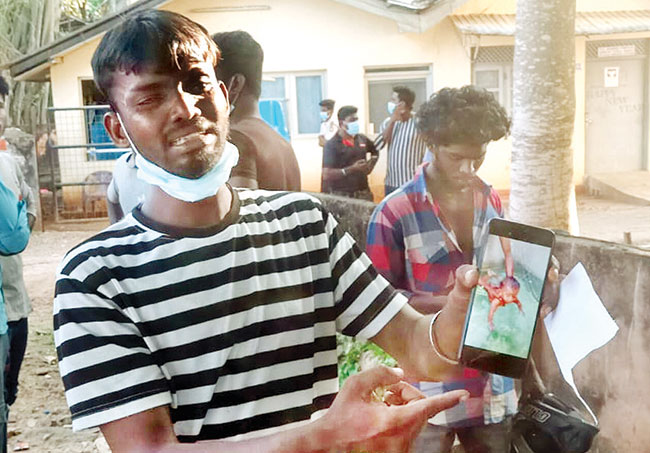
Text and pic by Dinasena Ratugamage
Relatives of a nine-month-old infant, who died recently after being admitted to the Vavuniya District General Hospital, held a demonstration alleging that the baby had died due to doctors’ negligence. They requested the Ministry of Health to conduct an investigation into the death.
Initially, they protested within the hospital premises. The protesters told journalists that the baby had not received proper medical attention.
The deceased was from Thawasikulam. His name was Dinojan Aksayan.
The Health Ministry is conducting an investigation into the deaths of 73 infants at the same hospital last year.
Such a high number of infant deaths had not been reported even during the height of the war, the Ministry said.
Four parents have also taken legal action over the deaths of their babies in 2014 and six others have requested impartial investigations into deaths of their children. The parents claim that the negligence of doctors and the hospital staff was the cause of these deaths. 395 babies have died at the hospital from 2015 to 2021.
A hosptial official, contacted for comment, denied the allegation that Baby Dinojan’s death was due to doctors’ negligence. An inquiry would be conducted if a formal complaint was made to the hospital authorities, he said.

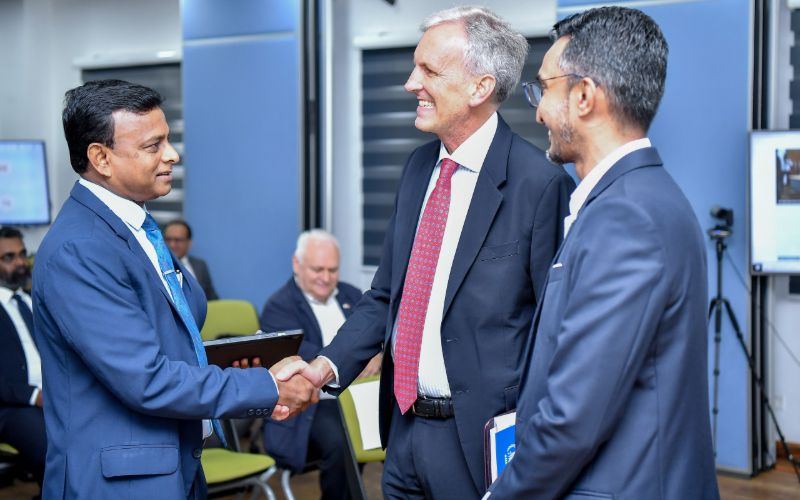
The conclusion of the Humanitarian Priorities Plan (HPP) implemented by the United Nations for those affected by Cyclone Ditwah was marked at a ceremony held in Colombo this morning (11), under the patronage of Commissioner General of Essential Services and Chief of Staff to the President, Prabath Chandrakeerthi, and United Nations Resident Coordinator in Sri Lanka, Marc-André Franche.
Speaking at the event, UN Resident Coordinator Marc-André Franche noted that the humanitarian relief programme launched for those affected by Cyclone Ditwah had been successfully implemented owing to the strong political leadership and the swift response demonstrated in managing the disaster situation.
Commissioner General of Essential Services and Chief of Staff to the President Prabath Chandrakeerthi emphasized that Sri Lanka had demonstrated how strong national leadership and effective partnerships could ensure the delivery of relief to affected communities in a fair and efficient manner during times of crisis. He further stated that the timely and accurate data and assessments provided by the United Nations had played a crucial role in facilitating rapid relief efforts. He also noted that the Government is continuing its efforts to strengthen multi-hazard early warning systems to enhance resilience against future natural disasters of a similar nature and to further expand institutional coordination at national, provincial and local levels.
Expressing appreciation and gratitude for the generous and prompt assistance extended by various countries and partners, the Commissioner General also commended the contribution of all state institutions that helped ensure the uninterrupted provision of essential services and facilitated the swift delivery of relief assistance.
Under the United Nations’ Humanitarian Priorities Plan for Cyclone Ditwah, a fundraising initiative was launched to mobilise US$35.4 million for those affected by the disaster. Of this amount, 75 per cent has already been disbursed as assistance to affected communities across the country. Through the programme, each affected family received an allowance of Rs. 27,000 through Divisional Secretariats, while a range of additional relief measures, including the construction of temporary housing, were also implemented.
The Humanitarian Priorities Plan covered 25 districts and delivered assistance through nine key sectors. Official reports indicate that 87 per cent of the targeted population of more than 650,000 people, equivalent to approximately 575,000 individuals, directly benefited from the programme. This achievement clearly reflects the confidence and support extended by foreign governments and organisations towards the Cyclone Ditwah response programme being implemented by the present Government.
Among those who attended the event were Additional Secretary (Disaster Management) to the Ministry of Defence K. G. Dharmatilake, ambassadors and high commissioners from several countries, representatives of the United Nations Development Programme (UNDP), representatives of the World Health Organization (WHO), representatives of international humanitarian organisations, and a number of local and international dignitaries.
(PMD)

A discussion to review the potential impacts of the anticipated El Niño phenomenon and the preparedness plans of relevant institutions to address its effects was held this morning (11) at the Presidential Secretariat under the patronage of President Anura Kumara Dissanayake.
The meeting was attended by representatives of the Department of Meteorology, the Department of Irrigation, the Central Environmental Authority, Mahaweli Authority of Sri Lanka, the Disaster Management Centre, Vidulijanana Lanka (Pvt) Ltd and the National System Operator (Pvt) Ltd, among other relevant institutions.
Extensive discussions were held on the possible impact of the anticipated El Niño conditions on the country’s food security, drinking water supply and energy sector, as well as the immediate measures required to effectively manage these sectors.
Particular attention was given to current reservoir water levels and the measures required managing potential pressure on agriculture, drinking water supply and energy generation. Officials also briefed the President on the preparedness plans already in place to mitigate any adverse effects.
Officials noted that the expected El Niño conditions are likely to resemble those experienced during 2016–2017. They further stated that water management plans have been formulated accordingly and that steps have already been taken to commence the 2026 Yala season approximately one and a half months earlier than usual.
Special attention was also focused on ensuring an uninterrupted electricity supply over the upcoming months, maintaining agricultural activities and safeguarding food security. The President instructed relevant officials to prepare and submit detailed plans to ensure adequate electricity generation, the provision of water required for the forthcoming cultivation season and the protection of drinking water resources.
President Dissanayake observed that, just as Sri Lanka had successfully managed challenges arising from Cyclone Ditwah and the conflict situation in the Middle East, the country possesses the capacity to effectively address this global challenge as well. The President expressed confidence that with proper planning and timely implementation, Sri Lanka would be well positioned to respond to any eventuality.
Among those present were Secretary to the President Dr. Nandika Sanath Kumanayake, Senior Additional Secretary to the President Kapila Janaka Bandara, Director General of the Department of Meteorology A. L. K. Wijemannage, Director General of the Department of Irrigation Kithsiri Weligopolage, Director General of the Mahaweli Authority of Sri Lanka H. M. K. K. Herath, Chairman of the Central Environmental Authority Professor Tilak Hewawasam, Acting Director General of the Disaster Management Centre Brigadier D. D. G. A. Jayawardena and several senior officials representing the relevant institutions.
(PMD)
Latest News
New Sasakawa Memorial Sri Lanka–Japan Cultural Centre reflects enduring friendship between Sri Lanka and Japan – PM

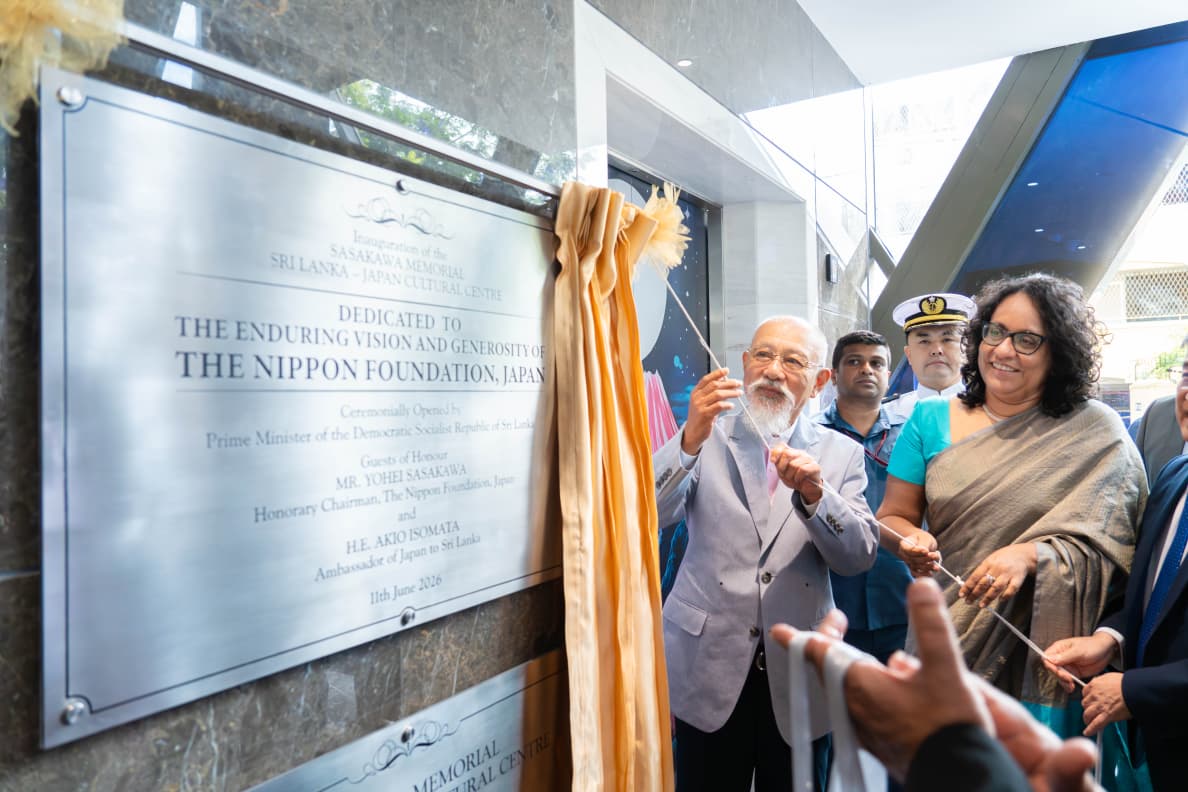
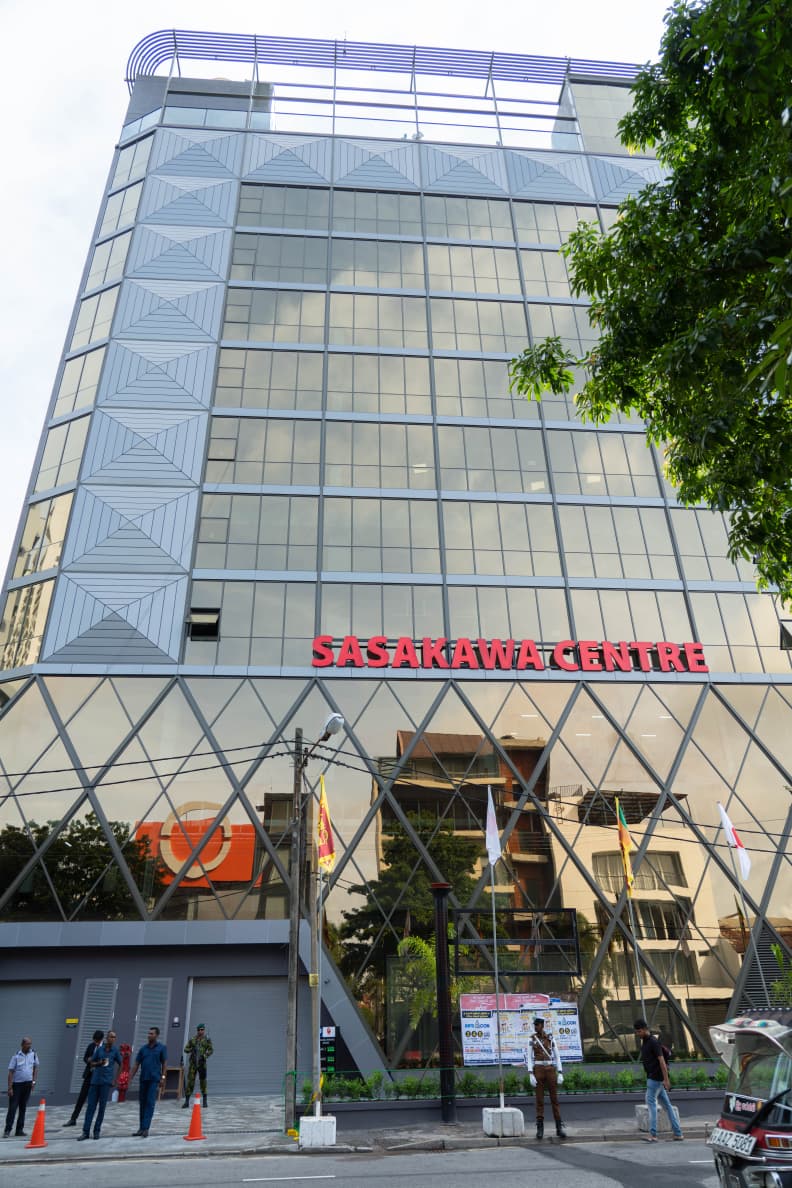
Prime Minister Dr. Harini Amarasuriya participated at the ceremonial opening of the new Sasakawa Memorial Sri Lanka–Japan Cultural Centre today [11th of June 2026].
The cultural centre, commissioned by the Sasakawa Memorial Sri Lanka–Japan Cultural Centre Trust and situated at No. 85, Ward Place, Colombo 07, is a landmark development designed to promote cultural exchange, education, professional training and bilateral cooperation between Sri Lanka and Japan.
The New Sasakawa Centre was ceremonially opened by the Ambassador of Japan to Sri Lanka Akio ISOMATA, Minister of Fisheries, Aquatic and Ocean Resources, Ramalingam Chandrasekar, Minister of Buddhasasana, Religious and Cultural Affairs, Hiniduma Sunil Senevi, Yohei SASAKAWA, Chairman of The Nippon Foundation, Japan, Premalal Fernando, Chairman, Sasakawa Centre Trust. The Prime Minister unveiled the inaugural plaque.
Following the occasion Memorandum of Understanding was signed between the Ministry of Defence and Sasakawa Peace Foundation in the presence of Prime Minister Dr. Harini Amarasuriya and Yohei SASAKAWA, Honorary Chairman.
Addressing the occasion, Prime Minister Dr. Harini Amarasuriya stated, that the friendship between Sri Lanka and Japan is enriched by a long history of cultural and spiritual connections and that the societies are connected through a deep appreciation of nature, culture, learning, and community.
Highlighting the longstanding contribution of the Sasakawa Centre, the Prime Minister stated that it has played an invaluable role in promoting Japanese language education and strengthening mutual understanding between the people of Sri Lanka and Japan. She expressed confidence that the new Centre would emerge as a dynamic platform for cultural exchange, educational cooperation, and meaningful people-to-people engagement.
The Prime Minister stated that, at a time of increasing global uncertainty, partnerships based on mutual respect, shared values, and a commitment to peace are more important than ever. She reaffirmed that Sri Lanka and Japan remain committed to dialogue, international cooperation, and s rules-based international order that promotes peace, prosperity, and human dignity.
The occasion was attended by the Ambassador of Japan to Sri Lanka Akio ISOMATA, Minister of Fisheries, Aquatic and Ocean Resources, Ramalingam Chandrasekar, Minister of Buddhasasana, Religious and Cultural Affairs, Hiniduma Sunil Senevi, Yohei SASAKAWA, Chairman, The Nippon Foundation, Japan, Premalal Fernando, Chairman, Sasakawa Centre Trust and Diplomatic core, distinguished guests.

[Prime Minister’s Media Division]
Sri Lanka look to their bowlers against big-hitting West Indies

Edgbaston takes center stage as England, Sri Lanka kick off T20 World Cup

Trump says US will hit Iran ‘very hard tonight’

Firefighters on scene at Pentagon during ‘hazardous materials incident’

Samarawickrama’s rise gives Sri Lanka a second pillar

Prabhsimran, Gaikwad, Tilak score fifties in DLS loss to Afghanistan A

‘Dates have the highest sugar content to fight Coronavirus’

Sunday Island 27 December – Headlines

#SundayIsland 17th December – Headlines

Sunday Island – 28th March

Sunday Island Headlines – 21 March

Sunday Island – 21st February – Headlines
-
 Features7 days ago
Power crept into the Sangha and is now tearing it apart
-

 Features7 days ago
Kondachchi wind farm and battery storage project to boost energy security, says Power Ministry Secretary
-

 News5 days ago
Women’s T20 World Cup 2026 warm-up: Chamari Athapaththu’s 94 helps Sri Lanka beat Pakistan
-
 Features7 days ago
Saudi Arabia sets new benchmark in Hajj management as 1.7 million pilgrims complete sacred journey
-

 News6 days ago
Asst. Manager, security officer arrested over Rs 30 mn snatch at Horana PB branch
-

 Editorial4 days ago
Probe Sallay’s complaint
-

 News5 days ago
Lankan-Canadian inducted to Toronto Sports Hall of Fame
-
 News2 days ago
Local firms move millions of dollars overseas for phantom imports: Govt.