
News
Ancient teeth reveal Bronze Age trade between South Asia and Mediterranean

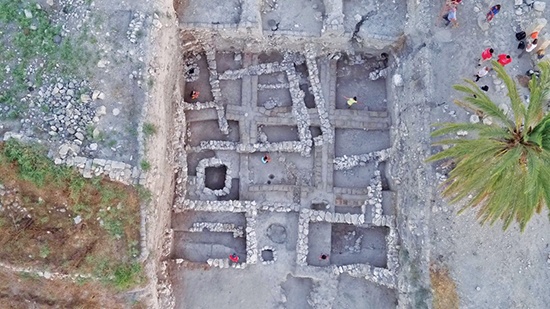
South Asian spices such as turmeric and fruits like the banana had already reached the Mediterranean more than 3000 years ago, much earlier than previously thought, says a team of researchers engaged in archaeological excavations in the Levant.
A news report published by the California based Courthouse News Service said that evidence from the excavations by a team of researchers working alongside German prehistoric archaeologist Philipp Stockhammer has shown that even in the Bronze Age, long-distance trade in food was already connecting distant societies.
The report said: The Levant was the site of global trade as long ago as 3,700 years, much earlier than previously believed, researchers found in an archaeological excavation of 16 Bronze Age bodies in modern Israel.
Philipp Stockhammer, a prehistoric archaeologist at Ludwig-Maximilians-Universität in Munich, and his colleagues analyzed food residues in the ancient corpses’ tooth tartar, also known as dental calculus. In these human fossils, which dated to the second millennium BCE, the scientists saw evidence of turmeric, bananas and soy.
“Exotic spices, fruits and oils from Asia had thus reached the Mediterranean several centuries, in some cases even millennia, earlier than had been previously thought,” Stockhammer said in a statement. “This is the earliest direct evidence to date of turmeric, banana and soy outside of South and East Asia.”
It’s no surprise that long-distance trade of food and spices was conducted during the Roman era, but evidence of trade with South Asia this early comes as a new find. Egypt and Mesopotamia were likely waypoints along the trade routes from South Asia and the Eastern Mediterranean.
The 16 bodies were excavated from Megiddo, a Bronze Age Canaanite city-state where the Canaans prepared to resist Egyptian military expansion in the 15th century BCE, and Tel Erani, where a Nagada Egyptian trading post sat more than 5,300 years ago.
Teeth are an excellent source of evidence for the lives of the ancients: bacteria from minerals, pathogens and other illuminating samples are deposited and preserved — essentially fossilized — for millennia.
“This enables us to find traces of what a person ate,” Stockhammer continued. “Anyone who does not practice good dental hygiene will still be telling us archaeologists what they have been eating thousands of years from now!”
His team’s process of paleoproteomics — analyzing the proteins preserved in mineralized tissues such as teeth and bones — “breaks new scientific ground,” said the study’s lead author, LMU biochemist Ashley Scott, in a statement.
Harvard University molecular archaeologist Christina Warinner, a senior author on the article, agrees.
“Our high-resolution study of ancient proteins and plant residues from human dental calculus is the first of its kind to study the cuisines of the ancient Near East,” Warinner said in a statement. “Our research demonstrates the great potential of these methods to detect foods that otherwise leave few archaeological traces. Dental calculus is such a valuable source of information about the lives of ancient peoples.”
The paleoproteomeics research method depends on the food proteins’ survival in teeth tartar over the years.
“Interestingly, we find that allergy-associated proteins appear to be the most stable in human calculus,” Scott said.
Wheat gluten, for instance, was found in the ancient teeth. By detecting plant microfossils known as phytoliths, which are rigid silica structures that helpfully persist after a plant’s decay, the scientists could also confirm the presence of cereals, dates and sesame in ancient Mediterranean diets.
The turmeric and soy proteins were found in a Megiddo individual’s teeth, and the banana proteins were recovered from a Tel Erani body. Bananas were domesticated and used in Southeast Asia since the 5th millennium BCE. Prior to this study, little was known about bananas’ trade or use until they came to West Africa by 1,000 BCE.
“Our analyses thus provide crucial information on the spread of the banana around the world. No archaeological or written evidence had previously suggested such an early spread into the Mediterranean region,” Stockhammer said in his statement. “I find it spectacular that food was exchanged over long distances at such an early point in history.”
The findings come with caveats, however, as it is impossible to know whether these particular individuals had simply lived, and therefore dined, in South Asia at some point in their lives before their remains wound up in the Levant, the eastern Mediterranean region that now covers Israel and Lebanon and parts of Syria and Jordan.
Still, the study — published Monday in the Proceedings of the National Academy of Sciences — may well indicate the earliest known signs of trade across Asia.
“We can now grasp the impact of globalization during the 2nd millennium BCE on East Mediterranean cuisine,” Stokchammer concluded. “Mediterranean cuisine was characterized by intercultural exchange from an early stage.”


India rules out reopening agreements
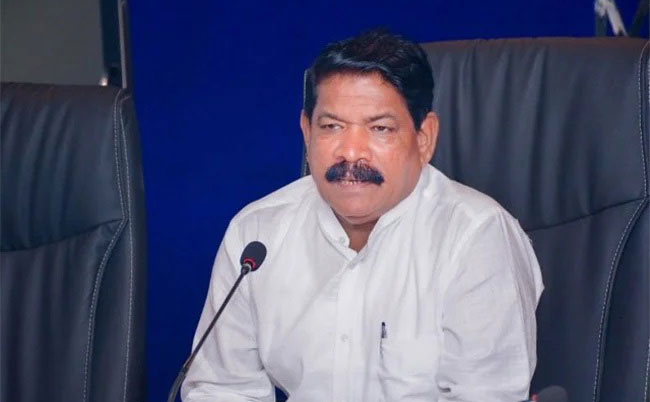
Fisheries and Aquatic Resources Minister Ramalingam Chandrasekaran has welcomed the Indian declaration as regards the status of Katchatheevu.
The NPPer appreciated New Delhi’s stand during the debate on the Anti-Corruption (Amendment) Bill recently. The Minister called the dismissal of DMK and AIADMK bid to regain Katchatheevu a historic decision.
The Indian government has told the Supreme Court it will not reopen the agreements under which Katchatheevu was ceded to Sri Lanka, citing its “excellent relationship” with Colombo, as the court told New Delhi and Tamil Nadu to make fishermen aware of the maritime boundary.
A bench of Justices Sanjay Kumar and Sanjeev Sachdeva was hearing petitions, pending since 2008, that challenge the “unconstitutional ceding” of Katchatheevu under the 1974 maritime agreement and the 1976 agreement that restricted Indian fishermen’s rights in Sri Lankan waters. Senior Advocate P. Wilson, for the petitioners, argued that because the 1974 agreement transferred territory, it required an amendment to the Indian Constitution.
India’s Attorney General, R. Venkataramani, said the government did not want to reopen the issue and that India had an “excellent relationship” with Sri Lanka it did not want to spoil. He told the court that concerns involving Indian fishermen were being pursued through diplomatic channels, but that India could not compel Sri Lanka to accept its position.
“Fishermen are told not to go into the territorial waters of Sri Lanka, they still venture there,” he said, adding that depleted fish stocks and pollution on the Indian side were driving them across the boundary. “We are polluting our seas. They are not coming here.”
“Either you sensitise the fishermen to not go beyond a particular point,” Justice Kumar said. Tamil Nadu’s counsel argued that the central government should resolve the issue with Sri Lanka. The court did not rule on the validity of the agreements, and the case will be heard again in February 2027.

Police have arrested a person on suspicion over an incident where 54-year-old restaurant owner Thushara Sampath, was shot dead near his business place at Nagoda, on 09 October. The arrest was made at Navaladi, in the Batticaloa area. Police commandos arrested him while he was travelling in a bus bound for Batticaloa.
The suspected gunman was produced before the Valaichenai Magistrate court and police obtained a detention order for five days.
The wife of the businessman, who received gunshot injuries, succumbed to her injuries yesterday (11) while receiving treatment at the Nagoda hospital. She was 52.
The two victims were shot around 7.40 a.m., on 9 Oct. Two unidentified persons arrived on a motorcycle and one of them opened fire with a T-56 assault rifle before fleeing the scene.
Sources said that the businessman had been in contact with a person identified as Bombuwala Naveen widely believed to be a narcotics dealer. Sources said he had lost an eye a few years ago as a result of an acid attack.
Meanwhile, police said that two close associates of Bombuwala Naveen had been arrested in connection with the ongoing investigation.
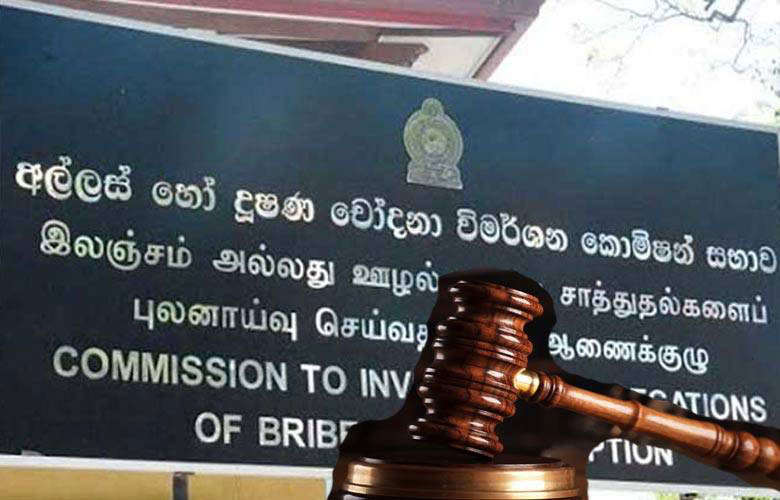
Sixteen former ministers and three former state ministers have been convicted in cases filed by the Commission to Investigate Allegations of Bribery or Corruption (CIABOC) since the incumbent government came to power, Deputy Minister of Public Security Sunil Watagala has told Parliament.
According to Watagala, CIABOC investigations, between October 2024 and October 2026, led to the arrest of a former chief minister, four wives of former ministers, seven children of former ministers and six former local government chairpersons. A total of 226 people have been arrested over bribery and corruption allegations during this period, 55 of them politicians.
Watagala has attributed the pace of the investigations to government measures to strengthen the independence of state institutions.

Chandrasekaran welcomes Indian stand of Katchatheevu

Alleged killer of couple apprehended

19 ex-ministers convicted in CIABOC cases under NPP rule

Regime change and the vacuum:Strategic lessons of Iraq and Libya

Old wounds, fresh probes

Ceylon Chamber’s Investment Summit 2026 to steer Sri Lanka beyond stabilisation

‘Dates have the highest sugar content to fight Coronavirus’

Sunday Island 27 December – Headlines

#SundayIsland 17th December – Headlines

Sunday Island – 28th March

Sunday Island Headlines – 21 March

Sunday Island – 21st February – Headlines
-

 News7 days ago
Geneva takes up Sallay’s case and govt. ignores opportunity to answer accusations
-

 Features6 days ago
Preventing grievances from becoming communal
-

 Features4 days ago
The Sri Lankan who made Scottish history
-

 Sports4 days ago
Nissanka absence opens door for Sri Lanka’s young guns
-

 News5 days ago
Gnansara Thera to be assigned to prison printing section: Officials
-

 News3 days ago
NDB fraud Rs 60mn more than reported
-

 News3 days ago
Removing monk’s robes matter for Sangha to decide: Mahanayake Theras
-

 Features4 days ago
Future of Sri Lanka’s state university system: Should it be shut down and reopened?