
News
Ancient Pali gets fresh push from India and Pathfinder

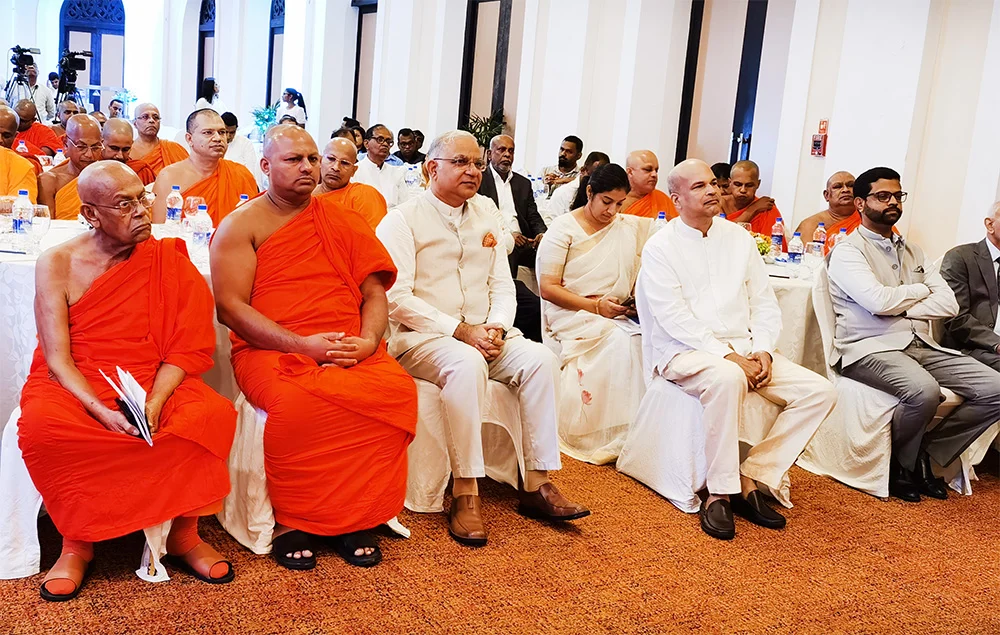
The Pathfinder Foundation, in collaboration with the High Commission of India in Colombo, and the Indian Council for Cultural Relations (ICCR), held a symposium on “Strengthening Pali Language Studies in Sri Lanka” last Friday (24), in Colombo.
The symposium brought together eminent members of the Maha Sangha, distinguished academics, policymakers, and education specialists to discuss the future of Pali language studies in Sri Lanka and explore practical strategies for preserving and promoting one of South Asia’s most significant classical languages.
The event was held with the blessings and participation of leading members of the Maha Sangha, including Most Venerable Dr. Niyangoda Vijithasiri, Anunayaka Thera of the Malwatta Mahavihara; Most Venerable Dr. Ittapana Dhammalankara Maha Nayaka Thera of the Kotte Sri Kalyani Samagri Dharma Maha Sangha Sabha; Most Venerable Shastrapathi Ganthune Assaji Maha Nayaka Thera of the Amarapura Chulagandhi Chapter; Senior Professor Ven. Kotapitiye Rahula, Anunayaka of the Kotte Sri Kalyani Samagri Dharma Maha Sangha Sabha; Most Venerable Dr. Waleboda Gunasiri Anunayaka Thera of the Sri Lanka Ramanna Nikaya; and Most Venerable Waskaduwe Mahindawansa Thera of the Amarapura Sambuddha Sasanodaya Maha Nikaya.
The symposium also brought together representatives of the three main Nikayas, leading scholars in Pali and Buddhist Studies, Indian High Commissioner Santosh Jha, Deputy High Commissioner, Maitrey Kulkarni, Pathfinder Foundation Founder Milinda Moragoda, Acting Director of the Swami Vivekananda Cultural Centre Roshni Thomson, General Secretary of the Urumayake Ulpatha R.A.D. Sirisena, university academics, Pirivena educators, and education experts.
Delivering the keynote address, Senior Professor Ven. Medagampitiye Vijithadhamma Thera described Pali as a comprehensive knowledge system that has preserved Sri Lanka’s cultural, philosophical, and spiritual heritage for centuries. He also commended the Government of India’s decision to confer Classical Language status on Pali in 2024.
“Pirivena education remains the centre of Pali knowledge transmission, while universities represent its highest level of academic learning,” Ven. Vijithadhamma Thera said. He observed that several important Pali traditions continue to be preserved within specific monastic lineages in Sri Lanka.
He noted that Pali education is currently divided among schools, Pirivenas, and universities, emphasising the need for closer collaboration among these institutions to strengthen the discipline.
“The decline of the humanities in higher education is largely due to limited employment opportunities. Symposiums such as this are therefore essential to strengthening Pali language studies,” he said.
Drawing attention to international examples, Ven. Vijithadhamma Thera noted that countries, such as Thailand and Cambodia conduct national examinations in Pali and suggested that Sri Lanka should consider introducing a similar system. He also called on universities to provide greater recognition to creative scholarly works produced in Pali.
Highlighting the opportunities offered by emerging technologies, he said artificial intelligence and digital tools could play a transformative role in preserving the language.
“Palm-leaf manuscripts can be digitized using Optical Character Recognition (OCR) technology and made widely accessible. Pali is a priceless cultural treasure that must be preserved and passed on to future generations,” he said, adding that safeguarding the language requires the collective efforts of the State, schools, the Sangha, information technology professionals, researchers, and the wider academic community.
Addressing the gathering, Indian High Commissioner Santosh Jha said that participating in Buddhist events was much more than a diplomatic responsibility, as it held deep personal significance for him, having been born and raised in Bihar, close to the place where Lord Buddha attained Enlightenment.
He noted that Pali forms the very foundation of Buddhist knowledge and recalled that in October 2024 the Government of India conferred Classical Language status on Pali. Referring to the remarks of Prime Minister Narendra Modi, he said it is humanity’s responsibility to keep the Pali language alive in order to preserve the original teachings of the Buddha.
High Commissioner Jha emphasised that Pali is the language of the earliest Buddhist scriptures, including the Tripitaka, which embodies the timeless message of Dhamma. In a world increasingly affected by conflict, he said, the Buddha’s teachings provide a path towards peace, compassion, and the welfare of all humanity.
He further observed that Sri Lanka continues to play a unique role in preserving Pali through its use in religious rituals, chanting, and Theravada Buddhist traditions.
Recalling earlier initiatives, the High Commissioner noted that Sri Lanka became the first country to organise an international seminar on the significance of Pali’s recognition as a Classical Language, soon after India’s decision in October 2024. He added that Prime Minister Modi had personally acknowledged the initiative and appreciated the contributions of Sri Lankan scholars in promoting Pali studies.
Building on that momentum, he said India has continued to support efforts to preserve and promote Pali, including assisting the Pathfinder Foundation in reprinting important classical Pali grammar texts such as Namamala and Balawatharo.
The symposium focused on the current state of Pali education in Sri Lanka, future prospects for its development, innovative approaches to teaching and learning, and stronger collaboration among Pirivenas, universities, research institutions, and international partners.
Participants also discussed ways of strengthening cooperation between Sri Lankan and international Pali scholars and educational institutions while laying the foundation for a sustainable national programme to promote the study, teaching, research, preservation, and wider use of the Pali language for future generations.






Latest News
Landslide Early Warnings issued to the districts of Colombo, Galle, Gampaha, Hambanthota, Kalutara, Kandy, Kegalle, Kurunegala, Matara, Nuwara Eliya and Ratnapura


The National Building Research Institute has issued landslide early warnings to the districts of Colombo, Galle, Gampaha, Hambanthota, Kalutara, Kandy, Kegalle, Kurunegala, Matara, Nuwara Eliya and Ratnapura from 16:00 hrs on 25.09.2026 To 16:00 hrs on 26.09.2026
Accordingly,
LEVEL III [RED] landslide early warnings have been issued to the Divisional Secretaries Divisions and surrounding areas of Neluwa, Nagoda, Niyagama and Thawalama inthe Galle district, Ganga Ihala Korale, Udapalatha, Doluwa and Pasbage Korale in the Kandy district, and Kothmale West, Ambagamuwa, Kotmale East and Norwood in the Nuwara Eliya district.
LEVEL II [AMBER] landslide early warnings have been issued to the Divisional Secretaries Divisions and surrounding areas of Elpitiya, Baddegama and Karandeniya in the Galle district, Walallawita in the Kalutara district, Deltota, Udunuwara, Gangawata Korale, Yatinuwara and Panvila in the Kandy district, Aranayake, Dehiowita, Mawanella, Deraniyagala and Yatiyanthota in the Kegalle district, Thalawakelle in the Nuwara Eliya district and Ratnapura and Pelmadulla in the Ratnapura district.
LEVEL I [YELLOW] landslide early warnings have been issued to the Divisional Secretaries Divisions and surrounding areas of Seethawaka and Padukka in the Colombo district, Attanagalla and Mirigama in the Gampaha district, Katuwana and Walasmulla in the Hambanthota district, Ingiriya and Bulathsinhala in the Kalutara district, Hatharaliyadda, Poojapitiya, Medadumbara, Kundasale, Ududumbara, Thumpane, Akurana, Pathadumbara, Harispattuwa and Pathahewaheta in the Kandy district, Warakapola, Bulathkohupitiya, Galigamuwa, Kegalle and Ruwanwella in the Kegalle district, Mallawapitiya, Alawwa, Polgahawela and Mawathagama in the Kegalle district, Pitabeddara, Kotapola and Pasgoda in the Matara district, Nuwara Eliya in the Nuwara Eliya district and Elapatha, Ayagama, Nivithigala, Kuruwita and Kalawana in the Ratnapura district

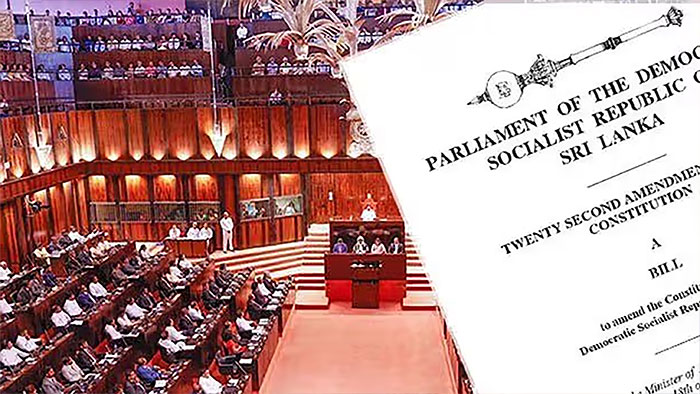
Parliament yesterday passed the Twenty-Second Amendment to the Constitution Bill and the Judicature (Amendment) Bill with two-thirds majorities, with 158 MPs voting in favour and 63 against each Bill.
The Illankai Tamil Arasu Kadchi (ITAK) and Sri Lanka Muslim Congress (SLMC) voted with the SJB against the Bills.
NDF MPs Ravi Karunanayake and Faizer Musthapha and SJB Badulla District MP Nayana Wasalathilaka were not present when the votes were taken.
The final vote on the Judicature (Amendment) Bill was announced at around 8.08 p.m. after Opposition MPs called for divisions on its clauses during the Committee Stage.
The votes followed a two-day debate which commenced on Thursday (24), after Justice and National Integration Minister Harshana Nanayakkara presented the Bills for their Second Reading.
The Supreme Court’s determination on the Bills was presented to Parliament on Tuesday (22) by Speaker Dr Jagath Wickramaratne. The Court determined that the 22nd Amendment Bill did not require approval at a referendum and could be passed by a special two-thirds majority in Parliament.
The amendment provides for raising the mandatory retirement age of Supreme Court judges from 65 to 67 and that of Court of Appeal judges from 63 to 65. It also provides for the Chief Justice to retire at 67 or after completing six years in office, whichever comes earlier.
The Speaker informed Parliament that the Judicature (Amendment) Bill could be passed by a simple majority.
The SJB opposed the legislation and its MPs attended Parliament dressed in black yesterday. The party also staged a protest at Polduwa Junction, Battaramulla, under the theme “No to 22, which destroys democracy”, with Opposition Leader Sajith Premadasa and several SJB politicians participating.
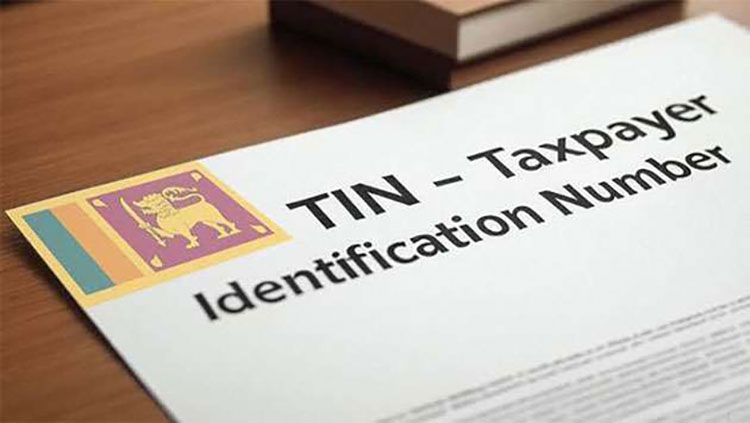
A valid Taxpayer Identification Number (TIN) Certificate will be required for a range of key transactions in Sri Lanka from November 1, 2026, the Inland Revenue Department (IRD) has announced.
The requirement, introduced under the Inland Revenue (Amendment) Act, No. 11 of 2026, applies to transactions specified under Section 102(3) of the Inland Revenue Act.
Accordingly, individuals will be required to produce a valid TIN Certificate when opening an account at a bank or financial institution, obtaining approval for a building plan, registering or renewing the licence of a motor vehicle, registering land or title to land, registering a business, transferring shares in a company incorporated in Sri Lanka or obtaining a credit card.
In the case of share transfers, both the transferor and transferee will be required to provide TIN certificates.
The IRD said officials handling such transactions had been instructed to ensure that a valid TIN Certificate was submitted before processing or completing the relevant transaction.
The Department advised those who do not already have a TIN to obtain one in advance through its e-Services platform.
It said a printout of the TIN verification result showing the applicant’s National Identity Card number and TIN could also be accepted instead of the certificate.The IRD also reiterated that obtaining a TIN is mandatory for resident individuals aged 18 and above under the applicable provisions.

Landslide Early Warnings issued to the districts of Colombo, Galle, Gampaha, Hambanthota, Kalutara, Kandy, Kegalle, Kurunegala, Matara, Nuwara Eliya and Ratnapura

Showers in the Western, Uva and Sabaragamuwa provinces and in Galle, Matara, Kandy, Nuwara-Eliya, Batticaloa and Ampara districts.

22A, Judicature Amendment Bills passed with 2/3 majority

TIN mandatory for key transactions from Nov. 1

Navy brings 25 Indonesian fishermen ashore after trawler capsizes

Former Mineral Sands Chairman arrested over recruitment irregularities

‘Dates have the highest sugar content to fight Coronavirus’

Sunday Island 27 December – Headlines

#SundayIsland 17th December – Headlines

Sunday Island – 28th March

Sunday Island Headlines – 21 March

Sunday Island – 21st February – Headlines
-

 News6 days ago
Namal Rajapaksa Buddhist gambit fails, bail denied
-

 Features6 days ago
Why the spelling Sri Lankan names in English vary
-

 Features6 days ago
Three bands, a new identity: Sri Lankan wolf snake recognised as distinct species
-

 Business6 days ago
SLIIT holds largest-ever convocation
-

 News6 days ago
Vehicle prices drop by up to Rs. 1 mn, says importers’ body
-

 News6 days ago
Govt monitors reported Saudi death sentence – Foreign Ministry
-
 Business6 days ago
Lanka’s famed beach shack battles demolition
-

 Business6 days ago
All-new Bolero MaXX Pik-Up unveiled in Lanka