
News
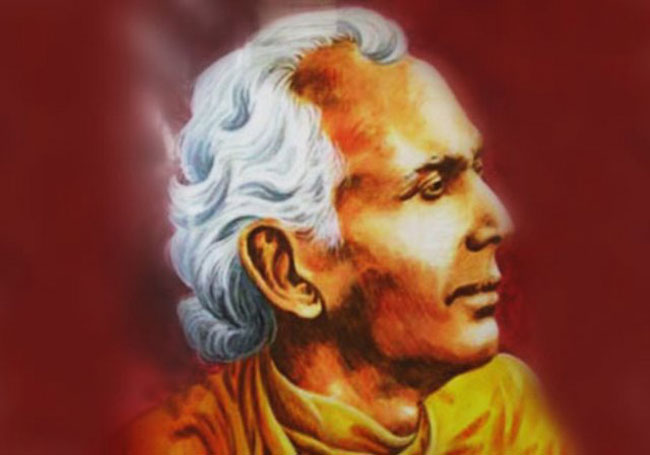
Anagarika Dharmapala: Admirer of ‘Queen Mab’

by Rohana R. Wasala
It may look unfashionable or even indecent to write about Anagarika Dharmapala (1864-1933) in these days of ‘reconciliation’ politics. But that is due to the deliberate distortion of facts by vested interests. So I beg my readers’ indulgence. The Anagarika has been consistently misrepresented by anti-nationalists as a Sinhala supremacist, a Buddhist fanatic, and a propagator of violent nationalism. But the truth was otherwise; he was none of these.
As anthropologist Gananath Obesekera, professor emeritus, Princeton University, mentions in his ‘The Doomed King’ (2017), “Dharmapala was the most passionate defender of Sri Vikrama in colonial times…”; Sri Vikrama Rajasinghe had been demonised by the British in the interest of their imperial scheme to annex the Kandyan kingdom. To the Anagarika, the last king of Lanka was a noble ruler and human being who was betrayed by traitorous chiefs like Ehelepola disava (as he conceived of them). He “defended Sri Vikrama and implored Sinhala people to model themselves on his life and history….” (ibid.) Gananath says Dharmapala was indulging in ‘hyper-glorification’ of the last king. Perhaps, he was; but that doesn’t invalidate the latter’s assessment of the king, whose non-Sinhala ethnicity did not trouble him. At the same time, I don’t share Gananath’s criticism of Dharmapala’s alleged anti-Christian attitudes.
Dharmapala was, first and foremost, an international Buddhist missionary, and only secondarily, a Sinhala Buddhist national revivalist and social reformer. Sri Lankans (native Ceylonese) were in urgent need of the brave leadership and guidance of such a heroic figure at that time. He excelled in both roles. Anagarika Dharmapala assumed robes as a Buddhist samanera at an advanced age in July 1931, after a very industrious and productive life; he received the upasampada or higher ordination under the name of Ven. Siri Devamitta Dhammapala, hardly four months before his death on April 29, 1933.
As was the standard practice among the well-to-do families in those colonial days, he received a good school education in the English medium. During all of his active life, he mostly used English for communication. More than 75% of his writings were in that language; he spoke English even more frequently in the course of his lifelong missionary work. No religious leader of the time, whether Buddhist or non-Buddhist, devoted so much attention as he did to the need for a good modern education for the young that included mastery of languages and science and technology (practical skills).
Anagarika Dharmapala said that he got an insight into Buddhism after reading Sir Edwin Arnold’s poem about the Buddha “Light of Asia” (1879). He treated the latter as his teacher. Arnold received the Anagarika when he visited London. Dharmapala was not an enemy of English or the English people; he was well disposed towards both. But he was a vehement critic and opponent of British imperialism, which though he didn’t challenge politically, as he thought that it was not yet the time for it; he wanted to have favourable relations with the existing imperial government in order that he could get on with his global missionary work without any obstruction. His national endeavour was to lead his people towards freedom from foreign rule through peaceful means, which motivated his work for stimulating social reform and bringing about the moral edification of the masses.
This year marks the 157th birth anniversary of the revered Anagarika Dharmapala, who made an immense contribution towards the restoration of the national dignity and the religious and cultural regeneration of the oppressed Sinhala Buddhists in the heyday of British imperialism in our country. He was born to a wealthy business family in Colombo exactly 157 years ago, that is, on September 17, 1864. The young Don David Hewavitharne, as he was named at birth, despite his strong dislike of British colonialist rule, had a passionate love of English poetry. He particularly liked the poems of John Keats and Percy Bysshe Shelley, both assigned by literary critics and historians to the Romantic tradition of English poetry. Ever since he discovered the latter’s ‘Queen Mab’ in a book in his uncle’s library as a schoolboy, it had remained his favourite English poem.
The basis of his admiration of ‘Queen Mab’ is not difficult to find. He said about the poem: “I never ceased …. .to love its lyric indignation against the tyrannies and injustices that man heaps on himself and its passion for individual freedom” (as quoted in ‘Flame in Darkness – the Life and Sayings of Anagarika Dharmapala’ by the English monk Maha Sthavira Sangharakshita, (1980). There is no doubt that this specimen of Shelly’s juvenilia (i.e. works done in his youth) was nevertheless an important source of inspiration for the Anagarika in his life’s work.
What must have appealed to Don David Hewavitharne in ‘Queen Mab’ was obviously more than just the polemical attack it mounts on “the tyrannies and injustices” that humans inflict on fellow humans. The poem embodies many of the radical ideas that Shelley articulated in his works, and some of these such as his atheism, his criticism of meat eating as a cause of vice, and the implicit advocacy of vegetarianism, his idea of death as something not to be feared, his condemnation of political and religious tyranny, his socialist politics, his scientific attitude to human experience and the external world, his belief in the moral perfectibility of humanity, his nonviolence and antipathy towards war, and his vision of social and political change through intellectual transformation are sure to have struck a chord in the great patriot and Buddhist revivalist that the young David later became.
‘Queen Mab’, a book-length poem in nine parts, was written and privately distributed by Percy Bysshe Shelley (1792-1822) in 1813. It was the poet’s first work of genuine literary merit. His decision to make it available to a select circle suggests the type of audience he wanted to address: the target readers were of the same patrician (aristocratic) background as himself who had the time and the means to get an education, and the leisure to read and enjoy poetry; the mostly illiterate downtrodden masses whose welfare he actually had in mind and who stood to gain most from the revolutionary changes he envisioned were for the most part outside of this circle; the Anagarika belonged to the same higher social class in this country as Shelley did in England.
Structurally, ‘Queen Mab’ is a fairy tale composed in nine cantos (main divisions). A fairy named Queen Mab comes down in her ethereal car to the sleeping Ianthe, a beautiful young maiden. Leaving the girl in her deep slumber the fairy awakens her Soul or Spirit and invites it onboard and transports it to her celestial abode at the uttermost edge of the universe. From that vantage point the Spirit (Ianthe’s Soul) is given a view of the universe stretching below. The fairy promises the Spirit to reveal the state presumably, of humanity’s past and present and the ‘secrets of the future’:
Critics have called this poem a dream vision allegory, a fairy tale, a utopian daydream, a protest- poem etc. The young David Hewavitharne might have identified ‘Queen Mab’ as a protest-poem. In terms of its substance we may call it a philosophical poem as well. In fact, the 1813 title of the poem was ‘Queen Mab: A Philosophical Poem with Notes’. Shelley was a ‘philosopher’ among the Romantics in the sense that while treating the usual ‘Romantic’ themes of beauty, passion, power of the imagination, the natural goodness of humanity, political freedom etc which formed their characteristic subject matter, he discovered and articulated causal connections in them with rare precision and clarity. He was unique in this respect among his contemporaries, with the possible exception of William Wordsworth (1770-1850) as critics have pointed out. Reading ‘Queen Mab’ we feel that it qualifies for all the above labels.
Though it is unselfconsciously melodramatic, coldly polemical, and crudely emotive in much of its versification and though he himself seemed years later to have had second thoughts about its estimation as a poem worthy of publishing for public consumption when he came to know that a pirated edition of the poem had appeared in 1821 (which was just a year before his accidental death by drowning), the ‘philosophy’ that he versifies in it is found to be as mature as it ever got in his case (considering the fact that he died at the young age of 30). The poem has even been described as ‘monumental’ by more sympathetic, and in my opinion more rational-minded and more discerning, readers. Obviously, Anagarika Dharmapala was among this group of readers.
Both Shelley and Dharmapala were revolutionaries, though of different moulds. They agitated for liberty and morality in the political and socio-cultural spheres. They had similar views about how to foster social and political reform (though the political aspect was more subdued in the case of Dharmapala than in the case of Shelley, a difference between the two that points to the Anagarika’s realistic, pragmatic approach as opposed to the dream-visionary impracticality of Shelley’s): Shelley believed in the possibility of perfecting humanity by moral means, which forms the nuclear theme of ‘Queen Mab’; the revolution he envisaged appears to be something to be achieved in this way, but not through armed struggle (despite his probable allusion to the French Revolution in his sonnet ‘England in 1819’ suggested.
As socially conscious young men in their different places and times Shelley and Dharmapala had much in common. They shared the same reformist ambitions. Both, born into wealth and privilege, showed an unusual concern for the welfare of the poor and were totally committed to the social uplift and moral refinement of the society including particularly the traditionally oppressed. Shelley’s relentless criticism of authoritarian institutions in his country is explicitly articulated in his sonnet ‘England in 1819’: The state of Shelley’s England is such that the king is “old, mad, blind, despised, and dying”; the princes are “the dregs of their dull race”; the rulers who are unable to see, feel or know, cling like leeches to their country until they “drop, blind in blood, without a blow”; the ordinary English people are “starved and stabbed in the untilled fields”; the army is corrupt and inept; the laws “tempt and slay”; religion is “Christless – Godless – a book sealed”. (Won’t this sound familiar to readers in many countries of the world even today?)
All these (agents of tyrannous evil) “Are graves, from which a glorious Phantom may – Burst to illumine our tempestuous day” (This could be interpreted as an allusion to the French Revolution, in which a crucial event was the storming of the ancient fortress of the Bastille and the releasing of the wretched prisoners there in 1789, just three years before his birth). Shelley’s diatribes like these preceded, by about three quarters of a century, the Anagarika’s vehement denunciation of the demoralizing British imperialism in our country. Just as Shelley rebelled (ideologically) against what he condemned as the tyranny of the king, priests and statesmen (‘statesmen’ not in its current dignified sense, but in the sense of mere ‘politicians’), Dharmapala adopted a defiant stance towards the occupying foreigners, errant Buddhist monks, and the Westernized local elite that so slavishly pandered to the interests of the colonial rulers.
But he was not an irrational hater of everything Western. He admired the positive aspects of European culture. He possessed a very good knowledge of the English language, which he used to write and edit many English publications in the pursuance of his Buddhist revivalist propaganda. His love of English poetry was consistent with the cosmopolitan Buddhist attitude towards what is admirable in other cultures. He criticized the tyranny and injustice of European colonialism, but he obviously had a high regard for the Western nations’ scientific and inventive genius. In return, he acted in compassion towards them according to his own religious convictions. He wrote in his “My Life Story” already referred to:
It is time that Buddhists of Asia should give the Dhamma to the people of Europe and America. Buddhism is for the scientifically cultured. The discoveries of modern sciences are a help to understand the sublime Dhamma. The mediaeval theology of ecclesiastical tussle may have satisfied the half-civilized consciousness of pre-scientific Europe and the paganized tribes of Europe of a barbarous age. Today the cultured races of Europe require a scientific psychology showing the greatness of human consciousness. The sublime doctrine of the Lord Buddha is a perfect science based on transcendental wisdom. This Dhamma should be freely given to the European races.
The unacceptable reality of our current domestic and international predicament is exactly what the farsighted Anagarika acted to forestall, against many odds, which limited his success. Paradoxically and quite unfairly, leaders like him are held responsible for our present ethnic problems by some individuals. My opinion is that had Anagarika Dharmapala and other patriots that he inspired not been there in that era and after, our plight today would have been worse.


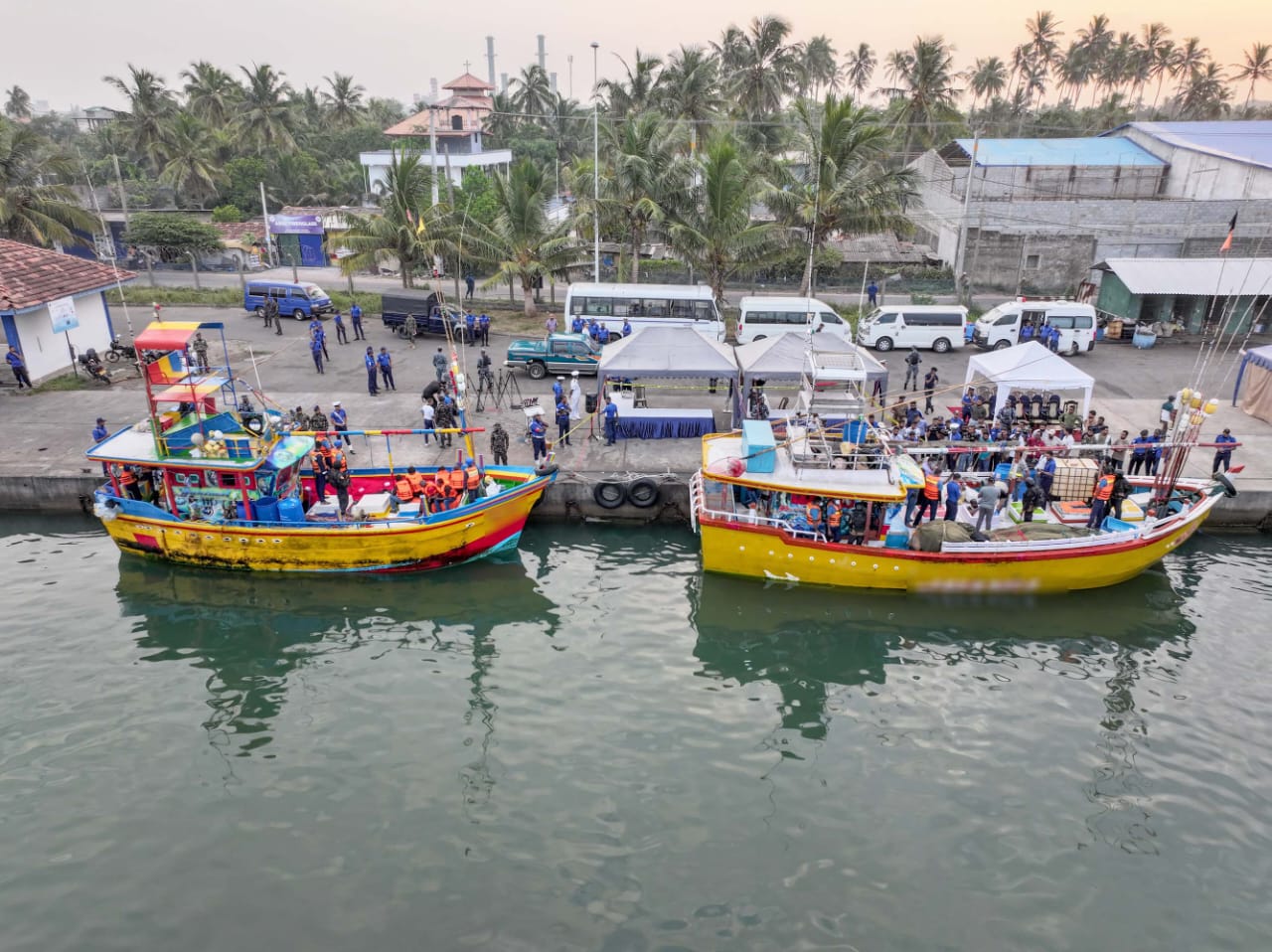
Building on its success in seizing major narcotic stocks in 2025, the Navy continued to support the “A Nation United” National Mission in 2026. In continuation of these efforts, during an
operation conducted on the high seas south of Sri Lanka, the Navy apprehended eleven (11) suspects aboard two local multi-day fishing trawlers suspected of drug smuggling.
Based on shared information, by the Sri Lanka Navy and Police, this special operation was conducted off the southern coast, deploying the Navy‟s Offshore Patrol Vessels. The operation
resulted in the interception of a multi-day fishing trawler suspected of smuggling narcotics, and the apprehension of five (05) suspects on board.
During further operations in the same area, naval units seized another multi-day fishing trawler (01), along with communication equipment and six (06) additional suspects, also believed to be involved in drug smuggling.
This morning (25 Jan 26), the two intercepted fishing trawlers, along with fourteen (14) sacks laden with suspected narcotics and the suspects, were brought to the Dikovita Fisheries Harbour.
An expert examination by the Police Narcotic Bureau confirmed that the fourteen (14) sacks contained more than 184 kilograms of heroin and over 112 kilograms of ‘Ice’ (crystal methamphetamine).
The Deputy Minister of Defence, Major General (Retd) Aruna Jayasekara, the Commander of the Navy, Vice Admiral Kanchana Banagoda, and the Inspector General of Police, Priyantha Weerasuriya, inspected the narcotics at the Dikovita harbour.
The Deputy Minister of Defence said that the current administration has initiated several projects for national development. As a flagship initiative, under the directives and guidance of the President, and under the supervision of the
Ministry of Defence, well-coordinated anti-narcotic raids have been launched.
This effort, part of “A Nation United” National Mission, involves the tri-forces, police, and all intelligence agencies working together under a coordinated plan to ensure that drug smugglers have no opportunity to bring narcotics into the country, he opined. He further stated that despite the national disaster situation, the state machinery, including the tri-forces, the police, and the public at large, remains united in rebuilding the nation, no room will be left for drug trafficking, which poses a severe threat to national security and public safety. Those
who engage in or support drug trafficking, under the cover of fishing activities, will find no escape, he added.
The Deputy Minister also reaffirmed that the tri-forces, police, and all law enforcement agencies are fully committed to their duty of suppressing this menace.
The Deputy Minister of Defence reported that, throughout 2025, a series of highly successful operations were conducted leading to numerous arrests. This was achieved through close coordination and mutual cooperation among the tri-services, the police, the Special Task Force, Police Narcotics Bureau, local law enforcement and international agencies. He noted that this
same spirit of cooperation and commitment has continued into 2026, resulting in the seizure of a large stockpile of drugs.
On behalf of the Honourable President, he extended gratitude to all who contributed to these efforts, specifically acknowledging the Commander of the Navy, the Inspector General of Police, the Police Narcotic Bureau, and the crews of the Navy’s Offshore
Patrol Vessels.
Moreover, the Deputy Minister declared that drug smuggling has become a national crisis, fueled by youth involvement and social crime. With borders secured under the “Nation United” National Mission, he warned traffickers to cease operations and urged users to abandon the destructive habit.
The Deputy Minister urged the public to report suspected drug smugglers to law enforcement via the hotlines 1818 or 1997 and also commended the role of media institutions and journalists in raising public awareness about the dangers of narcotics through responsible reporting.
Meanwhile, the two (02) multi-day fishing trawlers, along with a haul of narcotics, eleven (11) suspects, and communication equipment, were handed over to the Police Narcotic Bureau for
further investigation and legal proceedings.


Engineers at the Ceylon Electricity Board have drawn a clear red line over the government’s plan to gazette the appointed date for restructuring the utility, warning that trade union action will follow if the move is pushed through without addressing their core demands, the Sunday Island learns.
The powerful Ceylon Electricity Board Engineers’ Union (CEBEU) says preparations are already under way for industrial action, most likely after the appointed date gazette is published, should the Minister proceed without resolving outstanding issues raised repeatedly by engineers.
“If the appointed date is gazetted without addressing our demands, we will have no option but to take trade union action,” a senior electrical engineer told The Island, stressing that the warning should be taken seriously.
CEBEU sources say the engineers’ demands are aimed at preventing a structural and financial crisis in the electricity sector, rather than blocking reform. They insist that unbundling the CEB without first putting in place firm safeguards would expose the sector to instability and consumers to higher costs.
The engineers’ key demands include: legally binding financial safeguards to ensure the proposed Electricity Generation Company is viable from inception; protection against the transfer of legacy liabilities, extraordinary costs, or inefficiencies to new entities or electricity consumers; enforceable accountability for management and policy decisions that inflate system costs; genuine, structured consultation with technical professionals before irreversible decisions are taken; and a halt to gazetting the appointed date until these safeguards are formally incorporated.
Engineers warn that rushing the appointed date would lock existing weaknesses into the new structure, making them harder—and more expensive—to fix later. “Once the appointed date is gazetted, there is no rewind button,” a senior engineer said. “If the foundation is flawed, the entire structure will suffer.”
Meanwhile, according to energy analyst, Dr. Vidhura Ralapanwe, electricity sector reforms must be grounded in technical and financial reality, not driven by administrative timelines.
He has cautioned that implementing structural changes without correcting underlying governance and cost issues risks destabilising the sector and undermining public confidence.
CEBEU officials reject claims that the union is resisting reform. They say engineers are being sidelined in decision-making while being held responsible for system performance. “We are accountable for keeping the system running, but our professional warnings are being ignored,” one engineer said. “That is not reform; it is reckless governance.”
With the Minister yet to gazette the appointed date, tensions within the power sector are rising sharply.
Engineers say the government now faces a stark choice: engage with professionals and fix the problems first—or brace for confrontation in a sector where disruption will have coutrywide consequences.
By Ifham Nizam ✍️
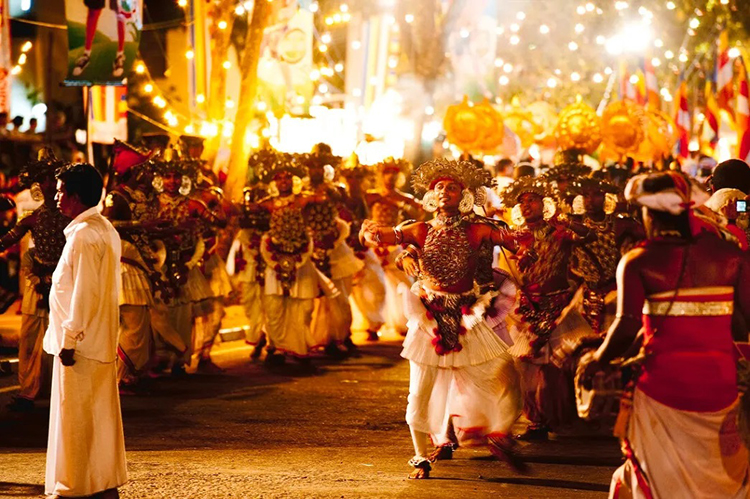
The annual Colombo Navam Maha Perahera, along with an exhibition of sacred relics brought from India, will be held at Gangaramaya Vihara in Hunupitiya, featuring a series of religious observances, according to Most Venerable Dr. Kirinde Assaji Thera.
Addressing a media briefing on Friday, the Venerable Thera said the Perahera will take place on January 31 and February 1, commencing at 7.30 p.m. and concluding before 10.00 p.m., after parading through the streets of Colombo.
He said specially decorated floats have been prepared to depict key historical events, enabling foreign visitors to better understand Sri Lanka’s cultural and religious heritage. The floats will portray significant moments such as the arrival of Arahat Mahinda, the bringing of the Sri Maha Bodhi, and the arrival of the Sacred Tooth Relic, and will be performed by leading local artistes.
The procession is expected to feature around 8,000 dancers and elephants, representing a wide range of traditional dance forms.
The exhibition of sacred relics from the Devnimodara Shrine in India will be held at Gangaramaya Vihara from February 4 to 11. The Venerable Thera urged devotees to visit the temple dressed in white and to refrain from bringing valuables or large items of luggage. He added that necessary facilities have been arranged to accommodate the large number of devotees expected.
Meanwhile, Minister of Buddhasasana, Religious and Cultural Affairs Dr. Hiniduma Sunil Senevi said a mobile application will be introduced to inform devotees of the approximate date and time allocated for venerating the Sarvagna Dhathu, in a bid to manage crowds more efficiently.
Senior DIG in charge of Colombo G. Nishantha de Zoysa said a special security plan has been implemented with the assistance of the tri-forces, in accordance with instructions from the Ministry of Public Security and the Inspector General of Police. He added that a comprehensive traffic management plan, including alternative routes, has been prepared, and that detailed police announcements will be issued shortly. The Senior DIG also advised the public not to carry large luggage, jewellery, mobile phones, or other valuables when visiting the exhibition.

Navy intercepts 02 narcotics-laden trawlers with 11 suspects in southern seas

U19 World Cup: Japan defeat Tanzania by nine wickets

U19 World Cup: Ambrish’s four-fer powers India to third straight win

Josh Hoey breaks world 800m short track record with 1:42.50 in Boston

Trump threatens Canada with 100% tariffs if it ‘makes a deal with China’

Showers will occur at times in the Northern, North-central, Eastern and Uva provinces and in Matale and Nuwara-Eliya districts

‘Dates have the highest sugar content to fight Coronavirus’

Sunday Island 27 December – Headlines

#SundayIsland 17th December – Headlines

Sunday Island – 28th March

Sunday Island Headlines – 21 March

Sunday Island – 21st February – Headlines
-

 Features6 days ago
Extended mind thesis:A Buddhist perspective
-

 Opinion5 days ago
American rulers’ hatred for Venezuela and its leaders
-

 Business3 days ago
CORALL Conservation Trust Fund – a historic first for SL
-
 Opinion3 days ago
Remembering Cedric, who helped neutralise LTTE terrorism
-

 Opinion2 days ago
A puppet show?
-
 Opinion5 days ago
History of St. Sebastian’s National Shrine Kandana
-

 Business9 hours ago
ComBank advances ForwardTogether agenda with event on sustainable business transformation
-
 Features4 days ago
The middle-class money trap: Why looking rich keeps Sri Lankans poor