
News
An October Surprise

By Gwynne Dyer
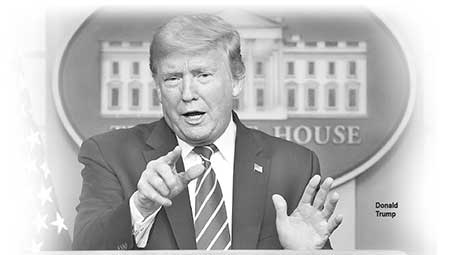
An ‘October Surprise’ in the United States is now almost inevitable, because that will be Donald Trump’s last chance to get re-elected legitimately. He might try to cling to office even if he loses the vote, but it would be a lot easier and neater if he actually won a majority in the Electoral College on 3 November.
‘October Surprise’ is the American political term for a fake crisis, usually involving foreigners, that is ‘discovered’ by a president trailing badly in the polls in the last few weeks before an election. All other issues are forgotten, Americans rally around the flag, and the incumbent wins on a surge of patriotism. Or that’s the theory, at least.
The same thing happens elsewhere too, of course, and not necessarily in October. That’s when it needs to happen in to win a US presidential election, but there’s a ‘July Surprise’ happening in Belarus right now (because the election there is set for 9 August).
Last week Alexander Lukashenko, the strongman who rules Belarus, ‘discovered’ Russian mercenaries in his country. They were unarmed and on their way to Istanbul, but Lukashenko says there is a plot: “So far there is no open warfare, no shooting, the trigger has not yet been pulled, but an attempt to organise a massacre in the centre of Minsk is already obvious.” Only I can save our country! Vote for me!
Trump will need something like that because otherwise the coronavirus is going to kill him politically. This was not true as recently as early June, because up until then the United States was not performing especially badly in dealing with the pandemic.
It LOOKED a lot worse because of Trump’s bizarre behaviour – the endless, shameless lies, the narcissism, the suggestions that people should inject bleach, etc. – but in terms of Covid-19 deaths per million people the American fatality rate was still lower than any other major Western countries except Germany and Canada.
The United States was late to go into lockdown, but so were they all, at least compared to most Asian countries. Until recently, if you were a Trump supporter, you could still believe he was doing a good job.
It was Trump’s rush to end the lockdown, not all the earlier nonsense, that did the real damage. He believed that he would lose the election if the economy didn’t revive, but by opening up too fast he managed to revive the pandemic at the same time.
The numbers tell the tale. This week America will record its 160,000th death from Covid-19. That’s almost a quarter of all the coronavirus deaths in the world. Much worse, US deaths are still going up while deaths elsewhere in the developed world have fallen steeply. That’s almost entirely due to Trump.
Take Canada, for example. It’s very similar to the US in economy and demography, but different in social and political terms. Canada has universal health care and a much less drastic divide between the rich and the rest, for example, which probably explains why America’s cumulative death rate per million is 484, while Canada’s is only 237.
The history is therefore an American death rate twice as high as Canada’s: not great, but structurally inevitable. By now, however, Canada has managed to get its deaths down to 10 a day, whereas America is back up around a 1,000 a day.
Even allowing for Canada’s much smaller population, that is 10 times worse. This is what coming out of lockdown too early did to the United States, and it is all down to Donald Trump.
The pandemic is raging again in the United States, and there may be a quarter-million deaths there by election day in November. US ‘deaths per million’ are going up three per day, which means that the US will overtake Chile (now 509) in less than two weeks, Italy (582) in a month, Spain (609) in five weeks. It might even catch up with the UK (682) by election day.
Most of those newly dead Americans will be over 60, so probably Trump supporters. Their relatives and friends are bound to notice eventually. Joe Biden’s lead over Donald Trump in the polls has already widened to 10%. How could Trump turn that around in the remaining 90 S days?
His only hope is to manufacture an October Surprise: a restaged ‘Tonkin Gulf Incident’ with China, perhaps, or a terrorist ‘threat’ so humongous that it gives him a pretext to declare martial law nationwide. Or maybe he will arrange the premature certification of a Covid-19 vaccine so he can roll it out just before the vote. If it kills a lot of people later on, who cares? He won.
Trump knows that if he loses the election he will spend the rest of his life in court, possibly even in jail. He will do whatever it takes to win. It isn’t over yet.

News
Establishment of National Trade Negotiation Committee (NTFC) and Trade Policy Consultation Committee.

Approval has been granted at the cabinet meeting held on 24-08-2026 to implement the recommendations submitted by the committee appointed to review Sri Lanka’s current Free Trade Agreements and future course of Free Trade Agreements in Sri Lanka.
Taking into account these recommendations, it has been
recognized the necessity of establishing a National Trade Negotiation Committee and Trade Policy Consultation Committee enabling Sri Lanka to follow a more targeted, sequential, and evidence-based approach in conducting negotiations for Sri Lanka’s future Free Trade Agreements and to ensure a sustainable and meaningful stakeholder consultation process.
The Cabinet of Ministers has approved the resolution furnished by the Minister of Trade, Commercial, Food Security, and Cooperative Development to act as follows.
• Establishment of a National Trade Negotiation Committee to guide trade discussions conducted with potential bilateral or regional trade partners
• Appointment of the Secretary to the Ministry of Trade, Commerce, Food Security, and Cooperative Development as the Chairman of the National Trade Negotiation Committee and
the Chief National Trade Negotiator.
• Establishment of 12 subject specific sub- committees with the required technical working groups under the National Trade Negotiation Committee
• Appointment of Trade Policy Consultative Committee comprising of trade experts, researchers engaged in research relevant to trade field, business community, unions, civil societies and relevant public officers to instruct the National Trade Negotiation Committee on active and technical sectors, to submit the policy recommendations to the Cabinet of Ministers regarding the matters relevant to the trade agreements, to inquire sustainable ideas regarding the Free Trade Agreements, and to ensure the communication mechanism.
• The Minister in charge of the Subject international trade and the Minister in charge of the subject of Industry to serve as Co-Chairpersons of the Trade Policy Advisory Committee.
By Saman Indrajith
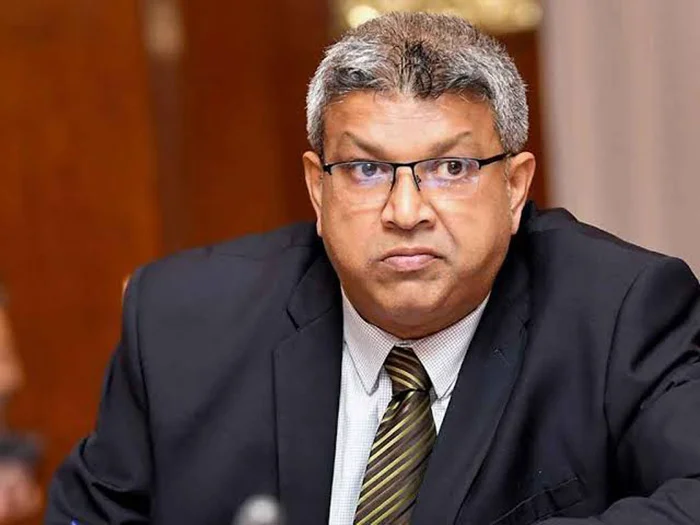
Justice Minister Harshana Nanayakkara yesterday told Parliament that the Commonwealth Lawyers’ Association (CLA) was not an organisation officially recognised or registered under the Commonwealth Secretariat, but a fee-levying private association.
Responding to a question by Opposition and SJB Leader Sajith Premadasa on why he had failed to meet CLA representatives, who recently visited Sri Lanka, Nanayakkara said he had offered them a date and time for a meeting, but they had been unable to attend.
The Commonwealth Lawyers Association (CLA) has questioned procedural fairness and other matters of concern in a report that deals with the Supreme Court hearing petitions against the 22nd Amendment to the Constitution. Among the issues raised by CLA President Steven Thiru, is the composition of the five-member bench.
The Minister said the CLA representatives subsequently requested another date, but he had already scheduled official engagements for the proposed day.
Nanayakkara said it was, therefore, incorrect to claim that he had refused to meet the CLA delegation.
“The CLA is not an official body accepted or admitted into the Commonwealth of countries. It is a private club whose members pay fees for membership,” he said.
However, the Minister said he was not suggesting that the organisation was “a bad organisation”, adding that the accuracy of several statements made by CLA members during their visit to Sri Lanka had yet to be established.
Nanayakkara identified lawyer Upul Jayasuriya as the CLA’s local representative and said Jayasuriya had sought a meeting with him.
“I gave him the opportunity, but he came up with the excuse that he could not make it as he was not in Colombo. Therefore, it is wrong to state that I did not give them time,” the Minister said.
By Shamindra Ferdinando
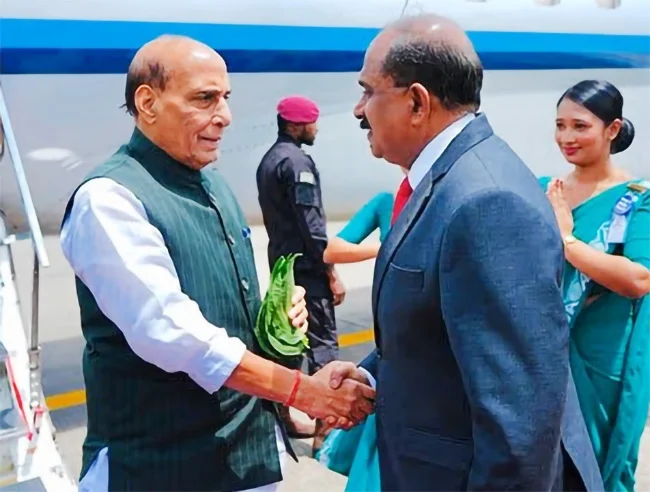
Indian Defence Minister Rajnath Singh is in Colombo on a three-day official visit, the first by an Indian Defence Minister since the 1988 visit by K.C. Pant, during Rajiv Gandhi’s tenure as the Prime Minister.
The Indian Defence Ministry declared that the visit would further strengthen the traditionally strong and friendly bilateral relations in mutually beneficial areas, including a strong maritime and defence partnership.
The visit takes place in the wake of Sri Lanka and India signing seven MoUs, including one on defence, in April 2025. Communist Party General Secretary Dr. G. Weerasinghe told The Island that the government should set the record straight regarding the rapidly developing military relations with the US and India. The acquisition of Colombo Dockyard Ltd., by Indian Defence Ministry-run Mazagon Dock Shipbuilders Limited, soon after the finalisation of MoUs, underscored New Delhi’s strategy, Dr. Weerasinghe said. Responding to another query, Dr. Weerasinghe said that the government should take this opportunity to discuss the Tamil Nadu fishing fleet poaching on Sri Lankan waters.
Pant visited during the Indian Army operations against the Liberation Tigers of Tamil Eelam (LTTE) in the Northern and Eastern Provinces here, while Pranab Mukherjee visited Colombo, in August 2005, to pay last respects to assassinated Foreign Minister Lakshman Kadirgamar.
Indian and Sri Lanka governments said that the visit was meant to strengthen cooperation between the two neighbouring countries in the fields of defence, economic engagement, maritime affairs and regional security.
An Indian warship arrived at the Colombo harbour ahead of the Defence Minister’s visit, reminiscent of old gunboat diplomacy. INS Udayagiri’s visit coincided with the Defence Minister’s visit. The Defence Minister’s delegation included senior officials from Ministry of External Affairs.
During the visit, the Indian Defence Minister is scheduled to hold high-level discussions with President Anura Kumara Dissanayake who also holds the Defence portfolio, Prime Minister Dr. Harini Amarasuriya and Defence Secretary Sampath Thuyacontha. He is also expected to meet members of the Indian community, residing in Colombo.
Dr. Weerasinghe said that the NPP government conveniently extended the moratorium on foreign research vessels imposed during Ranil Wickremesinghe’s tenure in 2024. The CP official said that the media alleged that that decision was taken at the behest of the US and India but nearly two years after the last presidential election the ban remains.

Avindu makes history with first World University gold for Sri Lanka

Establishment of National Trade Negotiation Committee (NTFC) and Trade Policy Consultation Committee.

Showers will occur in the Western and Sabaragamuwa provinces and in Galle and Matara districts

Justice Minister hits back at CLA

First visit by an Indian Defence Minister since IPKF deployment

“I’m not a war criminal, I fought for my country”: Shavendra Silva

‘Dates have the highest sugar content to fight Coronavirus’

Sunday Island 27 December – Headlines

#SundayIsland 17th December – Headlines

Sunday Island – 28th March

Sunday Island Headlines – 21 March

Sunday Island – 21st February – Headlines
-

 News6 days ago
Denied of promotion to SC despite vacancies, justice Gurusinghe retires
-

 News6 days ago
22A: SC urged to suspend hearing, appoint full bench
-

 News4 days ago
Namal remanded until Sept. 18 over Airbus deal investigation
-

 Latest News3 days ago
Tharanga creates history with Diamond League crown in Brussels
-
 News6 days ago
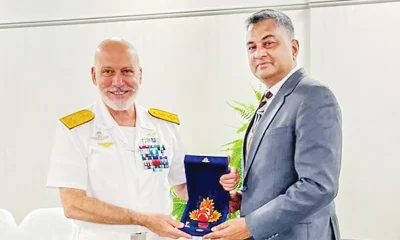
Govt. seeks NATO assistance
-

 Editorial6 days ago
Strange arithmetic goes unchallenged
-

 News3 days ago
Dispute which triggered listed company director being detained at BIA resolved
-

 Features2 days ago
After the parade: What a traffic OIC’s walk-out tells us