
Sports
An indicator of the lay of the land and a boost for South Africa, the country


There is no better time to be a women’s cricketer. There’s more playing opportunities and professionalism than ever before; more money, more interest and more attention on the game than at any time in its history and naturally, more at stake.
The T20 World Cup is among the game’s biggest prizes, and this one, the first since a packed MCG told us women’s cricket was hitting all the right notes, is particularly significant. A pandemic has come and (almost) gone since that memorable day and the women’s game suffered disproportionately because of it. FICA’s Women’s Global Employment Report noted that as tours and fixtures were cancelled over the next 18 months, only five countries – Australia, England, India, New Zealand and South Africa – maintained their pre-pandemic playing days while the rest of the ODI nations’ matches halved. In essence, this is the dividing line that defines the next phase of the professionalism of the women’s game: who gets ahead and who gets left behind. This World Cup will serve as an indicator for the lay of the land.
But it is also – and you wouldn’t ordinarily say this about a World Cup – a shop window of sorts. The WPL auction will take place on day four of the tournament, after nine of the 10 teams (Ireland are the exception) will have played their opening matches. The performances in that first round could change the lives of players who end up securing big-money deals and the WPL as a whole is likely to change the landscape of the women’s game and perhaps, even reduce the gaps in the international game which stem from differences in infrastructure and investment.
The best and the rest
As far as this World Cup goes, there’s a clear front-runner: Australia. It could turn out that the real competition will take place between England, India, New Zealand, South Africa, West Indies, Bangladesh, Pakistan, Sri Lanka and Ireland to decide who will lose to Australia in the final rather than a competition for the trophy itself. That’s not to put a damper on things but we have to be realistic and acknowledge how far ahead of the pack Australia are. FICA called them the “global leader in the women’s game,” as they’ve been to six of the seven T20 World Cup finals, won five, and they have only been beaten twice (once in a Super Over) between their 2020 T20 World Cup win and the start of this tournament.
But there is one thing that may prove challenging for the defending champions. Australia have never played a T20I in South Africa and have only toured the country for one white-ball tour – the 2005 Women’s World Cup – and yes, they won that too. That competition was held upcountry while this one will be played in the Western and Eastern Cape, venues that are completely foreign to Australia. They came in expecting pace and bounce and have been surprised by the slow nature of the coastal wickets including the tired Newlands surface where they beat India in their first warm-up match on Monday.
Australia and India are the only two teams to have been given a practice match at a World Cup venue, and it was on Australia’s request – because they play no group matches at Newlands and expect to make the semi-finals, which will both be played there – and have been given some opportunity to get to grips with the surfaces. They may not be entirely to Australia’s liking, which could tilt the balance, but probably only slightly.
As for the challengers, India, buoyed by their Under-19 Women’s T20 World Cup win and the WPL on the horizon, and England, ranked second, are the obvious candidates but don’t count out at least two others. New Zealand were the only team to beat Australia in a regular T20I in the last three years and have a good mix of youth and experience. South Africa, apart from being the hosts, are two-time semi-finalists and believe this to be their full circle moment. Their coach Hilton Moreeng is in his 10th, and likely last, year in charge and has overseen their full transition: from amateur to professional to pushing for major tournaments, and deserves a crowning moment send-off. The Dané van Niekerk saga aside, South Africa have a strong outfit with several match-winners, who will want to make the most of their opportunity to do something special in their backyard.
This time for (South) Africa
Upto the point that Shakira sang those words to open the 2010 Football World Cup, South Africa was considered a premier destination for major sporting, and especially cricketing, events. It had hosted the 2003 Cricket World Cup, the 2007 T20 World Cup, the 2009 Champions Trophy and the IPL that year. Since then, South Africa has fallen away sharply as ageing infrastructure and high-level corruption have left the country on the brink of being labelled dysfunctional. There have been rolling electricity blackouts every day since Christmas 2022 and for a record number of days last year. The World Bank ranks it as the most economically unequal country on earth and Forbes magazine has rated South Africa as the most dangerous place for female travellers. Yet, here we are.
This year, South Africa has launched its own franchise T20 league, played host to the inaugural Under-19 Women’s T20 World Cup, it’s about to host the senior Women’s T20 World Cup, and will host the Netball World Cup in the winter. The costs of keeping the lights have all been borne by the tournament organisers, with the ICC funding the generators that will be used at Newlands, Boland Park and St. George’s Park over the next two weeks. The country’s premier sports broadcaster, SuperSport, who still largely hire women in a decorative rather than substantive role, have changed their tagline to “Here for Her” in a bid to show their support for women’s sport. They broadcast more of it than ever before and given their presence on the continent as a whole, that means women’s sport is getting extensive exposure and it also affords the opportunity for South Africa to celebrate women.
It is also a chance to enjoy South Africa’s stadia, which, as Eoin Morgan told ESPNcricinfo while playing for Paarl Royals at SA20, still carry a certain charm because of the grass embankments. While grounds in other parts of the world are entirely built up, Newlands, Boland Park and St. George’s Park all retain an informal atmosphere, where picnic blankets can be laid down, umbrellas and gazebos put up and a proper party had. And there’s every chance of that happening. The Women’s T20 World Cup comes in the midst of a summer where locals have regained their love of cricket (thanks, in no small part, to that SA20) and are filling stands with a fervour not seen before. Ticket sales are said to be progressing steadily and decent crowds are expected throughout with the municipalities in Cape Town, Paarl and Gqeberha also doing promotional work.
The City of Cape Town – the municipality of the city – has taken ownership of the bulk of the marketing and on Saturday held a beachfront event, with all 10 teams present, to launch the tournament. Each captain was gifted an individual and locally significant trinket. Heather Knight got a doek (an African head scarf) and was shown how to tie it, Hayley Matthews was given a skirt, Laura Delaney got a beaded necklace and Harmanpreet Kaur, an apron, although it’s understood she does not cook. Well meaning as the City was, their item of choice for the South African captain was, let’s say, hopefully ironic rather than symbolic. Sune Luus was given a wooden spoon (and fork).
Still, there’s no better time to be a women’s cricketer, Luus confirmed at the captain’s press conference, especially a cricketer leading her team in a home World Cup.
(Cricinfo)

by Rex Clementine
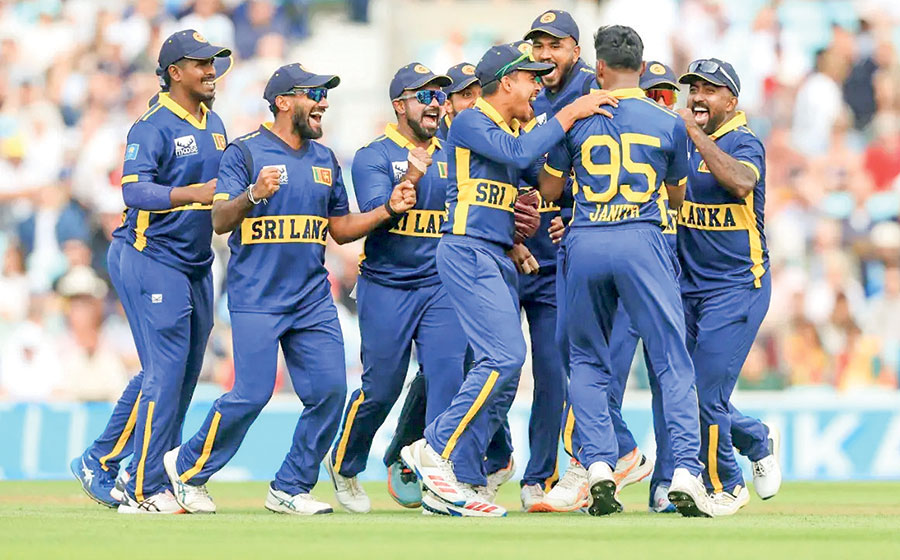
The national cricket team is bracing for a major shake up, with several new faces set to be drafted into the national set up as officials begin plotting a course towards next year’s World Cup.
The national team has endured a wretched two months across all three formats and several prominent players are now in the firing line ahead of the tour of Pakistan, one of the longest assignments undertaken by a Sri Lankan side in recent memory.
The Pakistan tour will stretch across 46 days, with Sri Lanka playing three T20Is, a tri-nation ODI series involving England, followed by two Test matches.
Two former captains, in particular, are under the pump.
Former white ball skipper Wanindu Hasaranga has been left out of the T20I squad and is unlikely to be considered for the ODIs either, with concerns over his attitude understood to have ruffled feathers within the hierarchy.
Hasaranga was sent home midway through the recent tour of England after an unusual sequence of events. It is understood that the leg-spinner had gone to watch a football match and on his return, complained of back pain that ruled him out of the opening ODI. SLC subsequently decided to send him home. Although the injury was considered only a minor niggle, the selectors now appear ready to draw a line in the sand by overlooking him for the Pakistan games.
Test captain Dhananjaya de Silva is also on shaky ground. He is expected to lose the captaincy and could even struggle to retain his place in the playing XI. Kusal Mendis, who leads Sri Lanka in limited-overs cricket, is expected to take over the Test reins on an interim basis.
The Cricket Transformation Committee is also looking at clipping the wings of players who spend considerable time on the franchise circuit. One proposal would restrict a player to two overseas franchise tournaments, while players could also be required to leave their franchise commitments and report to Colombo at least a week before Sri Lanka embark on an international assignment.
The arrival of several players in England directly from franchise commitments in the Caribbean is understood to have gone down badly in some quarters.
With the old guard under scrutiny, opportunity is knocking for several youngsters who have put their hands up in domestic cricket. A number of them are expected to be blooded during the Pakistan tour as Sri Lanka begin building towards next year’s World Cup.
The winds of change are not confined to the dressing room either.
Moves are also under way to overhaul the administration of Sri Lanka Cricket. The Cricket Transformation Committee is understood to be unimpressed with the returns delivered by some of the board’s highest paid executives but has little room to manoeuvre until their contracts expire. The absence of exit clauses in some of those agreements has proved a costly administrative blunder.
Meanwhile, the proposed new constitution for SLC is gathering momentum, with its architects hoping to transform the governing body into a more professional organisation in keeping with some of the leading cricket boards around the world.
Similar reforms were proposed in 2015 when Sidath Wettimuny headed an interim administration with the backing of then Sports Minister Navin Dissanayake. A new constitution was drafted by respected legal scholar Prasanna Jayawardena, but the government of the day showed little appetite to push the reforms through and eventually handed the reins back to elected officials.
Had those reforms been implemented in 2015, SLC might have emerged as a far more robust institution. Instead, elected administrations continued to call the shots, too often with little long term vision or pragmatism.
Public criticism over the manner in which SLC has been administered has mounted over the years, leaving the government with something approaching Hobson’s choice. It eventually decided to take the bull by the horns despite the risk of suspension by the global governing body in Dubai.
In a shrewd move, the government brought respected former players Sidath Wettimuny, Roshan Mahanama and Kumar Sangakkara into the committee overseeing cricket affairs during the transition, lending considerable credibility to the reform process.
The new constitution is expected to be in place by the end of the year, although legal challenges appear inevitable.
As The Sunday Island has previously reported, several leading lawyers were beneficiaries of the previous SLC administration’s willingness to spend record sums on legal fees. With another battle looming, it would hardly raise eyebrows if some of the same legal eagles were soon singing for their supper again.

by Reemus Fernando
Sri Lanka’s track and field team may have failed to match the medal haul of the previous edition at the Asian Games, but athletes from the 24-member squad finished among the top eight in at least seven events, a feat few countries managed. Those performances did not receive the recognition they deserved, as the spotlight fell on Rumesh Tharanga’s historic javelin gold.
At the 2023 edition in China, Sri Lanka won one gold, one silver and two bronze medals. This time, the team won only one gold.
Thanks to Tharanga’s victory, Sri Lanka finished 13th in the medal table. China dominated with 39 medals, including 17 golds. Hosts Japan were second with 32 medals (10 golds), followed by Bahrain (9), Thailand (3) and Uzbekistan (3) in third, fourth and fifth places respectively, each winning more than one gold.
Neighbours India, sixth with one gold, nine silvers and 14 bronzes, were the only other South Asian country besides Sri Lanka to win a track and field medal at this edition.
Every Sri Lankan athlete who competed in Japan has a remarkable story. Persevering in a sport that offers so few rewards is itself worth celebrating.
Take Dilhani Lekamge, who won silver in 2023. As highlighted in these columns last week, her perseverance deserves recognition. Some of her teammates were toddlers, or not yet born, when Lekamge took up javelin as a schoolgirl. At 39, she placed fifth with a throw of 59.27m, a distance that would have earned at least a bronze at three of the past six editions. Sumedha Ranasinghe, the country’s first Olympic thrower, could not produce his best, yet still finished sixth with a throw of 78.08m.
Tharanga explained on his return that Sri Lanka’s hurdlers felt the barriers coming at them closer than usual on the faster track, which left them short of their personal bests. Even so, Ayomal Akalanka finished fifth in the 400m hurdles final in 49.37s, the second-fastest time by a Sri Lankan in history. Akalanka has produced personal bests at crucial overseas meets since his youth and junior years, and his coach Anura Bandara, no stranger to coaching Asian Games medallists, had hoped for something special in Japan. “There was a slight problem with his hamstring over the ninth hurdle in the heats. If not for that injury, he would have done better and secured a good lane in the final,” Bandara told The Sunday Island on their return.
As the brightest hurdles prospect to emerge from the junior structure, Akalanka has many years ahead of him and should be earmarked for sustained investment.
The women’s 4x400m relay team included two members of the bronze-winning quartet from the last edition, Nadeesha Ramanayake and Lakshima Mendis. Ramanayake and Tharushi Karunaratne, who won a historic 800m gold in 2023, were in superb form then, and their contributions were key to the relay podium finish. Tharushi was absent this time, as her performances had begun to fade after she moved to the USA for training and studies. Ramanayake and Mendis were joined by Araliya Sathsarani and Jithma Wijeythunga, and the team placed seventh in the final (3:34.90), the third-fastest time in the country’s history.
Veteran sprinter Kalinga Kumarage reached the final and clocked 46.31 seconds.
The men’s 4x100m relay team (seventh in the final) and triple jumper Madushani Herath (eighth) were the other top-eight finishers.

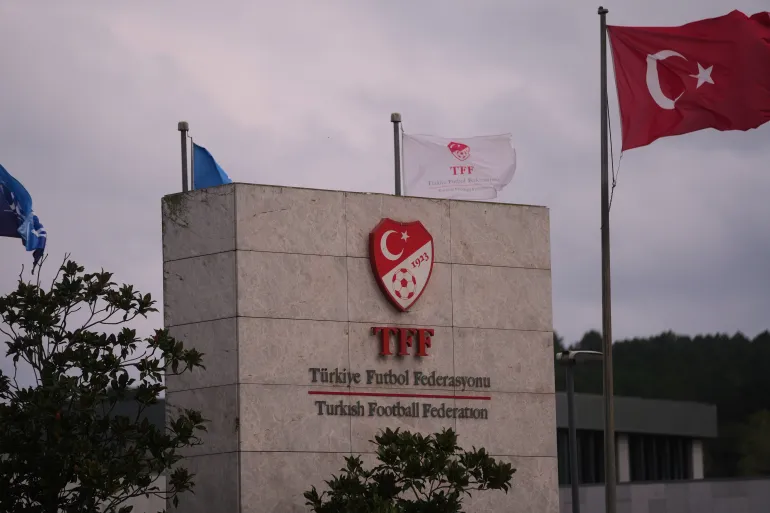
The head of Turkiye’s football refereeing body and four other officials have been placed in pretrial detention by a court as part of a corruption investigation, the state news agency Anadolu reports.
Ferhat Gundogdu, head of the Central Referees Committee, and six others appeared before a judge over allegations of manipulation of the referee administration process, Anadolu said on Saturday.
They appeared on Friday before a judge at Istanbul’s Caglayan courthouse on several charges, including forgery of official documents, breach of trust and illegal acquisition of personal data, the report said.
The judge remanded five people in custody and granted the other two conditional release, Anadolu said.
It was the latest scandal to shake football in Turkiye, coming exactly a year after the Turkish Football Federation (TFF) suspended 149 referees on charges of illegal betting.
On Thursday night, police from the illegal betting and sports crime unit also detained Yasin Kol, a referee from Turkiye’s top-flight Super Lig, as well as an assistant referee, media reports said.
Justice Minister Akin Gurlek said prosecutors are examining claims about “interference in the processes of referee classification, assignments, scoring and appointments as well as the exams on rules”.
During raids on Tuesday, police searched the VAR room at TFF’s headquarters in Istanbul. Observers said the investigation was likely linked to last year’s betting scandal and would have implications for the federation.
“It does seem to be a continuation of 2025, and it looks like it will continue further,” sports journalist Ayhan Sensoy told the AFP news agency.
Sensoy, who wrote a 2024 book on the issue called The Gambling Pit, said it was unlikely that federation bosses “have any chance of staying in office”.
So far, the TFF has not directly addressed the arrests as its top officials are due to fly home on Saturday after attending Friday night’s Belgium-Turkiye UEFA Nations League clash in Liege, which Turkiye lost 3-0.
[Aljazeera]

From stability to transformation: What Sri Lanka’s industrial policy experience teaches us

In love with linen: Minha Akram’s creative journey

What lies behind our waters?

THE SLFUW CELEBRATES 85th ANNIVERSARY

Oshini and Yenuthi excel as SL women strike Chess Olympiad gold

The first woman in the foreign service or Ceylon Overseas Service it was then called

‘Dates have the highest sugar content to fight Coronavirus’

Sunday Island 27 December – Headlines

#SundayIsland 17th December – Headlines

Sunday Island – 28th March

Sunday Island Headlines – 21 March

Sunday Island – 21st February – Headlines
-

 News6 days ago
Police remove Thileepan statue in Jaffna
-

 Features6 days ago
The 22nd Amendment, constitutional recovery and illiberal slippage
-

 Features6 days ago
Of foreigners as CEOs of Lankan ventures
-

 Latest News4 days ago
Gold winner Tharanga gets brand-new Honda Vezel from SLAAJ
-

 News6 days ago
Sajith rejects Jt. Opp. protest sabotage claim; SJB TU chief demands remedial action
-

 Features4 days ago
Why Sri Lanka needs an Inclusive Civic Nationalism – urgently
-

 Features5 days ago
Thailand’s biggest new global star …
-

 News3 days ago
US-assisted ‘Ice’ detection: NPC to examine IGP’s move to transfer drug-busting team