
Sports
An approach to improve school athletes’ present and future performance

by Nagalingam Ethirveerasingam. Ph.D.
Increasing Opportunities for Competition
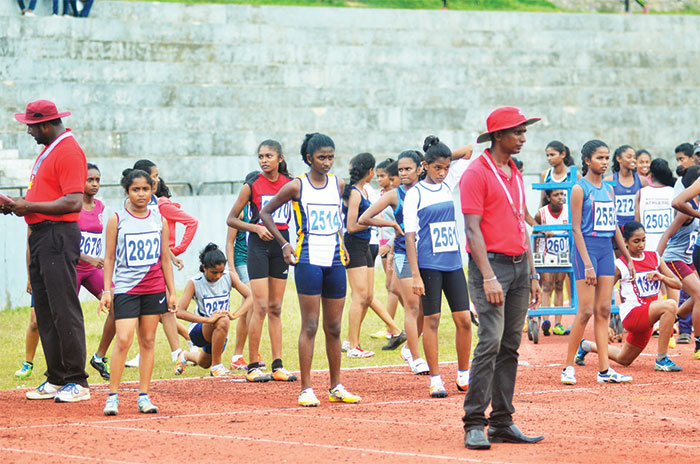
Athletes in schools and those out-of-school do not currently have enough opportunities to participate in competitions. Scheduling competitions between schools within districts, and between districts for those who are out-of-school, will provide athletes with more opportunities to develop their skills and achieve a higher standard of performance. Factors that may present an obstacle to competitions include: 1) cost of ground preparation; 2) availability of qualified officials to conduct weekly dual athletic/sports meets between schools within the Education Zones; 3) lack of space for a 400m or 200m track in many schools; and 4) tradition requires the expensive practice of awarding certificates and trophies/medals in a formal presentation soon after the competition.
Many students now compete in the Inter-House athletic meets during the first term. Potential future athletes are identified at this time. The first three in an event compete in the Zonal or District meet. The first three from those meets are selected to compete in the Provincial school meet and those who place in the first three move on to compete in the National School Meet. Such an arrangement gives only one chance for an athlete to compete at the next level. The athlete who fails at the Inter-House meet or at any of the next levels has to wait another year to demonstrate his talent.
The National and the Public Schools athletic meets are conducted during the Second and Third Term. In effect a school athlete will at most have only three or four athletic meets a year. In the 1940’s and 1950’s I had only 4 meets per year. Those were: the Inter-House, the Jaffna School Sports Association meet, the Junior National meet, and the Open National meet.
In contrast school athletes in California (USA), then and now, have track meets between schools every week from February to April each year. That is about 12 meets during their track season. During the off-season they engage in conditioning and strengthening activities.
All schools in Sri Lanka have the traditional yearly Inter-House sports meet. Students engage in erecting and decorating sheds for their houses. It is a fun-filled school function where teachers and students interact outside the classroom. It includes the awarding of medals and certificates for winners and a lot of long speeches by dignitaries. Students get the experience oforganising an event and executing it by cooperating with fellow students and teachers.
Such a large-scale event and festive atmosphere is not needed for‘Dual Meets’ between schools. In secondary schools two school teams can compete, the results of the events are recorded, announced, and published. There is no need for speeches, certificates, medals, or trophies. The important thing is for the student to test his skills in competition with others of his age.
A New Approach
It is important for schools in the provinces to prepare Dual/Triangular athletic meet schedules for all schools including 1AB schools in their province at least twoyears in advance. The provinces should also prepare such a sports schedule for schools in other sports within their province. Any sports schedule prepared by the National Associations in sports such as cricket, athletics, or football should be in consultation with the Provincial Departments of Education and the schools. Provincial Departments of Education should ensure that the schedule of travel outside their provinces for sports events by school teams is structured in such a way to ensure that student class attendance is maximised and that classroom learning is not negatively affected.
Advent of Professionalism in sports
Since the time professional sportspersons were permitted to compete in the Olympic Games, athletes of national and international standard have been paid to take part and compete for prize money in their sports. The term “amateur” was dropped from international and national organizations names. The Sri Lanka Amateur Athletic Association, for example, was renamed Sri Lanka Athletics.
Athletes can now also receive sponsorship from shoe, clothing, or equipment manufacturers.
Although athletes in school are not currently permitted to lend their names to sporting goods and apparel manufacturers, the school/team can receive such sponsorship in the form of equipment and uniforms or monetary compensation. Schools also are able to garner funds by allowing businesses to advertise their products or services on the school grounds for a recurrent fee. Such income supplements the meagre allocation for sports from the Ministry of Education.
Athletes over 18 do not earn any income unless they are performing at national level. Many national level athletes in Sri Lanka can join the Sri Lanka Army, Air Force, or Police teams and get paid a monthly stipend of approximately Rs. 30,000. The only requirement is that the athlete regularly trains three to four hours per day and competes for them. The Sri Lanka Athletic Association provides similar monetary grants for selected national level athletes who are not paid by the armed forces. The three organisations depend on government funding for such programs. Some organisations in the business sector also sponsor athletes with varied requirements.
Promotion of Athletics at District Level
To promote District Athletics, it is important for District Athletic Associations to be funded by the government or the private sector. They could sponsor the first two athletes, in each event, who have potential to achieve national standing but do not have any sponsorship or other means of support. Payment of a monthly living allowance for the first two performers in each event in the district, similar to what the Army and Air Force pays the athletes who are enrolled with them, will help the district athlete to continue to develop their skills. This will allow the district level athlete to practice three to four hours a day and also attend job oriented tertiary courses. Such practice will ensure more opportunities for district level athletes to achieve National, South Asian, and Asian level standards. In exceptional cases the athlete may also be able to attain Olympic standards. It will also give opportunities for district level athletic coaches, who should also receive a stipend, to improve their coaching skills. An additional benefit is that the number of athletic officials will increase and they will acquire higher levels of organisational and officiating skills.
Promotion of Athletics at School Level
Since 2017, those who are not successful at the GCE O/L at age 16 and are thus not able to enter Grade 12, are required to continue in the Vocational Technical Program in 1AB schools. That is, a student who fails GCE O/L cannot dropout or be ‘Pushed Out’ at age 16. In effect education is compulsory for all until they are 19 years old. The above requirement was a recommendation made by the 2014 Northern Education System Review (NESR) and was adopted by the Northern Provincial Council. It was also adopted by the National Education Commission as a National Education Policy and accepted by the National Institute of Education (NIE). All athletes can now stay in school until they are 19 and benefit from continuing education while developing their skills in their respective sports. The NIE has prepared an excellent Vocational Technical Education Program for such students enrolled in Grade 12 and 13. Some 1AB schools have already adopted it. Others should do so in the near future. School age sportspersons can now continue their sports activities, even if they fail GCE O/L, and acquire skills to make them more employable.
School sports and athletic competitions are the responsibility of the Assistant Director of Education in the Provincial Department of Education. The Sri Lanka Athletic Association and the National Olympic Committee have no direct responsibility. However, they can provide advice, guidance, and distribute the funding that they receive from their respective international organisations such as the IAAF and International Olympic Committee.
(The writer Nagalingam Ethirveerasingam represented Sri Lanka at the 1952 and 1956 Olympic Games and is the first Sri Lankan to win an Asian Games gold)


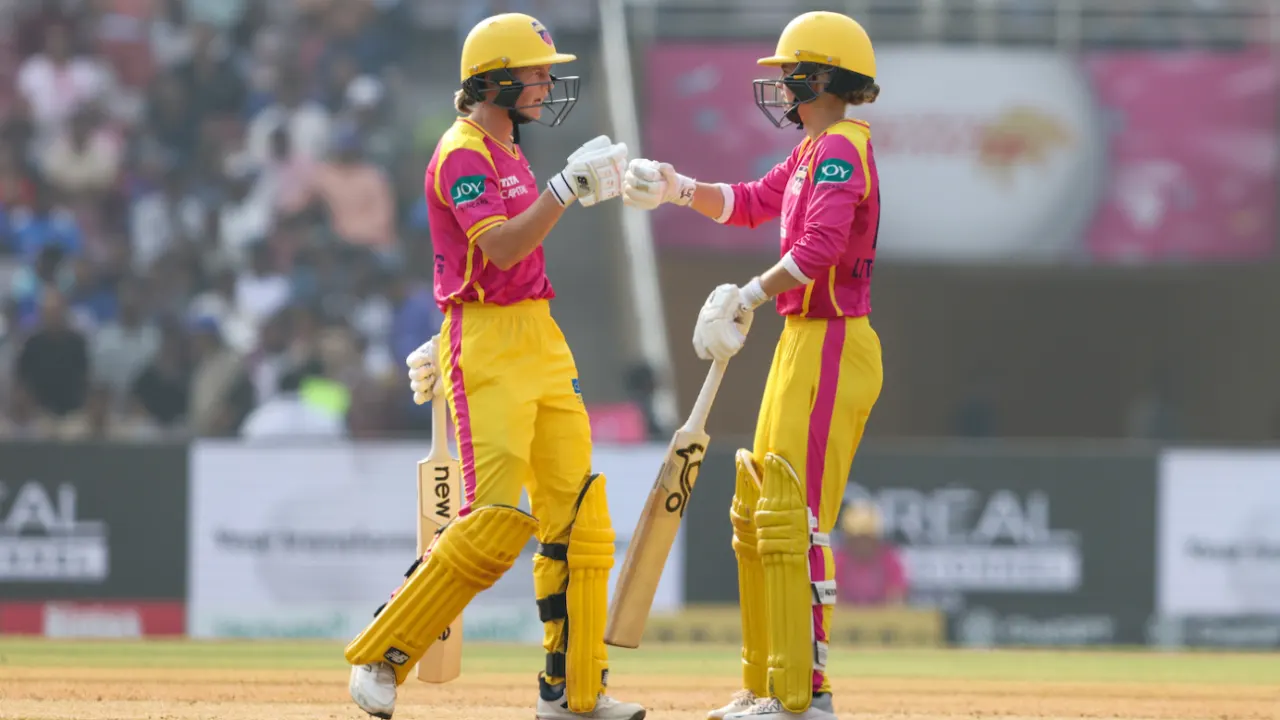
A 119-run partnership between MegLanning and Phoebe Litchfield set up a second successive win for UP Warriorz (UPW) against Mumbai Indians (MI) as they continued their bounceback after starting the season with a hat-trick of defeats.
Put in to bat, Lanning and Litchfield hit fifties before MI managed to restrict them to 187 for 8. However, a rejigged batting line-up faltered in the chase as the defending champions succumbed to their third defeat of the season in their last game in Navi Mumbai. UPW became just the second team to do the league double over MI in the WPL, after Delhi Capitals last year, also led by Lanning.
Nicola Carey, opening the bowling with Shabnim Ismail rested, continued her great form in WPL 2026 as she cleaned up Kiran Navgire for a golden duck with an inswinging yorker that beat the batter all ends up. But Lanning ensured a good powerplay for UPW.
After Litchfield picked up her first boundary courtesy an inside edge through backward square, Lanning got going with a pick-up flick off Carey that went all the way as 12 runs came off the third over. She then swept Nat Sciver-Brunt through square leg before picking up two more boundaries off Carey.
When Hayley Matthews was introduced in the sixth over, Litchfield first drove her through cover before Lanning hit back-to-back boundaries to take UPW to 56 for 1 at the end of the powerplay.
After a quiet eighth over bowled by Amelia Kerr, Litchfield was on 18 off 16 and needing to pick up the tempo. Next over, she square drove Amanjot Kaur for four before skipping down the track to loft her over long-off.
Lanning reached her half-century off 35 balls in the next over, hammering Kerr over long-off to get there. Litchfield, who Kerr had dismissed eight times in T20s, also lofted her over her head for a boundary as the two Australians started to pick up the pace. A quiet over followed, courtesy Sciver-Brunt, which also saw Triveni Vasisht drop Litchfield, but Litchfield and Lannning both picked up a boundary each off Sanskriti Gupta.
In a two-over period of frenzy that followed, UPW racked up 34 runs but lost both their set batters. Litchfield first just beat Carey running to her left at deep midwicket as she swept Amanjot for six and then brought up a 33-ball half-century with a cover drive. When Amanjot went short, Litchfield pulled her for another boundary through midwicket. She then chipped one to cover, where she was given another life, this time by Harmanpreet Kaur. Litchfield picked up another six off long-off to make it a 20-run over before a pick-up flick found deep backward square, where Sanskriti held on this time.
Lanning didn’t want to release any pressure and took on Matthews next over, putting away a couple of short balls for back-to-back fours. She swept the spinner for another boundary before picking out deep square leg to finish on 70 off 45.
After a period of 12 balls without a boundary after Lanning’s departure, Chloe Tryon launched a six over long-off. Tryon and Harleen Deol kept the boundaries coming as they picked up 23 runs off the next two overs.
But, MI’s star overseas allrounders then dampened the finish for UPW. First, Sciver-Brunt started the 19th over with back-to-back wickets. Tryon sliced a full toss to cover, where Harmanpreet made amends by holding on to the catch before Shweta Sehrawat was caught behind first ball. She got a thin edge that popped up off G Kamalini’s gloves but she did well to grab it in the second attempt.
Deol hit another boundary before missing a legbreak from Kerr in the final over to be out stumped. Kerr then also had Sophie Ecclestone stumped and Deepti Sharma caught behind to give away only two runs in the final over and restrict UPW to 187 for 8.
MI came into the game with the second worst average for the opening partnership and the worst run rate. On Saturday, they tried their fourth different combination of the season, with Sajeevan Sajana partnering Matthews. Matthews started well, with a three boundaries through the off side off Kranti Gaud and Shikha Pandey.
Sajana got into the action in the third over, pulling Gaud for six over midwicket before getting an outside edge for four. But, Gaud came back strong by trapping her in front to give UPW the first breakthrough.
Ecclestone then nearly had Matthews lbw, choosing not to review after the batter missed a sweep, even though it looked close. But it didn’t matter as Matthews chipped the next ball back to Ecclestone, who went on to bowl a wicket maiden.
Sciver-Brunt then got a couple of boundaries off Gaud and Harmanpreet was crafty in gliding one between backward point and short third off Ecclestone, but they only managed 38 runs in the first six, continuing their trend of slow starts.
Sciver-Brunt, who was looking in great touch, hit Pandey straight to Lanning at cover in the first over after the powerplay as MI’s job got harder. Then Deepti, who bowled a quiet first over, had Carey miscuing one down the ground and Deol took a good catch running back from mid-on.
Harmanpreet, who was struggling to get going, pulled Tryon for a six over midwicket but fell in the same over trying the same shot. Having lost half their side and needing to score at over 13 runs an over, it was effectively game over for MI.
Kerr and Amanjot tried to mount a comeback, with an 83-run stand that saw the latter hammer three sixes, but they could not keep up with the asking rate. Amanjot offered a return catch to Pandey in the penultimate over and MI ended up 22 runs short.
Brief scores:
UP Warriorz Women 187 for 8 in 20 overs (Meg Lanning 70, Phoebe Litchfield 61, Harlene Deol 25, Chloe Tryon 21; Nicola Carey 1-38, Amelia Kerr 3-28, Nat Sciver-Brunt 2-22, Hayley Maththews 1-40, Amanjot Kaur 1-38) beat Mumbai Indians Women 165 for 6 in 20 overs (Hayley Maththews 13, Sajeevan Sajana 10, Nat Sciver Brunt 15, Harmanpreet Kaur 18, Amelia Kerr 49*, Amanjot Kaur 41; Kranti Gaud 1-38, Shikha Pandey 2-30, Sophie Ecclestone 1-33, Deepti Sharma 1-35, Chloe Tryon 1-18) by 22 runs
[Cricinfo]
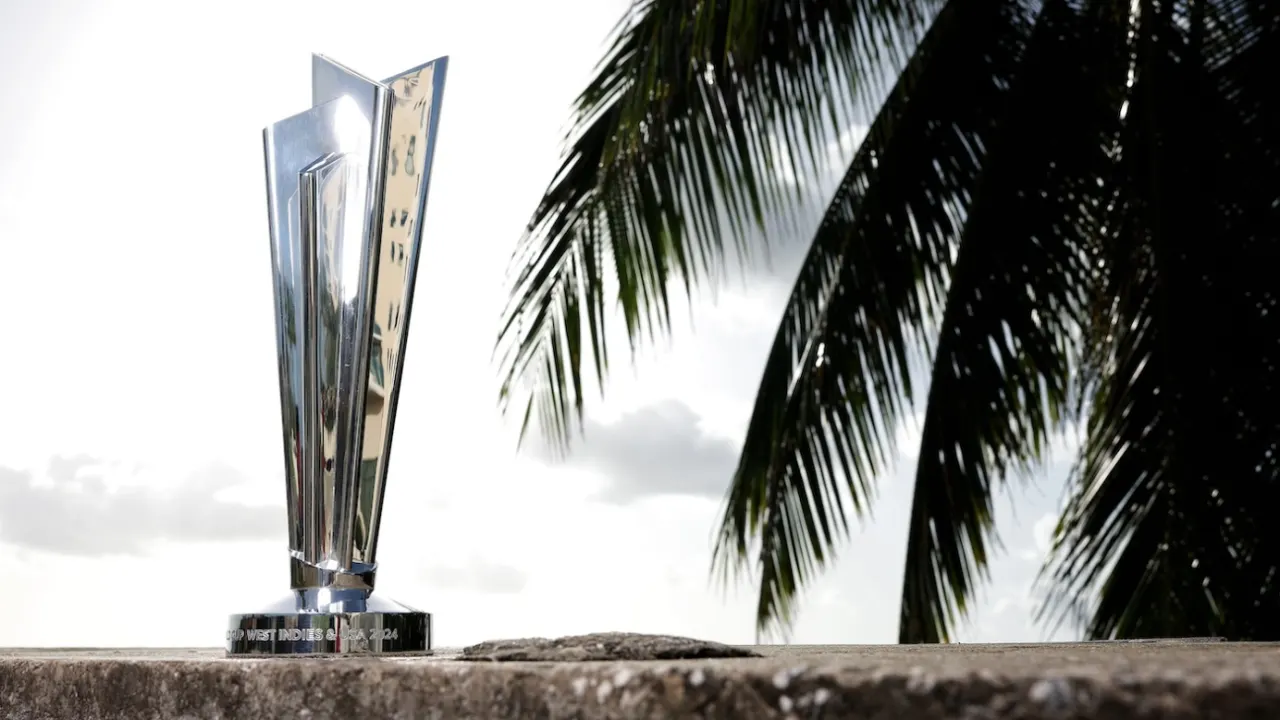
The ICC has decided to send officials to Dhaka this weekend to meet the BCB’s top brass in a bid to resolve the impasse over Bangladesh travelling to India for the T20 World Cup that starts in three weeks.
The ICC’s team is expected to provide the BCB with security details including an independent assessment as part of the discussions. The development comes days after the BCB reiterated its stance of not sending Bangladesh to play in co-hosts India’s venues owing to “security concerns.” So far meetings and discussions have taken place via video conference; this will be the first time the two parties will meet in person.
During the January 13 virtual meeting, the BCB asked the ICC to move Bangladesh, who are placed in Group C, outside India. However, the ICC said it would not tweak the original schedule, with the tournament start date – February 7 – less than a month away. Bangladesh are scheduled to play on that opening day, against West Indies, in Kolkata.
With relations between India and Bangladesh tense in recent times, the BCB sent a letter to ICC on January 4 stating it would not be safe for Bangladesh to travel to India for the World Cup where its four group matches are scheduled. That was in response to the BCCI “authorising” Kolkata Knight Riders to release Bangladesh left arm fast bowler Mustafizur Rahman. No specific reason was given for that decision.
A Risk Assessment report for the World Cup, compiled by an independent security agency, and accessed by ESPNcricinfo, says the threat to teams playing in India is in the moderate-high band but there is “no information to indicate a direct threat against participating teams.”
The ICC shared that security assessment report with the BCB in their last call, which indicated no specific or heightened threat to the Bangladesh cricket team in India. The assessment was shared with the BCB’s security team and concluded there was no overall threat to the side, but pointed to low to moderate risks in some venues and low to nil in others – standard ICC categorisations around the world that do not ordinarily constitute sufficient reason to move games.
[Cricinfo]
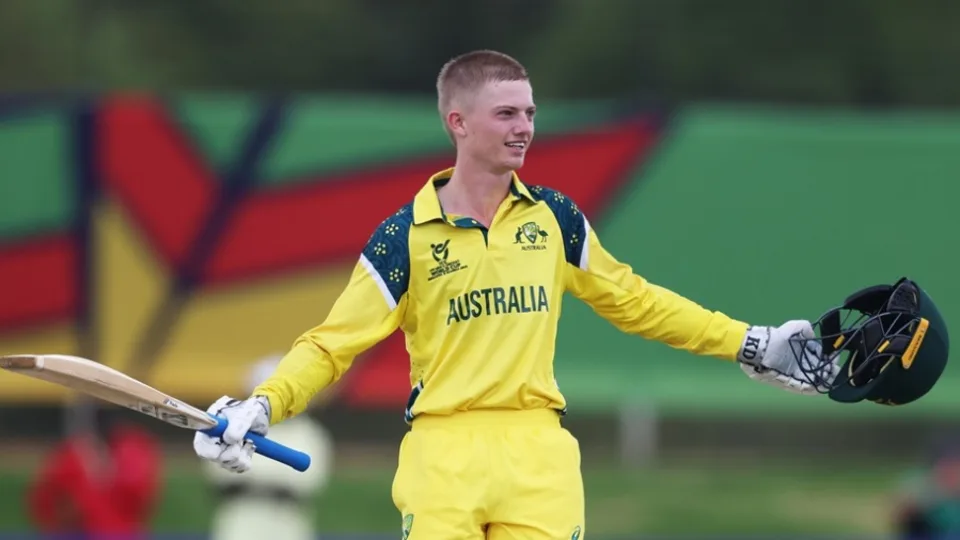
Steven Hogan’s century, which included a 186-run stand with Nitesh Samuel, helped Australia brush aside Ireland for an eight wicket win in Windhoek.
After being put in to bat, Ireland openers James West and Freddie Ogillby were off to a slow start, before John James struck to remove West for 11. Sebastian Dijkstra was the next one to go, with Charles Lachmund pinning him in front in the 18th over. That brought Rob O’Brien to the crease, who then slowly rebuilt the innings in Ogilby’s company to put up a 43-run stand.
Offspinner Will Malajczuk, however, denied Ogilby his half-century, having him caught behind for 49 in the 29th over. O’Brien continued to build steadily and found the boundaries occasionally, before departing for a 98-ball 79 in the 49th over, helping push Ireland’s total to 235.
Australia got off to a strong start in the chase, with Malajczuk hitting a four and six in the first over. After he fell in the third over, Samuel and Hogan continued to build towards the target, scoring their half-centuries off 62 balls and 50 balls respectively. Their 100-run stand came up in the 21st over, and Hogan continued to find boundaries, bringing up his ton off 97 balls in the 32nd over.
Medium-pacer Luke Murray provided the breakthrough in the 36th over, having Hogan caught behind for 115. In his 111-ball stay, Hogan hit 11 fours and a six. By then, Australia needed only another 20 runs to win. Ollie Peake then joined Samuel, who finished unbeaten on 77, and together they completed the chase with 62 balls remaining to get Australia off to a rollicking start.
Brief scores:
Australia Under 19s 237 for 2 in 37.2 overs (Steven Hogan 115, Nitesh Samuel 77*; Luke Murray 1-46) beat Ireland Under 19s 235 for 7 in 50 overs (Freddie Ogilby 49, Rob O’Brien 79; Charles Lachmund 3-41) by eight wickets
[Cricinfo]

Floods kill more than 100 across southern Africa as rains intensify

Lanning, Litchfield and Pandey help UP Warriorz do the double over Mumbai Indians

Ugandan leader to extend 40-year rule after being declared winner of contested poll

Iran supreme leader blames US for deadly protests

Trump names Tony Blair, Jared Kushner to Gaza ‘Board of Peace’

The Government is taking steps to regulate early childhood education to ensure quality education while enhancing the professionalism of preschool teachers. — PM

‘Dates have the highest sugar content to fight Coronavirus’

Sunday Island 27 December – Headlines

#SundayIsland 17th December – Headlines

Sunday Island – 28th March

Sunday Island Headlines – 21 March

Sunday Island – 21st February – Headlines
-

 Business3 days ago
Koaloo.Fi and Stredge forge strategic partnership to offer businesses sustainable supply chain solutions
-

 Business7 days ago
Dialog and UnionPay International Join Forces to Elevate Sri Lanka’s Digital Payment Landscape
-
 News20 hours ago
UNDP’s assessment confirms widespread economic fallout from Cyclone Ditwah
-

 Editorial20 hours ago
Crime and cops
-

 Editorial2 days ago
The Chakka Clash
-
 News7 days ago
Sajith: Ashoka Chakra replaces Dharmachakra in Buddhism textbook
-

 Features7 days ago
The Paradox of Trump Power: Contested Authoritarian at Home, Uncontested Bully Abroad
-

 Features7 days ago
Subject:Whatever happened to (my) three million dollars?