
News
Amnesty opposes authorisation of military to use force

Anti-govt. protests:
The Sri Lankan authorities must not impose a blanket order authorising use of force during the State of Emergency that has been announced and refrain from the use of armed forces to control public protests, the Amnesty International said in response to the new order empowering armed forces to maintain law and order in Colombo.
“The recent escalation of the authorities’ response to protests by calling in the armed forces, firing at protestors and excessive use of tear gas which resulted in the death of one person yesterday is deeply worrying,” said Yamini Mishra, Amnesty International’s South Asia Regional Director.
On the morning of 13 July 2022, thousands of protestors started making their way towards the Prime Minister’s office and the Parliament in Colombo. After an angry face-off, protesters breached the gates and took over the Prime Minister’s office. Amnesty International staff present at the protest location confirmed that law enforcement officers fired volleys of teargas against people, including children and journalists some of whom were seen escaping the plumes while coughing and sputtering. Dozens of protesters were injured, and one was reported dead. At Galle Face, helicopters flew low overhead, where a rolling peaceful protest site had been established three months ago in the prolonged agitation over the economic crisis in the country. At another protest near the Parliament later the same day, more than 80 people were reported to be injured and admitted to hospital.
At 3pm the Prime Minister Ranil Wickremesinghe delivered a televised address in which he said he had ordered the military to “do whatever is necessary to restore order”. On 14 July 2022, a press release was issued by the Army announcing a warning that they will use force to restore law and order in the country.
Any blanket order authorising use of force by armed forces is problematic even during times of emergency. The armed forces should not be involved in the policing of public assemblies, since they are trained to fight against enemies and not to protect and control civilians.
Amnesty calls upon law enforcement agencies to act with restraint to avoid further serious injury and loss of life. They may only use the minimum level of force necessary force to bring a situation under control where doing so is strictly necessary and proportionate. Even in instances where some parts of a protests turn violent, law enforcement must assess the situation on a case-by-case basis with use of force only where absolutely necessary and only against those engaged in violence. It must be strictly proportionate to the situation faced by law enforcement, which means authorities must not cause more harm than they seek to avert.
“At a time when the country is facing a dire economic crisis and protests are growing in scale, authorities must make comprehensive efforts to de-escalate the situation and focus resources on ensuring people can access essential goods and services, in line with international human rights law and standards,” said Yamini Mishra.

Latest News
PM departs Sri Lanka to participate in the 56th World Economic Forum Annual Meeting in Davos-Klosters, Switzerland.

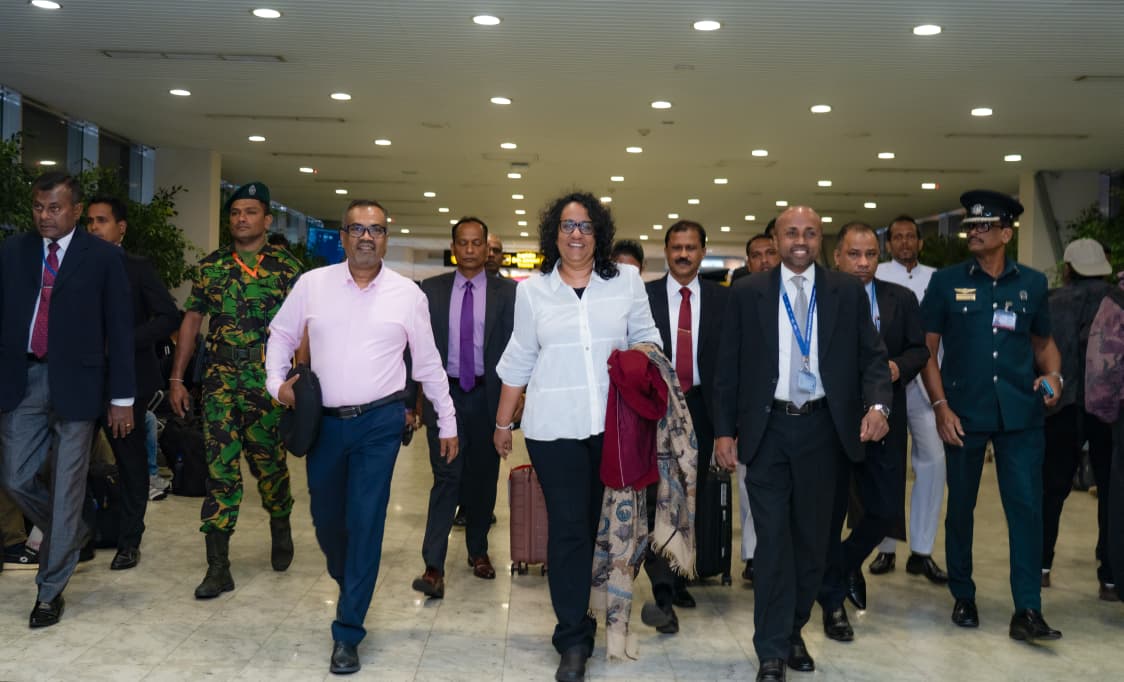
Prime Minister Dr. Harini Amarasuriya departed Sri Lanka on this morning (19 January) to participate in the 56th Annual Meeting of the World Economic Forum (WEF), to be held in Davos-Klosters, Switzerland, from 19 to 23 January 2026.
The World Economic Forum 2026 will be convened under the theme “A Spirit of Dialogue” and will bring together over 3,000 global leaders, including heads of state, government leaders, chief executive officers of leading multinational corporations, policymakers, and technology innovators.
During the visit, the Prime Minister is scheduled to hold a series of high-level bilateral meetings with key international leaders, heads of global institutions, and other distinguished dignitaries.
(Prime Minister’s Media Division)
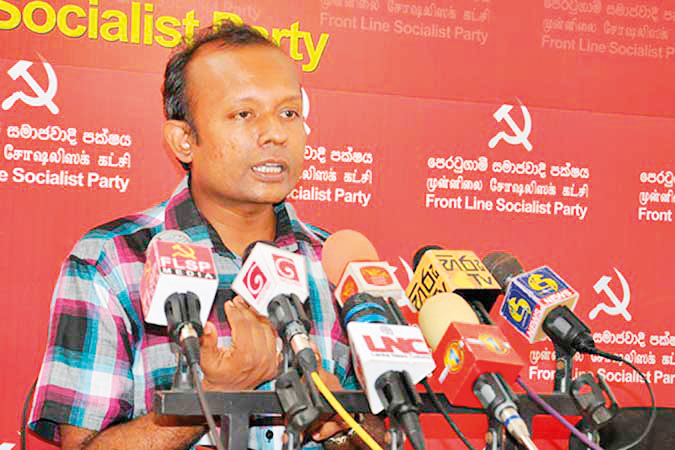
The government is under mounting pressure to release a foreign laboratory report on the controversial coal consignment imported for the Lakvijaya Power Plant, with the Frontline Socialist Party (FSP) accusing the authorities of political interference and tender manipulation.
Speaking to the media after a party meeting in Homagama yesterday, FSP Education Secretary Pubudu Jagoda demanded an immediate explanation for the delay in disclosing the report from a Dutch laboratory, Cotecna, which was commissioned to test samples of the coal stocks in question after doubts were raised about an earlier local laboratory assessment. Jagoda said Cabinet media spokesperson Dr. Nalinda Jayatissa had announced that the report would be submitted by 16 January, but it had yet to be made public.
“The Sri Lankan lab confirmed the coal was substandard and could damage both the environment and power plant machinery. The foreign lab has independently verified the same results, we are told. Yet, political pressure appears to be delaying the release of the report.” He warned that any attempt to issue a false report would eventually be exposed and urged the government and the laboratory to maintain transparency.
SLPP MP D.V. Chanaka told Parliament last week that while 107 metric tonnes of coal were normally required per hour to generate 300 megawatts, but as many as 120 tonnes of newly imported coal were needed to produce the same amount of power due to its lower calorific value. Tests showed the first two shipments had calorific values of 5,600–5,800 kcal/kg, below the required minimum of 5,900 kcal/kg, said.
Jagoda accused the government of tailoring procurement rules to benefit an Indian supplier, citing a drastic reduction in reserve requirements—from one million metric tonnes in 2021 to just 100,000 tonnes in 2025—and alleged previous irregularities by the company, including a 2016 Auditor General finding regarding a rice supply contract and the 2019 suspension of a key agent of the company by the International Cricket Council over match-fixing.
He further criticised systemic manipulation of the coal tender process, including delays in issuing the tender from the usual February-March window to July, and progressively shortening the submission period from six weeks to three, giving an advantage to suppliers with stock on hand.
The Ministry of Energy recently issued an amended tender for 4.5 million metric tonnes of coal for the 2025/26 and 2026/27 periods, following the cancellation of an earlier tender. Jagoda warned that procurement delays and irregularities could trigger coal shortages, higher spot-market purchases, increased electricity costs, and potential power cuts if hydropower falls short.
Jagoda called for urgent investigations into the procurement process, insisting that any mismanagement or corruption should not be passed on to the public.Denying any wrongdoing, the government has said it is waiting for the lab report.
by Saman Indrajith ✍️
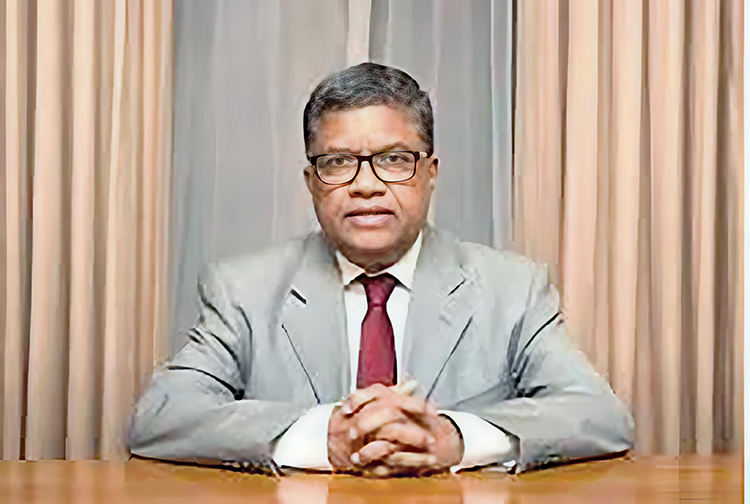
The Communist Party of Sri Lanka yesterday (18) alleged that the US was terrorising countries with unfair tariffs to compel them to align with its bigot policies.
CPSL General Secretary Dr. G. Weerasinghe said so responding to The Island query regarding European countries being threatened with fresh tariffs over their opposition to proposed US take-over of autonomous Danish territory Greenland.
US President Donald Trump has declared a 10% tariff on goods from Denmark, Norway, Sweden, France, Germany, the UK, the Netherlands and Finland with effect from 1 February but could later rise to 25% – and would last until a deal was reached. Targeted countries have condemned the US move.
Dr. Weerasinghe pointed out that none of the above-mentioned countries found fault with the US imposing taxes on countries doing trade with Russia and Iran. Now that they, too, had been targeted with similar US tactics, the CP official said, underscoring the pivotal importance of the world taking a stand against Trump’s behaviour.
Referring to the coverage of the Greenland developments, Dr. Weerasinghe said that news agencies quoted UK Prime Minister Keir Starmer as having said that the move was “completely wrong”, while French President Emmanuel Macron called it “unacceptable.
Dr. Weerasinghe said that Sri Lanka, still struggling to cope up with the post-Aragalaya economic crisis was also the target of discriminating US tariff policy. The top CPSL spokesman said that the recent US declaration of an immediate 25% increase in tariff on imports from countries doing business with Iran revealed the prejudiced nature of the US strategy. “Iran is one of our trading partners as well as the US. Threat of US tariffs on smaller countries is nothing but terrorism,” Dr. Weerasinghe said, stressing the urgent need for the issue at hand to be taken up at the UN.
Responding to another query, Dr. Weerasinghe cited the US targeting India over the latter’s trade with Russia as a case in point. He was commenting on the recent reports on India’s Reliance Industries and state-owned refiners sharply cutting crude oil imports from Russia. The CPSL official said that the EU wouldn’t have even bothered to examine the legitimacy of US tariff action if they hadn’t been targeted by the same action.
Perhaps, those who now complain of US threats over the dispute regarding Greenland’s future owed the world an explanation, Dr. Weerasinghe said. The reportage of the abduction of Venezuela’s President and the first lady underscored that the US intervened because it couldn’t bear the Maduro administration doing trade with China and other countries considered hostile to them, Dr. Weerasinghe said.
The CPSL official said that the NPP couldn’t turn a blind eye to what was happening. Just praising the US wouldn’t do Sri Lanka any good, he said, adding that the Greenland development underscored that the US under Trump was not concerned about the well-being of any other country but pursued an utterly one-sided strategy.
The US dealings with the NPP government, particularly the defence MoU should be examined taking into consideration US tariffs imposed on Sri Lanka at the onset of the second Trump administration and ongoing talks with the US, Dr. Weerasinghe.
By Shamindra Ferdinando ✍️

PM departs Sri Lanka to participate in the 56th World Economic Forum Annual Meeting in Davos-Klosters, Switzerland.

Several killed in Kabul blast, Afghan Interior Ministry says

Senegal beat hosts Morocco to win AFCON 2025 after farcical walk-off

At least six killed in Pakistan as fire rips through Karachi shopping mall

Chile declares ‘state of catastrophe’ as deadly wildfires menace cities

At least 21 killed in Spain after crash involving high-speed trains

‘Dates have the highest sugar content to fight Coronavirus’

Sunday Island 27 December – Headlines

#SundayIsland 17th December – Headlines

Sunday Island – 28th March

Sunday Island Headlines – 21 March

Sunday Island – 21st February – Headlines
-

 Editorial2 days ago
Illusory rule of law
-
 News3 days ago
UNDP’s assessment confirms widespread economic fallout from Cyclone Ditwah
-

 Business5 days ago
Koaloo.Fi and Stredge forge strategic partnership to offer businesses sustainable supply chain solutions
-
 Editorial3 days ago
Crime and cops
-
 Features2 days ago
Daydreams on a winter’s day
-

 Editorial4 days ago
The Chakka Clash
-
 Features2 days ago
Surprise move of both the Minister and myself from Agriculture to Education
-
 Features2 days ago
The Story of Furniture in Sri Lanka