
Editorial
‘American tax, Somalian life’


Wednesday 27th December, 2023
Perhaps, nothing represents Sri Lankans’ resentment towards the new tax regime and the aggravation of their economic woes better than the title of today’s comment; it is a literal translation of a slogan written on the rear of a tuk-tuk. It however is relevant only to the ordinary people who pay very high taxes but lead a hand-to-mouth existence. For the wealthy, it is ‘Somalian tax, American life’.
Low as the opinion the public has of the three-wheeler fraternity may be, some trishaw bumper stickers are aphoristic gems effectively conveying very powerful messages. Yesterday’s commemoration of the victims of the 2004 tsunami reminded us of another trishaw slogan, which is ideal for a campaign for ethnic reconciliation—Sinhale, Demale, Marakkale, tsunami wele ekama wale, which roughly rendered into English means that the people belonging to the Sinhala, Tamil and Muslim communities were buried together in mass graves in the aftermath of the 2004 tsunami.
Taxes are a necessary evil, and nobody likes them anywhere in the world. But unlike in the countries where the benefits of taxation accrue to the public in the form of social welfare, education, healthcare, infrastructural development, etc., Sri Lankans have had to pay more taxes in return for very little. This situation has come about due to waste, rampant corruption and the allocation of colossal amounts of public money to enable politicians to live high on the hog.
Even former President Gotabaya Rajapaksa, on whose watch the economy went into a tailspin due to his blunders, which were legion, is maintained with public funds although he ran away, unable to clean up the economic mess he and his Viyathmaga brigade, as it were, created. The members of political families live the life of Riley without any legitimate sources of income; they are obviously doing so at the expense of the taxpaying public.
There is no gainsaying that a state cannot survive without tax revenue. Successive governments chose to ignore dire warnings issued by Sri Lankan economists, who questioned politicians’ wisdom of adopting populist policies and seeking short-term stability at the expense of long-term growth. Calls for increasing state revenue gradually to meet high expenditure went unheeded. Worse, the Gotabaya Rajapaksa government slashed taxes for political expediency, causing a sharp drop in state revenue, and the country is now paying for such short-sighted, harebrained economic policies.
The same government under a new President has moved to the other extreme; it has increased taxes exponentially. If taxes had been fixed at affordable levels and efficiently collected, there would not have arisen any need to overtax the public to the extent of reducing many people to penury and exacerbating the human capital flight.
History is replete with instances of unconscionably high taxes igniting social unrest and serving as a catalyst for rebellions and revolutions. The French Revolution of 1789 stands as a glaring example. In ancient Rome, under Emperor Vespasian, exorbitant taxation was introduced to finance lavish construction projects and military campaigns. Heavy levies, especially on provinces and the lower classes, triggered conflicts like the Jewish-Roman Wars and the Batavian revolt. In 1381, the English Peasants’ Revolt broke out due to the imposition of poll taxes by King Richard II.
The American colonies’ resistance to British taxation, inter alia, led to the American Revolution. The Stamp Act, Tea Act, etc., imposed by the British Parliament created widespread discontent, leading to the call for independence. During the past few years, public protests have erupted in France, Lebanon, Spain, Argentina, Chile and Ecuador against tax and tariff hikes among other things. Sri Lanka has been no exception.
Thus, it may be seen that when oppressive new taxes are imposed or the existing taxes are jacked up unreasonably, they spark social unrest that often lead to the destabilistaion of countries.
The least that the Rajapaksa-Wickremesinghe regime can do to prevent another popular uprising is to eliminate waste, streamline tax collection and prevent corruption in the revenue-generating agencies so that it will be able to increase state revenue without squeezing the public dry. The general consensus is that if the Customs, the Motor Traffic Department, Inland Revenue, Telecommunications Regulatory Authority, etc., are rid of corruption, there will be a steep rise in state revenue overnight. Corrupt deals that government politicians and officials cut with impunity have also taken their toll on the state coffers.
It has now been revealed that public money to the tune of billions of rupees was paid for fake pharmaceuticals procured by the Health Ministry. A shady renewable energy deal is to be struck with a foreign company at the expense of the Sri Lankan public. Sugar tax scams, and corruption and waste at the Ceylon Electricity Board and the Ceylon Petroleum Corporation have also adversely impacted state revenue.
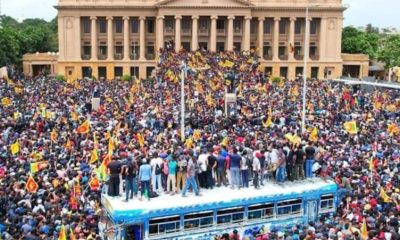
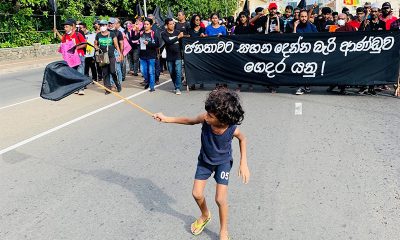
Having crushed Aragalaya, the government seems to be overconfident that it will be able to bulldoze its way through. The ongoing police operations against the underworld may also be a dry run of a crackdown to be launched in case of the eruption of another popular uprising owing to the people’s economic difficulties which are expected to take a turn for the worse next year. But there is no defence whatsoever against People Power. The government had better stop testing the people’s patience, which is wearing thin.








Tuesday 17th March, 2026
US President Donald Trump and Israeli Prime Minister Benjamin Netanyahu prematurely claimed victory in their war on Iran immediately after killing Ayatollah Ali Khamenei and inflicting heavy damage on the Iranian military bases and economic nerve centres. Trump even snubbed UK Prime Minister Keir Starmer, when the latter decided to send a warship to the Gulf region belatedly; he said the US and Israel had already won the war and therefore he did not need British help. But Trump is now asking other countries to send their warships to ensure the safety of the commercial vessels sailing through the Strait of Hormuz, which Iran has closed and is using as an effective strategic lever to mount economic pressure on the US and its allies.
Trump keeps on contradicting himself. He has asked for ships from other countries while claiming that Iran has been ‘beheaded’. When Iran threatened to close the Hormuz Strait, Trump said he would deploy the US warships there. Iran has since attacked 16 or 18 ships in that strait. Trump now says, “Hopefully China, France, Japan, South Korea, the UK, and others that are affected by this artificial constraint will send ships to the area so that the Hormuz Strait will no longer be a threat by a nation that has been totally decapitated.” It was reported at the time of writing, that Trump had demanded help from all NATO allies to reopen the Strait of Hormuz. If Iran has been ‘decapitated’ as Trump claims, why can’t the US deploy its own warships to ensure the safety of vessels passing through the Hormuz Strait?
The response of the US allies to Trump’s request has been muted. China has reportedly rejected his call out of hand, saying the Strait of Hormuz is part of Iranian territory and Iran’s sovereignty must be respected. Why the other countries are wary of deploying their warships in a war the US and Israel have started is understandable. They know how dangerous naval incursions into Iran’s sea will be, with the war having taken an unexpected and unpredictable turn. Iran has unveiled new missile capabilities; it is now firing hypersonic missiles at Israel.
Washington has failed to live up to the expectations of its allies in the Persian Gulf. They expected the US to protect them against Iranian attacks. But they now have Iranian drones and missiles raining down on them, destroying their oil storage facilities and critical infrastructure. The US has sought assistance even from Ukraine, which has been dependent on Washington to fight Russia: it needs Ukrainian help to counter Iranian drone attacks on its allies in the region. This points to a serious military miscalculation the US and Israel have made. Shouldn’t they have done a proper assessment of Iran’s drone capability before going to war? They have spent billions of dollars to defend themselves against low-cost yet extremely destructive Iranian drones. Have Trump and Netanyahu bitten off more than they can chew in their war on Iran?
Trump, who once claimed that he deserved the Nobel Peace Prize more than anyone else, has plunged the entire world into chaos. Economies are groaning under soaring oil prices and global uncertainty. Economists have warned that at this rate the world may have a global recession to contend with sooner than expected. If the Iran conflict intensifies and/or drags on, the day may not be far off when economic hardships drive people to riot in many countries. Most of all, Trump’s military adventurism has severely damaged the foundation of the Washington-led global order, as it were. Iran is reportedly planning to allow passage for a limited number of tankers through the Strait of Hormuz on the strict condition that the cargo is traded in Chinese yuan and not US dollars. This strategy is aimed at not only circumventing US sanctions but also giving a boost to the de-dollarization campaign. The ongoing war has also made the US swallow its pride and do an about-turn on its sanctions on Russian oil.
In a dramatic turn of events, Trump has gone on record as saying that Washington is talking to Iran, but Tehran is not yet ready to make a deal to end the war. Iran has made it clear that it will not end the war on Washington’s terms. Iran’s President Masoud Pezeshkian has stated conditions for ending the ongoing conflict. He demands acceptance of Iran’s rights, reparations, and international guarantees against future aggression.
Had Trump acted wisely, weighing all possible military and economic ramifications of his military campaign and refrained from letting the genie out of the bottle in the Middle East, he would not have had to seek others’ help to force it back in. One can only hope that the other world powers will learn from the unfolding conflict, realise the need to act with restraint and strive to resolve the worsening Middle East conflict soon.
Monday 16th March, 2026
The JVP-NPP government has finally brought itself to swallow its pride and introduce the QR-based fuel rationing system to face the current global oil crisis. It is notoriously slow on the draw and arrogantly dismissive of sound counsel. About three and a half months ago, its delayed response stood in the way of effective disaster management in the immediate aftermath of the landfall of Cyclone Ditwah.
The government mismanaged the current fuel crisis for two weeks. It rejected out of hand calls for fuel rationing when long lines of vehicles began to appear outside filling stations on the first day of the US-Israeli airstrikes on Iran. We repeatedly pointed out that there was no shame in rationing fuel during a global oil crisis. Instead of introducing the QR-based fuel sales to manage the meagre petroleum reserves by preventing panic buying and hoarding and curtailing consumption, the government, in its wisdom, kept on releasing fuel to the market. Maybe the JVP/NPP leaders considered it infra dig to introduce the QR-based fuel sales lest the credit for managing the crisis should go to their immediate predecessors, who introduced that method. It is also possible that they were all at sea due to inexperience or they resigned themselves to fatalism, hoping that the fuel crisis would resolve itself.
An absurd attempt is being made in some quarters to liken the current fuel crisis to the one we experienced in 2022. The two situations are as different as chalk and cheese. The 2022 fuel crisis was local, but the current one is global. In 2022, the SLPP government bankrupted the economy, leaving the country with no forex for fuel imports. Today, the country has foreign currency for oil imports, but the Iran conflict has disrupted the global oil supply.
The government craftily jacked up fuel prices the other day, claiming that they were intended to curtail fuel consumption. Thereafter, it resorted to fuel rationing, which is bound to cause severe difficulties to the public, but some fuel is certainly much better than no fuel at all. If not for rationing, the vast majority of motorists would have had to wait in never-ending queues outside filling stations for days on end and return home empty-handed the way they did at the height of the economic crisis in 2022.
Trishaw and school van operators are complaining that their weekly fuel quotas are not sufficient. The government should look into their complaints and redress their grievances. There were complaints of some teething problems yesterday. Many people found it difficult to obtain new QR codes, and some filling stations complained of technical issues. These problems must be sorted out expeditiously. There are also some holdouts, but they are bound to fall in line.
Stern action must be taken to prevent the emergence of a black market in fuel. A wag says Sri Lanka is now as oil rich as Iran’s Kharg Island, thanks to numerous hidden caches of fuel. Every trishaw doubled as a mini bowser to stockpile fuel during the past two weeks or so. It is now up to the police to seize hoarded fuel and bring the culprits to justice. There is also the possibility of some filling station operators themselves hoarding fuel and profiteering. They allegedly did so in 2022.
There are other measures that need to be adopted to manage the fuel crisis, which shows no signs of going away any time soon, with US President Donald Trump acting like a bull in a china shop. Countries like Pakistan have adopted methods such as work from home and shorter work weeks without pay reductions. Technology can play a pivotal role in helping reduce fuel consumption. There are many single-occupancy or low-occupancy vehicles on the Sri Lankan roads. A car-pooling app can be created to enable several commuters to share one vehicle, thereby reducing fuel consumption, traffic congestion and carbon emissions. We are not short of IT mavens capable of helping evolve a technological solution to the issue of underutilised vehicle capacity on the road.
A long-term solution to the energy crisis is obviously to reduce the country’s fossil fuel dependency. It defies comprehension why Sri Lanka, blessed with abundant sunshine throughout the year, continues to burn millions of tons of fossil fuel a year for transport, cooking, cooling and lighting. Every house must be equipped to harvest and store solar energy, while the use of electric vehicles is promoted as a national priority.
The country is experiencing a severe cooking gas shortage as well despite government politicians’ rhetoric, denials, claims and assurances. It is public knowledge that many people have several gas cylinders each and stock up on cooking gas. LPG dealers are also notorious for hoarding gas and selling it at black market rates at the expense of many ordinary citizens who languish in queues in vain. The QR-based quota system can be extended to LPG sales as well while raids are conducted to seize hoarded gas stocks.

War and politics are full of uncertainties and surprises. When one heard US President Donald Trump bragging that the US and Israel had won the war against Iran at the end of the third day of bombing itself, one was reminded of US President Dwight D. Eisenhower, a former Supreme Commander of the Allied Expeditionary Force in Europe during World War II, and his realistic assessment of war. Eisenhower famously said, “… every war is going to astonish you in the way it occurred, and in the way it is carried out.” Fielding a question at a press conference about how the US would respond to a potential conflict involving China and Taiwan, he said the war was inherently unpredictable and responsible leaders could not forecast exactly how it would unfold.
Trump and Israeli Prime Minister Benjamin Netanyahu may have thought they would be able to bomb Iran into submission and engineer a regime change in Tehran in a matter of few days after killing Iranian Supreme Leader Ayatollah Ali Khamenei. But the war is dragging on with no end in sight, and Iran has opened a new front in the economic sphere. It has effectively turned the world’s most important oil chokepoint, the Strait of Hormuz, into a strategic lever, countering US-Israeli bombs with barrels of oil, so to speak.
Trump recently reassured the world that the war would be over soon, and G7 countries released part of their strategic oil reserves when oil prices began to climb, but Iranian attacks on six ships in the Hormuz Strait have caused oil prices to soar again despite the release of as many as 400 million barrels of oil by the International Energy Agency, with the US alone pledging to contribute 172 million barrels. Iran has warned that it will not allow “one litre of oil” to be exported from the region while US and Israeli attacks continue. Many economies are already groaning under high oil prices, and some of them have adopted energy-saving strategies that hurt their industries and citizens. There is no way the US can absolve itself of responsibility for this situation, with fears being expressed of a possible global recession, which will lead to job losses, drastic welfare cuts and many other untold hardships for countless people across the world. The IMF has warned of an increase in global inflation if the Middle East conflict continues.
President Trump initially gave flippant answers to serious questions about escalating oil prices, claiming that the US would gain from oil price increases, and he prioritised defeating Iran over bringing oil prices down, but the sobering economic reality made him swallow his pride and waive US sanctions on Russian oil as a desperate measure to stabilise the global energy market. The waiver is said to be effective only for one month, but unless oil prices come down, it will have to be extended. This move has gladdened the heart of Russian President Vladimir Putin beyond measure. The reason the US gave for imposing sanctions on Russian oil was that Russia used oil money to fund its war against Ukraine.
US Treasury Secretary Scott Bessent has described the waiver of sanctions on Russian oil as a ‘narrowly tailored, short-term measure’ that applies only to oil already in transit and will not provide significant financial benefit to the Russian government, which derives the majority of its energy revenue from taxes assessed at the point of extraction. But Russia’s economic envoy Kirill Dmitriev wrote on Telegram that the US was “effectively acknowledging the obvious: without Russian oil, the global energy market cannot remain stable”. President Putin has expressed a similar view.
The western allies of the US have not taken kindly to the lifting of sanctions on Russian oil. The closure of the Strait of Hormuz in no way justifies lifting sanctions on Russia, French President Emmanuel Macron has said after a discussion with other G7 leaders on the economic fallout from the Iran war. Countries like Ukraine ought to realise that their interests do not figure in the Big Powers’ scheme of things. No sooner had Trump asked Ukraine for help to counter Iranian drones on its allies in the Middle East than he lifted sanctions on Russian oil.
The US and Israel have said it is they who will decide when to end the ongoing war. But Iran has said although they started the conflict it will decide how and when to finish it. The UN, which has outlived its raison d’etre for all intents and purposes, has called for an immediate ceasefire in the Middle East. It is doubtful whether the parties to the war will heed the UN call, but it will be in their interest to do so, and pave the way for the de-escalation of the bomb-barrel conflict, as it were, which has adversely impacted the entire world. More than 4.2 million people have already been displaced in the Middle East region, mostly in Iran, according to the UN. Trump ought to heed Eisenhower’s view of war.

Israel says it’s killed Ali Larijani, Iran’s security chief and Basij commander

Devon Conway, bowlers star as New Zealand make it 1-1

Israel claims to have assassinated commander of Iran’s Basij militia unit

Trump seeks to delay meeting with Xi in China

Pakistan lodge official complaint about Bangladesh’s review at end of chase

Showers or thundershowers will occur at several places in the Central, Sabaragamuwa, Southern and Uva provinces after 2.00 pm.

‘Dates have the highest sugar content to fight Coronavirus’

Sunday Island 27 December – Headlines

#SundayIsland 17th December – Headlines

Sunday Island – 28th March

Sunday Island Headlines – 21 March

Sunday Island – 21st February – Headlines
-

 Business7 days ago
BOI launches ‘Invest in Sri Lanka’ forum
-
 News6 days ago
Historic address by BASL President at the Supreme Court of India
-

 Sports6 days ago
The 147th Royal–Thomian and 175 Years of the School by the Sea
-

 Sports7 days ago
Royal start favourites in historic Battle of the Blues
-

 News7 days ago
CEBEU warns of operational disruptions amid uncertainty over CEB restructuring
-
 Features7 days ago
Indian Ocean zone of peace torpedoed!
-
 News6 days ago
Power sector reforms jolted by 40% pay hike demand
-
 News4 days ago
Crypto loopholes funnel Lankan funds abroad