
News
Almanac case: Colombo HC acquits and discharges BR et al


By A.J.A. Abeynayake
Colombo High Court yesterday acquitted and released Finance Minister Basil Rajapaksa and former Director General of the Divineguma Development Department Kithsiri Ranawaka from the 2015 almanacs distribution case; they were accused of misappropriating public funds to the tune of Rs. 29.4 million.
Announcing the verdict, Colombo High Court Judge Damith Thotawatte said that the evidence presented by the prosecution in the case had failed to prove the allegations against the accused.
The judge said: “According to the testimony of Dilan Kaluarachchi of the Divineguma Department who testified in this case, the printing the almanacs took place in 2011. The witness stated that since the inception of the Divineguma Department, it had been carried out in accordance with the objectives of the department. The witness stated that the printing of the almanacs for the year 2015, which is the basis of this case, had taken place in the latter half of 2014 according to the same process.”
The judge said that the prosecution had failed to prove beyond reasonable doubt that there had been an abuse or a violation of the provisions of the Presidential Election Act through the process of printing and distributing the almanacs.
Accordingly, the defendants were acquitted and released without calling for a defence statement, the judge concluded.
The judge also ordered that if there was any travel ban imposed on the accused by his court, steps should be taken to lift it and release the bail money deposited by the accused with the court.
The Attorney General had filed indictments against Basil Rajapaksa and former Divi Neguma Department Director General Kithsiri Ranawaka in the Colombo High Court for having printed five million almanacs with the image of former President Mahinda Rajapaksa thereon at a cost of Rs. 29.4 million by utilising funds belonging to the Divi Neguma Department, to be used as election propaganda material ahead of the January 2015 presidential election.



The Cabinet of Ministers has approved the resolution furnished by the Minister of Agriculture, Livestock, Land, and Irrigation to determine the price of the maize by a committee appointed by the Secretary to the Ministry of Agriculture, Livestock, Land, and Irrigation in the future and to import only the quantity of maize that could not be supplied locally for the production of animal feed, under the supervision of the Department of Animal Production and Health.

The Cabinet of Ministers has approved the joint resolution furnished by the President in his capacity as the Minister of Finance, Planning, and Economic Development and the Minister of Industries and Entrepreneurship Development to phase the removal of Cess tax imposed on imported goods under 2,634 combined classification codes identified over 4 years [from 2026 to 2029\.
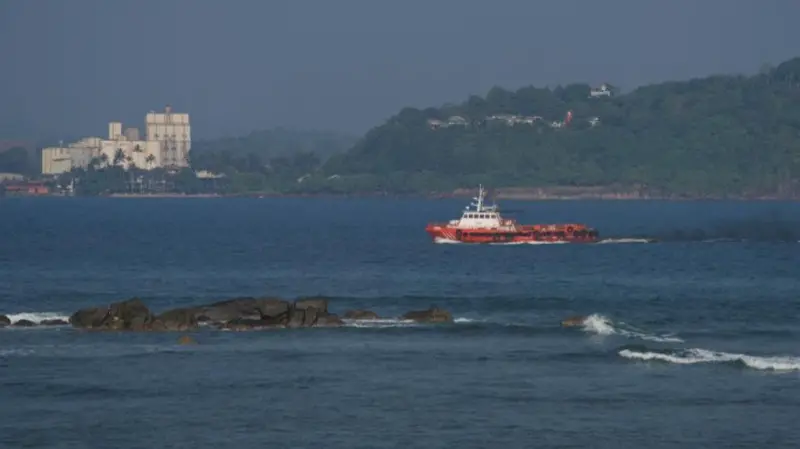
Around 140 people are missing after an Iranian navy ship sank off the coast of Sri Lanka.
The Sri Lankan navy says around 180 people were on board, with 32 rescued. A spokesman tells the BBC the cause of the sinking is not known
Sri Lanka’s navy has confirmed that it’s rescued 32 people after it received a distress call from Iranian navy ship ‘IRIS Dena’ early this morning.
Budhika Sampath, the spokesman of Sri Lanka’s navy says: “Though it was beyond our waters, it was within our search and rescue region. So we were obliged to respond as per international obligations.”
He adds: “We found people floating on the water, rescued them, and later when we inquired we found that those people are from an Iranian ship.”
He also says that according to the documentation of the ship 180 people are believed to have been on board, although the exact number of missing is unknown.
The spokesman says at the time of launching the rescue operations they did not see the vessel but saw oil patches on the water and floating life rafts.
He also tells the BBC that he rejects the reports of a submarine attack causing the sinking, and that the cause is unknown.
Earlier the secretary of the country’s defence ministry Air Vice Marshal Sampath Thuiyakontha told BBC Sinhala that around 140 people are thought to be missing.
So far, Sri Lanka’s military has not been able to confirm what might have caused the ship to sink.
[BBC]

Cabinet approves import of Maize to meet shortfall

Cabinet nod for the removal of Cess tax imposed on imported good

Around 140 people missing after Iranian navy ship sinks off coast of Sri Lanka

South Africa strong favourites as quest for elusive silverware hots up

Australian girl, 8, killed in snowmobile accident in Japan

Russia, China raise diplomatic voices against US-Israeli attacks on Iran

‘Dates have the highest sugar content to fight Coronavirus’

Sunday Island 27 December – Headlines

#SundayIsland 17th December – Headlines

Sunday Island – 28th March

Sunday Island Headlines – 21 March

Sunday Island – 21st February – Headlines
-

 Opinion6 days ago
Jamming and re-setting the world: What is the role of Donald Trump?
-

 Features3 days ago
Brilliant Navy officer no more
-

 Features6 days ago
An innocent bystander or a passive onlooker?
-
 Features7 days ago
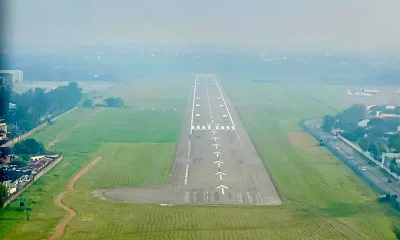
Ratmalana Airport: The Truth, The Whole Truth, And Nothing But The Truth
-

 Opinion3 days ago
Sri Lanka – world’s worst facilities for cricket fans
-
 Business7 days ago
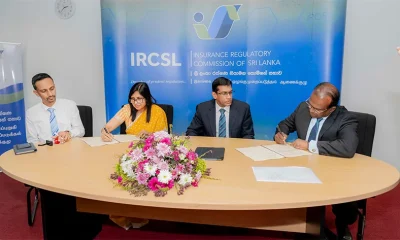
IRCSL transforms Sri Lanka’s insurance industry with first-ever Centralized Insurance Data Repository
-

 Business6 days ago
An efficacious strategy to boost exports of Sri Lanka in medium term
-

 Features4 days ago
Overseas visits to drum up foreign assistance for Sri Lanka