Sports
All you need to know about the World Cup Qualifier
ODI World Cup Qualifier… What’s that?
As the packaging suggests, this is a qualifying event where ten teams will fight it out for the last two available spots at the 2023 ODI World Cup in India in October-November. The Qualifier is the finishing point of a four-year process that began with 32 teams in contention for the World Cup, where only ten will finally take part.
Interesting. So will we see teams such as India and Australia in the Qualifier?
Nope, they are already in the main draw. India, who are the hosts and the other teams that finished in the top eight of the 13-team ODI Super League have automatically qualified for the showpiece event. The bottom five teams from the Super League and five others will feature in the Qualifier.
Going way too fast, mate… now what’s the ODI Super League?
The ODI Super League was introduced by the ICC in 2020 to help decide the teams that would feature in the World Cup. It ran from July 30, 2020, to May 14, 2023. The 13 teams included the 12 Full Members and Netherlands, who were winners of the preceding World Cricket League Championship.
At the end of the Super League, India, New Zealand, England, Bangladesh, Pakistan, Australia, Afghanistan and South Africa sealed their World Cup spots. The bottom five teams – West Indies, Sri Lanka, Ireland, Zimbabwe and Netherlands, along with five Associate nations – will get another crack at making the main event through the Qualifier. Two of these ten sides will eventually make the journey to India.Having said that, the Super League will be scrapped after the 2023 World Cup, with the ICC going back to relying on rankings as the basis for qualification to the men’s 50-over World Cup.
Gotcha. Who are these five Associate teams?
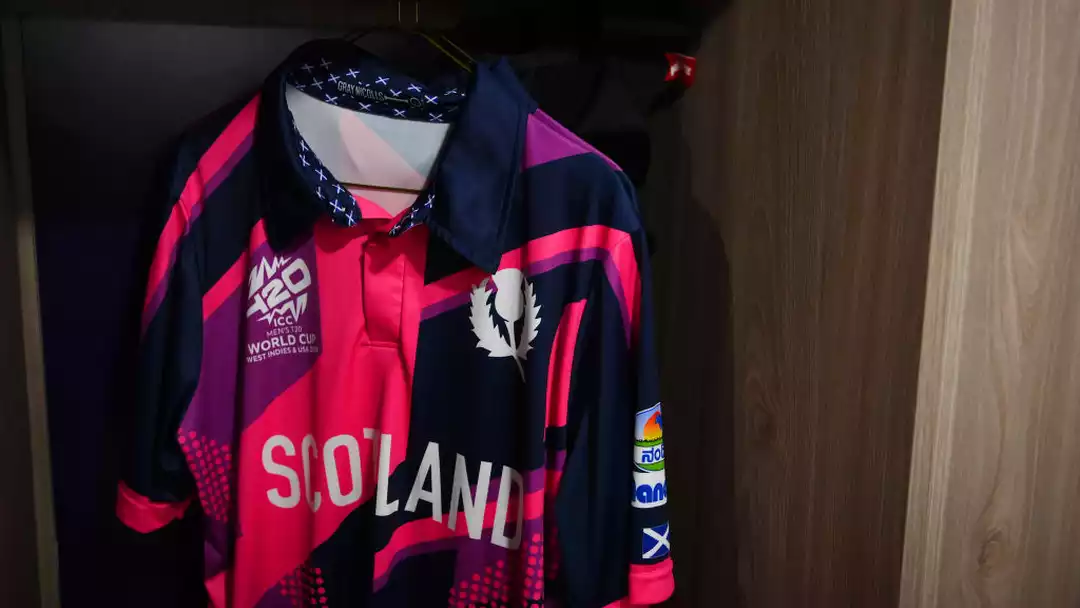
Oman, Scotland, UAE, Nepal and USA.
And how did they make it to the final World Cup Qualifier?
Scotland, Oman and Nepal were the top three teams in the World Cup League 2, a seven-team tournament of 140 matches that was played from August 2019 to March 2023. Scotland and Oman finished first and second, and Nepal sealed third place in exhilarating manner by winning 11 of their last 12 matches to pip Namibia by a solitary point.
UAE and USA clinched the final two qualifying spots after finishing as the top two teams at the World Cup Qualifier play-offs in March-April this year.
Awesome. So how does the upcoming Qualifier work?
All matches will have ODI status, and will come thick and fast. The ten teams have been split into two groups of five. Group A includes Nepal, Netherlands, USA, West Indies and Zimbabwe, while Group B consists of Ireland, Oman, Scotland, Sri Lanka and UAE. Each side will play four group matches, facing the others in their group once in a round-robin format. The winner of each game will be awarded two points, while ties and no-results will fetch one point each.
After the 20 group-stage matches are done, the top three sides from each group will progress to the Super Six, carrying over the points they acrue against the other two teams that reach this stage. Each team in the Super Six will face the three qualifying teams from the opposite first-round group. Thereafter, the top two teams on the Super Six table will qualify for the 2023 World Cup.
Wait, so no final?
There will be a match between the top-two Super Six sides, with the winner taking home a shiny trophy. But the final will be a win-win game for both sides, since they’ve both already booked their World Cup berths.
Sweet. Oh, before I forget: where’s this happening and when?
In Zimbabwe, as was the case last time around in 2018. Four venues, two each in Harare and Bulawayo, will host the matches.
The tournament commences on June 18, with the group-stage games finishing on June 27. The Super Six will run from June 29 to July 7, while the final will take place on July 9 at Harare Sports Club. Playoffs to decide seventh to tenth places will take place from June 30 to July 6. Here’s the full list of fixtures, and all the squads.
Anything new this time around?
The DRS. After first announcing the presence of third umpires to monitor only run-outs, the ICC confirmed that DRS will be in use from the Super Six stage for the first time in a World Cup Qualifier.
Surely West Indies and Sri Lanka go in as favourites?
Going by the rankings, you would say so. Both teams narrowly missed out on automatic qualification for the World Cup, and will fancy their chances. West Indies have shown excellent recent form in ODIs: coming into the Qualifier, they swept UAE 3-0 in an ODI series in Sharjah, and had earlier drawn 1-1 against South Africa. Sri Lanka, meanwhile, are coming off a 2-1 ODI series win over Afghanistan.However, don’t rule out Zimbabwe, who will be playing in their home conditions, and will have the backing of the local crowd.
And the underdogs… ?
Ireland have reasonable recent game time under their belt, and plenty of in-form players. They could prove to be a handful. Talking of underdogs, don’t forget Nepal, who have never featured in an ODI World Cup, but have a team for the conditions, are on a roll, and can cause a few upsets.
The last World Cup Qualifier…what happened there?
Heartbreak for Zimbabwe and Scotland, and World Cup qualification for Afghanistan and West Indies. Afghanistan’s qualification was nothing short of miraculous. They entered the Super Six staring down the barrel, but successive wins and favourable results from other games ensured they booked a place at the 2019 World Cup. A win over West Indies in the final was the cherry on top of a comeback for the ages. (cricinfo)

Sports
Clean promises, dirty selection
This week’s revamp of the national selection panel, capped by the return of a proven failure, has sent shockwaves through cricketing circles, leaving jaws on the floor and eyebrows firmly raised. What is even more baffling is the timing. With barely two months to go for the World Cup that Sri Lanka will co-host, why this mad dash to reshuffle the deck? It smacks of panic rather than planning.
Yes, the term of the selection panel had technically expired. But cricket, like life, is not always played by the letter of the law alone. Common sense, that increasingly rare commodity, suggested a simple two-month extension for continuity’s sake. Upul Tharanga, after all, had done a stellar job: transparent, practical and refreshingly free of smoke and mirrors. Few would have raised a murmur had he been granted an extension. Under his watch, Sri Lanka won a Test in England after a decade in the wilderness, chalked up series wins over India and Australia and climbed to fourth in the ODI rankings. That is a CV that reads far better than that of the man now warming the chairman’s seat.
The only conclusion one can reasonably draw is that this appointment was rushed through for political reasons. NPP strongman Upul Kumarapperuma stands accused of nudging Pramodya Wickramasinghe back into the chief selector’s chair. When contacted by this newspaper, Kumarapperuma denied any interference, but conceded that the two were classmates at Rahula College, Matara, are close friends and that Pramodya had attended his political rallies in Matara in the lead-up to last year’s General Election. If it walks like a duck and quacks like a duck, you don’t need the third umpire.
The Sports Minister has defended the decision, arguing that he could choose only from among those who had applied for the post. That defence doesn’t quite stand up to scrutiny. Cricket history offers several counter examples. The most recent is Graeme Labrooy, appointed in 2017 despite not applying. He did a commendable job and during his tenure Sri Lanka ended Pakistan’s decade long unbeaten run in the UAE, their adopted fortress due to civil unrest back home. If exceptions could be made then, why not now? Why wasn’t the same discretion shown when it mattered most?
The Minister’s move to include a woman in the selection panel deserves applause and is long overdue, the first such appointment in Sri Lanka’s cricketing history. Sadly, that progressive step has been eclipsed by the choice of chairman, undoing much of the goodwill in one clumsy stroke. A quick straw poll among fans would tell its own story.
There is no denying that the NPP has done several commendable things since coming to power, standing shoulder to shoulder with the common man. The decision to give up perks and privileges has struck a chord with the public. But the appointment of the cricket selection committee has left a distinctly bad taste. Those calling the shots appear to have been hoodwinked by forces within. That, at least, is the inescapable conclusion.
The government’s Clean Sri Lanka project is gathering momentum, but on the cricketing front the broom seems to have been left in the pavilion. A bit of homework would have unearthed the many alleged scandals where this individual’s name has surfaced — from clearing acres of pristine forest land for banana cultivation to lottery scams and the controversial purchase of bus ticketing machines for the Transport Ministry. So much for clean hands and straight bats.
As for Pramodya’s previous stint as chief selector, it was a car crash in slow motion. Sri Lanka stumbled through multiple qualifying rounds in World Cups and then ended up ninth in a ten team World Cup in 2023 and missed out on the Champions Trophy altogether. To see him parachuted back two years later is beyond belief. A bull in a china shop would cause less damage.
If Sri Lanka come a cropper at the World Cup, the buck must stop somewhere. And it should stop with the government, particularly those representing the Matara district, who chose to play politics promoting their lackeys when the nation needed a steady opener at the crease. How sad!
by Rex Clementine ✍️
Sports
Lyon, Cummins shut the door on England’s slim Ashes hopes
Australian relentlessness in Adelaide has all but ensured possession of the Ashes for two more years. Set a world-record target of 435 to win the third Test and keep the series alive, England found some belated fibre to their batting, led chiefly by Zak Crawley’s 85 – only for the enduring excellence of Pat Cummins and Nathan Lyon to emphatically shut the door on them.
Cummins took the first three wickets to fall, including Joe Root for the 13th time in Tests, before Lyon plucked out three more during the final session to break England’s resoBrydon Carse lve. Crawley played admirably but could not convert what would have been a second hundred against Australia, lured from his ground by Lyon with the shadows beginning to lengthen for Alex Carey to complete a quicksilver stumping.
Although Jamie Smith, who played two scoring shots in 30 balls, and Will Jacks negotiated a pathway to the close, England were still more than 200 runs from their target with four wickets standing as Australia closed in on a decisive 3-0 lead. Barring miracles from the lower order on Sunday, England were set to concede the urn inside just 11 days of cricket.
Australia’s dominant position in this match had been constructed around a bristling 170 from Travis Head, but England were clinical with the ball during the morning session on day four, six wickets going down in just over 90 minutes’ play to at least prevent a mammoth target progressing towards the gargantuan.
One of the central tenets of England’s Bazball era has been that they love a chase – the clear lines of a fourth-innings requirement bringing the best out of a mercurial batting unit. At 2-0 down, and needing a win to stay alive in the series, they had clarity in abundance. But even as Adelaide Oval remained on the friendlier side for batting, the size of the task ahead of England became crystal as Cummins struck twice in his opening spell either side of lunch.
Ben Duckett’s torrid tour continued as he poked recklessly at his second ball to be taken at slip. Ollie Pope was then given a thorough working over by Cummins and Mitchell Starc, though it took a brilliant catch from Marnus Labuschagne, diving one-handed at second slip, to send him on his way for what may be the last time in Test whites.
England rebuilt through the afternoon with a measured 78-run stand between Crawley and Root. But the immaculate Cummins undid Root once again in his first over after tea. Just as in the first innings, Cummins’ probing around the line of off stump was too much for Root to withstand as he fiddled behind, his anguish apparent as he thumped the back of his bat and stalked from the field.
In truth, there was very little Bazballing from England’s top order as they opted for a more conventional approach – scarred, perhaps, by their misadventures in Perth and Brisbane. Crawley scored one run from his first 28 balls, by which point England were two wickets down, but was rewarded for his patience with his highest return of the series, an innings replete with controlled drives and good judgement. Like Root, he was proactive in sweeping and reverse-sweeping against Lyon, whose initial six-over spell went for 35 and led to Cummins calling on Head after tea.
Crawley and Harry Brook put on another half-century stand, though Brook lived dangerously at times, despite an apparent effort to rein in some of his attacking instincts. He was tied down by Scott Boland bowling with the keeper up, and got away with a miscued ramp that came off the toe of the bat with his stumps exposed; as the ball rolled away to square leg, he also had to swiftly abort an attempted run.
Brook did capitalise on Boland dropping short to cuff a boundary, but his only other four came when reverse-sweeping Lyon – and that shot was to bring about his downfall, losing his shape in ungainly fashion as the ball dipped and spun to clip leg stump. Brook hung around, seemingly bewildered at being bowled, but the message for England was clear.
Lyon now slipped into his groove, removing Ben Stokes for 10th time in Tests with a ripping offbreak that drifted in towards middle and leg before spinning past a forward defensive to hit the top of off. When Crawley overbalanced pushing at one that went on with the arm, Carey’s glovework did the rest. England were 194 for 6 and not even the possibility of rain cutting into the final day could offer any solace, with their winless run in Australia set to extend to 18 Tests.
Australia had resumed on Saturday in a position of control, buttressed by Head’s second hundred of the series and an unbroken partnership with fellow South Australian Carey. They might have had designs on batting until well beyond the lunch break, to extinguish the last embers of English fight – but any declaration speculation was quickly shelved as the innings unraveled after the dismissal of Head.
England opened up with Stokes, the captain having not bowled a ball on day three, but Australia’s fifth-wicket pair initially went about their work in untroubled fashion, Head carving and clipping boundaries to go past 150. They had added 40 in under eight overs, with Head closing in on his career-best 175 against West Indies on this ground three years ago, when an attempt to hoick Josh Tongue for six ended up in the hands of Crawley at deep square leg – despite a late adjustment as he lost the flight of the ball.
That ended a stand worth 162 and Carey had other landmarks to consider, pushing Australia’s lead above 400 while moving closer to becoming only the third wicketkeeper to score twin hundreds in a Test. He was stopped short by Stokes – who had seen an lbw decision against Josh Inglis overturned by the presence of an inside edge in his previous over – as a well-directed short ball ended up in the hands of leg slip via Carey’s glove.
Inglis could not make the most of his reprieve, edging Tongue behind as he tried to open the face, and the new ball did for Australia’s tail: Brydon Carse removing Cummins and Lyon with consecutive deliveries before Archer completed the job, a collapse of 6 for 38 lifting English spirits – for all of eight balls.
Brief scores:
England 286 and 207 for 6 (Zak Crawley 85; Pat Cummins 3-24, Nathan Lyon 3-64) need 228 runs to beat Australia 371 and 349 (Travis Head 170, Alex Carey 72; Josh Tongue 4-70, Brydon Carse 3-80)
[Cricinfo]
Sports
Hodge hundred keeps West Indies’ fight on
Slow-burn thrillers aren’t for everyone. Mount Maunganui’s been screening one for the past three days and just as the draw was starting to turn favourite, things started to happen. “Ooooh my Goooddddd,” cried Kaveem Hodge rolling around on the floor. Apparently, he was only allowed a second Test match century if he could show he could take a cricket ball to the crown jewels. He did. On 97, he put his agonised body through the trauma of a quickly run two, and on 99, decided running is for losers and whacked a pull shot to the square-leg boundary.
West Indies went to stumps on 381 for 6, and trailing by 194, but there is uncertainty around two of the wickets they have in hand. Shai Hope was holed up in his hotel all of Friday and he hasn’t really been seen since. It is reported that he is unwell and as team-mate after team-mate came in ahead of him, it is starting to look serious enough to prevent him from batting Kemar Roach is down with a hamstring injury he picked up on the first day and his status is unclear as well.
New Zealand will remain hopeful of a positive result, particularly on the evidence of how they roused themselves in the final session. They were tired. The slow pace of the pitch was negating the movement that was still on offer. So there was a lot of oohs and aahs but never the aha! Until Daryl Mitchell was given the ball and he just trundled in and trapped Justin Greaves lbw. Three balls later, Ajaz Patel had Roston Chase trapped in front as well.
West Indies had racked up fifty partnership after fifty partnership – four of their top five wickets were able to bed in. They’d proven hard to crack. Then all of a sudden, a dibbly-dobbly bowler and a man who had never taken a Test wicket at home broke through.
Slow burn thrillers. Gotta love ’em.
Hodge batting in the 90s started to get uncomfortable. Anderson Phillip got hit in the head. New Zealand missed an edge through to the keeper. The replay went up on the big screen and Tom Latham said, “Oh, not again!”, throwing back to the missed opportunity when they had no reviews in Christchurch and Roach lbw only for the umpire to shake his head. There’s still two more days of this left.
Hodge’s Test career has been a slow burn too and at one point was in danger of being put out. He had been dropped during the home summer with only two of his previous 15 innings crossing the 30-run mark. Speaking at the end of the day’s play, he had the grace to accept that, saying if the employees aren’t giving what is expected of them, bosses will look elsewhere.
West Indies came back to him for this tour of New Zealand and he made it a priority to figure out a way to bat against the moving ball. This challenge, far from making him shrink, triggered the analytical side of him. He has a degree in sports science and those principles might have come in handy to recognise that he could leverage his strength, scoring square of the wicket, into runs, “Plan your work, work your plan,” he said at the end of the day on 109 not out.
Hodge looked suspect initially, surviving outside edges through the slip cordon and berating himself about his front foot’s reluctance to get in line with the ball. But none of that deterred him from doing the basics right; from being ready for the next ball; from gaining better awareness of his off stump. With more and more time in the middle, he was able to get his body moving the way he wanted. The strength of his defence began to shine through – soft hands, bat face pointed down to make sure the ball didn’t reach the close catchers – and the bowlers began looking elsewhere. Hodge punished them for their lack of perseverance, playing some of the most crisp pull shots. The early struggle and the method to get out of it made the final yield all the better.
Tevin Imlach, batting at No. 4 in place of Hope soon after his captain had wondered where he was trying to score his runs, put in a decent shift which included running down the pitch at Ajaz and hoisting him over the top for a straight six. That shot was a direct response to the left-arm spinner almost running through his defence with an arm ball.
Alick Athanaze was all class. He, like Hodge who was his room-mate as they came up playing together in Dominica, was back-foot dominant. Punches and whips and cuts all eye-catching for the sound off the bat and the balance at the crease.
Greaves spoke on Friday about bringing glory back to West Indies and it is clearly not beyond him. Once, a mere forward defensive was almost enough to carry the ball to the long-off boundary.
Each of those three players had the chance to go big in largely placid conditions but they were all cut short. Imlach out for 27 driving at a ball that wasn’t pitched up and could’ve been left alone. Athanaze left a nothing ball from Ajaz that would’ve comfortably missed leg stump but for a cruel deflection off his front leg. He was 45 off 57. Greaves (43 off 69) missed a straight ball from Mitchell and needed a review to see just how plumb he was. New Zealand’s batters had been ruthless. West Indies’ had work to do.
Jacob Duffy, the highest wicket-taker of the series, ran in with purpose whether his job was to strike early – which he did, John Campbell falling without adding to his overnight score of 45 – or do some donkey work – he cranked his pace up to 144kph for the last over of the day which he spent banging the ball into the pitch to see if he could benefit from a bit of variable bounce.
Ajaz, who hasn’t played a Test at home for five years, and whose 85 wickets until now were all the result of work done away from home, made the most of the wind blowing across the ground, just lobbing the ball up at the high-70-low-80 kph range and getting good drift and dip. Michael Rae overcame a laceration to his shin to keep trucking in. Zak Foulkes, a swing bowler out of place on a pitch which was helping only those who could hit the deck hard, tried his best. New Zealand were a much-improved bowling side. Their discipline was up. They didn’t let their shoulders sag even as the ball got soft and partnerships kept building. That mentality is going to be crucial as the slow burn in Mount Maunganui continues.
Brief scores:
West Indies 381 for 6 (Kaveem Hodge 109*, Brandon King 63; Jacob Duffy 2-79) trail New Zealand 575 for 8 dec (Devon Conway 227, Tom Latham 137, Rachin Ravindra 72*; Justin Greaves 2-83) by 194 runs
[Cricinfo]
-
Midweek Review4 days agoHow massive Akuregoda defence complex was built with proceeds from sale of Galle Face land to Shangri-La
-
News3 days agoPakistan hands over 200 tonnes of humanitarian aid to Lanka
-
News3 days agoPope fires broadside: ‘The Holy See won’t be a silent bystander to the grave disparities, injustices, and fundamental human rights violations’
-
News4 days agoBurnt elephant dies after delayed rescue; activists demand arrests
-
Editorial4 days agoColombo Port facing strategic neglect
-
News2 days agoArmy engineers set up new Nayaru emergency bridge
-
Business2 days agoUnlocking Sri Lanka’s hidden wealth: A $2 billion mineral opportunity awaits
-
News4 days agoSri Lanka, Romania discuss illegal recruitment, etc.