
Midweek Review
AKD in dilemma over anti-terror laws he used to condemn

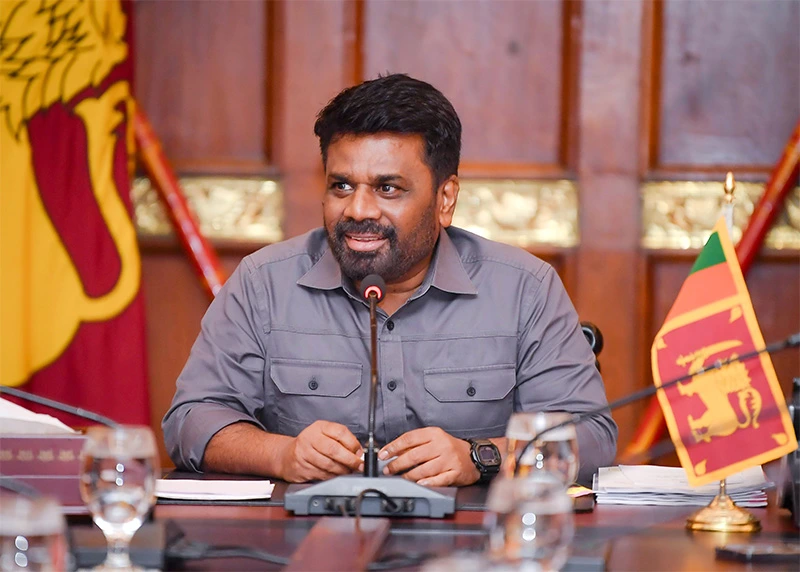
President Dissanayake’s government promptly utilized the PTA – the first since the presidential election – to deal with those who had been suspected of allegedly planning to mount an attack on Israelis in the Arugam Bay area. The government couldn’t have ignored the alleged threat, especially against the backdrop of the warning issued by the US Embassy here, of what it called a serious risk. In line with the statement, dated Oct. 23, the Embassy imposed travel restrictions on mission personnel as well, while strongly urging US passport holders to avoid the area.
By Shamindra Ferdinando
The Prevention of Terrorism Act (PTA/No 48 of 1979)) that had been introduced in 1979 as a temporary measure by President JRJ in response to emerging threats from separatist terrorists and made into a permanent law in 1982 (No 10 of 1982) attracted considerable public attention over the past few weeks in the wake of the police making arrests under this draconian law.
The issue at hand should be freshly examined against the backdrop of the Janatha Vimukthi Peremauna (JVP), the dominant partner in the newly elected National People’s Power (NPP), having been at the receiving end of that piece of controversial legislation in the ’80s, particularly during their second violent uprising (1987-1990 period).
The JVP constantly demanded the repealing of the PTA at a time the party never dreamt of an opportunity to win a national election under any circumstances. In fact, the abolition of the PTA had been one of the JVP’s main demands throughout the war/insurgency and thereafter. However, now that the JVP-led NPP having had convincingly won the presidential (Sept. 21) and general (Nov. 14) elections and is in the process of consolidating its power, the powers that be have no option but to revisit its previous highly critical stand on the controversial Act.
Can President Anura Kumara Dissanayake, who is also the Commander-in-Chief of the armed forces, in addition to being the Defence Minister, as well as head of the National Security Council (NSC), do without the PTA.
Can the PTA be abolished and whatever existing/future security threats be dealt with other relevant laws, or replaced with a new law acceptable to all political parties represented in Parliament. But, that does not mean that concerns of those outside Parliament should be discarded without proper examination.
President Dissanayake’s government promptly utilized the PTA – the first since the presidential election – to deal with those who had been suspected of allegedly planning to mount an attack on Israelis in the Arugam Bay area. The government couldn’t have ignored the alleged threat, especially against the backdrop of the warning issued by the US Embassy here, of what it called a serious risk. In line with the statement, dated Oct. 23, the Embassy imposed travel restrictions on mission personnel as well, while strongly urging US passport holders to avoid the area.
The government had no option but to invoke the PTA again to deal with those who sought to humiliate the administration over the Mahaveer Naal events conducted in the Northern and Eastern provinces in memory of LTTE leader Velupillai Prabhakaran’s birthday.
Responding to the Mahaveer Naal events, Public Security and Parliamentary Affairs Minister Ananda Wijepala, first time entrant to Parliamen, accused Opposition activists of exploiting the situation to undermine the government. Wijepala, who had served as Anura Kumara Dissanayake’s private secretary when he served as a lawmaker, alleged that the involvement of the New Democratic Front (NDF) in the conspiracy, while shortly, thereafter, law enforcement authorities arrested the administrative secretary of the SLPP, Renuka Perera, for allegedly disseminating false information with regard to Mahaveer Naal.
It would be pertinent to mention that not all those who were apprehended for disseminating such false information been taken in under the PTA.
The issue is whether the government needs a draconian law, like the PTA, to deal with persons circulating videos of LTTE events during the conflict and after.
Apprehending people for circulating videos of such events seemed ridiculous when the Illankai Thamil Arasu Kadchi (ITAK), having recognized the LTTE as the sole representative of the Tamil-speaking people, received an audience with no less a person than President Dissanayake. The meeting between President Dissanayake and the ITAK delegation took place at the Presidential Secretariat amidst the continuing furore over people being arrested for circulating Mahaveer Naal content. Some of the ITAK members recently had paid tribute to the LTTE publicly while the government struggled to deal with bad press over Mahaveer Naal events.
The writer is of the view that commemoration of LTTE cadres should be permitted, regardless of their status. In fact, such events underscored the futility of the LTTE macabre cause. Mahaveer Naal automatically reminds the country of the atrocities that had been perpetrated by the LTTE over the years until their very end on the Vanni east front.
Let me remind those shedding crocodile tears for terrorists of the cold blooded killing of academic Rajani Thiranagama in Jaffna in late Sept 1989 during the deployment of the IPKF. Dr. Thiranagama was shot dead on Sept. 21 while cycling home from the Jaffna University, where she was Head of the Anatomy Department.
Yahapalana
bid to repeal PTA
While in the Opposition, Ranil Wickremesinghe relentlessly campaigned against the PTA. Wickremesinghe had an opportunity to explore the possibility of doing away with the PTA after he facilitated Maithripala Sirisena’s victory at the 2015 presidential election. Wickremesinghe’s broken promise due to delaying of the required action, should be discussed, taking into consideration Western governments’ unbending interest in abolition of the PTA. They felt that in the aftermath of the LTTE’s eradication, Sri Lanka didn’t require such a law.
Since the successful conclusion of the war in May 2009, the Western governments had been putting pressure on war-winning President Mahinda Rajapaksa to abolish the PTA. The JVP, too, backed the Western call to do away with emergency regulations and the PTA. However, President Rajapaksa resisted relentless Western pressures but the Yahapalana government initiated a high profile project to do away with the PTA over a year after the 2015 January presidential election.
Instead of doing away with the PTA as demanded by various interested parties, Wickremesinghe sought to replace the existing law with what he called the Counter Terrorism Act (CTA).
The committee that had been tasked with drafting the policy and legal framework of the proposed law was headed by Sagala Ratnayake, Minister of Law and Order and Southern Development. Obviously Wickremesinghe couldn’t have done away with the PTA without taking adequate provisions to counter terrorism. Wickremesinghe subjected the whole process to the scrutiny of Western governments. Among those invited for discussions on the CTA and an Amendment to the Code of Criminal Procedure Act on Dec. 16, 2016, were Justice Minister Wijeyadasa Rajapakse, Minister Sagala Ratnayake, British High Commissioner James Dauris, French Ambassador Jean-Marin Schus, EU Ambassador Tung-Lai Margue and several other foreign envoys.
However, the Yahapalana government couldn’t go ahead with the project. Wickremesinghe couldn’t muster the required support for his move as the Yahapalana parliamentary group gradually fell apart. By late 2017, the relationship in the coalition between the UNP and Maithripala Sirisena’s SLFP had deteriorated to such an extent, agreement on such a significant piece of proposed legislation seemed very much unlikely. Their decision to go it alone at Local Government elections in early February 2018 sealed the fate of the Yahapalana alliance, and the much touted bid to introduce CTA in place of the PTA, fizzled out.
The Sirisena-Wickremesinghe alliance had been in turmoil since Wickremesinghe’s nominee for the post of Governor Central Bank, Singaporean Arjuna Mahendran, perpetrated the massive Treasury bond scams in Feb. 2015 and March 2016. The humiliating defeat suffered by both the UNP and the SLFP at the Local Government polls effectively ended their partnership while the CTA was put on the back burner. The government had been in such a desperate situation, the top leadership simply could not deal with the CTA and the matter was quickly forgotten.
Having neglected national security to their heart’s content, the UNP leadership relaunched the CTA project in the wake of the 2019 Easter Sunday carnage. The UNP saw an opportunity to pressure political parties represented in Parliament, as well as other interested parties, over the proposed CTA. However, Wickremesinghe’s move hadn’t received much anticipated support as those who opposed the PTA alleged that the new law never really changed the powers granted to law enforcement authorities.
In spite of the Easter Sunday attacks, the opposition to the PTA, and the proposed CTA, remained unyielding. Political parties, civil society and Western governments haven’t been able to reach consensus on anti-terrorism law legislation though all post-war administrations discussed the issues at hand at length.
President Gotabaya Rajapaksa, too, made an effort to amend the PTA. In late January 2022, President Rajapaksa’s Cabinet approved a spate of amendments to the PTA. But, the proposed amendments failed to secure the backing of those concerned about anti-terrorism law. The introduction of amendments meant that President Rajapaksa had absolutely no interest in at least examining Wickremesinghe’s brainchild CTA.
The civil society, legal scholars and other interested parties simply rejected the amendments on the basis the government failed to address their long standing concerns. The Rajapaksa administration in Dec. 2019 withdrew Wickremesinghe’s proposed Counter terrorism Bill to pave the way for a new initiative that was launched in June 2021. Obviously, it hadn’t been a priority for the Rajapaksa administration though under Foreign Minister Prof. G. L. Peiris’s leadership a Cabinet subcommittee deliberated a report prepared by Defence Secretary Gen. Kamal Gunaratne. That bid, too, failed and during Wickremesinghe’s presidency (July 2022-Sept 2024) nothing really happened with regard to the PTA.
New challenges
The European Union has linked the repeal of the PTA with its continuing relationship with Sri Lanka. The EU, in Oct. 2021 during Gotabaya Rajapaksa’s presidencyk told Sri Lanka that the country must amend the PTA that gave law enforcement authorities sweeping powers to arrest and hold suspects, without trial, if it wanted to retain the lucrative GSP-plus trade status with the 27-member economic bloc.
President Dissanayake now faced the daunting task of addressing the concerns of the EU and various other members of the Western world with regard to anti-terrorism laws here.
Dissanayake’s administration cannot ignore the renewed calls for the abolition of the PTA or the introduction of suitable amendments. However, the government cannot weaken Sri Lanka’s defences against terrorism though the LTTE rump is unlikely to pose a conventional military threat. But, the 2019 Easter Sunday carnage proved responsibility on the part of the government to ensure the armed forces, the police and intelligence services had legal safeguards when dealing with terrorism.
*One of the major shortcomings in the amendments proposed by President Gotabaya Rajapaksa, according to civil society groups, is the failure on the part of the amended Bill to address problems with the admissibility of statements and confessions under the PTA. They have repeatedly pointed out provisions of the PTA waived the application of the Evidence Ordinance and there were no safeguards to be followed in recording confessions and statements from suspects.
*Another issue of concern is that the period of 72 hours after arrest and before production before a magistrate had not been amended. They have declared this is a loophole in the PTA that facilitated the torture of those arrested under the PTA while in custody.
*They are also concerned about the absence of sufficient judicial oversight during investigations conducted in terms of the PTA.
*As the definition of the acts which came within the offence of terrorism is of a broad and vague nature, those in authority tend to abuse the PTA. The amendments that had been approved by Gotabaya Rajapaksa’s Cabinet in January 2022 hadn’t addressed concerns expressed by interested parties.
The above were some of the concerns raised by those demanding abolition of the PTA/suitable amendments to the law. Anti-terrorism laws in force in all countries regardless of their status always attract public criticism and can be described as a source of intense debate. Critics say that anti-terrorim laws violate even the basic freedoms enjoyed by the people.
Neighbouring India employs a spate of laws meant to deal with terrorism. Amendments have been introduced over the years and like here these laws have been abused though stakeholders accept the need for tough anti-terrorism laws to meet security challenges. India has gone to the extent of neutralizing those living overseas in case New Delhi felt they posed a threat. The ongoing controversy involving India and Canada over the alleged hit ordered by New Delhi in Vancouver is a case in point.
Sri Lanka, under any circumstances, cannot afford to do away with the PTA altogether. However, the government, in consultation with political parties represented in Parliament, should take tangible measures to ensure law enforcement didn’t deliberately abuse PTA for political or private purposes. There is no point in denying the fact that the PTA had been grossly abused over the years by all governments. Perpetrators hadn’t been properly dealt with thereby creating an environment for such abuses. However, the PTA had provided invaluable support for law enforcement operations as successive governments battled Northern and Southern terrorists.
During the war against the LTTE, the PTA had been a critical part of the government arsenal. Interrogation of suspects had been part of the overall security strategy meant to thwart attacks as law enforcement authorities battled LTTE terrorists assigned for covert operations in the South and especially suicide bombings.
Terrorist infiltration couldn’t have been averted without continuous operations, based on available information. The government had no option but to discourage people from the Northern and Eastern provinces from taking up residence in Colombo and its suburbs, as well as other predominantly Sinhala areas, as part of the overall measures to neutralize the threats on soft targets.
The LTTE targeted public transport in a bid to mount pressure on the government as it was retreating on the battlefield.
In spite of allegations of its misuse and abuse, the PTA had been quite useful in combating Southern and Northern terrorism. That is the undeniable truth. Whatever its shortcomings, the PTA cannot be done away with unless the government introduces a new anti-terrorism law that meets security requirements, in a challenging environment.
Though the West impose pressure on countries like Sri Lanka to undo such laws, they themselves have introduced even much harsher laws like the Homeland Security Act 2002 passed by the USA, primarily in reaction to the 9/11 attacks there, in the previous year, by Muslim terrorists, that claimed few thousand lives and somewhat similar draconian laws were introduced in England after the bomb attacks in London soon afterwards. But there is hardly a whimper from our Foreign Ministry that generally plays deaf and dumb like our diplomats about such unfair demands from us by the West.

Ulugetenne
The Sri Lanka Navy, on 04 June, commissioned SLNS Samudravijaya, formerly United States Coast Guard Cutter Decisive. It is the fourth mothballed US Coast Guard cutter transferred to the SLN through the US Excess Defence Articles Programme. President Anura Kumara Dissanayake attended the ceremony at the Colombo Port. The US Embassy in Colombo, in a statement issued on the same day, quoted Defence Attaché Lieutenant Colonel Matthew House as having said: “Few partners have demonstrated the commitment to maintaining and operating these vessels as successfully as the Sri Lanka Navy. The outstanding condition and operational performance of SLNS Samudura, SLNS Gajabahu, and SLNS Vijayabahu are a testament to the professionalism and technical expertise of Sri Lankan sailors. Their stewardship of these vessels helped build the confidence that made this fourth transfer possible.” The first of the four vessels SLNS Samudura was commissioned on 19 February, 2005, during Chandrika Bandaranaike Kumaratunga’s tenure as the President. Milinda Moragoda, Economic Reforms and Science and Technology Minister of the previous UNP-led UNF government, played a significant role in acquiring that vessel. SLNS Samudura boosted SLN and participated in numerous operations, including the high profile hunt for LTTE floating warehouses, during the Eelam War IV. But, the US refrained from transferring any more big ships during the war though on the then Navy Commander Vice Admiral Wsantha Karannagoda’s request to provide intelligence and Washington obliging, made the successful hunt for LTTE floating arsenals in the last stages of the war possible. The transfer of the second vessel took place 19 years after the end of the war. Ex USCG Sherman was commissioned 06 June, 2019, as SLNS Gajabahu (P626). The third vessel was transferred to the Sri Lanka Navy on October 26, 2021, as the country was heading towards an unprecedented economic crisis. That vessel was commissioned as SLNS Vijayabahu at the Colombo Port with the participation of President Ranil Wickramasinghe and US Ambassador to Sri Lanka Julie Chung on November 20, 2022. Ironically SLNS Gajabahu, one of the ex-US vessels prominently figured in the contingency plan to save President Gotabaya Rajapaksa, but whose downfall was engineered by the US.
By Shamindra Ferdinando
The moment President Gotabaya Rajapaksa decided to take up residence at the President’s House (Janadhipathi Mandiraya), Fort, in the first week of April, 2022, the Navy had no option but to prepare a thorough contingency plan, in case the regime change project posed a realistic threat to the life of the President.
The President, in consultation with senior military officers, made his move within 48 hours after violence erupted outside his private residence at Pangiriwatte, Mirihana, on the night of 31 March, 2022. That decision seemed realistic and sensible at that time.
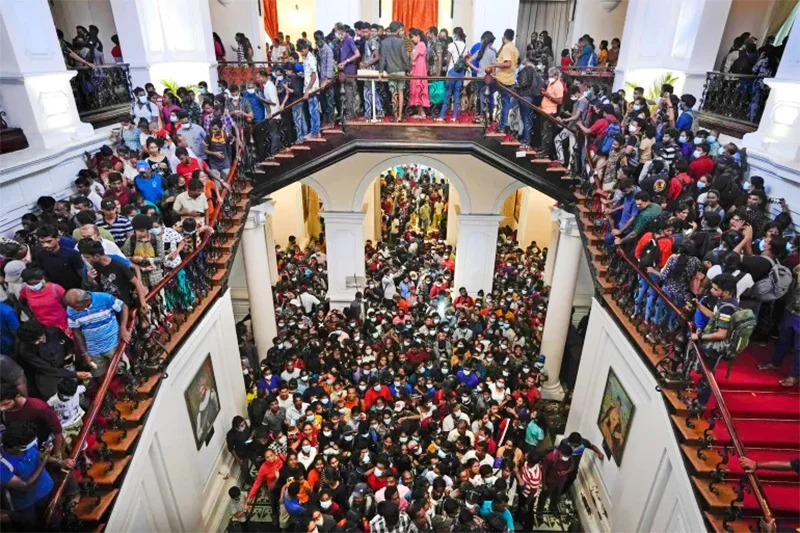
But, in the wake of the disastrous overall armed forces response to the coordinated violence unleashed by the regime change project on 09 May, 2022, in the aftermath of the Temple Trees ordered attack on Galle Face protesters, the top brass must have recognised the urgent need for total overhauling of security strategy. But, unfortunately, that hadn’t been the case. With violent crowds overwhelming the armed forces, deployed to block them, rapidly approaching the President’s House, those who had been at the makeshift Operations Room there were stunned.
In hindsight, the President’s decision to remain at the President’s House, regardless of the near failure on the part of the armed forces to repulse the raid on Temple Trees, on 09 May, seemed unwise. The rescue operation could have gone wrong and the war-winning President Mahinda Rajapaksa could have ended up in the hands of an angry mob.
Perhaps, the conspirators envisaged the President’s move, from Pangiriwatte to the President’s House, situated walking distance away from the Galle Face protest site, where they could draw additional strength.
The failure on the part of the government to take tangible measures, in the wake of the President’s House becoming the sole target on that fateful day, is a contentious issue that needs to be properly investigated. Don’t forget that the court case filed over the 09 May attacks on the residences and properties belonging to SLPP politicians, and some supporters ,was later withdrawn. The Wickremesinghe-Rajapaksa government never investigated the 09 May incidents.
Exactly two months after the mobs almost succeeded in breaking through defences at Temple Trees, on the night of 09 May/10, where Prime Minister Mahinda Rajapaksa was residing, they mounted the assault on the President’s House.
In the wake of the 09 May mayhem, President Gotabaya Rajapaksa named Lt. Gen. Vikum Liyanage as the Commander of the Army. He succeeded General Shavendra Silva who served as the CDS but was out of the country when all-out mayhem was unleashed by the Aragalaya mobs on 09 July, 2022, to oust the sitting government.
In spite of a direct and growing threat to the President’s House, on 09 July, 2022, the President felt confident in meeting the challenge. The President issued a directive to the Secretary, Ministry of Defence, General (retd.) Kamal Gunaratne, to shift the Operations Room from the Defence Force Headquarters, at Akuregoda, to the President’s House. Having shifted the Operations Room on 08 July, 2022, to the President’s House, as directed by the President, the top brass prepared to face the challenge.
Maj. General K.B. Egodawela, who served as an Additional Secretary (Administration) to the President, from the day the President moved to the President’s House, till he vacated on 09 July, 2022, in his memoirs ‘Aragalaya: Adarayen Prachandathwayata’ (From Love to Violence) revealed that though the top brass opposed the shifting of the Operations Room they carried out the directive. While the President felt that the top brass could collectively work at the President’s House to bring the situation under control, Gen Gunaratne proposed that the President should move to Akuregoda Defence Forces Headquarters, according to Egodawela. In fact, Gunaratne, who had been with Gotabaya Rajapaksa from the very beginning of the sinister campaign, strongly opposed the President’s decision to remain there.
Obviously, the President’s House pathetically failed to ascertain the scale of the protest and the rapidity with which protesters overwhelmed troops deployed outside the President’s House stunned the top brass. Had they swiftly reached consensus on Gen. Gunaratne’s suggestion, perhaps the 09 July regime change operation could have been thwarted. The armed forces could have resorted to tougher measures to prevent a march on Akuregoda Defence Forces Headquarters had the President agreed to move there.
Within two hours after the protest, targeting the President’s House began, video footage provided by drones indicated that troops couldn’t hold the rampaging mobs any longer. According to Egodawela, the top brass had been prepared to remove the President, even without his consent, by landing a helicopter in the Colombo harbor or by ship. Finally, they resorted to the second option. As the President and First Lady Ayoma got into a vehicle and took the rear exit into the adjoining former Navy Headquarters, mobs entered the President’s House. Another vehicle carrying several other persons followed.
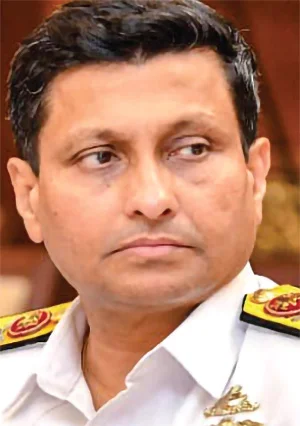
The then Navy Commander Vice Admiral Nishantha Ulugetenne who had been with the President at the President’s House got into the vehicle carrying the President. Had they stayed at the President’s House for 10 more minutes, the consequences could have been devastating. https://island.lk/gotabayas-escape-from-aragalaya-mob-in-rti-spotlight/
Egodawela, who had been with the President from the very beginning of the presidential term, alleged that the raiders planned to kill the President and several others and display their bodies. The author quoted an unidentified intelligence officer as having told him that the raiders wanted to display the bodies the way LTTE leader Velupillai Prabhakaran’s body was shown.
Perhaps shifting the Operations Room from Akuregoda Defence Force Headquarters to the President’s House had been a risky move that, in a way, facilitated the regime change operation. The rationale in bringing those who had been tasked with countering the impending threat to one place (President’s House) to be with the target (Gotabaya Rajapaksa) seems unbelievably a dicey move. The President had been influenced by what he described as inordinate and unforgivable delay on the part of the Akuregoda Operations Room to carry out timely evacuation of Prime Minister Mahinda Rajapaksa on the night of 09 May from Temple Trees. Most probably, the President wanted to oversee the 09 July counter operation personally. But, in hindsight, the decision to shift the Operations Room from Akuregoda to the President’s House obviously hadn’t been a clever move.
SLN preparations
When mobs threatened to overwhelm the President’s security at Pangiriwattta, on 31 March, additional police and STF contingents were brought in. They were followed by the Navy and Air Force. The Army arrived at the scene, subsequently.
As pointed out by the President himself, the situation at Temple Trees, on 09 May, had been far worse and the combined police and armed forces response revealed that they hadn’t taken precautionary/counter measures, even after the Pangiriwatta fiasco.
At the time of the incidents, the overall Temple Trees security deployment included about 60 elite Special Boat Squadron (SBS) personnel deployed within the premises and were supplemented by seven SLN platoons. The Army also moved in to strengthen Temple Trees defences but the mobs pressed on till troops fired blank ammunition.
The top brass, directing counter measures from Akuregoda Defence Force Headquarters, had to act swiftly and decisively to evacuate those at the Temple Trees or face the consequences. As there hadn’t been any other alternative place of living proposed, Prime Minister Mahinda Rajapaksa, wife Shiranthi and their eldest son Namal were escorted to nearby former Air Force Headquarters and from there flown to the Trincomalee Navy base. VA Ulugetenne, over the phone, issued instructions to the relevant officer in Trincomalee to make arrangements as two helicopters carrying the group took off from the helipad on the top of the former Air Force Headquarters. The helicopters departed around 04 in the morning.
They had stayed at Trincomalee Navy House for about a week and, as requested by the Navy, paid for their stay because by then Mahinda Rajapaksa had resigned. Perhaps, they could have taken refuge at the Panagoda Army cantonment or at Saliyapura, home to the Gajaba Regiment, but, at the end, sought the protection at the Trincomalee Navy base.
Ironically, President Gotabaya Rajapaksa, too, had to take refuge at the Trincomalee Navy base, exactly two months later. Ever since the President moved into the President’s House, Fort, the Navy had been on their toes to meet any eventuality. The daunting task of arranging evacuation by sea fell on the shoulders of VA Ulugetenne, who, meticulously, planned the operation with his staff.
Having informed the President of the contingency plans, VA Ulugetenne stationed two Advanced Offshore Patrol Vessels (AOPVs), namely SLNS Sindurala and SLNS Gajabahu and four Fast Attack Craft (FACs), at the Colombo Port. It would be pertinent to mention that SLNS Sindurala, built at the Goa shipyard, in terms of an agreement signed at the tail end of the Mahinda Rajapaksa government, was adjudged the best vessel in the SLN fleet in 2022.
Additional SBS personnel and snipers, too, had been brought in to Colombo though none of them knew exactly what their task would be. The OPV and FAC crews most probably felt that they were awaiting orders for a major anti-drug operation in the high seas.
As the decision was made to evacuate the President and the First Lady, the Chief alerted the vessels and quickly deployed tugboats to pull SLNS Sindurala and, shortly thereafter, SLNS Gajabahu, formerly of the US Coast Guard, carrying the President and the First Lady. By the time the two AOPVs moved in different directions, on the instructions of VA Ulugetenne, the hand phones of SLNS Gajabahu crew were collected to prevent them from revealing what was happening. Along with the AOPVs, two pairs of FACs had moved out to sea. (https://island.lk/ranil-reveals-bid-to-get-rid-of-him-while-gr-was-fleeing-to-trinco-on-board-slns-gajabahu/)
Nearly 12-hour journey to Trinco
The SLNS Gajabahu, formerly of the US Coast Guard, had a crew consisting of over 100 officers and men. Someone, most probably a port employee, posted a short clip of some unidentified persons taking large travelling bags into the ship but the President, First Lady and VA Ulugetenne going in were never captured on a camera.
As the vessel began its journey towards Trincomalee, it remained approximately 12 nautical miles from land and the President received many calls, some of which weren’t answered. VA Ulugetenne, too, received quite a number of calls. Those familiar with the developments at that time said that some felt that SLNS Gajabahu should move out of Sri Lankan waters. There had been suggestions that the destination should be the Maldives, India or Singapore. Regardless of such suggestions, SLNS Gajabahu proceeded towards Trincomalee where the Navy made necessary arrangements to host them.
Captain Marlon Perera, who still serves the Navy, had been the Commanding Officer of the vessel. Perera now holds the Commodore rank.
During the journey precautions were taken to ensure the safety and security of the President and the First Lady. Although the crew hadn’t been aware that they would be entrusted with such a sensitive task at a time the country was in crossroads against the backdrop of an economic collapse and sovereign default, there were fears of the crew being affected by propaganda in support of regime change operation.
The attempt made by sailor Wijemuni Vijitha Rohana de Silva to cause harm to Indian Prime Minister Rajiv Gandhi, way back in July, 1987, underscored the necessity to take precautions during the Colombo-Trincomalee journey as the possibility of anti-Gotabaya campaign having an impact on at least some members of the ship crew couldn’t be ruled out.
On July 30, 1987, during a guard of honor in Colombo, the 21-year-old naval rating struck Gandhi on the shoulder and back with the butt of his rifle. Gandhi narrowly avoided the full impact of the blow by evasive ducking.
On the invitation of VA Ulugetenne, Gotabaya Rajapaksa attended all the formalities in respect of a visit undertaken by the President to the Trincomalee Navy base. The President participated in those formalities knowing that he couldn’t attend the commissioning parade that was scheduled to be held on 15 July, 2022. The Navy was not in a position to put off the commissioning parade hence the decision to invite Defence Secretary Gunaratne as the Chief Guest.
Ulugetenne retired from active naval service on 18 December, 2022, following a distinguished career, spanning over 37 years. He received the appointment as the 24th Commander of the Navy in July, 2020, just a couple of months after Gotabaya Rajapaksa’s election as the President.
Wickremesinghe, in his capacity as Gotabaya Rajapaksa’s successor, appointed Ulugetenne as Sri Lanka’s Ambassador to Cuba. The appointment was made in late 2023 and the retired Navy Chief presented his credentials to Cuban President Miguel Díaz-Canel on 13 February, 2024 (https://island.lk/from-fonseka-convictions-to-arrest-of-ulugetenne/)
However, within weeks after the last presidential election held in late November, 2024, the NPP government recalled over a dozen top envoys appointed by the previous administration. Admiral Ulugetenne was among them. The government deprived a decorated officer, who had served the country for nearly four decades, from completing his term in Havana. Within months after his return, he became the target of a murder investigation.
Then out of the blue the retired Navy Chief became the focus of a murder investigation, that, too, post-war. The Criminal Investigation Department (CID) arrested him on 28 July, 2025, over the disappearance of a person reported in July, 2020.
Kurunegala High Court Judge Tikiri Jayatilleke, on 14 October, 2025, granted him bail. Jayatilleke declared that the CID acted in an illegal manner in respect of the former Navy Commander. His counsel Kalinga Indatissa, PC, alleged in court that his client had been apprehended only on the basis of an ex-LTTE cadre’s allegation in the absence of any evidence
The next hearing is scheduled for 08 July, 2026. Ulugetenne was held at the Kegalle Prison for four days and then transferred to the Dumbara (Pallekale) Prison. Altogether, he was in prison for 80 days, like a common criminal, despite him being a former Navy Commander with an unblemished career record.
Wartime Chief of Naval Intelligence, Rear Admiral (retd) Sarath Mohotti, who had been also arrested in connection with the same investigation, was also granted bail, a few weeks later.
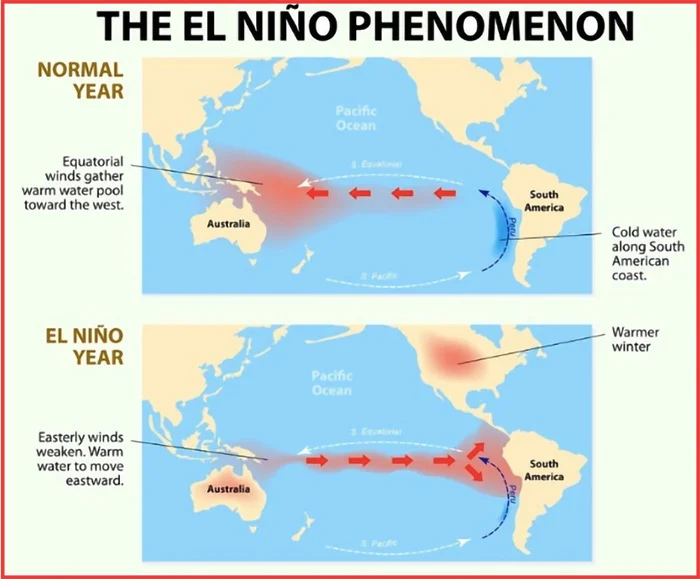
El Niño events have historically been associated with weaker monsoons in South Asia, erratic rainfall patterns, and increased risks of droughts and floods.
The coming months could bring South Asia and the wider Indian Ocean region a dangerous mix of climate shocks, economic strain, and geopolitical instability. At the centre of this looming challenge is the anticipated El Niño event, which is likely to disrupt monsoon patterns, intensify weather extremes, and place additional pressure on already fragile food, water, and energy systems.
But El Niño will not arrive in isolation. It will intersect with continuing global disruptions—from the war in Ukraine to instability in the Middle East—each of which continues to reverberate through energy markets, food supply chains, and shipping routes. The combined effect is likely to be cumulative, not linear.
This is, therefore, a moment that calls for anticipatory regional coordination rather than fragmented national responses.
A record of regional first response
There is already a clear precedent for such coordination in the region.During the COVID-19 pandemic, India emerged as a key first responder, supplying vaccines, medicines, and logistical support across the neighbourhood under its “Neighbourhood First” policy. This helped establish a practical framework for regional cooperation in times of systemic stress.
More recently, India played a similar role during the economic crisis in Sri Lanka, providing critical financial assistance, fuel, and essential supplies at a moment of acute vulnerability. India has also been among the first responders during major climate-related disasters, including cyclone events such as Cyclone Ditwa, delivering rapid humanitarian assistance.
These are not isolated gestures. They reflect an emerging pattern in which India increasingly functions as a stabilising force in the wider region.
This trajectory is reflected in India’s evolving regional frameworks—from Neighbourhood First, to SAGAR (Security and Growth for All in the Region), and now the broader MAHASAGAR vision, which signals an expanded maritime and regional engagement architecture.
Why El Niño is different this time
El Niño events have historically been associated with weaker monsoons in South Asia, erratic rainfall patterns, and increased risks of droughts and floods. In a region where agriculture remains highly climate-sensitive, even modest deviations can translate into inflation, rural distress, and fiscal pressure.
This year, however, the risks are compounded by global fragilities:
* Persistent food and fertilizer price volatility
* Elevated energy costs linked to geopolitical tensions
* Supply chain disruptions in key commodities
* High debt burdens in several neighbouring economies
Together, these factors reduce the resilience of national systems and increase the risk of cascading shocks across borders.It is also important to recognise that social instability in some fragile countries in the region should be kept in mind, as climate shocks and economic pressures can quickly reinforce each other and create wider humanitarian and political consequences.
The case for a Delhi-based regional initiative
Against this backdrop, there is a strong case for India to convene a regional El Niño preparedness dialogue in Delhi, bringing together neighbouring countries, key development partners, and multilateral institutions.
This should not be limited to South Asia alone. The impacts of El Niño extend across the wider Indo-Pacific and Indian Ocean region. Participation could include:
* Neighbouring states in South and Southeast Asia
* The United Nations system
* The World Bank and Asian Development Bank
* Key bilateral partners such as Japan and others active in regional resilience
Given its geographic position, institutional capacity, and experience as a first responder, it is both natural and appropriate for India to chair such an initiative.
What the initiative should focus on
The objective should be practical coordination rather than declaratory statements. Three areas stand out:
1. Shared forecasting and early warning systems
Strengthening real-time exchange of climate data, monsoon projections, and sectoral risk mapping, particularly for agriculture, water, and fisheries.
2. Contingency planning for essential supplies
Coordinating regional approaches to food reserves, fertilizer availability, and energy supply buffers during climatic disruptions.
3. Disaster response and financing coordination
Improving interoperability among disaster management systems, and exploring rapid-response financing through multilateral development banks for climate-related shocks.
From Neighbourhood First to MAHASAGAR
India’s regional doctrine has steadily evolved—from Neighbourhood First to SAGAR, and now MAHASAGAR—reflecting a broader conception of responsibility in the Indian Ocean region.Each stage has expanded the scope of engagement: from immediate neighbourhood assistance, to maritime cooperation and growth, to a wider vision of regional interconnectedness.
A structured El Niño preparedness initiative would be a natural continuation of this trajectory, embedding climate resilience into the region’s evolving strategic architecture.
Climate as regional security
The distinction between climate events and security outcomes is increasingly blurred. A failed monsoon in one country can trigger food inflation in another; a cyclone can disrupt trade routes; droughts can accelerate migration pressures and fiscal instability.
El Niño should therefore be seen not only as a meteorological phenomenon but as a systemic stress test for regional resilience.
India is already widely seen in the region as a first responder in times of crisis. The experiences of COVID-19, the Sri Lankan economic emergency, and climate-related disasters have reinforced this role in practical terms.
The next step is to move from reactive response to anticipatory coordination.
A Delhi-based regional El Niño preparedness meeting—anchored by India and supported by multilateral institutions and key bilateral partners—would be a timely and pragmatic initiative. In an era of compounding global risks, regional cooperation is no longer optional; it is essential.
 (Milinda Moragoda is the Founder of the Pathfinder Foundation. Can be contacted via email@milinda.org, courtesy wionews.com.
by Milinda Moragoda
“A demagogue is one who preaches doctrines he knows to be untrue to men he knows to be idiots.” — H.L. Mencken
Summary
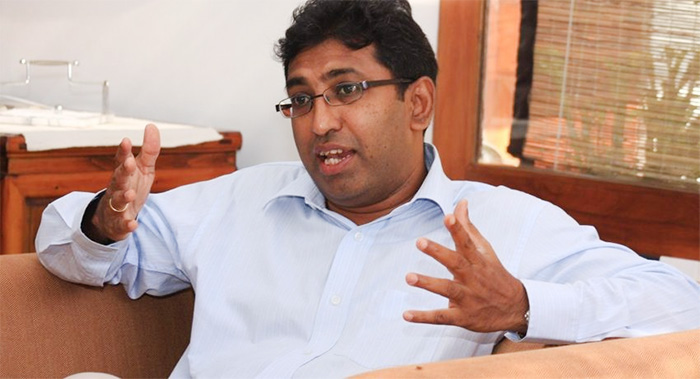
During a recent television appearance (https://www.youtube.com/watch?v=s0QWfenCFlk) , opposition MP and Committee on Public Finance (COPF) Chair Dr. Harsha de Silva dramatically brandished the latest IMF Letter of Intent (LoI, 13 May 2026), pointing to the signatures of President Anura Kumara Dissanayake and Central Bank Governor Dr. Nandalal Weerasinghe as proof of a “secret” alignment with austerity and cost-reflective utility pricing. However, for serious students of Sri Lankan macroeconomics, this “revelation” contained no new information. The legal, structural, and institutional mandate for cost-reflective pricing was codified long before the current administration took office—embedded in the IMF Extended Fund Facility (EFF) of 2023, the 2023 IMF Governance Diagnostic, and the Economic Transformation Act of 2024. This article argues that veteran economists in parliament must move beyond theatrical “gotcha” moments designed for political popularity and instead fulfill their true duty: educating the public on the non-negotiable continuity of structural adjustment programmess.
Anatomy of a Non-Revelation
The recent spectacle of Dr. Harsha de Silva presenting the IMF Letter of Intent on live television was framed as a grand exposure of the current administration’s hidden fiscal policy. With theatrical emphasis, Dr. de Silva pointed to the signatures of President Anura Kumara Dissanayake (AKD) and the Central Bank Governor, declaring that the government had bound the public to the bitter pill of cost-reflective electricity and fuel pricing.
Yet, to anyone who understands the mechanics of central banking and sovereign debt restructuring, this performance revealed nothing that was not already part of (i) the public, (ii) legal, and (iii) institutional reality. A Letter of Intent is a standard operational requirement of the IMF review process; it is not a newly minted policy conceived in secret. By treating a routine administrative continuity as a shocking disclosure, Dr. de Silva engaged in political showmanship rather than economic education.
Legacy of Cost-Reflective Pricing
The narrative that cost-reflective utility pricing is a novel concession by the AKD administration is factually incorrect. The institutional architecture to eliminate non-commercial losses within the Ceylon Electricity Board (CEB) and Ceylon Petroleum Corporation (CPC) was firmly established under the previous administration of Ranil Wickremesinghe.
The structural benchmarks were explicitly laid out in (i) the March 2023 IMF EFF Agreement and (ii) re-emphasized in the September 2023 IMF Governance Diagnostic Report. This framework was further consolidated by the legislature through (i) the Economic Transformation Act of 2024 and (ii) the new Sri Lanka Electricity Act. When the current administration assumed office, the fiscal tracks had already been laid. President AKD is merely operating the machinery of state within the legal and economic boundaries inherited from his predecessor Ranil Wickremesinghe to prevent a secondary default.
The Myth of the Solitary Saviour
There is a troubling tendency among Sri Lanka’s technocratic elite to engage in a saviour complex—positioning themselves on television screens as the singular authorities capable of managing public finance or navigating international waters. Dr. de Silva’s presentation was less about unveiling unknown data and more about projecting an image of unrivaled smartness in public finance.
When veteran economists resort to these manoeuvers, they diminish their own professional standing. Sri Lanka’s economic recovery does not hinge on the brilliant insights of a single individual or party; it depends on (i) institutional discipline, (ii) data-driven planning, and (iii) structural continuity. Pretending that routine compliance documents are exclusive intelligence updates serves only to feed personal political popularity at the expense of public intellectual growth.
Real Politics behind the Screen
Why, then, did Dr. de Silva choose to make a mountain out of an administrative molehill? The answer lies in pure political strategy. The National People’s Power (NPP) platform ascended to governance on strong anti-austerity rhetoric, promising relief from the heavy tax and tariff burdens imposed by the previous regime.
By holding up the signed LoI, Dr. de Silva sought a political checkmate. His objective was to expose the contradiction between the NPP’s populist election promises and its executive actions. While highlighting this policy convergence is fair game in partisan politics, framing it as a “new discovery” misleads the electorate into believing that the IMF programme is an optional, arbitrarily signed document rather than a legally binding national framework that leaves any sitting President with zero alternative manoeuvers.
True Mandate of Parliament’s Financial Oversight
During the broadcast, the fundamental boundary of the Committee on Public Finance (COPF) was brought into question. Dr. de Silva correctly noted that COPF does not formulate state policy—that remains the strict prerogative of the Executive and its chosen advisors. COPF’s true mandate is oversight: ensuring transparency, accountability, and the efficient monitoring of state revenues and expenditures.
If the head of our public finance oversight body wishes to protect the national interest, that energy should be (ii) directed toward evaluating the actual performance scorecards of state institutions, (ii) tracking structural benchmarks, and (iii) monitoring the real-time efficiency of economic programs. Using the platform of technical oversight to score quick points on a talk show blurs the vital line between a state auditor and a political campaigner.
Conclusion: The Need for Institutional Candour
Sri Lanka has paid a catastrophic price for populist rhetoric and the manipulation of economic facts for electoral gain. What the public requires from veteran economists and seasoned politicians today is not more political theater but radical candor.
The truth is simple: Sri Lanka is locked into a long-term, institutional structural adjustment programme that transcends whoever sits in the presidential secretariat. President AKD is executing pre-existing state commitments because the alternative is immediate economic isolation. Rather than trying to convince the public that they alone possess the secret key to salvation, opposition technocrats owe it to the nation to elevate the discourse. It is time to replace television showmanship with (i) honest, (ii) evidence-based planning, (iii) acknowledging that while politicians change, the arithmetic of national survival remains exactly the same.
(The writer, among many, served as the Special Advisor to the Office of the President of Namibia from 2006 to 2012 and was a Senior Consultant with the UNDP for 20 years. He was a Senior Economist with the Central Bank of Sri Lanka (1972-1993). He can be reached via asoka.seneviratne@gmail.com)
By Prof. Asoka S. Seneviratne

Tuesday at T20 World Cup: New Zealand eye first win; Ireland run into England

‘Spider-Man of Yemen’ dies falling into volcanic crater

Norwegian crown princess’s son found guilty of two counts of rape

Trump says deal to end war with Iran already signed and details to be released ‘pretty soon’

Showers will occur in the Western, Sabaragamuwa and North-western provinces and in Galle, Matara, Kandy and Nuwara-Eliya districts

Easter Sunday carnage: WR asks AG to question Dappula on ‘grand conspiracy’ claim

‘Dates have the highest sugar content to fight Coronavirus’

Sunday Island 27 December – Headlines

#SundayIsland 17th December – Headlines

Sunday Island – 28th March

Sunday Island Headlines – 21 March

Sunday Island – 21st February – Headlines
-
 News4 days ago
CIABOC summons Yoshitha over his participation in British Navy training programme
-
 News6 days ago
Local firms move millions of dollars overseas for phantom imports: Govt.
-
 Midweek Review6 days ago
July 09: An inexcusable overall security failure and exceptional contingency plan
-

 News3 days ago
Commonwealth lawyers urge Lanka to uphold rule of law
-

 News6 days ago
AI raises concerns over arrest of Sallay and rapper under PTA
-

 Sports1 day ago
Tharanga set for high-profile javelin clash in Ostrava
-

 Features2 days ago
Politics of protected species
-

 News4 days ago
Justice Minister responds to social media claims he represented Easter Sunday ringleader