
Editorial
Aiya’s wisdom and Malli’s folly

Former Minister Chamal Rajapaksa has told Parliament that his younger brother, Mahinda, should have quit politics after completing his second term as the President. This is something Chamal Aiya could have told Mahinda Malli in private. Why did he make such a statement on the floor of the House, of all places?
Mahinda is not alone in trouble; all members of the Rajapaksa family find themselves in hot water. Their properties have come under mob attacks, and they cannot move about freely. Worse, they have had to suffer indignities at the hands of angry protesters, who include many of their erstwhile supporters. Whoever would have thought, about a year or so ago, that such a fate would befall the powerful ruling family?
The Rajapaksa family is in the current predicament mainly because it took the masses for asses. The Rajapaksas thought the country was their fiefdom, and laboured under the delusion that they could ride on the sataka of Mahinda, who used to be a political magnet, win elections and continue to pull the wool over the eyes of the public. They did not learn from their humiliating defeat in 2015, and became cocky and arrogant when the people, fed up with the yahapalana rule, elected them again in 2019/2020, for want of a better alternative; they started making up for lost time. Their current rule is like a replay of the Mahinda Rajapaksa government (2010-2015), and what they are facing today would have played out if President Rajapaksa had succeeded in securing a third term in 2015.Chamal’s admonition, as it were, for Mahinda has come too late in the day although one cannot but fully endorse it. He should have prevailed on Mahinda not to introduce the 18th Amendment, which did away with the presidential term limit and restored the executive powers of the President. He was the Speaker at the time. The 18th Amendment became a curse for not only the Rajapaksa family but also the entire country.Did Chamal make a serious effort to dissuade his younger brother, President Gotabaya Rajapaksa (GR), from introducing the 20th Amendment, which is as draconian as the 18th Amendment, and has boomeranged? President GR has given in to pressure from the protesting public and undertaken to do away with the 20th Amendment and reduce his executive powers.
As a seasoned politician, Chamal should also have protested against the appointment of his younger brother, Basil, as the Minister of Finance. The task of running the Finance Ministry requires a real maven. If a well-versed person had been appointed the Finance Minister and given a free hand to address the economic crisis with the help of experts from the Central Bank, the Finance Ministry and elsewhere, the country would not have gone bankrupt, and the Rajapaksas would have been safe.Chamal should have guided President GR, who apparently thought he could run the country with the help of some retired military officers, whose pathetic performance as public officials makes one wonder how they succeeded in defeating the LTTE, which was described as the most ruthless terrorist outfit in the world. The so-called intellectuals who rallied behind GR and made his victory possible at the 2019 presidential election have their critics visiting mockery upon them. Has Chamal admonished the incumbent President as well?
The Rajapaksa family has not given up its efforts to retain its grip on power, as can be seen from the way it is manipulating numbers in Parliament, and causing divisions among its rivals. It has appointed Ranil Wickremesinghe Prime Minister and engineered several crossovers from the SJB, and the SLPP dissident group. But what really matters is not dosh-induced defections but public opinion, which is obviously not in favour of the Rajapaksas.



Thursday 29th January, 2026
Four Mahanayake Theras have made an intervention, albeit with delay, to reorient government policy towards commonsense and good governance. They have raised concerns about the prolonged delay in appointing the Auditor General. In a letter to President Anura Kumara Dissanayake, they have warned that the continued absence of an Auditor General has created space for various groups to question the state’s financial oversight and fuel debate over public financial management.
Noting that selecting an external officer for a post so central to public audit and oversight could detract from the integrity of the office, the Prelates have voiced support for Dharmapala Gammanpila, a senior official with extensive experience in the National Audit Office, as the most suitable candidate for the post of Auditor General.
The post of Auditor General has remained vacant since the retirement of the former incumbent in April 2025, and three nominations submitted by the President were rejected by the Constitutional Council (CC)––and rightly so. The government is trying to parachute an outsider into the Auditor General’s post to safeguard its interests.
Supermajorities make governments impervious to reason and blind them to reality. Feeding politicians’ autocratic tendencies that are a threat to democracy, steamroller majorities drive governments to embark on risky missions and launch mega projects to boost their leaders’ egos. An SLFP-led government weakened the economy with a disastrous experiment with autarky in the 1970s. A UNP government, elected in 1977, went to the other extreme, ruining profitable state enterprises and institutionalising election malpractices, political violence and corruption. Another SLFP-led government launched a grandiose infrastructure development drive and spent borrowed money on some Ozymandian projects, which have become white elephants. An SLPP administration introduced an ill-planned organic farming drive. The incumbent government has undertaken to reform the education system hastily.
The Dissanayake government is bent on reducing every vital state institution to a mere appendage of the JVP in a bid to perpetuate its hold on power. The Police Department has already become a pliable tool of the JVP. The CID is now a part of the JVP in all but name; it is doing political work for the government. It arrests, harasses and casts aspersions on the political rivals of the government in the name of investigations. Whenever the government paints itself into a corner, the CID makes some high-profile arrests to divert attention. The ruling party propagandists have launched a vilification campaign against the Attorney General, with the JVP/NPP supporters holding protests and calling for his ouster, as part of a government strategy to render the state prosecutor malleable so that the JVP/NPP can have its rivals arrested and prosecuted according to its whims and fancies.
The powerful message in the Mahanayake Theras’ letter to President Dissanayake has resonated with the public, who cherish democracy and good governance. It is being argued in some quarters that going by what Cabinet Spokesman and Minister Dr. Nalinda Jayatissa said about the prelates’ letter, at this week’s post-Cabinet media briefing, the government is likely to go ahead with its plan to appoint an outsider as Auditor General, paying no heed to the Mahanayake Theras’ concerns.
The JVP/NPP is not alone in ignoring the Mahanayake Theras’ concerns and advice. In December 2011, the Mahanayake Theras of the Asgiriya and Malwatte Chapters of Siam Nikaya, the Ramanna Nikaya and the Amarapura Nikaya, intervened to resolve a dispute in the UNP. They wrote to UNP leader Ranil Wickremesinghe, urging him to appoint Karu Jayasuriya as UNP leader, and thereby help strengthen the Opposition. Their letter went unheeded. One of the allegations the JVP and other Opposition parties levelled against President Mahinda Rajapaksa in 2014 was that his sons had held a car race in Kandy, ignoring the Mahanayake Thera’s concerns and protests.
It will be interesting to see whether President Dissanayake considers the prelates’ wise counsel seriously and abandons his efforts to politicise the National Audit Office.
Wednesday 28th Junuary, 2026
The SJB-led Opposition made a public display of collecting signatures for a no-confidence motion (NCM) against Prime Minister and Education Minister Dr. Harini Amarasuriya over the government’s flawed educational reforms, but it has since got cold feet. Not all Opposition parties have endorsed the NCM in question. Some bigwigs of the JVP/NPP government with a two-thirds majority are now daring the Opposition to go ahead with the NCM. Dr. Amarasuriya herself has taunted the Opposition, in Parliament, asking why it has baulked at moving the NCM against her.
The government is humiliating trade unions as well. Deputy Health Minister Dr. Hansaka Wijemuni has scoffed at the strength of the Government Medical Officers Association, which is currently on the warpath. He has claimed that the doctors did their utmost to win their demands by holding patients to ransom, but in vain, and warned that the government will not hesitate to take stern action to keep the state-run hospitals free from disruptions. This warning smacks of a veiled threat.
The JVP/NPP high-ups are sounding just like their predecessors, especially the members of the UNP regime led by President J. R. Jayewardene. The incumbent government’s dire warning to the protesting doctors reminds us of how the JRJ government suppressed trade union struggles in the 1980s. Having crushed the July 1980 general strike by terminating tens of thousands of workers who took part in it, the Jayewardene government bragged that ‘the elephant’ (meaning the UNP) had only shaken its trunk.
As for the Opposition’s NCM on hold, it is hoped that the JVP/NPP government will not follow a very bad precedent set by the Jayewardene regime. In 1980, the Opposition sought to postpone the debate on an NCM it moved against the then Speaker Bakeer Markar for backing President Jayewardene’s efforts to retain Abeyratne Pilapitiya as a UNP MP by nominating him to the Kalawana electorate despite a Supreme Court ruling that his election was void. Speaker Markar echoed President Jayewardene’s assertion that the Kalawana seat had not fallen vacant, and therefore a by-election was not warranted. The NCM against the Speaker was scheduled to be debated on 23 December, 1980, but the Opposition wanted it postponed in view of possible legal implications of the by-election the UNP was trying to avoid. But claiming that the NCM, moved by the Opposition, was of utmost national importance and therefore had to be debated urgently, the UNP government took it up, put it to the vote and defeated it! All UNP MPs, including the proposer and the seconder, voted against the NCM! The Opposition boycotted the NCM debate.
When the JVP-NPP government dares the Opposition to move the NCM against Prime Minister Amarasuriya, it sounds like its immediate predecessor, the SLPP-UNP administration, which was led by Jayewardene’s nephew, President Ranil Wickremesinghe. One may recall that when the Opposition, including the JVP, demanded action against the then Health Minister Keheliya Rambukwella over a racket involving the procurement of a fake cancer drug, President Wickremesinghe audaciously challenged it to move an NCM against Rambukwella. The Opposition did so, but the SLPP and the UNP defeated the NCM comfortably. Wickremesinghe apparently thought the matter would end there, but he was mistaken.
A government may defeat an NCM and boast of victory, but allegations against its members do not go away. The SLPP-UNP government could not go on defending Rambukwella, who was eventually thrown to the wolves. A parliamentary majority does not necessarily translate into a government’s ability to win elections. The crumbling SLPP-UNP regime, which defeated the NCM against Rambukwella, faced ignominious defeats in the presidential and parliamentary elections in 2024. The Yahapalana government (2015-2019) also had a parliamentary majority despite the UPFA’s pull-out from it in October 2018; the then Prime Minister Ranil Wickremesinghe retained his hold on power with the help of the JVP, the TNA, etc., but his party, the UNP, was reduced to a single National List seat in the 2020 general election. The JVP, which threw its weight behind Wickremesinghe, could secure only three seats.
Governments with supermajorities, too, have suffered crushing electoral defeats in Sri Lanka. The SLFP-led United Front government, which had a two-thirds majority, suffered a Humpty Dumpty-like fall in 1977. President Mahinda Rajapaksa’s government secured a two-thirds majority but collapsed like a house of cards in 2015. So did the Gotabaya Rajapaksa administration, which also had a two-thirds majority. The JVP-NPP government is ruining things for itself so much so that it is wary of holding the Provincial Council elections. Powerful governments in this country apparently tend to dig their own political graves.
Tuesday 27th January, 2026
The NPP government’s efforts to abolish MPs’ pensions have met with stiff resistance. All members of the current Parliament, including 159 NPP legislators, will lose their retirement benefits unless the government walks back its plan. Several petitions have been filed before the Supreme Court against the bill seeking to abolish the MPs’ pension scheme. The matter is now best left to the judges of the apex court.
Interestingly, former Minister of Justice Dr. Wijeyadasa Rajapakshe has pointed out that President Anura Kumara Dissanayake, who is all out to do away with MPs’ pensions, will receive his retirement benefits.
What one gathers from Dr. Rajapakshe’s argument is that President Dissanayake, like his predecessors, will be entitled to his pension. Article 36 of the Constitution says: “Within one month of the commencement of the Constitution, Parliament shall by resolution determine the salary, allowances and pension entitlement of the holders of the office of President. Such pension shall be in addition to any other pension to which such person is entitled by virtue of any prior service” (emphasis added). Article 36 (2) says, inter alia, “Any subsequent amendment, repeal or replacement of this Article and any subsequent law or any provision thereof inconsistent with this Article shall not have retrospective operation.” Article 36 (4) says: “Parliament may by resolution increase, but shall not reduce, the salary, allowances or pension entitlement of the holders of the office of President.”
One may recall that before the 2024 elections, the JVP/NPP leaders had the public believe that they would practise austerity a la Jose Mujica, who was the President of Uruguay from 2010 to 2015. Known as the world’s poorest President, Mujica, refused to move into the President’s House, and lived on a farm with his wife; his most notable asset was a 1987 Volkswagen Beetle. He donated his presidential salary and waited in queues with ordinary people in government hospitals, where he received treatment. He died a few months ago. It is unbecoming of the self-proclaimed Marxist leaders who denounced the previous Presidents for using insanely expensive vehicles purchased with state funds. In 2018, Dissanayake, as an Opposition MP, made a hue and cry about two bulletproof vehicles bought for the then Prime Minister Ranil Wickremesinghe’s use, at a staggering cost of Rs. 300 million each. He condemned that kind of expenditure as an utter waste of state funds. Now, the 600-million-rupee question is where those vehicles are. Are the incumbent government leaders using them?
Shouldn’t President Dissanayake emulate Mujica instead of his predecessors whom he berated for wasting tax money to maintain fleets of super luxury vehicles and large VVIP security divisions?
Meanwhile, it is puzzling why the JVP/NPP has not sought to abolish the MPs’ salaries as well. The JVP says it looks after its leaders and parliamentary group members. Besides, as evident from their asset declarations, they can easily do without their salaries. They should heed what Mujica famously said in an interview with BBC: “I’m called ‘the poorest president’, but I don’t feel poor. Poor people are those who only work to try to keep an expensive lifestyle, and always want more and more.” Sadly, as we argued in a previous comment, the only similarity one sees between the policies of the Mujica administration and those of the JVP-led NPP government is their lax attitude towards cannabis. Mujica legalised the recreational use of cannabis, and the JVP/NPP leaders have permitted the cultivation of cannabis for export.
While claiming that their well-wishers look after them, the JVP/NPP leaders insist that their political rivals in the current Parliament amassed huge amounts of ill-gotten wealth while they were in power. In fact, those who are currently in the Opposition enriched themselves while savouring power and now spend colossal amounts of funds on their election campaigns and live in clover. So, one can argue that the members on both sides of the House are in a position to serve the nation voluntarily.

Rathnayake in Sri Lanka squad for England T20Is; Thushara, Kamindu left out

U19 World Cup: Peake ton fires Australia into the semis

The National Strategic Action Plan to monitor and combat human trafficking (2026-2030) officially launched

Seifert, Santner headline New Zealand’s massive win despite Dube’s 15-ball fifty

Dry weather will prevail inmost parts of the island.

No changes to IMF agreement despite Cyclone Ditwah impact

‘Dates have the highest sugar content to fight Coronavirus’

Sunday Island 27 December – Headlines

#SundayIsland 17th December – Headlines

Sunday Island – 28th March

Sunday Island Headlines – 21 March

Sunday Island – 21st February – Headlines
-
 Business3 days ago
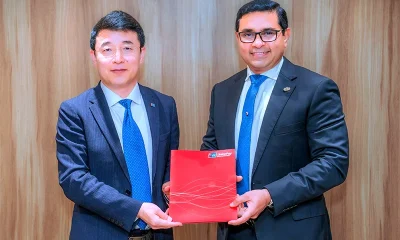
ComBank, UnionPay launch SplendorPlus Card for travelers to China
-
 Business4 days ago
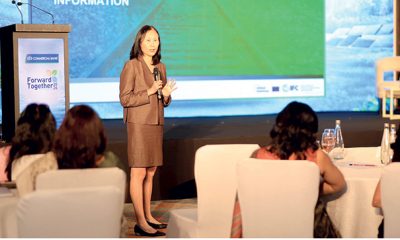
ComBank advances ForwardTogether agenda with event on sustainable business transformation
-
 Opinion4 days ago
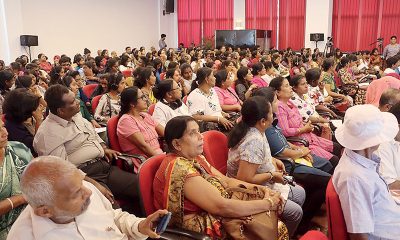
Conference “Microfinance and Credit Regulatory Authority Bill: Neither Here, Nor There”
-
 Opinion6 days ago
A puppet show?
-
 Opinion3 days ago
Luck knocks at your door every day
-
 Features6 days ago
‘Building Blocks’ of early childhood education: Some reflections
-

 Business5 days ago
Dialog Brings the ICC Men’s T20 Cricket World Cup 2026 Closer to Sri Lankans
-
 News4 days ago
Rising climate risks and poverty in focus at CEPA policy panel tomorrow at Open University