
Business
Advancing solar PV integration: A vision for a sustainable energy future

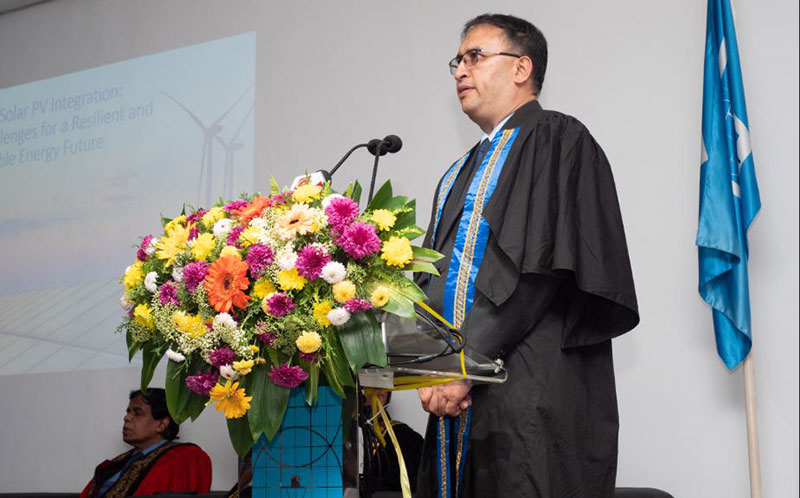
During the Eng. (Prof.) R. H. Paul Memorial Oration 2025, Prof. Lilantha Samaranayake emphasised the urgent need for advanced solar photovoltaic (PV) integration to create a resilient and sustainable energy future. Speaking on the Future of Renewable Energy, he highlighted projections from the International Energy Agency (IEA) that forecast global renewable electricity generation will exceed 17,000 TWh by 2030, representing an almost 90% increase from 2023. Solar PV is anticipated to become the leading source of renewable electricity, followed by wind and hydroelectric power.
Sri Lanka has set an ambitious target of achieving 100% renewable energy. Policymakers are working towards a people-centric, equitable, and affordable energy transition. The government also aims to reduce electricity tariffs by 30% within five years, though no specific timeline has been set for net-zero emissions.
Challenges in Solar PV Integration—While renewable energy adoption is increasing, challenges remain. A major issue is grid stability due to solar energy’s intermittent nature. Grid stability refers to the ability of an electrical power grid to maintain a consistent voltage and frequency while balancing electricity supply and demand. One of the main challenges with integrating solar energy into the grid is its intermittent nature, meaning that solar power generation fluctuates depending on sunlight availability. This variability can cause instability in the grid.
Why is Solar Energy Intermittent? Solar panels generate electricity only when exposed to sunlight. At night, there is no generation, requiring alternative power sources. Cloud cover, rain, and seasonal changes affect solar energy output. On cloudy days, solar generation can drop suddenly, causing fluctuations in power supply. Unlike conventional power plants that provide a steady output, solar energy can vary within minutes, making it challenging to maintain a stable power flow.
How Does This Affect Grid Stability? The Electricity grids operate at a specific frequency (e.g., 50 Hz or 60 Hz). A sudden drop in solar power generation can lead to a decrease in frequency, potentially causing power outages. Solar energy injections can cause voltage levels to rise or drop unpredictably, affecting equipment performance and consumer supply quality. Traditional power plants have rotating generators that provide inertia, helping to stabilise the grid. Solar PV systems do not have this natural inertia, making the grid more susceptible to instability.
Prof. Samaranayake explained that Sri Lanka’s current power generation mix, as of November 2024, includes:
27% from hydroelectric power
19.6% from rooftop solar
14.3% from coal
13.6% from oil
5.1% from private oil plants
Smaller contributions from wind, biomass, and other renewable sources
A key concern is the lack of inertia in renewable energy sources. Unlike conventional power plants, solar and wind do not provide inherent grid stability, leading to frequency fluctuations.
Prof. Samaranayake proposed an innovative solution for grid stability: implementing Virtual Inertia using advanced power electronic control systems. This approach mimics the stabilising effect of traditional rotating generators, ensuring a steady frequency supply in the grid.
Other potential solutions include:
Adding rotating machines such as LNG or nuclear power plants
Energy storage systems like pumped storage, flywheels, and large-scale battery systems
Enhancing grid regulations to support the integration of rooftop solar PV systems
The introduction of advanced Virtual Inertia technology is expected to complement regulatory changes that relax statutory voltage limits and improve the quality of electricity supply.
Another controversial yet forward-looking strategy discussed was the possibility of nuclear energy. According to sources from the Sri Lanka Atomic Energy Board (SLAEB), the country’s first nuclear power plant, leveraging integral pressurized water reactor (iPWR) technology, could be operational by 2032. Given Sri Lanka’s proximity to India, which already operates nuclear plants, proponents argue that nuclear energy could be a viable option for stabilizing the power grid.
Prof. Samaranayake stressed the need for a holistic approach, as solar PV continues to be vital to Sri Lanka’s energy future. This involves investing in energy storage, enhancing grid infrastructure, and enacting regulatory reforms. He called on policymakers, engineers, and the public to collaborate in creating a more sustainable and resilient energy landscape.
The Eng. (Prof.) R. H. Paul Memorial Oration reminds us of engineering and innovation’s critical role in tackling global energy challenges. With strategic planning and technological advancements, Sri Lanka can pave the way for a cleaner, more sustainable future.
The oration paid tribute to the late Prof. R. H. Paul, a distinguished academic and former Dean of the Faculty of Engineering, University of Peradeniya, who made significant contributions to electrical and electronic engineering in Sri Lanka. His legacy continues to inspire advancements in the energy sector.


Xiaomi Sri Lanka, marked a significant day in the brand’s local journey with the launch of the all-new Xiaomi 17T and the grand opening of the new Xiaomi Store powered by Abans at One Galle Face Mall, Lower Ground.
This occasion reflects the brand’s growing presence in the country and its commitment to bringing smarter technology, connected devices and immersive customer experiences closer to Sri Lankan consumers.
Held under the theme “Step into a smarter world with Xiaomi,” the launch event welcomed media, partners, technology enthusiasts and customers to experience Xiaomi’s latest innovation and wider smart ecosystem. The new store at One Galle Face Mall powered by Abans has been designed to give customers a hands-on experience across Xiaomi smartphones, smart home products, lifestyle technology and connected devices, supported by Abans’ strong retail presence and customer service network.
Commenting on the milestone, Kain Wang, Country Head, Xiaomi Sri Lanka, said, “17th June is a significant day for Xiaomi in Sri Lanka as we celebrate two important milestones together: the launch of the Xiaomi 17T and the opening of our new Xiaomi Store powered by Abans at One Galle Face Mall. This reflects the strength of Xiaomi’s journey in Sri Lanka and our continued commitment to offering innovation, performance and smarter lifestyle experiences to local consumers. With Xiaomi 17T, we are bringing advanced Leica imaging, powerful performance and long-lasting battery life to users who want to do more with their smartphones. At the same time, our new store creates a dedicated space for customers to experience the Xiaomi ecosystem in a more personal and engaging way.”

Prime Lands Residencies PLC, the condominium development arm of Prime Group – the real leader in modern real estate, announced that construction is actively underway on MON VIE, a landmark ultra-luxury residential development located at Thalakotuwa Gardens, Colombo 05. Featuring never been seen developments in Sri Lankan residential architecture, including the country’s first-ever cantilevered viewing deck and its first floating rooftop restaurant, the project’s scope reflects its broader ambition to bring a genuinely new kind of living experience to Colombo.
Conceived under the defining philosophy of ‘The art of family living, perfected,’ MON VIE is designed for discerning modern families who seek both the refinement of contemporary urban living and the warmth of a genuine home. Rising Ground + 25 floors, with a signature rooftop, MON VIE will offer an exclusive collection of 2-bedroom and 3-bedroom luxury apartments, with prices starting from LKR 86 million. MON VIE’s crowning glory will be its floating rooftop restaurant, Sri Lanka’s first of its kind, conceived not only as an amenity for residents but as a gourmet destination of its own right, offering panoramic views of Colombo against a backdrop befitting the city’s most exceptional address in Colombo 05.

The Colombo Stock Exchange (CSE) has announced the rebalancing of the All Share Price Index (ASPI) for the 2nd Quarter of 2026. The announced rebalancing will be effective from the market opening of 22nd June 2026 (after the market close of 19th June 2026).
The ASPI was originally calculated based on full market capitalization. In January 2022, the methodology was revised to adopt a float-adjusted market capitalization basis, whereby only the public holding portion of a company’s market capitalization is considered in the index calculation. As listed companies report their public holding percentages on a quarterly basis, the ASPI requires periodic adjustments to reflect these changes. These adjustments are carried out through the quarterly rebalancing process of the ASPI. Accordingly, the next quarterly rebalancing exercise for the ASPI (2026 Q3) is scheduled to take effect after market on 18th September 2026. The detailed methodology can be accessed on the CSE website at www.cse.lk.

Xiaomi Store powered by Abans opens at One Galle Face Mall

Prime Residencies forges ahead with construction of MON VIE, Colombo 05

CSE to rebalance ASPI for Q2 of 2026

CEAT opens premium Shop-in-Shop outlet at Olympic Tyre House, Colombo 6

Sri Lanka and Russia forge path to enhanced tourism ties at Moscow Forum

Sri Lanka’s enterprise leaders chart course for secure AI adoption at Innovation Forum 2026

‘Dates have the highest sugar content to fight Coronavirus’

Sunday Island 27 December – Headlines

#SundayIsland 17th December – Headlines

Sunday Island – 28th March

Sunday Island Headlines – 21 March

Sunday Island – 21st February – Headlines
-

 News7 days ago
Release of 2025 O/L results likely to be delayed
-

 News7 days ago
Theft of USD 2.5 mn from Treasury: CoPF accused of complicity in NPP cover-up
-

 News6 days ago
Beijing Capital Airlines to resume flights to Colombo signalling boost to tourism
-

 Features5 days ago
Killing of Colombo’s ancient trees — a warning on UN’s World Desertification Day – 17 June
-

 Opinion7 days ago
Decoding Trump’s 12.5% “Forced Labor Tariff” on Sri Lanka
-

 News2 days ago
Creditor not yet paid
-

 News3 days ago
Creditor receives USD 2.5 mn as Lankan public bears loss from theft of Treasury funds
-

 Opinion7 days ago
Palm leaf manuscripts of Sri Lanka – Part V