
Latest News
Adjustment of water tariffs alongside with electricity tariff revision is under review – Minister of Water Supply and Estate Infrastructure Development

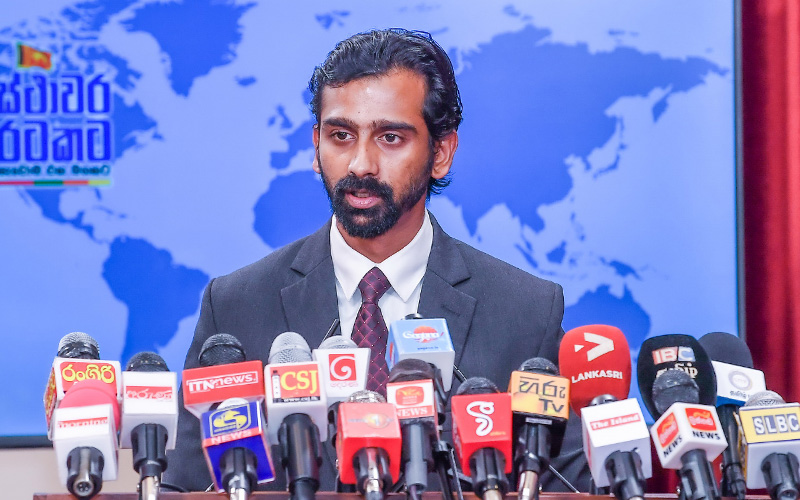
Minister of Water Supply and Estate Infrastructure Development Jeevan Thondaman, announced that the reduction of water tariffs is being studied alongside the new electricity tariff revision, with a decision expected by the end of this week.
The Minister also highlighted that the Water Supply Board, previously experiencing a monthly loss of LKR 2.8 billion, has now achieved a profit of LKR 6.2 billion.
Minister Thondaman made these remarks during the ‘Collective Path to a Stable Country’ press briefing today (17) at the Presidential Media Centre (PMC).
Elaborating further, the minister said:
We commend Minister Kanchana Wijesekera for initiating steps to lower electricity tariffs. The water supply sector is closely tied to electricity tariffs, making it likely that this revision will also lead to reduced water tariffs.
Water availability is influenced by various factors. We previously committed to lowering water tariffs in tandem with reductions in electricity charges. Currently, the Ministry is not only focusing on electricity but also assessing the impact of reduced interest rates, down from 26% to 11%. Additionally, we are studying the potential reduction in water tariffs based on changes in the dollar exchange rate. It’s important to note that the cost of chemicals procured by the water supply board is influenced by the dollar exchange rate.
It is expected that by the end of this week, a decision will be made regarding the extent of the reduction in the water tariff. When I assumed office in January 2023, the Ministry faced challenges, unable to even provide 1,000 new water connections. Moreover, I inherited a Ministry burdened with an USD 800 million debt and a Water Supply Board experiencing monthly losses of approximately LKR 2.8 billion. The board’s monthly recurring expenses of LKR 4.5 billion had a significant national impact.
Since then, we have delivered on our commitments. The number of new water connections has increased to 113,000, with plans to add approximately 30,000 more connections in the coming weeks.
Furthermore, we have successfully transformed the Water Supply Board’s monthly loss of LKR 2.8 billion into a monthly profit of LKR 6.2 billion. It is noteworthy that with a recurring expenditure of LKR 4.5 billion, we have ensured the sustainability of the water supply sector by allocating the surplus towards debt servicing.
Through the Ministry of Power and Energy, we secured a USD 100 million policy-based loan from the Asian Development Bank (ADB). Similarly, preparations are underway for a sub-programme within the water supply sector. Cabinet approval has been obtained for the final two issues of the ADB’s reform proposals: the water tariff formula and the investment framework criteria. Upon approval by the Asian Development Bank Executive Board, an additional USD 100 million is anticipated.
Moreover, we are committed to safeguarding vulnerable and economically disadvantaged communities from the impact of water tariffs. Measures have been implemented to provide subsidies to hospitals, schools, and religious institutions classified as charitable entities.
We are also pleased with the success of the “Aswasuma” program and the President’s focus on increasing wages for plantation workers and granting land rights. The Upcountry communities have gained confidence in the President’s initiatives. Despite challenges faced by Upcountry communities, we are optimistic about the direction we are heading. Today, many longstanding issues affecting Upcountry communities have been resolved.
Next month, discussions will be held with the Ministry of Industries and Estate Companies aimed at finding a lasting solution to the plantation workers’ wage issue. Furthermore, in response to our longstanding request, the President submitted a cabinet paper on land rights last Monday. In Upcountry areas where numerous families reside, there is often only one Grama Sewa Officer, leading to inadequate distribution of government welfare benefits. This is exacerbated by historical land demarcation issues affecting Upcountry residents.
These challenges have impeded the development of Upcountry communities. To address this, the President’s cabinet paper proposes formally recognizing Upcountry areas as villages. Additionally, there is widespread agreement that priority should be given to providing housing rights to Upcountry people. Securing land rights enables individuals to build homes, fostering community development.







[Cricbuzz]
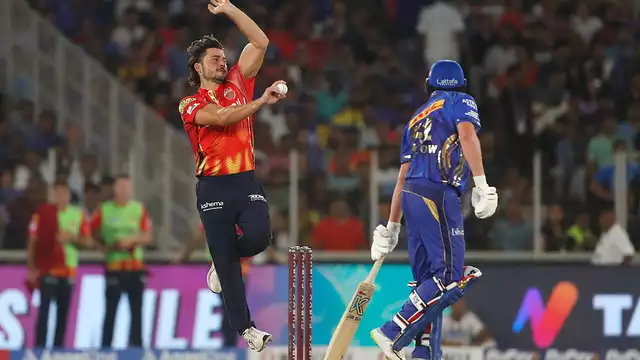

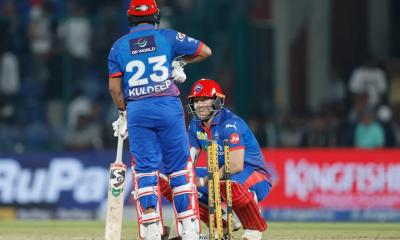
Why did David Miller refuse a single off the penultimate delivery with Delhi Capitals needing 2 off 2? It’ll be spoken of for a while, but not inside the Gujarat Titans change room. Because Prasidh Krishna bowled a nerveless slower bouncer off the final delivery that Miller missed, and Jos Buttler then nailed a direct hit with an underarm throw from behind the stumps to run out Kuldeep Yadav, clinching a dramatic first win for GT in IPL 2026.
Despite being adjudged run out on the field, Miller wasn’t in the mood to concede defeat, and reviewed the final ball for a possible wide. But when replays confirmed what he had perhaps known, he was crestfallen. Equally distraught in the dugout was K L Rahul, whose 52-ball 92 set the game up for DC but for one run.
It was GT’s first win of the tournament and the first loss for DC after starting the campaign with two wins in a row.
Thirty-six needed off 12. A bruised finger that didn’t make it easy for him to grip the bat had forced Miller to retire hurt with DC needing 81 off 42. But when Tristan Stubbs was run-out in the 17th over, Miller returned hoping to play second fiddle to Rahul. Instead, he was now expected to deliver a box-office hit with Rahul nicking behind off a full Mohammed Siraj delivery two balls later.
Miller nearly delivered what was expected, as he went 6, 4, 6 off Siraj, repeatedly peppering the short leg-side boundary. At the other end, Vipraj Nigam also ramped four off a short delivery to bring the equation down to a manageable 13 off the final over.
Prasidh was tasked to bowl the final over. His three overs prior to that had been walloped for 41; Rahul, his state mate, had climbed into him earlier in the night. But all that would’ve been forgiven if Prasidh delivered a gun final over. That GT could only have four fielders out due to a slow over rate added to his challenge. And he nearly succumbed.
Nigam made room and swung cleanly to hit the first ball to the long-off fence, but a rush of blood had him swipe the second delivery to Shubman Gill at mid-off. With DC now needing nine off four, Kuldeep gently deflected his first ball to deep third to leave the chase in Miller’s hands.
With the equation down to 8 off 3, Prasidh bowled a slot-ball that Miller walloped over long-off. But with two needed, Miller inexplicably refused a single to take it all upon himself to finish the deal. He couldn’t connect on the final ball, and Prasidh belted a roar. GT had pulled one from under DC’s rug in dramatic circumstances.
After scores of 1 and 0 in his first two games, Rahul announced himself with a 29-ball half-century that was as pleasing as they come for large parts. It was also one that didn’t have the baggage of him playing run-accumulator, like he has tended to in the past while opening the batting. This Rahul was fun, free and fearless and he helped DC overcome a few roadblocks along the way, like when they lost two wickets in two deliveries to Rashid Khan at the halfway mark.
Rahul was particularly menacing against the fast bowlers, and it began with a wristy flick that he sent way back over deep square off Kagiso Rabada. The early jitters out of the way – if he even had some inkling of them – he batted like a man possessed, fearlessly climbing into length balls from Prasidh over cover, and slapping disdainfully over point.
He is good, but where is the Rashid of old, they asked. Turns out he hadn’t gone anywhere. After he conceded just nine in his first two with DC rampant, he returned to dismiss Nitish Rana in his dramatic third over, the 10th of the innings. Having been given out lbw earlier, only for Rana to overturn the decision through DRS, he was out a few balls later when he miscued a googly to Sai Sudharsan at long-off. This was Rana’s third sub-20 score of the season.
This brought the in-form Sameer Rizvi to the middle, and he lasted all of one delivery as Rashid snuck through his inside-edge with a ripping googly to briefly elicit jitters in the DC camp. This is when Miller entered, before briefly exiting with seven overs left. But in the same over, when Rashid had Axar Patel slice one to Glenn Phillips running back from cover, GT started to have an opening.
On any other night, Rashid’s spell would have cracked open the game. The fact that DC were still in it despite these wickets was down to Rahul. It needed the skilful Siraj to dismiss him with DC needing 45 off three overs. By then, the pressure was telling.
That GT were eventually able to get over the line was down to their run cushion, made possible thanks to half-centuries from Jos Buttler, Gill and Washington Sundar. Buttler looked unshackled, hitting four sixes off his first 15 deliveries en route a bruising half-century, while Gill played himself in and then allayed fears of neck spasms during his takedown of Kuldeep with the slog sweep. Then Washington, promoted to No. 4, struck his maiden IPL fifty to shore up the innings.
Even so, GT managed just 49 off the last five. On another day, this may have proved to be costly. It didn’t on Wednesday, and for that, they have Rashid to thank.
Brief scores:
Gujarat Titans 210 for 4 in 20 overs (Sai Sudarshan 12, Shubman Gill 70, Jos Buttler 52, Washington Sundar 55, Glenn Phillips 14*; Mukesh Kumar 2-55, Lungi Ngidi 1-24, Kuldeep Yadav 1-42 ) beat Delhi Capitals 209 for 8 in 20 overs (Pathum Nissanka 41, KL Rahul 92, David Miller 41*, Vipraj Nigam 12; Mohammed Siraj 1-42, Rashid Khan 3-17, Prasidh Krishna 2-52) by one run
[Cricinfo]

PSL 2026: Iftikhar’s all-round show seals last-ball win for Zalmi

BCCI curbs movement of benched IPL players in latest rules

Prasidh trumps Miller in last-ball finish as Gujarat Titans clinch thriller

Greece to ban social media for under-15s from next year

Showers will occur at a few places in the Western, Sabaragamuwa and North-western provinces and in Galle, Matara, Kandy, Nuwara-Eliya and Mannar districts after 2.00 p.m.

Sun directly overhead Chilaw, Bingiriya, Halmillawewa, Panduwasnuwara, Gokarella, Kawudupelella, Koppaveli and Kirankulam about 12:12 noon. today (09)

‘Dates have the highest sugar content to fight Coronavirus’

Sunday Island 27 December – Headlines

#SundayIsland 17th December – Headlines

Sunday Island – 28th March

Sunday Island Headlines – 21 March

Sunday Island – 21st February – Headlines
-

 Features5 days ago
Ranjith Siyambalapitiya turns custodian of a rare living collection
-

 News5 days ago
Global ‘Walk for Peace’ to be held in Lanka
-

 News3 days ago
Lankan-origin actress Subashini found dead in India
-

 Features5 days ago
Beyond the Blue Skies: A Tribute to Captain Elmo Jayawardena
-
 Opinion7 days ago
Hidden truth of Sri Lanka’s debt story: The untold narrative behind the report
-

 Features5 days ago
Aspects of Ceylon/Sri Lanka Foreign Relations – 1948 to 1976
-

 Business17 hours ago
Hayleys Mobility introduces Premium OMODA C9 PHEV
-

 Features7 days ago
The Ramadan War