
Business
Addressing misconceptions on agricultural practices in Sri Lanka’s tea plantations

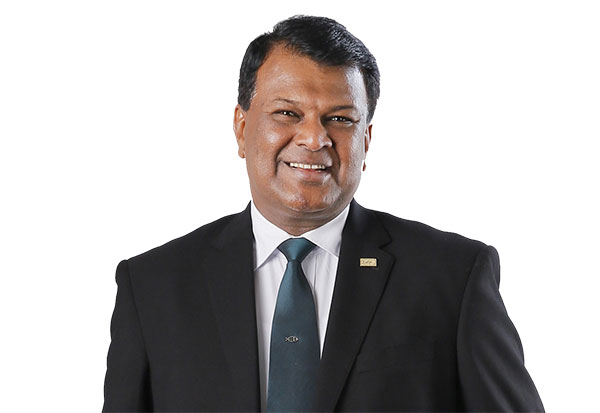
By Dr. Roshan Rajadurai
The recent move by the government to ensure the availability of fertiliser critical for the country’s agriculture sector is welcomed by all industry stakeholders – including the Regional Plantation Companies (RPCs), which cultivate tea, rubber and other plantation crops. This is a crucial source of support at a time the tea industry in particular, is facing numerous challenges. Hence, the government’s actions are appreciated and commended by all RPCs.
However, recent discussions on fertiliser have brought to the fore certain misconceptions held by certain critics and members of the public on agricultural practices in Sri Lanka’s tea plantations – which produce the world-renowned ‘Ceylon Tea’, one of Sri Lanka’s largest exports and foreign exchange-earners.
Hence, this article will address such myths and misconceptions and put the record straight on the practices with regard to fertiliser and agro-chemical usage in tea plantations managed by Regional Plantation Companies (RPCs).
At the onset, it should be noted that more than 70% of Sri Lanka’s tea is produced by the smallholder sector, which does not come under the management of the RPCs. RPCs can only comment on practices adopted on plantations managed by Regional Plantation Companies.
Adherence to ‘Integrated Agriculture’
Integrated agriculture practices refer to the use of a combination of traditional and modern methods for cultivation, done with due focus on social and environmental factors (beyond mere commercial considerations), with the intention of ensuring long-term sustainability.
Sri Lanka’s tea plantations have been producing output of the highest quality, meeting highly rigorous international quality standards for more than 150 years, which would clearly not have been possible without the use of integrated agriculture practices.
To provide an example of how this is practised operationally, for weed management, RPC plantations use various biological methods (for instance, predators which consume and control the population of harmful insects) and do not rely exclusively on synthetic/chemical inputs. Similarly, all activities related to cultivation, plant protection etc., use a combination of traditional practices, organic material and recommended agro-chemicals used in prescribed quantities.
International accreditations and certifications
Some appear to be of the view that RPCs apply agro-chemicals liberally in large quantities. Firstly, this would be highly imprudent and would go against the very interests of the RPCs. Agro-chemicals are a notable component of the cost of production (CoP), and over-application would simply increase costs.
This myth is also dispelled by the fact that the tea industry of Sri Lanka is by far the most environmentally and otherwise certified tea industry in the world. RPC plantations have been accredited and certified by numerous internationally-reputed organisations such as Rainforest Alliance, Forest Stewardship Council, Fairtrade International and adhere to Good Agricultural Practices (GAP).
In addition, Sri Lankan tea has been recognised as the world’s ‘cleanest’ tea since 1975 by the Food and Agriculture Organisation (FAO) of the United Nations (UN).
95% of Sri Lanka’s tea production is exported. Shipments of tea produced in Sri Lanka are exported to countries, including European countries, with stringent standards in terms of maximum residue limit (MRL), which refers to the highest level of a chemical residue legally allowed in food and beverages.
Robust local framework on agro-chemical usage
Baseless allegations on high agro-chemical usage by tea plantations are also a disservice to the invaluable contributions of globally respected organisations such as the Tea Research Institute (TRI) of Sri Lanka. TRI follows a rigorous testing and approval process in allowing the use of agro-chemicals for tea cultivation.
Following trials, often conducted over several years, agro-chemicals have to be approved for use by an independent professional committee.
While some have claimed in the past that certain chemicals used in tea plantations contributed to health issues in non tea-growing parts of the country, reputed local bodies such as the National Science Foundation has refuted such baseless claims.
Multiple safeguards at the producer, national, international and buyer level ensure strict compliance of the RPCs with best practices in agro-chemical usage.
Niche markets are not a viable option
Some on the other hand, have speculated on the possibility of avoiding agro-chemical usage in Sri Lankan tea plantations by opting for organic cultivation.
Unfortunately, the biggest deterrent to organic tea cultivation is completely beyond the control of growers, as it is the preference of buyers of Ceylon Tea. Ceylon Tea is known and preferred due to certain properties such as aroma, taste and colour. These properties are impacted by the type of plant nutrients applied. When organic inputs are used, the final products tend to differ significantly in terms of appearance, taste, aroma etc. from Ceylon Tea that buyers prefer and are accustomed to. While few plantations have attempted cultivation of organic tea, a number of such experiments have failed due to lack of buyer demand.
There is certainly a small niche market globally for organic tea – which is less than one percent of the total market. However, Sri Lanka’s tea industry, which is already facing severe challenges on multiple fronts, is in absolutely no position to completely re-align itself (including by finding new markets and buyers) to switch and cater to this small segment. An industry which exceeds USD 1.2 billion in value (in terms of total export earnings in 2020) cannot sustain itself by catering to a small niche.
It should be noted that RPCs are responsible for providing employment to 105,000 workers in total and for providing various facilities for a total resident population of approximately one million. Beyond commercial considerations of individual companies, it would be highly irresponsible for the RPCs to ‘bet’ the wellbeing of nearly five percent of the country’s population resident on RPC plantations on a highly niche and a still emerging sector.
In addition, practically, adoption of entirely organic cultivation would be highly challenging. At Rs. 1,900 per kilogram, the estimated production cost of one kilogram of organic tea would be equivalent to nearly three times the cost of production of one kilogram of tea produced via conventional methods.
Greater possibility of disease under organic methods
Another consideration which cannot be ignored is the probability of greater disease, if 100% organic cultivation methods were to be adopted. Many Sri Lankans would have heard of the famous ‘coffee leaf rust’ which commencing in 1869 entirely wiped out Sri Lanka’s significant extent of coffee plantations at the time.
Due to lack of ability (in terms of availability of agro-chemicals etc.) at that time to treat the fungal disease, the entire industry was wiped out. Now, while thanks to advances in agriculture and technology it is possible to address such challenges, it would be extremely difficult to do so, without the use of agro-chemicals to any degree.
For instance, at times of high humidity in plantations, it can be necessary to apply fungicides. If not, due to fungal diseases 20% to 30% of the crop could be lost within a relatively short period of time. Hence, while the coffee leaf rust example is an extreme scenario, it is not one which can be ruled out. Anywhere in the world where conventional agriculture is practiced, agro-chemicals are critical in dealing with such challenges.
Unlike fungicides, lack of application of suitable fertiliser in sufficient quantities may not be immediately apparent in tea. However, given that tea is perennial crop, with tea bushes being able to produce output for 30 or 40 years or more, once the changes start to manifest within a period of perhaps six months, the impact could potentially be long-term and last throughout the life of the tea bush.
Critics can perhaps make invalid comparisons to dispute the above, such as stating that even in midst of fertiliser shortages, national tea production has increased thus far this year, compared with the previous year. This is simply due to last year being unfavourable for tea production, with the drought resulting in a massive 40% crop loss.
RPCs invested in the industry’s future growth
In conclusion, despite certain claims to the contrary, Sri Lankan tea plantations managed by Regional Plantation Companies adhere to all necessary safeguards with regard to responsible agro-chemical usage at both national and international level. If not, the Ceylon Tea brand would not be as strong and internationally-acclaimed for its quality.
RPCs have actively and voluntarily adopted measures such as integrated agriculture practices, to minimise usage of agro-chemicals and incorporate organic elements and biological methods. However, there is an extent to which this can be done and converting to organic tea cultivation for the industry as a whole is not a feasible solution, considering that organic tea is a small, highly niche sector. In addition, converting entirely to organic creates other risks, including greater prevalence of disease.
RPCs have been part of the Ceylon Tea industry for many decades and are not looking to make a ‘quick buck’ and endanger the industry’s sustainability, our own and the livelihoods of our workers, by irresponsible usage of agro-chemicals. RPCs have made a significant contribution to the development of the Ceylon Tea industry and the long-term growth of the industry is very much in our interest. Hence, I would urge all industry stakeholders and members of the public to not be swayed by myths and misconceptions on the practices of RPCs with regard to agro-chemical usage.

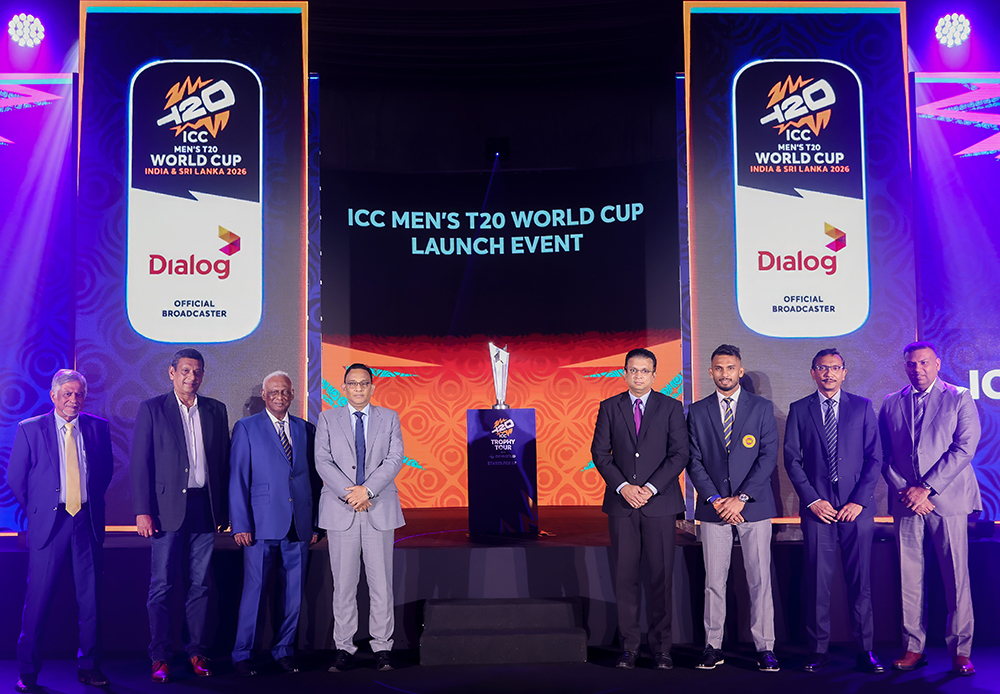
Dialog Axiata PLC, Sri Lanka’s #1 connectivity provider, hosted an event to mark the ICC Men’s T20 Cricket World Cup 2026, bringing together stakeholders and cricket enthusiasts as Sri Lanka looks ahead to one of the world’s most anticipated sporting events.
Over the years, Dialog has played an enduring role in supporting sport in Sri Lanka, with cricket at its core, enabling access to the game through partnerships and nationwide initiatives, reflecting its commitment to Powering the Passion of the Nation. Against this backdrop, securing the ICC media rights in Sri Lanka for the 2026–2028 period represents an important milestone in Dialog’s ongoing journey of bringing the world’s leading cricket tournaments to Sri Lankan audiences.
The event was attended by representatives from the Sports Ministry, Sri Lanka Cricket, the media, and the corporate sector, alongside former and current national cricketers. It recognised Sri Lanka’s proud cricketing legacy and the deep-rooted following the game enjoys among fans, while underscoring the scale and significance of the ICC Men’s T20 Cricket World Cup 2026 for local audiences.
As anticipation builds towards the tournament, the ICC Men’s T20 Cricket World Cup trophy was ceremonially showcased during the event, offering those present a closer look at a widely recognised symbol of the competition.
S.Achhudan, Director General of Sports said, “Sport plays an important role in strengthening national unity and identity. Public–private partnerships, such as Dialog’s continued support for cricket, are important in sustaining the sports ecosystem and in enabling broad public access to major international sporting events.”
Commenting on the occasion, Supun Weerasinghe, Director / Group Chief Executive of Dialog Axiata PLC, said, “Cricket holds a special place in Sri Lanka, with a following that spans generations and communities. Global tournaments such as the ICC Men’s T20 Cricket World Cup are events that fans look forward to and remember. At Dialog, our focus is to play a meaningful role in enabling these experiences — ensuring Sri Lankans can follow the game across platforms, with the quality, reliability, and reach it deserves.”
Sharing his views on the collaboration, Mr. Bandula Dissanayake, Honorary Secretary of Sri Lanka Cricket, said, “The ICC Men’s T20 Cricket World Cup is a major event for the sport and for cricket-loving nations such as Sri Lanka. With Dialog as the ICC media rights holder in Sri Lanka for the 2026–2028 period, this collaboration supports strong engagement around the tournament and reflects the scale of interest cricket continues to enjoy across the country.”
Sri Lankan fans will be able to follow the ICC Men’s T20 Cricket World Cup 2026 on Dialog Television and the Dialog Play App, alongside a free-to-air broadcast partnership with Supreme TV, ensuring wide access to the tournament.
The revenue that was earned from the tourism sector in 2025 was US $ 3.2 billion, which is a significant drop compared to the 2018 figure , which is US$ 4.3 billion, a top tourism sector specialist said.
‘Comparatively there is a revenue deficit of US $ 1.2 billion, which we cannot be satisfied with at any cost, ‘Island Leisure Lanka’ founder chairman Chandana Amaradasa said.
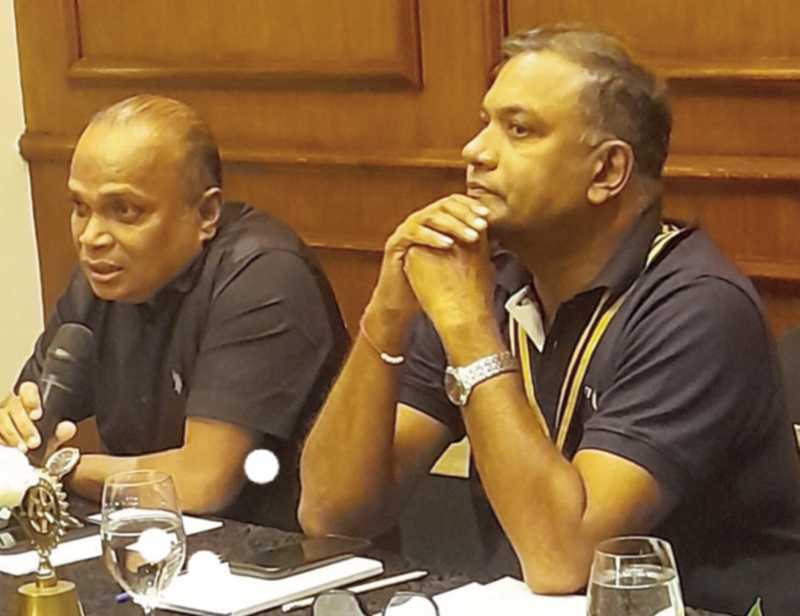
Amaradasa made these observations at a Rotary Club joint meeting organised by Rotary Club Colombo South, featuring also the Rotary Clubs of Kolonnawa and Sri Jayawardenapura, at the Kingsbury Hotel on Tuesday.
Amaradasa added: ‘To develop the tourism sector the government has to do many things which previous governments comprehensively failed to take up.
‘The revenue that comes from the local tourism sector is four to five percent of the GDP, while in Dubai it is more than 45 percent of the GDP.
‘At present the country has 51000 rooms, out of which not more than 10000 rooms are at the four to five star level. Of that number 6000 rooms are located in Colombo, which is a major issue for tourism promotion in tourism potential areas.
‘Sri Lanka should focus on high quality standards in tourism and also develop the East Coast with the necessary infrastructure; especially having an international airport is absolutely necessary.
‘Colombo could be developed as a MICE tourism hub in the region. But not having an international level conference/convention hall is a another bottle neck in promoting that market as well.’
By Hiran H Senewiratne ✍️
Business
A Record Year for Marketing That Works: SLIM Effie Awards Sri Lanka 2025 crosses 300+ entries

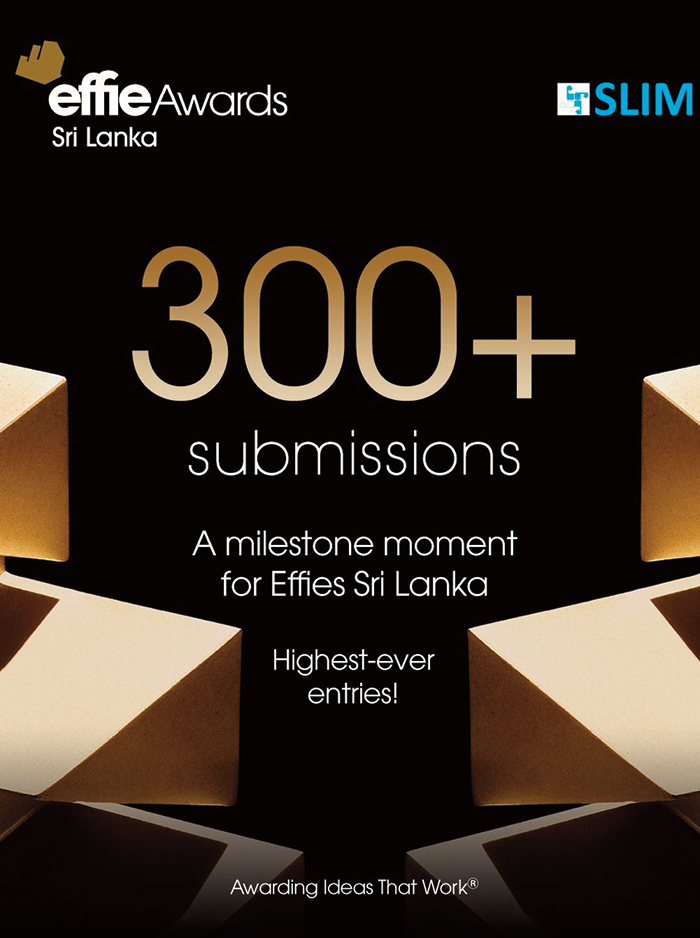
The Sri Lanka Institute of Marketing (SLIM) announces a defining milestone for the country’s marketing, advertising, and creative sectors, as Effie Awards Sri Lanka 2025 records the highest number of entries in its history, crossing 300+ submissions. The unprecedented response reflects a stronger, more confident industry, one that is increasingly committed not only to bold creativity, but to creativity that can prove its value through measurable business and brand outcomes.
Now in its 17th year in Sri Lanka, the Effie Awards remain the most recognised benchmark for marketing effectiveness, honouring campaigns that bring together creative excellence, strategic discipline, and results. As the industry evolves, the Effies have become a space where the agency community, brand teams, media and creative partners are collectively challenged to raise the bar, moving beyond attention and awards, toward work that drives growth, shapes behaviour, and delivers real impact.
The record volume of entries this year also signals a healthy shift in the market: more brands and agencies are willing to be evaluated against rigorous effectiveness criteria, and to put forward work that demonstrates clear thinking, strong execution, and proof of performance. SLIM notes that this momentum highlights the expanding role of marketing and advertising in Sri Lanka, not simply as communication, but as a strategic driver of competitiveness and value creation.
SLIM confirms that the judging process will commence soon, guided by the established Effie evaluation framework that assesses entries on insight, strategy, execution, and measurable outcomes. The Grand Finale is scheduled for end-February 2026, where Sri Lanka’s most effective marketing work will be recognised on a national platform.
For inquiries, entries, and sponsorship opportunities, please contact the SLIM Events Division: +94 70 326 6988 | +94 70 192 2623.

T20 World Cup 2026: ICC replace Bangladesh with Scotland

Indonesia landslide kills 7, dozens more missing

Ukraine condemns ‘brutal’ Russian strikes ahead of second day of peace talks

Sri Lanka bat first in second ODI

Colombo Stock Exchange (GL 12) donates LKR 25 million to the “Rebuilding Sri Lanka” Fund

Tanzid Hasan’s ton, Binura Fernando’s four-for power Rajshahi Warriors to BPL title

‘Dates have the highest sugar content to fight Coronavirus’

Sunday Island 27 December – Headlines

#SundayIsland 17th December – Headlines

Sunday Island – 28th March

Sunday Island Headlines – 21 March

Sunday Island – 21st February – Headlines
-

 Editorial7 days ago
Illusory rule of law
-

 Features7 days ago
Daydreams on a winter’s day
-

 Features7 days ago
Surprise move of both the Minister and myself from Agriculture to Education
-

 Features6 days ago
Extended mind thesis:A Buddhist perspective
-

 Features7 days ago
The Story of Furniture in Sri Lanka
-

 Opinion5 days ago
American rulers’ hatred for Venezuela and its leaders
-
 Features7 days ago
Writing a Sunday Column for the Island in the Sun
-
 Business3 days ago
CORALL Conservation Trust Fund – a historic first for SL