
Business
Adani Group’s renewable energy company getting better payment terms than us from government

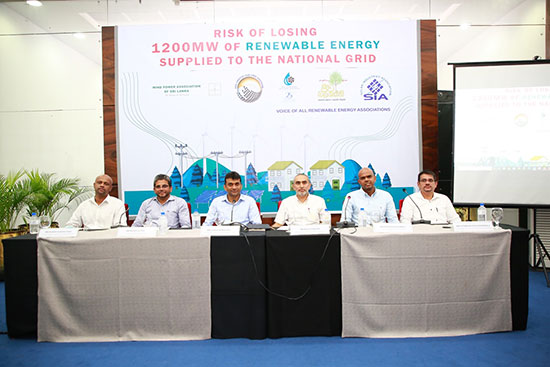
SL’s Renewable Energy Associations allege:
By Hiran H.Senewiratne
The government is paying higher terms on a unit cost for Adani Group’s renewable energy company as against local developers, which has created some unfair situations for local developers, Sri Lanka’s Renewable Energy Associations said.
“Adani Group is looking at possible investments in Sri Lanka’s wind and renewable energy sector and the government has agreed to pay six US dollar cents for a kilowatt hour/unit, while local developers are getting only a little higher than two US dollar cents, which really discourages them, exco member, Biomass Developers Association, Riyaz Sangani said.
Sangani made these comments at a media conference organized by renewable energy associations that include small hydro, wind, solar and biomass power developers and the Solar Industries Association of Sri Lanka. The event was held at the BMICH on Wednesday.
Sangani said that the Adani Group only signed the agreements but is yet to start its feasibility studies for the proposed projects. ” I am sure with the rupee depreciation and poor government decision- making process they will back out of the proposed projects, he added.
“The government has ignored its priorities because now the national grid in this country risks losing 1250.9 Megawatts (MW) of power generated by renewable energy developers, as the Ceylon Electricity Board (CEB) has not paid for the electricity supplied by them since August 2021, Sangani explained.
“At this critical juncture when the country is in a dire economic state, the renewable energy developers are hard-pressed to cease operations as they are unable to meet their critical payment obligations, including paying employee salaries, maintenance, and debt obligations, Secretary, Wind Power Association Manjula Perera said.
“The net effect of this would not just be that the country would lose this mass of clean energy, but it will lead to a severe economic crisis as the alternative will be to procure thermal power, burning fossil fuel at an astronomically high cost of about Rs.90/- per unit as opposed to the average cost of Rs. 15.77 paid for renewable energy. This will exacerbate the forex crisis and be unbearable to the country at this juncture, Perera said.
“As a whole, CEB owes approximately Rs. 22 billion to renewable energy operators. This has brought the industry to its knees, posing a serious threat of not being able to pay salaries to about 7000 employees, potentially leading to a severe social crisis, he said.
“At the same time, the banks have lent about Rs. 60 billion to the industry and servicing these loans will come to a grinding halt soon, president, Grid Connected Solar Power Association Lasith Wimalasena said.
“This can impact the banking system as well. On the other hand, there are about 550MW projects in the pipeline for impending financial closure and if those are not financed and developed, the country will turn to high-cost fossil fuels for power, further compounding its economic woes, Wimalasena said.
“Sri Lanka is in a huge power deficit because of the wrong type of power plants being in operation. Renewable energy is the cheapest and cleanest option available, however, these payment defaults will seriously discourage potential investors in the sector, completely halting the country’s ambition to become a high renewable energy generating nation and also failing in its obligations to the United Nation’s Sustainable Development Goals (UNSDGs), he added.
“CEB’s current average cost of a unit of electricity delivered to consumers is estimated to be Rs. 60/-, as of April 20, 2022. The direct generation cost itself from CEB power plants varies from Rs. 154 per unit, Kelanitissa Power Station being the highest, and Rs. 7.19 (large hydro) being the lowest.
“Other renewable energy plants operated by private owners are at the lowest after the cost of large reservoir- based hydro plants and the recently commissioned 100MW wind plant in Mannar, president, Solar Industries Association Kushaan Jayasuriya said.
“The CEB should focus on cost efficiency and promoting renewable energy by creating greater flexibility in decision making at the Sustainable Energy Authority, The Power Ministry, The Finance Ministry, The Attorney General’s office and PUCSL for the sake of the country and its people, Secretary, Small Hydro Power Developers Association Warna Dahanayake said.
” The future target of 70 per cent of power generated through renewable energy means it will never materialize as delayed payments will drive away investors, he added.


Pan Asia Banking Corporation PLC’s Senior Listed Rated Unsecured Redeemable Debenture issue of up to Rs. 5 billion was oversubscribed following its opening reflecting strong investor interest.
The debentures, with a par value of Rs. 100 each, will be listed on the Colombo Stock Exchange (CSE). The three-year debentures offer an interest rate of 12.75% interest payable annually, while the five-year debentures offer 13.50% interest payable annually.
The issue has been assigned a BBB+ (Stable) rating by Lanka Rating Agency.
The debenture issue was managed by the Investment Banking Unit of Commercial Bank of Ceylon PLC, with SSP Corporate Services (Private) Limited serving as the Registrar to the Issue.
The Bank said the strong investor response demonstrates continued confidence in Pan Asia Bank and its approach to creating long-term value for its stakeholders.
Pan Asia Bank, which positions itself as ‘The Truly Sri Lankan Bank’, continues to strengthen its role in supporting the financial requirements of individuals and businesses while contributing to the development of Sri Lanka’s economy.
Business
SLIIT International and Liverpool John Moores University inaugurate dedicated international learning facility
The Sri Lanka Institute of Information Technology (SLIIT) and Liverpool John Moores University (LJMU), United Kingdom, recently inaugurated SLIIT International in Collaboration with LJMU, a dedicated international learning facility located at No. 17, Dickmans Road, Colombo 04, marking a significant milestone in a partnership spanning more than a decade and reinforcing their commitment to providing Sri Lankan students with access to internationally recognised UK higher education qualifications.
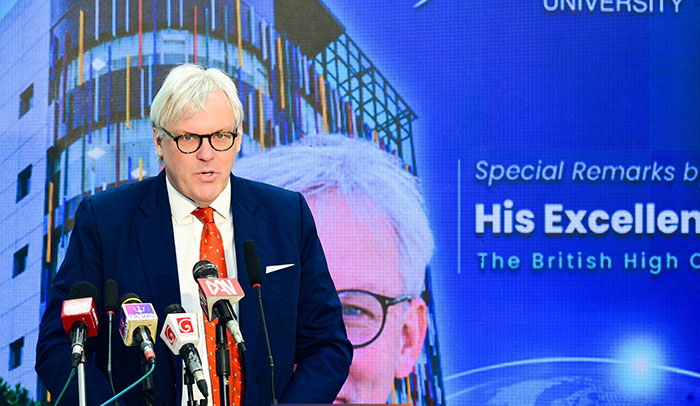
The Grand Opening Ceremony was attended by Andrew Patrick, British High Commissioner to Sri Lanka, who graced the occasion as Chief Guest, alongside senior representatives from SLIIT, Liverpool John Moores University, the British Council, academia, industry and other stakeholders, marking the next chapter of the longstanding SLIIT–LJMU collaboration. The new facility is particularly significant as Sri Lanka’s first academic facility dedicated exclusively to the delivery of LJMU degree programmes, reflecting the strength, maturity and long-term commitment of the partnership.
Over the past decade, the SLIIT–LJMU partnership has established a growing network of more than 1,500 alumni, while providing Sri Lankan students with opportunities to gain internationally recognised UK qualifications locally. The new dedicated facility has been designed to provide a world-class learning environment exclusively for LJMU programmes, supporting future programme expansion, strengthening the student experience and creating opportunities for deeper academic collaboration, innovation, research and student engagement.
Commenting on the milestone, Prof. Lalith Gamage – Vice-Chancellor, Managing Director and Chief Executive Officer, SLIIT, stated, “The launch of SLIIT International in Collaboration with Liverpool John Moores University represents an important new chapter in our longstanding partnership with Liverpool John Moores University. Our vision is to provide Sri Lankan students with a world-class education and student experience right here in Sri Lanka, while equipping them with the global outlook, critical thinking, professional capabilities and career readiness required to succeed in an increasingly interconnected world. This dedicated facility strengthens the student experience while providing a strong foundation for the continued growth of our collaboration with LJMU.”
Prof. Timothy Nichol, Pro-Vice-Chancellor, Faculty of Society and Culture, Liverpool John Moores University, said, “The opening of Sri Lanka’s first facility dedicated exclusively to LJMU degree programmes represents a significant milestone for the University and our partnership with SLIIT. It reflects the strength of our collaboration and our shared commitment to delivering a high-quality LJMU educational experience in Sri Lanka. The new facility also creates exciting opportunities for deeper academic collaboration, innovation, research and student engagement as we look towards the next phase of our partnership.”
A key highlight of the Grand Opening Ceremony was the panel discussion titled “Beyond Borders: The Role of British Higher Education in Developing Globally Competitive Graduates.” The discussion examined the growth of international educational opportunities in Sri Lanka, the future expansion of UK degree programmes, maintaining the quality and integrity of UK qualifications, developing future-ready graduates with global competencies, and the role of international higher education in strengthening graduate employability. The panel brought together Prof. Lalith Gamage; Prof. Timothy Nichol; Mr. Sajeewa Meepage, Representative of the British Council; and Dr. Harsha Cabral, Board Member of SLIIT.
The panelists further emphasized on emerging trends in areas including law, business, psychology and artificial intelligence, as well as the contribution of UK higher education to Sri Lanka through internationally recognised qualifications that uphold global academic standards.
The discussion explored the history and future of the SLIIT–LJMU partnership, the strategic significance of the new SLIIT International facility, academic quality, graduate employability and the long-term growth of LJMU programmes in Sri Lanka.
The ceremony also featured a special address by Andrew Patrick, British High Commissioner to Sri Lanka, followed by an address by Mrs. Clare Sears, Country Director, British Council Sri Lanka. The evening also included the ceremonial exchange of the partnership document between SLIIT International and Liverpool John Moores University, symbolising the continued commitment of both institutions to strengthening their collaboration and expanding international educational opportunities for Sri Lankan students.
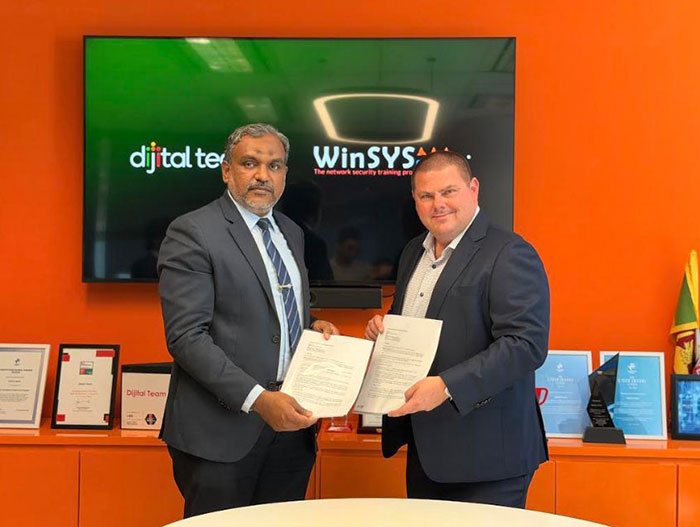
Dijital Team has signed a two-year partnership with Winsys City University, strengthening the skills and capabilities of its team members to support Managed Service Providers and IT service providers while elevating tech talent to immediate industry-readiness. With a Memorandum of Understanding (MOU) signed recently, the partnership was formally launched on 9 September 2026 at Dijital Team’s office premises, Colombo.
Combining Dijital Teams’ international employer network and understanding of the capability requirements of MSPs and IT service providers across Australia, New Zealand and the United Kingdom with Winsys City University’s training heritage of 21 years, the joint programmes create legitimate classroom-to-international-career pathways, offering structured learning and certification avenues that support deeper capability across cloud, cybersecurity, automation, AI and emerging technologies.

Turkish court detains football refereeing chief pending corruption trial

Ten injured after car crashes into rugby supporters in Australia

Polls open in Latvia against backdrop of perceived Russia threat

Abhishek, Tilak and spinners secure gold for India at Asian Games again

Tharindu Rathnayake, bowlers secure Asian Games Bronze for Sri Lanka

G7 to release 100 million barrels of oil and diesel after Trump export ban threat

‘Dates have the highest sugar content to fight Coronavirus’

Sunday Island 27 December – Headlines

#SundayIsland 17th December – Headlines

Sunday Island – 28th March

Sunday Island Headlines – 21 March

Sunday Island – 21st February – Headlines
-

 News6 days ago
Police remove Thileepan statue in Jaffna
-

 Features6 days ago
The 22nd Amendment, constitutional recovery and illiberal slippage
-

 Features6 days ago
Of foreigners as CEOs of Lankan ventures
-

 Latest News3 days ago
Gold winner Tharanga gets brand-new Honda Vezel from SLAAJ
-

 News6 days ago
Sajith rejects Jt. Opp. protest sabotage claim; SJB TU chief demands remedial action
-

 Features4 days ago
Why Sri Lanka needs an Inclusive Civic Nationalism – urgently
-

 Features5 days ago
Thailand’s biggest new global star …
-

 News3 days ago
US-assisted ‘Ice’ detection: NPC to examine IGP’s move to transfer drug-busting team