
News
Adani controversy: COPE yet to accept ex-CEB chief’s retraction

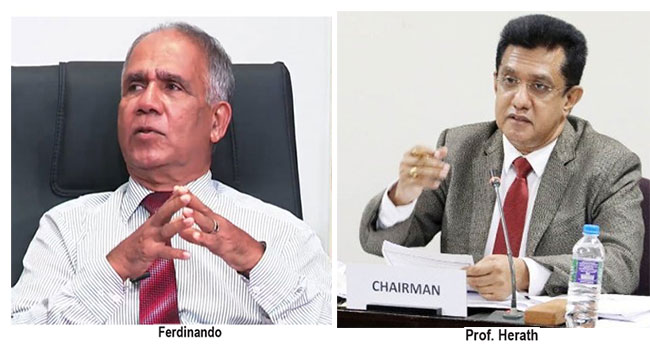
… official has previously claimed to have received instructions from Prez and PM
By Shamindra Ferdinando
COPE Chairman Prof. Charitha Herath yesterday (14) said that he would have to consult members of his all-party committee as regards ex-Chairman of CEB M.C. Ferdinando’s retraction of a statement he made before the outfit on June 10.
The SLPP National List MP said so when The Island asked him whether Ferdinando could do so.
Ferdinando resigned after having claimed in writing to Prof. Herath that the statement he attributed to President Gotabaya Rajapaksa was never made by the President. This was after President Gotabaya Rajapaksa denied giving such a directive to Ferdinando.
The Parliament released the video footage of a smiling Ferdinando claiming he was told by the President on Nov 24 last year to go ahead with the Adani Green Energy project here as he was under pressure of Indian PM Modi.
Asked to explain, Prof. Herath said that Ferdinando had retracted only that part of his statement therefore there was no issue at all regarding views expressed by him. The academic said that there had never been an instance where a person contradicted a statement made by him/her before the committee.
COPE comprises 22 members representing both the government and the Opposition.
Adani Group chairman Gautam Adani met President Gotabaya Rajapaksa and Prime Minister Mahinda Rajapaksa in Colombo in late Oct last year.
In a letter dated Nov 25, 2021 written by Ferdinando to the then Secretary to the Treasury S.R. Attygalle, the then CEB Chairman stated that both President Gotabaya Rajapaksa and Premier Mahinda Rajapaksa directed him to go ahead with 500 MW wind and solar renewable energy project in Mannar and Pooneryn.
COPE summoned CEB the day after the Parliament approved Sri Lanka Electricity (Amendment) Bill with 120 lawmakers voting for the Bill after a division was called by Chief Opposition Whip Lakshman Kiriella. Thirty six lawmakers voted against.
Referring to a progress review meeting on the energy sector chaired by President Gotabaya Rajapaksa had on Nov 16, 2021 at the Presidential Secretariat, Ferdinando told Attygalle he assumed the project Government-to-Government venture as President Gotabaya Rajapaksa and Prime Minister Narendra Modi reached agreement on it.
Ferdinando has copied the letter to several persons, including Minister Namal Rajapaksa.
Ferdinando has been earlier embroiled in Yugadanavi controversy after he acknowledged that the signing of the agreement with US based New Fortress Energy happened at midnight on Sept 17 last year.
The government brought Ferdinando from retirement in Australia to be Chairman CEB in July 2021 to facilitate the Yugadanavi deal that paved the way for the US firm to secure 40 percent of shares in the power plant held by the Treasury. Ferdinando succeeded Eng. Vijitha Herath, while Basil Rajapaksa received the finance portfolio in time for the Yugadanavi agreement.


* Iran begins 40-day mourning after Khamenei killed in US-Israeli attack
* President Pezeshkian condemns killing as ‘a great crime’
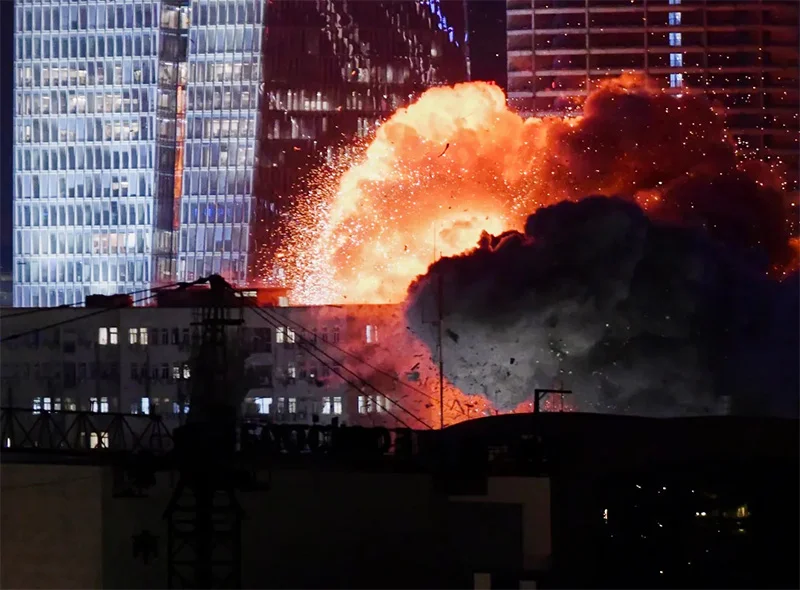
Iran has begun 40 days of mourning after Supreme Leader Ayatollah Ali Khamenei was killed in ongoing attacks by the United States and Israel, according to Iranian state media.
Top security officials were also killed in Saturday’s strikes, along with Khamenei’s daughter, son-in-law and grandson. The killings mark one of the most significant blows to Iran’s leadership since the 1979 Islamic revolution Al Jazeera has reported.
Iranian President Masoud Pezeshkian condemned the killing as “a great crime”, according to a statement from his office. He also declared seven days of public holidays in addition to the 40-day mourning period.
Reporting from Tehran, Al Jazeera’s Tohid Asadi said people were pouring into the streets of the capital following the news of Khamenei’s killing.
“There will be expected ceremonies,” he said, noting they would likely take place amid continuing bombardment across the country.
Protests denouncing Khamenei’s killing were also reported elsewhere, including Shiraz, Yasuj and Lorestan.
“There will be expected ceremonies,” he said, noting they would likely take place amid continuing bombardment across the country.
Footage aired by Iranian state media showed supporters mourning at the shrine of Imam Reza in Mashhad, with several people seen crying and collapsing in grief, according to Al Jazeera.
The killing also led to protests in neighbouring Iraq, which declared three days of public mourning. In Baghdad, protesters confronted security forces in the heavily fortified Green Zone, which houses Iraqi government buildings and foreign embassies.
Videos verified by Al Jazeera showed demonstrators waving flags and shouting slogans, with witnesses saying some were attempting to mobilise towards the US Embassy. Footage also showed protesters blocking vehicles at a roundabout near one of the entrances to the area.
There was also a protest in the Pakistani city of Karachi, where footage, verified by Al Jazeera, showed people setting fire to and smashing the windows of the US consulate.
However, there have also been reports of celebrations in Iran, with the Reuters news agency quoting witnesses as saying some people had taken to the streets in Tehran, the nearby city of Karaj and the central city of Isfahan.
Meanwhile, the official IRNA news agency reported that a three-person council, consisting of the country’s president, the chief of the judiciary, and one of the jurists of the Guardian Council, will temporarily assume all leadership duties in the country. The body will temporarily oversee the country until a new supreme leader is elected.
Ali Larijani, the head of Iran’s Supreme National Security Council, accused the US and Israel of trying to plunder Iran, in an interview aired on state TV.
He also called on Iranians to unite. “Groups seeking to divide Iran should know that we will not tolerate it,” he added.
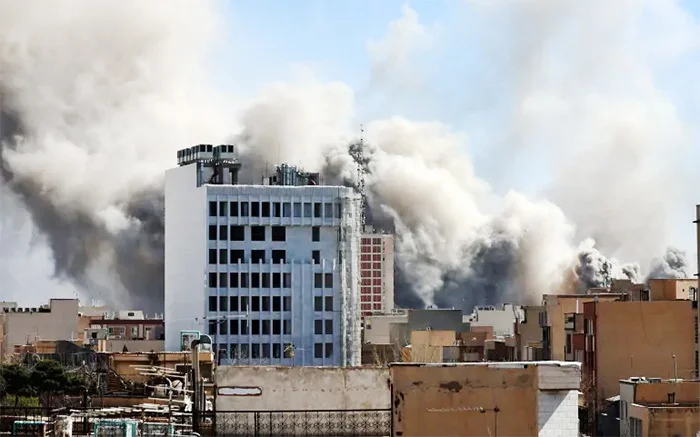
Smoke rises over central Tehran following ongoing U.S.–Israeli strikes on Iran yesterday.[EPA]
Khamenei assumed leadership of Iran in 1989 following the death of Ayatollah Ruhollah Khomeini, who had led the Islamic revolution a decade earlier.
While Khomeini was regarded as the ideological force behind the revolution that ended the Pahlavi monarchy, Khamenei went on to shape Iran’s military and paramilitary apparatus, strengthening both its domestic control and its regional influence.
Meanwhile, the Islamic Revolutionary Guard Corps (IRGC) pledged revenge and said it had launched strikes on 27 bases hosting US troops in the region, as well as Israeli military facilities in Tel Aviv.
Explosions have continued to be reported in Qatar and the United Arab Emirates, while security alerts are in place in several countries across the region.
US President Donald Trump, in a social media post on Sunday, warned Iran that it would be hit “with a force that has ?never been seen before” if it retaliated.
Iran’s retaliatory attacks since Saturday have targeted Israel and US assets across multiple Middle East countries, including Qatar, the UAE, Kuwait, Bahrain, Jordan, Saudi Arabia and Iraq.
Harlan Ullman, chairman of the strategic advisory firm Killowen Group and an adviser to the Atlantic Council in Washington, DC, said the US may have made a “big mistake” by killing Khamenei.
“Decapitation only works when you get all the leaders, and I don’t think that we got all the leaders,” Ullman said, adding that the US should not expect Iran’s leadership to enter negotiations in the immediate aftermath.
Iranian state media reported on Saturday at least 201 people have been killed in the joint US-Israeli attacks across 24 provinces, citing the Red Crescent. In southern Iran, at least 148 people were killed and 95 wounded in a strike on an elementary girls’ school in Minab on Saturday, with the toll continuing to rise, according to state media.
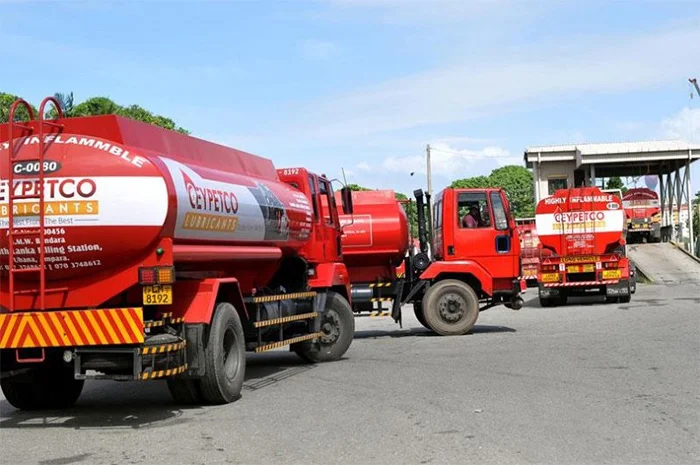
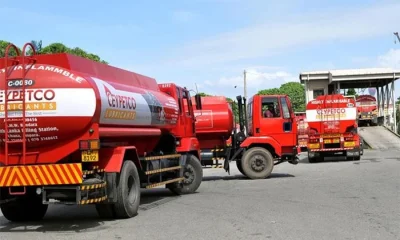
There would be no delay in fuel shipments scheduled for April and May, the Ceylon Petroleum Corporation (CPC) assured yesterday.
Addressing a media briefing in Colombo, CPC Chairman D.J. Rajakaruna said Sri Lanka’s fuel supplies did not originate from the present conflict zone in West Asia and, therefore, supplies to the Corporation would not be disrupted.
He noted that the relevant consignments were due to arrive from India and Singapore as planned.
“We are making this statement responsibly. There is no need for the public to queue up for fuel. Distribution was not originally scheduled for Sunday (01), but due to increased demand, we have deployed all distribution staff to continue fuel issuance. Although Monday (02) is a Poya Day, fuel supplies will continue without interruption,” he said.
The Chairman added that all filling stations had been instructed not to dispense fuel into cans or barrels, warning that legal action would be taken against those attempting to purchase fuel in bulk containers for resale.

The 13th Session of the Sri Lanka–Pakistan Joint Economic Commission (JEC) was successfully held recently in Colombo, reinforcing the strong and longstanding economic and diplomatic ties between the two countries.
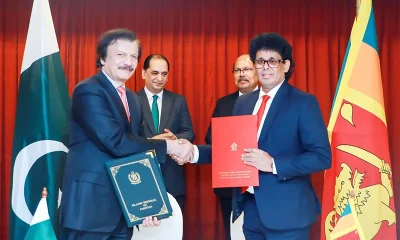
The Sri Lankan delegation was led by Wasantha Samarasinghe, Minister of Trade, Commerce, Food Security and Cooperative Development, while the Pakistani delegation was headed by Haroon Akhtar Khan, Special Assistant to the Prime Minister of Pakistan for Industries and Production. The session concluded with the signing of the Agreed Minutes by both Co-Chairs, formalising cooperation across multiple sectors.
The Pakistan High Commission in Colombo said that in the IT and digital economy, both sides agreed in principle to establish a Joint Working Group on IT and telecommunications, promote collaboration in emerging technologies, and support each other in international digital forums.
Industrial cooperation was a key focus, with discussions on expanding trade in chemicals, polymers, engineering goods, glassware, surgical instruments, and pharmaceuticals. Sri Lanka invited Pakistani pharmaceutical companies to explore investment opportunities in designated pharmaceutical zones. Both countries also agreed to strengthen collaboration in Export Processing Zones and enhance support for small and medium enterprises through their respective development agencies.
Significant progress was made in agriculture and livestock, including cooperation on meat exports, livestock farming, seed certification, sanitary and phytosanitary harmonisation, pest risk analysis, and capacity building. Procedures for the export of Sri Lankan pineapples and avocados to Pakistan were advanced. Both sides explored electronic phytosanitary certification (ePhyto), blockchain-based seed traceability systems, and increased trade in agro-commodities such as rice, sesame, and onions.
In education, the JEC emphasised academic and research cooperation, faculty and student exchanges, accreditation and quality assurance, and promoting Pakistan as a higher education destination for Sri Lankan students. A Joint Working Group on Education and Science was proposed, alongside renewal of several institutional Memoranda of Understanding.
Cooperation in science, technology, and innovation will continue under existing bilateral frameworks, with plans for joint research in advanced materials, biotechnology, climate change mitigation, and emerging technologies. Collaborative research projects, student exchanges, and co-authored publications were highlighted as key initiatives.
Health sector collaboration will focus on joint research, academic exchanges, regulatory cooperation on therapeutic goods, capacity building, fast-track registration of essential medicines, public-private partnerships, epidemiological surveillance, and coordinated responses to disease outbreaks.
Maritime cooperation was also discussed, with Pakistan offering technical expertise, training, and industrial collaboration through its shipbuilding institutions. Both sides explored enhanced maritime connectivity, including transshipment, port cooperation at Karachi and Gwadar, direct shipping routes, logistics integration, and maritime training programs.
Commerce secretary-level talks reviewed the progress of the Pakistan–Sri Lanka Free Trade Agreement (PSFTA), assessing current implementation and identifying measures to further enhance bilateral trade and economic cooperation.
On the sidelines, Special Assistant Haroon Akhtar Khan held discussions with Sri Lankan Cabinet members on collaboration in industry, labor and foreign employment, and health sectors.
Both delegations expressed satisfaction with the outcomes of the 13th JEC and reaffirmed their commitment to regular engagement and effective implementation of agreed initiatives. It was mutually agreed that the 14th session will be held in Islamabad, with dates to be confirmed through diplomatic channels.

War photographer Paul Conroy dies as tributes paid

Allies of US in the Gulf bear brunt of Iran attacks

Dry weather will prevail in most parts of the island

Israel resumes attacks as Iran vows to avenge supreme leader’s death

CPC has enough fuel stocks

Lanka, Pakistan strengthen ties at 13th JEC

‘Dates have the highest sugar content to fight Coronavirus’

Sunday Island 27 December – Headlines

#SundayIsland 17th December – Headlines

Sunday Island – 28th March

Sunday Island Headlines – 21 March

Sunday Island – 21st February – Headlines
-

 News7 days ago
Prime Minister Attends the 40th Anniversary of the Sri Lanka Nippon Educational and Cultural Centre
-

 Opinion3 days ago
Jamming and re-setting the world: What is the role of Donald Trump?
-

 Sports7 days ago
Dottin out obstructing the field as Sri Lanka clinch series
-
 Features3 days ago
An innocent bystander or a passive onlooker?
-

 Features5 days ago
Building on Sand: The Indian market trap
-
 Opinion5 days ago
Future must be won
-
 Features4 days ago
Ratmalana Airport: The Truth, The Whole Truth, And Nothing But The Truth
-
 Business4 days ago
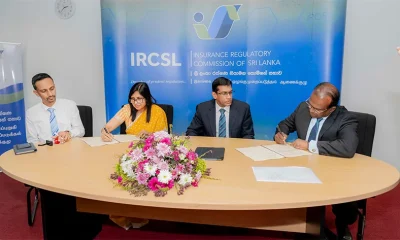
IRCSL transforms Sri Lanka’s insurance industry with first-ever Centralized Insurance Data Repository