
News
Activists push for ban on using human contraceptive jabs on animals

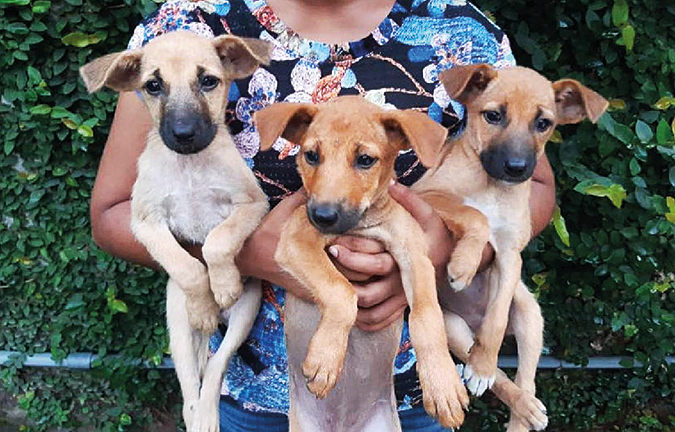
(Mongabay) Authorities are considering banning the use of a human contraceptive injection for animals backed by calls from animal rights activists and vets, after a state-sanctioned chemical sterilization program drew serious criticism.
The medroxyprogesterone acetate contraceptive injection, popularly sold under the brand name Depo-Provera, is intended for humans and had come under the spotlight when the government attempted to introduce it to stray dogs (Canis lupus familiaris)as a pilot project.The drug has often been surrounded in controversy due to its safety risks. In the United States, the Food and Drug Administration has issued a “black box warning” on the contraceptive, citing that it may lead to bone density loss among humans.Vets and animal rights activists say the repercussions of using the injection on animals are even worse.
The Veterinary Drug Control Authority (VDCA), which falls under the purview of the Department of Animal Production and Health, has not banned the use of this contraceptive for animals.The Public Health Veterinary Services office estimates Sri Lanka’s stray dog population to be around 3-4 million.Hemali Kothalawala, the director general of the Department of Animal Production and Health, said in the past, the VDCA has granted approval to import that jab only under “special circumstances” if it is to be used on animals.
However, the National Medicines Regulatory Authority has granted approval to import the injection to be used on humans. Animal rights activists say the injections imported for humans are illegally used by quack vets on dogs.
“We are considering proposals to prohibit the use of this injection on animals. This has many harmful side effects. We will make a final decision in the near future,” Kothalawala told Mongabay.She added that until a final decision is made, anyone importing the injection for the purpose of using it on animals will have to obtain the approval of the VDCA.
Calls to ban the injection came after the Public Health Veterinary Services officeannounced a pilot project on Jan. 5 to carry out chemical sterilization on 50,000 free-roaming dogs.The program was aimed at achieving zero dog-mediated human rabies deaths by 2025, in line with the United Nations Sustainable Development Goals.
“The Depo-Provera vaccines were to be given to us as a grant by the World Health Organization,” L.D. Kithsiri, the director of Public Health Veterinary Services, told Mongabay.
Over the years, the Public Health Veterinary Services Office has adopted two approaches to combat rabies. The options are to administer rabies vaccines or perform clinical sterilization on female dogs — a process during which the animal’s reproductive organ is removed to permanently stop it from reproducing.
“We wanted to introduce chemical sterilization because we have not received enough funds from the government to carry out clinical sterilization,” Kithsiri said.
He said the Public Health Veterinary Services Office has received only around 69 million rupees ($190,000) for clinical sterilization in 2023, and that allocation is enough to perform the surgery on only 25,000 dogs.
“In 2022, the number of dog-mediated human rabies deaths was 28. Each year, around 20-30 deaths occur due to rabies. We need to perform the surgery on at least 100,000 dogs every year to achieve our target of no rabies deaths,” Kithsiri added.
The proposed chemical sterilization program sparked serious concerns from animal rights activists and vets who pointed out that the injection can have life-threatening implications when given to dogs.
The injection requires repeated dosing and has to be given to dogs after assessing the exact phase of their reproductive cycle. The Sri Lanka Veterinary Association (SLVA)had written to the health ministry highlighting that it is not practical to monitor the reproductive cycle of stray dogs, which had been chosen for the pilot project.
“It [the injection] requires repeated dosing for long-term suppression of reproduction. Therefore, administering Depo-Provera to stray animal population control is limited,” SLVA said in its letter seen by Mongabay.
The injection should not be given to female dogs when their estradiol hormone levels have been elevated or when they are not in anestrus — the non-breeding period of a dog’s six-month heat cycle, according to research published in The Blue Cross, the annual bulletin of the Nepal Veterinary Students Association.


A discussion on the Anuradhapura Sacred City Development Plan was held on Wednesday (30) afternoon at the Presidential Secretariat, under the leadership of Chief of Presidential Staff Prabath Chandrakeerthi and Acting Deputy High Commissioner/First Secretary of the High Commission of India Roshini Thomson.
During Indian Prime Minister Narendra Modi’s official visit to Sri Lanka, he had expressed his agreement to provide assistance for a Sacred City development project when he visited the Jaya Sri Maha Bodhi in Anuradhapura.
Accordingly, the Urban Development Authority and the Department of National Physical Planning have proposed jointly implementing development activities in the Anuradhapura Sacred City.
The draft proposal prepared jointly by the Urban Development Authority and the Department of National Physical Planning has already been submitted to the High Commission of India, and the discussion focused on the proposal.
President Anura Kumara Dissanayake also recently held discussions with the Maha Sangha and all relevant stakeholders regarding the Anuradhapura Sacred City Development Plan, and instructed officials to expedite the project.
The initial cost of implementing the Anuradhapura Sacred City Development Plan is currently estimated at Rs. 7.7 billion. The Government of India is expected to provide the financial contribution required for the project, which is expected to commence before the end of this year.
Under the project, a range of development programmes are to be launched while preserving the antiquity and religious character of the Anuradhapura Sacred City. These will include renovating access roads, ensuring the proper disposal of waste, improving sanitation facilities and restoring all dilapidated sites.
Second Secretary (DC) at the High Commission of India Ramya C. S., Director General of the Department of National Physical Planning W.T.H. Ruchira Withana, Director General of the Urban Development Authority D.M.D.S. Dissanayake and Director of the Department of External Resources Chandrika Senanayake, along with senior officials of the High Commission of India and officials from relevant institutions, were among those present at the occasion.
[President’s Media Division (PMD)]
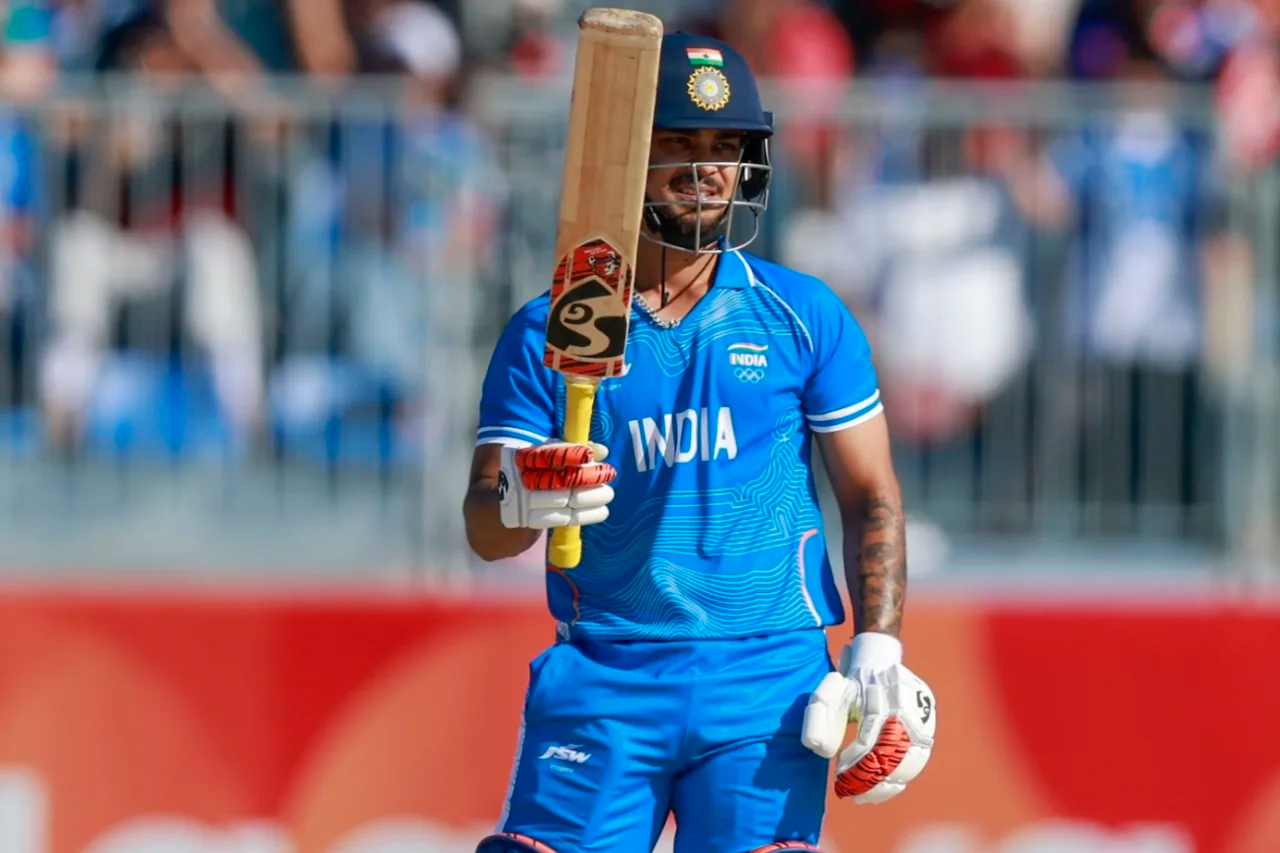
Defending champions India registered their biggest T20I win against Sri Lanka to make the final of the 2026 Asian Games men’s competition in Nisshin on Thursday.
A day after the ODI side chased down 406 against West Indies like it was child’s play on a flat Guwahati pitch, the T20I side scraped their way to 169, well above-par on a treacherous track filled with cracks. Sri Lanka were no match after that.
The result sets up the first India vs Pakistan final of 2026, and there will be a gold medal at stake.
Sri Lanka were a touch unlucky as Ishan Kishan miscued many aerial shots but they all fell in no-man’s land. But Nuwanidu Fernando did drop Kishan on 56, and that didn’t help as he went on to make 80* in just 46 balls. There were a couple of balls that misbehaved wildly, and it was a sign of things to come.
The chase felt like an act of cruelty against batters. Jasprit Bumrah bowled Test lengths and added new degrees of unplayability to the existing ones. Axar Patel bowled 14 dots and got a two-for and India finished the game with a team hat-trick. On top of all that, Sri Lanka suffered three run outs, two of which were of top-four batters.
In the end, they were rolled over for 45, the second lowest total in men’s games at the Asian Games and the joint-lowest total for a Full-Member team in men’s T20Is, alongside West Indies’ 45 against England in 2019.
India picked four spinners in their XI and Sri Lanka three in what was their first bit of action at the competition after their quarter-final fixtures were rained out. It proved to be the right strategy as spinners bowled 83% of all the balls bowled (149 out 179) across the 29.5 overs of play. They took 12 wickets, bowled 73 dots and went at an economy of 6.56. The quick bowlers conceded 44 runs in 30 balls. Bumrah’s share in that: 2 for 7 in two overs.
The bowlers’ domination started early in the game as the weather held for the second game running on the day.
Both Abhishek Sharma and Sanju Samson fell to fingerspin while trying to open up the off side. Samson made room and looked to go inside out over cover and was beaten by extravagant spin, but went for it again and Tharindu Ratnayake fired the ball in to smash his stumps. Sahan Arachchige, who had Abhishek lob one to short third, then checked every form of deviation to knock over Shreyas Iyer – the ball angled in, dipped, drew the batter forward and turned away to hit the stumps.
In the chase, Sineth Jayawardena looked to take Bumrah on early and looked hapless as the ball seamed in to beat the across-the-line swing and hit him on the back leg in front of all three. Sohan de Livera fell victim to Bumrah’s exaggerated angle from over the wicket and nicked to the keeper. For the first time in a men’s T20I, India has taken two wickets before conceding a run.
The fifth ball of Bumrah’s second over trampolined off a length, seemed to pick up pace off the pitch, and needed Samson to leap right up to catch it. Nuwanidu, the batter, was lucky that the line of the ball was not straighter.
Despite the Bumrah threat, India did not turn to pace for the remainder of the innings. That was likely because Lasith Croospulle was run out by sharp work from Ravi Bishnoi at short third in the over before, and Arachchige and Ashen Bandara committing the cardinal sin of sweeping Axar and giving away their wickets.
Washington Sundar’s introduction with Sri Lanka on 18 for 5 did not faze Nuwanidu. The first ball spun big but went down leg. Next three balls had two sixes, the second an effortless twirl of the bat to send the ball over long-on. Then Nuwanidu went for a non-existent single to short third and Sri Lanka ran their way out to a point of no return.
In conditions where batting was far from easy, Kishan and Vaibhav Sooryavanshi found ways to maximise the strengths of their respective games.
Sooryavanshi opened up the off side repeatedly by either making room or standing still and slapping balls, even when they were angling in. He brought up India’s 50 with 4, 6, 4 off Tharindu Ratnayake but fell to Arachchige, in similar fashion to Abhishek, soon after. He made 38 off 21. Only behind Kishan’s 80 not out. The next highest individual score was Nuwanidu’s 15.
Kishan then walked out and hit two sixes in his first 12 balls. He waited for the bad ball and wasn’t going to miss out if he got one… or two. However, he had to take chances as Shreyas Iyer fell and Axar – promoted above Tilak Varma – got stuck. Kishan’s reverse sweep off Arachchige from a leg-stump line during this slowdown showed he could pull off risks on demand.
Both Axar and Tilak fell cheaply but took India past 100 with handy stands with Kishan, who forced errors out of bowlers and brought up a 33-ball fifty in the 17th. He could have been out twice in the next two balls but survived a ball that turned in a right angle and Nuwanidu’s drop at mid-off.
India hit four sixes and four fours in the last eight overs. Kishan hit all of them bar the last six, hit by Washington. That took them to 169 for 7, a par score in general, maybe twice the par on the day.
Scores:
India 169 for 7 in 20 overs (Vaibhav Sooryavanshi 38, Shreyas Iyer 13, Ishan Kishan 80*; Tharindu Ratnayake 2-32, Sahan Arachchige 2-28, Wanuja Sahan 1-17, Lasith Croospullle 1-25, Nuwanidu Fernando 1-20) beat Sri Lanka 45 in 905 overs (Nuwanidu Fernando 15; Jasprit Bumrah 2-07, Axar Patel 2-08, Washington Sundar 1-18, Abhishek Sharma 2-2, ) by 124 runs
[Cricinfo]
Latest News
I extend my heartfelt wishes to all the sons and daughters of our country for a Happy World Children’s Day – President


Children’s Day Message from President Anura Kumara Dissanayake:
“Children are the most valuable asset of a nation. Ensuring their physical and mental well-being and creating an environment conducive to their proper development is a primary responsibility of any government. Children’s imagination, aspirations and creativity will determine the shape and colour of the country tomorrow. The country we build for children must not merely be a country prepared to be handed over to them in the future; it must be a country that gives space to their dreams today, listens to their voices and provides opportunities for them to realise their potential.
For the best interests of children, we are taking the necessary steps to ensure equal access to education, guidance, social protection, opportunities for sport, leisure and recreation, proper nutrition and access to healthcare, while protecting children from all forms of violence and discrimination and safeguarding their rights.
Race, religion, economic status, geographical background or any other circumstance should not be a barrier to any child’s education or proper development. Every child should have equal and fair opportunities to realise their potential, pursue their dreams and create the future they wish for themselves. To this end, we have already begun the process of reforming the education system in Sri Lanka, transforming it towards a skills-based system suited to the new world, one that does not place a burden on parents or cause distress to children.
Our aim is to ensure that no child is left behind in the new Sri Lanka we are building, and to provide every child with opportunities for development in a safe environment. It should be emphasised that the fundamental objective of all the programmes being implemented, from expanding educational scholarships to securing the future of children growing up in child development centres and those in need of care, is to create a dignified and secure tomorrow for every child in the country.
It is the aspiration of every parent to give their children a better life than the one they themselves experienced. We are currently steering the country’s economy towards a correct and stable direction in order to provide children with a safe and happy childhood, free from the shadows of an unstable economy. At the same time, we have launched the national operation “A Nation United” (Ratama Ekata), bringing everyone together to free the younger generation from the menace of illicit drugs.
At a time when we are working towards the goal of building a safe and better country for children, I greatly appreciate the initiative of the Ministry of Women and Child Affairs in organising this year’s World Children’s Day celebrations under the theme “Strong Minds – Enriched Children”, declaring a National Children’s Day Week and conducting a range of meaningful programmes aimed at strengthening children’s rights, well-being, protection, education and freedom.
I extend my heartfelt wishes to all the sons and daughters of our country for a Happy World Children’s Day”.

England call up Crane and rest Archer for Pakistan series

ICC introduces pink-ball daytime Test trial, new time-wasting penalties

Discussion on Anuradhapura Sacred City Development Plan

India enter Asian Games final after Kishan and Bumrah ride roughshod over Sri Lanka

I extend my heartfelt wishes to all the sons and daughters of our country for a Happy World Children’s Day – President

Sri Lanka bowl first in semi final clash against India

‘Dates have the highest sugar content to fight Coronavirus’

Sunday Island 27 December – Headlines

#SundayIsland 17th December – Headlines

Sunday Island – 28th March

Sunday Island Headlines – 21 March

Sunday Island – 21st February – Headlines
-

 Editorial6 days ago
Birth of a bad law
-

 Features7 days ago
Beyond traditional jobs: Why Sri Lanka needs to facilitate the gig economy
-

 News4 days ago
Police remove Thileepan statue in Jaffna
-
 Latest News7 days ago
Kusal, Wellalage star as Sri Lanka defend 322 in Headingley thriller
-
 News6 days ago
TIN mandatory for key transactions from Nov. 1
-

 Features4 days ago
The 22nd Amendment, constitutional recovery and illiberal slippage
-

 Features4 days ago
Of foreigners as CEOs of Lankan ventures
-

 News4 days ago
Sajith rejects Jt. Opp. protest sabotage claim; SJB TU chief demands remedial action