
News
Active Learning as a Foundation of Civility

By Chandra Fernando,
Educational Consultant USA
“Sleep not when others speak, sit not when others stand, speak not when you should hold your peace, walk not on when others stop.”
This is one of the 110 Rules of Civility and Decent Behaviour George Washington, as a young student, had to copy as an exercise in penmanship. They were composed by French Jesuits in 1595 and translated into English in 1640.
As a teacher and teacher trainer, I have recently become acutely aware of the lack of civility in the present day in many countries and societies of the world. This is especially concerning due to young people’s attitudes towards one another, political discourse, and the lack of respect for others in modern society. Moral and social development seems to be lacking in general and there is little respect for social niceties. Many think it is alright to speak your mind no matter how much offense it may cause to others.
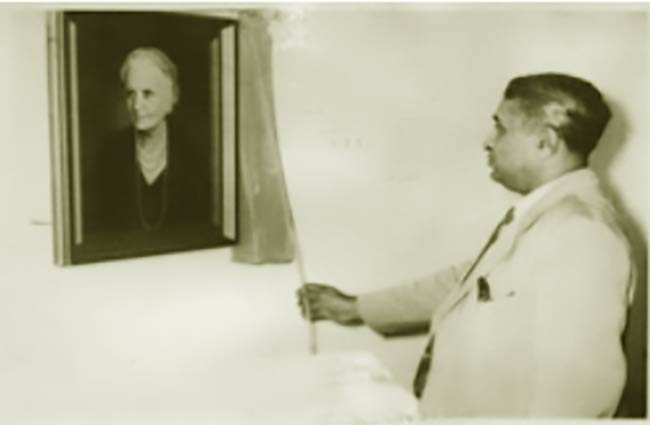
This brings me to a system of education which has been in existence for 117 years in Asia, Europe, Australia, North and South America and Africa. It was developed by one of the first women physicians in the world, Dr. Maria Montessori. Her method demonstrates the universality of human development which involves moral and social growth from birth to young adulthood. It prepares young people for their unknown future by providing an education for life, and gives students the potential to change the world for the better.
The Montessori method accentuates the positive, regards everyone as being equally valuable, respects all cultures, and provides young people with opportunities to explore and discover our common humanity.
Civility is a code of decency. It is the work of the will and intellect. However, it is the work of the heart as well. In its totality, civility helps one appreciate one’s own identity and personality without demeaning others. It is about the common good, service to the whole community and society. It involves respect, politeness, good manners of behaviour and self-regulation of one’s own words and actions.
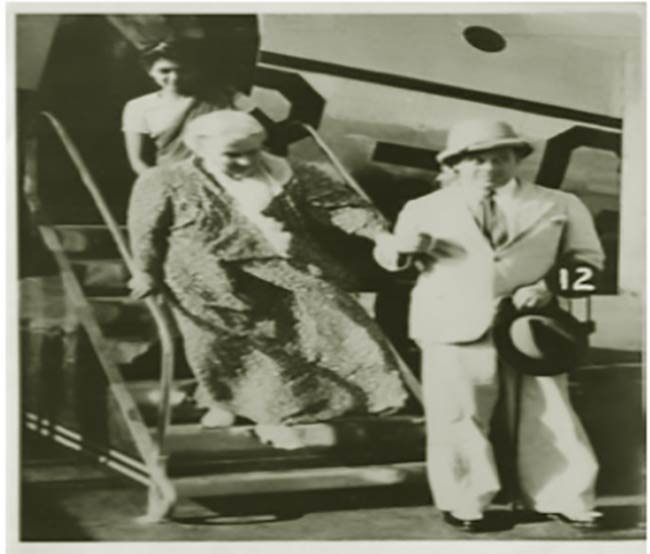
Dr. Montessori and her son Mr. Mario Montessori landing in Sri Lanka 1944
Grace and Courtesy
Montessori education instills in students, “Lessons of Grace and Courtesy” as core tenets of conduct, practices or habits. These lessons are aligned with such human tendencies as activity, exploration, adaptation and language.Grace is the manner in which we value ourselves. It is looking in the mirror. It is self- awareness. Courtesy deals with the manner in which we respect others, the ways in which we connect to others.
Civility may be defined as a combination of both. Montessori practitioners regard civility as a combination of social and moral development involving respect, consideration of others and a large amount of self-regulation of our own behaviour and attitude. When we internalize these values, they provide us with a sense of serenity and well-being.
Children in Montessori classrooms all over the world practice lessons of grace and courtesy at each developmental level: birth to 6 years, 6 to 12 years and 12 to 18 years. The young Montessori toddler internalizes her culture by responding to the love, language, and customs of her environment. Grace is forming within this little human being through interaction, modelling and sensitivities. In the next level, in childhood, she continues to make great strides through her involvement in the environment: through interactions with peers and role models, through peer teaching, and individual and group lessons in the multi age classroom which acts as a microcosm of our world.
In the next level of development from age 12 to 18 years, the adolescent explores avenues of a just society through social interactions and moral education gained from research of historical data and current events. Finally, the university student is able to absorb cohesive parts of society such as language, religion, and customs which define the personality she builds for experiencing the mission of humankind.
In Montessori’s words:
“A great social mission that will ensure the child justice, harmony and love remains to be accomplished. And this great task must be the work of education, for this is the only way to build a new world and to bring peace.”
The year 2024 marks the 117th anniversary of the first Montessori classroom in Rome, Italy, and the 80th anniversary of the first Montessori teacher training course in Sri Lanka. In 1944, at the invitation of the Colombo Teachers Union, Dr. Maria Montessori, accompanied by her son, Mario, landed in Sri Lanka to train more than 300 teachers on the premises of Good Shepherd Convent, Kotahena. This institution is now the AMI Montessori Centre housed at St Bridget’s Convent, Colombo 7.
August 31st is Maria Montessori’s birthday. She dedicated her whole life to the welfare of children all over the globe. She received many accolades from many individuals and organizations and was nominated for the Nobel Peace prize in 1949, 1950, and 1951.

News
President chairs discussion on 2027 Budget Proposals for the Ministry of Industry and Entrepreneurship Development

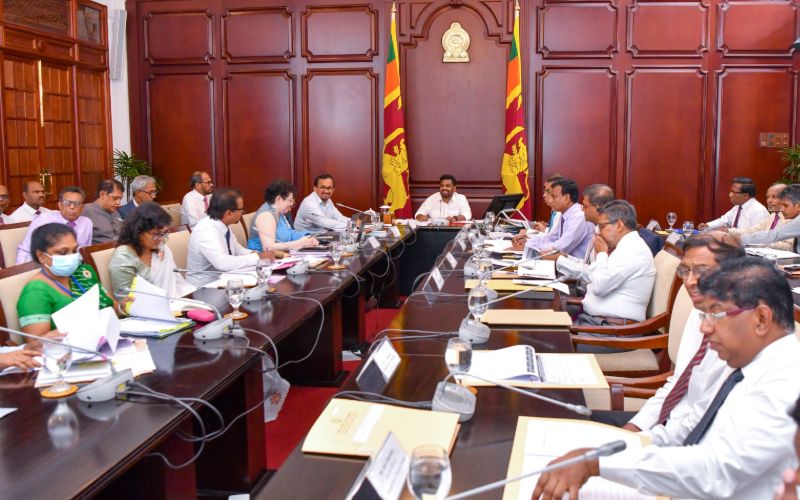
A pre-Budget discussion to review the progress of projects implemented under the 2026 Budget allocations for the Ministry of Industry and Entrepreneurship Development and to discuss proposals for the 2027 Budget was held under the patronage of President Anura Kumara Dissanayake at the Presidential Secretariat on Monday (13) afternoon.
The progress of projects implemented by each division of the Ministry of Industry and Entrepreneurship Development and the institutions under its purview using the 2026 Budget allocations, as well as proposals for the 2027 Budget, were reviewed separately during the discussion.
The President also focused on the current status of the programme to establish industrial zones in areas including Dambulla, Ingiriya, Valachchenai, Millaniya and Katunayake. Discussions centred on issues that have arisen in allocating land and developing infrastructure, including electricity, water and roads, as well as the urgent measures required to resolve these issues.
President Dissanayake instructed officials to make every effort to complete all projects already initiated under the Ministry of Industry and Entrepreneurship Development within the stipulated timeframes. He also highlighted the need to clearly identify the Government’s role and limitations in relation to the industrial sector.
Attention was also drawn to the current situation regarding the development of state-owned enterprises, while issues affecting the sugar and salt industries and alternative proposals to address them were also discussed.
The current status of the process to consolidate institutions under the Ministry of Industry and Entrepreneurship Development was also reviewed. The President pointed out that large institutions had been established at different times to meet various needs, ultimately creating a situation in which such institutions had to be maintained using taxpayers’ money.
He stressed that the consolidation of these institutions should not only improve their efficiency but should also result in a relative reduction in operational expenditure compared with the costs incurred prior to consolidation.
Officials also briefed the President on the proposal to establish the Entrepreneurship and Industry Transformation Authority (EITA) and the programme proposed under the Authority.
Attention was also focused on the challenges faced by exporters and industrialists in carrying out their activities. The President instructed officials to submit proposals on general concessions that could be provided to encourage exporters and industrialists.
The President further pointed out that Sri Lanka could develop distinctive expertise by identifying several key areas within the industrial sector and providing the facilities necessary for their development.
Minister of Industry and Entrepreneurship Development Sunil Handunnetti; Minister of Labour and Deputy Minister of Finance and Planning Anil Jayantha Fernando; Deputy Minister of Industry and Entrepreneurship Development Chathuranga Abeysinghe; Secretary to the President Dr Nandika Sanath Kumanayake; Chief of Presidential Staff Prabath Chandrakeerthi; Senior Additional Secretary to the President Russell Aponsu; Secretary to the Ministry of Finance, Planning and Economic Development Dr Harshana Suriyapperuma; and Secretary to the Ministry of Industry and Entrepreneurship Development Thilaka Jayasundara, along with officials from the Ministry of Finance and the Ministry of Industry and Entrepreneurship Development, participated in the discussion.
[PMD]
News
Prime Minister meets the Amir of the State of Qatar and conveys condolences on the passing of the Father Emir
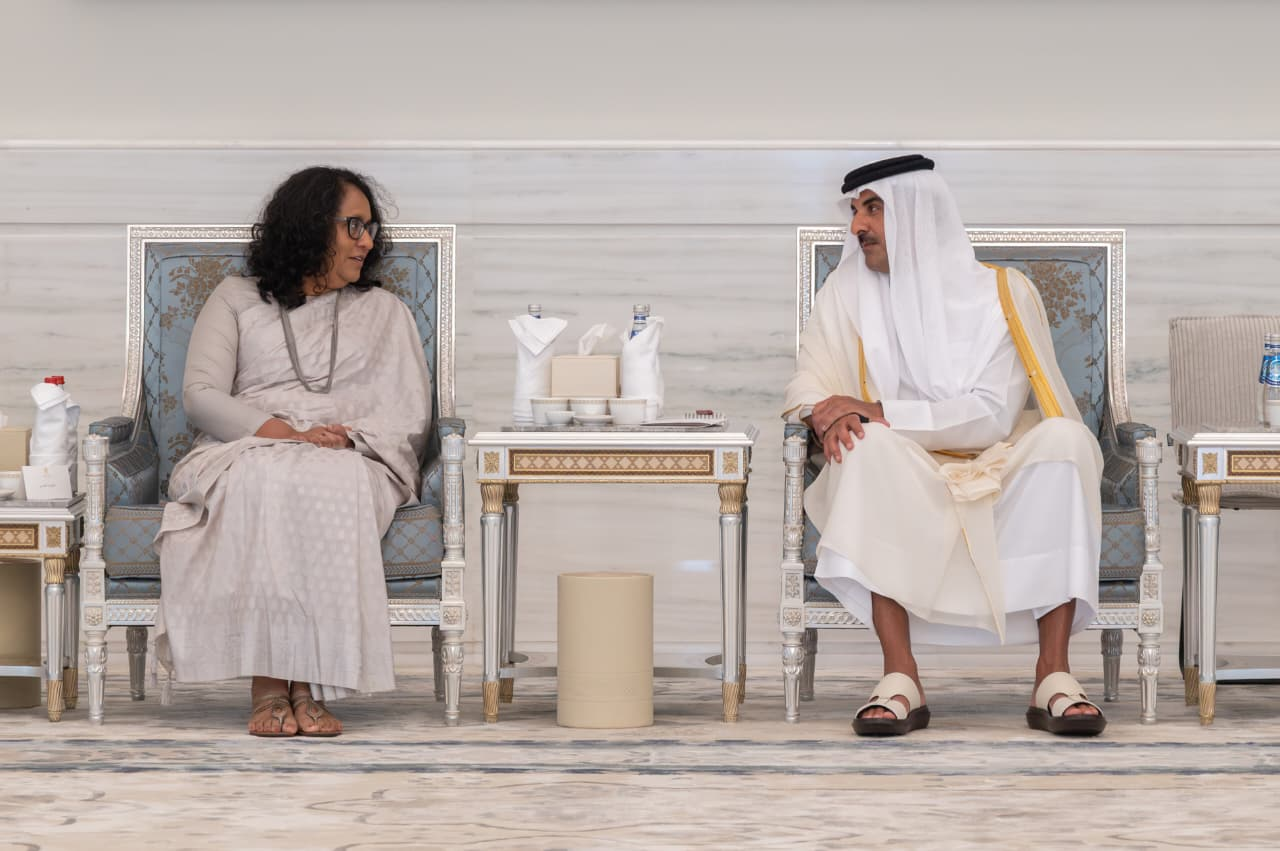
Prime Minister Dr. Harini Amarasuriya, visited the State of Qatar to convey condolences on the passing of the Father Emir, at Lusail Palace in Doha on Wednesday (15 July).
Upon her arrival, the Prime Minister was received by His Highness Sheikh Khalifa bin Hamad bin Khalifa Al Thani, Minister of Interior of the State of Qatar. The Prime Minister subsequently met with His Highness the Emir of the State of Qatar, Sheikh Tamim bin Hamad Al-Thani.
During the meeting, Prime Minister Dr. Harini Amarasuriya conveyed to the Emir the deepest condolences of the Government and the people of Sri Lanka on the passing of the Father Emir, Sheikh Hamad bin Khalifa Al Thani.
The occasion was attended by the Deputy Emir of the State of Qatar Sheikh Abdullah bin Hamad Al Thani; Prime Minister and Minister of Foreign Affairs, Sheikh Mohammed bin Abdulrahman bin Jassim Al Thani; Hassan bin Abdullah Al Ghanim, Speaker of the Shura Council; senior members of the Royal Family.
[Prime Minister’s Media Division]

At present, El Niño conditions have developed and are classified as being at a weak level. Forecasts indicate a 63% probability of a very strong El Niño event developing during the period from November 2026 to January 2027. According to the National Oceanic and Atmospheric Administration (NOAA), there is approximately a one-third probability that El Niño will remain below a very strong intensity.
Typical Climatic Conditions Associated with El Niño
Based on analyses of past El Niño events that occurred between 1950 and 2025:
• Rainfall during July and August may be below normal, particularly in the dry zone areas.
• From October onward, rainfall is generally expected to be above normal.
• If a positive Indian Ocean Dipole (IOD) develops, enhanced rainfall conditions may continue until December.
Sectors Requiring Attention
• Appropriate measures should be taken for water resource management during July and August.
• Increased rainfall expected from October onward may lead to floods and landslides, requiring preparedness and close monitoring. The forecasts are important for sectors such as, Agriculture /Water management /Livestock /Health /Energy /Other climate-sensitive sectors
• Attention should be paid to official information issued by the Department of Meteorology.
Actions by the Department of Meteorology
The Department of Meteorology continuously monitors the evolving situation and issues:
• Weekly and monthly seasonal forecasts and Monthly analyses of rainfall data to monitor meteorological drought conditions.
As weather conditions are influenced not only by El Niño but also by other climatic factors, updated forecasts and advisories are regularly shared with relevant stakeholder organizations (Irrigation/ Water Management Committee /Department of Agriculture/National Building Research Institute/Disaster Management Centre (DMC)/Ministry of Health /Sri Lanka Land Development Corporation…etc). The Department also provides technical support to the committee established through a Cabinet decision to address climate-related impacts. The Department’s monthly rainfall outlook for July to September 2026 is attached
Monthly Rainfall Forecasts for July, August and September 2026
Month Rainfall forecast
July 2026
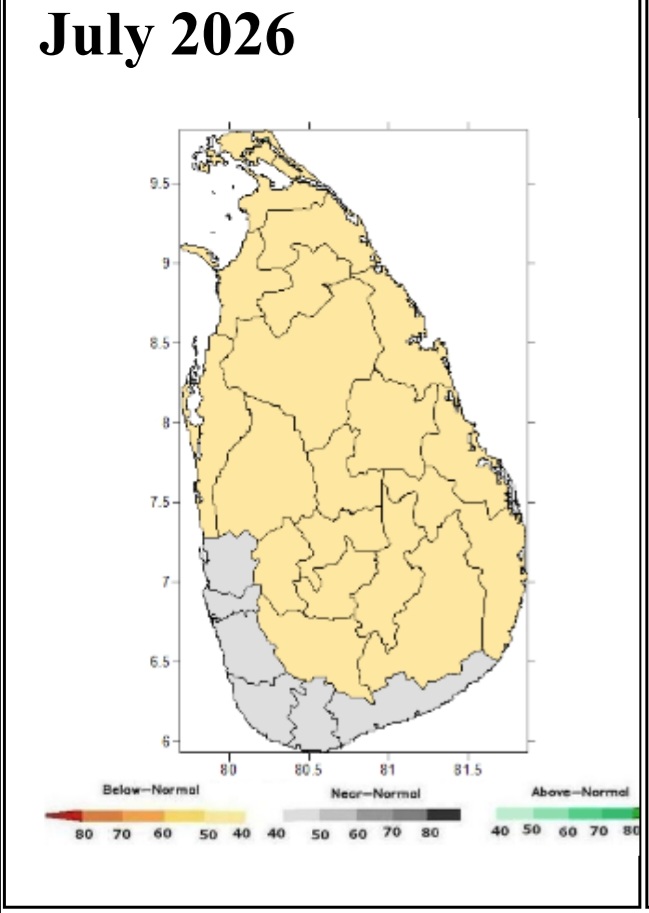
During July 2026, there is a higher probability of having near normal rainfall across most parts of the Western and Southern Provinces. The remainder of the country is expected to experience below normal rainfall.
August 2026
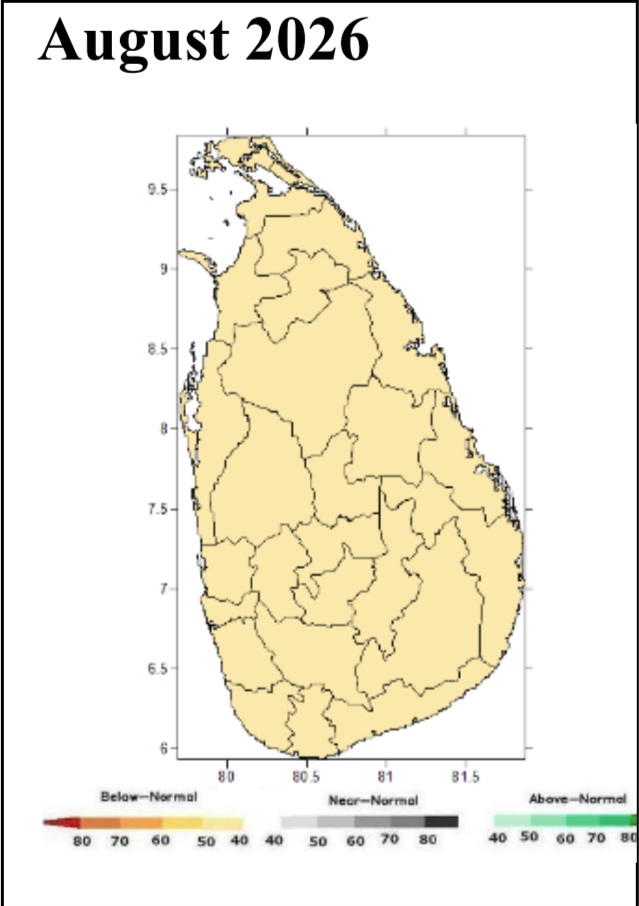
There is a higher probability of having below normal rainfall across most parts of the country during month of August 2026.
September 2026
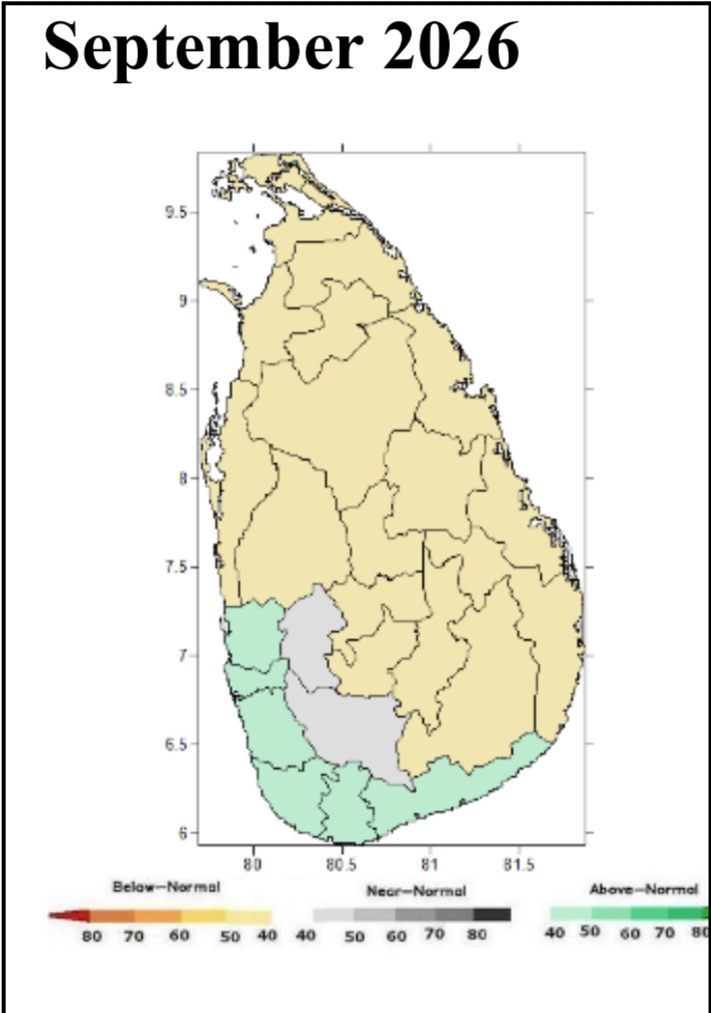
There is a possibility of above-normal rainfall across most parts of the Western and Southern Provinces, while near-normal rainfall is expected in the Sabaragamuwa Province. Below-normal rainfall is likely in the remaining areas during September 2026.
Note: These long-range forecasts may change due to strong day-to-day atmospheric variability associated with the movement of weather systems such as atmospheric disturbances, low-pressure areas, and depressions, as well as intra-seasonal oscillations such as the Madden–Julian Oscillation (MJO). Therefore, in addition to the weekly and monthly forecasts, it is important to pay attention to the Department’s official announcements, weather advisories and warnings, as well as the daily weather forecasts issued by the Department of Meteorology.

President chairs discussion on 2027 Budget Proposals for the Ministry of Industry and Entrepreneurship Development

Prime Minister meets the Amir of the State of Qatar and conveys condolences on the passing of the Father Emir

Current El Niño Status in Sri Lanka

A few showers may occur in the Western, Sabaragamuwa and North-western provinces and in Kandy, Nuwara-Eliya, Galle and Matara districts.

Argentina face fine for Falklands banner in semi-final win

US launches fresh strikes on Iran as Trump warns Tehran it ‘better behave’

‘Dates have the highest sugar content to fight Coronavirus’

Sunday Island 27 December – Headlines

#SundayIsland 17th December – Headlines

Sunday Island – 28th March

Sunday Island Headlines – 21 March

Sunday Island – 21st February – Headlines
-
 News7 days ago
Herath warns prospective migrant workers not to get fleeced by racketeers
-
 Features5 days ago
Prison riots and politics: NPP’s biggest challenge and Sri Lanka’s biggest opportunity
-

 Editorial6 days ago
What’s the world coming to?
-
 Foreign News7 days ago
Tensions erupt in Indian state after 11-year-old raped and murdered
-

 Features7 days ago
Devanesan Annan – in Memoriam
-
Editorial7 days ago
Punishment in hellholes
-
 Features2 days ago
Dirty Money
-

 Editorial5 days ago
Much ado about crime: Fish or cut bait