
News
Academics demand the immediate release of Hejaaz Hizbullah and Ahnaf Jazeem


‘Their continued detention is an attack on the rights of lawyers and the rule of law’
Nearly 100 academics have issued a statement on the continued detention of Hejaaz Hizbullah and Ahnaf Jazeem, who were arrested by the Criminal Investigation Department (CID) more than a year ago.
They have said decades of majoritarian politics, and the more recent descent towards authoritarianism and militarization, have eroded the foundations of our democracy and have numbed us to the violence in our daily lives and de-sensitised us to how sections of our citizenry are targeted.
The members of the academic community representing a cross section of universities in Sri Lanka, demanded the immediate release of the two detainees and called attention to the fact that their arrests have taken place in a context of unrelenting anti-Muslim mobilizations that are tearing our social fabric apart.
“We are deeply worried about the continuing deterioration of the criminal justice system and the institutional decay it more broadly signals, as these developments are also symptomatic of a gradual hollowing out of the democratic bases of society. We, therefore, call for a halt to undemocratic actions by government actors, a repeal of the PTA (Prevention of Terrorism Act) and other laws that are contrary to the principles of democracy, and ask that the public demand accountability”, they said.
“We call on the greater academic community to broaden this struggle to ensure that we fulfill our mandate and exercise our academic freedom in the pursuit of democracy and justice for all”.
At the outset, the statement noted that on April 14, 2020, human rights and constitutional lawyer Hizbullah was arrested by the CID and detained under Section 9 of the PTA for over 10 months. At the time of arrest, his alleged crimes were “aiding and abetting” one of the Easter Sunday bombers. It later transpired that he represented the family in two land cases. He is now being charged with speech related offences under Section 2(1)(h) of the PTA and Section 3(1) of the International Covenant on Civil and Political Rights (ICCPR) Act. These are based on statements made by minors to the CID, which the children maintain they were coerced and threatened to make, it said.
On May 16, 2020, the Police Counter Terrorism Investigation Division (CTID) arrested Jazeem, a poet and teacher from Mannar, on allegations that his book Navarasam contained “extremist ideas” and that he taught “extremism” to students. A review of the poems by an “expert panel” of psychiatrists, some with university affiliations, makes vague claims about the potential of the book to incite violence, hatred, and suicidal thoughts, it said.
Their report fails to provide the basis or justification for these judgments and even says that there were two discrepant sets of translations (Sinhala and English from the original Tamil) at their disposal, which fact should have called the entire operation into question. Contrary to the allegations of the CTID, recent translations reveal that the poems were deeply critical of violence, it further said.
Hizbullah’s arrest and continued detention is an attack on the rights of lawyers and the rule of law. Jazeem’s arrest and continued detention without charge represents, in addition, an attack on the freedom of expression and pluralism, and a broader war on ideas, it stressed.
As can be seen from the progress of the two cases, the rights of Hizbullah and Jazeem have been clearly violated, and questionable tactics have been and continue to be used to manufacture the cases against them. In custody, their basic needs for health and safety have been neglected, it asserted.
Continuing, the statement said: “The incarceration of Hizbullah and Jazeem occurs in the backdrop of highly organized anti-Muslim mobilizations designed to stigmatize and isolate Muslim communities. Violence and intimidation continue, bolstered by the government’s complicity in these acts in the name of “national security”. In March 2021, the Minister of Public Security announced plans to shut down 1,000 madrasa schools and ban the burqa.
“A month later, the Cabinet approved the ban on all forms of face veils in public spaces, and, in May, the Deputy Director of Customs announced that any Islamic religious texts brought to the country must be cleared by the Ministry of Defence. These actions further criminalize one for being Muslim and are an assault on our democratic freedoms.
“Anti-Muslim sentiments guide the state COVID-19 response as well. Last year, at the height of the pandemic, the Ministry of Health adopted a mandatory cremation policy for the COVID dead, despite WHO guidelines to the contrary. The policy was backed by “experts”, including those from universities, citing unsubstantiated public health concerns, with crass disregard for the strongly followed religious tradition among Muslims of burying their dead.
“Today, burials are permitted, but restricted to a Muslim-populated area – Ottamavadi, Batticaloa – signalling that only Muslims must contend with the albeit unlikely threat from their dead. The burial issue was only one of the more flagrant of attempts to weaponise the pandemic against Muslims.
“The state machinery, through statements and actions of doctors, PHIs, politicians, military personnel, and state-controlled media pushed a narrative of Muslims as super-spreaders.
“These trends are not new. They are a continuation of heightened violence against Muslims that spans a decade. Starting in 2012, organized attacks on mosques and demonstrations against Muslims, including an anti-Halal campaign, culminated in horrific acts of violence, including the Aluthgama and Digana riots. In parallel, highly politicized campaigns have targeted Muslim individuals; for instance, Dr. Shafi Shihabdeen was arrested on false allegations of forced sterilization, and activist Ramzy Razeek was detained for condemning the anti-Muslim witch-hunt post Easter Sunday bombings.
“Unlike the zeal with which these cases are pursued, state institutions responsible for ensuring public safety have failed to prevent anti-Muslim violence, and no one has been held accountable so far.
“The targeting of Muslims occurs in a context of increasing authoritarianism and militarisation which have served to weaken democratic institutions. We have witnessed the remanding of former Director, CID, Shani Abeysekera, who had investigated high-ranking officials and politicians, author Shaktika Sathkumara, for purportedly anti-Buddhist writings, and many others. The PTA is wielded as a tool of politicization and arbitrary power, alongside the Emergency Regulations and the ICCPR Act.
“They are deployed in majoritarian campaigns against minorities, to attack those opposed to the regime in power, and crush dissent, casting doubt on state institutions and the judicial system.
“Academics are mandated to exercise and safeguard free speech and expected to confront and question the excesses of those in power. As members of public higher educational institutions, we must support and amplify the voices of the marginalized. Having learned from the devastation caused by uneven justice, majoritarian politics, and racist rhetoric, and knowing the insecurity and fear that some of our citizens live with on a daily basis, we must resist these attacks. We believe that allowing these actions to continue with impunity implicates us all”.
Signatories:
Prof. Upul Abeyrathne, University of Peradeniya, Dr. Asha Abeysekera, University of Colombo, Dr. Indi Akurugoda, University of Ruhuna, Prof. Arjuna Aluwihare, University of Peradeniya, Prof. Liyanage Amarakeerthi, University of Peradeniya, Shani Anuradha, University of Peradeniya, Dr. S. Arivalzahan, University of Jaffna, Dr. Fazeeha Azmi, University of Peradeniya, Prof. A. S. Chandrabose, The Open University of Sri Lanka, Prof. Sarath Chandrajeewa, University of the Visual & Performing Arts, Dr. Visakesa Chandrasekaram, University of Colombo, Dr. Kumar David, formerly University of Peradeniya, Ruwanthie de Chickera, Visiting Lecturer, The Open University of Sri Lanka, Erandika de Silva, University of Jaffna, Prof. Nirmal Ranjith Dewasiri, University of Colombo, Dr. Kanchuka Nayani Dharmasiri, University of Peradeniya, Prof. Priyan Dias, University of Moratuwa, Avanka Fernando, Department of Sociology, University of Colombo, Dr. Michael Fernando, formerly at the University of Peradeniya, Kasun Gajasinghe, University of Peradeniya, Prof. Dileni Gunewardena, University of Peradeniya, Prof. Camena Guneratne, The Open University of Sri Lanka, Prof. Farzana Haniffa, University of Colombo, Dr. D. Hemachandra, University of Peradeniya, Prof. Siri Hettige, University of Colombo, Ms. Tracy Holsinger, Visiting Lecturer, The Open University of Sri Lanka, Dr. Rajan Hoole, formerly University of Jaffna, Kaushalya Jayasinghe, University of Peradeniya, Prof. Prabhath Jayasinghe, University of Colombo, Maleen Jayasuriya, University of Peradeniya, Dr. Wijaya Jayatilaka, formerly University of Peradeniya, Dr. Pavithra Jayawardena, University of Colombo, Prof. Jeyaratnam Jeyadevan, University of Jaffna, Dr. Ahilan Kadirgamar, University of Jaffna, Prof. Pavithra Kailasapathy, University of Colombo, Dr. Anuruddha Karunarathna, University of Peradeniya, Dr. Chandana Kulasuriya, formerly at the Open University of Sri Lanka, Supoorna Kulatunga, University of Peradeniya, Prof. N. Savitri Kumar, University of Peradeniya, Dr. Ramya Kumar, University of Jaffna, Prof. Shamala Kumar, University of Peradeniya, Prof. Vijaya Kumar, University of Peradeniya, Prof Amal S. Kumarage, University of Moratuwa, Kaushalya Kumarasinghe, formerly the Open University of Sri Lanka, Ms. Hasini Lecamwasam, University of Peradeniya, Prof. Saumya Liyanage, University of the Visual and Performing Arts, Colombo, Dr. Sudesh Mantillake, University of Peradeniya, Ranga Manupriya, Visiting Lecturer, UVPA & University of Moratuwa, Dr. Prabha Manuratne, University of Kelaniya, Mrs. Kosalai Mathan, University of Jaffna, Dr. Mahim Mendis, The Open University of Sri Lanka, Dr. S. N. Morais, The Open University of Sri Lanka, Dr Rumala Morel, University of Peradeniya, Dr. M. Z. M. Nafeel, University of Peradeniya, Ms. Kethakie Nagahawatte, University of Colombo, Dr. F. M. Nawastheen, The Open University of Sri Lanka, Ms. Sabreena Niles, University of Kelaniya, Prof. F. Noordeen, University of Peradeniya, Dr. M. A. Nuhman, formerly University of Peradeniya, Prof. Arjuna Parakrama, University of Peradeniya, Sasinindu Patabendige, University of Peradeniya, Nipuni Sharada Pathirage, University of the Visual and Performing Arts, Hasitha Pathirana, University of Kelaniya, Dr. Pradeep Peiris, University of Colombo, Prof. Asoka Perera, University of Moratuwa, Dr. Kaushalya Perera, University of Colombo, Prof. Sasanka Perera, formerly of University of Colombo, Nicola Perera, University of Colombo, Ruhanie Perera, University of Colombo, Dr. Saman Pushpakumara, University of Peradeniya, Prof. Rupika Rajakaruna University of Peradeniya, Prof. Harshana Rambukwelle, The Open University of Sri Lanka, Dr. Ramasamy Ramesh, University of Peradeniya, Dr. Romola Rassool, University of Kelaniya, Rizmina Rilwan, University of Peradeniya, Dr. Athulasiri Samarakoon, The Open University of Sri Lanka, Prof. Gameela Samarasinghe, University of Colombo, Dr. T. Sanathanan, University of Jaffna, Ms. R. T. M. Senanayake, University of Peradeniya, Prof. Hiniduma Sunil Senevi, Sabaragamuwa University of Sri Lanka, Prof. Kalinga Tudor Silva, University of Peradeniya, Navaratnam Sivakaran, University of Jaffna, Ms. Anusha Sivalingam, University of Colombo, Dr. N. Sivapalan, University of Jaffna, Prof. Hettigamage Sriyananda, The Open University of Sri Lanka, Prof. Vasanthi Thevanesam, University of Peradeniya, Dr. Darshi Thoradeniya, University of Colombo, Prof. Deepika Udagama, University of Peradeniya, Dr. Ramila Usoof-Thowfeek, University of Peradeniya, Prof. Jayadeva Uyangoda, University of Colombo, Dr. Ruvan Weerasinghe, University of Colombo, Thiyagaraja Waradas, University of Colombo, Prof. Maithree Wickremesinghe, University of Kelaniya, Dr. Shermal Wijewardene, University of Colombo, Saminadan Wimal, University of Jaffna, Dr. Dileepa Witharana, The Open University of Sri Lanka.

By Saman Indrajith
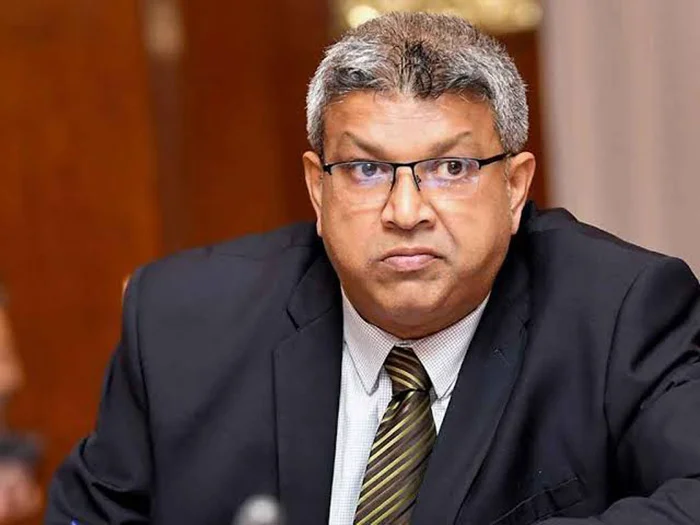
Justice Minister Harshana Nanayakkara yesterday told Parliament that the Commonwealth Lawyers’ Association (CLA) was not an organisation officially recognised or registered under the Commonwealth Secretariat, but a fee-levying private association.
Responding to a question by Opposition and SJB Leader Sajith Premadasa on why he had failed to meet CLA representatives, who recently visited Sri Lanka, Nanayakkara said he had offered them a date and time for a meeting, but they had been unable to attend.
The Commonwealth Lawyers Association (CLA) has questioned procedural fairness and other matters of concern in a report that deals with the Supreme Court hearing petitions against the 22nd Amendment to the Constitution. Among the issues raised by CLA President Steven Thiru, is the composition of the five-member bench.
The Minister said the CLA representatives subsequently requested another date, but he had already scheduled official engagements for the proposed day.
Nanayakkara said it was, therefore, incorrect to claim that he had refused to meet the CLA delegation.
“The CLA is not an official body accepted or admitted into the Commonwealth of countries. It is a private club whose members pay fees for membership,” he said.
However, the Minister said he was not suggesting that the organisation was “a bad organisation”, adding that the accuracy of several statements made by CLA members during their visit to Sri Lanka had yet to be established.
Nanayakkara identified lawyer Upul Jayasuriya as the CLA’s local representative and said Jayasuriya had sought a meeting with him.
“I gave him the opportunity, but he came up with the excuse that he could not make it as he was not in Colombo. Therefore, it is wrong to state that I did not give them time,” the Minister said.
By Shamindra Ferdinando
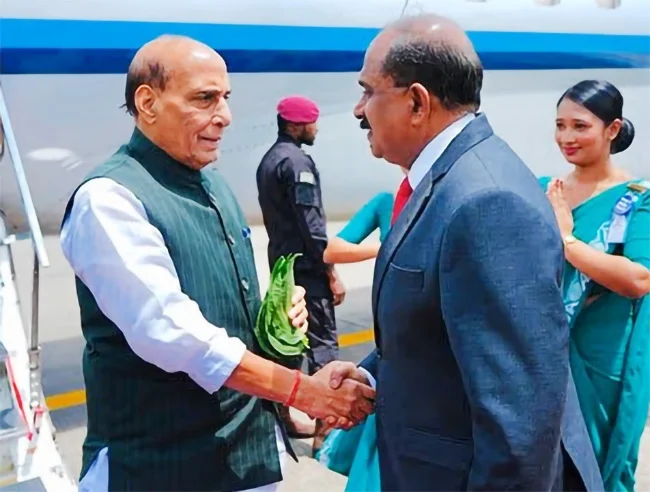
Indian Defence Minister Rajnath Singh is in Colombo on a three-day official visit, the first by an Indian Defence Minister since the 1988 visit by K.C. Pant, during Rajiv Gandhi’s tenure as the Prime Minister.
The Indian Defence Ministry declared that the visit would further strengthen the traditionally strong and friendly bilateral relations in mutually beneficial areas, including a strong maritime and defence partnership.
The visit takes place in the wake of Sri Lanka and India signing seven MoUs, including one on defence, in April 2025. Communist Party General Secretary Dr. G. Weerasinghe told The Island that the government should set the record straight regarding the rapidly developing military relations with the US and India. The acquisition of Colombo Dockyard Ltd., by Indian Defence Ministry-run Mazagon Dock Shipbuilders Limited, soon after the finalisation of MoUs, underscored New Delhi’s strategy, Dr. Weerasinghe said. Responding to another query, Dr. Weerasinghe said that the government should take this opportunity to discuss the Tamil Nadu fishing fleet poaching on Sri Lankan waters.
Pant visited during the Indian Army operations against the Liberation Tigers of Tamil Eelam (LTTE) in the Northern and Eastern Provinces here, while Pranab Mukherjee visited Colombo, in August 2005, to pay last respects to assassinated Foreign Minister Lakshman Kadirgamar.
Indian and Sri Lanka governments said that the visit was meant to strengthen cooperation between the two neighbouring countries in the fields of defence, economic engagement, maritime affairs and regional security.
An Indian warship arrived at the Colombo harbour ahead of the Defence Minister’s visit, reminiscent of old gunboat diplomacy. INS Udayagiri’s visit coincided with the Defence Minister’s visit. The Defence Minister’s delegation included senior officials from Ministry of External Affairs.
During the visit, the Indian Defence Minister is scheduled to hold high-level discussions with President Anura Kumara Dissanayake who also holds the Defence portfolio, Prime Minister Dr. Harini Amarasuriya and Defence Secretary Sampath Thuyacontha. He is also expected to meet members of the Indian community, residing in Colombo.
Dr. Weerasinghe said that the NPP government conveniently extended the moratorium on foreign research vessels imposed during Ranil Wickremesinghe’s tenure in 2024. The CP official said that the media alleged that that decision was taken at the behest of the US and India but nearly two years after the last presidential election the ban remains.
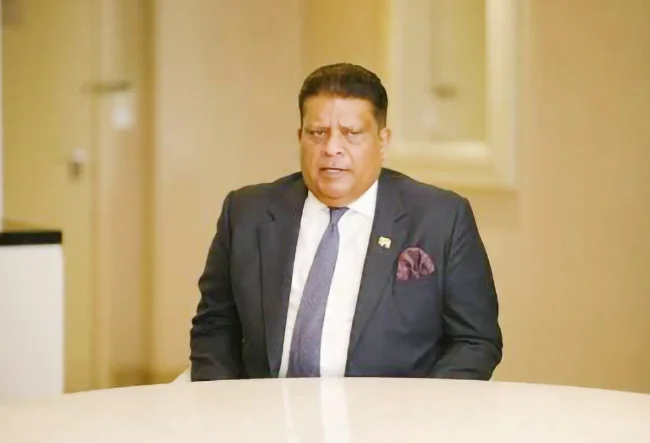
Former Army Commander and Chief of Defence Staff General Shavendra Silva has rejected allegations of wrongdoing during the final stages of war against the LTTE, declaring his readiness to answer specific accusations against him and questioning the basis on which he has been sanctioned internationally.
In an interview with India-based “Impact Stories,” retired General Silva said the Sri Lankan military had fought the Liberation Tigers of Tamil Eelam (LTTE) professionally and had sought to minimise civilian casualties during the final military offensive.
Silva, who commanded the Army’s 58 Division during the final phase of the war in 2009, said he had repeatedly sought an explanation for sanctions imposed on him.
“I have been sanctioned by the United States of America, and I was sanctioned recently by the United Kingdom. For what? I have been asking, tell me what I have done wrong,” Silva queried.
“I’m not a war criminal. I fought for my country,” he added, arguing that if he had violated military law, he should have been investigated and punished under the appropriate mechanisms.
The United States imposed travel restrictions on Silva and his immediate family in 2020, citing what it described as credible information of his involvement, through command responsibility, in alleged gross violations of human rights during the final phase of the war. The United Kingdom later imposed sanctions on Silva in 2025 over alleged human rights violations during the conflict.
Silva rejected allegations that the military deliberately targeted civilians, while acknowledging that civilian deaths could have occurred during the fighting.
“There would have been deaths of civilians, but those are not intentional,” he said, adding that military planning sought to minimise civilian casualties and that targets were avoided when civilians were observed nearby.
Recalling the final stages of the offensive, Silva said his division rescued more than 123,000 civilians and that more than 75% of, approximately 12,000 LTTE members, who surrendered at the end of the conflict, had surrendered to his division.
He said surrendered LTTE members were subsequently rehabilitated and reintegrated into society, arguing that this demonstrated the military’s approach toward those who laid down their weapons.
Silva also recalled an “encirclement operation” in which he said a large number of LTTE bodies were recovered. He said a senior LTTE northern commander was among those found dead and was dressed in civilian clothes while carrying a weapon.
“One could say a civilian was killed. No, he was the LTTE northern commander,” Silva said, arguing that combatants wearing civilian clothing could subsequently be counted as civilian casualties.
Silva also accused the LTTE of using civilians as human shields, preventing people from leaving areas under its control and positioning military assets near civilian locations during the final stages of the conflict.
He criticised successive Sri Lankan governments for what he described as a failure to effectively present the military’s account of the war internationally, saying this had allowed allegations against Sri Lankan troops to gain traction overseas.
Silva called on governments and international organisations making allegations against Sri Lankan forces to engage directly with those accused and present specific incidents for explanation.
“Come to a dialogue,” he said. “Tell us, ‘You all had done this on this particular day, at this particular time,’ so that we can clarify.”
“If we have done something, we will accept,” he added.
Silva also rejected claims that the LTTE represented the wider Tamil community, saying grievances should be addressed politically rather than through armed violence. He cited the LTTE’s assassinations, suicide attacks and forced recruitment while arguing that entire ethnic or religious communities should not be blamed for the actions of the organisation or its supporters.
The former Army Commander said the military’s objective had been to defeat the LTTE and free civilians from its control, while maintaining that Sri Lankan troops did not intentionally commit abuses against civilians.
Sri Lanka’s final military offensive remains the subject of longstanding international scrutiny. United Nations investigations and international human rights organisations have alleged serious violations of international humanitarian and human rights law by both government forces and the LTTE during the final stages of the conflict. Sri Lankan military leaders, including Silva, have repeatedly rejected allegations that government forces deliberately targeted civilians.

Showers will occur in the Western and Sabaragamuwa provinces and in Galle and Matara districts

Justice Minister hits back at CLA

First visit by an Indian Defence Minister since IPKF deployment

“I’m not a war criminal, I fought for my country”: Shavendra Silva

Govt. tells UN 22nd Amendment meant to strengthen judicial independence

Legacy of enforced disappearances: Vital facts conveniently forgotten to whitewash LTTE and India

‘Dates have the highest sugar content to fight Coronavirus’

Sunday Island 27 December – Headlines

#SundayIsland 17th December – Headlines

Sunday Island – 28th March

Sunday Island Headlines – 21 March

Sunday Island – 21st February – Headlines
-

 News6 days ago
Denied of promotion to SC despite vacancies, justice Gurusinghe retires
-

 Latest News7 days ago
Grade 5 scholarship exam results released
-

 News6 days ago
22A: SC urged to suspend hearing, appoint full bench
-

 News4 days ago
Namal remanded until Sept. 18 over Airbus deal investigation
-

 Latest News3 days ago
Tharanga creates history with Diamond League crown in Brussels
-
 News6 days ago
Govt. seeks NATO assistance
-

 Editorial6 days ago
Strange arithmetic goes unchallenged
-

 News3 days ago
Dispute which triggered listed company director being detained at BIA resolved