
News
Academics demand the immediate release of Hejaaz Hizbullah and Ahnaf Jazeem


‘Their continued detention is an attack on the rights of lawyers and the rule of law’
Nearly 100 academics have issued a statement on the continued detention of Hejaaz Hizbullah and Ahnaf Jazeem, who were arrested by the Criminal Investigation Department (CID) more than a year ago.
They have said decades of majoritarian politics, and the more recent descent towards authoritarianism and militarization, have eroded the foundations of our democracy and have numbed us to the violence in our daily lives and de-sensitised us to how sections of our citizenry are targeted.
The members of the academic community representing a cross section of universities in Sri Lanka, demanded the immediate release of the two detainees and called attention to the fact that their arrests have taken place in a context of unrelenting anti-Muslim mobilizations that are tearing our social fabric apart.
“We are deeply worried about the continuing deterioration of the criminal justice system and the institutional decay it more broadly signals, as these developments are also symptomatic of a gradual hollowing out of the democratic bases of society. We, therefore, call for a halt to undemocratic actions by government actors, a repeal of the PTA (Prevention of Terrorism Act) and other laws that are contrary to the principles of democracy, and ask that the public demand accountability”, they said.
“We call on the greater academic community to broaden this struggle to ensure that we fulfill our mandate and exercise our academic freedom in the pursuit of democracy and justice for all”.
At the outset, the statement noted that on April 14, 2020, human rights and constitutional lawyer Hizbullah was arrested by the CID and detained under Section 9 of the PTA for over 10 months. At the time of arrest, his alleged crimes were “aiding and abetting” one of the Easter Sunday bombers. It later transpired that he represented the family in two land cases. He is now being charged with speech related offences under Section 2(1)(h) of the PTA and Section 3(1) of the International Covenant on Civil and Political Rights (ICCPR) Act. These are based on statements made by minors to the CID, which the children maintain they were coerced and threatened to make, it said.
On May 16, 2020, the Police Counter Terrorism Investigation Division (CTID) arrested Jazeem, a poet and teacher from Mannar, on allegations that his book Navarasam contained “extremist ideas” and that he taught “extremism” to students. A review of the poems by an “expert panel” of psychiatrists, some with university affiliations, makes vague claims about the potential of the book to incite violence, hatred, and suicidal thoughts, it said.
Their report fails to provide the basis or justification for these judgments and even says that there were two discrepant sets of translations (Sinhala and English from the original Tamil) at their disposal, which fact should have called the entire operation into question. Contrary to the allegations of the CTID, recent translations reveal that the poems were deeply critical of violence, it further said.
Hizbullah’s arrest and continued detention is an attack on the rights of lawyers and the rule of law. Jazeem’s arrest and continued detention without charge represents, in addition, an attack on the freedom of expression and pluralism, and a broader war on ideas, it stressed.
As can be seen from the progress of the two cases, the rights of Hizbullah and Jazeem have been clearly violated, and questionable tactics have been and continue to be used to manufacture the cases against them. In custody, their basic needs for health and safety have been neglected, it asserted.
Continuing, the statement said: “The incarceration of Hizbullah and Jazeem occurs in the backdrop of highly organized anti-Muslim mobilizations designed to stigmatize and isolate Muslim communities. Violence and intimidation continue, bolstered by the government’s complicity in these acts in the name of “national security”. In March 2021, the Minister of Public Security announced plans to shut down 1,000 madrasa schools and ban the burqa.
“A month later, the Cabinet approved the ban on all forms of face veils in public spaces, and, in May, the Deputy Director of Customs announced that any Islamic religious texts brought to the country must be cleared by the Ministry of Defence. These actions further criminalize one for being Muslim and are an assault on our democratic freedoms.
“Anti-Muslim sentiments guide the state COVID-19 response as well. Last year, at the height of the pandemic, the Ministry of Health adopted a mandatory cremation policy for the COVID dead, despite WHO guidelines to the contrary. The policy was backed by “experts”, including those from universities, citing unsubstantiated public health concerns, with crass disregard for the strongly followed religious tradition among Muslims of burying their dead.
“Today, burials are permitted, but restricted to a Muslim-populated area – Ottamavadi, Batticaloa – signalling that only Muslims must contend with the albeit unlikely threat from their dead. The burial issue was only one of the more flagrant of attempts to weaponise the pandemic against Muslims.
“The state machinery, through statements and actions of doctors, PHIs, politicians, military personnel, and state-controlled media pushed a narrative of Muslims as super-spreaders.
“These trends are not new. They are a continuation of heightened violence against Muslims that spans a decade. Starting in 2012, organized attacks on mosques and demonstrations against Muslims, including an anti-Halal campaign, culminated in horrific acts of violence, including the Aluthgama and Digana riots. In parallel, highly politicized campaigns have targeted Muslim individuals; for instance, Dr. Shafi Shihabdeen was arrested on false allegations of forced sterilization, and activist Ramzy Razeek was detained for condemning the anti-Muslim witch-hunt post Easter Sunday bombings.
“Unlike the zeal with which these cases are pursued, state institutions responsible for ensuring public safety have failed to prevent anti-Muslim violence, and no one has been held accountable so far.
“The targeting of Muslims occurs in a context of increasing authoritarianism and militarisation which have served to weaken democratic institutions. We have witnessed the remanding of former Director, CID, Shani Abeysekera, who had investigated high-ranking officials and politicians, author Shaktika Sathkumara, for purportedly anti-Buddhist writings, and many others. The PTA is wielded as a tool of politicization and arbitrary power, alongside the Emergency Regulations and the ICCPR Act.
“They are deployed in majoritarian campaigns against minorities, to attack those opposed to the regime in power, and crush dissent, casting doubt on state institutions and the judicial system.
“Academics are mandated to exercise and safeguard free speech and expected to confront and question the excesses of those in power. As members of public higher educational institutions, we must support and amplify the voices of the marginalized. Having learned from the devastation caused by uneven justice, majoritarian politics, and racist rhetoric, and knowing the insecurity and fear that some of our citizens live with on a daily basis, we must resist these attacks. We believe that allowing these actions to continue with impunity implicates us all”.
Signatories:
Prof. Upul Abeyrathne, University of Peradeniya, Dr. Asha Abeysekera, University of Colombo, Dr. Indi Akurugoda, University of Ruhuna, Prof. Arjuna Aluwihare, University of Peradeniya, Prof. Liyanage Amarakeerthi, University of Peradeniya, Shani Anuradha, University of Peradeniya, Dr. S. Arivalzahan, University of Jaffna, Dr. Fazeeha Azmi, University of Peradeniya, Prof. A. S. Chandrabose, The Open University of Sri Lanka, Prof. Sarath Chandrajeewa, University of the Visual & Performing Arts, Dr. Visakesa Chandrasekaram, University of Colombo, Dr. Kumar David, formerly University of Peradeniya, Ruwanthie de Chickera, Visiting Lecturer, The Open University of Sri Lanka, Erandika de Silva, University of Jaffna, Prof. Nirmal Ranjith Dewasiri, University of Colombo, Dr. Kanchuka Nayani Dharmasiri, University of Peradeniya, Prof. Priyan Dias, University of Moratuwa, Avanka Fernando, Department of Sociology, University of Colombo, Dr. Michael Fernando, formerly at the University of Peradeniya, Kasun Gajasinghe, University of Peradeniya, Prof. Dileni Gunewardena, University of Peradeniya, Prof. Camena Guneratne, The Open University of Sri Lanka, Prof. Farzana Haniffa, University of Colombo, Dr. D. Hemachandra, University of Peradeniya, Prof. Siri Hettige, University of Colombo, Ms. Tracy Holsinger, Visiting Lecturer, The Open University of Sri Lanka, Dr. Rajan Hoole, formerly University of Jaffna, Kaushalya Jayasinghe, University of Peradeniya, Prof. Prabhath Jayasinghe, University of Colombo, Maleen Jayasuriya, University of Peradeniya, Dr. Wijaya Jayatilaka, formerly University of Peradeniya, Dr. Pavithra Jayawardena, University of Colombo, Prof. Jeyaratnam Jeyadevan, University of Jaffna, Dr. Ahilan Kadirgamar, University of Jaffna, Prof. Pavithra Kailasapathy, University of Colombo, Dr. Anuruddha Karunarathna, University of Peradeniya, Dr. Chandana Kulasuriya, formerly at the Open University of Sri Lanka, Supoorna Kulatunga, University of Peradeniya, Prof. N. Savitri Kumar, University of Peradeniya, Dr. Ramya Kumar, University of Jaffna, Prof. Shamala Kumar, University of Peradeniya, Prof. Vijaya Kumar, University of Peradeniya, Prof Amal S. Kumarage, University of Moratuwa, Kaushalya Kumarasinghe, formerly the Open University of Sri Lanka, Ms. Hasini Lecamwasam, University of Peradeniya, Prof. Saumya Liyanage, University of the Visual and Performing Arts, Colombo, Dr. Sudesh Mantillake, University of Peradeniya, Ranga Manupriya, Visiting Lecturer, UVPA & University of Moratuwa, Dr. Prabha Manuratne, University of Kelaniya, Mrs. Kosalai Mathan, University of Jaffna, Dr. Mahim Mendis, The Open University of Sri Lanka, Dr. S. N. Morais, The Open University of Sri Lanka, Dr Rumala Morel, University of Peradeniya, Dr. M. Z. M. Nafeel, University of Peradeniya, Ms. Kethakie Nagahawatte, University of Colombo, Dr. F. M. Nawastheen, The Open University of Sri Lanka, Ms. Sabreena Niles, University of Kelaniya, Prof. F. Noordeen, University of Peradeniya, Dr. M. A. Nuhman, formerly University of Peradeniya, Prof. Arjuna Parakrama, University of Peradeniya, Sasinindu Patabendige, University of Peradeniya, Nipuni Sharada Pathirage, University of the Visual and Performing Arts, Hasitha Pathirana, University of Kelaniya, Dr. Pradeep Peiris, University of Colombo, Prof. Asoka Perera, University of Moratuwa, Dr. Kaushalya Perera, University of Colombo, Prof. Sasanka Perera, formerly of University of Colombo, Nicola Perera, University of Colombo, Ruhanie Perera, University of Colombo, Dr. Saman Pushpakumara, University of Peradeniya, Prof. Rupika Rajakaruna University of Peradeniya, Prof. Harshana Rambukwelle, The Open University of Sri Lanka, Dr. Ramasamy Ramesh, University of Peradeniya, Dr. Romola Rassool, University of Kelaniya, Rizmina Rilwan, University of Peradeniya, Dr. Athulasiri Samarakoon, The Open University of Sri Lanka, Prof. Gameela Samarasinghe, University of Colombo, Dr. T. Sanathanan, University of Jaffna, Ms. R. T. M. Senanayake, University of Peradeniya, Prof. Hiniduma Sunil Senevi, Sabaragamuwa University of Sri Lanka, Prof. Kalinga Tudor Silva, University of Peradeniya, Navaratnam Sivakaran, University of Jaffna, Ms. Anusha Sivalingam, University of Colombo, Dr. N. Sivapalan, University of Jaffna, Prof. Hettigamage Sriyananda, The Open University of Sri Lanka, Prof. Vasanthi Thevanesam, University of Peradeniya, Dr. Darshi Thoradeniya, University of Colombo, Prof. Deepika Udagama, University of Peradeniya, Dr. Ramila Usoof-Thowfeek, University of Peradeniya, Prof. Jayadeva Uyangoda, University of Colombo, Dr. Ruvan Weerasinghe, University of Colombo, Thiyagaraja Waradas, University of Colombo, Prof. Maithree Wickremesinghe, University of Kelaniya, Dr. Shermal Wijewardene, University of Colombo, Saminadan Wimal, University of Jaffna, Dr. Dileepa Witharana, The Open University of Sri Lanka.

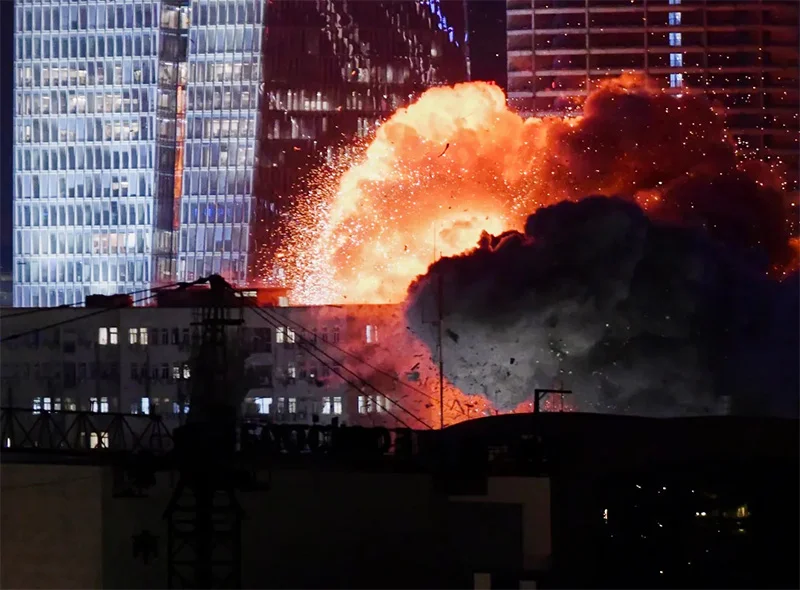
* Iran begins 40-day mourning after Khamenei killed in US-Israeli attack
* President Pezeshkian condemns killing as ‘a great crime’
Iran has begun 40 days of mourning after Supreme Leader Ayatollah Ali Khamenei was killed in ongoing attacks by the United States and Israel, according to Iranian state media.
Top security officials were also killed in Saturday’s strikes, along with Khamenei’s daughter, son-in-law and grandson. The killings mark one of the most significant blows to Iran’s leadership since the 1979 Islamic revolution Al Jazeera has reported.
Iranian President Masoud Pezeshkian condemned the killing as “a great crime”, according to a statement from his office. He also declared seven days of public holidays in addition to the 40-day mourning period.
Reporting from Tehran, Al Jazeera’s Tohid Asadi said people were pouring into the streets of the capital following the news of Khamenei’s killing.
“There will be expected ceremonies,” he said, noting they would likely take place amid continuing bombardment across the country.
Protests denouncing Khamenei’s killing were also reported elsewhere, including Shiraz, Yasuj and Lorestan.
“There will be expected ceremonies,” he said, noting they would likely take place amid continuing bombardment across the country.
Footage aired by Iranian state media showed supporters mourning at the shrine of Imam Reza in Mashhad, with several people seen crying and collapsing in grief, according to Al Jazeera.
The killing also led to protests in neighbouring Iraq, which declared three days of public mourning. In Baghdad, protesters confronted security forces in the heavily fortified Green Zone, which houses Iraqi government buildings and foreign embassies.
Videos verified by Al Jazeera showed demonstrators waving flags and shouting slogans, with witnesses saying some were attempting to mobilise towards the US Embassy. Footage also showed protesters blocking vehicles at a roundabout near one of the entrances to the area.
There was also a protest in the Pakistani city of Karachi, where footage, verified by Al Jazeera, showed people setting fire to and smashing the windows of the US consulate.
However, there have also been reports of celebrations in Iran, with the Reuters news agency quoting witnesses as saying some people had taken to the streets in Tehran, the nearby city of Karaj and the central city of Isfahan.
Meanwhile, the official IRNA news agency reported that a three-person council, consisting of the country’s president, the chief of the judiciary, and one of the jurists of the Guardian Council, will temporarily assume all leadership duties in the country. The body will temporarily oversee the country until a new supreme leader is elected.
Ali Larijani, the head of Iran’s Supreme National Security Council, accused the US and Israel of trying to plunder Iran, in an interview aired on state TV.
He also called on Iranians to unite. “Groups seeking to divide Iran should know that we will not tolerate it,” he added.
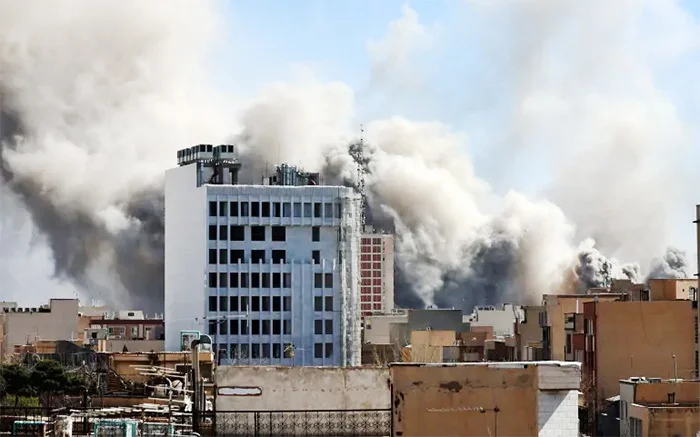
Smoke rises over central Tehran following ongoing U.S.–Israeli strikes on Iran yesterday.[EPA]
Khamenei assumed leadership of Iran in 1989 following the death of Ayatollah Ruhollah Khomeini, who had led the Islamic revolution a decade earlier.
While Khomeini was regarded as the ideological force behind the revolution that ended the Pahlavi monarchy, Khamenei went on to shape Iran’s military and paramilitary apparatus, strengthening both its domestic control and its regional influence.
Meanwhile, the Islamic Revolutionary Guard Corps (IRGC) pledged revenge and said it had launched strikes on 27 bases hosting US troops in the region, as well as Israeli military facilities in Tel Aviv.
Explosions have continued to be reported in Qatar and the United Arab Emirates, while security alerts are in place in several countries across the region.
US President Donald Trump, in a social media post on Sunday, warned Iran that it would be hit “with a force that has ?never been seen before” if it retaliated.
Iran’s retaliatory attacks since Saturday have targeted Israel and US assets across multiple Middle East countries, including Qatar, the UAE, Kuwait, Bahrain, Jordan, Saudi Arabia and Iraq.
Harlan Ullman, chairman of the strategic advisory firm Killowen Group and an adviser to the Atlantic Council in Washington, DC, said the US may have made a “big mistake” by killing Khamenei.
“Decapitation only works when you get all the leaders, and I don’t think that we got all the leaders,” Ullman said, adding that the US should not expect Iran’s leadership to enter negotiations in the immediate aftermath.
Iranian state media reported on Saturday at least 201 people have been killed in the joint US-Israeli attacks across 24 provinces, citing the Red Crescent. In southern Iran, at least 148 people were killed and 95 wounded in a strike on an elementary girls’ school in Minab on Saturday, with the toll continuing to rise, according to state media.
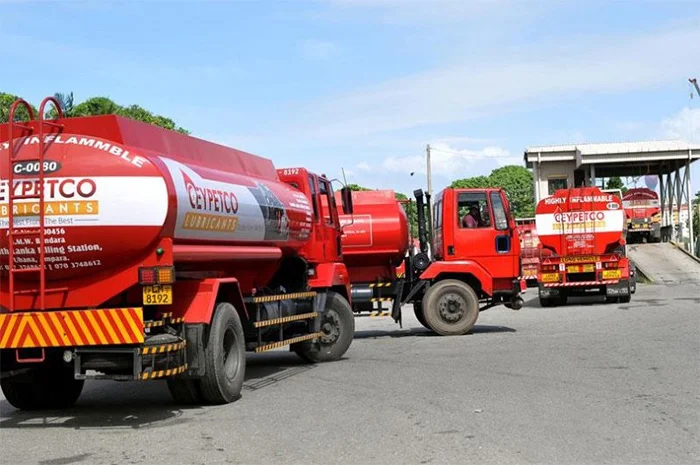
There would be no delay in fuel shipments scheduled for April and May, the Ceylon Petroleum Corporation (CPC) assured yesterday.
Addressing a media briefing in Colombo, CPC Chairman D.J. Rajakaruna said Sri Lanka’s fuel supplies did not originate from the present conflict zone in West Asia and, therefore, supplies to the Corporation would not be disrupted.
He noted that the relevant consignments were due to arrive from India and Singapore as planned.
“We are making this statement responsibly. There is no need for the public to queue up for fuel. Distribution was not originally scheduled for Sunday (01), but due to increased demand, we have deployed all distribution staff to continue fuel issuance. Although Monday (02) is a Poya Day, fuel supplies will continue without interruption,” he said.
The Chairman added that all filling stations had been instructed not to dispense fuel into cans or barrels, warning that legal action would be taken against those attempting to purchase fuel in bulk containers for resale.

The 13th Session of the Sri Lanka–Pakistan Joint Economic Commission (JEC) was successfully held recently in Colombo, reinforcing the strong and longstanding economic and diplomatic ties between the two countries.
The Sri Lankan delegation was led by Wasantha Samarasinghe, Minister of Trade, Commerce, Food Security and Cooperative Development, while the Pakistani delegation was headed by Haroon Akhtar Khan, Special Assistant to the Prime Minister of Pakistan for Industries and Production. The session concluded with the signing of the Agreed Minutes by both Co-Chairs, formalising cooperation across multiple sectors.
The Pakistan High Commission in Colombo said that in the IT and digital economy, both sides agreed in principle to establish a Joint Working Group on IT and telecommunications, promote collaboration in emerging technologies, and support each other in international digital forums.
Industrial cooperation was a key focus, with discussions on expanding trade in chemicals, polymers, engineering goods, glassware, surgical instruments, and pharmaceuticals. Sri Lanka invited Pakistani pharmaceutical companies to explore investment opportunities in designated pharmaceutical zones. Both countries also agreed to strengthen collaboration in Export Processing Zones and enhance support for small and medium enterprises through their respective development agencies.
Significant progress was made in agriculture and livestock, including cooperation on meat exports, livestock farming, seed certification, sanitary and phytosanitary harmonisation, pest risk analysis, and capacity building. Procedures for the export of Sri Lankan pineapples and avocados to Pakistan were advanced. Both sides explored electronic phytosanitary certification (ePhyto), blockchain-based seed traceability systems, and increased trade in agro-commodities such as rice, sesame, and onions.
In education, the JEC emphasised academic and research cooperation, faculty and student exchanges, accreditation and quality assurance, and promoting Pakistan as a higher education destination for Sri Lankan students. A Joint Working Group on Education and Science was proposed, alongside renewal of several institutional Memoranda of Understanding.
Cooperation in science, technology, and innovation will continue under existing bilateral frameworks, with plans for joint research in advanced materials, biotechnology, climate change mitigation, and emerging technologies. Collaborative research projects, student exchanges, and co-authored publications were highlighted as key initiatives.
Health sector collaboration will focus on joint research, academic exchanges, regulatory cooperation on therapeutic goods, capacity building, fast-track registration of essential medicines, public-private partnerships, epidemiological surveillance, and coordinated responses to disease outbreaks.
Maritime cooperation was also discussed, with Pakistan offering technical expertise, training, and industrial collaboration through its shipbuilding institutions. Both sides explored enhanced maritime connectivity, including transshipment, port cooperation at Karachi and Gwadar, direct shipping routes, logistics integration, and maritime training programs.
Commerce secretary-level talks reviewed the progress of the Pakistan–Sri Lanka Free Trade Agreement (PSFTA), assessing current implementation and identifying measures to further enhance bilateral trade and economic cooperation.
On the sidelines, Special Assistant Haroon Akhtar Khan held discussions with Sri Lankan Cabinet members on collaboration in industry, labor and foreign employment, and health sectors.
Both delegations expressed satisfaction with the outcomes of the 13th JEC and reaffirmed their commitment to regular engagement and effective implementation of agreed initiatives. It was mutually agreed that the 14th session will be held in Islamabad, with dates to be confirmed through diplomatic channels.

PCB fines Pakistan players for underwhelming T20 World Cup campaign

Iran strikes Qatar and Saudi energy sites as US jets shot down by Kuwaiti ‘friendly fire’

India and Canada agree series of deals as Carney and Modi reset ties in Delhi

Oil prices rise after ships attacked near Strait of Hormuz

War photographer Paul Conroy dies as tributes paid

Allies of US in the Gulf bear brunt of Iran attacks

‘Dates have the highest sugar content to fight Coronavirus’

Sunday Island 27 December – Headlines

#SundayIsland 17th December – Headlines

Sunday Island – 28th March

Sunday Island Headlines – 21 March

Sunday Island – 21st February – Headlines
-
 Opinion4 days ago
Jamming and re-setting the world: What is the role of Donald Trump?
-
 Features4 days ago
An innocent bystander or a passive onlooker?
-
 Features6 days ago
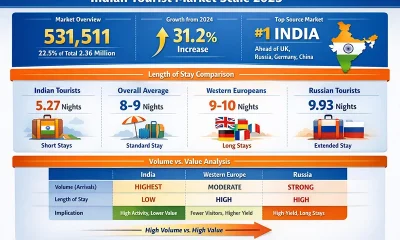
Building on Sand: The Indian market trap
-
 Opinion6 days ago
Future must be won
-
 Features5 days ago
Ratmalana Airport: The Truth, The Whole Truth, And Nothing But The Truth
-

 Business6 days ago
Dialog partners with Xiaomi to introduce Redmi Note 15 5G Series in Sri Lanka
-
 Business5 days ago
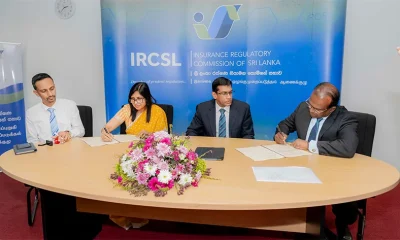
IRCSL transforms Sri Lanka’s insurance industry with first-ever Centralized Insurance Data Repository
-

 Sports7 days ago
CEA halts development at Mandativu grounds until EIA completion