
Opinion
Absurd standardss on Cadmium and Lead in fertilizers

An opposition member of parliament, Dr Harsha De Silva raised the issue of “contaminated” fertilizer stocks in the House. News reports and social media state that fertilizers “Laced with Unsafe Levels” of Lead and Cadmium have been released in Sri Lanka. Exposure to even small amounts of these heavy metals over time, mainly through the food chain, or by smoking, causes kidney, liver, bone and neurological damage in humans, leading to a variety of chronic diseases.
According to the news reports “The SLSI had suspended the release of the TSP consignment after it found that Lead and Cadmium in the imported fertilizer were higher than the maximum levels for toxic elements based on Sri Lanka standards specifications……However, following a meeting at the Presidential Secretariat, Director Senaratne authorized the release of the consignment into the market, on a strictly conditional basis, considering the food security of the country”.
Anyone reading the news would be justifiably alarmed, as both cadmium and lead are toxic substances that should not get into the food chain, even in small concentrations. However, we point out here that the fault is not in the imported fertilizer, but in the ridiculous standards stipulated by those who wrote Sri Lanka’s standards for heavy metal residues in fertilizers. This is a topic that I have addressed in newspaper articles as well as in technical studies [e.g., Dharma-wardana, Environmental Geochemistry and Health volume 40, pages 2739–2759 (2018) ].
This report must be taken in the backdrop of news about toxins in coconut oil, as well as the attempt of a TV-media host to make the SL Standards Institute (SLSI) Director Dr. Senaratne to reveal names of companies alleged to have imported contaminated coconut oil. She quite correctly stood her ground and declined to reveal names and make public accusations.
The Director of a scientific laboratory is not mandated to act as a public prosecutor. However, her answer showed that scientists are not media savvy and may give totally inappropriate answers that media outlets seek to create media hype. The fact that media hosts should try to destroy due process, and create “instant exposés” in an inappropriate manner, show the extent of the decline in public standards of justice and fair play in the country.
However, let us use this opportunity to educate ourselves regarding toxic substances in general, and heavy metals in fertilizers, in particular. Due to lack of space, here we examine only the case of cadmium, whose Sri Lankan standards are stated in SLS-812-standard-1988, amended and re-approved in 2008. This says that a kilo of TPS fertilizer cannot contain more than 5 mg of cadmium (or 10.9 mg per kg of P2O5). This is an absurd specification, which is impossibly LOW, such that there are very few mineral sources that conform to such a specification.
 Let us look at this in comparison with the standards required by other countries for cadmium in fertilizer.
Each country, and sometimes each state or province of a country, sets its standards based on the naturally existing cadmium levels in its soil. Most parts of the UK have very high cadmium levels in its soil, and so inputs of Cd via fertilizers make little difference. Some parts of Western Europe (e.g, Brittany, in France, or parts of Holland) have low natural levels, while Belgium is as contaminated as the UK. So the European Union, as a whole, hopes to gradually tighten its standards and move to 20 mg/kg by 2040. But Sri Lanka has already, in 1988 itself, set its Cd limit at the impossibly low value of 5 mg/kg !
Was this very low limit set already in 1988 so as to disallow every imported batch of fertilizer, so that it can be allowed only when the right pockets are filled? Did the ring of racketeers with greased palms get broken, or did it not change with the change of government, and was this the reason why this matter had to go right up to the top for the “approval” of a perfectly safe and fine fertilizer? The fertilizer has been “condemned” as being “laced with cadmium” and other heavy metals using deliberately contrived specifications ?
How clean the food you eat depends fundamentally on the cleanliness and ecology of the soil to start with. It is only secondarily dependent on the purity of fertilizers in regard to trace metals, or the presence of traces of pesticides; even though a very different hype has been developed in the media for the consumption of a public frightened for its health and ready to even believe people like Dr. Mercola (see:
http://www.dailynews.lk/2018/11/07/features/167704/toxic-cocktail-myth-and-truth) or even “Dr”. Dhammika Bandara inspired by Kaali Amma.
All soils have a certain amount of naturally occurring toxins, as well as toxins from human activity, e.g, earth works, mining, farming, burning of fossil fuels or forests that cause acid rain and noxious fumes, and poor disposal of garbage. Even organic farming, often believed to be clean and “natural”, produces toxins similar to those in mineral fertilizers, as composting plant matter leads to the cyclic accumulation of heavy metals like cadmium and lead found naturally in the soil, and re-concentrated in plant matter used for composting.
Mineral fertilizers like triphosphate (TPS) are mined from the ground, usually from desert locations (e.g., in Morocco, Nauri Islands in New Zealand). These mineral deposits are becoming increasingly scarce and phosphates are a threatened commodity. Mineral fertilizers applied to the soil also contribute some cadmium (and other trace metals) to the soil.
Let us take an “extremely polluted sample” of fertilizer by Sri Lanka’s specification, e.g. Nauru phosphate which has some 90 mg/kg of cadmium, i.e., 15 times more than that specified by the current absurd SL standard. We have shown (e.g., https://doi.org/10.1007/s10653-018-0140-x)
that it will still take many centuries to modify the cadmium levels in, say, Sri Lankan soil significantly by such fertilizer additions. Hence even such a so-called “bad” fertilizer, but used in Australia and New Zealand, would be perfectly safe for use in Sri Lanka too.
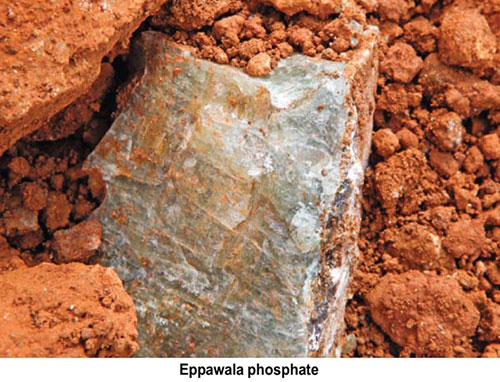
Sri Lanka has a deposit of phosphate minerals at Eppawala. While it is quite high in its arsenic contamination, it has very low cadmium contamination. Some people have urged the government to exploit the Eppawala deposits. I have opposed this as the conversion of the rock phosphate to usable TPS etc., is a highly polluting process that is best done far away from human habitations – i.e., unsuitable for Sri Lanka. In any case, a local production will also cost three to ten times more than what is available in the international market. Given the increasing scarcity of phosphate, the local deposit should be regarded as a national treasure that must be conserved for future use, until cleaner nano-technological methods for mineral exploitation become available.
Hence, I urge the government to change the cadmium and other heavy metal specifications used in Sri Lanka to conform to modern scientific knowledge, and align its standards with values used internationally. Having looked at the level of cadmium in Sri Lankan soils, I believe that an appropriate standard for Sri Lanka is to set its upper level for cadmium to be about 100-150 mg per kg of Phosphate, instead the current absurdly low value.
CHANDRE
DHARMAWARDANA
Canada
The author is currently affiliated with the National Research Council of Canada, Ottawa, and the University of Montreal. He was a past VC and Professor of Chemistry at Vidyodaya/SJP university.



The resignation of Energy Minister Kumara Jayakody comes after several weeks of controversy over his ministerial role. The controversy sharpened when the minister was indicted by the Commission on Bribery and Corruption for a transaction he was involved in ten years ago as a government official in the Fertiliser Corporation. The other issue was the government’s purchase of substandard coal from a new supplier. Minister Jayakody’s resignation followed the appointment of a Special Presidential Commission of Inquiry to investigate coal and petroleum purchases. The minister who resigned, along with the Secretary to the Ministry of Energy, Udayanga Hemapala, stated that they did not wish to compromise the integrity of the investigation to be undertaken by the Commission of Inquiry.
The government’s initial resistance to holding the minister accountable for the costly purchase was based on the argument that the official procedure had been followed in ordering the coal. However, the fact that the procedure permitted a disadvantageous purchase which has come to light on this occasion suggests a weakness in the process. The government’s appointment of the Special Presidential Commission of Inquiry to examine purchases as far back as 2009 follows from this observation. In this time 450 purchases are reported to have been made, and if several of them were as disadvantageous as this one, the cost to the country can be imagined. The need to investigate transactions since 2009 also arises from the possibility that loopholes in official government procedures in the past would have permitted private enrichment at a high cost to the country.
Concerns have been expressed in the past that the purchase of coal and petroleum, often on an emergency basis, enabled the use of emergency procurement processes which do not require going through the full tender procedures. The government has pledged to eradicate corruption as its priority. As a result, the general population would expect it to do everything within its power to correct those systems that permitted such corruption. Accountability is not only forward looking to ensure non-corrupt practices in the present, it is also backward looking to ensure that corrupt practices of the past are discontinued. This would be a matter of concern to those who headed government ministries and departments in previous governments. Those who have misapplied the systems can be expected to do their utmost to resist any investigation into the past.
Politically Astute
One of the main reasons for the government’s continuing popularity among the general population, as reflected in February 2026 public opinion poll by Verité Research, has been its willingness to address the problem of corruption. Public opinion studies have consistently shown that corruption remains one of the top concerns of citizens in Sri Lanka. The arrests and indictments of members of former governments have been viewed with general satisfaction as paving the way to a less corrupt society. At the same time, the resignations of Minister Kumara Jayakody and Secretary Udayanga Hemapala are an indication that not even government members will be spared if they are found to have crossed red lines. This is an important signal, as public confidence depends not only on holding political opponents to account but also on demonstrating fairness and consistency within one’s own ranks.
There appears to be a strategy on the part of the opposition to target government leaders and allege corruption so that ministers will be forced to step down. Organised protests against other ministers, and demonstrations outside their homes, are on the rise. The government appears not to want to give in to this opposition strategy and therefore delayed the resignation of Minister Jayakody until it had itself established the Special Presidential Commission of Inquiry. It enabled the minister to step down without it seeming that the government was yielding to opposition pressure. In political terms, this was a calibrated response that sought to balance the need for accountability with the need to maintain authority and coherence in governance.
The demand by opposition parties to focus attention on the coal problem could also be seen as an attempt to shift the national debate from the corruption of the past to controversies in the present. The opposition’s endeavour would be to take the heat off themselves in regard to the corruption of the past and turn it onto the government by making it the focus of inquiries into corruption. The decision to set up a Special Presidential Commission of Inquiry accompanied by the resignation of the minister and the ministry secretary was a politically astute way of demonstrating that the government will have no tolerance for corruption. It will also help to remind the general public about the rampant corruption of past governments which prevents the opposition’s corruption accusations against the government from gaining traction amongst the people.
New Practice
The resignation of a government minister who faces allegations but has not been convicted is still a relatively new practice in Sri Lanka. The general practice in Sri Lanka up to the present time has been for those in government service, if found to be at fault, to be transferred rather than removed from office. This is commonly seen in the case of police officers who, if found to have used excessive force or engaged in abuse, are transferred to another station rather than subjected to more serious disciplinary action. A similar pattern was seen in the case of former minister Keheliya Rambukwella, who faced allegations of corruption in the health field but was reassigned to a different portfolio rather than removed from government.
Against this background, the present resignation assumes greater importance. It signals a willingness to break with past practices and to establish a higher standard of conduct in public office. However, a single instance does not in itself create a lasting change. What is required is the consistent application of the same principle across all cases, irrespective of political affiliation or convenience. This is where the government has an opportunity to strengthen its credibility. By ensuring that the same standards of accountability are applied to its own members as to those of previous governments, it can demonstrate that its commitment to good governance is not selective.
The establishment of the Special Presidential Commission of Inquiry, the willingness to accept ministerial resignation, and the recognition of systemic weaknesses in procurement are all steps in the right direction. The challenge now is to ensure that these steps are followed through with determination and consistency. If the investigations are conducted impartially and lead to meaningful reforms, the present controversy could mark a turning point. The resignation of the minister should not be seen as an isolated event but as the beginning of a new practice. If it becomes part of a broader pattern of accountability, it can contribute to a new political culture and to restoring public trust in government.
by Jehan Perera

The Island newspaper’s lead news item on the 12th of April 2026 was on the CEB request to shut down rooftop solar power during the low demand periods. Their argument is that rooftop solar panels produce about 300 MW power during the day and there is no procedure to balance the grid with such a load.
We as well as a large academic and industrial consortium members have been trying to promote solar energy as a viable and sustainable power source since the early 1990’s. We formed the Solar Energy Society and made representations to Government politicians about the need to have solar power generation. This continuous promotional work contributed to the rapid increase in PV solar companies from three in the early 1990’s to over 650 active PV solar companies established today in the country. These companies have created tens of thousands of high-quality jobs, as well as moving in the right direction for sustainable development.
However, all these efforts appear to have been in vain since the CEB policy makers have continuously rejected solar energy as a viable alternative. Their power generation plans at that time did not include solar energy at all but only relied on imported coal power plants and diesel power generation. Even at the meetings where CEB senior staff were present, we emphasised the importance of installation of battery storage facilities and grid balancing for which they have done nothing at all over the past three decades. Now they have grudgingly accepted the need to include solar energy, which was an election promise of the present government. The government policy is that Sri Lanka should go for renewables to satisfy 70% of its energy needs by 2030 and soon move towards the green hydrogen technology by using solar and wind energy.
The question is why the diesel generators and hydropower stations cannot be shut off one by one to accommodate the solar power generated during the daytime. Unlike a coal-fired plant, diesel generators and hydro power plants can be shut off in a relatively shorter period of time. Norochchalai Lakvijaya power plant produces around 900 MW of power while the total country requirement is 2500 MW on a daily basis. The remainder is provided by diesel generators, hydro and other renewable energy sources.
The need for work to achieve this goal of grid balancing should be the primary responsibility of the CEB. Modern grid balancing systems are in operation in countries such as Germany where around 56% of its energy come from renewable sources. They also plan to increase this to reach 80% of the energy required through renewables by 2030. Our CEB is hell bent on diesel power plants. Who benefits from such emergency power purchases is anybody’s guess?
The Government and the CEB should realise that all roof top solar plants are privately financed through personal funds or bank loans with no financial burden on the Government. It is a crime to request them not to operate these solar panels and get the necessary credits for the power transmitted to the national grid. It appears that the results of CEB’s lack of grid balancing experience and unwillingness to learn over three decades have now passed to the privately-funded rooftop solar panel owners. It is unfortunate that the Government is not considering the contributions of ordinary individuals who provide clean power to the national grid at no cost to the Government. Over 150,000 rooftop solar panels owners are severely affected by these ruthless decisions by the CEB, and this will lead to the un-popularity of this new government in the end.
by Professors Oliver Ileperuma and I M Dharmadasa

It was with shock that I realized that the article in the Sunday Island of April 5 about the winsome graduate gazing serenely at her surroundings was, in fact, an obituary about Nilanthi Jayasinghe, a former colleague who I had held in high esteem. I had lost touch with Nilanthi since my retirement and this news that she had passed away, saddened me deeply
I knew and had worked with Nilanthi – Mrs Jayasinghe as we used to call her – at the Open University of Sri Lanka in the 1990s. As Director, Operations, she was a figure that we as heads of academic departments, relied on; a central bastion of the complex structure that underpinned academic activities at Sri Lanka’s major distance education provider. Few people realize what it takes to provide distance education in an environment not geared to this form of teaching/learning – the volume of Information that has to be created, printed and delivered; the variety of timetables that have to be scheduled; the massive amount of continuous assessment assignments and tests that have to be prepared and sent out; the organization of a multitude of face-to face teaching sessions; the complex scheduling of examinations and tests – all this needed to be attended to for a student population of more than 20,000 and for 23 centres of study dotted across Sri Lanka.
It was an unenviable task but Nilanthi Jayasinghe with her flair for organization, handled it all with aplomb and a deep sense of commitment. If there were delays and inconclusive action on our part, she never reprimanded but would work with us to sort things out. Her work as Director, Operations brought her into contact with staff across the spectrum-from the Vice-Chancellor to the apprentice in the Open University’s Printing Press. Nilanthi treated everyone with dignity and as a result, was respected by all at the university. She was sensitive, kind-hearted, a good friend who would readily share problems and help to solve them. The year NIlanthi retired, I was out of the island. When I came back to the Open University, I felt bereft without the steadfast support of her stalwart presence .
The article in the ‘Sunday Island’ describes her life after retirement, looking after family members and enjoying the presence of a granddaughter.
After a lifetime of commitment to others, Nilanthi Jayasinghe truly deserved this happiness.
May she be blessed with peace.
Ryhana Raheem
Professor Emeritus
Open University of Sri Lanka.

Cardinal: Presidents, IGPs and AG sabotaged Easter carnage probes before 2024 regime change

CIABOC asks Parliament not to transfer witness in case against Deputy Secy General

UN wants Sri Lanka to deliver concrete results in Easter Sunday bombing probe

Chief Sangha Nayaka for North America asks Lankans to support int’l Walk for Peace

Damsith’s 13-wicket match haul powers Sri Sumangala to emphatic title win

Squeaky clean image of JVP in tatters

‘Dates have the highest sugar content to fight Coronavirus’

Sunday Island 27 December – Headlines

#SundayIsland 17th December – Headlines

Sunday Island – 28th March

Sunday Island Headlines – 21 March

Sunday Island – 21st February – Headlines
-

 Business4 days ago
Harnessing nature’s wisdom: Experts highlight “Resist–Align” path to resilience
-
 News1 day ago
Rs 13 bn NDB fraud: Int’l forensic audit ordered
-

 News6 days ago
PNS TAIMUR & ASLAT set sail from Colombo
-

 News4 days ago
Gratiaen Trust announces longlist for the 33rd Annual Gratiaen Prize
-

 News3 days ago
From Nuwara Eliya to Dubai: Isha Holdings markets Agri products abroad
-

 Opinion2 days ago
Shutting roof top solar panels – a crime
-
 News4 days ago
Heroin haul transported on 50-million-rupee contract
-

 Latest News5 days ago
Singapore Zoo’s first Sri Lankan leopard cubs make their public debut