
News
In terms of RTI Act House releases names of MPs who voted for new law


Abolition of time-tested Exchange Control Act
Only 18 opposed it and 113 skipped vote
By Shamindra Ferdinando
Amidst allegations that the abolition of the time-tested Exchange Control Act of 1953 contributed to the country’s bankruptcy and foreign exchange crisis, The Island, in terms of the Right to Information Act No 12 of 2016 requested from the Office of Secretary General of Parliament, the names of the MPs who had voted for the new law (Foreign Exchange Act No 12 of 2017) and those who opposed it.
According to parliamentary records, 94 voted for the Bill and 18 voted against it while 113 skipped the vote. The TNA voted with the UNP and the SLFP-led UPFA for the new law. The then Prime Minister Ranil Wickremesinghe, who moved the second reading motion in his capacity as the Minister of National Policies and Economic Affairs was among those who skipped the vote on July 25, 2017.
Justice Minister Wijeyedasa Rajapakse voted for the new law, which, he says, has helped unscrupulous exporters park export proceedings overseas to the tune of USD 100 bn. Two of the strongest critics of current economic policies namely Dr. Harsha de Silva and Eran Wickremaratne voted for the new law enacted in 2017.
Former Governor of the Central Bank Dr. Indrajith Coomaraswamy has publicly alleged that the new exchange law was not formulated in consultation with the Central Bank. The Governor led Central Bank team which appeared before the Parliamentary Select Committee (PSC) probing the 2019 Easter Sunday carnage declared that the new law hindered its regulatory powers.
The following MPs voted for the new law: S.B. Dissanayake, Nimal Siripala de Silva, Gamini Jayawickrama, John Amaratunga, Lakshman Kiriella, Gayantha Karunatilleka, Rajitha Senaratne, Ravi Karunanayake, Kabeer Hashim, Sajith Premadasa, Mano Ganesan, Thilanga Sumathipala, Anura Priyadarshana. Yapa, Tilak Marapana, Vajira Abeywardena, S.B. Nawinna, Sarath Fonseka, Navin Dissanayake, Wijeyadasa Rajapakse,(Mrs.) Chandrani Bandara, (Mrs.) Thalatha Atukorale, D. M. Swaminadan, Abdul Haleem, Sagala Ratnayake, Daya Gamage, Faizer Musthapha, A. H. M. Fowzie, Dilan Perera, Lakshman Seneviratne, Ravindra Samaraweera, Niroshan Perera, Ruwan Wijewardene, Mohan Lal Grero, A.D. Premadasa Champika, Sujeewa Senasinghe, Wasantha Senanayake, Wasantha Aluvihare, Dr. Mrs. Sudarshini Fernandopulle, Eran Wickramaratne, Mrs. Sumedha G. Jayasena, Ameer Ali Shihabdeen, Lasantha Alagiyawanna, Faizal Cassim, Dr. Harsha De Silva, Ashok Abeysinghe, Karunarathna Paranawithana, Manusha Nanayakkara, Lucky Jayawardana, Vadivel Suresh, Edward Gunasekara M.S. Thowfeek, J.M. Ananda Kumarasiri, J.C. Alawathuwala, Seyed Ali Zahir Moulana, Ranjith Aluvihare, Abdullah Mahrooff, Srinal de Mel, Anura Sidney Jayarathne, K.K. Piyadasa, A.A. Wijetunge, Ajith Mannapperuma, Nalin Bandara Jayamaha, Hector Appuhamy, Sisira Kumara Abeysekara, Thushara Indunil Amarasena, A.Aravindh Kumar, Ananda Aluthgamage, K. Thurairetnasingam, Mavai S.Senathirajah, A. Adaikkalanathan, Sivagnanam Shritharan, E. Sarawanapawan, M.A. Sumanthiran, Charles Nirmalanathan, Gnanamuthu Srineshan, Ashoka Priyantha, Chandima Gamage, Mylvaganam Thilakarajah, Mohamed Navavi, Sujith Sanjaya Perera, Bandulal Bandarigoda, Imaran Maharoof, Ashu Marasinghe, Ishak Rahuman, Malith Jayathilake, Mujibur Rahuman, Harshana Rajakaruna, Jayampathy Wickramaratne, Thusita Wijemanne, Mrs. Rohini Kumari Wijeratne, Hesha Withanage, Sandith Samarasinghe, Chathura Senaratne and Wijepala Hettiarachchi.
The following MPs voted against D. V. Chanaka, Piyal Nishanta de Silva, Prasanna Ranaweera, Kanchana Wijesekara, Indika Anurudda Herath, Mrs. Sriyani Wijewickrama, Thenuka Vidanagamage, Shehan Semasinghe, Vijitha Herath, Bandula Gunawardane, C. B. Ratnayake, Nihal Galappathi, Gamini Lokuge, Rohitha Abeygunawardana, Wimalaweera Dissanayake, Udaya Shantha Gunasekara, Ranjith de Soysa and Roshan Ranasinghe. The then Speaker Karu Jayasuriya was in chair at the time the vote was taken.
Before the vote was taken the then UPFA MP Vasudeva Nanayakkara said the new law would lead to disaster. Quoting Washington-based Global Financial Integrity, MP Nanayakkara said that USD 1.99 bn had been moved out of the country through illegal means annually.









Latest News
Prompt solutions will be provided for the salary anomalies prevailing within the teacher and principal services — PM


Prime Minister Dr. Harini Amarasuriya stated that the government has paid close attention to the salary anomalies prevailing within the teacher and principal services and that prompt solutions will be provided following extensive discussions held with trade unions.
The Prime Minister made these remarks while responding to questions raised in Parliament on Friday (06).
Presenting data on existing vacancies in the education sector, the Prime Minister explained the current situation.
There are 903 vacancies existing in the Sri Lanka Education Administrative Service (SLEAS) and 3,790 vacancies in Sri Lanka Principals’ Service (SLPS).
In order to fill the vacancies which still remain due to various reasons, including selected officers not accepting appointments after the examinations and interviews conducted since 2021, interviews are scheduled to be held in the second week of March 2026.
Further, in order to fill the vacancies for the years 2021 and 2025, competitive examinations will be conducted in the future with the approval of the Public Service Commission.
At present, entry into the Principals’ Service is considered as a new recruitment. As a solution to the salary-related issue arising in this regard, a new Cabinet paper is being prepared seeking approval to consider appointments to the Principals’ Service as a promotion, thereby enabling appropriate salary conversion.
The Prime Minister also emphasized that sustainable solutions are required not only for salary issues in the education sector but also for salary-related concerns in several other sectors. Accordingly, the government plans to appoint a new Salary Commission. Through this commission, the government expects to provide lasting solutions to the issues faced by teachers and principals within this year.
In accordance with the service minute of the Principals’ Service, several training programmes have been made mandatory for the professional development of principals.
These include, Induction training at the beginning of service, capacity development training prior to promotion to Grade II and Grade I, and periodic awareness programmes conducted at provincial and zonal levels.
The Prime Minister further stated that discussions are undertaking with the Department of Management Services regarding the proposals submitted by principals’ associations. Based on the responses received, the government is prepared to take the necessary steps through the Cabinet of Ministers.
[Prime Minister’s Media Division]

The UNP yesterday (06) voiced concern over, what it described as, the continued silence of the Sri Lankan government regarding the sinking of an Iranian vessel by a US submarine within Sri Lanka’s Exclusive Economic Zone (EEZ).
In a statement, the UNP questioned whether the government had been informed, in advance, by the United States of the military action carried out within Sri Lanka’s EEZ, particularly within the framework of the Colombo Security Conclave.
The party warned that such developments had effectively turned Sri Lanka’s EEZ into a war zone, posing potential risks to commercial maritime activity.
Full text of the UNP statement: The United National Party is concerned over the continued silence of the Sri Lankan government regarding the sinking of an Iranian vessel by a US submarine in our Exclusive Economic Zone (EEZ). The government must disclose to the Sri Lankan public whether they were informed by America prior to the military action that was carried out in the country’s EEZ, and within the ambit of the Colombo Security Conclave.
These actions have resulted in our EEZ being turned into a warzone which will have a detrimental impact on our commercial interests. Shipping costs and insurance are expected to increase, impacting the country’s economy, including the cost of living.
The government of Sri Lanka must seek assurance from the United of States of America that further military action will not be conducted in the vicinity of the country. The government must also discuss the potential economic impact with the relevant shipping companies and insurance authorities.
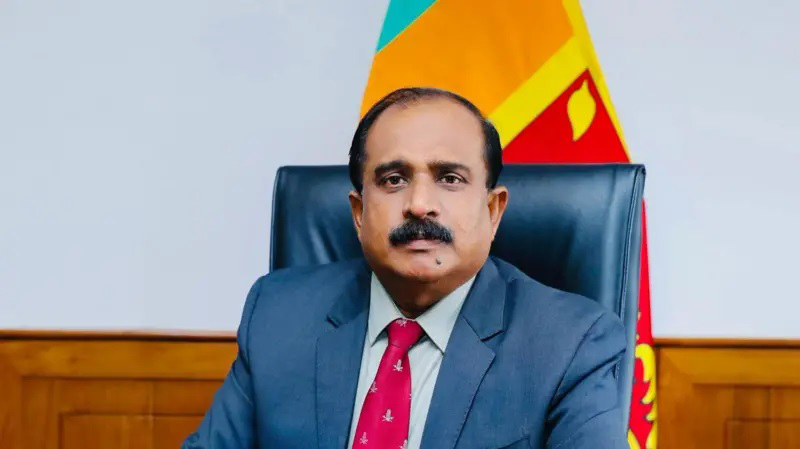
Deputy Defence Minister Maj. Gen. (Ret.) Aruna Jayasekara yesterday (06) told Parliament that the next few weeks could prove decisive for Sri Lanka in view of the war situation in the Middle East.Addressing the House, Jayasekara said there was a possibility of delays in the provision of certain essential services in the coming weeks.
He said restrictions had been imposed on shipping and air travel owing to the ongoing conflict, which could affect the timely delivery of services and supplies expected by the country.
The Deputy Minister said the government had therefore taken steps to further extend the State of Emergency to ensure the uninterrupted maintenance of essential services.
“Due to the prevailing war situation, restrictions have been imposed on shipping, air travel and several other activities. As a result, some of the essential services we expected may face delays in the future. The coming weeks will be decisive, and we must pay special attention to maintaining these essential services. Accordingly, we have taken steps to continue the state of emergency,” he said.

Dry weather will prevail over the island.

Prompt solutions will be provided for the salary anomalies prevailing within the teacher and principal services — PM

Zelenskyy visits front line as Ukraine and Russia swap 500 prisoners each

UNP concerned about govt.’s silence over US sub sinking Iranian warship in Lanka’s EEZ

Govt. warns of possible adverse developments in the next few weeks due to Gulf conflict

Human rights court orders reparations for forced sterilization case in Peru

‘Dates have the highest sugar content to fight Coronavirus’

Sunday Island 27 December – Headlines

#SundayIsland 17th December – Headlines

Sunday Island – 28th March

Sunday Island Headlines – 21 March

Sunday Island – 21st February – Headlines
-

 Features5 days ago
Brilliant Navy officer no more
-

 Opinion5 days ago
Sri Lanka – world’s worst facilities for cricket fans
-

 News2 days ago
Legal experts decry move to demolish STC dining hall
-

 Features5 days ago
A life in colour and song: Rajika Gamage’s new bird guide captures Sri Lanka’s avian soul
-

 Business2 days ago
Cabinet nod for the removal of Cess tax imposed on imported good
-
 Features6 days ago
Overseas visits to drum up foreign assistance for Sri Lanka
-
 Features6 days ago
Sri Lanka to Host First-Ever World Congress on Snakes in Landmark Scientific Milestone
-
 Latest News2 days ago
Around 140 people missing after Iranian navy ship sinks off coast of Sri Lanka