
Features
A weekend with a family in Sinharaja

By Siri Ipalawatte
Canberra
The bus disappears around the bend, and the villagers who disembark with me shuffle off into narrow paths whilst carrying their heavy gunny sacks. Night is falling, the cicada buzz is rising, and I begin to get that panicky feeling that the city-coddled folk might experience upon finding themselves suddenly alone on the roadside in a remote village in Deniyaya with no idea where to go!Before my panic escalates, a man wearing an oversized checked shirt over a pair of faded brown shorts appears. He says his name is Palitha, and tells me to follow him on what turns out to be an ankle-jarring trek up the steep, stony tracks that make up the road to his house, my accommodation for the next two nights.
We pass through a high corridor of stunted tea bushes and arrive at a brick building with a pitched roof of locally made tiles. This simple structure and the man who runs the place is the reason I have ended up here rather than a hotel. Sinharaja Homestay is fairly basic. Staying here saves a lot of hassle as you can arrange a rainforest walk with a certified guide who is very knowledgeable about the forest. You can enjoy home cooked food prepared by his mother and have a late-night chat with his old father. The look and feel of these places is very different from a star hotel,’ a Canberra friend who stayed here last year, told me after his holiday in Sri Lanka, a delicate way of saying that guests wanting air conditioning will often find themselves presented with portable fans. ‘Once that understanding and appreciation is there, I think visitors like going ‘free range’ and getting to know the village people. People and their way of living are at the heart of this experience.’
Waiting outside in the cooling dusk was Palitha’s father, wearing two button-down shirts, a white sarong and a woolly, handmade headscarf. His face is crinkled with old smiles. We creak up the small wooden staircase and sit on the veranda, which overlooks sweeping terraces of abandoned tea plantations edged with balustrades of bamboo and banana trees.
Technicolor butterflies flutter by as large as ‘dolled-up’ bats. I glance toward a giant wood spider, its body the size of a blackened plum, floating in mid air. Recalling suddenly, that if it could string up a web between a jak tree and a mango tree more than five yards apart, it could just as easily pounce on my face! But Palitha’s mother rescues me by offering a steaming cup of tea with pieces of Sinharaja kithul jaggery and Palitha keeps feeding me information about the forest.

Sinharaja Reserve covers 19,000 hectares of natural and modified forest and occupies a broad ridge at the heart of the island’s wet zone. It was once a royal reserve, and some colonial records refer to it as Rajasinghe Forest. In 1840 the forest became British crown land and from that time efforts were made to preserve at least some of it. On most days the forest brings plentiful rain-clouds that replenish its deep soils and balance water resources for much of South-Western Sri Lanka. Recognising its importance to the island’s ecosystem, UNESCO declared the reserve a World Heritage Site in 1989.
I see Palitha’s mother is doing her cooking in the kitchen just next to where we sit. As I zoom my eyes around the warren-like space dimly lit by a kerosene lamp, I see a jumble of warped pans and dented pots hanging from the wall. A snarl of just harvested vegetables and foraged greens blanket the small table opposite her. She moves swiftly from task to task, using simple culinary tools to chop, mix, stir, taste, and then add correct ingredients. Palitha notices my keen interest and says almost everything that went into her dishes came from their home garden. The aromas from the kitchen are intoxicating – herbal, musky, and I can think of no other adjective but ‘fecund’.
Four of us gather round the dinner table and spoon her ‘kitchen aromas’ to our dinner plates. I look around as everyone is savouring her meal that includes dishes such as dried fish with fried onions and green chillies, dhal mixed with Maldives fish, mixed vegetables with coconut milk, ambarella curry and rice. I feel I have been enfolded into this beautiful and simple family.
After dinner, the house turns quiet. With the dishes done Palitha’s mother disappears back into her bedroom as Palitha, his father and I get our tea and take it out onto the front stoop. I listen to the night sounds making their way along the forest canopy as the mosquitoes begin to rise. I am enveloped in stillness. I hear silence; I make remark about this while tending to my hot tea.
In the morning, Palitha gets behind the wheel of an old green-colored jeep. I get a closer look at it and try to figure it out. I can see that he’s added a few cosmetics and some modifications, but a two-piece windshield and side-mounted seats suggest this is likely a reincarnated ‘Willy’. We are on our way! First he has to take on some extra supplies. He heads to the middle of town and parks outside a little shop. He settles on a few bakery items, cans of drinks, salt, and some ambul bananas. On the edge of the town, Palitha fills up on diesel and drives faster as the town falls away, skirting some potholes, hitting others. Soon he leaves the tarmac road altogether, taking a gravel road toward the reserve.
He pulls over to pick up a skinny, bow legged middle-aged man carrying a shoulder bag and a long knife. The man is chewing on betel, the mild stimulant that is everywhere in rural Sri Lanka. ‘This is Piyasena, he is going to get some thelijja’. We pass a very narrow one-lane bridge and numerous rice fields. The trees look different, taller and healthier, and we are getting closer to our destination; we walk the final four kilometres into the rainforest. Palitha takes some betel from Piyasena and begins to chew. We get a warm welcome smile from the young girl at the counter. ‘You are the first visitors of the day! She chirps.
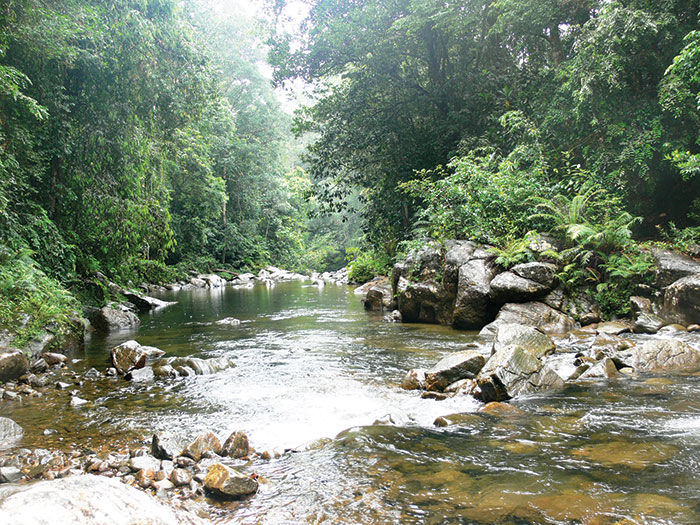
After fitting ourselves with the not so fashionable but vital ‘leech socks’ generously sprinkled with salt, we are ready to set off into this magical rainforest. It is a warm and humid world where no wind penetrates and there is dense shade with moving flecks of lights. It is amazing to notice that every tree and plant has the tip of its leaf drawn out to a point in order to drain off the water rapidly. The forest floor, carpeted with leaves that fall off in never-ending rainfall the year round, opens into dark aisles, with undergrowth of tiny shrubs and tree seedlings. It is the forest of the future!
‘Look at that canopy of trees’ Palitha points out to the very top of a hill, much higher than the one we are climbing. ‘Every tree up there is specific and unique to this island. They occur in no other place in the world.’ As we walk he points to one bush, and then another. ‘There is nothing here that cannot be used for something. So much of this forest can be used for medicinal purposes. The local villagers use the woody climber – venivel – here as aspirin. The heen bovitiya is used against jaundice and hepatitis.’
He points out a paradise flycatcher, blue magpies, a crested serpent eagle, and a bee-eater. He knows how to identify them visually, but almost thirty years in the rainforest has also taught him to identify almost anything by its song.
I see many little walking paths used by villagers. These paths are overgrown with shrubs on narrow ridges so that in some places we have to walk in single file, watching to keep strictly to the middle of the ridge. There are numerous small rocks right in the middle of the rail, but the paths have been trodden so close to the rocks that they seem friendly to Palitha. He knows the terrain so well that he doesn’t need to look down as he moves. My feet have never felt rocks this hard and spiky, and my ankles give out over and over again. I have suffered a leech attack and am bleeding from my leg in various places. But I never bother to investigate what has been irritating me, until we come back to Palitha’s house and grab that steaming cup of plain tea with soft brown chunks of jaggery.
Later that evening, I sat with Palitha’s father and talked on the deck overlooking the little creek. The mosquitoes have risen and then settled in for the night, but small flies are landing on every available surface as we listen to the sounds of the water below. The birds have tucked themselves into the trees for the night. Whatever is hunting in the forest is doing it silently!
As the sun dips behind robust tall trees, I sip my tea while Palitha’s father is having a cup of polpala. He tells me that he is 89 years old. ‘I walk ten kilometres every day in the forest’ he says. His mornings begin when he wakes up and his days end when he feels like going to sleep. He eats ‘what he likes, twice a day: one big meal for lunch and a small portion for dinner’; mostly rice, yams, fruits and vegetables and occasionally dried fish, and no meat or eggs.
‘How is it’ I ask carefully, ‘to grow old in this way?’
I am wondering if it is imprudent to discuss mortality when someone is on the edge of his, but something tells me he knows things I can’t find in a book!
He says he spent all those years watching birds, animals, and chopping wood. He tells me when he gets stressed out he slows down. There’s no need to rush about and make a mess of things. Just slow down and take long breaths. He purses his lips and sucks in a deep, fierce breath through his nose, eyes closed, belly rising. He rests his knobby, wrinkled, knowing hands on his abdomen as it lifts, and when he is quite satisfied with this, he opens his eyes and slowly, fully releases his breath.His silver white hair is alight with the last rays of sun. The creek races past us with its incessant movement against the rocks. I cannot see how any life can be fuller than his.





President Anura Kumara Dissanayake has been investing his political capital in going to the public to explain some of the most politically sensitive and controversial issues. At a time when easier political choices are available, the president is choosing the harder path of confronting ethnic suspicion and communal fears. There are three issues in particular on which the president’s words have generated strong reactions. These are first with regard to Buddhist pilgrims going to the north of the country with nationalist motivations. Second is the controversy relating to the expansion of the Tissa Raja Maha Viharaya, a recently constructed Buddhist temple in Kankesanturai which has become a flashpoint between local Tamil residents and Sinhala nationalist groups. Third is the decision not to give the war victory a central place in the Independence Day celebrations.
Even in the opposition, when his party held only three seats in parliament, Anura Kumara Dissanayake took his role as a public educator seriously. He used to deliver lengthy, well researched and easily digestible speeches in parliament. He continues this practice as president. It can be seen that his statements are primarily meant to elevate the thinking of the people and not to win votes the easy way. The easy way to win votes whether in Sri Lanka or elsewhere in the world is to rouse nationalist and racist sentiments and ride that wave. Sri Lanka’s post independence political history shows that narrow ethnic mobilisation has often produced short term electoral gains but long term national damage.
Sections of the opposition and segments of the general public have been critical of the president for taking these positions. They have claimed that the president is taking these positions in order to obtain more Tamil votes or to appease minority communities. The same may be said in reverse of those others who take contrary positions that they seek the Sinhala votes. These political actors who thrive on nationalist mobilisation have attempted to portray the president’s statements as an abandonment of the majority community. The president’s actions need to be understood within the larger framework of national reconciliation and long term national stability.
Reconciler’s Duty
When the president referred to Buddhist pilgrims from the south going to the north, he was not speaking about pilgrims visiting long established Buddhist heritage sites such as Nagadeepa or Kandarodai. His remarks were directed at a specific and highly contentious development, the recently built Buddhist temple in Kankesanturai and those built elsewhere in the recent past in the north and east. The temple in Kankesanturai did not emerge from the religious needs of a local Buddhist community as there is none in that area. It has been constructed on land that was formerly owned and used by Tamil civilians and which came under military occupation as a high security zone. What has made the issue of the temple particularly controversial is that it was established with the support of the security forces.
The controversy has deepened because the temple authorities have sought to expand the site from approximately one acre to nearly fourteen acres on the basis that there was a historic Buddhist temple in that area up to the colonial period. However, the Tamil residents of the area fear that expansion would further displace surrounding residents and consolidate a permanent Buddhist religious presence in the present period in an area where the local population is overwhelmingly Hindu. For many Tamils in Kankesanturai, the issue is not Buddhism as a religion but the use of religion as a vehicle for territorial assertion and demographic changes in a region that bore the brunt of the war. Likewise, there are other parts of the north and east where other temples or places of worship have been established by the military personnel in their camps during their war-time occupation and questions arise regarding the future when these camps are finally closed.
There are those who have actively organised large scale pilgrimages from the south to make the Tissa temple another important religious site. These pilgrimages are framed publicly as acts of devotion but are widely perceived locally as demonstrations of dominance. Each such visit heightens tension, provokes protest by Tamil residents, and risks confrontation. For communities that experienced mass displacement, military occupation and land loss, the symbolism of a state backed religious structure on contested land with the backing of the security forces is impossible to separate from memories of war and destruction. A president committed to reconciliation cannot remain silent in the face of such provocations, however uncomfortable it may be to challenge sections of the majority community.
High-minded leadership
The controversy regarding the president’s Independence Day speech has also generated strong debate. In that speech the president did not refer to the military victory over the LTTE and also did not use the term “war heroes” to describe soldiers. For many Sinhala nationalist groups, the absence of these references was seen as an attempt to diminish the sacrifices of the armed forces. The reality is that Independence Day means very different things to different communities. In the north and east the same day is marked by protest events and mourning and as a “Black Day”, symbolising the consolidation of a state they continue to experience as excluding them and not empathizing with the full extent of their losses.
By way of contrast, the president’s objective was to ensure that Independence Day could be observed as a day that belonged to all communities in the country. It is not correct to assume that the president takes these positions in order to appease minorities or secure electoral advantage. The president is only one year into his term and does not need to take politically risky positions for short term electoral gains. Indeed, the positions he has taken involve confronting powerful nationalist political forces that can mobilise significant opposition. He risks losing majority support for his statements. This itself indicates that the motivation is not electoral calculation.
President Dissanayake has recognized that Sri Lanka’s long term political stability and economic recovery depend on building trust among communities that once peacefully coexisted and then lived through decades of war. Political leadership is ultimately tested by the willingness to say what is necessary rather than what is politically expedient. The president’s recent interventions demonstrate rare national leadership and constitute an attempt to shift public discourse away from ethnic triumphalism and toward a more inclusive conception of nationhood. Reconciliation cannot take root if national ceremonies reinforce the perception of victory for one community and defeat for another especially in an internal conflict.
BY Jehan Perera

I have read a newspaper report that the Special Task Force of Sri Lanka Police, with help of Military Intelligence, recovered three buried yet well-preserved 84mm Carl Gustaf recoilless rocket launchers used by the LTTE, in the Kudumbimalai area, Batticaloa.
These deadly weapons were used by the LTTE SEA TIGER WING to attack the Sri Lanka Navy ships and craft in 1990s. The first incident was in February 1997, off Iranativu island, in the Gulf of Mannar.
Admiral Cecil Tissera took over as Commander of the Navy on 27 January, 1997, from Admiral Mohan Samarasekara.
The fight against the LTTE was intensified from 1996 and the SLN was using her Vanguard of the Navy, Fast Attack Craft Squadron, to destroy the LTTE’s littoral fighting capabilities. Frequent confrontations against the LTTE Sea Tiger boats were reported off Mullaitivu, Point Pedro and Velvetiturai areas, where SLN units became victorious in most of these sea battles, except in a few incidents where the SLN lost Fast Attack Craft.
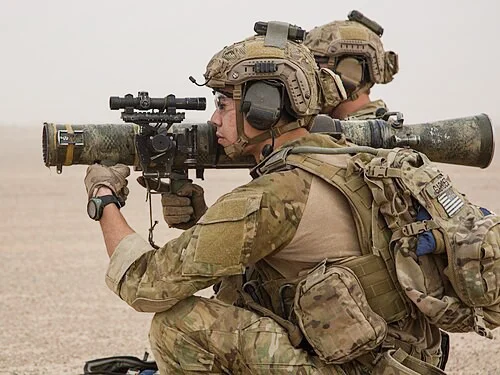
Carl Gustaf recoilless rocket launchers
The intelligence reports confirmed that the LTTE Sea Tigers was using new recoilless rocket launchers against aluminium-hull FACs, and they were deadly at close quarter sea battles, but the exact type of this weapon was not disclosed.
The following incident, which occurred in February 1997, helped confirm the weapon was Carl Gustaf 84 mm Recoilless gun!
DATE: 09TH FEBRUARY, 1997, morning 0600 hrs.
LOCATION: OFF IRANATHIVE.
FACs: P 460 ISRAEL BUILT, COMMANDED BY CDR MANOJ JAYESOORIYA
P 452 CDL BUILT, COMMANDED BY LCDR PM WICKRAMASINGHE (ON TEMPORARY COMMAND. PROPER OIC LCDR N HEENATIGALA)
OPERATED FROM KKS.
CONFRONTED WITH LTTE ATTACK CRAFT POWERED WITH FOUR 250 HP OUT BOARD MOTORS.
TARGET WAS DESTROYED AND ONE LTTE MEMBER WAS CAPTURED.
LEADING MARINE ENGINEERING MECHANIC OF THE FAC CAME UP TO THE BRIDGE CARRYING A PROJECTILE WHICH WAS FIRED BY THE LTTE BOAT, DURING CONFRONTATION, WHICH PENETRATED THROUGH THE FAC’s HULL, AND ENTERED THE OICs CABIN (BETWEEN THE TWO BUNKS) AND HIT THE AUXILIARY ENGINE ROOM DOOR AND HAD FALLEN DOWN WITHOUT EXPLODING. THE ENGINE ROOM DOOR WAS HEAVILY DAMAGED LOOSING THE WATER TIGHT INTEGRITY OF THE FAC.
THE PROJECTILE WAS LATER HANDED OVER TO THE NAVAL WEAPONS EXPERTS WHEN THE FACs RETURNED TO KKS. INVESTIGATIONS REVEALED THE WEAPON USED BY THE ENEMY WAS 84 mm CARL GUSTAF SHOULDER-FIRED RECOILLESS GUN AND THIS PROJECTILE WAS AN ILLUMINATER BOMB OF ONE MILLION CANDLE POWER. BUT THE ATTACKERS HAS FAILED TO REMOVE THE SAFETY PIN, THEREFORE THE BOMB WAS NOT ACTIVATED.
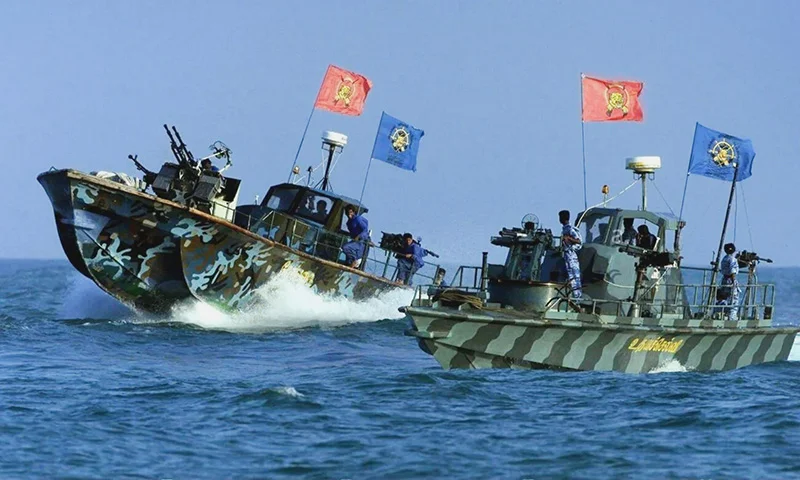
Sea Tigers
Carl Gustaf 84 mm recoilless gun was named after Carl Gustaf Stads Gevärsfaktori, which, initially, produced it. Sweden later developed the 84mm shoulder-fired recoilless gun by the Royal Swedish Army Materiel Administration during the second half of 1940s as a crew served man- portable infantry support gun for close range multi-role anti-armour, anti-personnel, battle field illumination, smoke screening and marking fire.
It is confirmed in Wikipedia that Carl Gustaf Recoilless shoulder-fired guns were used by the only non-state actor in the world – the LTTE – during the final Eelam War.
It is extremely important to check the batch numbers of the recently recovered three launchers to find out where they were produced and other details like how they ended up in Batticaloa, Sri Lanka?
 By Admiral Ravindra C. Wijegunaratne
WV, RWP and Bar, RSP, VSV, USP, NI (M) (Pakistan), ndc, psn, Bsc (Hons) (War Studies) (Karachi) MPhil (Madras)
Former Navy Commander and Former Chief of Defence Staff
Former Chairman, Trincomalee Petroleum Terminals Ltd
Former Managing Director Ceylon Petroleum Corporation
Former High Commissioner to Pakistan

 Yes, get ready to vibe with Yellow Beatz, Sri Lanka’s awesome girl group, keen to take Sri Lankan music to the world with a style similar to K-pop!
With high-energy beats and infectious hooks, these talented ladies are here to shake up the music scene.
Think bold moves, catchy hooks, and, of course, spicy versions of old Sinhala hits, and Yellow Beatz is the package you won’t want to miss!
According to a spokesman for the group, Yellow Beatz became a reality during the Covid period … when everyone was stuck at home, in lockdown.
“First we interviewed girls, online, and selected a team that blended well, as four voices, and then started rehearsals. One of the cover songs we recorded, during those early rehearsals, unexpectedly went viral on Facebook. From that moment onward, we continued doing cover songs, and we received a huge response. Through that, we were able to bring back some beautiful Sri Lankan musical creations that were being forgotten, and introduce them to the new generation.”
The team members, I am told, have strong musical skills and with proper training their goal is to become a vocal group recognised around the world.
Believe me, their goal, they say, is not only to take Sri Lanka’s name forward, in the music scene, but to bring home a Grammy Award, as well.
“We truly believe we can achieve this with the love and support of everyone in Sri Lanka.”
The year 2026 is very special for Yellow Beatz as they have received an exceptional opportunity to represent Sri Lanka at the World Championships of Performing Arts in the USA.
Under the guidance of Chris Raththara, the Director for Sri Lanka, and with the blessings of all Sri Lankans, the girls have a great hope that they can win this milestone.
“We believe this will be a moment of great value for us as Yellow Beatz, and also for all Sri Lankans, and it will be an important inspiration for the future of our country.”
Along with all the preparation for the event in the USA, they went on to say they also need to manage their performances, original song recordings, and everything related.

The year 2026 is very special for Yellow Beatz
“We have strong confidence in ourselves and in our sincere intentions, because we are a team that studies music deeply, researches within the field, and works to take the uniqueness of Sri Lankan identity to the world.”
At present, they gather at the Voices Lab Academy, twice a week, for new creations and concert rehearsals.
This project was created by Buddhika Dayarathne who is currently working as a Pop Vocal lecturer at SLTC Campus. Voice Lab Academy is also his own private music academy and Yellow Beatz was formed through that platform.
Buddhika is keen to take Sri Lankan music to the world with a style similar to K-Pop and Yellow Beatz began as a result of that vision. With that same aim, we all work together as one team.
“Although it was a little challenging for the four of us girls to work together at first, we have united for our goal and continue to work very flexibly and with dedication. Our parents and families also give their continuous blessings and support for this project,” Rameesha, Dinushi, Newansa and Risuri said.
Last year, Yellow Beatz released their first original song, ‘Ihirila’ , and with everything happening this year, they are also preparing for their first album.

Namibia begin campaign in crucial game against Netherlands

Markram, Ngidi help South Africa ease past dogged Canada

Pakistan withdraw boycott of India match at T20 World Cup

Mainly dry weather will prevail in the most parts of the island.

NPP: Speaker won’t step down, CIABOC can investigate him

Trinco Buddha statue case: All suspects, including 4 monks re-remanded till 11 Feb.

‘Dates have the highest sugar content to fight Coronavirus’

Sunday Island 27 December – Headlines

#SundayIsland 17th December – Headlines

Sunday Island – 28th March

Sunday Island Headlines – 21 March

Sunday Island – 21st February – Headlines
-
 Features2 days ago
My experience in turning around the Merchant Bank of Sri Lanka (MBSL) – Episode 3
-

 Business3 days ago
Zone24x7 enters 2026 with strong momentum, reinforcing its role as an enterprise AI and automation partner
-

 Business2 days ago
Remotely conducted Business Forum in Paris attracts reputed French companies
-
 Business2 days ago
Four runs, a thousand dreams: How a small-town school bowled its way into the record books
-

 Business2 days ago
ComBank and Hayleys Mobility redefine sustainable mobility with flexible leasing solutions
-
 Business3 days ago
HNB recognized among Top 10 Best Employers of 2025 at the EFC National Best Employer Awards
-

 Business3 days ago
GREAT 2025–2030: Sri Lanka’s Green ambition meets a grid reality check
-

 Editorial5 days ago
All’s not well that ends well?