
Features
A wake-up call for stronger preparedness and coordination


Lessons from Ditwah:
Fifteen days after Cyclone Ditwah tore through the country, the floodwaters have receded and the immediate shock has given way to reflection. As of December 14, 2025, the bodies recovered from landslides have been laid to rest, survivors, whose homes were wiped out, are sheltered in Suraksha centres, and daily life has begun to inch forward. Roads, nearly 80 percent of them, have been reopened, power and water restored, and communities, through individual resolve and collective effort, have cleared homes and roads, even as heaps of damaged belongings still line the roadsides. Now, as the initial dust settles, the nation stands at a critical moment: beyond recovery, it is time to confront the deeper structural weaknesses laid bare by Ditwah.
Cyclone Ditwah has emerged as a defining test for Sri Lanka, both for the newly elected NPP government, facing its first major natural disaster, and for a nation still recovering from the economic collapse of 2022 and navigating the constraints of an IMF bailout programme. The storm not only challenged the country’s disaster-response machinery but also revealed the resilience of its people, the strengths of its leadership, and the gaps that must be urgently addressed as climate-related catastrophes become increasingly frequent.
Presidential Leadership in Times of National Crisis
From the earliest hours of the cyclone’s impact, President Anura Kumara Dissanayaka took an active and visible role in directing the government machinery. His rapid mobilisation of state institutions, technical agencies, and the Armed Forces helped Sri Lanka confront a multi-layered and complex emergency that spanned damaged roads, disrupted power lines, unsafe water supplies, landslides, and widespread displacement. The administration’s coordination, during these initial hours, set the tone for what became one of the most intensive emergency-response efforts in recent years. Mobilising and coordinating government institutions solely through presidential initiative is not an ideal administrative practice. A resilient state must, instead, ensure that its institutions are structurally prepared to act seamlessly when disaster strikes, closing the systemic gaps exposed by Cyclone Ditwah.
The President’s visits to all affected districts strengthened on-the-ground coordination by bringing together district coordinating committees, public officials, political representatives, and community organisations to align relief and reconstruction with local realities, while also helping to identify bottlenecks and clarify institutional responsibilities. However, these same district-level meetings exposed serious shortcomings in disaster governance: weak inter-agency communication, unclear response mandates, gaps in early-warning systems, and uneven political leadership at the local level. In several instances, critical information failed to reach the right actors in time, and some elected representatives were slow to engage, prompting the President to direct provincial governors to personally assess landslide-prone areas—underscoring the urgent need for a more robust, integrated disaster-management framework and stronger local political participation during crises.
Cyclone Ditwah serves as a powerful reminder that Sri Lanka must prepare better, long before the next storm arrives. Effective disaster response depends not only on the commitment of the central government and security forces but also on pre-trained communities and seamless cooperation between agencies at every administrative tier. This article seeks to contribute to a constructive national conversation on the lessons learned from Cyclone Ditwah. The intention is not to assign blame but to highlight the insights necessary to build a more resilient, better-coordinated system capable of protecting lives and livelihoods in the face of future disasters.
Equally notable was the spontaneous civic mobilisation that unfolded across the country. Communities self-organised to clear debris, distribute food, assist vulnerable families, and provide temporary shelter, demonstrating a deep social solidarity that often surfaces during national crises. In many affected districts, local volunteers were the first to reach remote or isolated areas, complementing government and military operations.
Rethinking Responses to Recurrent Climate Emergencies
Sri Lanka is no stranger to weather-related disasters, and Cyclone Ditwah is neither the first nor the last event the nation will confront. Over the past decade alone, the country has endured floods, landslides, droughts, and cyclones of varying intensity. These recurring emergencies underscore an undeniable truth: climate-related shocks are now a structural part of Sri Lanka’s future, demanding a disaster-management system that is agile, integrated, and continuously updated.
After the devastation of the 2004 Indian Ocean tsunami, Sri Lanka invested significant effort in building its institutional infrastructure for disaster risk reduction. Agencies were established, frameworks were drafted, and early-warning mechanisms were introduced with the hope of preventing a repeat of such a tragedy. Yet the experience of Cyclone Ditwah has revealed that many of these institutions have become moribund—functioning in isolation, following outdated protocols, and lacking the coordination needed for an effective national response. While the systems technically exist, they are not fully aligned with the mission they were created to serve. Too many agencies operate within narrowly defined mandates and fail to communicate or integrate their work with related entities. This siloed approach weakens the overall national response and limits the ability of institutions to mobilise collectively when disaster strikes.
Once again Ditwah highlighted the need for reliable early-warning system that requires constant technological upgrading. A robust interface between technology and institutional networks is essential. Advanced and accessible communication technologies—early-warning systems, mobile alerts, satellite data, and community-level dissemination platforms— should play a crucial role in transforming timely information into effective action. Timely alerts, data-sharing mechanisms, communication networks, and community-level outreach must keep pace with global standards and evolving climatic threats. The gaps observed during Cyclone Ditwah indicate that Sri Lanka’s early warning systems need stronger digital infrastructure, better interoperability, and clearer channels for dissemination to all communities, especially those in vulnerable zones. Disaster risk management cannot rely solely on community participation.
Building a Disaster Management Architecture
Sri Lanka gained independence in 1948 in the aftermath of the devastating island-wide floods in 1947. Since then, the country has repeatedly faced severe natural disasters—particularly windstorms and floods—in 1957, 1964, 1969, 1976, 1986, and 1989. Yet, despite this long and painful history, no single, dedicated institutional mechanism existed, within the state, to manage disaster-related activities, until the mid-1990s. Responsibility for disaster response remained fragmented across multiple agencies, largely operating under the broad and limited mandate of social services.
A decisive institutional shift began in 1994 with the establishment of the National Disaster Management Centre (NDMC) by President Chandrika Bandaranaike Kumaratunga, under the Ministry of Social Welfare. The NDMC was tasked with coordinating disaster preparedness, mitigation, emergency response, recovery, and long-term rehabilitation and development. It also initiated the development of a comprehensive legal and policy framework for disaster management. By 2000, the NDMC had completed draft versions of the Disaster Management Bill and the National Disaster Management Plan. However, these initiatives stalled and were never formally adopted following the change of government in 2001.
The catastrophic human, economic, and social consequences of the 2004 Indian Ocean Tsunami starkly exposed the limitations of this incomplete framework and underscored the urgent need for a systematic and comprehensive approach to disaster management. In response, disaster preparedness was elevated to a national priority, and on 10 February, 2005, a bipartisan Parliamentary Select Committee was appointed. Its mandate was to examine gaps in preparedness revealed by the Tsunami of 26 December, 2004, assess the absence of effective early-warning mechanisms, and recommend measures to strengthen institutional readiness and reduce the impact of future natural disasters.
The Parliamentary Select Committee met 28 times and produced a wide-ranging report within a short span, marking a decisive policy moment in Sri Lanka’s approach to disaster management. Its findings laid bare deep structural weaknesses in hazard mapping and risk assessment, preparedness, early-warning systems, mitigation, emergency response, and public awareness. Acting on these recommendations, Parliament enacted the Sri Lanka Disaster Management Act, No. 13 of 2005—finally providing a legal foundation for coordinated disaster governance.
The Disaster Management Act of 2005 brought forward significant changes in the institutional framework for disaster management. It created the National Council for Disaster Management (NCDM), a high-level political body, chaired by the President, with the Prime Minister as Vice Chair, and established the Disaster Management Centre (DMC) as the country’s lead implementing agency. The DMC was mandated to coordinate disaster risk reduction at national and sub-national levels, supported by Disaster Management Committees at district and divisional levels. A dedicated Cabinet Ministry of Disaster Management and Human Rights followed in 2006, later streamlined as the Ministry of Disaster Management in 2010. On paper, this architecture promised coherence, authority, and reach.
Parallel to the setting up of new institutional framework for disaster management, the process of disaster management policy planning and policy formulation has taken a new turn. ‘The Disaster Management Policy of 2010’, prepared by DMC, in 2010, was adopted as the main policy line for disaster management. Furthermore, DMC developed ‘The National Disaster Management Plan of 2013-2017’(NDMP) in 2014 as the overall guiding document covering intended activities of the major phases–mitigation, preparedness, emergency operations and post disaster activities, such as relief, recovery and reconstruction. Training, public awareness and education are also covered in the above phases. It envisaged a multi-sector approach in which involvement of NGOs and CBOs are expected to translate policies into tangible action. Further, in 2014, NCDM approved the Sri Lanka Comprehensive Disaster Management Programme (SLCDMP) for 2014-2018 to reduce disaster and climate risks by minimising impacts on people, properties, and the economy. SLCDMP also presented a comprehensive roadmap to improve capacity of local level operators by institutionalising local level support in its planning. It was prepared by the National Disaster Management Coordinating Committee (NDMCC), a multi-stakeholder national platform, established in November 2007 who also plays a key role in implementing disaster risk reduction strategies in the country. This is a clear manifestation of confusion and duplication of disaster management work.
Technological and informational capacities improved with the establishment of a Disaster Information System in 2008, supported by UNDP, and the gradual rollout of nationwide early-warning systems. Responsibility for hazard monitoring was formally vested in the Meteorological Department and the Geological Survey and Mines Bureau, operating through the Disaster Management Centre’s Emergency Operations Centre. While these developments marked genuine progress, their effectiveness has remained uneven in practice. International partners, such as UNDP, have produced extensive analyses and recommendations, but ultimate responsibility of implementation rests with domestic institutions. The core problem lies not in the absence of information, but in weak implementation, limited inter-agency cooperation, and persistent administrative inaction.
Fragmented Institutions and the Cost of Poor Coordination
At the heart of these shortcomings are deeper features of Sri Lanka’s political and administrative culture. Disaster management has frequently been treated as a politically advantageous domain—offering visibility and access to state resources—resulting in its fragmentation across multiple ministries and agencies. This dispersion undermines integrated planning, weakens accountability, and hampers coordination precisely when speed and clarity are most critical. The consequences of inadequate preparedness, poor inter-agency coordination, and inconsistent public messaging have repeatedly emerged during major crises. This was evident in the MV X-Press Pearl disaster in May 2021, where information on hazardous cargo damage was not shared across agencies. Similarly, the lack of inter-agency communication was a prominent issue during Cyclone Ditwah in December 2025.
Technological and informational capacities improved with the establishment of a Disaster Information System in 2008, supported by UNDP, and the gradual rollout of nationwide early-warning systems. Responsibility for hazard monitoring was formally vested in the Meteorological Department and the Geological Survey and Mines Bureau, operating through the Disaster Management Centre’s Emergency Operations Centre. However, their effectiveness has remained uneven in practice.
International partners, such as UNDP and other multi-lateral agencies, have produced extensive analyses and recommendations, but ultimate responsibility of implementation rests with domestic institutions. The core problem lies not in the absence of information and recommendations , but in weak implementation, limited inter-agency cooperation, and persistent administrative inaction.
NGOs: Critical Actors with Structural Limits
Another critical dimension of Sri Lanka’s disaster-management landscape is the prominent role played by non-governmental organisations (NGOs) and, to a lesser extent, private-sector institutions across almost every phase of the disaster-management cycle. Their contribution is especially visible at the community level, where state reach is often limited. It is, however, important to distinguish between spontaneous voluntary community action and the more structured, project-driven modes of operation, typical of NGOs. This distinction does not diminish the importance of NGOs; rather, it helps clarify both their strengths and their limitations within a national disaster-management framework.
NGO engagement is particularly valuable in Community-Based Disaster Risk Management (CBDRM), where sustained local participation is essential. Through CBDRM initiatives, NGOs help Disaster-Risk Communities identify, analyse, and monitor risks, develop locally appropriate mitigation strategies, and strengthen coping capacities. Many international humanitarian organisations coordinate their work through the UN Humanitarian Country Team, while several local initiatives demonstrate the transformative potential of community-centred action. The Community Tsunami Early-Warning Centre (CTEC) in Peraliya, established with the support of two foreign donors and a Sri Lankan medical doctor, is a notable example. Equipped with round-the-clock internet-linked computers receiving real-time alerts from the US Geological Survey, CTEC has built a network of 30 focal points across the Galle District, each comprising 10 village representatives—illustrating how informed communities can play a frontline role in risk mitigation.
The Sarvodaya Community Disaster Risk Management Centre in Moratuwa further underscores the constructive role NGOs can play. Sarvodaya has worked to establish disaster-management committees linked with government district-level officers, strengthening coordination between communities and the state. In partnership with LIRNEasia, it has also developed early-warning systems designed to deliver alerts directly to households. With more than 50,000 community-based organisations, Sri Lanka possesses a potentially powerful grassroots network capable of making a decisive impact on disaster preparedness, response, and recovery. These organisations have been tasked with identifying vulnerable groups within their communities and ensuring their protection during emergencies—a role they performed actively in the aftermath of the 2004 Tsunami.
Yet, despite this potential, Sri Lankan NGOs, as a sector, suffer from persistent structural weaknesses. Many remain heavily dependent on international donor funding and tend to become inactive once external financing diminishes. Over time, this has led to cycles of intense activity during high-profile disasters, followed by organisational stagnation and decline. Unless NGO engagement is better integrated into long-term national planning, supported by stronger domestic institutional linkages and sustainable funding mechanisms, their contribution will remain episodic rather than transformative.
Early Warning Systems: From Forecasting to Community Action
The recent experience of Cyclone Ditwah has once again underscored the critical importance of effective early warning systems in mitigating the impact of natural disasters. Sri Lanka’s vulnerability to such events was starkly evident during the 2004 Indian Ocean Tsunami. The first tsunami waves hit the eastern coast of Sri Lanka at approximately 6.40 a.m. on 26th December, about one hour and forty minutes after the earthquake. A secondary wave struck approximately 20 minutes later. The western coastal area was hit by the tsunami waves much later. The tsunami hit the southern coastal city of Hambantota at about 9.10 a.m. and Peraliya on the south-western coast, where the train tragedy took place, at 10.10 a.m., three and a half hours after the first wave, the tsunami hit the eastern coast of Sri Lanka. If an emergency disaster early-warning communication system were in place, at least a part of the human disaster on the Western coast could have been avoided. More than two decades later, Ditwah revealed that preparedness remains inadequate, and simply issuing statements from government agencies is insufficient. Early warnings must be actively communicated to communities, accompanied by clear action plans implemented by relevant authorities, to ensure people are informed, prepared, and able to respond effectively to impending disasters.

A landslide
Cultural and Ethnic Sensitivity in Disaster Response
One of the most important lessons highlighted by Cyclone Ditwah is the critical need for inclusivity and sensitivity in a multi-ethnic, post-conflict society like Sri Lanka. Emerging from the ashes of a devastating ethnic conflict, the country must ensure that national unity and ethnic harmony remain central to every policy and action, especially during crises. Ditwah revealed that some state institutions are not yet fully equipped to operate effectively in a multi-ethnic, multi-linguistic environment. Crucial notices and statements were, at times, released solely in Sinhala, in violation of the language policy enshrined in the Constitution. While practical administrative challenges may exist, it is the responsibility of political leadership to ensure that these requirements are addressed proactively. When vital information fails to reach communities in their own languages during emergencies, those communities would experience alienation and discrimination, with potentially grave consequences. In a multi-ethnic, post-conflict society, sensitivity to ethno-political dynamics is not optional—it is imperative across all phases of disaster management: preparedness, emergency response, and post-disaster recovery.
The real challenge begins now, and Sri Lanka cannot afford complacency. Resettling displaced and vulnerable communities is a formidable task that demands more than community goodwill—government institutions must bear the brunt of these responsibilities. Piles of spoiled food and debris left unattended in cities can quickly create serious public health hazards, underscoring the need for swift and organised action. With the North-Eastern Monsoon approaching, the country must be prepared for any eventuality.
Foreign Humanitarian Assistance and Its Geopolitical Dimensions
Sri Lanka did not stand alone in the wake of Ditwah. The country received substantial international assistance—not only in emergency humanitarian relief, but also in expertise, equipment, and resources for recovery and reconstruction. This support reflects the goodwill Sri Lanka continues to command globally, while also underscoring the need for credible and efficient domestic systems capable of coordinating effectively with foreign partners. At the same time, emergency relief is never geopolitically neutral. Sri Lanka must therefore approach foreign disaster assistance with a clear understanding of its national interests—without retreating into a besieged mentality. Instead, the challenge is to manage geopolitical competition to our advantage through an approach of omni-enmeshment: engaging all major powers simultaneously through dense networks of cooperation, institutions, and partnerships, creating mutual stakes and reducing the likelihood of strategic pressure or conflict.
Rethinking Development Strategies under Climate Stress
Beyond immediate relief, Cyclone Ditwah forces us to rethink the development model we are pursuing. Decades of deforestation and unplanned urban expansion have amplified the country’s vulnerability: between 1990 and 2010, Sri Lanka lost an average of 24,500 hectares of forest per year, totaling nearly 21 percent of its forest cover (Sri Lanka Forest Information and Data, The Rainforest S.). Forests once absorbed and regulated rainwater, but their loss has accelerated floods, triggered landslides, and intensified droughts, while impervious urban surfaces exacerbate flash flooding. The country is now paying the price for these environmental and planning failures, making comprehensive, forward-looking strategies a matter of urgent necessity.
Lessons from Ditwah and the Path Forward
Cyclone Ditwah is more than a weather event—it is a wake-up call that Sri Lanka must strengthen its resilience against future disasters. Fragmented responsibility, weak inter-agency coordination, and inconsistent communication are vulnerabilities that put lives and livelihoods at risk. We are compelled to face the challenges posed by extreme weather events repeatedly in the future. Learning and applying the lessons of Cyclone Ditwah is crucial for political leaders, state institutions, NGOs, and communities alike. Only by building a culture of preparedness, accountability, and coordination can the nation shift crisis response from reactive improvisation to proactive, life-saving action.
Prof. Gamini Kerawella can be accessed through keerawellag@gmail.com
by Prof. Gamini Keerawella


 It was Iran’s first spiritual head of state, the late Ayatollah Khomeini, who singled out and castigated the US as the ‘Great Satan’ in the revolutionary turmoil of the late seventies of the last century that ushered in the Islamic Republic of Iran. The core issue driving the long-running confrontation between Islamic Iran and the West has been religious identity and the seasoned observer cannot be faulted for seeing the explosive emergence of the current war in the Middle East as having the elements of a religious conflict.
The current crisis in the Middle East which was triggered off by the recent killing of Iranian spiritual head of state Ayatollah Ali Khamenei in a combined US-Israel military strike is multi-dimensional and highly complex in nature but when the history of relations between Islamic Iran and the West, read the US, is focused on the religious substratum in the conflict cannot be glossed over.
In fact it is not by accident that US President Donald Trump resorts to Biblical language when describing Iran in his denunciations of the latter. Iran, from Trump’s viewpoint, is a primordial source of ‘evil’ and if the Middle East has collapsed into a full-blown regional war today it is because of the ‘evil’ influence and doings of Iran; so runs Trump’s narrative. It is a language that stands on par with that used by the architects of the Iranian revolution in the crucial seventies decade.
In other words, it is a conflict between ‘good’ and ‘evil’ and who is ‘good’ and who is ‘evil’ in the confrontation is determined mainly by the observer’s partialities and loyalties which may not be entirely political in kind. It should not be forgotten that one of President Trump’s support bases is the Christian Right in the US and in the rest of the West and the Trump administration’s policy outlook and actions should not be divorced from the needs of this segment of supporters to be fully made sense of.
The reasons for the strong policy tie-up between Rightist administrations in the US in particular and Israel could be better comprehended when the above religious backdrop is taken into consideration. Israel is the principal actor in the ‘Old Testament’ of the Bible and is seen as ‘the Chosen People of God’ and this characterization of Israel ought to explain the partialities of the Republican Right in particular towards Israel. Among other things, this partiality accounts for the strong defence of Israel by the US.
For the purposes of clarity it needs to be mentioned here that the Bible consists of two parts, an ‘Old’ and ‘New Testament’ , and that the ‘New Testament’ or ‘Message’ embodies the teachings of Jesus Christ and the latter teachings are seen as completing and in a sense giving greater substance to the ‘Old Testament’. However, Judaism is based mainly on ‘Old Testament’ teachings and Judaism is distinct from Christianity.
To be sure, the above theological explanation does not exhaust all the reasons for the war in the Middle East but the observer will be allowing an important dimension to the war to slip past if its importance is underestimated.
It is not sufficiently realized that the Iranian Islamic Revolution of 1979 utterly changed international politics and re-wrote as it were the basic parameters that must be brought to bear in understanding it. So important is the Islamic factor in contemporary world politics that it helped define to a considerable degree the new international political order that came into existence with the collapsing of the Cold War and the disintegration of the USSR .
Since the latter developments ‘political Islam’ could be seen as a chief shaping influence of international politics. For example, it accounts considerably for the 9/11 calamity that led to the emergence of fresh polarities in world politics and ushered in political terrorism of a most destructive kind that is today disquietingly visible the world over.
It does not follow from the foregoing that Islam, correctly understood, inspires terrorism of any kind. Islam proclaims peace but some of its adherents with political aims interpret the religion in misleading, divisive ways that run contrary to the peaceful intents of the faith. This is a matter of the first importance that sincere adherents of the faith need to address.
However, there is no denying that the Islamic Revolution in Iran of 1979 has been over the past decades a great shaper of international politics and needs to be seen as such by those sections that are desirous of changing the course of the world for the better. The revolution’s importance is such that it led to US political scientist Dr. Samuel P. Huntingdon to formulate his historic thesis that a ‘Clash of Civilizations’ is upon the world currently.
If the above thesis is to be adopted in comprehending the principal trends in contemporary world politics it could be said that Islam, misleadingly interpreted by some, is pitting a good part of the Southern hemisphere against the West, which is also misleadingly seen by some, as homogeneously Christian in orientation. Whereas, the truth is otherwise. The West is not necessarily entirely synonymous with Christianity, correctly understood.
Right now, what is immediately needed in the Middle East is a ceasefire, followed up by a negotiated peace based on humanistic principles. Turning ‘Spears into Ploughshares’ is a long gestation project but the warring sides should pay considerable attention to former Iranian President Mohammad Khatami’s memorable thesis that the world needs to transition from a ‘Clash of Civilizations’ to a ‘Dialogue of Civilizations’. Hopefully, there would emerge from the main divides leaders who could courageously take up the latter challenge.
It ought to be plain to see that the current regional war in the Middle East is jeopardising the best interests of the totality of publics. Those Americans who are for peace need to not only stand up and be counted but bring pressure on the Trump administration to make peace and not continue on the present destructive course that will render the world a far more dangerous place than it is now.
In the Middle East region a durable peace could be ushered if only the just needs of all sides to the conflict are constructively considered. The Palestinians and Arabs have their needs, so does Israel. It cannot be stressed enough that unless and until the security needs of the latter are met there could be no enduring peace in the Middle East.
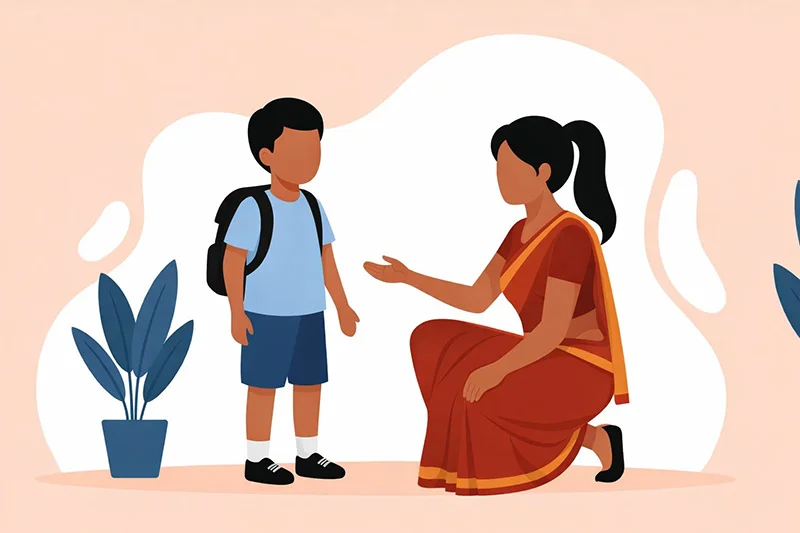
The two input gateways of communication, sight and sound, are quite well developed at birth. In fact, the auditory system becomes functional around 24 weeks in the womb, and the normal newborn can hear quite well after birth. However, the newborn’s vision is a little blurry at birth, and the baby sees the world in shades of grey, while being able only to focus on things 20 to 30 cm (8–12 inches) away. Coincidentally, this is perhaps the exact distance to a mother’s face during breastfeeding. By 2-3 months, there are colour vision capabilities and the ability to track. By 5-8 months, there is depth perception, and by 12 months, there is adult clarity of vision.
By the time a child turns five, his or her brain has already reached 90% of its adult size. This astonishing physical growth is not just happening on its own; it is, to a certain extent, fuelled by experience, and the most vital experience a young child can have is communication with his or her parents.
Modern developmental neuroscience has shifted our understanding of how children learn. We used to think babies were passive sponges, slowly absorbing the world. We now know they are active characters from day one, constantly seeking interaction to build the architecture of their minds. This architecture is not built by apps, vocabulary flashcards, or educational television. It is built through simple, loving, back-and-forth interactions with anyone they come across, but mostly their parents.
The Foundation: Serve and Return (0–12 Months)
Communication with an infant from birth to one year of age begins long before they speak their first word. In the first year, the goal is to master a phenomenon called Serve and Return. This is a basic scenario picked up from the game of tennis. At the start of each game of a set in tennis, a player serves, and the opponent returns the serve. Just imagine a tennis match, where a baby “serves” by making a sound, making eye contact, reaching for a toy, or crying. The job of anyone in the vicinity, who very often are the parents of the baby, is to “return” the ball. If they babble, you babble back. If they point at a cat, you look and say, “Yes, that’s a furry cat!” This simple act does two things. The first is Brain Building, which creates and strengthens neural pathways in the language and emotional centres of the brain. The other is Emotional Security, a thing which teaches a baby that he or she has some help in the learning processes. The baby absorbs the notion that when he or she signals a need, his or her world will respond. This forms the basis of a secure attachment. Scientists have advocated that during this stage, people, especially the parents of a baby, should embrace what is called ‘parentese’. It is the use of a somewhat high-pitched, exaggerated voice. Research has shown that babies pay more attention to parentese than to regular adult speech, helping them to map the sounds of their native language more quickly.
The Language Explosion: Toddlers (1–3 Years)
When a child starts speaking words, the game changes considerably and quite profoundly. This period is defined by a rapid increase in his or her vocabulary and the beginning of grammar. It is very important to narrate everything. The people around, especially the parents, need to become kind of sports commentators for your life. While dressing them, one could say, “First we put on the red sock. After that, we put the other red sock on your left foot.” What we are doing by this is to give them the labels for the world they see.
It is also important to expand, but not truly correct, whatever the child says. If a toddler points to a car and says “Car!”, don’t just say “Yes.” Expand on it: “Yes, that is a big, fast, red car!” You are adding a new vocabulary and grammatical structure through a natural process. If the child says “Me go,” respond with, “Yes, you are going!” rather than correcting and saying “No…, you should say ‘I am going’.”
Toddlers love reading the same book, even one hundred times. While it may be tedious for those around the baby, it is important to realise that such repetition is vital for their learning. They are predicting what comes next, which is a core cognitive skill.
The Preschooler: Building Stories and Logic (3–5 Years)
By age three, the focus shifts from “what” to “why.” Preschoolers are beginning to understand complex emotions, time, and causality. This is the age at which it is best to ask questions which require thought and understanding. Such indirect open-ended questions would sound like “What was the best part of the park today?” or “How do you think that character in the story is feeling?“
A preschooler’s world is full of “big feelings” they cannot yet manage. When they are upset because they cannot have a cookie, avoid saying “Don’t cry over nothing.” Instead, name the emotion: “Don’t cry, you can have a cookie after dinner“. This teaches them emotional literacy. Parents and others around in the home could share stories about when they were little, or make up fantasy tales together. Storytelling teaches sequential logic (beginning, middle, end) and strengthens their imagination.
The Absolute Master Class: Learning Through Play
If communication is the fuel for brain development, play is the engine. For a child under five, play is not a break from learning; play is learning. It is how they explore physics (stacking blocks), mathematics (sorting shapes), social dynamics (sharing toys), and language (pretend play). We can boost their development exponentially by weaving communication into their play.
When a child is playing with blocks, dough, or puzzles, they are building fine motor skills and spatial awareness. It is also useful to use three-dimensional words: “Can you put the blue block on top of the red one?” “The puzzle piece is next to your knee.” One could also ask them to describe the texture: “Is the dough soft or hard?“
Pretend play, such as acting as a doctor, an engineer, a chef, or a superhero, is one of the most cognitively demanding things a child can do. It requires them to understand symbolic thought and to take on another person’s perspective. Join their world as a supporting character, not the director. If they are the doctor, ask, “Doctor, my teddy bear’s tummy hurts. What should I do?” This encourages them to use vocabulary relevant to the scenario and practice complex social problem-solving.
Playing with water, sand, slime, or safe food products allows children to process sensory information. This is the perfect time for descriptive vocabulary. Use contrasting words: wet/dry, hot/cold, sticky/smooth, loud/quiet.
A few special words for parents. You do not need an expensive degree or specialised toys to build your child’s brain. The most powerful tool you have is your own responsiveness. Modern science tells us that the basic recipe for a thriving child is simple: Look at them when they signal you. Respond with warmth and words. Narrate their world and Join their play.
You are not just talking to your child; you are building his or her future, even via just one conversation at a time. So, go on talking to your child and even make him or her a real-life chatterbox.
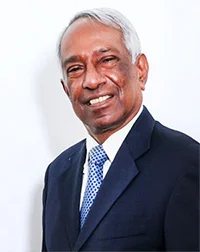 Dr B. J. C. Perera
MBBS(Cey), DCH(Cey), DCH(Eng), MD(Paediatrics), MRCP(UK), FRCP(Edin), FRCP(Lond), FRCPCH(UK), FSLCPaed, FCCP, Hony. FRCPCH(UK), Hony. FCGP(SL)
Specialist Consultant Paediatrician and Honorary Senior Fellow, Postgraduate Institute of Medicine, University of Colombo, Sri Lanka.

 Tourism is very much in the news these days and it’s certainly a good sign to see lots of foreigners checking out Sri Lanka.
With this in mind, Ruki’s Model Academy & Agency recently had a spectacular event to select Mrs. Tourism Sri Lanka in order to promote Sri Lanka in the international scene.
Nimesha Premachandra was crowned Mrs. Tourism Sri Lanka 2026.
She says she owes her success to Ruki (Rukmal Senanayake), the National Director and model trainer, and personality and advocacy trainer Tharaka Gurukanda.
Nimesha is a school teacher by profession, an actress and TV presenter by passion, and an entrepreneur by spirit.
She believes in balancing grace with purpose, and using her platform to inspire women, while promoting the beauty and culture of Sri Lanka to the world. And this is how our Chit-Chat went:

Nimesha Premachandra: Mrs. Tourism Sri Lanka 2026
01. How would you describe yourself?
I am a passionate, disciplined, and people-oriented person. I love learning, performing, and guiding others, especially young minds, through education.
02. If you could change one thing about yourself, what would it be?
I would probably try to be less self-critical and allow myself to celebrate achievements more often.
03. If you could change one thing about your family, what would it be?
Nothing major. I am grateful for my family’s love and support, which has shaped who I am today.
04. Is Mrs. Tourism Sri Lanka your very first pageant?
No. I have been part of pageants before, but Mrs. Tourism Sri Lanka is very special because it represents purpose, culture, and global representation.
05. What made you take part in this contest?
I wanted to represent Sri Lanka internationally and use this platform to promote tourism, culture, and women’s empowerment.
06. Obviously, you must be excited about participating in the grand finale, in Vietnam; any special plans for this big event?
Yes, I am extremely excited. My focus is to showcase Sri Lankan elegance, hospitality, and authenticity, while building meaningful connections with participants from around the world.
07. How do you intend promoting tourism, in Sri Lanka, during your rein?
I plan to highlight Sri Lanka’s diverse experiences in culture, heritage, wellness, nature, and local hospitality through media appearances, digital storytelling, and tourism collaborations.
08. School?
Kaluthara Balika. School life played a big role in shaping me. I actively participated in sports and performing arts, which later helped me build confidence as an actress and presenter.
09. Happiest moment?
Being crowned Mrs. Tourism Sri Lanka 2026 and seeing the pride in my family’s eyes – definitely one of my happiest moments.
10. What is your idea of perfect happiness?
Peace of mind, good health, and being surrounded by the people I love while doing work that has meaning.
11. Which living person do you most admire?
I most admire Angelina Jolie because she beautifully balances her work as an actress with meaningful humanitarian efforts. She uses her global platform to support refugees, advocate for human rights, and inspire women to be strong, compassionate, and independent.
12. Which is your most treasured possession?
My memories and experiences because they remind me how far I’ve come, and keep me grounded.
13. Your most embarrassing moment?
Like everyone, I’ve had small on-stage mishaps, but they always taught me to laugh at myself and move forward confidently.
14. Done anything daring?
Participating in pageants while balancing teaching, media work, and family life has been one of the boldest and most rewarding decisions I’ve made.

Keen to use her title to promote Sri Lanka globally
15. Your ideal vacation?
A peaceful destination surrounded by nature; somewhere I can relax, reconnect, and experience local culture.
16. What kind of music are you into?
I enjoy soft, soulful music because it helps me relax and stay inspired.
17. Favourite radio station:
I enjoy stations that blend good music with meaningful conversation and positive energy.
18. Favourite TV station:
Sri Lanka Rupavahini Corporation. It’s where it all began for me. It played a significant role in my journey as a TV presenter and helped shape my confidence and passion for media.
19 What would you like to be born as in your next life?
Someone who continues to inspire others because making a positive impact is what matters most.
20. Any major plans for the future?
I hope to expand my work in media and entrepreneurship while continuing my role as an educator and using my title to promote Sri Lanka globally.

Afternoon showers expected in the Uva and Sabaragamuwa provinces and in Hambantota, Nuwara-Eliya and Ampara districts

Trump administration launches US military operation in Ecuador

US sinks Iranian warship off Galle returning from Indian naval exercise

Justice Kumudini complains of male domination at senior levels, absence of a woman head of BASL

No qualified printer to head Government Printing Department

Wildlife Dept. fails on elephant fence management: Withanage

‘Dates have the highest sugar content to fight Coronavirus’

Sunday Island 27 December – Headlines

#SundayIsland 17th December – Headlines

Sunday Island – 28th March

Sunday Island Headlines – 21 March

Sunday Island – 21st February – Headlines
-

 Features3 days ago
Brilliant Navy officer no more
-

 Opinion6 days ago
Jamming and re-setting the world: What is the role of Donald Trump?
-
 Features6 days ago
An innocent bystander or a passive onlooker?
-

 Opinion3 days ago
Sri Lanka – world’s worst facilities for cricket fans
-

 Business6 days ago
An efficacious strategy to boost exports of Sri Lanka in medium term
-

 Features4 days ago
Overseas visits to drum up foreign assistance for Sri Lanka
-
 Features4 days ago
Sri Lanka to Host First-Ever World Congress on Snakes in Landmark Scientific Milestone
-

 Features3 days ago
A life in colour and song: Rajika Gamage’s new bird guide captures Sri Lanka’s avian soul