
Sports
A script gone sour!

36th Anniversary of Sri Lanka’s first ever Test match at Lord’s – Part 1
by Rohan Wijeyaratna
“We’ve actually come here” said the middle-aged man seated next to me, “to watch a proper game of cricket”. Dressed in jacket and a gaudy ‘bacon and eggs’ tie, he was with a group of four others, settling into their seats in the upper tiers of the New Tavern Stand, with the expectation of witnessing an enjoyable day’s cricket. The drift of their conversation seemed no different to the sentiments expressed in the English press and elsewhere, that the game about to begin would be agreeably one sided. Many felt England had a great opportunity of redeeming themselves after the fearful thrashing they received at the hands of the West Indies, earlier that summer.
No one could fault such sentiment. Sri Lanka’s lead up to their first Test at Lord’s had been less than impressive. Beginning 25th July, the Lankans played Nottinghamshire, Surrey, Gloucestershire, Hampshire, Kent, Sussex and Warwickshire and – barring Kent – they failed to bowl out any of the other sides even once. Also, they lost to Surrey. “Not much better than Cambridge University” was the honest appraisal of an experienced county coach, without stooping to insult. Going by the match results at the time, that seemed fair comment.
England’s rough summer
 This was 23rd August 1984. England had suffered a complete ‘blackwash’ earlier that summer at the hands of the West Indies, losing 5-0. The pounding was so intense and intimidating, it prompted cricket sages like Jim Swanton to suggest the drawing of a mandatory line across the wicket, compelling bowlers to pitch beyond it. That the West Indians derived most of their menace through their unrelenting pace there was no doubt, but the extent to which they used the short pitched delivery made it seem that batting was as much an exercise in self defense as it was, in defense of the wicket. Even night-watchmen weren’t spared. Batsmen literally jumped out of their skins with both feet off the ground, trying to keep the ball down, or frantically swaying out of the way to avoid grievous injury. The bowlers were like men possessed. There were not just one or two of them, but often four in tandem; all delivering at furious pace, unrelenting fury and unerring accuracy. Importantly, they were all pitched short of a good length. Whichever side of the divide one belonged, there was no denying this was violent cricket, which fell way short of the game’s famed chivalry. Given all of that, the Sri Lankan match at the tail end of the summer, was expected to offer the perfect antidote to what had gone on before.
Manna from heaven!
On a murky overcast morning, David Gower won the toss and sensing some possible early inroads, decided to field. As it proved, it was a serious misjudgment. Shortly, Wettimuny and Amal Silva walked out from the shadows of the hallowed pavilion at Lord’s, nervously aware how many illustrious men have trodden those very same steps before. They were greeted with polite applause, and soon everyone had taken their positions. But just before ‘play’ was called, there was an interruption. A scattering of banner waving detractors invaded the field and held up play for several minutes, to the complete bemusement of all! It took a while to connect that this was a demonstration with political connotations. When the ground was finally cleared, it was evident the pitch invasion had left its mark on at least one person in the middle.
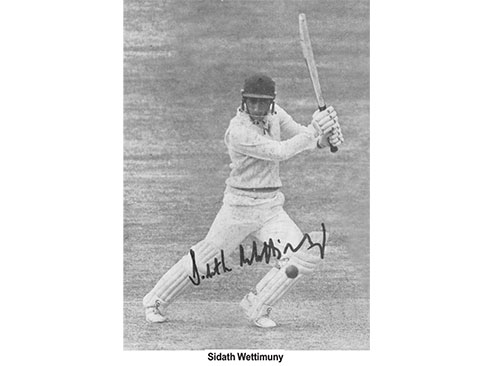
Walking to the middle and facing the first ball of a Lord’s Test match could be a daunting task to even the best amongst experienced campaigners. Sidath Wettimuny was no exception. The long walk, then taking guard, taking in the atmosphere, enduring the suspense of the ‘wait’ for the first ball; being sub-consciously reminded of his team’s expectations of him – all these would have created their own share of tensions, adding to the butterflies already in his stomach. Then suddenly, there came the disruption! To an already tensed Sidath Wettimuny, this seemed like manna from heaven!
On his way!
This disruption helped ease the mounting tension within Sidath Wettimuny and soon he was seen busily making explanations to his shell-shocked adversaries as to what the invasion was all about. Just moments before, these very same men had been aggressively scowling at him from the slip cordon and elsewhere, and now they were lapping up every word he uttered, as though it was the gospel! The interlude must have helped dispel all the butterflies in his stomach, for, when play got under way, and a shortish delivery presented itself outside the off, Wettimuny lost no time in getting well on top of it, cutting it neatly to the left of point for two. Shortly thereafter to a ball that was even shorter and wider, he launched into the type of shot he would normally never have played, unless well past 20. It was a well controlled, searing square cut, which sent the leather scuttling away between fourth slip and gully, to register Sri Lanka’s first Test boundary at Lord’s.
Wettimuny continued in this vein, taking most of the strike and doing most of the scoring. Presently, he essayed a sublime drive past point off Botham for four, and then unfurled a sumptuous repeat of the shot off Ellison. At most times he was copybook perfect, and when he wasn’t, he made sure the ball met the bat at its sweetest spot. Wide half volleys were spectacularly square driven while several other memorable strokes followed, as he reached the first of several milestones during his epic innings. He brought up his 50 by rolling off two dashing fours off Agnew in the final over before lunch; the first – an uppish slash over the slips to a very wide ball which stood up, and the other – a near one handed cover drive, coiling and then uncoiling with the shot, in one beautiful symphonic movement. Sri Lanka came into lunch at 81 for 2 with Wettimuny having made 51 of them.
Near vulnerable position
For a while at least within the first hour when the scoreboard read 42-2 after 13 overs, Gower’s decision with the toss seemed vindicated. Even though Jim Fairbrother’s farewell wicket to Test cricket was the friendliest featherbed any batting side could have asked for, and even though the bowling did no justice to the four slips and gully that stood in patient hope, Amal Silva batting with no trouble at all was trapped leg before to a Botham in-swinger. Madugalle the next man in, was comprehensively bowled shortly thereafter, to a delivery which swung back late. This left Wettimuny and Roy Dias to navigate the innings from a somewhat vulnerable position to the safety of the luncheon break, with the game still, evenly poised.
A throwback to a bygone era
If England harboured any hopes of an early breakthrough upon resumption, such hopes were quickly dashed by the two Sri Lankans. What unfolded after lunch was a delightful interlude of sublime Asian batting artistry, where wristwork, footwork, placement and touch, were amply displayed in a throwback to a by-gone era of technically correct batting, laced with style and unending grace. There was no further evidence needed to showcase the cricketing pedigree of both these batsmen. Relying mostly on his water-tight technique and his lyrical off-side driving, Wettimuny shortly reached his hundred in the 54th over, out of a total of 154. As the entire ground stood to him in warm applause, it was evident that the spirit of cricket was alive and well, and good cricket was being recognized; never mind from where it came.
Dias meanwhile, not to be outdone, displayed shades of his undisputed class. His regally elegant off-side play was complemented with decisive clips through midwicket to anything that was on his pads. He had not just style and grace, but command as well in all his offerings, but just when the stage was really well set for one great innings to remember, Dias fell victim to a clever piece of deception by the wily Surrey off- spinner Pocock. The bowler enticed him to go through with the shot, to a ball that hadn’t quite arrived and Dias paid the penalty. He made 32 out of a 102 run partnership from 150 minutes of batting.
In his element
 The departure of Roy Dias brought the pugnacious 21 year old Ranatunga to the center. Looking every bit as cheeky as he always was, Ranatunga quickly set about scuttling the bowling with an array of off side shots, using no noticeable back lift and curbing himself until the ball was almost upon him. He would then lean into it with some muscle and scuttle it away, be it from backward point to long-on. Anything that was on his pads, he would deftly deflect backward of square, with the assurance of a man who was in complete control of himself.
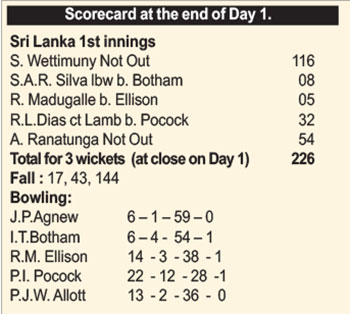
Wettimuny meanwhile, was increasingly stricken with cramp and was content on playing second fiddle. This allowed Ranatunga to take on the bulk of the bowling. The leftie would busily square drive or punch on the off, picking gaps or creating them, while gorging himself on the bowling as if it were a plate of rice. At tea, Sri Lanka were 173 for three and by the end of the day’s play 30 minutes before the scheduled close, they were 226 for three. Amply blessed with patience and style, Wettimuny returned unbeaten on 116 on a day he could do no wrong even if he tried. Ranatunga remained unbeaten on 54.
To be continued tomorrow.

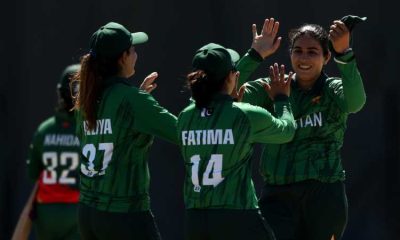





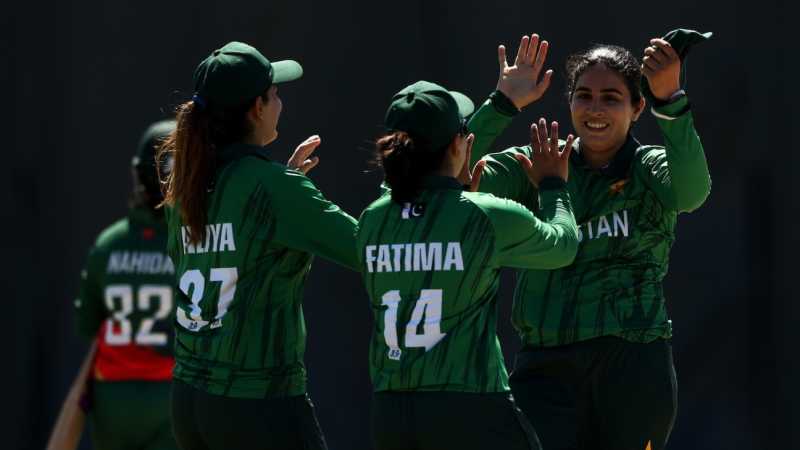
At 67 for 5 in the 12th over, Pakistan were under the cosh against Bqngladesh in their bronze-medal playoff at the Asian Games women’s competition. That’s when Fatima Sana walked out, slammed 45 in 30 balls, and gave Pakistan 145, which was 31 too many for Bangladesh, especially after Umm-e-Hani picked up three top- and middle-order wickets to end with 3 for 10 from her four overs.
Bangladesh’s big concern, of late and in general, has been the number of dot balls they play out in a typical T20 innings. In this game, it was a marginal improvement from the loss to India in the semi-final – they had 43 dot balls here compared to 61 in that game. But it was still fewer than the 48 they bowled to Pakistan in the first half. The difference was Sana, who scored at 150.00 to change the complexion of the contest.
Pakistan’s start had been decent, thanks to Gull Feroza, after they won the toss and opted to bat. Feroza and Shawaal Zulfiqar added 46 in 41 balls before being separated in the seventh over. The one to be dismissed was Feroza, who had scored 31 in 23 balls. Zulfiqar batted on before becoming the third batter to fall, having struggled to 17 off 27 balls. And the wickets kept falling, Shorna Akter picking up two of them to leave Pakistan in a mess with five batters gone.
Sana had a solid stand for the sixth wicket with Aliya Riyaz, who scored 25 in 22 balls and added 67 with Sana in just 43 balls. The control Bangladesh had was gone with the two hitting five sixes between them.
The target for Bangladesh, which looked like it might be in the region of 100, was suddenly closer to 150. And the chase never took off. Umm-e-Hani struck in the third over, then in the fifth over, and again in the 16th over. By then, Bangladesh were floundering: 77 for 5 with under five overs to go.
The resistance came from senior pro Sharmin Akther, who scored an unbeaten 46 in 45 balls, but there was nothing around her, and Pakistan ran out comfortable, 31-run victors.
Scores:
Pakistan women 145 for 8 in 20 overs (Shawaal Zulfiqar 17, Fatima Sana 45, Gull Feroza 31, Aliya Riyaz 25; Sanija Akter Meghla 1-28, Nahida Akter 2-21, Shorna Akter 2-16, Ritu Moni 2-27) beat Bangladesh women 114 for 7 in 20 overs (Dilara Akter 12, Nigar Sultana 25, Sharmin Akhter 46*, Nahida Akter 10*; Tasmia Rubab 1-25, Fatima Sana 1-25, Umm-e-Hani 3-10, Nashra Sandhu 1-19, Ayesha Zafar 1-10) by 31 runs
(Cricinfo)

India Women won the toss and chose to bat first in the Asian Games women’s cricket final in Nishin, Japan.
India: Smriti Mandhana, Shafali Verma, G Kamalini, Harmanpreet Kaur (capt), Richa Ghosh (wk), Bharti Fulmali, Deepti Sharma, Shreyanka Patil, Kranti Gaud, N Shree Charani, Nandani Sharma
Sri Lanka: Imesha Dulani, Chamari Athapaththu (capt), Hasini Perera, Kavisha Dilhari, Harshitha Samarawickrama, Hansima Karunaratne, Kaushini Nuthyangana (wk), Kawya Kavindi, Mithali Ayodhya, Chamudi Praboda, Sugandika Kumari
(Cricinfo)
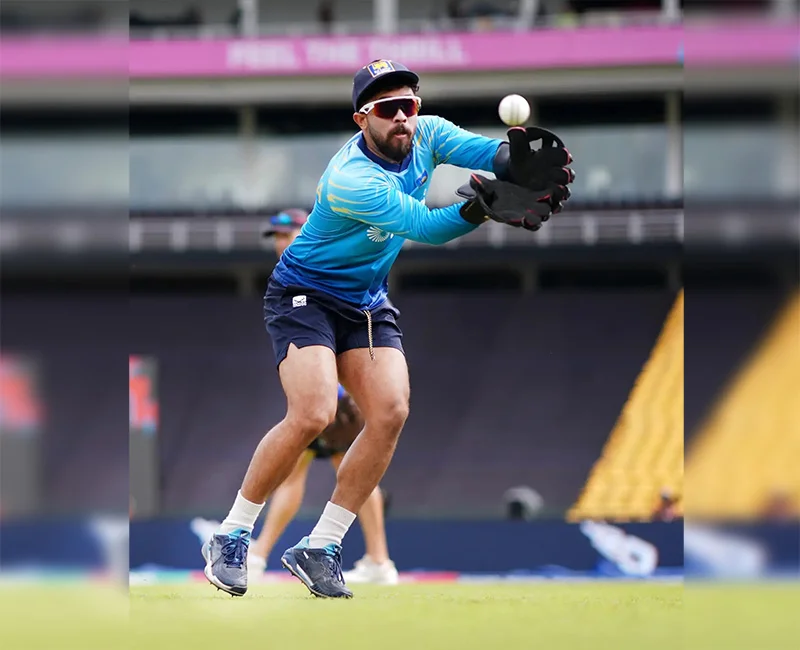
The reins of Sri Lanka’s ODI captaincy will return to Kusal Mendis as the wicketkeeper batter makes his international comeback following a lengthy injury lay off.
Mendis, a regular across all three formats for much of the last decade, was forced into a rare spell on the sidelines after suffering a hamstring injury during the LPL.
The injury ruled him out of the home Test series against India and he subsequently missed the T20I leg of the tour of England, with Charith Asalanka taking over the captaincy. Mendis will lead the side today in the first ODI against England.
 Mendis had returned to action for SSC in last week’s domestic T20 tournament, featuring in both the semi-final and final. He struck a crucial half-century in the semi-final against NCC to help SSC book their place in the final and having proved his match fitness, was flown to England to take charge of the ODI side.
Sri Lanka will hope his return can provide the spark that was conspicuously absent during a chastening T20I series, where the tourists were swept 3-0.
More worrying than the scoreline was the manner of the defeats. Sri Lanka barely landed a punch, with the batting repeatedly folding and the side often failing to use its full quota of 20 overs. It is hardly a new headache either. The shortcomings of the batting unit in the shortest format have been evident for some time, but a remedy remains elusive.
The fact that not a single Sri Lankan batter managed a half-century throughout the three match series only underlined the scale of the problem.
Today’s game will be played at Chester-le-Street in Durham, the northernmost international cricket venue in England. A short drive from Scotland, Durham was also once home to Sri Lankan great Kumar Sangakkara, who had a stint in county cricket with the club.
All-rounder Janith Liyanage, who has developed into a steadying influence in the middle order, is expected to feature, while prolific young run scorer Pavan Rathnayake is also pushing strongly for a place.
Sri Lanka also have the option of promoting Kamil Mishara to open alongside Pathum Nissanka, which would preserve the left-hand, right-hand combination at the top of the order.
Asitha Fernando, who did not feature in the T20I series, returns for the ODIs and is tipped to share the new ball with Dushmantha Chameera. The third seamer’s berth appears to be a toss up between Dilshan Madushanka and Eshan Malinga.
There is no shortage of spin either, with Sri Lanka having to choose from Maheesh Theekshana, Dunith Wellalage and uncapped leg-spinner Sachindu Colombage.
Today’s game gets underway at 5pm Sri Lanka time.
The second match will be played at Headingley on Thursday before the tour concludes in London on Sunday, with The Oval hosting the final ODI, a day game beginning at 3pm Sri Lanka time.

Fatima Sana and Umm-e-Hani secure bronze for Pakistan in Asian Games

India bat first in Asian games womens cricket final

Showers about 100mm will occur in the Western, Sabaragamuwa, Central and North-western provinces and in Galle and Matara Districts

Govt. confident of 2/3 majority despite NPP split speculation

Justice Corea appointed Acting President of the Court of Appeal

Protest against setting up of cement factory in highly populated area near BIA

‘Dates have the highest sugar content to fight Coronavirus’

Sunday Island 27 December – Headlines

#SundayIsland 17th December – Headlines

Sunday Island – 28th March

Sunday Island Headlines – 21 March

Sunday Island – 21st February – Headlines
-

 News5 days ago
US embassy won’t comment on IGP’s probe into joint drug raid
-

 News4 days ago
Bid for Basil’s extradition nears final stage: Police
-

 News3 days ago
Shanakiyan urges urgent action over reported death sentence for Lankan in Saudi Arabia
-

 Business5 days ago
All-new Bolero MaXX unveiled in Sri Lanka
-

 News2 days ago
Namal Rajapaksa Buddhist gambit fails, bail denied
-

 Opinion5 days ago
A journalist who wrote across the divide
-

 Editorial6 days ago
More fuel price shocks shrouded in secrecy
-
 Sports6 days ago
MAS Holdings, official clothing sponsor of Sri Lanka team at Aichi–Nagoya 2026 Asian Games