
Business
A Rescue and Reset Plan for Sri Lanka

by Sanath Nanayakkara
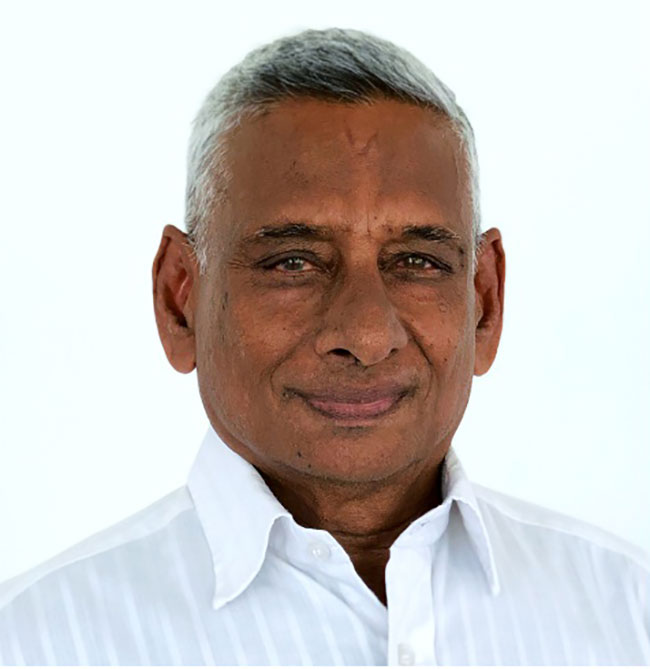
In the following interview given to The Island Financial Review, independent financial advisor and consultant Ranjith Wickremasinghe (Ranjith_@ymail.com) outlines what he describes as a Rescue and Reset Plan for Sri Lanka. Ranjith Wickremasinghe is a former chairman of the Sri Lanka Ports Authority and of the Ceylon Shipping Corporation.
What is the basic essence of your Rescue and Reset Plan for Sri Lanka – published on 14th April 2022 (ISBN 978-624-97686-5-9)?
Decades of fiscal deficits, trade deficits, balance of payment deficits, corruption, mismanagement, bad decisions, leakages, damage to our economic resources by pollution from SLiMDOE described below, and the loss of tourism income due to covid19 has caused the foreign debt to increase to US$ 60 billion from US$ 18 billion in 2009, leading to an untenable annual debt repayment US$7 billion.
In analyzing our strengths of the sea which is eight times bigger than our landmass, and our strategic location in the center of the Indian Ocean my research identified a hidden intrinsic asset which I have further researched, formulated, invented, monetized and published as the “Sri Lanka’s Multi-Billion Ocean-Air Expressway”, which I have named as SLiMDOE in my publication ISBN 978-624-97686-4-2 on 12th September 2021.
The carriage of 30% of world trade annually via 85,000 ocean and air crossings using the SLiMDOE short-cut across Sri Lanka and abutting the Dondra Head in the southern tip has enabled global economies to gain US$ 100 billion during the last decade whilst damaging our economy by an equal amount, which could be used as leverage to waive off our debt.
Basic Strategy of the Rescue and Reset Plan
1. Obtain a waiver on foreign debt repayments against the damage caused to our economic resources by pollution in using the SLiMDOE via a global initiative under the umbrella of the World Bank and UNDP. It is proposed that an interim waiver of debt repayments for 2022 and 2023 amounting to US$ 7 billion each are requested, pending discussions with the global economies and the creditors.
2. It is also imperative to obtain bridging finance of US$ 4 billion each for 2022 and 2023 needed to reset the stalled economy, from multilateral institutions and friendly countries.
3. Corresponding to the above “reset process” the GoSL is required to implement several other proposals to obtain a burst of development using the “South Sea of Sri Lanka”, to earn foreign exchange quickly, and to avert the present foreign exchange and the debt crisis. The full potential of export earnings could exceed US $ 20 billion per annum at full fruition enabling our economy to grow from US$ 84 billion in 2021 to over US$ 100 billion by 2026, detailed in my publication ISBN 978-624-97686-5-9.
These measures are expected to out wipe out the trade deficit of US$ Bn 8 to surplus of US$ Bn 2 by 2026 by increasing the exports from 2020 US$ Bn 10 to US$ 33 by 2026, and benefiting from the value addition, import substitution, and increased agricultural, fishery and livestock output, well over 100% by 2026.
Targets given are expected to turnaround the Sri Lankan economy to a GDP growth of 0.4 % in 2022, by 3% in 2023, 4% in 2024, 5% in 2025, 6% in 2026, and reduce the budget deficit from 11% in 2020 and 2021 to 6% of GDP by 2022, and to 3% by 2026, and substantially increase our external reserves and reduce our foreign debt. (As the relief measures are being delayed due to the present political impasse, this will cause a negative growth in 2022 than predicted above).
The UNDP recently proposed ‘debt-for-nature swaps’ to tackle Sri Lanka’s debt problem. This proposal from the UNDP came as Sri Lanka is getting ready to talk with its multiple creditors to restructure its debt. The International Rating Agency Moody’s has also expressed the view that it is wiser for Sri Lanka to explore this option. In another development, British Prime Minister Boris Johnson recently assured support to Sri Lanka for climate financing. In this context, do you think that Sri Lanka can leverage this opportunity to obtain such climate-related instruments to raise new funding as well as to forgo at least part of the country’s existing debt?
Yes, Sri Lanka can use my discovery, Sri Lanka’s Multi-Billion Dollar Ocean-air Expressway (SLiMDOE) as leverage to obtain a waiver on repayment of debt and obtain the bridging finance as per my concept published in September 2021, the principle of which has now has been reinforced by the UNDP and the British Prime Minister Boris Johnson.
Government tax revenue which recorded 12% in 2019 has fallen to 8% of GDP in 2020. It needs to be raised immediately and eased gradually as the economy grows as per your Plan. However, the private sector asks for a simplified tax structure and consistency in tax policy. The ordinary people want less indirect taxes and more direct taxes levied from the rich. How can we strike a balance between these two dynamics?
The President has stated that the reduction of taxes in 2020 was a mistake, and the new Prime Minister also holding the portfolio of Finance has already taken remedial aimed at correcting this situation. As the economy stabilizes during the tail end of the five-year period the corrections could be made appropriately to the ratio of direct to indirect tax.
According to your Rescue and Reset Plan for Sri Lanka, the government’s recurrent expenditure now standing at 17% of GDP needs to be brought down to 14% by end 2022, to help reduce the budget deficit now running at 11% of GDP. How can we do this in a sufficient and appropriate manner while protecting the country’s economic and public services interests?
Austerity has to start at the top, and has to percolate to the lower levels. We are a bankrupt nation; the carnival is over; we need to be lean and mean at the top and up to the bottom. We need to challenge every single item of expenditure based on “value for money” and lead by example. No more luxury living at the expense of the tax payer.Restructuring of SOEs is considered to be crucial for fiscal consolidation and Sri Lanka’s sustainable growth, but there’s a lot of resistance from trade unions to undermine such attempts. How can we achieve this against this backdrop?
All the CEO’s of SOE’s must be instructed to submit a five-year corporate plan and a financial plan immediately. All these plans must be evaluated by an expert committee who would give the policy direction. In this exercise the accounting and other professional bodies should be asked to volunteer their membership to assist in these evaluations to keep the costs to a bare minimum. All CEO, s must be given dividend targets.
Price of basic food and other essentials have increased from 30% to 80%. The poor has become poorer, and now have to skip meals. Do you think as a country running a twin deficit, Sri Lanka can provide relief to these vulnerable segments in the near future? If so, what’s the specific social safety net you propose?The dividends targets must be given to restructured SOE’s to finance the safety net of the poor.

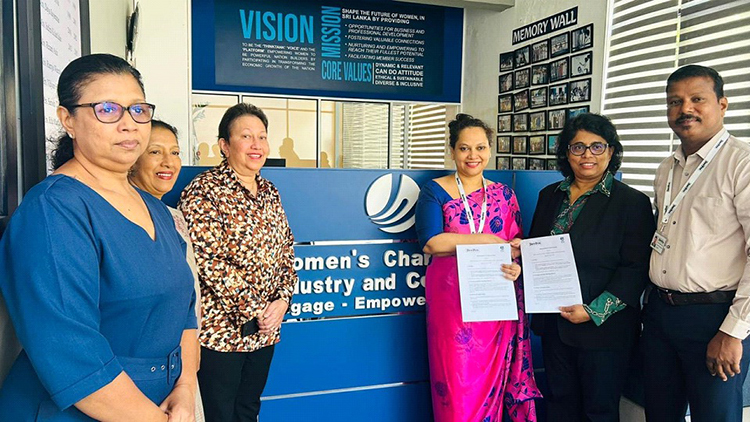
DevPro and Women’s Chamber of Industry and Commerce (WCIC) signed a formal partnership on Wednesday, 28th January to collaborate in promoting women’s economic empowerment and inclusion in Sri Lanka.
DevPro builds on 30 years of OXFAMs legacy in Sri Lanka and works towards Inclusive Economic Development leveraging expertise in inclusive and climate-resilient market systems and enterprise development and innovation. DevPro’s work is guided by the core values of gender justice, inclusivity and community-led development. Through its recent projects, DevPro has supported over 270 women-led MSMEs, across agriculture, handloom, and tourism-related value chains in five provinces in Sri Lanka through a mix of interventions combining skills development, enterprise strengthening, market linkages, and gender-sensitive community engagement to improve income, resilience, and economic participation.
WCIC is the first women-only trade chamber in the world, dedicated to empowering women entrepreneurs and women-led MSMEs in Sri Lanka through skills-building, business advisory services, networking etc. Among its many initiatives, WCIC’s flagship annual event, “Prathibhabhisheka” – Women’s Entrepreneurs Awards has empowered many women owned and women-led businesses in Sri Lanka to enhance their business resilience and competitiveness through improved governance processes, financial health, market recognition and global expansion.
Through this partnership, both DevPro and WCIC, will leverage their collective expertise, networks and resources to advance women’s economic empowerment and inclusion through projects, capacity building, research and policy advocacy focused on women entrepreneurship development, innovative business models, sustainability certification and credentials, export readiness and market integration and financial literacy and inclusion.
The MoU was signed by Gayani de Alwis, Chairperson of WCIC and Chamindry Saparamadu, Executive Director of DevPro in the presence of senior members of both teams.
Business
Writer Business Services enters Sri Lanka to partner with institutions to provide information management and payments solutions

Writer Corporation, one of India’s leading business groups, announced the launch of its subsidiary, Writer Business Services Pvt. Ltd., and the commencement of its operations in Sri Lanka. The expansion reflects Sri Lanka’s strategic importance in Writer’s regional growth plans and its role in supporting a highly regulated digital and financial services market which is currently undergoing digital transformation.
Sri Lanka’s continued focus on strengthening regulatory frameworks, digital platforms, and financial systems is shaping how institutions across banking, government, and enterprise sectors approach their business operations. There is a clear emphasis on secure, compliant, and resilient information and transaction environments that can scale with regulatory and business needs. Writer’s entry into Sri Lanka aligns with this direction, bringing global experience and a partnership-led approach to the market.
As part of its launch, Writer will establish a secure records and information storage facility in Seeduwa, Colombo. Designed to meet global standards for security, compliance, and disaster resilience, the facility will support banks, financial institutions, government bodies, and large enterprises in managing physical and digital information across its lifecycle.
Alongside information management, Writer brings established expertise in integrated payment services to support the modernization of transaction infrastructure across the banking and financial services sector. Its payments capabilities focus on strengthening availability, transaction continuity, and transparency across critical payment channels that underpin institutional reliability and customer confidence.
Writer’s digital payments offerings in Sri Lanka include end-to-end ATM and self-service terminal outsourcing, integrated channel ownership and managed services, field management applications, payment and reconciliation platforms, and remote monitoring with near real-time reporting. These solutions support financial institutions in improving uptime, strengthening governance, and enhancing operational efficiency across payment networks, in line with the continued evolution of electronic and automated payment systems.
Across information management and payments, Writer operates with an integrated portfolio spanning records and information management, business process outsourcing, cloud and digital services, data privacy, cybersecurity and enterprise payments infrastructure. These capabilities support institutions in addressing evolving regulatory requirements, digitization of legacy environments, and rising operational and cyber risks.
Writer’s local presence enables closer collaboration with clients and on-ground delivery, while supporting the development of Centres of Excellence across cybersecurity operations, SOC and NOC services, AI-led solutions, and payments operations and monitoring.
Writer’s Sri Lanka operations will be built, led, and run by Sri Lankan professionals, reflecting a long-term commitment to local talent growth and development.
Commenting on this development, Satyamohan Yanambaka, CEO, Writer Global Services Pvt. Ltd., assured Writer’s long-term commitment to the country’s digital ambitions. He said, “Writer’s entry into Sri Lanka reflects our belief that digital ambition in regulated environments must be supported by trust, sound governance, and strong execution. As institutions scale digital services, the reliability of information and payment systems, channel operations, and governance frameworks becomes increasingly important to public and institutional confidence. Our experience across information management, digital transformation, and enterprise payments enables us to support secure, large-scale financial ecosystems, with a clear commitment to building and leading these capabilities locally.”
Sri Lanka’s Digital Personal Data Protection framework raises expectations around how personal and sensitive information is secured and governed.
Altair Residences have, over the past six months, seen more than 100 individual title deeds being executed by apartment owners, providing owners with a clear, registered, legal title to their apartments in accordance with Sri Lankan property law. This has been a key initiative by the new owners and management of Altair to improve governance and will continue in an orderly manner in the coming months.
With the transition of ownership to Blackstone India, Altair’s Management Council has also been formally constituted, enabling owners to play an active and proactive role in the management of the Altair building. In addition, the management council has appointed Realty Management Services (RMS), a subsidiary of Overseas Realty Ceylon PLC, as the new facility manager of Altair.
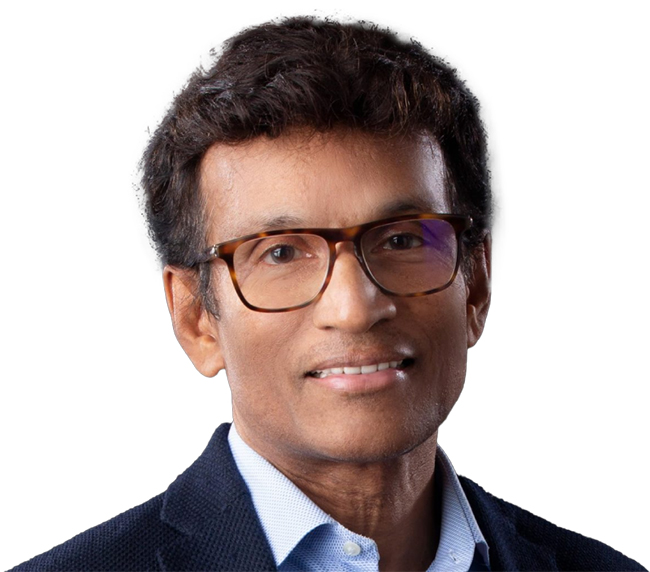
Commenting on these milestones, Thilan Wijesinghe, Chairman of TWC Holdings, who, together with a team from TWC, represents Blackstone’s interests in Sri Lanka, said, “The issuance of individual title deeds is a critical step in any professionally developed residential asset. Over the past six months, this process at Altair has moved forward in a structured and transparent manner, alongside the formal establishment of owner-led governance. This, combined with the appointment of experienced facility managers are fundamental building block for long-term value-creation for apartment owners and proper asset stewardship.”
With ongoing improvements to the building being undertaken by Indocean Developers Pvt Ltd (IDPL), the owning company of Altair, the issuance of deeds to owners is expected to accelerate over the coming months.

USA pick former Sri Lanka allrounder Shehan Jayasuriya in T20 World Cup squad

Jofra Archer back as England and Sri Lanka begin World Cup countdown

Showers will occur at times in the Eastern, Northern, North-Central and Uva provinces and in Matale and Nuwara-Eliya districts

DevPro and WCIC come together to accelerate women’s economic empowerment in Sri Lanka

Tobacco and alcohol claim 22,000 lives annually

Development Officers hunger strike drags on for fourth day

‘Dates have the highest sugar content to fight Coronavirus’

Sunday Island 27 December – Headlines

#SundayIsland 17th December – Headlines

Sunday Island – 28th March

Sunday Island Headlines – 21 March

Sunday Island – 21st February – Headlines
-
 Business5 days ago
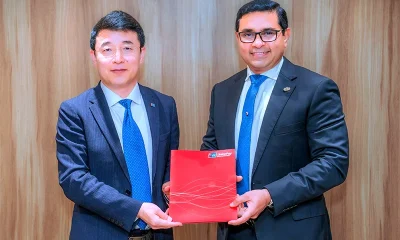
ComBank, UnionPay launch SplendorPlus Card for travelers to China
-
 Business6 days ago
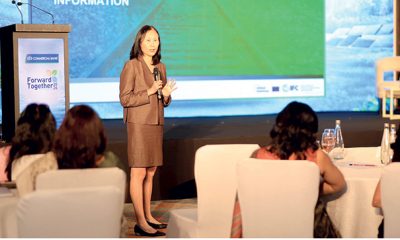
ComBank advances ForwardTogether agenda with event on sustainable business transformation
-
 Opinion6 days ago
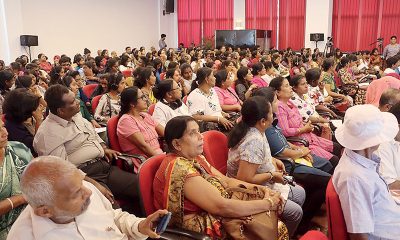
Conference “Microfinance and Credit Regulatory Authority Bill: Neither Here, Nor There”
-
 Business2 days ago
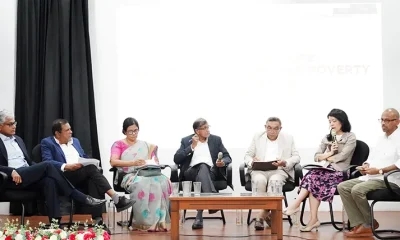
Climate risks, poverty, and recovery financing in focus at CEPA policy panel
-
 Opinion20 hours ago
Sri Lanka, the Stars,and statesmen
-

 Opinion5 days ago
Luck knocks at your door every day
-
 Business7 days ago
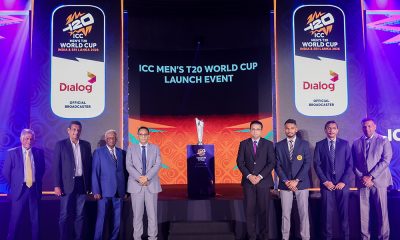
Dialog Brings the ICC Men’s T20 Cricket World Cup 2026 Closer to Sri Lankans
-
 News6 days ago
Rising climate risks and poverty in focus at CEPA policy panel tomorrow at Open University