
Features
A Policy Science Analysis


President’s Gama Samaga Pilisandarak
By Dr D. Chandraratna
Trying to place President’s Gama Samaga Pilisandarak (PGSP) in a scientific perspective of public policy making is timely. One of the stated objectives of the Presidents election manifesto, ‘Vistas of Prosperity’ is to create a village-centered development of our predominantly agriculture-based rural economy. The President has pledged to achieve a four-fold objective: a productive citizen, a happy family, a virtuous, disciplined and just society and ultimately a prosperous country. A laudable project worthy of comment and analysis.
President Rajapaksa believes that to achieve this broad objective, he must clearly identify the problems faced by the rural population, which constitutes about 70% of the population in Sri Lanka. It is well known that people in rural areas have suffered for far too long as national development goals are stymied. Given the fact Sri Lanka has an executive presidential system of government it must be understood that decisions that the executive President makes supersede all other decision centres. It is no secret however, that political decisions are tied up with ideology, party politics, group interests, vote banks and the survival of regimes. But in this paper we will leave the ideology and rhetoric aside and examine only the facts, evidence, ends and means only.
Ideal methods of policy making; the end points of a continuum
At the outset it is necessary to contextualise the exercise within the science of policy making in public affairs. Policies are a web of executive decisions made to overcome problems that people in society face in their day-to-day lives. These can be arranged on a continuum from the complex to the simple. At the complex end lies the oldest model, based on the theory of decisions expounded by the management guru Herbert Simon; it is called the Root Method or Comprehensive Rational model, where policy decisions are made after a laborious weighing of all alternative courses in terms of optimum results, costs, and many other value positions. Obviously, this is absolutely necessary in national issues and problems which consume a vast amount of national resources and are costly in nature. Infrastructure projects such as transport systems, communication systems, river and waterways, energy supplies etc., fit in with the comprehensive method of policy making. Governments issue white papers and appoint commissions, task forces and professional consultant bodies before such are undertaken because of the vastness in costs and liabilities. The most important fact is that the country as a whole must realise the value and necessity of such vital state projects. In Sri Lanka, it is a matter of regret that some costly projects such as the Mattala airport and the Hambantota Port have come under criticism because the national implications have not been professionally argued. The author is of the view that both were valuable projects in their own right and if only the relevant Ministry at the time had followed though the correct professional procedure in public policy-making, the projects may have had a different outcome.
In other countries, projects of that magnitude go though extensive weighing of alternatives, open professional debates and university research centres arguing about costs, benefits and opportunity costs of the nation’s limited resources. Science has to be put before ideology because haphazard interventions in national policy or grids or systems can be deleterious.
The opposite method at the other end is called incremental policy making, for as the name suggests it is limited in scope and applicable to small time projects with little or limited national implications. These appear solutions to residual ills, minor dysfunctions of national policies, which need remedial outcomes. Hence, such measures are called disjointed, piecemeal and also having incremental outcomes, benefitting a few at the margins. The fact that they are disjointed invites numerous criticisms. But their positives will be explored first.
This is the method of policy making that the President has taken up as a speedy solution to the numerous problems faced by the rural peasantry in Sri Lanka and his entourage has selected the most backward of villages as the points to touch on.
In fairness to the President, it must be stated at the outset that we do not consider this as a ploy on the part of the President to escape the political overload that he has inherited from years gone past. Ever since the gradual dissipation of efforts by governments since Independence, to kick-start the village economy as the mainstay of the national development strategy, the dividends have been sub-optimal. The colonisation schemes, village expansion schemes, financial assistance to tenants were only partially successful. We do remember the 10-year plans, five-year plans, Operations rooms, Planning Ministries but the results have been poor. The President will succeed to the extent that his advisors keep him informed of the successes, and especially failures of the efforts in the past. The President’s officials must not be a bunch of ‘yes men’ leading the President up the garden path.
Transparency in respect of both means and ends is the path to success. People are not unaware of the fact that politicians are in the habit of recommending such incremental stop-gap policies as a way out to avoid political embarrassment, hoping for a temporary respite. Bottom-up policy making has its positives but its limits and usefulness must be properly grasped.
President’s Gama Samaga Pilisandarak –– the context
Before we evaluate what the President has so far addressed, we must note the following facts about our broad policy field. Sri Lanka has nine provinces, 25 districts, 318 divisions and 14,022 Grama Niladari areas or villages. The country, consisting of 14,022 villages, is demarcated into 196 electorates. For 196 electorates there are 225 Members of Parliament to advance the welfare of all 14022 villages. Given the electoral system these members of Parliament represent not electorates, but districts. They are elected on the proportional representation system of voting. Hence no one at the Centre is responsible, theoretically at least, for any of the problems in any particular village.
Having identified that the PGSP is located at the incremental end of public policymaking we need to put it in an analytical perspective.
It is fair to surmise thus far the President has in his encounters identified and sometimes attended to some of the following major issues identified by the President inter alia: shortage of lands and water for agriculture and houses, unavailability of deeds for lands, inadequate health and transportation facilities, shortages affecting school and other educational issues, inaccessibility to drinking water, elephant-human conflicts and difficulties in marketing.
We are also aware that around 30 precent of the total households in rural societies in Sri Lanka live below the poverty line. Moreover, nutrition surveys conducted in the recent reveal a high prevalence of malnutrition among those in rural areas, which may have been caused by chronic poverty.
There are particular issues in some villages, which we will leave out in this paper.
The Analysis: Plusses and Minuses
I will use a famous textbook in policy making by Hogg and Gunn (1984) to follow through with the Presidential initiative. Let us start with the positives of the PGSP.
This move in the President’s opinion is for the top policy maker to ascertain the real situation in the village, which any text will title as an issue search. The pertinent question to ask is why these concerns do not come up on any agenda paper. Basically, it may be that those affected have no voice because organised interest groups with power and influence drive the issues that get priority. In a poor country, this should come as no surprise. The electronic media of late have had a number of programmes as an agenda-setting exercise with limited success but their main objective was to embarrass the local politicians and bureaucrats. The president also has an interest in attending to their immediate concerns before they could intensify in the future creating more headaches for him. Seeing the problem first hand gives the first policy maker in the country a view of the issue plus the complexities and need for ameliorative action.
The other positive from the perspective of the villager is the immediacy of solution, as resources can be mustered straight away by the President, which otherwise takes long years noting the plethora of departments and other bodies that are involved.
Sri Lanka is one of the highly bureaucratised countries with a public service ‘surplus to requirements’ and running the gauntlet is beyond the capacity of villagers. For example, to regularise a land permit, I was told by a one-time Land Commissioner, one has to have approvals from 23 odd government and semi government organisations. Things are unbelievably complicated by the number of authorising bodies. It took me 12 years after occupation to obtain the deed to my apartment from a government department in Colombo, and that too after two costly court cases. Bureaucratic corruption and inefficiency! Let us not talk about it. No wonder that the people awaiting the arrival of the President were sadly disappointed last week by the cancellation of his visit at the last minute.
In this bottom-up policy initiative there are many pitfalls that we can list straightaway. The President can visit only a few villages and those that are neglected can be politically ‘not with him’. Secondly, the problems are the same in most villages and it will be pointless wasting the time of the President because he will reach the saturation point very soon. He will realise that there are better and efficient mechanisms, given the resources, which can attend to these problems. What the information tells the President is that the issues, being common to many of the fourteen thousand villages are crying out for a national plan of action. Hence we wonder whether it is it the enormity of the issues that strained the limits of those who had power before, causing this neglect? Was it lack of insight, proper understanding, ministerial inexperience or the fear of realising the complexity of the interrelationships between issues or sheer lack of resources that caused this oversight?
The President cannot visit all villages and the solutions he instantaneously gives can be counterproductive. The furore over the environment and forests is a classic case where the Presidents instant solutions have become the weapon in the hands of an environmentally conscious middle class youth on whose bandwagon the opponents of the government are taking a joy ride.
The President will face similar catch-22 situations, which adversely affect his popularity. Incremental policies at the margins by themselves do not achieve much.
Conclusion
Sri Lanka failed in the bottom-up policy development due to many reasons and I can only highlight briefly a few for lack of space. The inefficient and lethargic conduct of the public institutions, the way our peoples representatives are elected without responsibility for particular localities, over 8000 politicians, the haphazard manner in which ministries are created for politicians (Foreign Affairs coupled with Lotteries!), the total lack of coordination between departments, the corruption of public officials, the inability of law to punish those who flout the law, the misuse of power and influence, the non-use or decay of coordination mechanisms such as Divisional, District and Provincial coordinating committees, and the lack of nexus between Provincial Councils and local authorities and many more. The political solution proposed by way of Provincial Councils has become a dead weight. Generally, we are an over governed society and as such the use of modern scientific management for policy implementation is non-existent.
An article appeared in your paper the other day by our colleague Ranjith Soysa from Australia about the successes of China in eradicating poverty in a matter of decades by comprehensive social policy planning which Sri Lanka can learn from. A white paper on poverty alleviation, which outlines the success of policies implemented, the methods employed and her desire to share the unique social experiment with other developing countries was mentioned therein. ‘Sri Lanka should make use of this opportunity to study the programme and follow its guidelines if a national comprehensive policy is to be implemented.
China achieved the largest scale battle against extreme poverty, as 98.99 million people had been lifted out of absolute poverty––a miracle in human history. But China achieves success because it is a planned centrally and the ideology is driven with strict, rigidly enforced rules, but whether we, being overly democratic, can enforce such discipline in a country noted for a poor work ethic is any one’s guess.
References
Hogwood,B.W & L.A.Gunn (1984) Policy Analysis for the Real World, Oxford, Oxford University Press.
D.Chandraratna, Making Social Policy in Modern Sri Lanka (2003), Vijitha Yapa, Colombo.


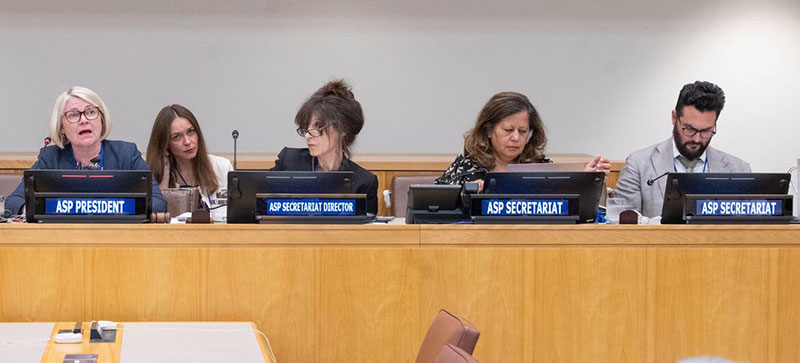
 US Secretary of State Marco Rubio’s warning to the International Criminal Court (ICC) was stark: ‘Either the ICC will end its threats, or we will end the ICC.’ It followed US central administration accusations that the court was unfairly targeting Americans on the basis of trumped-up war crimes charges.
However, a new plethora of sanctions has been clamped on the ICC by the US, which in turn has spurred accusations by sections of the world that the latter has unleashed an ‘assault’ on the international legal order.
What some of the sanctions would mean for the ICC was outlined by Rubio: ‘We will ban transactions with this rogue court, cutting off their resources and crippling their ability to operate against us.’
The ICC has shown consistency of purpose over the years. Despite some operational constraints it has indicted a large number of political strongmen from around the world, accused of war crimes and other governance excesses that come under its purview. Two such recent figures are: Russian President Vladimir Putin and Israeli Prime Minister Benjamin Netanyahu.
Rather than enjoy a mere nominal presence in the world community, the ICC has proved its effectiveness by detaining and bringing to justice scores of VIP politicians and others of their ilk who have been found guilty of human rights abuses and kindred excesses that come within the terms of reference of the ICC.
Accordingly, the international justice system would be stymied considerably as a result of the ICC being dis-empowered, particularly financially. Needless to say, potential and real perpetrators of the species of crime coming under the jurisdiction of the ICC would stand to gain most from such anarchic tendencies. That is, political repression globally would be enabled to enjoy a new lease of life.
A detailing of the types of crime coming under the purview of the ICC provides an idea of what it would cost the international community if the ICC’s operations are gravely hampered. They are mainly: genocide, war crimes, crimes against humanity and the crime of aggression.
That is, the part of the world to be worst affected would be the global South, since the latter is awash with the mentioned crimes. Needless to say, a chronically-disaffected South will sooner rather than later undermine the well being of the world dangerously. The world is already being put through these paces.
At the time of writing, ‘illegal migrants’ from the South, for example, are aggravating many a Western economy’s woes, besides creating for them acute law and order issues. The fact that these migrants’ presence goes on to become a virtual test of the migrant receiving states’ ability to forge domestic social inclusion in the face of jingoistic protests by mainly white supremacist groups is evidence of the latter. As is known, the US, to take just one example, has been up against this crisis for quite a while.
Accordingly, it will be in the best interests of the West if ‘illegal’ migrant arrivals on their shores are stemmed. If the socio-political and economic problems assailing the South are effectively managed through North-South collaborative, ‘trouble-shooting’ efforts the causes leading to ‘illegal’ migration and connected issues could be resolved at source as it were. For, it is the aggravation of the South’s material questions that lays the basis for the emergence of repressive and anti-democratic regimes in the hemisphere.
Until such time that the aforementioned issues in North-South relations are visited afresh and addressed urgently, a vibrantly functioning ICC would be needed. For, the latter would prove a deterrent to Southern political and military strongmen, highly prone to power abuse and like excesses, from coming into being in the wake of the South’s chronic material woes and the wars and conflicts that result from them.
It stands to reason then that the US would be acting in its own interests by enabling the ICC to perpetuate its mandate without hindrance. For a crop of issues that impinges negatively on internal law and order would be defused.
Meanwhile, there needs to be a meeting of minds among the rest of the West to put back in place a North-South dialogue process aimed at reducing some of the economic pressures that are weighing on the South.
Since economics usually drives politics it will be in the interests of the world community to scrutinizingly re-visit North-South issues of the past and put in place economic relief packages for Southern publics that would enable them to tide over their material hardships rather than permit the latter to aggravate into social disaffection and eventually armed militancy. It is the latter juncture that paves the way for the emergence of authoritarian rulers in the South who then go on to be a blight on their publics.
Accordingly, the Southern-based global development thinking of the past that envisaged a more equitable world economic order needs to be seen as an urgent need. That is, NAM’s international development paradigms need to be resuscitated to the extent possible.
It is unlikely that rightist governments of the West, such as the current Republican administration in the US, would find these projects feasible, but democratic states of Europe, led by perhaps the UK, are likely to think otherwise. For it would not be beneficial for the democratic world to be having on their hands repressive governments in the South who would be gravitating towards the major military and economic actors of the South, such as Iran and North Korea, who tend to be in constant power struggles with the West.
However, until such time that the mentioned, pro-people initiatives are given serious thought the ICC would need to be enabled by the international community to be in place comfortably and carry on with its mandate of bringing repressive rulers to book. Besides the ICC should pave the way for the peoples of the developing world to enjoy some substantial respite from the political repression and even terror which tend to be their lot.
Meanwhile, the wars of West Asia are relentlessly aggravating the economic hardships of people everywhere, driving the point home to enlightened sections that there is no alternative to peacemaking. A challenge is to convert the US under President Trump to this line of thinking.

 This week, I give you five simple, time-tested homemade remedies that help reduce the appearance of blemishes, control excess shine and leave your skin feeling softer and smoother.
The Honey and Lemon Brightening Dab:
For stubborn blemish marks, this is a classic. Mix one teaspoon of pure bee honey with three to four drops of fresh lemon juice. Apply gently, only on the affected spots, and leave for 10 minutes before rinsing with lukewarm water. While honey soothes and softens, lemon helps to brighten naturally. Use twice a week in the evening.
Besan and Rose Water Oil-Control Pack:
An ideal remedy to combat shine, especially on the T-zone. Take two teaspoons of besan (gram flour) and mix with sufficient rose water to form a smooth paste. Add a pinch of turmeric for its antiseptic goodness. Apply evenly, keep for 15 minutes and wash off. It absorbs excess oil without over-drying, leaving a beautiful matte finish.
Aloe Vera and Cucumber Ice Soother:
Blend fresh aloe vera gel with the juice of a grated cucumber and freeze the mixture in an ice tray. Each morning, wrap one cube in a soft muslin cloth and gently rub over a cleansed face for 30 seconds. It calms, tightens pores and imparts a baby-soft smoothness.
Oatmeal and Curd Gentle Polish:
Roughness and old blemish marks need gentle exfoliation. Combine one tablespoon of finely powdered oatmeal with one tablespoon of fresh curd (yoghurt). Massage very gently, in circular motions, for one minute, leave for five minutes and rinse. It removes dead cells and unveils softer, clearer skin.
Multani Mitti and Green Tea Magic Mask:
Brew some green tea and allow it to cool completely. Mix one and a half teaspoons of Multani Mitti (Fuller’s Earth) with the tea water to make a fine paste. Apply for 10 to 12 minutes – do not let it dry and crack completely – and wash off. It draws out impurities, fades blemishes and bestows a fresh, shine-free glow.
A Gentle Reminder:
As with any natural remedy, always do a patch test on your inner arm first. For those with oily or combination skin, avoid heavy coconut oil application and harsh scrubbing, as they tend to aggravate shine and blemishes.

 Dream of performing on a world stage? Well, here is your unique, golden opportunity!
The World Championships of Performing Arts (WCOPA) — the one and only official “Talent Olympics” — is the world’s premier global platform for aspiring singers, dancers, actors, models, instrumentalists, etc., to compete, shine and be discovered!
And, yes, this world stage is open to YOU, Sri Lankans living in Sri Lanka and overseas!
Held annually in glittering Las Vegas, WCOPA brings together over 70 countries, all competing for Gold, Silver and Bronze Medals, just like the traditional Olympics.

Lakisha Bernard: Will represent Team Sri Lanka at WCOPA 2027
Outstanding performers vie for the coveted titles of Junior and Senior Grand Champion Performer of the World, with winners and standout participants awarded over $500,000 in scholarships, cash awards and prizes to catapult their education and careers!
Sri Lanka is already making waves! At WCOPA 2026, Natharie Wickramasinghe, representing Team Sri Lanka, made the nation proud by winning a Bronze Medal in the Ethnic/Folklore Dance category!

Lakisha: Accomplished freelance Model and Fashion Design graduate
Recruitment for this prestigious competition is handled through a system of scouts and licensed National Directors — and this is where our very own Chris Rajendra, now based in Las Vegas, and National Director for Team Sri Lanka, comes into the scene.
If you are a singer, dancer, actor, model, instrumentalist — if you have talent burning inside you — contact Chris Rajendra today for registration and, who knows, you may find yourself in Las Vegas, and proudly draped in the Sri Lankan flag, at WCOPA 2027!
The contact address is: Chris Rajendra, wcopa.nationaldirector.sl@gmail.com
or chris.rajendra@gmail.com
Meanwhile, a star is born for 2027, in the form of Lakisha Bernard who is all set to represent Team Sri Lanka at WCOPA 2027.
Originally hailing from the sun-drenched coastal city of Colombo and now carving out her creative career in Canada, 22-year-old Lakisha is stepping into the international spotlight.
This accomplished freelance Model and Fashion Design graduate has officially been appointed as the Team Sri Lanka Promoter for Canada as she prepares to represent Team Sri Lanka at WCOPA in Las Vegas.
Lakisha brings a unique blend of high-fashion sensibility, captivating camera presence and expert garment design to the Team.
Having built her career, from local college shoots to high-glamour concepts, Lakisha’s inspiring journey embodies the true spirit of cultural bridge-building and creative resilience, bringing immense pride and recognition to Sri Lanka on the global stage.
WCOPA 2027 will be held at the legendary Westgate Hotel & Casino, Las Vegas, from 12th to 20th July – the very same iconic arena where the late, great Elvis Presley himself performed!
Your moment is now. Your stage is Las Vegas, so hurry and contact Chris Rajendra.

Showers or thundershowers will occur at most parts of the island

Prison rules to be revised over monks’ attire

AC President recuses himself from hearing prison attire case pertaining to Gnanasara Thera

Court orders steps to obtain INTERPOL Red Notice against Basil

CID informs Fort Magistrate’s Court investigation into money laundering case against Namal completed

No force used to make Gnanasara Thera wear prison garb – Prisons

‘Dates have the highest sugar content to fight Coronavirus’

Sunday Island 27 December – Headlines

#SundayIsland 17th December – Headlines

Sunday Island – 28th March

Sunday Island Headlines – 21 March

Sunday Island – 21st February – Headlines
-

 News6 days ago
NDB fraud Rs 60mn more than reported
-

 News6 days ago
Removing monk’s robes matter for Sangha to decide: Mahanayake Theras
-
 News5 days ago
NPP govt. reminded of its responsibilities as US warship leaves Colombo
-

 News4 days ago
Sri Lanka escalates anti-graft drive with Shiranthi’s jailing
-
 Latest News6 days ago
Farhan, Sadaqat help Pakistan ace 183 chase to go 1-0 up
-
 News6 days ago
BHC, Colombo: “LTTE remains a proscribed org. in the UK”
-

 Latest News3 days ago
Farhan and Sadaqat help Pakistan seal series in style
-
 News4 days ago
Iranian ships stranded, Lanka fears US sanctions