
Business
A holistic approach to People Management

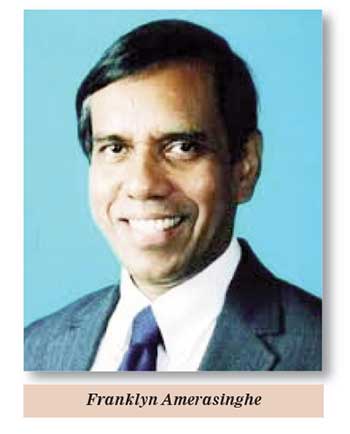
Business Oriented People Management by Franklyn Amerasinghe which is to be launched soon, validates that people management is about understanding that the people employed are more than a resource to earn profits and they are as valuable as the investor himself…
by Randima Attygalle
‘Thousands of students are now looking at entering the field of ‘People Management’ and one drawback for them is that usually they study Human Resource Management as part of a curriculum for certification, but they often have no exposure to a holistic analysis of how the ‘People Management’ function is integrated into the functioning of the business.’
The preface to Franklyn Amerasinghe’s latest compilation, ‘Business Oriented People Management’, which is to be launched soon, underlines the fundamental objective the author seeks through his work. The author who alludes to the Human Resource or the HR function as ‘People Management’ further qualifies: “the term ‘Human Resources’ leaves an ugly taste in the mouth. It seems to look at the human element as just another resource like money. People management is about understanding that the people employed are more than a resource to earn profits and they are as valuable as the investor himself.”
The book which deals with the evolution of human resource management, the corporate sector and its rules for governance, people management and performance management, globalization and international obligations, labour legislation, collective bargaining, leadership, dispute management and much more, enables the ‘People Manager’ insights into how decisions are taken and also indicates the benefits for Boards of Companies to have a people-centric focus in their business policies. The sustainability of the corporate and the social aspects of the business are also given attention.
The book, Amerasinghe explains, provides a basic picture of how a private sector organization complies with its multitude of obligations relative to all stakeholders. A publication by the Employers’ Federation of Ceylon (EFC), Business Oriented People Management’ , as its one time Director General/CEO, Amerasinghe notes, is “conceived as a supplementary aid to all those responsible for managing people whether they be designated as HR Personnel or not.”
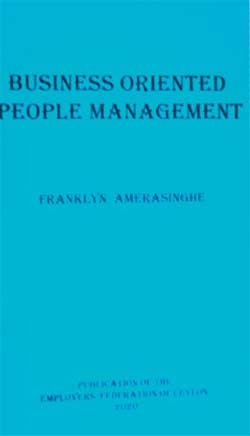 Amerasinghe who was also a Senior Specialist at the ILO for Employers’ Organizations in East Asia, translates his wealth of experience in his scholarly pursuits. A prolific writer credited for many functional compilations on mediation and cooperation at workplace, conflict management and social dialogue, he has also served on many prestigious Boards and Committees in the public and private sectors.
His latest work provides insights to the executives managing people and how they should fit into the overall achievement of business plans. An unfortunate trend the author notes, is for such executives to look very exclusively at their immediate tasks and targets neglecting the larger picture of the organization. “The fact that each executive contributes to fulfill a corporate plan is sometimes forgotten in pursuit of personal goals. Moreover, many think that following blindly, and without question, policies handed down by higher management is loyalty and is sufficient. Every employee at whatever level should be encouraged to contribute to the development of the company and its policies. Some areas of activity mentioned are for the purpose of identifying the People Manager as vital in the business interests of a private sector organization which is dynamic and looking for sustainable growth,” notes the author adding that the People Manager has two distinct functions: his personal performance and to encourage others with whom he interacts to play their part in corporate performance.
Current management structures, the author observes, reflect that increased responsibility for handling people rests outside the traditional HR Department, although laying down policy and monitoring what is done at departmental level would still remain with it. “Thus the book is meant to assist all managers who participate in managing people,” he says. The advent of digitization and new forms of work arrangements have shifted the ‘circumstances’ of the HR Manager to another level thus changing gears in his/her performance role, says Amerasinghe. “The traditional role of the HR Manager, however, remains the same which is to make the employee contented and motivated to contribute to the organization.”
Paying significant attention to the skills needed on a day to day basis such as dispute handling, negotiation and communication, the book also focuses on industrial relations, an area which the author feels is now quite overlooked, as the HR function looks more and more towards isolating people at work and dealing with them individually. “This does not usually work in the Sri Lankan setting as there is a cultural desire to indulge in collective thinking, especially in rural areas.” The era when production and service centres were in Colombo has been replaced by a policy of moving to rural and suburban centres, with a large number being in Industrial Zones which attract a large number of rural workers.
“The rural worker is conditioned by peer pressure and a strong resistance to change from their traditions. The COVID pandemic which has seen mass loss of jobs especially at lower levels will probably bring back industrial relations to merit more consideration again,” observes the writer.
Amerasinghe’s latest compilation also enables a window to the past in which corporates tackled issues of their employees. Originally the intention was to have an employee who dealt with ‘fire-fighting issues’. The development of HR strategies as a means of keeping employees in line with business requirements was aided by circumstances such as the debacle of the unions in July 1980 and the disillusion which followed. “There has been a remarkable change in the culture of blue collar workers by the movement of collective power to the workplace as opposed to the earlier reality of workers being made to follow the dictates of political parties and their interests,” says Amerasinghe whose latest book balances the advantages of collective agreements against the desire of employers to make employees more focused on their individual terms and earnings which as he says is the key component in the strategy to motivate employees to be more productive.
The COVID situation as the author further observes, brings out a new dimension, which is the futility of legislation to guarantee terms and conditions of employment in the face of employers not having the capacity to meet their legal obligations “The law cannot force employees to stand up for their rights when confronted by a situation when they must either accept what is offered or starve.” The book deals with the legal situation and the need for employers to think of their social responsibility towards employees. “Moreover, in the long term they may have look for new employees when they need to think of ramping up their production or services again.”
The author in his work refers to the Personnel Managers of the past who grew into managing people by long association with the organization. “The more experience one has at the lowest levels of an organization, the more effective one could be. HR personnel should have compulsory internships. Through my book I try to focus on the need to fully comprehend what the organization is about and its responsibility which in turn devolves on the management.” He also goes onto note that there is an onus placed on the management to afford opportunities for the HR personnel to constantly upgrade themselves and be innovative.


By Hiran H. Senewiratne
Sri Lanka’s financial literacy rate is approximately 58 percent. Such literacy is absolutely necessary for the inclusion of people in the country’s financial system which in turn is central to overall economic development, Central Bank Governor Dr. Nandalal Weerasinghe said.
‘One needs to have knowledge and skills of a financial nature to figure in financial inclusiveness. While 86 percent of Sri Lanka’s population has access to the country’s financial system, 82 percent of the public has at least a savings account in the country’s banking system, Dr Weerasinghe said.
The Governor made these comments recently at the inauguration of Financial Literacy Month 2026 at the Central Bank’s Centre for Banking Studies, Rajagiriya.
Dr. Weerasinghe added: ‘Suitable, affordable and quality financial instruments are needed to enhance financial literacy in the country.
‘Financial information has to be accurate, risk-free and accountable, thus creating confidentiality in the financial system, which would enable the sector to reach greater heights’.
Meanwhile CBSL sources said: ‘The Literacy Month opened with the two-day ‘FinLit Expo Colombo’. The expo gives the public the opportunity to engage with institutions, better understand financial services, gain practical insights into managing their finances and learn how to protect themselves from financial fraud and scams.
‘The CBSL is leading the program in collaboration with stakeholder institutions. It forms part of the Financial Literacy Roadmap for Sri Lanka, which is implemented under the National Financial Inclusion Strategy (NFIS), the national framework for widening access to and use of formal financial services.
‘The Colombo event will be followed by six regional ‘FinLit Expos’ aimed at direct engagement with local communities. Partner institutions will also run awareness activities. Together, the events are intended to provide financial education to communities and encourage people to apply financial knowledge in everyday life.
‘A public awareness campaign on television, radio, newspapers and social media will extend the program’s reach. The program also includes digital financial literacy activities and the promotion of QR codes and other online payment methods.
‘The public and stakeholder institutions are encouraged to take part in the month’s activities under the theme, “Towards a Financially Literate Sri Lanka”.
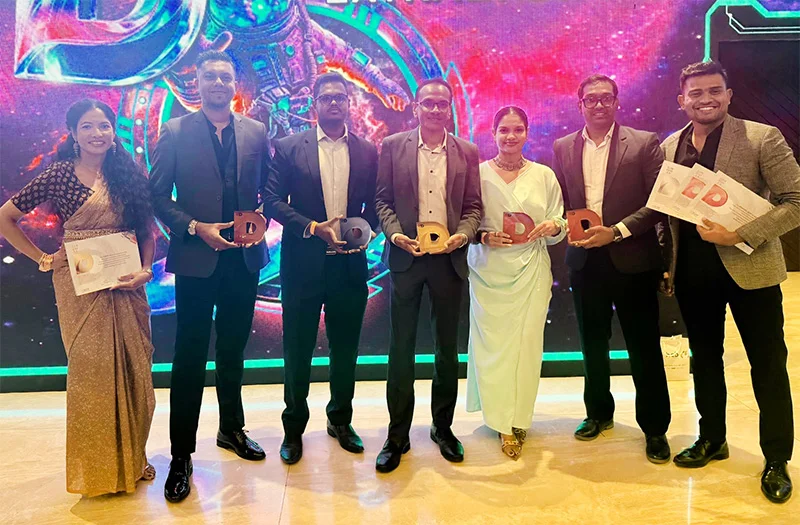
HUTCH Sri Lanka strengthened its position as a leader in digital engagement by securing five accolades at SLIM Digis 2.6, emerging as one of the most recognized brands at this year’s digital excellence awards. The achievement was further highlighted by HUTCH being the only telecom operator to be recognized at the event.
Organized by the Sri Lanka Institute of Marketing (SLIM), SLIM Digis is Sri Lanka’s premier platform celebrating excellence, innovation, and outstanding achievements in the digital marketing industry. The recognition highlights HUTCH’s growing strength in digital-first, agile, and creative marketing, and its ability to respond to everyday moments, engage audiences, and deliver impactful digital campaigns.
The Gold Award for Best Use of Agile and Moment Marketing, a Silver for Best Use of Digital in a Marketing Campaign, and a Bronze for Best Performance Marketing were all awarded for “Keeping Sri Lanka Connected Through Ditwah,” HUTCH’s response to the cyclone that struck Sri Lanka in November 2025, recognised for the speed and relevance with which HUTCH kept customers better connected and informed.
HUTCH Roaming also earned two further Bronze awards for Best Use of Digital in a Marketing Campaign and Best Use of Creative Content. Bringing together AI-led storytelling, the campaign was designed around distinct customer clusters, each characterized by unique travel behaviours, needs, and perceptions, delivering relevant content for different audiences within a single overarching campaign.
“These wins are a strong reflection of how HUTCH approaches marketing today, staying close to the moments that matter to our customers and responding with speed, relevance, and creativity. Being the only telco recognised at SLIM DIGIS 2.6, and across five categories, is proof that agility and thoughtful storytelling can go hand in hand. This recognition reflects the collective efforts with our strategic partners, whose collaboration, expertise, and shared commitment brought great campaigns to life,” said Hamdhy Hassen, Chief Marketing Officer, HUTCH Sri Lanka.
Sri Lanka’s Smart Luxury Business Hotel to Host Delegates and Contestants from Over 40 Countries as the Island Nation Hosts Its First-Ever Global Pageant of This Scale
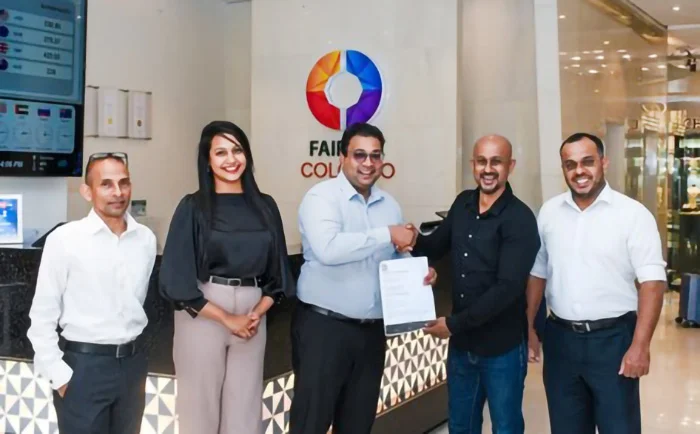
Fairway Colombo, a subsidiary of Fairway Holdings (Pvt) Ltd, has been appointed as the Official Accommodation Partner for Manhunt International 2026, one of the world’s most prestigious male pageants, scheduled to take place in Sri Lanka.
The event marks a historic milestone for Sri Lanka, as the country prepares to host a global pageant of this scale for the very first time. More than 40 contestants representing countries from across the world will arrive in Colombo, bringing together diverse cultures, international media attention, and a global audience — further strengthening Sri Lanka’s position as a premier destination for tourism, culture, and hospitality.
As the official accommodation partner, Fairway Colombo will welcome and host international delegates and contestants throughout their stay in Colombo, delivering the exceptional hospitality experience and personalized service that the hotel is recognized for.
A Landmark Partnership for Sri Lankan Tourism
“We are truly honored to be selected as the Official Accommodation Partner for Manhunt International 2026. This partnership is a proud moment not only for Fairway Colombo but also for Sri Lanka as a whole. Hosting an event of this global stature provides us with an opportunity to showcase our commitment to smart luxury, innovation, and authentic Sri Lankan hospitality to an international audience. We look forward to creating a memorable and seamless experience for all delegates and guests,” said Avinga Wanigasekara, General Manager of Fairway Colombo.
Strategically located in the heart of Colombo’s historic Fort district, Fairway Colombo is recognized as a Smart Luxury Business Hotel, combining modern comfort, advanced technology, and exceptional service. As part of Fairway Holdings (Pvt) Ltd, the property represents the group’s vision of delivering innovative, world-class experiences across the hospitality and leisure sectors.

Delegation from Korean Volunteer Association meet Secretary to the President

Imran Khan’s PTI braces to fight federal takeover of Khyber Pakhtunkhwa

Nissanka’s return headlines Sri Lanka’s Test squad against Pakistan

HRCSL issues recommendation on seizure of four books by B. Piratheepan by Sri Lanka Customs

Former Zimbabwe player and umpire Sarah Dambanevana dies aged 36

Deflated Sri Lanka look to prevent whitewash against dominant Pakistan

‘Dates have the highest sugar content to fight Coronavirus’

Sunday Island 27 December – Headlines

#SundayIsland 17th December – Headlines

Sunday Island – 28th March

Sunday Island Headlines – 21 March

Sunday Island – 21st February – Headlines
-

 Features5 days ago
The Sri Lankan who made Scottish history
-

 Sports5 days ago
Nissanka absence opens door for Sri Lanka’s young guns
-

 News4 days ago
NDB fraud Rs 60mn more than reported
-

 News6 days ago
Gnansara Thera to be assigned to prison printing section: Officials
-

 News4 days ago
Removing monk’s robes matter for Sangha to decide: Mahanayake Theras
-
 News6 days ago
OIC of FCID summoned before Maligakanda Magistrate
-

 Features5 days ago
Future of Sri Lanka’s state university system: Should it be shut down and reopened?
-
 News5 days ago
Shiranthi R remanded until 13 Oct.