
News
A dhamma daana of a different kind

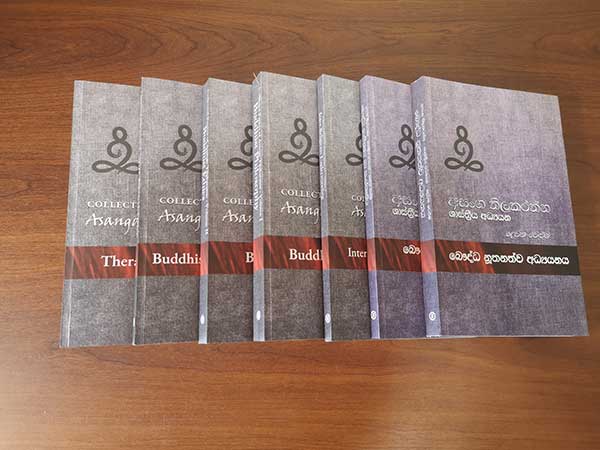
Four-decades of writings by Prof. Asanga Tilakaratne, eminent scholar of Buddhist Studies and the one time Head of the Department of Buddhist Studies, University of Colombo, featured in eight volumes will be launched on August 27 at the BMICH.
by Randima Attygalle
Cataloguing the work of a reputed scholar spanning over four decades, elicited from numerous sources, both local and foreign, into a collection of eight meticulously compiled journals is a colossal task. In a labour of love, this has been realized by a team of Buddhist and Pali scholars guided by Ven. (Prof) Raluwe Padmasiri Thera in a manner true to the words of the Buddha, “If anything is worth doing, do it with all your heart.”
The eight volumes, five in English and three in Sinhala are a tribute to the eminent scholar Prof. Asanga Tilakaratne credited not only for his fine literature of a wide canvas of Buddhism related themes but also for his work as a teacher moulding a generation of young scholars in Buddhist and Pali studies. He has drawn inspiration from celebrated modern interpreters of Buddhism such as K.N. Jayatilleke and David J. Kalupahana in his scholarly pursuits.
The writings of Prof. Tilakaratne, the founder Head of the Department of Buddhist Studies, University of Colombo, are classified under several key themes including Buddhist Philosophy, Buddhist Ethics, Theravada Studies, Buddhism and Modernity, Inter-religious understanding and Buddhist Literature and Culture. The soon-to-be-launched collection will bring the painstakingly researched papers of the reputed scholar closer to the student, researcher and the intellectual reader.
The idea of compiling Prof. Tilakaratne’s academic papers was first mooted as a casual discussion among a group of scholars at the occasion of his retirement from the University of Colombo in 2018 as the Senior Chair Professor of Pali and Buddhist Studies. “Initially neither they nor I had any inkling that the project will run into many volumes! All papers compiled under eight different banners are what I have written for four decades. Although I have been teaching full time for the last 30 years, I did not stop my research and writing because teaching and writing go together. If the teacher is not delivering new themes and fresh raw materials, he is not doing justice to his students,” says Prof. Tilakaratne.
He applauds the editorial board of ‘emerging Buddhist scholars’ comprising his friends, junior colleagues and students for embarking on this uphill task. The panel which represents the four-fold group in Buddhist society (Bhikku-Bhikkuni, Upasaka-Upasika) truly represents the future of Buddhist Studies in the country, says Tilakaratne who notes that they have the “potential to take contemporary Theravada Buddhist scholarship to the world”.

Prof. AsangaTilakaratne
Comprehensive scholarly introductions by renowned Buddhist scholars- both local and foreign add to the substance of the volumes. Ven. Tirikunamale Ananda Mahanayaka Thera, Jayadeva Uyangoda- Emeritus Professor of Political Science, University of Colombo and G. A. Somaratne, Professor of Buddhist Studies, Centre for Buddhism, University of Hong Kong, are credited for the introductions of the three Sinhala publications. Scholars like Dr. Surakkulame Pemaratana Thera, emerging monastic Buddhist scholar who holds a doctorate from Pittsburg University and works at Pennsylvania University, USA, Anne M. Blackburn of Cornell, Damien Keown of Goldsmiths College, University of London, Rupert Gethin, President of Pali Text Society, London and Professor of Bristol University, UK, and Abraham Velez of Kentucky University, USA complements the English volumes.
The demand for Buddhist books continues to escalate but this, however, needs to have a mechanism of checks and balances, remarks Prof. Tilakaratne. “With the demand, there is now a tendency to publish practically anything in the name of Buddhism for this ready market,” says the author who urges publishers to have the manuscripts reviwed by a qualified panel of scholars. In the USA and the UK the average time between handing over the manuscript to the publisher and its publication is two years or more.
“But in a situation where a good number of books published in this country are author’s own publications, with no guarantee of accuracy or value whatsoever, means that anyone can publish virtually anything provided they have resources. there must be a broader mechanism in place in order to assure that what is given to readers is of good quality.”
In this backdrop, the collection authored and edited by qualified professionals bear the intellectual responsibility for the content. The panel of editors had also taken considerable efforts to adhere to sound academic traditions.
The two volumes ‘Inter-religious understanding’ and ‘Buddhism and Modernity’ featured in the collection are particularly topical in the contemporary setting bidding the Buddhist intelligentsia of Sri Lanka to create a dialogue on these topics, notably on religious understanding so that communal reconciliation becomes a reality. “History reflects that Buddhism has faced challenges with courage and survived. Since 1815 the challenges posed by modernity in a Sri Lankan setting have been diverse and serious, so much so at a certain point, during this early period of the island’s British colonial history even some local scholars seemed to have thought that Buddhism will definitely lose the battle. Some papers in the collection discuss issues related to this aspect of modernism,” explains Prof. Tilakaratne.
What is significant in the collection is that it addresses issues related to how Buddhism as an organization adapted to new situations and adopted certain aspects of modernity while preserving the core of its philosophy. One of the key aspects of the author’s academic writings, which is reflected even in his formative years of academic and intellectual development is his effort to interpret the teachings of Buddha in the context of problems arising from modern scientific and technological developments. His first book Minis Getalu Pilibanda Bauddha Vigrahaya (Buddhist Analysis of Human Problems), published in 1979, belongs to this genre and won the State Literary award for that year.
Inter-religious understanding deliberates on theoretical and doctrinal issues as well as issues arising from historical and social contexts. “Doctrinally and philosophically the challenge for any religion is to accommodate other religions while preserving one’s own uniqueness. Where multiplicity of religion is a fact in one’s daily life, stressful situations among religious followers is inevitable. The challenge for each religion is to find out its own resources to cope with such situations. In my writings I have tried to develop a position which to my understanding is fair by Buddhism as well as other religions,” observes the author.
While lauding everyone who supported to make this initiative a reality, Prof. Tilakaratne makes special mention of Ven. Bellanwila Dhammaratana Nayaka Thera, Chief incumbent of Bellanwila Rajamaha Viharaya and the publisher of the collection- Sarasavi Publishers.

News
Food Security is vital to ensuring a Nation’s Sovereignty and National Security – Prime Minister

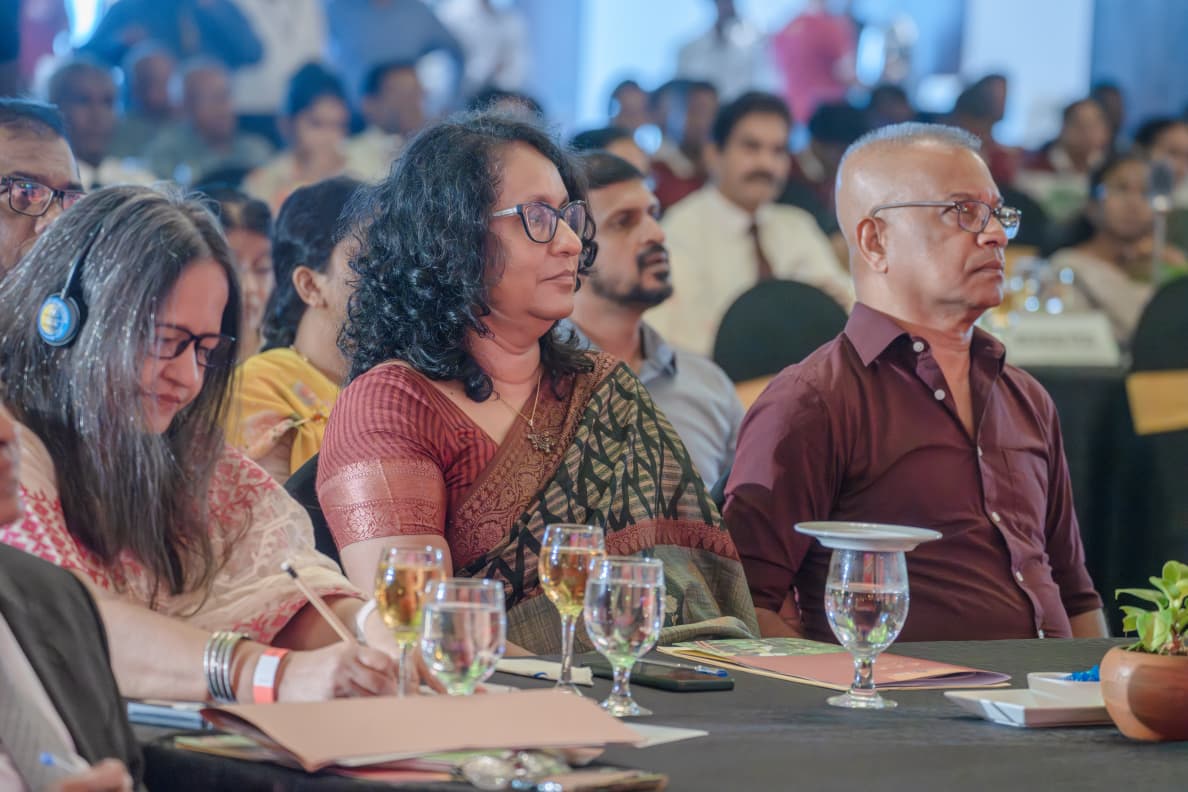
Prime Minister Dr. Harini Amarasuriya stated that, in the face of the turbulent global environment prevailing today, agriculture is confronting significant challenges, and that food security is a crucial factor affecting a country’s stability, sovereignty, and national security.
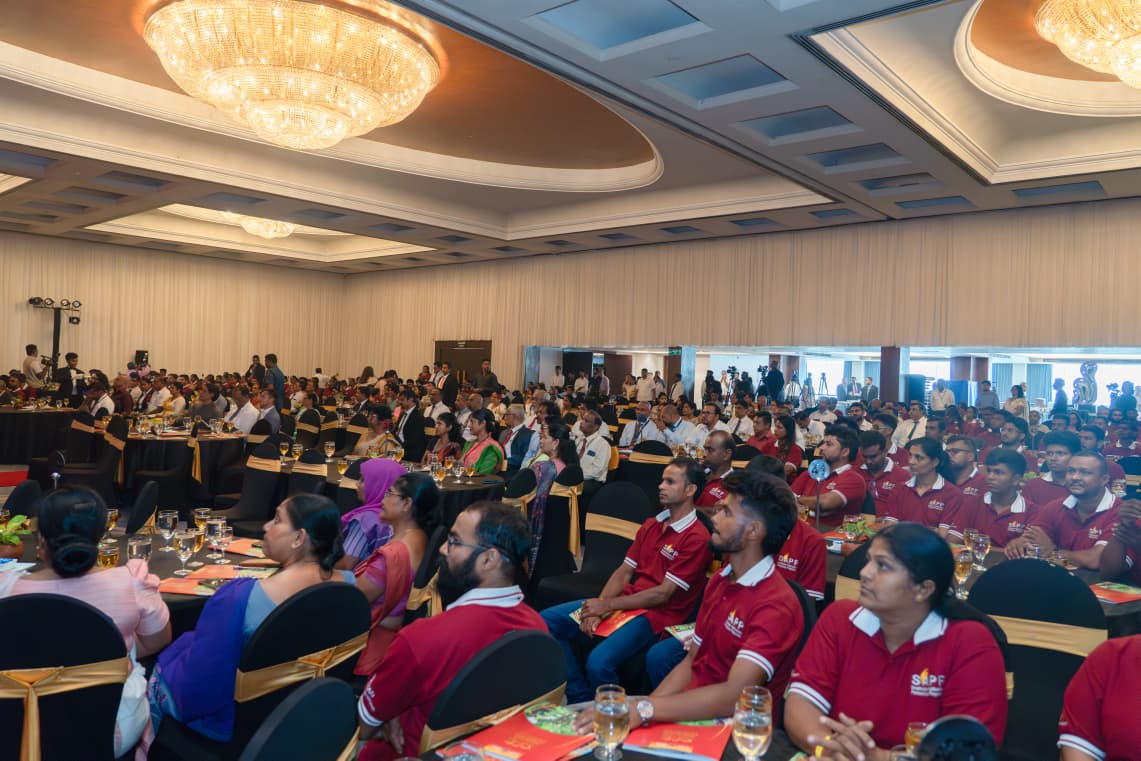
The Prime Minister made these remarks on 28 of April at the Waters Edge, Battaramulla, while addressing the National Youth Agripreneur Showvase and B2B connect Conference organised under the Smallholder Agribusiness Partnership Programme (SAPP), funded jointly by the International Fund for Agricultural Development (IFAD) and the Government of Sri Lanka. The programme aims to empower rural youth to engage in agribusiness ventures.
Addressing the gathering, the Prime Minister further stated:
“I commend the organisers for successfully conducting this event despite the various challenges faced by the country.
You are playing an important role in both the agricultural sector and the national economy. I am happy to witness talented agri-entrepreneurs such as yourselves.
Food security, founded on agriculture, directly impacts a nation’s national security. Concepts such as ’Grow and Sell’ contribute significantly to strengthening the production economy.
During the COVID crisis, as well as amidst the current conflicts in the Middle East, it has become evident that if countries lack food security, their economies become vulnerable. Even a minor decision taken by leaders can disrupt supply chains.
Climate change also poses serious challenges to agriculture. When climatic and environmental conditions become difficult to predict, agriculture itself is threatened. In such a context, your contribution as agri-entrepreneurs goes beyond earning an income. It is also a direct contribution to the nation’s food security and, consequently, to national security. Your talents and innovations are important not only to yourselves, but to the people of the country as a whole”.
The Prime Minister also expressed gratitude for the support extended by institutions such as IFAD and SAPP, and conveyed best wishes to the country’s creative entrepreneurial youth.
The occasion was attended by the Minister of Agriculture, Livestock, Land and Irrigation K.D. Lalkantha; Deputy Minister of Industry and Entrepreneurship Development Chathuranga Abeysinghe; Secretary to the Ministry of Agriculture, Livestock, Land and Irrigation D.P. Wickramasinghe; Additional Secretary of the Ministry Lathisha Priyanthi; Director of SAPP Sunimal Chandrasiri; and several other distinguished guests.
(Prime Minister’s Media Division)
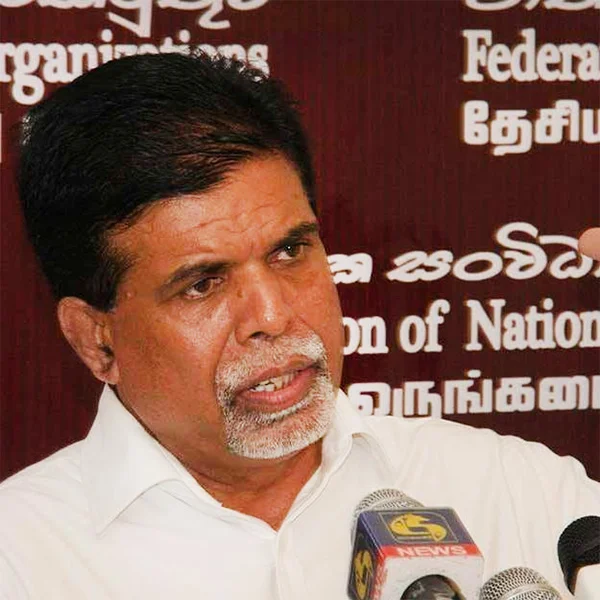
The National Patriotic Front (NPF) has said the NPP government owes the public an explanation regarding the status of negotiations with Russia to secure energy supplies.
NPF General Secretary Dr. Wasantha Bandara said that Sri Lanka was in such a desperate situation, the current dispensation couldn’t, under any circumstances, miss the opportunity to reach consensus with Russia in this regard.
Dr. Bandara was responding to The Island query in the wake of the NPF, in a letter, dated 27 April, warning President Anura Kumara Dissanayake of the catastrophic consequences for the country if it failed to obtain energy supplies on affordable terms.
Alleging that various interested parties, within the government, and the Western diplomatic community, hindered the successful conclusion of an agreement/agreements between Sri Lanka and Russia, Dr. Bandara pointed out that those in authority seemed to have conveniently forgotten that Sri Lanka received two Russian delegations. In late March and early April 2026, Russian Deputy Energy Minister Roman Marshavin and Deputy Foreign Minister Andrey Rudenko, visited Colombo where the focus was on long-term fuel supplies, investment, and tourism.
Dr. Bandara said that Anura Karunatilleke, who succeeded Energy Minister Kumara Jayakody, embroiled in the coal scam, was yet to meet the Russian Ambassador in Colombo Levan Dzhagaryan, who wants to explore ways and means of expediting the process. Instead,
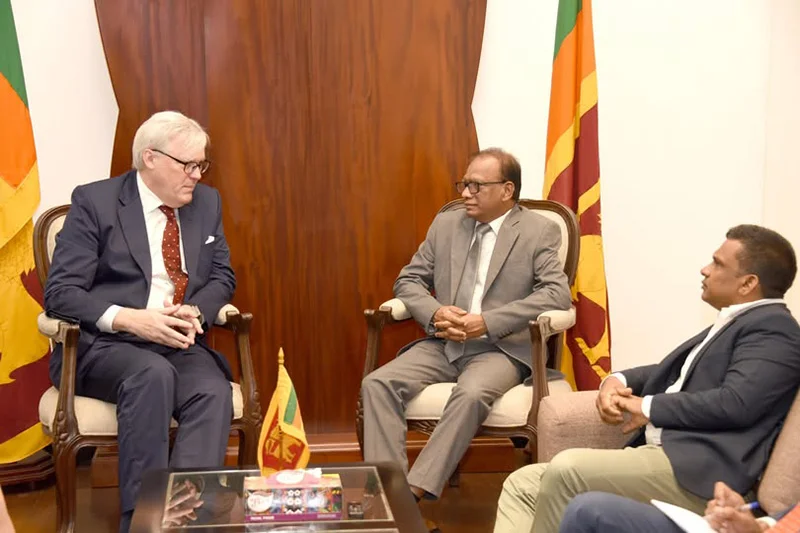
British High Commissioner Andrew Patrick meets Energy Minister
Karunatilleke and Deputy Civil Aviation Minister Janaka Ruwan Kodithuwakku
Karunatilleke and Deputy Civil Aviation Minister Janaka Ruwan Kodithuwakku recently met British High Commissioner Andrew Patrick, Dr Bandara said. Referring to BHC post that they discussed how Sri Lanka could maximise its ports and airports, including through existing and new UK partnerships, alongside UK support for green energy, particularly offshore wind, Dr. Bandara emphasised that the UK and EU struggling to meet their own energy demands couldn’t help Sri Lanka.
In the NPF letter to President Dissanayake, Dr. Bandara alleged that Sri Lanka could secure a barrel of Russian crude for USD 150 to 160 whereas procurement through India cost a lot more. The NPF emphasised the responsibility on the part of the NPP government to maintain close relations with China, Russia and Iran, Sri Lanka’s long-time friends.
The NPF has urged President Dissanayake to intervene without further delay to ensure national interest in this matter is given utmost importance.
Dr. Bandara pointed out that those in charge of coal procurement told a parliamentary committee how the trouble started after Sri Lanka moved from Russian coal to South African products through disgraced Indian firm Trident Chemphar Ltd. Dr. Bandara asserted that political parties, represented in Parliament, should take up this matter vigorously and shouldn’t be distracted by vile NPP strategies.
By Shamindra Ferdinando
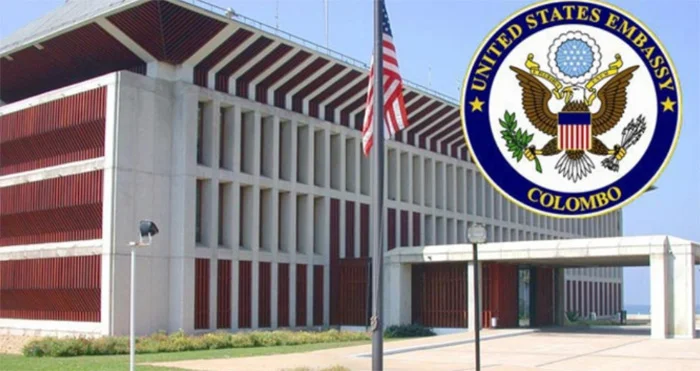
The US Embassy in Sri Lanka, on April 26, celebrated the 15th anniversary of American Corner Jaffna (ACJ), highlighting its longstanding role in connecting communities in Northern Sri Lanka with the United States through programmes focused on education, innovation, and American values. The Embassy also inaugurated the new “Freedom 250 Pavilion,” part of the global Freedom 250 initiative commemorating 250 years of American independence, the Embassy said in a press release issued yesterday (27)
Speaking at the event, US Embassy Public Affairs Officer Menaka Nayyar said: “American Corner Jaffna reflects the United States’ commitment to sharing American values, culture, and ideas with the people of Northern Sri Lanka. On July 4, 2026, the United States will celebrate 250 years of independence—a milestone that highlights our founding ideals and partnerships around the world, including here in Jaffna. Through the new Freedom 250 Pavilion and our programs, we invite the community to engage with the United States and learn more about our history, society, and innovation.”
In 2025 alone, ACJ hosted nearly 400 programmes, reaching more than 10,000 participants. Located at No. 23, Athiyady Road, Nallur, Jaffna, American Corner Jaffna provides free access to resources on the United States, English language learning, educational advising, and skills-based programming.
Established in 2011, in partnership with the Jaffna Social Action Centre, American Corner Jaffna was created as a platform for direct engagement with local communities—offering opportunities to learn about the United States while building skills in critical thinking, leadership, and innovation.
Launched in the post-conflict period, the Corner has played a key role in connecting emerging leaders in Northern Sri Lanka with ideas, resources, and opportunities rooted in American experience and perspectives. The Freedom 250 Pavilion expands ACJ’s capacity to host interactive programmes and community events, reinforcing the Corner’s role as a dynamic space for collaboration, dialogue, and learning.
Individuals can take part in free programmes by visiting American Corner Jaffna in person, contacting the Corner at 021 222 0665 or via email at info@americancornerjaffna.com, and following American Corner Jaffna on Facebook (facebook.com/amcornerjaffna) for the latest updates on events, registration, and membership opportunities.

Food Security is vital to ensuring a Nation’s Sovereignty and National Security – Prime Minister

Showers or thundershowers will occur in the most parts of the island after 1.00 pm

Explanation sought from AKD on ‘Russian energy supplies’

US reiterates its commitment to enhancing relations with Northern Sri Lanka

Rooftop Solar at Crossroads as Sri Lanka Shifts to Distributed Energy Future

Indonesia-SL agreement on Visa Exemption for Diplomatic and Official passports soon

‘Dates have the highest sugar content to fight Coronavirus’

Sunday Island 27 December – Headlines

#SundayIsland 17th December – Headlines

Sunday Island – 28th March

Sunday Island Headlines – 21 March

Sunday Island – 21st February – Headlines
-
 News7 days ago
Whistleblowers ask Treasury Chief to resign over theft of USD 2.5 mn
-

 News7 days ago
No cyber hack: Fintech expert exposes shocking legacy flaws that led to $2.5 million theft
-

 News4 days ago
BIA drug bust: 25 monks including three masterminds arrested
-

 Business5 days ago
Nestlé Lanka Announces Change in Leadership
-

 News2 days ago
Treasury chief’s citizenship details sought from Australia
-

 News4 days ago
Banks alert customers to phishing attacks
-
 News5 days ago
Hackers steal $3.2 Mn from Finance Ministry
-
 Business7 days ago
Dialog Enterprise partners Star Garments: Pioneering 5G innovation in Sri Lanka’s apparel industry