
Features
A beautiful scene for Genesis


She certainly looks gorgeous and she is seen on stage, these days, with the group Genesis, led by Kevin Hingert.
According to Kevin, Indumini Siriwardena is doing her thing, temporarily, with Genesis, until the return of their female vocalist, Karen, who is abroad, at the moment.
Kevin describes Indumini as a singer with a varied repertoire, who also sings in Hindi.
“Her repertoire suits the venues we perform, and she has been with us since January, this year,” he added.
Indumini, I’m told, has been around for some time, and also performs at the Shangri-la Hotel.
Genesis, in the meantime, are back, doing their regular gigs.
Says Kevin: “We are gearing up to move ahead, especially with the Nuwara-Eliya season fast approaching.”



by Dinesha Samararatne
Professor, Dept. of Public & International Law, Faculty of Law of the University of Colombo
and was an independent member of Sri Lanka’s Constitutional Council (Jan. 2023 to Jan. 2026).
Sri Lanka’s political transition in 2024 was widely regarded as restoration of democracy, a reversal of authoritarian rule and an opportunity for constitutional recovery. The 22nd Amendment is the first constitutional amendment since this turning point. It 1) extends the age of retirement of the judges of the superior courts by two years, 2) expands the number of judges in the Court of Appeal by 4, and 3) introduces a cap of 6 years on the term of a Chief Justice. The expansion of the Court of Appeal is meant to facilitate the Court sitting outside of Colombo.
This Amendment is a stress-test on Sri Lanka’s democratic restoration as well as constitutional recovery. This Bill was published in the Gazette along with a proposed amendment to the Judicature Act of 1978, which sought to extend the age of retirement for the lower judiciary and to increase the number of judges of the High Court by 10. The enactment of the Amendment coincides with the completion of two years of this Government. Here, I offer a brief assessment of some of the key policy and constitutional issues involved.
Democratic Transition and Constitutional Recovery
There were many signs of a new lease of political life in Sri Lanka following the presidential election in 2024. Many politicians (of a certain kind) who sensed the change chose to not even contest the parliamentary elections. An Inspector General of Police (whose appointment itself was, at the time, under challenge) was impeached, and the political discourse seems to shift towards more democracy, transparency and accountability. The vigilance of the engaged citizen (as opposed to the mere voter) was evident in the pushback which led to the resignation of a Speaker as well as a Minister.
Some may say that these changes were too little and too late. After all, the Online Safety Act and the Prevention of Terrorism Act remain on our law books and we are still governed by an Executive President. Some others may argue that these are signs of a significant paradigm shift that is underway. Since 2025, the number of investigations, prosecutions and convictions related to bribery and corruption has been unprecedented, the President’s Fund is being accessed by people on the basis of financial need and there seems to be a change in the political culture. Whether these changes may be consolidated, it is too early to tell.
Policy and the 22nd Amendment
The 22nd Amendment to our Constitution suggests that political tactics familiar to the old order of things (to the extent that that order is in our past), are re-emerging. A proposal for a constitutional amendment which is piece-meal (with no convincing explanation for its selectivity), is published in the gazette without public consultation – not even consultations with relevant professional bodies – and is enacted without bi-partisan consensus. A recent example of a similar approach is the expansion of the number of judges in the Supreme Court and Court of Appeal by way of amendments at the Committee Stage of the 20th Amendment in 2020, with no transparency or consultation and with political justification post-Amendment. Many questions arise and remain unanswered. Among the many issues that plague our courts, on what basis were these issues prioritised for reform? As in the past, the process has been opaque and rushed. In turn this has led to polarised debates which carry the risk of compromising the confidence in the Government.
Laws delays, one of the stated concerns that the 22nd Amendment seeks to address, is at crisis levels in Sri Lanka. It is certainly a concern for citizens but it is a concern along with the extremely weak mechanism for legal aid, the lack of accessibility of court procedures and the difficulties we face for instance at a police station. We have a right to know why amidst all these serious and ubiquitous issues, the government prioritised constitutional reform in this selective manner. Constitutional reform must demonstrate a compelling link between the aspirations of the people for democracy, for human dignity and the flourishing of life. If the plight or aspirations of people are weaponised by political forces or elected representatives, we carry the burden of calling that out.
My own view is that a review of the age of retirement of judges is long overdue, but whether and how it ought to apply to sitting judges, carries the real or perceived risk of undermining the independence of the judiciary. Moreover, that is certainly not the only reform that is long overdue. The minimum criteria for the appointment of a judge to our superior courts is governed by convention (sometimes in the breach), not by law. In fact, the law does not lay down any criteria for appointment to our superior courts despite the Court’s assertion in its Determination on the 22nd Amendment bill that judges are appointed on merit, ‘competence and ability to work hard’ (p 87). While procedures and mechanisms are in place for disciplinary measures for the judiciary of lower courts, there is no such mechanism for the superior courts. The rules of the Constitutional Council (a matter that has been disputed in litigation) do not provide guidance on the process to be adopted for approval /disapproval of nominations made by the President to these courts. There is no judicial review of legislation in Sri Lanka. In fact, we are governed under a constitution that provides for the enactment of constitutional amendments or law reform that are inconsistent with the Constitution (with approval at a referendum). These are some aspects that require review and discussion in relation to the further improvement of the judicial branch of the state in Sri Lanka. Many of us consider these reforms not just important but also urgent.
Special Determinations and their Scope
Generally, after a Bill is placed in the Order Paper of Parliament, any citizen may challenge it before the Supreme Court and the Court communicates its determination to the President and to the Speaker within three weeks (Article 121). When a Bill proposes to amend the Constitution, it requires approval by 2/3 absolute majority in Parliament. Therefore, if a Bill is challenged, the Court has to determine whether it also requires approval by the people at a referendum. The approval of the people is required if the Court determines that the Bill or any of its clauses is inconsistent with the entrenched clauses of our Constitution listed in Article 83. There are 10 entrenched clauses in our Constitution including the clause on Buddhism and freedom from torture. These clauses may only be amended with 2/3 in Parliament and approval by the People.
The presentation of the Bill and proceedings before Court is a reminder, yet again, of the sheer inadequacy of the manner in which the Constitution is amended or how we engage in law reform. Within a matter of three weeks, the Supreme Court is required to exercise its ‘pre-enactment’ judicial review. In this case, 65 petitioners rushed to Court to challenge the 22A bill and eight others the amendment to the Judicature Act. The hearings are conducted under severe time-pressure, including, in this instance, without a right of reply for the petitioners to the submissions by the Attorney-General. In the proceedings related to pre-enactment review, I cannot help but notice the irony of the process. At least in theory, the Attorney-General is the guardian of the Constitution and, therefore, is required to act in trust, for the benefit of the People. In these hearings, however, the Attorney-General, by and large, presents and defends the policies of the government. In theory, the government represents the people. The petitioners, too, bring to Court the concerns of the people (to the extent that they are presented by the petitioners) through counsel who often appear pro-bono for them. One possible way out of this dilemma is to consider a possibility for the Attorney-General to participate in these proceedings on the basis of the Constitution and for the government to retain its own counsel to make submissions defending its policies.
Two Constitutional Issues
The Court was faced with two constitutional questions in hearing these petitions. First, whether the petitions required the full court to hear and determine the matter since the Bill involved the retirement age of the sitting judges as well. Second, the Court had to determine whether the proposed amendment had a negative impact on judicial independence, whether judicial independence was an aspect of the entrenched clauses of our Constitution and if both those questions were answered in the affirmative, whether the Bill required approval at a referendum. Previously, the Court has determined that in reviewing a Bill, Court will not inquire into the desirability of the proposed reform but limit itself to determining whether any clauses of a Bill are inconsistent with the entrenched clauses of Constitution and would therefore require approval by the people at a referendum.
Constituting the Bench
In the Supreme Court, benches ordinarily comprise three judges, and the Chief Justice is vested with discretion to constitute larger benches of five or more judges (Article 132). In ‘the opinion of the Chief Justice’ the question involved must be one of ‘general and public importance’. The decision to constitute a larger bench may be the Chief Justice’s decision, or on the request of at least two of the judges hearing the matter or at the request of a petitioner. In the Dissolution case (2018) the Chief Justice himself constituted a Bench of seven judges.
The Chief Justice had constituted a Bench of five judges to hear this matter, of different years of seniority in the Court. Court rejected the request for a full bench on the basis that the Bench did not have a conflict of interest and that a five-judge Bench was the appropriate use of the resources of the Court, particularly in light of the fact that the Court was due to hear petitions regarding another bill at the same time. For the first time, the Court comments on the administrative functions of the Chief Justice, the difficulties in case management under resource constraints and the internal procedures of a bench when dealing with a Special Determination. Ironically, this reminds us that for several months, the vacancies in the Supreme Court and the Court of Appeal have remained while the President and the Government claim that they are committed to addressing laws delays.
Even if the Court had taken the view that there was a conflict of interest, as a matter of necessity, the Court had to make a determination on this Bill. The Court, in its wisdom, determined that a five-judge bench was constitutionally adequate. Yet, it could be argued, that in this context, a full bench or a fuller bench, would have satisfied all concerned that the Court had taken the maximum measures it could, to avoid any perceptions of a conflict of interest. That interest of the Court and of our constitutional system, arguably is constitutionally more important than ensuring efficiency in case-management.
The Bill and Independence of the Judiciary
The independence of the judiciary includes the following dimensions: personal and institutional; negative and positive; the actual and the perceived; and procedural and substantive. These dimensions require a principled assessment as well as a situated or contextual assessment.
‘Independence of the Judiciary’ is explicitly mentioned only twice in our Constitution: in the preamble, as part of our ‘intangible heritage’ which ‘guarantees’ our dignity and well-being and as the sub-heading for chapter XV of the Constitution. The independence of the judiciary, as part of our intangible heritage, has to be understood as a foundational constitutional concept and as a constitutional principle. In its operationalisation, the concept and the principle have to be interpreted and applied in context. This is where the contestations on the 22nd Amendment come alive. None of the entrenched clauses directly refers to the independence of the judiciary. However, in its recent jurisprudence, the Court has held that the independence of the judiciary has to be read into Article 3 of our Constitution, which is entrenched. Article 3 states that ‘sovereignty is in the People and is inalienable’ and further that our sovereignty includes ‘powers of government, fundamental rights and the franchise.’ In this Determination, Court endorses this interpretation.
The Court rightly notes that matters of policy are not reviewable by court except if such policies are vague or manifestly unreasonable. The Court determines that petitioners were wrong to argue that the extension of the age of retirement of the judiciary was an encroachment on the independence of the judiciary. Notably, the Court does not explain the independence of the judiciary as a constitutional concept except to note that the Constitution ‘guarantees that Judges will be able to make decisions free of influence and based only on relevant facts and law.’ (p 74). The Court further notes that while a reduction of the term or a reduction in the salaries of judges would undermine judicial independence, the increase of salaries of judges could hardly be considered as impacting judicial independence.
The Court considered several comparative examples in considering whether or not the extension of the age of retirement has been determined to have undermined the independence of the judiciary elsewhere. However, in each of those examples the broader constitutional context has a material bearing on the conclusions reached. In India, the selection of judges for appointment is through the Collegium System which comprises the judiciary. In the UK, the age of retirement was raised after extensive consultation between July – October 2020. As reported by the UK government, 1004 responses were received from the judiciary, the legal profession and other stakeholders. It is thereafter that the decision was implemented. It is relevant to note here that despite the lack of consultation, the lower judiciary and the Bar went on record opposing this Amendment.
In its wisdom, the Court agreed with the submissions made by the Attorney-General that since the extension of the age of retirement applied to all the judges, it was non-discriminatory and non-discretionary and therefore was ‘not at the whim and fancy of the Executive.’ (p 83) The Court reproduces a Note to the Cabinet (3 July 2026) which sets out the reasons for the Government’s policy decision. Notably, in a sector where no constitutional reforms have been made, except to require approval for appointments by the Constitutional Council, the Note provides no justification for selectively focusing on the age of retirement. The excerpts of the Note reproduced in the Determination make no reference to the other two reforms proposed.
The Social Justice Questions and Constitutionalism
For us, the constitutional questions have to be answered within the broader political context. From the citizen’s perspective, even the increase of the salaries of judges, if implemented under questionable, selective or opaque circumstances, can give rise to questions, concerns and a weakening of public confidence. Facts take colour from their context. This reminds me of another question on which there has been some debate in Sri Lanka, which is, whether Sri Lanka should establish a separate Constitutional Court which will adjudicate on constitutional matters thereby permitting a broader jurisdiction and mandate.
Some others have even described law as a colonial tool that has oppressed most in society. Some have argued that social justice requires that we marginalise or even dispense with commitments to liberal values such as rules of procedure and values of democracy such as diversity of opinion. That Sri Lankans have experienced exploitation, that democracy has been abused for state capture, through its Constitution and law, is true. As much as the law has been a tool for exploitation and abuse, it has also been a tool for liberation and social justice. Victims of human rights violations and abuse of law, often the vulnerable in our society, often have no recourse but the law. They seek it, even if to fail. Justice, too, is heavily contested and should remain so. Its meaning cannot be the monopoly of one social class, a political party or a ruling elite. At the same time, there ought to be commitments we can make as a polity to values, procedures and substantive outcomes that bring liberal commitments to rights and procedure with those of social justice. Furthermore, we must avoid the trap of romanticising ‘the people.’ We, the people, have actively sought and cultivated political patronage and participated in practices that undermine our common good, such as daily acts of violence, racism, patriarchy, corruption, abuse whether at home, at work or in the public domain.
Returning to the question of law, constitutions and justice, we should be vary of a ‘them vs us’ approach, particularly when they are propagated by those with political, cultural or economic power. The Constitution allows the Cabinet to place a bill before the People for their approval through a referendum (Article 120). Perhaps, taking this path, even if it carries a significant financial cost, may have allowed the government to put to rest the opposition to the 22nd Amendment. It is ironic that under a Constitution that declares the people to be sovereign, the only time a bill has been put to the people, was to postpone the exercise of their franchise (4th Amendment to the Constitution 1982).
Illiberal Slippage and/or Democratic Backsliding?
Serious issues of constitutional politics of this nature require that a strong government (which is what we have, with a charismatic leader and 2/3 in Parliament) is matched by a strong Opposition. What we have, instead, for the most part, are some politicians and political parties that have no credibility on matters related to the judiciary, mobilising against the government and claiming to defend the independence of the judiciary. While that tragi-comedy writes itself, we the citizens ought to be concerned about the lack of healthy political competition, an essential feature of a sustainable democracy and the disregard by the government of the reasonable voices within the Opposition.
Illiberal slippage or democratic backsliding has been identified as a risk for regimes that have led a transition to democracy. In a system headed by an Executive President, such a risk is all too real, as we know all too well. Ad hoc, piece-meal constitutional amendments of this nature place us on that path. In this political moment, many truths compete with each other. It is true that Sri Lanka made a distinct transition to democracy. It was made in stages starting from 2022. No single political party or social movement can claim that transition as their own. We cannot deny the organic dynamics of that transition. It is true that this transition has a class dimension to it. For certain, the political elite of the past enjoy diminished political capital and mileage, at least for now. The professional elite, depending on one’s perspective, too, arguably enjoy diminished traction. The ground beneath us is shifting. It is also true that within the limited electoral cycle, limited political capital, and in a context where former authoritarian forces remain electorally relevant, institutional reform is difficult. Situated in this broader context, there is cause for concern about the 22nd Amendment. It has weakened our transition to democracy and placed our constitutional recovery at risk.
(I write as an engaged citizen who studies constitutional law. The views expressed here are my own.)

by R N A de Silva
rnades@gmail.com
“I was good with numbers and liked mathematics, but it changed when letters started to replace numbers”- such sentiments are common expressions that we hear. Perhaps the challenges that the students face in mathematics as a school subject are mainly due to the fear of algebra. For many students the transition into secondary education brings this profound sense of academic dread – algebra. This anxiety is more a structural byproduct of human minds adapt to radical shifts in thinking than a personal failure of the individual student. Many students who have been dealing only with numbers suddenly feel that they are in unfamiliar territory as they have to combine numbers with letters, symbols and rules. Dismantling this fear has to be done by the educators through reshaping how it is introduced and contextualised so that it becomes an accessible gateway of logical reasoning.
Let us look at the reasons for the development of the fear of algebra.
The Challenge of the ‘unknown’
In the first few years of formal schooling, mathematics becomes a tangible experience. They can count with their fingers or tools like counters and beads. They can measure lengths of tables or rooms or divide boxes or fruits into fractions. The operations are predictable and visible. There is stability in numbers as three is always a three. Algebra disrupts this stability. Letters such as x and y are introduced which do not possess fixed values. Suddenly, they are asked to manipulate symbols which they cannot physically see. This demand for abstract thinking can leave students bewildered. When a student enters this stage prematurely or without adequate background, the brain struggles to attach meaning to symbols.
Foundational gaps
As mathematics is uniquely sequential and cumulative, a weak grasp of basic skills may hinder progress in algebra. If a student leaves primary school with a shaky understanding of mathematical operations, it will be a disruption to their ability to follow algebraic steps. Solving an algebraic equation such as 3x – 2 = 10 consists of two levels of cognitive processing. Determining the properties applicable to isolate the variable requires higher order strategic thinking while executing the basic arithmetic operations requires lower order execution. If difficulties arise with lower order execution, they lose track of the broader algebraic strategy. Building confidence starts with consistent practice of foundational skills.
Fear of making mistakes
In general, a problem in algebra may involve a multi-step process unlike in a standard arithmetic problem. This increases the chances of making mistakes thus resulting in an incorrect final answer although the process is correct. Unfortunately, the traditional grading systems often rely heavily on the final result than the logical process. This can lead to an intense fear of failure. Subsequently, this threat of failure may turn into a highly stressful experience.
Now, let us consider strategies to eliminate or minimise the growth of the fear of algebra.
Using concrete examples to clarify abstract ideas
It is essential for teachers to use concrete examples to bridge the gap between simple mathematics and symbolic reasoning, rather than forcing students to jump to abstractness unassisted. A few examples are given below.
Solving an equation such as 3x + 10 = 100 can be introduced in the form of a story. ‘I went to a shop and gave the shopkeeper Rs 100 asking for three candies. He gave me three candies and also Rs 10 as balance. What is the price that I have paid for a candy?’ The gradual introduction of a variable will be made easier with such narratives.
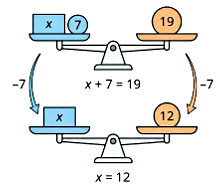
Figure 1
Equations can also be framed as games of balancing on a scale to understand what you do to one side of the scale need to be done on the other side too to maintain balance. (See figure 1)
Factorisation is an area that many students struggle with. The need for a quadratic expression to be converted to a product can be shown through tiles that need to be fully covered in a rectangular area. Factors of X^2 + 5x + 6 can be manipulated with tiles as shown below to obtain the answer as (x + 3)(x + 2). (See figure 2)
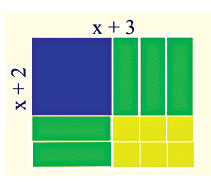
Figure 2
With such demonstration, symbols lose their mystical quality.
Embrace mistakes as stepping stones
Errors should be treated as valuable diagnostic data by the teachers where the students are able to dissect where a problem went wrong. Creating a supportive learning environment that normalises mistakes as learning opportunities helps reduce anxiety and encourages persistence.
Assessment should also be done to reward logical reasoning and correct algebraic procedures without giving too much weight to minor arithmetical errors. Formative assessments need to be conducted regularly as algebra is introduced, before the students become overwhelmed by the complexities of cumulative assessments.
Connect with real life applications
Many students fail to see how algebra connects to everyday life, making it harder for them to stay motivated. Wherever possible, teachers can demonstrate practical uses of algebra such as tracking expenses to find the balance remaining after expenditure, estimating travel time or fuel consumption, use of recipes dealing with proportion, tiling the floor of a room and finding measurements for a scaled model of a building. Showing how algebra helps in designing games or solving real-world problems enhances interest and comprehension.
Algebra may feel intimidating at first, but it is an opportunity for students to sharpen their reasoning, resilience and problem-solving skills. When the anxiety is eliminated, algebra reveals itself as an extremely useful and elegant toolkit for problem solving. Using appropriate teaching methods algebra can be transformed from an intimidating barrier into a powerful bridge to intellectual exercise. “An ounce of algebra is worth a ton of verbal argument.” said John Haldane.
(The writer is a senior mathematics examiner of the International Baccalaureate Organisation)
By Ifham Nizam
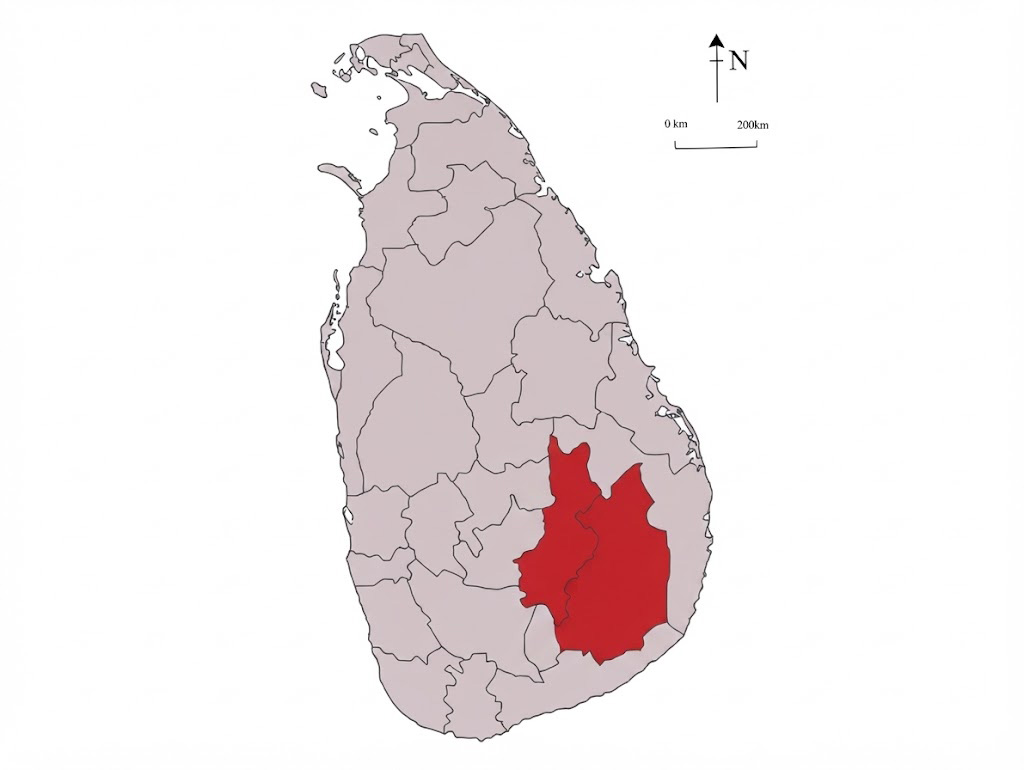
Two forest areas in the Badulla District — Mahiyanganaya Moopalana, covering 29.79 hectares, and Mahiyanganaya Heerussagala, covering 168.09 hectares — have been officially gazetted as forest reserves, bringing a combined 197.88 hectares of ecologically important land under formal protection.
The two forests, located in the Riddimaliyadda Divisional Secretariat Division within the Mahiyanganaya forest range, are dry-monsoon forests that provide habitats for a variety of native plant and animal species.
The declarations form part of the Government’s Vanaspathi forest conservation programme, under which 20 forests, covering a total of 9,538.68 hectares, across six districts, were granted protected status. The latest additions have taken the forest area, protected under the programme, to nearly 65,000 hectares, according to reports.
Environment Minister Dr. Dammika Patabendi and Deputy Minister Anton Jayakody were associated with the conservation programme.
Commenting on the significance of the declarations, Dr. Patabendi said the reserves are intended to deliver long-term environmental, ecological and social benefits.
“Through the declaration of these reserves, we aim to protect Sri Lanka’s biodiversity, safeguard water sources and watershed areas, create opportunities for eco-tourism, and preserve areas of archaeological importance found within these forests,” the Minister said.
Moopalana Forest
The 29.79-hectare Moopalana Forest is a dry-monsoon forest containing a range of natural resources and providing habitat for native species.
The forest is also linked to the livelihoods of surrounding rural communities. Local people obtain forest-based products such as rattan, veniwel and kitul, making the area significant, not only for biodiversity conservation, but also for traditional livelihood activities.
Several small waterways that become active during the rainy season are also found within the forest.
Heerussagala Forest
The larger 168.09-hectare Heerussagala Forest is likewise a dry-monsoon forest with important ecological resources and habitats for native flora and fauna.
The forest also has a direct connection with the local water system, with Nagadeepa Wewa being fed by the forest area.
Adding to its significance is the nearby Nagadeepa Temple, an area associated with archaeological value.
The protection of the forest, therefore, encompasses ecological, water-resource and cultural considerations.
The Ministry of Environment states that its broader approach to environmental management is based on sustainable natural-resource management, with government agencies, communities and other stakeholders participating in conservation efforts.
The gazetting of Moopalana and Heerussagala consequently places nearly 200 hectares of Badulla’s dry-monsoon forest under formal protection, strengthening the legal framework for conserving their biodiversity, water resources and associated cultural values.
The two forests are among 20 forest areas officially declared reserves in the latest phase of the Vanaspathi programme, which covers forests in Badulla, Anuradhapura, Ampara, Kegalle, Nuwara Eliya and Vavuniya.
For the communities surrounding these forests, their protection also represents the preservation of natural resources that support local livelihoods and water systems — while ensuring that these forest ecosystems remain part of Sri Lanka’s natural heritage for future generations, says Environment Ministry Consultant Dr. Ravindra Kariyawasam.

Mexico’s Pacific coast braces for Hurricane Polo

Washout against Afghanistan sends India into semi-finals

‘Still a lockdown’: Deadly floods hit Nepal tourism as peak season begins

Tharanga wins highly anticipated Asian Games gold

Tharanga on cusp of Asian Games Gold

Rain threat looms over lopsided India vs Afghanistan quarter-final

‘Dates have the highest sugar content to fight Coronavirus’

Sunday Island 27 December – Headlines

#SundayIsland 17th December – Headlines

Sunday Island – 28th March

Sunday Island Headlines – 21 March

Sunday Island – 21st February – Headlines
-

 News6 days ago
Mastermind Naufer Moulavi among 15 found guilty
-

 Midweek Review6 days ago
Thileepan’s fast unto death: An authentic narrative that many missed
-

 News7 days ago
Protest against setting up of cement factory in highly populated area near BIA
-

 Editorial7 days ago
Trouble beginning in earnest
-

 Latest News5 days ago
Showers above 100 mm are likely at some places in the Western, Sabaragamuwa, Central and North-western provinces and in Galle and Matara Districts
-
Editorial6 days ago
Big Bad Bills
-

 News7 days ago
Police may seek clarification from US
-
 News7 days ago
Govt. confident of 2/3 majority despite NPP split speculation