
Sports
A battle of flare and resilience

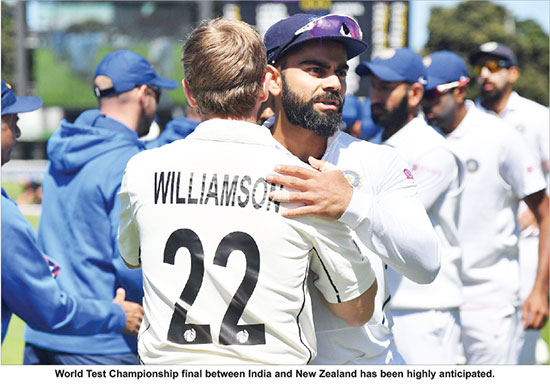
by Aravinthan Arunthavanathan
It was a glorious summer evening down under in 2014 December. The Australians breathed a sigh of relief, while the Indian counterparts were left gasping for breath. The stand in skipper had committed the unthinkable. Pulling a long hop straight into the hands of deep midwicket, in the fourth innings of a high-profile Test. That shot could have cost the leadership and may be even the place of the player concerned in the past, but in this case it did not. In fact, it turned out to be a moment which defined the brand of cricket India pledged to play under the leadership of Virat Kohli.
As Kohli walked off the ground distraught, he had lost the battle, but India under Kohli were preparing to win the war. Under Kohli they would not settle for anything less than a victory. The prince waiting in the wings to take over from M.S. Dhoni had walked the talk that day.
Since the turn of 2015, India became an embodiment of excellence driven by aggression. It is no surprise they topped the tables at the end of the World Test Championship cycle. They are an invincible force in their backyard which alone would have guaranteed this place at the start of the cycle. Having seen the way they came back from behind to win the Test series down under in 2020/21, which in fact was rated by ICC as the best Test series ever to have taken place, no one would doubt whether they deserve to be in the finals.
India’s opponents on the contrary are a personification of calmness and values of highest order. If there was a niceness index for overall demeanor, the scale will fail to measure the true value of the Kiwis. But despite being warm in nature, when considering the desire to win they are second to none. Kane Williamson has taken Brendon McCullum’s philosophy forward in his own way.
This was visible in the first Test against England in the recently concluded series. A proactive declaration on the final day with the aim of forcing a result demonstrated what New Zealand cricket is all about. The path of New Zealand to the summit is not as comprehensive as their counterpart’s journey. The highlight is undoubtedly the 2-0 win over India. The series however was closer than what the results suggest.
Mastery of home conditions leading to comprehensive wins against visitors during this period formed the foundation in Kiwis reaching the summit. Two deserved teams with an insatiable desire to win promises, a tantalizing duel in Southampton starting Friday provided a dreaded bubble breach or the English weather do not make an unwelcome entry.
On paper, India should be the favorites on the back of an impressive season, dominated by a great win down under. However, a little bit of reflection will reveal the intricate complexities that can influence the result of this contest.
Both teams are not short of arsenal at their disposal. They are faced with the problem of plenty, especially in the bowling department. The conditions in Southampton will probably provide a perfect balance between bat and ball. With the track routinely having pace and bounce to begin with followed by some degree of wear and tear towards the end combined with fluctuating overhead conditions Southampton promises to be an ideal setting for a high-profile balanced encounter. The swinging ball together with seam has been India’s nemesis. Despite conquering the pace and bounce, India have been exposed in the past when the ball has swung.
The debacle in New Zealand at the start of 2020 is a prime example. How much they have progressed since then is yet to be seen. However at least for the balance of odds India’s coveted line-up is not as strong in England as it is elsewhere.
The Kiwis led by Trent Boult and Tim Southee are masters of swing and seam. Backed by Kylie Jamison and Colin De Grandhomme the Kiwi line-up is well equipped to exploit this weakness in the Indian line up. This duel will be a significant factor in the outcome of this contest.
The Kiwis will be faced with the tough choice of choosing a spinner over most probably Neil Wagner or playing an all-out seam attack. Given the history of the venue and the magnitude of the game, the Kiwis may opt to leave out Wagner and select Ajaz Patel adding the spinning dimension to the attack.
The Kiwi batting line-up in contrast is not the most attractive or celebrated. But there is no doubt regarding their effectiveness. It is a line-up which thrives on resilience than flare. Tom Latham at the top has been consistent across conditions and has been a standout opener in recent times. Kane Williamson and Ross Taylor have struggled in English conditions. With Taylor having an overt deficiency against the incoming delivery, and Williamson not having a good record in England, the Indian seamers would be fancying their chances against the Kiwi batting unit.
The presence of three left-handers in the top order is sure make Ravi Ashwin a trump card. India will not even consider the option of leaving Ashwin out. An inexplicable practice employed in the past to play an additional seamer.
India would look to play Jasprit Bumrah and Ishant Sharma as their lead bowlers. The third seamer’s place will be a toss-up between Mohammed Shami and Mohammed Siraj. While Shami’s experience is invaluable, Siraj has forced into contention with a rapid ascent in stature on the tour down under. Either choice would not have a significant impact as both are extremely efficient.
The threat of Ravindra Jadeja and Ashwin would be a massive threat for the Kiwis. The duo is sure to add value by lengthening the Indian batting line-up too. It is too close to call who has the advantage. The Indian greatness in batting can disintegrate in the face of skillful swing bowling by the Kiwis.
Trent Boult versus Kohli and Rohit Sharma will be riveting duels. Both batsmen would be eager to make amends for their failures in the World Cup semi-final against the same opposition at Old Trafford.
How India’s newest sensations Shubman Gill and Rishabh Pant face their baptism of fire beside the rock solid shielding of Ajinkya Rahane and Cheteshwar Pujara, promises enthralling entertainment. The resilient Kiwi batting can find the high-quality Indian attack too difficult to handle. Ross Taylor overcoming his technical glitch and leading the Kiwis to a world title, first in more than two decades would be a fairy tale ending to one of New Zealand’s modern greats.
Kane Williamson would be more than eager to set his record straight in England and there can not be a better platform than a World Test Championship final. It could go either way. There is absolutely nothing to distinctly differentiate both the teams. Only time would reveal who emerges victorious. India since their 2011 triumph, have experienced a trophy drought despite showing remarkable dominance across formats. The desire for an ICC trophy is on the verge turning into despair.
Kiwis deserve to win at least for the criminal injustice they encountered in the 2019 World Cup final. However, the cricketing world would know the impact of an Indian win in a newly introduced tournament. One need not look beyond the 2007 World T20 see the commercial upside, such a prospect holds. Irrespective of who holds the title at the end of the game, the common fan could be assured that it has all the ingredients to be a battle for the ages.
(The writer’s blog can be found at “Cricketing perspectives” on facebook)








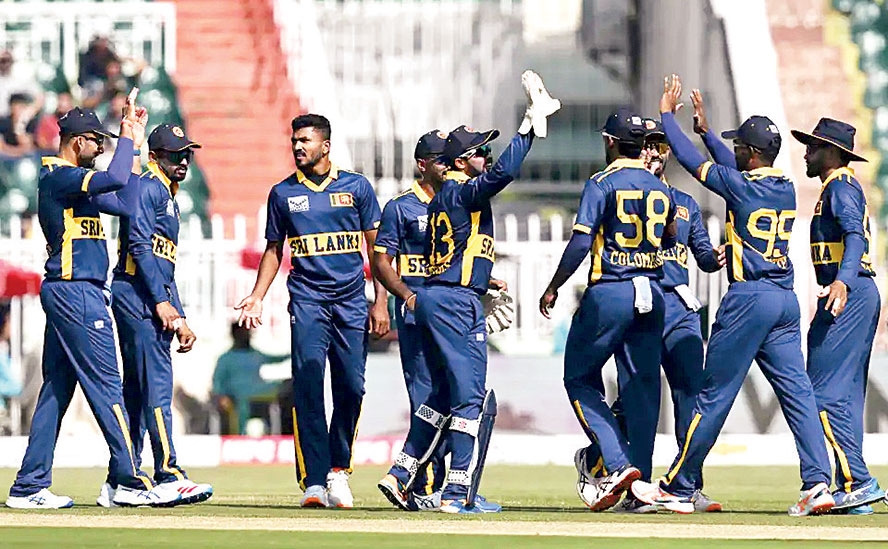
Eshan Malinga returned career best figures of four for 46, but his impressive spell could not prevent Pakistan from breaching the 300 run mark in the curtain-raiser of the ODI tri-nation series in Rawalpindi on Sunday.
Pakistan were bowled out for 305, with former captain Salman Ali Agha leading the charge with his fourth ODI hundred.
Agha struck a fluent 107 off 90 deliveries, peppering the boundary with ten fours and a six before falling to Asitha Fernando. The Sri Lankan seamer was equally impressive, returning tidy figures of three for 39.
Agha featured in a 97 run partnership with Hasan Nawaz and at 215 for four with 13 overs remaining, Pakistan appeared poised for a formidable total. However, Sri Lanka’s bowlers clawed their way back into the contest, applying the brakes just when the hosts threatened to run away with the game.
On a surface tailor made for batting, Sri Lanka’s late fightback could prove crucial, with the visitors fancying their chances of chasing down the target.
Left-arm seamer Dilshan Madushanka finished with two for 67, although his figures flattered him somewhat. He was guilty of straying onto the pads far too often, offering the Pakistan batters several scoring opportunities.
Sri Lanka went into the contest with just four specialist bowlers, leaving the part timers to shoulder a fair share of the workload. To their credit, the makeshift attack rose to the occasion, sharing ten overs between three bowlers without allowing Pakistan to completely dictate terms.
Dasun Shanaka did the lion’s share of the work, sending down seven overs, while Sahan Arachchige and Kamindu Mendis chipped in with the remaining three.
Sri Lanka also welcomed back top order batter Avishka Fernando, who returned to the ODI fold after spending several years on the sidelines.
England are the third team in the tri-nation competition, which serves as valuable preparation for next year’s World Cup.
The opening three matches will be played in Rawalpindi before the tournament shifts to Lahore for the remaining fixtures, including the final.
Sri Lanka are in the midst of a marathon 50 day tour of Pakistan. Having already completed a three-match T20I series, they will turn their attention to the tri-nation tournament before playing a First Class warm-up fixture followed by two Tests.
19 Division I – Tier ‘A’ Cricket
by Reemus Fernando
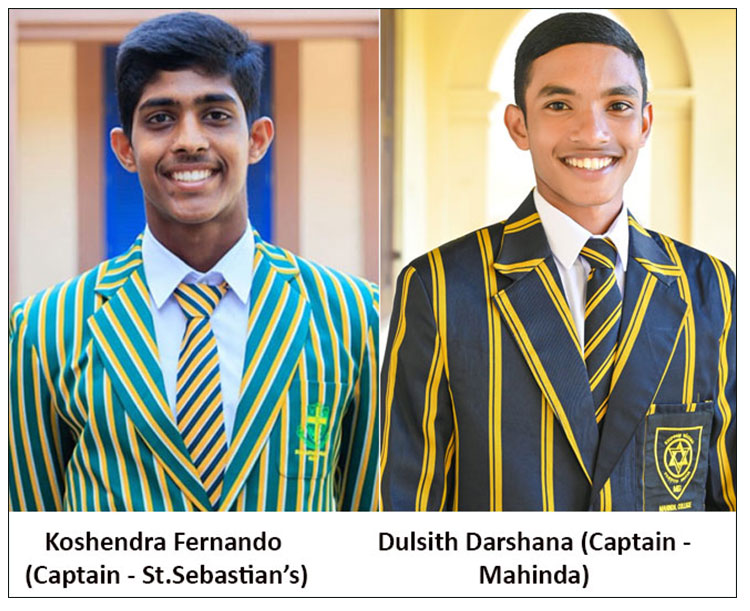
The top eight teams begin their battle for the Under 19 Division I Tier ‘A’ limited-overs title today, when Mahinda College, Galle, take on St. Sebastian’s College, Moratuwa, in the first quarter-final at Dombagoda.
Led by Dulsith Dharshana, Mahinda qualified for the knockout stage with wins over St. Anthony’s College, Katugastota (by five wickets), Royal College, Colombo (by six wickets) and Lumbini (by ten wickets). Their only defeat came against St. Peter’s College, Bambalapitiya, the only side to top 200 against them. In their other matches, Mahinda’s bowlers kept opponents to low totals.
That bowling unit, spearheaded by left-arm paceman Sadew Nethmina, appears to have peaked ahead of the crucial clash. They bundled Lumbini out for 40 in their last match, with Nethmina and Vishmitha Sathsara sharing nine wickets between them.
St. Sebastian’s reached the knockout stage on the back of wins over Maris Stella College, Negombo, and D. S. Senanayake College, Colombo. Their match against Sri Sumangala College, Panadura, ended without a result because of rain, while they lost by two wickets to Richmond, the eventual group champions.
St. Sebastian’s boast a strong batting line-up, with Hirusha Perera, Navinu Fernando, Lashen Fernando, Thivanka Fernando and Meshone Ferdinando all making notable contributions in the group stage. Skipper Koshendra Fernando is expected to lead the bowling attack with his spin, supported by Adeesha Lakshan, Lashen Fernando and Risinu Prabesh.
Teams
Mahinda (from):
Dulsith Darshana (Captain), Sadew Nethmina (Vice Captain), Randula Mabarana, Manitha Rajapaksha, Sehas Ashinsa, Kaveesha Githmal, Thiyon Helika, Kavindu Nimsata, Gesandu Bisas, Vishmitha Sathsara, Buddhima Tharupathi, Naviru Nishitha, Nihindu Sesitha, Anuga Palliyaguru, Senuja Vehan, Kevin Geemitha, Bakshara Jayarathne.
Officials: Denuwan Rajakaruna (Head Coach), Sandaru Nethmina (Asst. Coach), Y. Nishantha Kumara (Master in Charge)
St. Sebastian’s (from): Koshendra Fernando (Captain), Meshone Ferdinando, Nisila Dimath, Navinu Fernando, Hirusha Lochana, Lashen Fernando, Thejan Bandara, Chamath Wellalage, Risinu Prabesh, Sanoj Perera, Deneth Keshara, Adeesha Lakshan, Dilena Fernando, Thiwanka Fernando, Shenas Hashein, Pathiv Vehan, Dineepa Wickramsooriya.
Officials:
Lahiru Kanishka (Head coach), Nishantha Fernando (Asst. Coach), Sandaru Tharusha Perera (Master in Charge)
The other three quarter finals will be played on Tuesday as per the below schedule.
Mahanama Colombo V St. Joseph’s Darley Road at Mattegoda
Nalanda Colombo V St. Anthony’s Katugastota at Campbell Place
Richmond Galle V Wesley Colombo at Weeraketiya
Several big names fell at the first hurdle, including last year’s finalists Royal College, Colombo, as well as S. Thomas’ College, Mount Lavinia, Trinity College, Kandy, and St. Peter’s College, Bambalapitiya. Royal and St. Peter’s were in the same group and finished behind Mahinda and St. Anthony’s. S. Thomas’ were in Group ‘A’, where Mahanama and Wesley edged out the rest to book their places.

by Reemus Fernando
Asian Junior Championship medallist Mihinsa Dewmini Abeyratne broke a ten-year-old meet record to win the Under 20 high jump at the All Island Schools Games Athletics Championship at Diyagama on Sunday.
The President’s College, Embilipitiya, athlete cleared 1.75 metres, equalling her personal best, to erase the record of Poornima Gunarathne of Leeds International, Panadura. Gunarathne’s mark of 1.74 metres had stood since 2016.
Trained by retired sports officer Gamini Dias, Mihinsa was expected to achieve something special this season after setting a personal best of 1.75 metres at the same venue earlier this year. She followed that with a bronze medal at the Asian Junior Championship in Hong Kong.
Hers was one of six meet records to fall by the time this report was filed on day three of the meet.
In the girls’ category, Lyceum International School, Wattala, and Ave Maria Convent, Negombo, set new marks in relay events. In a closely contested Under 14 4×100 metres final, Lyceum clocked 51.35 seconds to erase Musaeus College’s 2019 record. Ladies’ College, who finished second in 51.52, also bettered the previous mark.
Ave Maria Convent edged Nimala Maria Balika in another tight finish to win the Under 16 girls’ 4×100 metres in a new meet record of 49.49 seconds. Nimala Maria Balika also bettered the old record.
In the boys’ category, Sadeesh Denuwan of Halmillaketiya MV stole the limelight with a new meet record of 11.22 seconds in the Under 14 80 metres hurdles. Maneesha Samarasinghe of Lyceum International, Wattala, set a new record of 13.09 seconds in the Under 16 100 metres hurdles.
Lyceum International, Wattala, also set a new meet record of 3:13.76 in the Under 20 4×400 metres relay.

Showers or thundershowers will occur in most parts of the island after 1.00 p.m

CTU: Teacher shortage casts doubt on govt.’s education reforms

Norochcholai to remain offline for several days after blackout

President links businessman held with arms to politicians

CID probe sought into tusker’s death amid fears of elephant-killing syndicate

Bill to allow remote witness testimony in courts

‘Dates have the highest sugar content to fight Coronavirus’

Sunday Island 27 December – Headlines

#SundayIsland 17th December – Headlines

Sunday Island – 28th March

Sunday Island Headlines – 21 March

Sunday Island – 21st February – Headlines
-

 Latest News6 days ago
Nissanka’s return headlines Sri Lanka’s Test squad against Pakistan
-

 News6 days ago
Sri Lanka, India caught in US-Iran ship crisis
-

 Latest News6 days ago
Imran Khan’s PTI braces to fight federal takeover of Khyber Pakhtunkhwa
-

 Latest News6 days ago
Missiles intercepted near Riyadh after Saudi coalition hits Yemen fuel depot
-

 News3 days ago
Asgiri Mahanayake calls for immediate release of Gnanasara Thera
-

 Features2 days ago
Kotahena:A Small Enclave, An Extraordinary Legacy
-
 Latest News6 days ago
Kusal Mendis’ unbeaten 87 hands Sri Lanka consolation win
-
 News7 days ago
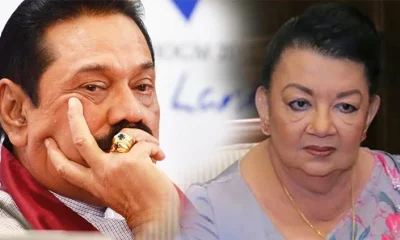
Mahinda and Shiranthi hospitalised