
Features
Ranil’s prospects at the next election

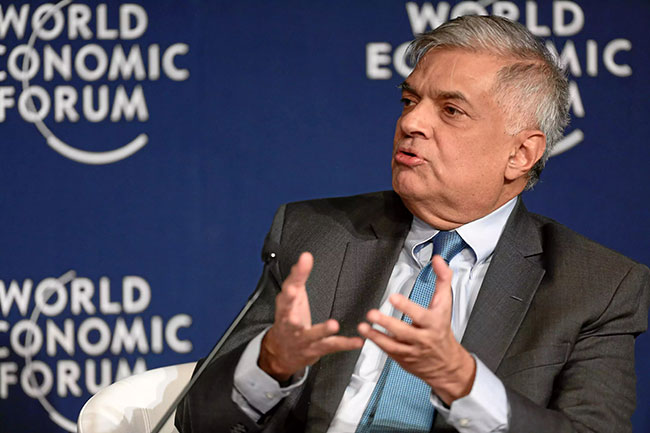
by Kumar David
The two parties whose electoral prospects (Local Govt or Provincial) regarding which there is much curiosity are President Ranil Wickremesinghe’s (RW) UNP and the NPP/JVP. At this time, it does not seem likely that Sajith Premadasa’s SJB will encounter any spectacular change (maybe in the plus 10% to minus 20% range) and anything smeared with Rajapaksa faeces will be erased. Funnies like the Vasudeva-Gamanpilla and Tissa Vitarana cartoon strips are unlikely to make an impression unless they get into bed with some entity with possibilities. This leaves RW’s UNP and NPP/JVP as the targets of current curiosity. I have devoted about three or four of my articles to the NPP/JVP in recent weeks, so it is omitted except peripherally in today’s column, giving space to focus on RW. The infighting in Tamil politics and the street-fighing in the Muslim al-Haj populated fudge parties will of course go on, but both have only marginal influence on who forms the next government.
I insisted throughout last year that whoever sorted out the long petrol queues would enjoy the political equivalent of the Christian “Life Everlasting”. Today one can hail a three-wheeler or taxi on the streets and the petrol queues are mostly gone for a combination of reasons. Hence RW as the incumbent president will, even if grudgingly, enjoy some credit.
The economy will be the big factor deciding RW’s fate in the coming months . Let me jot down what the main trends look like at this time of writing. There are five points and most of these factors seem to denote a bit of an upturn for RW.
The bourgeoisie and the upper-middle classes are of the view that RW is a better bet than Sajith or the pro-Rajapaksa horse dung – or so I reckon.
13A, RW’s consistency, the Tamil vote outside the N-E, and conversely rabid monks who are on the war path are the factors to bear in mind.
Whether the NPP/JVP has the guts to stand against Sinhala-Buddhist extremism will be a big concern as I will explain.
Somebody is gaming the economy; certainly, India if we take note of what the visiting Indian External Affairs Minister said on his visit about three weeks ago.
The IMF certainly, and China possibly, want to stabilise Sri Lanka. All their humming and hawing notwithstanding eventually they will.
Let me elaborate point by point. Though I have lost many a bottle of Scotch taking election bets I am inclined to risk it again. There is little animation about Sajith in the minds of the better-off classes. At this moment therefore for these classes it is a two-horse race between the desired RW/UNP and the feared NPP/JVP. A factor that could change this is a showdown over 13A. The Mahanayakes have announced that they intend to mobilise the forces of Sinhala-Buddhism; red-necked reactionaries clad in saffron robes tried their luck with a march on Colombo last week. Ranil gives the impression that he is going to stick with 13A and India obviously will back it to the hilt. Malai Naatu Thamilar (Up country Tamils) will make their own decisions on the issue in time. Opinion in the West is that the time has come to scuttle extremism in Sri Lanka. The balance of forces to end racism is favourable and a stand along the lines adopted by Harini Amarasuriya can settle the score. She told the Island: “It is already in the Constitution and it should be implemented . . . we have a debate whether it is a tenable solution for the national problem (Why the vacillation?). We have no faith in other parties, only the NPP can do this”. Agreed.
I will now turn to the last two points which could be decisive – the course of the economy over the next say 24 months. India wants investment opportunities and the Trinco oil farm and is favourably inclined to stabilising SL. It also seems that the IMF and Western Powers have made up their minds to give Sri Lanka a break; that is an opportunity to come out of the quagmire without imposing horrendous costs. This has global implications. I have argued for some time in this column that the West, India and possibly China are not willing to let Sri Lankan economy collapse and more important let the country flop into anarchy. Why? As one of the few surviving post-colonial democracies this is absolutely impermissible. Giant India is another story. Malaysia and South Korea are off-again on-again democracies.
This however has multifaceted implications for this country because stabilising the Sri Lankan economy over the next say 18-24 months will, in the first instance, be favourable for the Ranil Wickremesinghe Presidency. The downside of this is that RW has an anti-democratic past; it is not without reason that he is known as Batalanda Ranil. He sent his military goons to crush Aragalaya activists who were asleep. I am aware of the cock-eyed demands of some Aragalaya activists such as the Frontline Socialists who demand that their programmes be accepted by the government even if they fail to win a single seat in Parliament! What planet do such loonies come from? But you do not send out your gorilla troops to batter and bash young people who are fast asleep!! And the Internet is replete with images of the lechery of Ranil’s breast-squeezing cops. No, Ranil’s way of doing things is bad for democracy.
Rape in times of war is now been classified as a war-crime – good! Those convicted of serious war-crimes at the Nuremburg and Tokyo War-Crimes Tribunals at the end of WW2 were executed. It is a pity that due to prissy modern hang-ups these days, criminals guilty of extreme offences such as murder, torture and rape no longer face capital punishment. This mollycoddling of war criminals must cease.
Economic equations
A group, styling itself the “Ad Hoc-Group of Sri Lanka Bondholders” wrote last week to the IMF Managing Director and said that it “stands ready to design and implement restructuring terms to help SL restore debt sustainability and regain access to international capital markets. It promised engagement with SL’s official creditors towards a solution of the current crisis and restoration of debt sustainability”. The Paris Club (Japan, France, Korea, Germany, US, Spain, Netherlands, Russia, Sweden, Austria, Canada, Denmark, UK, Belgium and Australia) has also expressed its support for strengthening the Sri Lankan economy. Such initiatives may strengthen the hand of the government. RW will profit politically from the gains in macro-economic stability that these measures will lead to.
My expectation if much of this materialises is that the rupee will improve in the next period (is 250 to the dollar completely unimaginable?) and limits on capital controls will be eased to encourage FDI and capital flows into the share market. Well-to-do Sri Lankans with now blocked accounts will be glad to buy and sell dollars and this will be reflected in rising house prices, upper and upper-middle class people dining out more frequently, more tourist arrivals and investments in tourism. RW will gain politically among the aforesaid social classes and their retainers and associated factotums. This is not unusual in any country where capitalism makes gains; examples are a dime a dozen in Asia and Latin America. This is not an absolutely certain outcome but cannot be ignored. I am prepared to eat my words with a cup of the finest up-country tea at the Galle Face Hotel lounge if I am proved wrong.
This throws a heavy onus on the NPP. The NPP/JVP alone can counter-mobilise on the streets and on the villages, on the campuses and the trade unions to use the economic opportunities that may become available from international agencies, IMF injections, debt restructuring and improved import-export trade. An improvement in economic conditions need not be exploited for the benefit of the capitalist classes – other outcomes are possible. To redirect benefits towards the people the NPP must accept a programme and philosophy of social-democracy and must summon a Party Conferences at which it will table, debate and adopt its alternative Party Programme. The JVP must be told to forget its bankrupt past and follow suit. What other options does the JVP have?
In my column last week (February 12, 2023), speaking from a left perspective, I demanded an NPP Party Conference. I now repeat this demand in the broader public interest as well. It cannot be ducked.


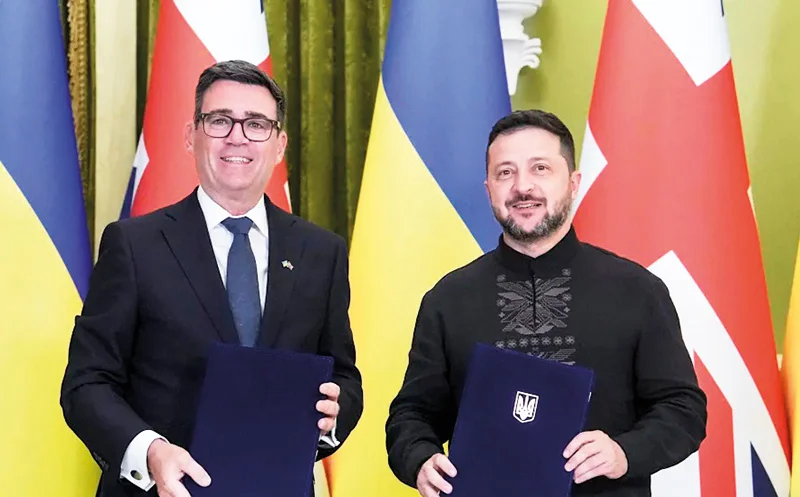
 The present offer by the UK to strengthen Ukraine’s defense capabilities in the missile technology field in particular comes as ‘a stitch in time’ and the initiative is also likely to be appreciated considerably by democratic opinion world wide for the possible morale-boosting effect it would have on Ukraine. Besides continuous arms support, the conviction that the world’s frontline democracies are behind it would prove a huge plus in Ukraine’s eyes in its grinding fightback against the Russian invasion.
While continued US support for Ukraine could not be considered ‘a given’ any more, British Prime Minister Andy Burnham’s words during a recent visit to Kyiv that the UK would stand by Ukraine ‘for as long as it takes’ is the kind of assurance that Ukraine needs at present. For, the conflict in Ukraine is essentially a war of liberation conducted by the latter against an invader and deeply at issue here is the upholding of International Law and its foundational concepts, such as national sovereignty and a nation’s right to political self-determination. The world of democracy is of the firm view that the latter ideals cannot be compromised, come what may.
The UK has its work cut out in this connection. It would find it difficult to convince the Trump administration that it should staunchly stand by Ukraine but it could campaign vigorously with the rest of the West and the EU fold in particular to unflaggingly support the embattled and over-run country.
Ukraine has shown an impressive adeptness in using drone technology in particular against her enemy and has even manufactured her own hardware in this respect but using the relevant blueprints handed over by the UK for the manufacture of more sophisticated cruise missiles, for instance, may prove financially difficult, going forward. It is left to be seen whether the UK and the rest of the West who are with Ukraine will continue to be with her, considering their own rising financial constraints.
The latter impediments could only multiply in the future. Oil, gas and energy prices are on the rise and the latter costs are glaringly reflected in kitchens and meal tables the world over. As we go along consumer discontent would steadily intensify and governments, East and West, would need to figure out with considerable rigour and foresight how such disaffection could be ably managed. Failing which, in most democratic societies, the chances are that publics would be out on the streets demanding that their grievances be redressed forthwith.
These rising concerns are reflected in a recent move by some EU governments to consider imposing what is described as ‘a windfall tax’ on the profits specified major oil companies operating within their shores have made in the wake of the US-Israel war on Iran. The rationale apparently is to use such tax earnings to cushion the rising cost of living of their publics and bolster the respective countries’ social expenditure.
In a recent letter to the president of the EU Council the EU governments referred to said, among other things, while drawing attention to the ‘discontent that is growing over the rising cost of living’: ‘A common approach’ is needed that ‘ensures those who profit from the crisis contribute their share to reducing the burden on the general population.’ Meanwhile, Oxfam with reference to the above development is on record as calling for a ‘permanent windfall tax of at least 50% on profits exceeding a 10% return on investment.’
Such are the rising economic pressures on the majority of Western governments. The question to be posed is how consistent they would be in their assistance to Ukraine if they decide consensually to stand by her. The soaring cost of living in the West compels the conclusion that there could be no guarantee that Western assistance to Ukraine, particularly in the defense and security fields, would be of a longstanding kind.
Of particular concern would be the fact that the weapons systems on offer from the UK to Ukraine could be increasingly costly to manufacture going forward. Besides they would need to be manufactured and put into action without delay.
However, these considerations should in no way deflect Ukraine’s supporters from the principled policy stance of defending her to the extent possible. Because at issue is the defense of International Law and the democratic system of government from their enemies; fascism and authoritarian rule.
While during World Wars 1 and 2 the US was with the major democracies of the West, this time around with regard to Ukraine, the US has chosen to be at cross-purposes with them. For instance, in relation to tariff matters and defense expenditure, in the NATO context, the US is pursuing a hard line which puts it at polar opposites with the West. Thus it is no longer possible to talk unreservedly of a ‘Western democratic alliance’. Put plainly, the cause of democratic development has been weakened.
A measure of relief for the supporters of Ukraine in the West could come by way of the upcoming mid-term polls in the US. If the Democratic Party fares well in them the pressure would be on the Trump administration to defer to opposition opinion at home, accommodate the best interests of Ukraine in its West European policy and perhaps even work towards a diplomatic solution to the Ukraine crisis in cooperation with Russia. Accordingly, the Democratic Party would need to put the Trump administration on the defensive, so to speak.
Until such time Ukraine’s Western supporters have no choice but to remain committed to it, ensure its steadfast defense against the invasion and work judiciously towards keeping the economic pressures at home in check.
Interestingly, at the present juncture in international politics the US could be said to be more weak than strong. For example, it has to some extent been militarily humbled by Iran; so much so it is resorting to economic means to keep Iran in check.
In keeping with this strategy, the US has launched ‘a new big wave of anti-Iran economic sanctions’ at the time of writing, aimed at cutting Iran away from all its major income sources. Some of these relate to digital assets, technology, gold, aviation and shipping. The hoped for result is the complete severance of Iran from the US dollar system.
However, while the UK and EU have no choice but to adhere to their policy of backing Ukraine, going forward they would need to dialogue more closely with the US and ensure that it cooperates with them on outstanding questions, such as Ukraine and the strengthening of democracy. The well being of the world is served when the latter aim is pursued.
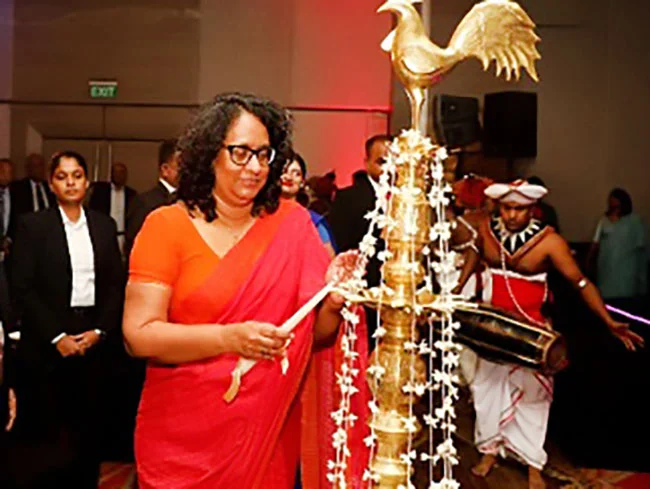
OPA 39th Annual Conference calls for Sri Lanka to move Beyond Recovery towards Sustainable Transformation
The Orgnisation of Professional Associations (OPA) successfully concluded its 39th Annual Conference, held recently at the Cinnamon Grand Colombo, under the theme “Envisioning Sri Lanka: Beyond Recovery”.
Held under the patronage of Jayantha Gallehewa, President of the OPA, with the leadership and guidance of Tisara De Silva, President-Elect and Chairman of the 39th Annual Conference, the Conference brought together leading professionals, academics, business leaders and representatives of the public and private sectors to deliberate on Sri Lanka’s next phase of national development.
The Inaugural Session, on August 2026, was graced by Prime Minister Dr. Harini Amarasuriya, as the Chief Guest; Andrew Patrick, British High Commissioner to Sri Lanka, as the Guest of Honour; and Murtaza Jafferjee, Chairman of the Advocata Institute, Sri Lanka, as the Keynote Speaker.
In her address, Prime Minister Dr. Harini Amarasuriya emphasised that overcoming the economic crisis alone should not be Sri Lanka’s ultimate objective, stressing that recovery must serve as the foundation for a broader economic and institutional transformation necessary for sustainable national progress. Reflecting on the difficult period experienced by the country, the Prime Minister noted that Sri Lanka had faced significant economic, social and institutional challenges, which had weakened public confidence and created uncertainty about the country’s future.
She stressed that “recovery only provides the foundation” and that Sri Lanka can move forward sustainably only by using that foundation to bring about meaningful transformation.
The Prime Minister observed that the theme of the OPA’s 39th Annual Conference, “Envisioning Sri Lanka: Beyond Recovery,” aptly encapsulated these national aspirations. She emphasised that Sri Lanka’s objective should not merely be to return to the conditions that existed before the crisis, but to forge a stronger national foundation characterised by robust institutions, a resilient economy, high-quality public services and an enabling environment in which every citizen has the opportunity to thrive.
She further underscored that Sri Lanka’s future development cannot be secured through economic growth and physical development alone. She emphasised that the effective mobilisation of the country’s knowledge, skills and professional expertise, is equally essential to achieving sustainable and inclusive national progress
The Technical Sessions held on 12 August 2026 brought together 19 distinguished experts and professionals representing academia, industry, banking and finance, public health, technology, management and business leadership. Their diverse expertise provided a multidisciplinary platform to examine the critical challenges, emerging opportunities and strategic choices that will shape Sri Lanka’s next phase of development, with particular emphasis on economic transformation, institutional strengthening, digitalisation, private-sector growth, human capital and sustainable development.
The deliberations were structured around four principal sub-themes: “Resilient Recovery and Sustainable Economic Development”; “Future Readiness: Innovation & Transformation”; “Policy for Impact: Advancing Equity, Sustainable Living, and National Well-Being”; and “Leadership, Governance and National Responsibility.”
Across these thematic areas, the sessions explored the structural reforms, institutional requirements and policy choices necessary to move Sri Lanka beyond economic stabilisation towards a more productive, competitive, resilient and inclusive economy. The discussions brought together diverse professional perspectives, enabling participants to examine national priorities through economic, technological, industrial, financial, social and governance lenses.
Particular emphasis was placed on the need to move beyond the diagnosis of problems towards pragmatic, evidence-based and implementable solutions. The deliberations recognised that sustainable national progress requires not only sound policies, but also effective institutions, professional competence, innovation, responsible leadership and the capacity to translate policy into tangible outcomes.
The sessions further underscored the importance of collaboration across sectors, recognising that Sri Lanka’s complex development challenges cannot be addressed in isolation. Stronger engagement among Government, private sector, professional associations, academia and civil society was identified as essential to fostering a coherent national response and ensuring that professional knowledge and expertise are effectively translated into policy and action.
Collectively, the Technical Sessions provided a substantive platform for knowledge exchange, critical reflection and forward-looking dialogue, reinforcing the OPA’s commitment to bringing the country’s professional expertise to bear on the task of building a resilient, innovative, equitable and prosperous Sri Lanka.
The OPA expressed its sincere appreciation to Prime Minister Dr. Harini Amarasuriya, the Chief Guest; Andrew Patrick, British High Commissioner to Sri Lanka and Guest of Honour; and Murtaza Jafferjee, Chairman of the Advocata Institute, Sri Lanka and Keynote Speaker, for their distinguished contributions to the Conference.
Much of what the 39th Annual Conference achieved would not have been possible without the leadership, commitment and generous contributions of Jayantha Gallehewa, President of the OPA; Tisara De Silva, President-Elect and Chairman of the 39th Annual Conference; Eng. Ravi Rupasinghe, General Secretary; Dharshana Wijemanne, Treasurer; Bhanu Wijayaratne, Convener & the Chairman of the Session Planning Committee of the 39th Annual Conference Committee, Past Presidents and Office Bearers; Presidents and representatives of Member Associations; members of the Executive Councils and General Forum; and the distinguished Session Chairmen, Resource Persons and professionals who shared their time, expertise and insights in pursuit of the Conference’s shared vision. The OPA remains immensely grateful to all those whose collective contributions enriched the 39th Annual Conference and strengthened its role as a meaningful platform for professional exchange, informed dialogue and national reflection.
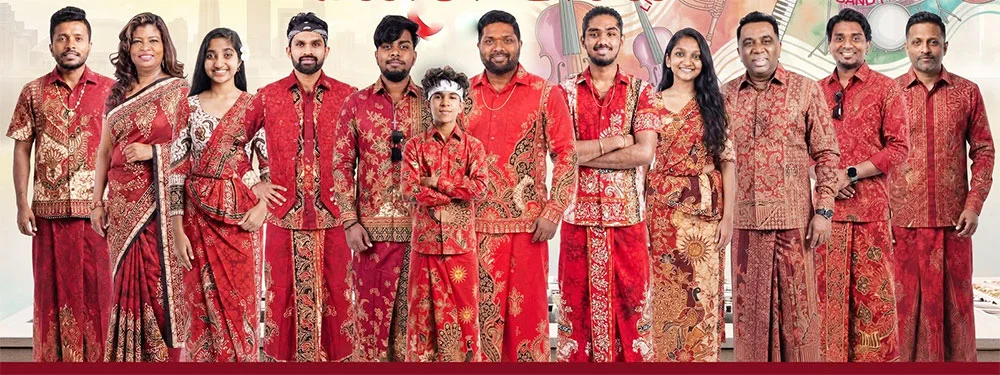
 For Sri Lankans living 14,000 kilometres from home, the sound of home has never felt closer — and that’s thanks to one man and his band.
Since stepping into the spotlight, Gamini Hemalal and the Ceymphony Band have turned into the heartbeat of the Sri Lankan community in Toronto.
Their mission is simple: bring the music, bring the memories, bring the people together. And it’s working.
What turned out to be the talk-of-the-town was their intimate musical evening with Sri Lanka’s legendary crooner Sohan Weerasinghe.

Sohan Weerasinghe: Had
everyone on their feet at the
Angus Glen Golf Club, in
Toronto, Canada
It was a ‘full house’ long before the big date. Tickets vanished within days — demand was that overwhelming.
According to those who were there, it was a truly amazing evening. The hall was packed, the energy electric. Sohan didn’t just sing — he owned the stage.
With his velvet vocals, his charm, and that signature style, he had everyone on their feet. The ladies, especially, couldn’t get enough. No wonder they call him “The Ladies’ Man!”
One attendee summed it up perfectly:
“We had so much fun. It is truly a blessing to have our kids around us, enjoying these beautiful moments together. Thank you, Gamini Hemalal, for such a wonderful evening, with an amazing crowd and an incredible atmosphere. Your hard work and dedication truly made it a special night.
“We also need to say a big thank you to the Ceymphony Band for delivering such an outstanding performance. You all were absolutely amazing! Our entire family had a fantastic time, and we truly enjoyed every moment.

Ceymphony Band: Extremely popular in the scene in Toronto
“Wishing you all continued success. Keep up the amazing work, we can’t wait for the next.”
And the next is already on the cards: ‘Halloween Pissu Baila Party 2026,’ on Friday, 30th October, at the famous Angus Glen Golf Club.
Gamini promises a crazy night of baila, music, dancing and Halloween vibes with the Ceymphony Band. Action runs from 8:00 PM to 12:00 midnight, with plenty of prizes to be won.

Gamini Hemalal: Amazing work for the Sri Lankan community,
in Toronto, Canada
Gamini is also putting together a special event, connected with the 2027 Avurudu celebrations — ‘Avurudu Musical Show 2027,’ a uniquely styled musical Avurudu celebration … Ceymphony Band style.
It’s scheduled to be held on Saturday, 10th April, 2027, also at the Angus Glen Golf Club.
Through music, Gamini Hemalal and Ceymphony are doing what diaspora bands do best — they’re shrinking the distance between two worlds.
One baila beat at a time, one full house at a time, they’re making sure that even in Canada, Sri Lankans feel like home.
Yes, there is plenty of action, indeed, for the Sri Lankan community in Toronto, Canada.

Patali alleges NPP conspiring to put off elections indefinitely

August 15 Super Dvora tragedy: Search continues for missing officer’s body

Tripartite MoU to expand free cardiothoracic surgeries at KDU Hospital

Jaffna to mark Int’l Day of the Disappeared

Unfolding El Niño and burning issues

Complexities in global politics deepen as economic pressures intensify

‘Dates have the highest sugar content to fight Coronavirus’

Sunday Island 27 December – Headlines

#SundayIsland 17th December – Headlines

Sunday Island – 28th March

Sunday Island Headlines – 21 March

Sunday Island – 21st February – Headlines
-
 News6 days ago
Country’s first woman Surveyor General appointed
-

 Business5 days ago
SriLankan Airlines makes ShakthiSAT Mission possible for talented Sri Lankan student
-
 Features6 days ago
Medical education in Sri Lanka: Then and now
-
 Latest News6 days ago
Imran Khan moved to private hospital amid deteriorating health
-
 Latest News6 days ago
Government has declared 21, 22 and 23 August 2026 as national days of mourning
-
 Features4 days ago
My secondary schooling after Royal Primary
-

 Latest News5 days ago
Tharanga edges out Chopra in 88m javelin battle
-
 News6 days ago
22A: Opp. demands all available SC judges hear petitions