
Features
Chinese-built port city stirs white elephant fears

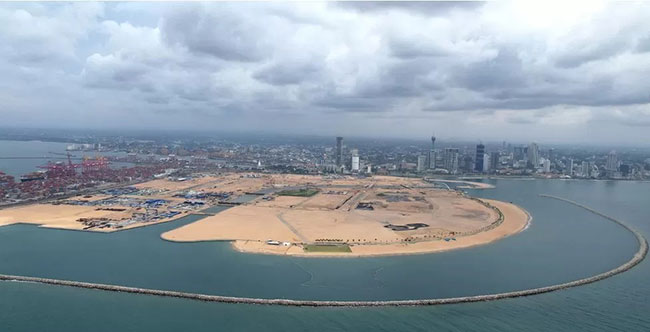
=Lankans are questioning the feasibility of Port City Colombo as their country faces its worst economic crisis.
By Stuart Heaver
(Al Jazeera) As far as many residents of Sri Lanka’s capital are concerned, the last thing their island nation needs in the midst of its worst-ever economic crisis is another beach – the island nation’s 1,340km coastline is blessed with some of the most beautiful beaches in the world.
Yet, Port City Colombo (PCC), a vast new Chinese-built reclaimed commercial zone in Colombo, recently unveiled an artificial beach facing the Laccadive Sea.
“The artificial beach is just greenwashing to attract international investors – sustainability is a convenient buzzword,” Priyangi Jayasinghe, a researcher at Colombo’s Munasinghe Institute for Development, told Al Jazeera.
Jayasinghe is one of many local critics who fear that PCC is another Beijing-funded white elephant in the mould of controversial projects. They include the loss-making Hambantota International Port, which was leased to Chinese state-owned China Merchants Port Holdings Company Limited in 2017 as Sri Lanka struggled to repay its foreign creditors, which include China, India and Japan as well as private lenders.
Critics say PCC, which is being developed on 269 hectares (665 acres) of reclaimed land, is unsustainable and will have negligible benefits for the nation’s ailing economy.
“PCC will make a very minor impact on the Sri Lankan economy. It will be a separate tax-free dreamland when the rest of the country is facing higher taxes to deal with the economic crisis,” Jayasinghe said.
CHEC Port City Colombo, which is developing PCC, rejects the criticism and insists the ambitious development project, funded under China’s Belt and Road Initiative (BRI) to the tune of $1.4bn, will establish a world-class city for South Asia.
CHEC Port City Colombo (Pvt) Ltd is a wholly owned subsidiary of China Harbour Engineering Company (CHEC), which in turn is a subsidiary of China Communications Construction Company Limited (CCCC), a majority state-owned enterprise with headquarters in Beijing.
Though scheduled for completion in 2041, construction has finished at parts of the site, including a pedestrian bridge and the artificial beach, which was scheduled to open in December but remains sealed off to visitors.
The project’s credibility received a boost in January from a high-profile visit by the United Kingdom’s former Prime Minister David Cameron. However, many locals, struggling with rampant inflation and food shortages, remain sceptical of more Chinese involvement in Sri Lanka’s economic affairs.
“And that over there is China,” a driver of a tuk-tuk motorised trishaw told Al Jazeera, pointing at the huge construction site for PCC while weaving through the congested midday traffic.
“Every time I return to Colombo, the government has sold a bit more of the nation to China,” Prem Velautham, a Sri Lankan living in the UK who recently visited the site, told Al Jazeera.
In reality, fears of Chinese ownership are based, at least in part, on misconceptions about the facts on the ground.
Much like the Hambantota Port, PCC is not owned by China or a Chinese company but 65 percent of the 178-hectare (440-acre) area of saleable reclaimed land will be held on a 99-year lease by a Chinese majority state-owned company.
“Given Sri Lanka’s role at the epicentre of the ‘debt trap diplomacy’ narrative and the well-documented troubles of the Hambantota seaport, it is not surprising that residents in Colombo or elsewhere are sceptical of flashy projects like this one – they have good reason to be,” Austin Strange, the co-author of Banking on Beijing and an assistant professor of international relations at the University of Hong Kong, told Al Jazeera.
CHEC Port City Colombo has said the project will create 143,375 new jobs and additional economic value of $13.8bn per annum.
“PwC has carried out an economic impact assessment of the Colombo Port City which highlights the significance of this project across multiple economic levers,” a spokesperson for the company said.
Critics question whether those calculations include the full environmental costs.
Vidhura Ralapanawe, a sustainability expert who advised the PCC Commission, the government body tasked with overseeing the development, said the project is car-centric and has not properly taken into account expected increases in demand for energy, water and waste and sewage services.
Ralapanawe also pointed out that a $1.5bn Japanese-funded light rail project that would have served as the main public transport link between PCC and Colombo was canceled in 2020.
“In 2021, I told the (PCC) commission that the existing sustainability plan was just not good enough – there was no serious focus on sustainability, it was just treated as the icing on the cake,” Ralapanawe, who is executive vice president for sustainability and innovation at the sustainable apparel manufacturer Epic Group, told Al Jazeera.
“What we have now is ‘not much’ in the way of sustainability – this was designed as a city on the cheap.”
A PCC Commission spokesperson rejected these claims as “incorrect” and referred Al Jazeera to the commission’s website, which states: “Port City Colombo follows an integrated approach, for the management of energy, water, and waste, with its sustainability initiatives focused on protecting and preserving the environment.”
When asked by Al Jazeera for more specific details, the commission referred questions to CHEC Port City Colombo, despite the Chinese company stating that the government is to provide the infrastructure for sewage treatment under the Public Private Partnership that covers the development.
The same PPP agreement also makes the government responsible for water supply, energy supply, waste removal and public transport.
Some environmental activists and citizens question whether authorities have the plan or budget for the significant investment required to accommodate PCC, given Colombo’s over-stressed public infrastructure and the abject state of Sri Lanka’s public finances.
CHEC Port City Colombo has estimated the project will increase demand for water by 39,000 cubic metres per day, equivalent to more than 15 Olympic-sized swimming pools, in a country that experienced severe droughts in 1992 and 2001. The developer has said the increased demand will be met by the state water authority and that it is encouraging its private partners to recycle wastewater.
CHEC Port City Colombo has also argued it is “not feasible” to establish a large-scale renewable plant for the project but it is “exploring all avenues to see which specific form of renewable or combination of renewable energy is most feasible”.
The company said a new multi-lane motorway known as the “Outer Circular Highway (OCH)” will meet the development’s transport needs and it will seek to “promote a more pedestrian form of commuting with many sheltered walkways and green canopies”.
While CHEC Port City Colombo has argued that PCC has already generated “significant interest in the international community”, Ralapanawe said foreign firms may be deterred from investing in the project if it does not allow them to meet internal sustainability targets for reducing carbon emissions, waste and water use, and protecting the marine environment.
Many residents in Colombo also express concerns that Chinese investors could take a bigger stake in PCC if the project fails, although there has been no suggestion of such a possibility by either the government or the developer.
“PCC is a case of not thinking things through, on a macro scale,” Ralapanawe said.

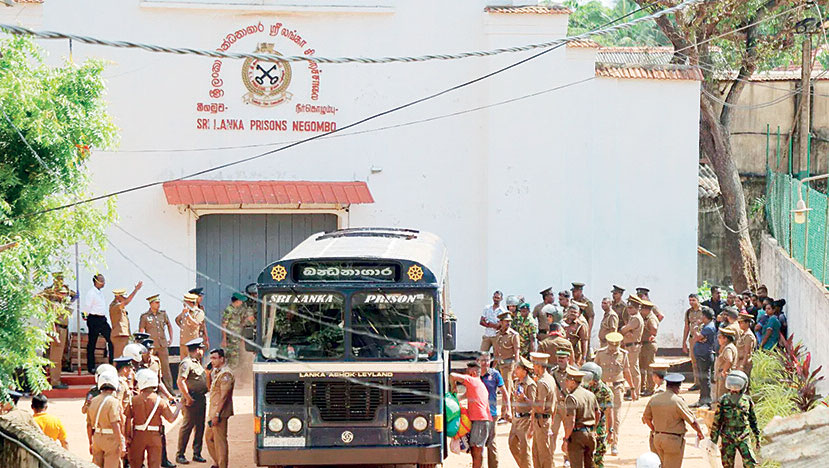
The riots that broke out in the Negombo prison over two days (July 5th & 6th) are a worrying measure of the challenge the NPP government faces in fighting organized crime and its paymasters in drug business. The political fallout has been predictable. On behalf of the government, Justice Minister Harshana Nanayakkara has taken responsibility, visited the Negombo jailhouse, met with officials a number of times, and has made a comprehensive statement before parliament within two days of the riots. The main opposition party has been equally responsible while GL Peiris, a former Minister of Justice for the Rajapaksas, has called for the current minister’s resignation. To what end? Mr. Peiris is in no position to call for anyone’s resignation given his rather pathetic record as a politician and a cabinet minister. There have also been calls for the resignation of the whole government.
But there is no surprise in all this. Even the riots in Negombo can be seen as an unsurprising explosion of a ticking timebomb – a viciously wired triangle of the drug economy, organized crime and overcrowded and under-supervised prisons. The surprise is that there are not more of them occurring more frequently. There are over 40,000 inmates in the country’s 26 prisons that can accommodate a total maximum of about 10,000 inmates. 2,600 prisoners were in the Negombo prison at the time of the riots, well over the prison’s capacity to accommodate 650 inmates. Over 700 inmates were reportedly involved in the rioting.
Overcrowded and underserviced prisons are a natural breeding place for bullying, rowdiness and violence. The mixing of remand prisoners facing trial and convicted criminals after trials aggravates the situation with convicts ever ready to gang up on remandees. These shortcomings are exploited by the criminal world of narcotics and its delegates among the prison inmates. All of the above ingredients were in the mix when matters came to a boil in the Negombo jailhouse, killing seven officers and 20 inmates while injuring more than 100 others. There was even a mastermind in the mix, conveying messages from bosses outside to drug peddlers inside and ordering them to attack the inmates who were opposed drug trafficking and may have been providing information to prison officials.
According to the Justice Minister’s statement in parliament, a group of rioters went so far as to dismantle the prison’s security infrastructure. The minister suggested that an organized group of inmates was behind this, smashing closed circuit television cameras and destroying a body scanner, which may have been part of an attempt “to disable the mechanisms used to stop drugs and other illegal items from entering the prison.” In his statement, Mr. Nanayakkara also announced the immediate measures the government would be taking to address overcrowding and expand supervisory capacity. These include streamlining bail requirements and bail hearings as well introducing ‘house arrest’ with electronic monitoring as an alternative to remanding everyone.
NPP’s Uniqueness
As The Island (8th July) editorially reminded its readers, Sri Lanka has a sad history of prison riots – the ghastly massacre of 53 unarmed Tamil prisoners in the Welikada Prison in 1983, a wholly different riot at the same prison and its brutal putdown by security forces in 2012, and the 2020 prison clashes in Mahara. The vicious triangle of drugs, crime and prisons is a relatively new phenomenon and breaking up that triangle will require simultaneous state response on all three fronts – targeting drug trafficking, containing violent crimes, and undertaking prison reform. Each one of them is a major task in itself and will require enormous resources, along with consistent and co-ordinated effort.
At the same time, I find something politically unique and even encouraging about the present situation. For the first time, in a long time, Sri Lanka has a government that has no truck with the world of drugs and organized crime. I believe I am not wrong in making this assertion, because there have been many criticisms of the NPP government – for its inexperience and its ineptitude, as a one man (AKD) show with L-board ministers, as well as for the ethical lapses and unexplained riches of some of the government members and ministers – but I have not come across anything that accuses the NPP government or its members of having links to the underworlds of drugs and crime.
Equally, I have not come across any previous Sri Lankan Head of State or Head of Government making a statement on the connections between the upperworld of politics and the underworld of crime, as President Anura Kumara Dissanayake did while addressing parliament on Wednesday, 24 June, hours after the arrests of Rakitha Rajapakshe and his cohorts.
The President spoke of the growing practices of forex fraud, money laundering, and bribe transactions that link the world of crime and drugs to the world of banking and the universe of politics. Quite revealingly, the President mentioned a certain politician who had had 92 telephone calls with prisoners remanded or convicted for drug trafficking. Fifty-four of those calls, the President said, were initiated by the politician while 38 of them were received by him from the prisons.
The President then challenged the political parties to inform parliament and the country of the actions they had taken, or will take in future, against such criminally compromised individuals who are their members. Indeed! Hence my thesis, this week, that the NPP government is the best and perhaps offers a singular opportunity for Sri Lanka to fight the interconnected menace of drug economy and organized crime. I am not vouching that the government will win this fight. Only that for the sake of the country it must win it. If the NPP fails, there is no one else in today’s politics in Sri Lanka, honest enough, sincere enough and able enough, to pick up the pieces and resume the fight. Those who have gotten into the habit of caviling at the NPP government over anything and everything must give it some slack and appreciate its unique position in the fight against crime and drugs.
Crime and Politics
In singling out the current president for daring to taken on well-connected criminals and their political patrons, I must point out in fairness to state and government leaders who came before 1977, that there was no need for them to do this in their time. For the nexus between crime and politics really came about after 1977. Of course, there were thugs and IRCs before 1977, plenty of them and they were buddies with individual politicians especially in the fringes of urban politics. Recall the name Ossie Corea from the 1950s, whose gun was the murder weapon that killed Prime Minister SWRD Bandaranaike, and Mr. Corea, a retired Excise Inspector, was the bodyguard of SWRD’s Finance Minister Stanley de Zoysa.
But there were no widespread connections between political parties and the criminal underworld. Those connections started coming after 1977 and have grown increasingly systemic in the 21st century under the auspices of the Rajapaksas. There is a publicly available list of over 25 ‘mobsters’, all of whom have been active criminally and politically in the years since 1977. Leading the list are the infamous Gonawala Sunil (Sunil Perera) and Sothi Upali (Upali Ranjith). The former was convicted and jailed for raping an 18-year old girl and was alleged to have been the inside mastermind of the 1983 dastardly massacre of Tamil political prisoners in the Welikada jail.
He was later honoured with a presidential pardon and appointment as an all-island Justice of the Peace. He was even bodyguard for then Minister of Education Ranil Wickremesinghe. Sothi Upali was implicated in the killing of Lalith Athulathmudali and was believed to have been close to the UNP’s political mastermind Sirisena Cooray. Mr. Cooray himself was believed by some to have been not without underworld connections and credentials. The list goes on.
It would be fantastic and absurd, perhaps simply nuts, for anyone to suggest that the crime-politics nexus after 1977 was a consequence of the open economy and neoliberal globalism. It would be analytically more defensible to contextualize the crime-politics nexus in the local political developments. The authoritarianism of the new presidential system and the abuse of the referendum devise to postpone parliamentary elections were certainly major factors. JRJ did everything quite instinctively, and academics now call it the phenomenon of “competitive authoritarianism” exemplified by leaders like India’s Modi and Turkey’s Erdogan.
State sponsored ethnic riots, the monopoly of political violence among the Tamils, and the violent second coming of the JVP were all catalytic mediums for the cohabitation of politics and crime. Tamil criminals and drug lords were implicated in the LTTE’s failed assassination attempt against President Kumaratunga in 1999. Criminal enterprises and drug trafficking were given a more convenient and safer passage to connect with the political upperworld by the growth of political security business, providing protection for MPs and officials, and involving both state security personnel and private strongmen. The notorious Beddagana Sanjeewa (Danuska Perera) was allegedly close to President Kumaratunga’s security detail and enjoyed easy access to Temple Trees. The Rajapaksa security details were also allegedly compromised by similar infiltrations and there have been suggestions that those in the security details of Rajapaksa VIPs may have been involved in some of the yet unsolved emblematic killings in Colombo.
As I wrote last week, the new line of investigating and litigating the 2019 Easter Sunday attacks to look for potential collusion between state security officials and perpetrators of the attacks would suggest that a different passage may have been opened up between the state security domain and the universe of local Islamic extremism. There is considerable anecdotal discussion supporting this contention, including the alleged role of Isreal. A precursor to this was in already in place after the LTTE renegades in the eastern province came into alliance with the state security forces. The big difference between the two, is that domestic Islamic extremism had its independent connections to its global counterpart and that may have provided the inspiration and the encouragement for the planning and execution of the Easter Sunday suicide bombings.
Against this backdrop of high level politicians connecting with low life criminals, the NPP government certainly stands apart. That is my whole point. That gives the NPP an uncompromising head start in the fight against crime. Every other government this century has been far too compromised even to make a head start for starters. But a great deal more than sincerity and inflexibility is needed to carry through the gamut of investigations and successful litigation. One positive development is the subtle responsiveness of the judiciary to the political climate that facilitated the election of the NPP government and is now willing its success especially in the fight against corruption and crime. The government should let the courts do their part without causing even so much as the appearance of interference.
by Rajan Philips
The Catholic Church at Hambantota town was the smallest church I had ever seen in Sri Lanka.
Large kohomba trees towering over the churchyard dwarfed the church. In the morning many birds perched on the trees and by late evening, hundreds of bats arrived to claim their roosts. The small stained-glass windows of the church filtering morning and afternoon sunlight added a touch of holiness to its ambiance.
Before a service started, altar assistants opened the large wooden church windows to let fresh air in and clear the musty indoor air. In the mid-fifties, there were only a few Catholic families in Hambantota town. The Sunday congregation seldom exceeded 30 and often, the parish priest could not find three boys to serve as altar assistants. I became an altar boy when I was just four years old and my brother, Nihal, who was then seven, was the chief altar assistant with me being the youngest of the servers.
During Lent, the priest conducted a Way of the Cross on Fridays and one Friday evening, I was the only altar assistant present to carry the cross from one station to the other. Suddenly, I felt my shorts slipping down and I held the cross with one hand and my shorts with the other. My mother, seeing my predicament, came over and taking the cross from me, handed it to a woman nearby and took me out of the church to tighten my trouser belt and bring me back to carry the cross.
The parish priest took the altar assistants in his old Austin car to distant places to officiate at the burials of the dead. Once, I went with him and two other boys to a leprosy colony to bury an old man who had died two days earlier. Apparently he had no relatives or friends. The priest conducted the burial rites and told the few hospital workers who attended the funeral, “Life is precious, although it could take many forms. What we witness today is one form, that is, poor and innocent. But God loves people of all sorts. That is because each one has a soul that is created in the mirror image of God”.
I thought about the eulogy on my return trip to Hambantota and felt uneasy wondering why the old man died without seeing his family. Then it dawned on me that life is erratic, and circumstances decide one’s fate, apparently God seem to be doing little to correct such errors.
My father was popular among his college staff and some of them offered to help his children in their studies. Mr. Senanayake, a senior teacher, helped Nihal and me in mathematics at home. Mrs. Wickramasinghe (Wicky) was an English teacher at the College. She lived with her family in a large bungalow with a beautiful front garden overlooking the public cricket grounds in Hambantota. The house was situated on elevated ground, lending it added importance.
My father had arranged for Nihal and me to go to Wicky’s twice a week in the late afternoons to learn conversational English. We liked that arrangement because it allowed us to play cricket with friends on our way to the English class. We were amazed to see the toys at Wicky’s. Her two sons and daughter were friendly and willingly shared toys with us. Nihal and I were reluctant to sit on the comfortable sofas in the sitting room, but each time we visited, Wicky invited us to sit on them.
She usually served us each a piece of cake or a few cutlets on a small plate with a fork before a conversation started. Eating cake was a rare thing at our home. I had never seen my mother baking a cake or my father bringing one home. Nihal asked me not to eat the whole piece of cake as we were not used to such food. I did not know how to use a fork, so I watched Nihal eating his piece of cake. He used his fingers without hesitation. I followed suit. Wicky saw us eating the cake with our fingers but said nothing.
Although Wicky was kind and friendly to us, we hesitated to feel equal to her children. Nihal and I once discussed my father and Wicky and he pointed out that Wicky was an assistant teacher under my father’s (he was the principal) supervision. Yet we felt that they were well above us. That feeling came from the fact our English was weak compared to Wicky’s children, their home was better furnished than ours and they ate better.
I remember a large toy tractor with a reverse gear and an attached hoe at Wicky’s place thinking it could actually be used in the field to plough land. It was yellow in colour and smoke came out of its short exhaust when started. I thought about my toys having hardly any other than a cap pistol. Nihal, Gamini, and I had cap guns, costing us 50 cents each while a roll of caps was five cents.
We bought cap rolls from Maulana’s shop behind our house. These were narrow red paper rolls with black-powder dots along them. The dot makes a nice cracking sound when the pistol’s hammer hits it just right when the trigger pulled. A good crack gave us a chance to inhale the smell of gunpowder. Wicky’s three sons also had several cap guns. The eldest who was a teenager, had an air gun with lead pellets. He boasted that he had already killed three birds with his air gun. He occasionally let Nihal and I use his air gun to fire shots at the papaya tree just in front of the house.
Wicky’s Alsatian dog was a large beautiful animal with a glowing coat and friendly face. When we played cricket, he tried to take the ball from us to his kennel. One day, when we came to Wicky’s, we heard shouting and weeping from the house. First Nihal and I thought someone had died. That was the first time that I heard someone screaming in English. Someone had poisoned the dog.
Wicky’s husband was threatening that he would kill the culprit. We were all petrified. Wicky brought a wooden box with some old clothes, wrapped the dog’s body with them, and nailed the lid shut. We, children carried the coffin to a pit dug by their servant boy and buried the dog. We all cried and kept some flowers on the grave. We did not play cricket after the funeral for several weeks.
My desire for a dog disappeared after seeing Wicky’s dead Alsatian. My father told Nihal and me that we did not have to worry about our Blacky because it was a pariah dog and nobody would poison it. Two weeks later, Blackie died in a road accident. Nihal and I tried to emulate the Alsation’s funeral and buried our dog in a cardboard box we got from Maulana’s shop.
We did not wrap the body in a cloth because my mother refused to give us any. My father gave us a rupee each to console us. We spent the money buying caps for our pistols and bultos (sticky sweet gum).
Two frequent visitors to our house were Weerasinghe Master and JJ Master, teachers at the Sinhala School where I studied. Weerasinghe Master wore a national dress – a white sarong and a loose white, collarless shirt with a fountain pen in its pocket plus leather slippers. He had a few hairs on his scalp and was called ‘Kira’ by his senior students for his perpetual sleepy look. His drooping eyelids and unshaven face gave the impression that he had just woken up from his sleep.
No student wanted to sit close to him in our class because of the foul smell his clothes and mouth exuded. He too wore a sarong and a light cotton jacket with a vest underneath. His black belt was about two inches wide, with a large metal buckle. He was my grade two class teacher.
My mother served visitors with biscuits and tea or coffee. They usually brought a packet of biscuits or a bag of toffees for the children. My father always welcomed them and, in fact, waited for their arrival. If they were delayed, my father asked me to go to the gate and check whether they were on their way.
When they arrived, my father occupied the armchair in the verandah. There were two more chairs without armrests and visitors occupied them. I sat on my father’s lap to listen to their conversation. He was in his sarong without a shirt or banian. He allowed me to sip some tea from his cup and to get an extra biscuit from the tray. They discussed politics, school gossip, and new development projects in Hambantota.
Weerasinghe Master and JJ Master were my father’s key sources of information. He said little but listened intently especially to Weerasinghe. Occasionally, the visitors talked to me, too. Once, Weerasinghe Master asked me: “What is the midpoint of the earth?” I replied, “here.”
“How do you know?”
“Because nobody knows; therefore, any place could be the centre,” I responded.
“Good answer,” he happily said while stroking my head and gave me a ten-cent coin. I told my mother, who was in the kitchen, about the gift. She worried about the kata vaha (evil tongue) or ‘evil eye’ and didn’t appreciate my smartness. She later told my father that Weerasinghe’s envy could harm the children and asked that he discouraged me from joining their evening chats saying I do my homework instead. But I liked to sit on his lap, and this practice continued for another two or three years until we left Hambantota.
Many years later, I found the chair on which my father and I sat when he talked to his friends in Hambantota. Although my father was dead by then, I felt his presence whenever I sat on it. I thought about him, his magnanimity, his kindness to me and how much I missed him. I re- enacted in my mind the discussions that I remembered from those long evenings on our verandah in Hambantota. I thought about his body warmth, his roaring laughter and his jovial personality. I broke the chair into pieces and set them on fire.
My mother saw this but said nothing. Perhaps she understood that I wanted to get away from the memories of my father that had haunted me for many years. I thought I was angry with my father for dying when I was only 16 years old. I wanted him to live to appreciate my performance as a good student and an athlete.
Once when my younger brother, Gamini, fell ill, our family’s peace and happiness shattered.
Gamini was then five years old, had low fever for many days and could not eat any food. He was hospitalized and treated for a week but his condition deteriorated. Weerasinghe Master told my father that a yaka (demon) had apparently possessed my brother and, therefore, an exorcism was the proper remedy. He recommended a yakkadura (exorcist) in Matara Town, about 50 miles west of Hambantota, known for protecting children from evil spirits.
Two days later, my father went to Matara in search of him and brought him home, along with an assistant and accommodated them in our empty garage. They first checked the entire house for any hidden charms buried by our enemies and found nothing. Then, they dug small holes at random around the house to look for such charms without any result. My mother resented having two strangers at home and told my father that being Catholics, we should not entertain thoughts of demons when the church and the priest were only 100 feet from our house. My father agreed but said that the priest cannot detect demons and combat their evil actions.
On the following day, the exorcist prepared offerings for the gods and evil spirits and arranged them on several wooden trays. In the evening, he began chanting and making small offerings – sweets and handun kuru (incense sticks) – to various gods who protect Sri Lanka. Then, a tray loaded with charred meat was offered to a mighty devil, which had in the past attempted to usurp the powers of the Kataragama Deiyo (a powerful god) of the Southeast Corner of the island. The exorcist complained that there was no discipline among minor demons, and they were mischievous spirits who were happy to harm human beings, especially children.
He then offered a tray to a benevolent god and another to a malevolent demon, pleading for their help in persuading the evil spirit which had possessed my brother, to leave without harming him. He cajoled and pleaded with them, offering food and drinks on trays several times.
In the late evening, neighbours and several schoolteachers came to watch the exorcism. My mother offered them cool drinks and biscuits. On several occasions, the exorcist asked them questions. One question was, “Should the devil who possessed the child leave immediately?” All who were there said “yes”. One woman went further and said, “Yes, please leave this baby and his family for which we will offer you lots of food and drinks.”
Another question was, “What was the best sign that the demon could give the onlookers that he had left the possessed child?” Someone said, “why not break a branch of the kohomba tree so that we know that the spirit had left.” This interaction between the exorcist and the onlookers eased the tension and fear among the latter. At that point, the exorcist cajoled the spirit, demanding that it leave the child immediately.
He was sure that only a minor spirit had possessed my brother demanding proper appeasement. Dancing, chanting, and offering food trays continued until the early hours of the morning. At four in the morning of the following day, my brother passed a stool and the exorcist examined it and found some undigested dark matter. But the spirit left no sign of departure.
My father checked the kohomba tree in the morning but could not find any broken branches. He was disappointed. But from that time, Gamini began to move and recovered rapidly. The exorcist and his assistant left after collecting their fees and gifts. They advised my parents to protect their children from evil eyes and evil tongues. He advised my father and mother to avoid taking all four sons with them to church or school, as someone might envy four sons in the family and cast evil eyes or evil tongues that could harm them.
Sixty years later, I visited Hambantota with Gamini and Nihal. When we passed the Catholic cemetery, Nihal reminded us that if Gamini had died in Hambantota as a toddler, he would have been buried there. Although it was a simple statement, it shook me as that was the first time I thought of death as a real-life experience. We all remained silent for several minutes until Nihal broke our thoughts saying if Gamini was buried there, we would have come to Hambantota more frequently to visit him at the cemetery!
by Jayantha Perera
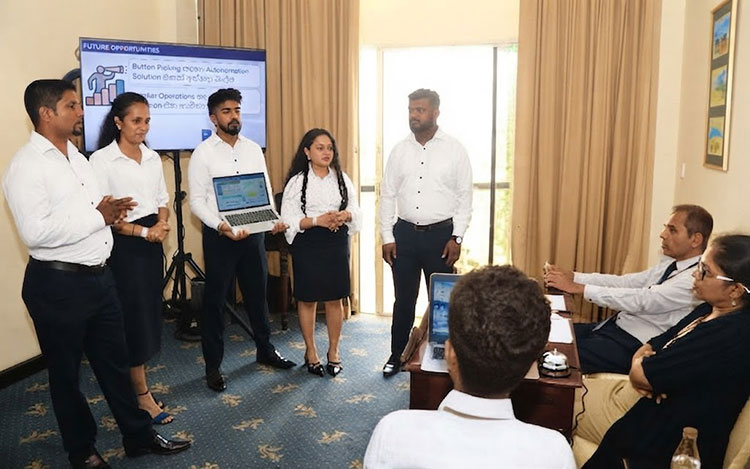
My confidence in the Quality Circle concept continued to grow. I became increasingly convinced that, if properly adapted to our culture, it could make a significant contribution to improving both organizational performance and the quality of employees’ working lives in Sri Lanka.
Around this time, the Asian Productivity Organization (APO) organized a multi-country study mission on Quality Circles. It was an excellent opportunity to learn directly from countries that had successfully implemented the concept. Naturally, I submitted my application. To my disappointment, I was not selected.
Ironically, the authorities nominated another individual who, as far as I knew, had never previously encountered the concept of Quality Circles. Such disappointments are part of life, and one learns to accept them with good grace.
When he returned from the study mission, I approached him with genuine enthusiasm. I suggested that we join forces with a few like-minded colleagues to promote Quality Circles throughout Sri Lanka.His response was immediate. “This will never work in Sri Lanka.” I smiled politely but remained unconvinced.
Time has an interesting way of proving people either right or wrong. In this instance, the prediction could not have been more mistaken. Today, the National Convention on Quality and Productivity attracts well over 500 Quality Circles from companies and government institutions across the country, with participation continuing to grow year after year.
That experience reinforced an important lesson I have observed repeatedly throughout my career. Truly new ideas are often dismissed as impractical until they become accepted practice. Had every innovator accepted the verdict that “it will never work”, much of the world’s progress would never have occurred.
My first international conference paper
Not long afterwards, while attending another conference in Kuala Lumpur, chance intervened once again.
As I wandered through the exhibition area during a break, I noticed a collection of brochures and leaflets displayed on a table. One immediately caught my attention. It was a call for papers for the forthcoming International Convention on Quality Circles. I picked it up almost absent-mindedly.
By the time I returned to Sri Lanka, however, I had made up my mind. Why not share our experience with the international community? I prepared an abstract describing how I had modified the Japanese Quality Circle model to suit Sri Lankan organizational culture while preserving its fundamental principles. To my great delight, the organizers accepted the abstract and invited me to submit the full paper for presentation. For a relatively young professional, this represented a tremendous honour.
The organizers also offered a substantial concession on the conference registration fee for paper presenters. That solved one problem, but another remained. How was I going to pay for the airfare?
As fortune would have it, I noticed an advertisement by Pilgrimways Tours promoting a group package to Bangkok. Better still, the travel dates coincided almost perfectly with the conference schedule. Problem solved. I joined the tour group and travelled to Bangkok. The contrast between the priorities of my fellow travellers and my own still makes me smile.
After checking into the hotel on the first evening, most members of the tour disappeared into Bangkok’s famous nightlife. While they were enjoying themselves, I remained in my room rehearsing my presentation repeatedly, determined not to waste the opportunity that had come my way. The following morning presented another challenge.
The conference was being held at the Dusit Thani Hotel—or so my memory tells me—but I simply could not afford taxi fares. Instead, dressed in a full business suit, I walked all the way from my modest hotel to the conference venue. The journey took nearly 45 minutes.
I can still remember walking along the dusty streets of Bangkok, perspiring heavily in the tropical heat and wondering whether people thought I was rather eccentric. Nevertheless, every step was worthwhile. The convention itself was outstanding. Researchers and practitioners from many countries exchanged ideas, demonstrated successful projects and discussed the future of Quality Circles. For me, it was an invaluable learning experience.
When my turn came to present, everything went remarkably well. The audience responded positively to the paper, particularly to the way the Japanese model had been adapted rather than merely copied. That experience strengthened my belief that management practices cannot simply be transplanted from one country to another. They must first be understood, then carefully adapted to local culture while preserving their essential philosophy.
Looking back today, I sometimes reflect that those 45 minutes of walking through Bangkok probably became one of the best investments I ever made in my professional life.
Building lasting friendships with the Quality Circle Forum of India
One of the greatest benefits of attending international conferences is not merely listening to presentations but meeting people who share the same passion.
During the convention, I became acquainted with several of the senior office-bearers of the Quality Circle Forum of India (QCFI). These gentlemen had already built one of the strongest Quality Circle movements outside Japan and possessed a wealth of practical experience. Despite my relative inexperience, they received me warmly.
They willingly shared their constitution, organizational structure, operational procedures and numerous publications. Their generosity saved us years of trial and error. More importantly, these professional relationships gradually developed into lifelong friendships.
Even today, the links between the Quality Circle movements of Sri Lanka and India remain exceptionally close. Over the years, both countries have learned much from one another, and I remain deeply grateful to our Indian colleagues for the encouragement and assistance they extended during those formative years.
Sometimes, the greatest contribution one organization can make to another is simply to share its experience openly and generously.
Sri Lanka joins the international movement
Following the establishment of the Quality Circle Association of Sri Lanka, another important opportunity arose. An International Convention on Quality Control Circles (ICQCC) was scheduled to be held in New Delhi. During the discussions, the QCFI proposed that Sri Lanka should be admitted to the ICQCC Coordinating Committee. We were honoured.
However, not everyone shared the same enthusiasm. Some representatives from other member countries felt that Sri Lanka’s Quality Circle movement was still too young. In their view, we had not yet earned a place among the more established nations. I therefore found myself answering numerous questions about our activities, our achievements and our future plans.
It was, in effect, an oral examination. Fortunately, I had accumulated sufficient practical experience to answer every question confidently. After considerable discussion—and with the vigorous support for which our Indian friends are well known—Sri Lanka was finally admitted. Not everyone appeared pleased with the decision, but we had earned our place.
Many years later, when the ICQCC was held in Colombo, I had the privilege of proposing Bangladesh for membership. The proposal was accepted unanimously. Perhaps that was one small example of the spirit of regional cooperation that organizations such as SAARC sought to promote.
Establishing the Quality Circle Association of Sri Lanka
By this time, it had become increasingly clear that Sri Lanka needed a national body to promote, coordinate and support Quality Circle activities. Drawing extensively upon the successful experience of the Quality Circle Forum of India, we drafted our own constitution and formally established the Quality Circle Association of Sri Lanka (QCASL). I was privileged to be elected as its first President.
Those early years were both exciting and demanding. We organized seminars, workshops, demonstrations, practical clinics and, eventually, our own National Quality Circle Convention. Since the concept was still unfamiliar to many organizations, education became one of our principal objectives.
Our newsletter also played an important role. Under the guidance of an energetic editor, it carried articles, case studies, reports on successful projects and news of Quality Circle activities both locally and overseas. Gradually, a growing community of practitioners began sharing ideas and learning from one another.
One of the most memorable milestones was our first National Convention, held at the Colombo Hilton Hotel. It proved to be a landmark event. Among the many presentations, one remains especially vivid in my memory.
A young female Quality Circle leader from a factory was describing the intangible benefits her team had gained through participation. Towards the end of her presentation, she made a simple but deeply moving remark. “I never imagined that someone like me would one day have the opportunity to make a presentation in a five-star hotel.” Those few words captured the true spirit of Quality Circles.
The greatest achievement was not merely solving production problems or improving quality. It was giving ordinary employees the confidence to analyze problems, communicate effectively and present their ideas before senior managers with pride and dignity.
Interestingly, the Hilton management had initially expressed some concern about hosting large numbers of factory workers. They wondered how comfortable these visitors would be in a luxury hotel environment. By the conclusion of the convention, however, they told us that ours had been one of the most disciplined, courteous and well-behaved groups ever to use their facilities.
That compliment pleased me enormously, because it demonstrated once again that people invariably rise to the level of trust and respect shown to them.
Spreading the message further
At about the same time, another opportunity arose to spread the Quality Circle philosophy even more widely. I was serving on the Executive Committee of the Japan–Sri Lanka Technical and Cultural Association, an organization that had done much to strengthen ties between the two countries. During one of our committee meetings, someone suggested organizing a seminar on Quality Circles to introduce the concept to a wider audience. I readily accepted the challenge. The response exceeded all our expectations.
The first seminar attracted an overwhelming number of participants. In fact, so many organizations wished to attend that we were compelled to organize two further seminars within the following three months simply to accommodate the demand.
It became increasingly clear that Sri Lankan managers were searching for practical ways of involving employees more meaningfully in improving quality, productivity and organizational performance. Quality Circles appeared to offer precisely that opportunity.
As word spread, more organizations began experimenting with the concept. Some succeeded immediately, while others required more time and guidance. Nevertheless, the movement had begun to gather momentum.
An unfortunate setback
Unfortunately, organizations, like individuals, sometimes lose sight of the very ideals upon which they were founded. Following my departure from the Quality Circle Association of Sri Lanka, disagreements gradually emerged among some of the office-bearers. What began as differences of opinion eventually developed into personal accusations and internal disputes. The harmony and unity that had characterized the Association during its formative years slowly disappeared. Eventually, the Association ceased to function.
I watched these developments with considerable sadness. Years of hard work appeared to have been undone, not because the Quality Circle concept had failed, but because people had allowed personal differences to overshadow the larger mission. It was another valuable lesson in management. Building an organization is difficult. Sustaining it is even more difficult. No matter how noble its objectives, an organization can survive only if its members continue to place the common good above individual interests.
A new beginning
As the years passed, many colleagues and friends repeatedly approached me with the same request.”Why don’t you restart the Association?” Others suggested forming an entirely new organization. They believed, as I did, that Sri Lanka still needed a national institution dedicated to promoting Quality Circles, productivity improvement and continuous improvement practices.
Initially, I hesitated. Starting an organisation from scratch requires enormous commitment, and I had many other professional responsibilities. Yet the requests continued. Eventually, I agreed. A small group of committed enthusiasts came together to establish a new organization—the Sri Lanka Association for the Advancement of Quality and Productivity (SLAAQP).
None of us imagined that our inaugural meeting would coincide with one of the darkest days in Sri Lanka’s history. On the very morning scheduled for the inauguration, terrorists launched the devastating attack on the Central Bank in Colombo. Many innocent people lost their lives, hundreds were injured, and the city was plunged into fear and confusion. Shattered glass, damaged buildings and scenes of devastation confronted everyone who ventured into the city that day.
Several colleagues suggested postponing the inauguration. Their concerns were perfectly understandable. After giving the matter careful thought, however, I decided that we should proceed.If we abandoned our plans at the first sign of adversity, what message would that send about our own commitment? In the end, only four or five people managed to attend.
Yet, with that tiny gathering, we formally inaugurated the Sri Lanka Association for the Advancement of Quality and Productivity. Looking back today, I believe that one of the Association’s greatest strengths lay not in the size of its inaugural meeting but in the determination of the few who refused to allow fear to overcome purpose. Many successful organizations have had surprisingly modest beginnings.
Remaining connected to the international movement
Throughout both the QCASL and SLAAQP years, I made it a point to attend every International Convention on Quality Control Circles. People sometimes asked how our relatively modest Association managed to finance such regular overseas participation. The answer was simple. It did not. I was careful never to burden the Association financially.
Whenever possible, I arranged my business commitments so that I could combine visits to our principals and associates in Japan with attendance at the annual convention. By carefully planning my itinerary, I was able to use the same airline ticket to stop over in cities such as Bangkok, Kuala Lumpur, Bali or Seoul, where the conventions were often held.
This approach enabled me to remain closely connected with developments around the world while ensuring that the Association’s limited resources could be devoted to supporting activities within Sri Lanka. It was a small personal contribution, but one that I was happy to make.
The International Convention on Quality Control Circles rotates annually among its 13 member countries. Attending these conventions not only exposed me to the latest developments in participative management but also enabled me to establish friendships with practitioners from many parts of the world—friendships that have endured to this day.
Looking back with gratitude
Over the years, many people began referring to me as “Mr Quality Circles” or even “the Father of Quality Circles in Sri Lanka.” Although I always regarded such descriptions as generous exaggerations, one incident associated with the title has remained firmly in my memory. On one occasion, I was introduced at a public meeting as “the Father of Quality Circles in Sri Lanka.” Among those present was the distinguished Toastmaster, Mr Haleem Ghouse.
When the programme ended, he came up to me with a broad smile and offered a piece of advice that only a seasoned humourist could have delivered. “Sunil,” he said, “never allow anyone to introduce you as the father of Quality Circles.” I looked at him rather puzzled. He continued, with impeccable comic timing: “Because paternity is only an opinion—only maternity is a fact!” We both burst into laughter.
His witty remark has remained with me ever since, and whenever anyone attempts to bestow that title upon me, I cannot help recalling Haleem’s delightful observation.
A journey worth taking
As I reflect upon this remarkable journey, I experience a deep sense of gratitude. What began as a single factory visit in Japan in 1980 eventually evolved into a lifelong mission to promote participative management in Sri Lanka. I had no grand master plan. I simply encountered an idea that inspired me and felt compelled to share it with others. The journey was far from smooth.
There were disappointments, sceptics who dismissed the concept as impractical, failed experiments, organisational setbacks and moments when the future seemed uncertain. Yet there were also extraordinary rewards.
I had the privilege of watching thousands of ordinary employees discover talents they never realized they possessed. Factory workers became confident presenters. Supervisors became facilitators rather than controllers. Managers learned to listen. Organizations discovered that those closest to the work often possessed the best ideas for improving it. Perhaps that, more than anything else, is the enduring lesson of Quality Circles. Every employee deserves not only the opportunity to work but also the opportunity to think, contribute and grow.
Last year, I experienced one of the proudest moments of my professional life when the Sri Lanka Association for the Advancement of Quality and Productivity decided to name its highest recognition for Quality Circle achievement the Sunil G. Wijesinha Award for Quality Circles Excellence.For someone who simply wished to introduce an inspiring Japanese management practice to Sri Lanka nearly half a century ago, that honour was both deeply humbling and profoundly gratifying.
Awards eventually fade into history, but seeing an idea continue to benefit future generations is a reward beyond measure.
In my next episode, I shall describe another fascinating chapter of this journey—the introduction of the Japanese 5S workplace management system to Sri Lanka, a movement that would eventually spread to hundreds of organisations across the country and become one of the most widely practiced Japanese management techniques in Sri Lankan industry.
by Sunil G. Wijesinha

Noskova defeats Muchova in Wimbledon final to record first Grand Slam title

Former Emir of Qatar Sheikh Hamad bin Khalifa Al Thani dies aged 74

Sourav Ganguly, Kevin Pietersen and Anjum Chopra inducted into ICC Hall of Fame

The President’s Fund has been transformed into a people-centred fund – PM

Wanyonyi breaks world 1000m record with 2:11.83 in Monaco

Gaud makes her Lord’s mark as India surge into dominant position

‘Dates have the highest sugar content to fight Coronavirus’

Sunday Island 27 December – Headlines

#SundayIsland 17th December – Headlines

Sunday Island – 28th March

Sunday Island Headlines – 21 March

Sunday Island – 21st February – Headlines
-
 News2 days ago
Herath warns prospective migrant workers not to get fleeced by racketeers
-

 News6 days ago
AI concerned over proposed SL military deployment in Haiti
-

 Midweek Review4 days ago
Unexpected focus on ‘pieces of tin’ worn by military men
-
 Latest News5 days ago
Nyamhuri and Ngarava stun Bangladesh by defending 141
-

 News3 days ago
Negombo Prison riot: Ensuring protection of prisoners fundamental responsibility of the state – UN
-
 Features3 days ago
Devanesan Annan – in Memoriam
-
 Foreign News2 days ago
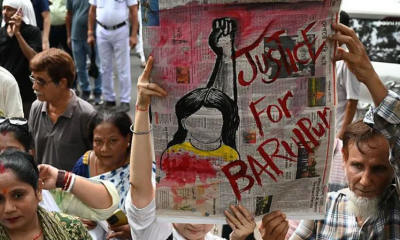
Tensions erupt in Indian state after 11-year-old raped and murdered
-

 Editorial1 day ago
What’s the world coming to?