
Opinion
13A and federalism: US manoeuvrings since 1980s

By Daya Gamage
Former US State Department
Foreign Service National Political Specialist
Activating the 13th Amendment and devolution of power – possibly with the merger of two provinces –seems to have returned to the national agenda with President Ranil Wickremasinghe taking a lead role. He undertook a similar endeavour as the prime minister in 2001-2004 during the Bush Administration with its Secretary of State Gen. Colin Powell and his deputy Richard Armitage playing a significant role during the Norwegian-initiated peace talks.
Washington policymakers and lawmakers had a very clear agenda: having a strong belief that Sri Lanka’s minority Tamils were discriminated against by the Sinhalese ‘chauvinists’ and their ‘Sinhalese-controlled’ administration, and Tamil grievances could be redressed only with the adoption of a federal system.
The US policy toward Sri Lanka’s ethnic issue has long been guided by the comforting notion that Tamil self-government within a decentralised Sri Lankan state would satisfy the legitimate needs of that minority community and shield it from Sinhalese oppression. The system of dispersing power federally is so deeply rooted in the US political culture that Americans tend to be uncritical in assessing its implications for governance, national unity and social justice. In the light of America’s mixed experience with federalism, one could question whether it is reasonable for Washington to press a small island nation to adopt a federal system when the evidence suggests that beyond a certain degree of administrative and political de-concentration, it would not be a good fit.
Washington believed that the Tamil community (accounting for 12% of the Sri Lankan population) had fewer economic and employment opportunities when compared to the ‘advantaged’ 74% Sinhalese majority, and it would benefit from a federal system.
Washington policymakers arrived at this determination way back in the 1980s, long before the signing of the infamous Indo-Sri Lanka Accord. That determination governed the mindset of the policymakers and lawmakers in the U.S. through 2009 and to date.
Vital documents
I will now disclose contents of two 1980s documents developed in Washington, and they formed Washington’s foreign policy agenda in respect of Sri Lanka, and it to date, in my belief, has remained unknown to Sri Lankan policymakers. Ignorant of these policy determinations, Sri Lanka during those years engaged in discourses with international players
It is also vital to disclose how the Political Office of the United Nations (UN) – always a domain of retired US Foreign Service (FS) Officers – in collaboration with State Department and White House officials – endeavoured to prepare a path to ‘impose’ a federal system in Sri Lanka in keeping with the determinations of those two documents, which escaped the attention of Sri Lankan authorities and prevented them from formulating Sri Lanka’s own independent foreign and national policies beneficial to all ethnic communities.
Washington’s ignorance of the demographic formation of Sri Lanka, caste factor especially among the northern Tamil community, which initially sparked the northern rebellion, dueling nationalisms, economic factors that have affected all ethnic groups, influenced the formulation of the US foreign policy agenda.
Classified 1984/1986 US Documents Advocating Federalism
Here are the two United States Government documents that underpin its policy toward Sri Lanka. The naïve manner in which Sri Lanka has handled its foreign policy dealings and its national agenda placed it on a slippery slope.
In June 1984, the Directorate of Intelligence (CIA) and the State Department’s Near East and South Asia Bureau (NEA) jointly prepared a document called ‘Failure to Share Political Power with Minority Groups’. Declaring President Jayewardene’s commitment to his Sinhalese-Buddhist constituency at the height of the July 1983 communal riots, it said “by the general election of 1956 Sinhalese-dominated parties had gained control of the government and driven the small Tamil parties out of the mainstream political life.”
Another document dated September 02, 1986 and authored jointly by the CIA and the NEA noted that ‘northern insurgency’ had politicised Sri Lanka’s Sinhalese and Tamil communities. The ethnic rivalry is at the heart of the conflict, the document says, adding that the Tamils believe – with some adjustments – they need some devolution of power to their districts and that they are victims of political and economic discrimination, suggesting that Washington refrain from providing military assistance to the Sri Lanka administration, as it noted even in another document that Washington shouldn’t get involved in a battle between two ethnic communities.
These three documents laid the foundation for the subsequent structure of Washington’s foreign policy toward Sri Lanka all the way until the end of the separatist Eelam War IV in May 2009 and well beyond.
Washington sentiments
Washington sentiments were amply reflected in this 1984 classified document. This June 1984 document, subsequently declassified, had most revealing sentiments that played a major role in subsequent years during Washington’s intervention in Sri Lanka’s national issues, one of which was the proposal for a federal system in Sri Lanka solely and exclusively focusing on minority Tamil issues.
Washington’s initial (1984) understanding was that a federal structure would extensively satisfy the Tamil demands. The document states, “Tamil demands probably would be satisfied by a federal structure that would guarantee Tamils control over security and economic development where they comprise the majority of the population”. This belief was notably expressed by State Department Foreign Service Officers (FSOs) at frequent intervals in subsequent years when Washington intervened in Sri Lankan national affairs; in keeping with this agenda the USAID in 2005, with active participation of top officials of the U.S. Embassy in Colombo, continuously for three months, convened nationwide public seminars with the assistance of civil society groups underscoring the merits of federalism.
This writer and his State Department associate, Senior Foreign Service (FSO) and Intelligence Officer Dr. Robert K. Boggs, have already addressed these issues deeply in a manuscript currently being prepared – ‘Defending Democracy: Lessons in Strategic Diplomacy from U.S.-Sri Lanka Relations’. It is to be released through an international publisher soon. The two authors’ thirty-year experience, knowledge and understanding of Washington’s foreign policy dealings with the South Asian region centering Sri Lanka and India, and their subsequent research and collection of (mostly hidden) data – most of which the Sri Lankan policymakers never knew even existed (or their infantile approach to national issues never took those seriously) will be featured in this book with their (unconventional) interpretations and analyses. Both authors had extensive experience and gained vast knowledge of Washington’s foreign policy trajectory in the South Asian region and its dealings with Sri Lanka and India during their official engagements in Colombo, New Delhi, Mumbai and Washington.
The June 1984 classified ‘intelligence assessment’ expressed fear that if Washington was seen associating with a regime that battles a minority group it could “damage the U.S. prestige in the region and in parts of the Third World and that highly politicised Tamil minority in Sri Lanka might even turn to the Soviet Union for support.” (It is with this rationale that Washington deeply engaged during the 2002-2004 peace talks that it believed could bring favourable acceptance in the international community).
The direct quote is: “Increased identification with Jayewardene at this time could damage US prestige in the region and in parts of the Third World. It could be perceived by other small ethnic groups as acceptance by the United States of the use of repression against minorities. Moreover, elements of the highly politicised Tamil minority in Sri Lanka might even turn to the Soviet Union for support.”
The June 1984 ‘Intelligence Assessment’ further declares “Tamil demands probably would be satisfied by a federal structure that would guarantee Tamils control over security and economic development where they comprise the majority of the population” – meaning the North-East region of Sri Lanka.
The document opined that Washington believed “the Tamils have become convinced that they should have an autonomous homeland with economic and security control.”
What the June 1984 document says about the United States refusal to extend military assistance to the (American-friendly) Jayewardene regime’s request to combat the LTTE terrorism and its total blocking of the supply of military gear to the subsequent Rajapaksa regime during (2006-2009) its military offensive against the separatist movement led to Washington’s strict belief that such military equipment could be used for “repressive measures against the Tamils.”, and that other avenues need to be found such as devolution of power and setting up a federal structure.
Lalith Athulathmudali
The then National Security Minister Athulathmudali reached to this writer somewhere in May 1987 to convey the regime’s displeasure at the U.S. ambassador the US Department of Defence’ (USDOD) administrative action preventing American arms manufacturing corporations selling combat equipment to Sri Lanka; the matter was extensively discussed in a tense atmosphere at a National Security Council session chaired by President Jayewardene.
The document justifying Washington’s refusal to provide military assistance says, “Some of these weapons would have been useful beyond immediate internal security needs.”
Following are taken from ‘Sri Lanka: The Challenge of Communal Violence’ , a joint intelligence assessment by the Directorate of Intelligence (CIA) Office of Near Eastern and South Asia Bureau of the State Department. June 1984 Secret document subsequently declassified:
1. President Jayewardene’s failure to deal with the demands of Sri Lanka’s Tamil minority – 18 percent of the population – has brought the Tamils to the brink of open insurrection. In our judgment, Jayewardene, through his political manoeuvering since his election in 1977, has contributed to the deterioration of communal relations by failing to share political power with minority groups
2. Tamil demands probably would be satisfied by a federal structure that would guarantee Tamils control over security and economic development where they comprise the majority of the population.
3. The Tamils, according to Embassy and scholarly reports, have become convinced that they should have both an autonomous homeland and control over security forces and access to more economic development projects.
4. We believe the frustrations of the last year have convinced even moderate Tamils they must press for a separate homeland with the hope of achieving at least a federal relationship with Colombo.
Subsequent U.S. Manipulation for a Federal System
In early 2012, under the auspices of the Office of the Under Secretary-General of the United Nations (Political Affairs) B. Lynn Pascoe, attended by many professionals that included President Barack Obama’s close confidante and information czar Prof. Cass Sustein and his wife Dr. Samantha Power, the U.S. President’s human rights-war crimes-genocide crusader in the National Security Council, to start a process of restructuring several developing Third World nations’ constitutional arrangements to promulgate federalism as an answer to ethnic minority grievances.
The Under-Secretary-General (Political) B. Lynn Pascoe was a retired career diplomat from the US State Department.
Since the early 2012-process commenced a number of closed-door meetings and seminars at which the partition of UN member states has been discussed. Most of the meetings have been held under the direction of the UN Interagency Framework for Coordination on Preventive Action (the Framework Team or FT). The control of the FT fell into the domain of the under-secretary-general of Political Affairs Jeffrey Feltman, who took over from Pascoe in June 2012.The UN slot in the Department of Political Affairs, for decades, has always been assigned to a retired American Foreign Service officer (FSO), and it is the second most influential position next to the Secretary-General.
When a former American FSO occupies the Number Two slot of the UN, the State Department has extensive leverage over the operation of the United Nations, and it has been seen that both branches – the Department of Political Affairs and the US State Department – work together to achieve common objectives. As much as the state department and its representative – US ambassador to UN- maintain jurisdiction over the Human Rights Commission in Geneva under internal UN arrangement, during this period, the Under-Secretary (Political) Jeffrey Feltman oversaw the functioning of UNHRC.
When the process commenced in 2012, Sri Lanka, apart from Nepal, was also a target for the identity federalism engineers.To promote a ‘serious devolution to the peripheral regions’ – whether one calls it federal structure or otherwise – Dr. Samantha Power, who initially attended the Framework Team in early 2012 with the UN Department of Political Affairs, travelled to Sri Lanka in November 2015. So was the UN Under-Secretary-General (Political) Jeffrey Feltman travelled to Sri Lanka for talks in July 2017, during the Sirisena-Wickremesinghe administration.
Richard Boucher, in his capacity as assistant secretary for South Asia in the state department, in one of his official visits to Sri Lanka, at a press conference in Colombo on June 1, 2006, expressed the US policy in this manner: “Although we reject the methods that the Tamil Tigers have used, there are legitimate issues that are raised by the Tamil community and they have a very legitimate desire, as anybody would, to be able to control their own lives, to rule their own destinies and govern themselves in their homeland; in the areas they’ve traditionally inhabited”.
Boucher’s recognition of the “homeland concept” and “traditionally inhabited” areas, the right to “govern themselves in their homeland,” and inalienable right to “control their own lives,” reflect the 1984/1986 initial formation of the policy.
In 1999 Victor L. Tomseth, who was assistant secretary at the State Department in Washington for South Asia (1982–1984), was asked in an interview by Charles Stuart Kennedy for the Association for Diplomatic Studies and Training if they were “involved at all in trying to moderate or do anything about the Tamil movement in Sri Lanka.” Tomseth confirmed that Washington and the embassy in Colombo “were fairly proactive in that…But we, the U.S., were trying to do what we could to encourage some kind of dialogue with responsible Tamil political leaders and pushing on the government a bit to think in terms of some kind of structure through federalism or regionalism that would address a lot of the concerns that a lot of Tamils had, not just the radicals,” he declared.
Mr. Tomseth was later (1984–1986) assigned to Colombo as the deputy chief of mission at the US Embassy.
U.S. Misconceptions and Fallacies – What GoSL Never Understood The U.S. apparently never seriously challenged the fundamental notion that the LTTE represented the interests of all Sri Lankan Tamils and the entire population of the two provinces it claimed as the Tamil homeland. Some 45 percent of all Sri Lankan Tamils (excluding plantation Tamils) live outside the North and East in the South among the Sinhalese, including many of the best educated and most professionally accomplished members of the community.
Pertaining to the northern caste structure, the LTTE was dominated by leaders from only a narrow segment of the caste hierarchy. Given the deep-seated tensions among the various Tamil castes, it is unlikely that many members of either the dominant caste (the Vellarlas comprising about half of the total community) or of the so-called low castes (about 15 percent of the Tamil population) would have agreed that the LTTE spoke for them. In the Eastern Province, which the LTTE claimed in entirety as part of its historical homeland, Tamils of all castes constitute only about 39% of the population there. The Northern Vellarlas think that the Eastern Tamils, known as “Mukkuwars,” rank low in Tamil society. Eastern Tamils expressed, in conversation with this writer, during several tours in the 1980s their deep resentment at northerners’ near-control of the administrative structure of the East.
The US contributed to legitimising the LTTE by exempting it from the organisations being targeted in its war on terrorism (GWoT). Then the international community made a concession of enormous value to the LTTE without receiving any concessions in return. By accepting the Tigers’ claim to be the sole representative of the Tamil people, the West (the US in particular) boosted the LTTE’s prestige, lobbying clout and fund-raising capacity unchallenged by the Sri Lanka governments.
In 2001 the U.S. signed on to a peace process that essentially granted the LTTE diplomatic parity with the Sri Lankan government and artificially limited the discussion to just the two antagonists.
Illegality of the Accord and 13A
Given the persistent salience of the 13th Amendment in Indo-Sri Lankan diplomatic discourse, it would be appropriate to mention the underlying legality of the amendment and its checkered implementation. First, there is a reasonable argument to be made that the bilateral accord – the Indo-Sri Lanka Accord of 1987 – that mandated the devolutionary restructuring of the Sri Lankan government was illegal from the very inception. Although signed by President Jayewardene the accord was crafted and implemented by India by using threat of military action. The threat of forcible intervention must have been perceived as real to persuade President Jayewardene to agree to Indian occupation of the North although that surely added fuel to the Sinhalese insurrection in the South. Lt. Gen. A.S. Kalkat, the Commander of the IPKF during 1987-1990, explained in an interview that Rajiv Gandhi had felt compelled by domestic political pressures from Tamil Nadu to launch the military intervention and that he had extracted the Accord from President Jayewardene by the show of power projection, which was the infamous food drop. The General opined that the Accord, opposed by both the Sri Lankan people and the LTTE, was fundamentally flawed in granting autonomy to one fifth of the population in an area comprising one third of the area of the island. The lesson for India and the US., he said, is that “an outside power cannot give a political dispensation; only the government of the country could give [that to] its citizens.”
But the 13th Amendment was imposed on the country under duress rather than being legislated through democratic debate, and it remains politically controversial. What is less debatable is that the Indian airdrop and intimidatory diplomatic communications from New Delhi to Colombo prior to the IPKF were violative of at least the spirit of Article 2(4) of the United Nations Charter. That UN Article enjoins all member states to “refrain in their international relations from the threat or use of force against the territorial integrity or political independence of any State.” Both the Security Council and the General Assembly have adopted numerous resolutions that contain implicit or explicit references to Article 2(4), condemning, deploring or expressing concern about acts of aggression or the launching of armed intervention. A number of resolutions have included calls for withdrawing troops from foreign territories.
In addition, Article 51 of the Vienna Convention on the Law of Treaties states that an “expression of a state’s consent to be bound by [a] treaty which has been procured by coercion of its representative through acts or threats directed against him shall be without legal effect.” Similarly, Article 52 of the same Convention provides that “a treaty is void if its conclusion has been procured by the threat or use of force in violation of the principles of international law embodied in the Charter of the United Nations.”
Some Indian commentators have argued that Sri Lanka cannot withdraw from the 1987 Accord—and by extension the Amendment—by reason of the Vienna Convention because neither Sri Lanka nor India are signatories to the Convention. The United States has never ratified the Vienna Convention, but its Department of State as early as 1971 acknowledged that the Convention constituted “the authoritative guide to current treaty law and practice,” even for non-parties. Despite being a non-signatory, the U.S. Government has frequently brought cases before the International Court of Justice (ICJ) based on alleged violations of the Vienna Convention. In short, neither India nor the USG has standing under international law to press the Sri Lanka to honor commitments imposed on it illegally.
The Thirteenth Amendment was enacted in the Sri Lanka Constitution as a result of this illegal Indo-Sri Lanka Accord of 1987.
In conclusion, it is essential to state that demographic formation in Sri Lanka is largely ignored by Washington, and Sri Lanka never used it as a negotiating tool. US diplomats who promoted the federal system did not take into account the shifting demography. More Tamils live among the Sinhalese than ever before in the history of the Sri Lankan nation. Tamils in significant numbers left the north and east to settle in the south; they purchase houses and land in Sinhalese-majority areas mostly in the suburban areas. (In fact, no Tamil or any other ethnic community member who has no ancestral roots in the District of Jaffna is allowed to acquire land in that district under the Thesavalamai Law, which is in Sri Lanka’s statute books). In 1981, at the time the LTTE commenced its armed insurrection, 608,144 or 32.8% of Tamils lived outside the northern and eastern provinces. In 2001, approximately 736,480 Tamils lived outside those two provinces. A conservative estimate since December 2004 has been that close to 40% of minority Tamils were domiciled among the Sinhalese outside the two provinces. The Department of Census and Statistics for 2014 reveals that 54% Tamils are living outside north and east. In the capital of Colombo within the city limits and surrounding areas alone the Tamil community is estimated at 30% of the total population of the area.
Another factor that has been ignored: Sri Lanka is 77 percent rural, 19 percent Urban and 5 percent plantation. 77% Rural, Monaragala, Ratnapura, Kegalle. Hambantota in the Sinhalese-majority South, and Vanni, Kilinochchi, Mannar, parts of Trincomalee and Batticaloa in the (total) Tamil districts are included. These rural sectors experience sub-standard education and health facilities, employment issues and less infrastructure facilities. Which means the Sinhalese and Tamils as well as Muslims experience these anomalies. In the Urban 19% sector, the Sinhalese, Tamils and Muslims enjoy all the facilities the Rural Sector population doesn’t enjoy. Extremely well nurtured educational and health facilities, the best infrastructure, employment opportunities and upward mobility in the society is found in these Urban Sectors such as Jaffna, Colombo, Kandy, Galle, Trincomalee in which all three ethnic communities enjoy the fruits of government patronage. These facts have escaped the attention of the Western nations. When going into negotiations Sri Lanka never focused on these.
The devolution, federal structure and Thirteenth Amendment are being discussed without the above-mentioned facts being taken into account.
(The writer is a retired Foreign Service National Political Specialist of the United States Department of State accredited to the Political Section of the U.S. Embassy, Colombo, Sri Lanka from 1980 through 1995. Previous ten years he was engaged in Public Affairs for the State Department. In 2017, he published a research-analytical book ‘Tamil Tigers’ Debt to America: U.S. Foreign Policy Adventurism & Sri Lanka’s Dilemma’)


Tariff Increase: Visible and Real Impact
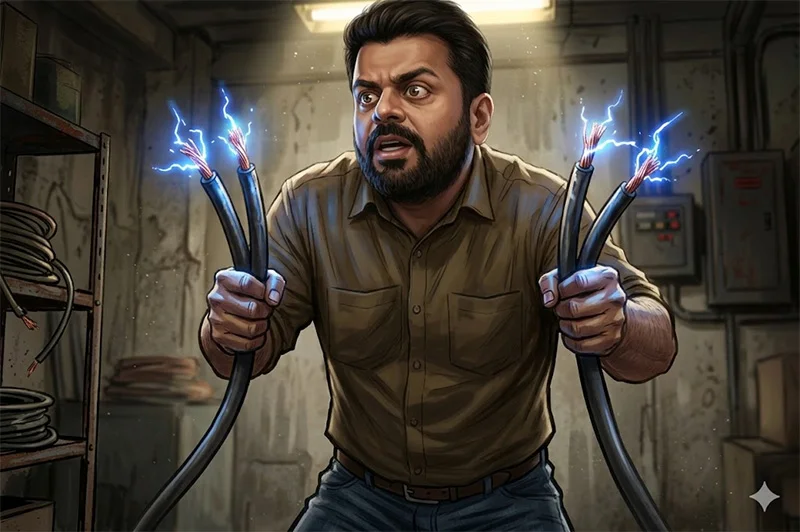
The recent increase in electricity tariffs in Sri Lanka has created serious social and economic concerns. The increase applies especially to consumers who use more than 180 units of electricity. Their bills may rise by more than 18%.
At first, this may look like a decision that affects only “high electricity users.” But in reality, the impact is much wider. It affects households, businesses, industries, services, inflation, investment, and national competitiveness.
Sri Lanka is now facing a situation where electricity bills continue to rise again and again. This should not be seen as a one-time tariff revision. If the price of one unit of electricity keeps increasing, the deeper problem is not only household consumption. The real problem is the high cost of electricity generation. Therefore, the unit price of electricity cannot be reduced in a sustainable way unless the cost of generation is reduced first.
The main concern is that Sri Lanka still does not seem to have a clear, practical, and measurable long-term plan to reduce generation costs. What we often hear are political explanations, temporary promises, and hopeful statements. But hope alone cannot reduce electricity tariffs. What the country needs is a realistic national plan. It must focus on low-cost power generation, efficient management, renewable energy investment, and serious reforms in the electricity sector.
Electricity is a basic foundation of a modern economy. When its price increases, it affects the cost of living, business costs, production, and national competitiveness. According to the Public Utilities Commission of Sri Lanka (PUCSL) announcements, the May 2026 revision applies especially to domestic consumers above 180 units, government institutions, large industries, and several GP2 and GP3 categories.
Direct Impact: Pressure on the Middle Class
The tariff increase directly affects middle-class and upper-middle-class families that use more than 180 units of electricity. In urban and semi-urban life, many electrical appliances are now part of daily life. These include refrigerators, water pumps, computers, internet devices, washing machines, fans, rice cookers, and other household equipment.
Many families exceed 180 units not because they live luxuriously, but because modern life requires electricity. Therefore, it is not realistic to say that this decision affects only the rich. Children’s education, online learning, work from home, small home-based businesses, water supply, communication, and basic household safety all depend on electricity.
According to PUCSL examples, a household using 210 units may see its bill increase from Rs. 9,570 to Rs. 11,330. This is an increase of about Rs. 1,760 per month, or nearly Rs. 21,000 per year. For families whose incomes are not rising at the same pace, this is a serious burden. It reduces savings. It affects education, health, food, and daily consumption. When electricity bills, food prices, fuel prices, and loan costs rise together, middle-class confidence falls. Families begin to cut non-essential spending. This also reduces market demand. Therefore, the electricity tariff increase is not just another monthly bill. It is a deeper pressure on living standards, savings, and economic security.
Impact on the Business Sector
The wider impact of electricity tariff increases is seen most clearly in the business sector. Factories, hotels, restaurants, supermarkets, cold storage facilities, bakeries, printing businesses, IT firms, and small and medium enterprises all depend heavily on electricity.
When electricity costs rise, production and service costs also rise.
In 2024, the industrial sector alone used 4,622 GWh of electricity. This was 30.4% of total electricity sales. The General Purpose category used 3,472 GWh, or 22.9%. This shows that a large share of electricity consumption takes place in the production and service economy.
For large industries, electricity is essential for machinery, refrigeration, lighting, packaging, water pumping, and quality control. When the unit price of electricity rises, the cost of producing each item also rises. Businesses then have only a few choices. They can pass the cost to consumers. They can reduce their profit margins. Or they can reduce production.
For small and medium businesses, the pressure is even greater. Large companies may be able to invest in solar power, energy-efficient machinery, or special credit facilities. But small businesses have limited options. For a bakery, salon, grocery shop, or small restaurant, a higher electricity bill directly affects daily cash flow. In the end, these costs enter the prices of goods and services. The price of food at a restaurant, goods at a shop, products from a factory, and services at a hotel can all rise because of electricity costs.
In the long run, this can also affect employment, wage increases, business expansion, and overall economic activity.
Inflation and the Cost of Living
Higher electricity tariffs can create a risk of rising inflation. Electricity is not only a household bill. It is also a key cost in food production, storage, transport, industry, hotels, hospitals, schools, and many services.
When electricity costs rise, that cost gradually enters the prices of goods and services.
Sri Lanka’s recent experience shows how dangerous this can be. In September 2022, annual inflation based on the Colombo Consumer Price Index reached 69.8%. Food inflation reached 94.9%, while non-food inflation reached 57.6%. This shows how quickly living costs can rise when fuel, electricity, transport, and exchange rate pressures come together. In April 2026, CCPI-based annual inflation also increased from 2.2% in March to 5.4%. Non-food inflation rose from 2.9% to 6.8%. This is an important warning.
Under the CCPI base year 2021=100, the category “Housing, Water, Electricity, Gas and Other Fuels” carries a weight of about 31.6% in the consumer price index. Therefore, higher electricity and fuel costs can have a direct impact on inflation. The risk is that an electricity bill increase does not stop with the electricity bill. It can later spread into food prices, medicine prices, school services, hospital services, restaurant prices, and transport costs. This is known as a second-round effect.
When inflation remains high, real household income falls. Even if salaries remain the same in numbers, people can buy less with that salary. There is another danger. If people and businesses expect prices to keep rising, businesses may raise prices early. Workers may demand higher wages. Suppliers may sign contracts at higher prices. This can create a wage-price spiral. Therefore, the inflationary impact of electricity tariff increases should not be treated lightly. The country needs more than tariff increases to cover institutional losses. It needs a long-term plan to reduce the cost of electricity generation, diversify the energy mix, and protect the cost of living.
Coal, Oil, and the Cost of Power Generation
One major reason for rising electricity tariffs is the way electricity is generated. Consumers see only the final bill. But behind that bill are fuel choices, power plant efficiency, import costs, exchange rates, and weaknesses in energy planning.
A major part of Sri Lanka’s electricity generation still depends on coal and fuel oil. In 2024, total electricity generation was 16,802 GWh. Coal accounted for 32.6%. CEB oil-based generation accounted for 9.3%. IPP oil-based generation accounted for 4.6%. Together, coal and oil-based generation made up nearly 46% of total generation. This is very important for tariff decisions.
Coal power plants such as Norochcholai provide relatively low-cost base power. But when such plants face maintenance problems, technical failures, or unexpected shutdowns, the country loses low-cost electricity. It then has to use more expensive oil-based power plants.
According to CEB 2024 data, the fuel cost of one unit of electricity from Lakvijaya coal power was Rs. 17.96 per kWh. But some diesel and LAD power plants cost more than Rs. 40 to Rs. 100 per kWh. This clearly shows how the generation mix affects the unit price of electricity.
Coal and oil are also imported fuels. They depend on foreign exchange. When global fuel prices rise, when the rupee weakens, or when geopolitical risks increase, electricity generation costs also rise. Therefore, a real discussion on reducing electricity tariffs must begin with reducing generation costs. Sri Lanka needs a practical plan to move towards lower-cost, reliable, and locally available energy sources.
Inefficiency and Policy Weaknesses
Another major reason for repeated tariff increases is long-term inefficiency in the electricity sector. Old transmission systems, power losses, delayed projects, inefficient procurement, political interference, and the absence of a stable energy policy have weakened electricity planning.
An efficient electricity system needs timely investment in low-cost power plants. Existing plants must be properly maintained. Transmission and distribution systems must be modernized. Renewable energy projects must be connected to the grid without unnecessary delay. When these steps are not taken on time, the country becomes dependent on expensive emergency solutions. Sri Lanka has natural advantages in solar, wind, and small hydro power. But delays in approvals, limited grid capacity, legal uncertainty for investors, and frequent policy changes have prevented the country from using this potential fully. This is a lost economic opportunity.
Another weakness is that decisions in the electricity sector are often driven more by politics than by technical and economic logic. Tariff decisions, power plant selection, project approvals, and institutional reforms should be based on professional judgment. When decisions are made for short-term popularity, the long-term cost is paid by the public.
Therefore, a plan to reduce electricity tariffs cannot be only a tariff announcement. It must be a full reform programme. It must reduce generation costs, reduce dependence on imported fuel, strengthen the grid, speed up renewable energy, and reduce institutional inefficiency. Without such a plan, electricity bills will continue to remain a burden on the people.
Impact on National Competitiveness
High electricity costs do not affect households alone. They also affect production costs, export prices, investment decisions, tourism costs, and the service economy. Therefore, electricity tariffs are a key factor in national competitiveness.
When electricity costs rise, it becomes harder for exporters to compete on price. Sectors such as apparel, food processing, rubber, plastics, packaging, printing, and light manufacturing all depend on electricity. International buyers are highly price-sensitive. If Sri Lanka’s production costs rise, its export competitiveness weakens.
Tourism is also affected. Hotels, restaurants, guest houses, and villas need electricity for air conditioning, lighting, laundry, kitchens, water heating, and digital systems. When electricity bills rise, room rates and service charges may also rise. This can make Sri Lanka less attractive compared to regional competitors. The IT, BPO, software, and digital service sectors also need reliable and affordable electricity. Higher power costs and uncertainty about supply can reduce the confidence of foreign clients and investors.
Foreign investors consider energy costs when choosing a country. They also look at labour costs, tax policy, legal stability, market access, and infrastructure. If electricity is expensive, the system is inefficient, and policy is unstable, investors see the country as risky. In the long run, this can affect new investment, jobs, wage growth, and economic growth. Therefore, electricity tariff increases must also be seen as a national competitiveness issue. If Sri Lanka wants to expand exports, strengthen tourism, attract investment, and create jobs, it needs a reliable electricity system at a reasonable cost.
A Positive Side: An Opportunity for Energy Efficiency
This situation should not be seen only negatively. Higher electricity prices can also encourage people to think more seriously about energy efficiency.
According to CEB 2024 data, electricity exported to the grid through rooftop solar increased from 632 GWh in 2023 to 867 GWh in 2024. This is a 37% increase. The number of rooftop solar accounts increased from 39,827 to 73,050, an 83% increase. This is a positive sign. It shows that people are looking for energy alternatives. But this alone is not enough. Individual solar adoption is useful, but the country still needs a reliable, coordinated, and long-term national energy plan to reduce overall generation costs.
What Should Be Done?
Sri Lanka cannot depend only on short-term solutions. The country needs a national policy that builds long-term energy security and economic stability.
Renewable energy must be accelerated. Sri Lanka has strong natural advantages in solar, wind, and hydro power. But delays in projects, policy instability, and investment barriers have prevented the country from using this potential fully. Households and businesses should be encouraged to use solar power. This can be done through affordable loans, tax relief, and a clear legal framework. If people can produce part of their own electricity, pressure on the national grid will also reduce.
Efficiency, Transparency, and Public Responsibility
To solve this problem, inefficiency and waste in the electricity sector must be reduced. Transmission losses, delayed projects, weak management, and political interference must be addressed. Financial transparency and professional management in institutions such as the Ceylon Electricity Board are also essential. This can help rebuild public trust.
The public also has a role. People should use electricity responsibly. They should use energy-efficient appliances, reduce waste, and change consumption habits where possible. But public responsibility alone cannot solve the problem. Even if people save electricity, the unit price cannot fall if national generation costs remain high. Therefore, responsible consumption by the public and a serious government plan to reduce generation costs must go together.
Rising electricity tariffs are not only about a higher electricity bill. They affect the entire economy. They influence household living costs, business costs, inflation, investment, and national competitiveness. The long-term solution is not repeated tariff increases. It is an efficient, diversified, and sustainable energy policy. The price of one unit of electricity can be reduced only when the cost of producing that unit is reduced. Political hope is not enough. Sri Lanka needs a practical national programme with clear targets, a timeline, investment support, faster renewable energy development, and reforms to reduce inefficiency in the electricity sector. Without such a programme, promises to reduce electricity bills will sound to the public like another political explanation and another hopeful statement.
by Prof. Ranjith Bandara

For more than sixty years, Sri Lanka has suffered repeated man-made disasters. Every few years, something man-made (manufactured) happens that pushes the country back by almost a decade. These setbacks did not come from natural disasters; they came from selfish people, from violence, from poor leadership, and from decisions made without thinking about the nation’s future.
Since 1971, uprisings, terrorism, and political chaos have taken thousands of young lives. Each time, the country lost not only its youth but also its stability, its economy, and its hope.
But the deeper problem began even earlier. From the 1960s onward, many political leaders stopped caring about long-term development. They focused on personal gains and power, not the progress of the country. They made decisions for personal gain (financially and politically), not national benefit.
In recent years, the situation has become even more alarming. People who exposed corruption—whistleblowers, honest officers, financial scandals, and potential witnesses—have been threatened, silenced, or even killed. A mafia-style political culture has taken root, far worse than what existed decades ago. It reminds many of the fear and instability that surrounded the events of 1971.
How can a nation move forward when:
* Law and order is weak,
* Financial fraud happens repeatedly,
* Uninformed politicians make decisions for short-term gain and neglect the growth of the country,
* The unitary nature and sovereignty of the country are threatened, and
* The judiciary is manipulated, weakening justice and democracy?
No country can progress and maintain true democracy under these conditions. If this continues, Sri Lanka risks falling into a deeper crisis—possibly worse than the collapse seen in Ethiopia’s recent turmoil.
A Message to Every Voter
From now on, at each election, the responsibility lies with the people.
Don’t vote for untrustworthy people or those who have committed violent or fraudulent activity,
Don’t blindly vote for a party—study their policies (not gimmicks) and see whether you can trust them.
Don’t be carried away by posters, advertisements, and slogans (these are paid activities by beneficiaries), with empty promises.
Every voter must think carefully about:
* The nation’s future, maintenance of the unitary nature and its sovereignty,
* Law and order and the safety of their children,
* The stability of the economy, and
* The protection of democracy and the independence of justice.
Sri Lanka cannot afford to repeat the same mistakes. It cannot afford leaders who bring fear, division (religious, ethnic, etc.), or corruption. It cannot afford another decade lost.
The ballot box is the only peaceful tool the people have to protect the country. Use it wisely. Choose stability over chaos, integrity over corruption, and national interest over personal loyalty.
The future of Sri Lanka depends on the choices that you make now.
Sri Lanka has suffered one man-made disaster after another. Every few years, something (manufactured) happens that pushes the country’s development and economy back by nearly a decade. Since 1971, much of this damage came first from the JVP uprisings and later from the LTTE conflict. Each time, it is unfortunate that thousands of young people lose their lives for no good reason, and the nation (innocent) families) paid a heavy price.
Since the early 1960s onward, many so-called political leaders have stopped thinking about Sri Lanka’s long-term future. They focused on grabbing power at any cost in national elections, not progress. False promises and misleading voters mostly accomplished these.
In recent years, the situation has become even worse. People who raised genuine concerns, exposed major governmental corruptions and scandals, or acted as whistleblowers have been threatened, silenced, or even killed. A real mafia-like system now operates in the country—far worse than anything seen before. It feels dangerously similar (or can become worse) to the atmosphere that led to the 1971 tragedy.
How can a nation move forward when there is no law and order, when significant financial fraud happens one after another, and when politicians chase short-term personal gain instead of protecting the country’s future? How can democracy survive when the judiciary is manipulated, when judicial freedom is weakened, and when the unitary nature and sovereignty of the nation are put at risk? This cannot continue.
Unless something changes soon, Sri Lanka may face an even deeper financial, unruly, and social collapse—possibly worse than what happened in Ethiopia’s economic crisis.
by Dr. Sunil J Wimalawansa
Professor of Medicine

Where the mind is without fear
And the head is held high
Where knowledge is free
Where the world has not been broken up
Into fragments by narrow domestic walls
Where words come out from the depths of truth …
Into that heaven of freedom, my Father,
Let my country awake
That was not a man ‘for all seasons’ (who are plentiful) but a man for the ages, writing those words in this kali yugaya.
Do you hear them? Now? Now, as ever, as everywhere?
Fifty years ago, I wrote commentaries on each poem in Gitanjali, from which those lines are taken. They were a kind of ‘crib’, paid for by an early tutory, Atlas Hall, which sort of prepared students for examinations at tertiary level here and in London. One might note that Gitanjali and other works by writers in South Asia (other than those touted by spurious academics as ‘post-modernist’ and ‘post-colonial’, – read ‘pro-colonial’) – have long been sent out of the window of classrooms in this country.
The immediate occasion that called for these comments was the presentation of a selection of songs, from Tagore’s extensive body of work, at the Wendt last Monday. It was by the foremost exponent today of robindra sangeeth, Rezwana Chowdhury Bannya of Bangladesh & Santiniketan (yes, that sounds as if Santiniketan is a nation by itself). In a singularly happy namaskar towards each other, it was co-hosted by the High Commissions of Bangladesh & India. The fact that both have adopted Tagore’s songs as their national anthems may be indicative of ‘the breaking down of narrow domestic walls’. ‘The Partition of Bengal’, first attempted by the British over a hundred years ago, failed because the people, Tagore active among them, did not want it. Four decades later they, the Brits again, succeeded in rebuilding that wall though it remains porous. As Sarath Amunugama observed, in a felicitous address in which he referred both to ‘the partition’, and to national anthems, and as is well known here, Ananda Samarakone’s namo, namo matha was inspired by his stay at Santiniketan. In the 1930s to the 1960s the latter connection has vitalised our dancing, singing, ‘music-making’ and our knowledge of theatre.
A somewhat hilarious outcome of the latter occurred about ten years ago at the Tower Hall, when Suchitra Mitra, whose name would for the foreseeable future be inextricably associated with robindra-sangeeth, invited our ‘old boys’ of Santiniketan to come up and join her in their school song. Most of them had lost the words and more than there seemed to be of them had lost their voice, leaving Suchitra Mitra up there encouraging and reprimanding them like a Montessori teacher.
And now we have, before our astonished gaze, a Cricket World Cup with loads of some kinds of drama, including a battle royal among three South-Asian giants of that English game with the sort of statutory-leaders of India, Pakistan and Sri Lanka present, polishing or twirling moustaches and waving gaily in the general direction of our millions of hoi polloi via TV cameras.
Sorry, yuga purusha, no trace of awareness around. So how could you and all of us whom you left behind (not that it could any longer matter to us as it did not to you), expect guilt?
The special issue of INDIA Perspectives (IP) that marked this occasion is a handsome work. The IP journal has always been a high-quality production but this was a revelation. Specialists in each area of Tagore’s interests and activities have contributed articles on his views on schooling, theatre, painting, religion, nationalism and internationalism, science, rural economics and so on, each from his/her perspective. What follows is drawn from that work.
Although he and Gandhi were friends and, says Amartya Sen, he had popularised the appellation Mahatma for Gandhi, Tagore had seen that the chakra was not the route to India’s future. There could be many views on that: Tagore may have overlooked its symbolic value or significance. After all, the bottom-line is that the European tribes became rich by pillaging the rest of the world and rendering those people poor. The textile industry in England, for instance, ‘developed’ by destroying the textile industry in Bengal; the methods adopted were various, the most direct being that of chopping off the fingers of the weavers. Tagore should have been aware of that.
The brutality of the British ‘raj’ was not unknown to him. Following the massacre of over 1,000 unarmed people at a gathering at Jaliawallah Bargh by a Brigadier (named Dyer) Tagore returned a ‘knighthood’ ‘bestowed’ on him by their monarch. A dozen years later, the oh-so-valiant Brits followed up the massacre at Jaliawallah Bargh by, in Tagore’s words, ‘a concerted homicidal attack, under cover of darkness, on defenseless prisoners undergoing the system of barbaric incarceration’. Any other examples, anyone?
Tagore had been an inveterate traveler and the questions that arise in ‘looking inwards and outwards’ tend to remain unresolved. He had foreseen that ‘science’ would be prostituted, that it would not serve the world community of living things, that it would become a man-made calamity: ‘Science is at the beginning of the invasion of the material world and there goes on a furious scramble for plunder. Often things look hideously materialistic, and shamelessly belie man’s own nature.’
Nevertheless he seems to have retained golden visions for what it was going to do: ‘But the day will come when some of the great processes of nature will be at the beck and call of every individual and at least the prime necessities of life will be supplied with very little care and cost’. (We have seen how Monsanto, Del Monte and fellow predators, have set about doing that). ‘To live will be as easy to man as to breathe, and his spirit will be free to create his own world.’ He was fortunate indeed in not being around to witness how the country he was born in and which had nourished his creativity has gone in the pursuit of command of the great processes of nature (and of her neighbours). Besides, the mega-mega weddings, etc., we are witness to the operations of an imperium hell-bent on evicting people from the lands, waterways and beaches that ‘the market’ covets.
How such a culture of science would choose to help the sick or, just a step further for such minds, to make the healthy ill, or, indeed, how such ‘science’ would be used to create, in Ralph Pieris’s term, ‘illth’ (not ‘wealth’), did not quite come to pass in his lifetime. Since his passing, we share a common experience of ‘patents’ on traditional medicines, including the most ubiquitous and widely / wisely used, kohomba or neem, of kotala himbutu and many others, acquired via ‘laws’ constructed by the ‘developed’ people aforementioned, and India’s experience in developing an antidote to the AIDS virus. They affirm the validity of Tagore’s ‘gut reaction’ to where ‘science’ may take the world and has indeed taken it.
Forty years ago Senaka Bibile initiated the construction and adoption of a formulary that reduced the number of drugs required in this country by some 80% and identified them by their generic name, and battle was joined. (Senaka was eventually eliminated/killed by a mercenary, from this part of this world, of Big-Pharma). That entity, Big-Pharma, has acquired control not only over the production of drugs and their marketing but over the entire range of activity that relates to health-care – systems of ‘referral’ and lab tests where such weren’t needed, so with hospitalisation or indoor treatment usually with yet more ‘tests’, ‘prescription drugs’, ‘insurance’ from an ‘approved’ company of blood suckers. Its control is most scandalously evident in the USA and includes a species of corruption that Tagore could not have conceived of. (robindra–sangeeth does not address such yet-to-be reality, nor do his plays and paintings). When Big-Pharma got their obedient servants in the USA administration to send in marines to force Bangladesh to allow their drugs in, the government and the people of Bangladesh, all honour to them, physically ‘repelled the boarders’.
Tagore lived in and came to terms with a changing world, and he responded to all of what he saw in terms that had not occurred to his contemporaries anywhere in ‘the known world’. There were others of course who had a like foresight. Though too numerous to mention here, I should think that Blake and Whitman belonged among them, – as did such great poets as Bharathari from centuries ago, and Subramaniam Bharathi, consigned to a pauper’s grave, from yesteryear. So many more through all the hundreds and thousands of years that don’t quite make up a kalpa.
We learn through the IP that Tagore’s name had been put up for the Nobel prize by a single member of the Royal Society, T S Moore, while 97 other members had collectively recommended Thomas Hardy. The Swedish Academy had picked Tagore out of 28 nominees. In a telegram conveying his acceptance of the award, Tagore expressed his appreciation of ‘the breadth of understanding which has brought the distant near, and has made the stranger a brother’. In these times, Sarkozy, Cameron and their ilk seem intent on making strangers of brothers.
A fallout of the instant fame it brought had been a loss of privacy (as Garcia Marquez and others discovered many decades later) and of the use of his time to get on with his work. Gitanjali was for the most part a rendering into English, by the poet himself, of his songs in Bangla. Translating a novel, short story or a play is no easy matter (as, with respect to Sinhala works, Ashley Halpe, Lakshmi de Silva, Vijitha Fernando et al could confirm). Hemingway had found the great Russians unreadable till he came upon the translations by Constance Garnett. Translating poetry is infinitely more difficult, (as Ranjini Obeyesekere and Lakshmi have shown) and Tagore was hounded by admirers to translate more of his work into English. He was called on to make his poetry accessible to those who had only English. His poems have since been put into English; among them, an effort I liked, a whole volume, was titled ‘I will not let you go’. Simply put, the title poem will not let you go.
Nevertheless, the task of translating works in other south Asian languages, to begin with, into Hindi, Bangla and Urdu and the other way is one that needs attention. Bangla has the second largest numbers of speakers in South Asia after Hindi – about two-thirds the number of Hindi-speakers. Bangladesh might consider setting up a kind of clearing house for such work, perhaps with SAARC support and located perhaps, at Silaideh, around Tagore’s ancestral land in Bangladesh. Maybe, as Tagore’s examples show, ‘start small’ would be a good approach.
On matters that have to do with ‘religion’, Tagore’s activities may be seen as being eclectic. He was a member of Brahmo, (of which Satyajit Ray and his father’s family were members), which took the Upanishads for text and had no truck with caste-orders of ‘Hinduism’ including the rationalization for it given in the Gita. He admired Sufism, presented a ‘Christothsava’ akin to Christmas, wrote on ‘Devotion to Buddhism’. His view on Siddhartha Gautama was: ‘This wisdom came, neither in texts of scripture, nor in symbols of deities, nor in religious practices sanctified by ages, but through the voice of a living man and the love that flowed from a human heart.’ The concept of nirvana had not attracted him and in that sense his perception of Buddhism seems to have been closer to that of the northern form than to the Theravada familiar to us here and in south-east Asia.
As with his experiments in theatre, where he moved away from the westernised urban mode to the folk-inspired dance-drama, so with music and song he moved away from the classical raag to folk music. That is a trajectory that our musicians should explore. He drew from other cultures – among the vibrant renderings given by Rezwana Chowdhury Bannya was one that gave a celebratory edge to ‘Ye banks & braes o’ bonnie Doon’.
My first encounter with robindra sangeeth occurred in Dhaka at the home of Mohamed Sirajuddin. When the late Prof. P P G L Siriwardena introduced us, Siraj exclaimed, ‘We are batch-mates’; what he meant was that he had joined the CSP (Civil Service of Pakistan) around the same time as I joined the CCS. As Secretary for Rural Development he did much to support cottage industries in Bangladesh and was familiar with our experience in that field. He invited artistes he valued, some, to my ears, at master level in robindra sangeeth, to perform at his place. I was struck by the variety of those who turned up to listen; there were friends, people from down – or off – the road, the Governor of the Central Bank, Ministers, colleagues … It reminded me of the glory days at Chitrasena’s in Kollupitiya. In an environment that seemed designed for chamber music, those songs sank into my heart. Among those who sang were a young couple who were TV stars but gave tribute to a middle-aged man, Farook, who was a master. Yes, robindra sangeeth, does need the male voice.
As Rezwana mentioned, delicately, as ‘in passing’, a problem that arises in appreciating such songs is that they are more sadly incomplete for the listener who has no Bangla than the emotions they do convey regardless. The affinity between Bangla and Sinhala is well known. (Some twenty years ago I sent a farmer from Berelihela, off Tissamaharama, to Dhaka for extended chats with fellow farmers from Asia and the Pacific. When I myself got there a few days later on allied business, I found that he had communicated very well indeed with people there in the only language he knew: his own). The present moment seems to offer an excellent opportunity for the High Commissions of Bangladesh and India to harness the active support of our government to set up an infrastructure for making Bangla accessible to our people. If, in these sort-of ‘market’ days a further incentive is required at this end, policy makers should be aware that workers and managers from here have contributed much to the resuscitation of a textile industry in Bangla that had been of an unparalleled excellence through the centuries.
by Gamini Seneviratne

Complete all projects funded under the LKR. 500 bllion allocation for Ditwah within this year – President

Development projects should be carried out in line with the practical needs of the people – PM

Ayesha Zafar’s rapid ton crushes Zimbabwe

Donald Trump lands in China for high-stakes meeting with Xi Jinping

Gujarat Titans go No.1 after Rabada and Holder rout Sunrisers Hyderabad

Showers will occur in the Western, Sabaragamuwa, Central, North-western and Northern provinces and in Anuradhapura, Trincomalee, Galle and Matara districts

‘Dates have the highest sugar content to fight Coronavirus’

Sunday Island 27 December – Headlines

#SundayIsland 17th December – Headlines

Sunday Island – 28th March

Sunday Island Headlines – 21 March

Sunday Island – 21st February – Headlines
-

 News7 days ago
MIT expert warns of catastrophic consequences of USD 2.5 mn Treasury heist
-
 News4 days ago
Lanka Port City officials to meet investors in Dubai
-

 Editorial7 days ago
Clean Sri Lanka and dirty politics
-
 News16 hours ago
Ex-SriLankan CEO’s death: Controversy surrounds execution of bail bond
-

 Editorial6 days ago
The Vijay factor
-
 News5 days ago
SLPP expresses concern over death of former SriLankan CEO
-
 News5 days ago
Police inform Fort Magistrate’s Court of finding ex-CEO of SriLankan dead under suspicious circumstances
-
 Features6 days ago
Palm leaf manuscripts of Sri Lanka – 1