
Business
‘World’s most global inclusive finance platform originating in Sri Lanka transforming global communities’


Success didn’t happen overnight for U Thant Zin, nor did it come easily. U Thant Zin is a paddy farmer in Auglan, Myanmar. For smallholder farmers like him, the lack of collateral and expertise in the agricultural sector remain significant barriers to obtaining financing. Defying the odds, LOLC Myanmar lent an agricultural loan to U Thant Zin amounting to US$ 670 in 2019. Currently, he is the proud owner of a 10-acre paddy field owing to hard work, perseverance, and multiple loans from LOLC Myanmar.
Ruth Olawepo, an owner of a clothing store, dreamt of expanding her business to other states in Nigeria and importing readymade abayas from Senegal. She decided to partner with Fina Trust Microfinance Bank Nigeria, a subsidiary of LOLC, and availed of a loan of US$ 12,000 in 2021. Since the first loan, she is now on her third cycle with the bank and the loan amount has been increased to US$ 24,000. She currently has three shops in Lagos Island Branch and also has outlets upstate.
The lives of hundreds of such aspiring individuals around the world are being transformed through LOLC’s services that promote financial inclusion. The term ‘financial inclusion’ implies having access to useful and affordable financial products and services that meet people’s financial needs. The World Bank Group considers financial inclusion as a key enabler to reducing extreme poverty and boosting shared prosperity, while the International Monetary Fund (IMF) believes that financial inclusion facilitates efficient allocation of funds among entrepreneurs, in turn, increasing aggregate output. As a result, the benefits of inclusive finance translate into higher GDP growth. For instance, Cambodia’s GDP in 2007 was US$ 8.64 Bn (Word Bank data), whereas domestic credit to the private sector as a percentage of GDP was 18.2%. Within a time span of 13 years, Cambodia’s GDP reached US$ 25.87 Bn, while domestic credit to the private sector grew to 139.6% of GDP, making Cambodia one of the fastest growing nations in the world, with an annualised GDP growth of 9.9% within this time period. During the same period, LOLC Cambodia’s gross loan portfolio grew from US$ 18.1 Mn to US$ 830.9 Mn by a CAGR of 37.6%.
Inclusive finance is critical for borrowers at the bottom of the pyramid as it gives them quick funding for entrepreneurial finance, unlike traditional finance, which is known for red tape and a slow credit financing process, with obstacles such as the borrower not being either eligible to get a loan or the lengthy loan processing times defeating the purpose of quick loans. The difference in LOLC’s inclusive finance services is that it provides quick financing, understanding the urgency of the bottom of the pyramid entrepreneurs and their lack of collateral. Committed to supporting the growth of micro borrowers, LOLC engages in continuous dialogue with borrowers and encourages significant adoption of technology to provide smaller ticket size loans.
This has significantly boosted the global economies – with the elevation of per capita GDP of the population.
LOLC’s ambitious global growth and expansion have been propelled by its passion to provide inclusive finance. The group commenced operations in 1980 with ORIX Corporation of Japan, and then set up a leasing company to pioneer leasing in Sri Lanka in partnership with IFC and BOC. At the time, it was providing asset-backed financing, since it was difficult to access financing through traditional financial institutions. LOLC grew rapidly and by early 2000 adopted an inclusive finance strategy to enhance access to its array of innovative financial products for people at the bottom of the pyramid. Within a short span of time, LOLC became the largest inclusive finance operator in Sri Lanka. LOLC’s unique business methodology is also referred to in academia, as reflected by its inclusion as a case study in the INSEAD Business School’s prestigious MBA programme.
LOLC expanded its horizons outside Sri Lanka in 2007 by setting up its first operation in Cambodia. Since then it has been on a phenomenal journey, expanding globally and serving the bottom of the pyramid populations in each of its markets successfully. As of now, LOLC’s financial model is empowering communities in 15 countries. By the end of 2023, it will have a presence in 22 countries. Its largest inclusive finance target markets are in the developing countries of Asia, Africa and potentially Latin America. LOLC is positioned to cover a population footprint of over 2.1 Bn in Asia, which provides a glimpse into its powerful influence. Similarly, it has a presence in 7 countries in Africa, covering a 482 million population base. By the end of 2023, LOLC is looking to enter Latin America, which will be another breakthrough market for the group. Accordingly, the group will be the only finance house with a scale that has the ability to cover most of the addressable inclusive finance markets globally.
LOLC has implemented greater digitalisation of its systems and processes and is able to on-board customers digitally at the field level by empowering field officers with mobile devices such as tabs, thereby eliminating duplication, since the branch can access data directly from the tabs in real time. This enables field officers to also access information in real-time and take quick decisions at customers’ doorsteps, thereby enhancing efficiency internally while shortening the time taken to approve and disburse loans.











By Ifham Nizam
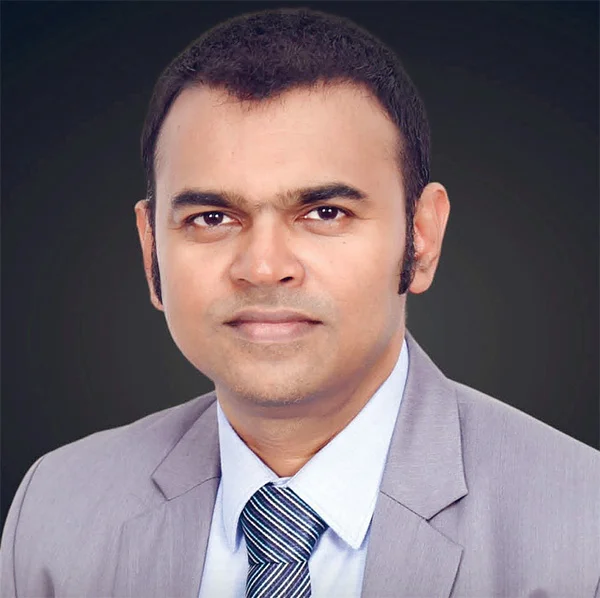
National Transmission Network Service Provider (Pvt) Ltd. (NTNSP), has secured third place in Sri Lanka’s fiercely contested 160 MW/640 MWh Battery Energy Storage System (BESS) tender, beating a number of established private-sector energy players in a major competitive procurement exercise just six months after the restructuring of the Ceylon Electricity Board (CEB).
The result marks a significant early indication that a newly restructured CEB successor company can compete on a commercial footing with established players in the rapidly expanding energy market, Senior Engineer Pubudhu Niroshan told The Island Financial Review.
More significantly, Niroshan said NTNSP’s entry into the tender helped intensify competition and contributed to a roughly 10% reduction in the lowest bid compared with the previous 160 MW/640 MWh BESS procurement, potentially delivering a more favourable outcome for electricity consumers.
“Entering such a highly competitive bidding process within just six months of restructuring and emerging third is by no means an easy task, Niroshan said.
He said the achievement had to be viewed in the context of the calibre and number of competitors involved in the process, adding that NTNSP had demonstrated that a successor company emerging from the CEB restructuring could step into a competitive commercial environment and hold its own against established businesses.
The significance of NTNSP’s participation, however, extended beyond its third-place ranking.
According to Niroshan, the company’s decision to enter the BESS procurement created an additional layer of competition, forcing other bidders to sharpen their commercial offers.
‘The first and second-ranked bidders had NTNSP as another competitor. That itself created additional competitive pressure, he said.
The BESS procurement involved a total capacity of 160 MW/640 MWh, with the programme divided into individual projects.
The procurement was designed to bring private and other eligible project proponents into the development and operation of battery storage facilities, providing an important mechanism for integrating renewable energy and strengthening the electricity system.
The outcome, he said, was particularly important for electricity consumers because greater competition in procurement could ultimately translate into lower costs for the power system.
‘Once you have several serious players competing, offering a fair and competitive price becomes essential. That is ultimately good for the consumer, he said.
Niroshan also referred to concerns previously raised by NTNSP before the Public Utilities Commission of Sri Lanka (PUCSL) regarding prices submitted for BESS projects under the Feed-in Tariff (FiT) mechanism.
He said subsequent market developments had provided support for the view that some of the prices submitted under the FiT mechanism were comparatively high.
For Niroshan, the experience also demonstrated why competition must remain at the heart of the restructuring of the electricity sector.

Serendib Flour Mills continued its longstanding commitment to rural communities through the fifth edition of Serendib Uththama Dalada, more than 100 elderly mothers and fathers from remote farming communities to experience the sacred Sri Dalada Perahera in Kandy.
Held on 26 August 2026, the initiative brought together elderly parents from Mahalakotuwa, Elahera and Attanakadawala, many of whom have spent a lifetime engaged in agriculture and contributing towards sustaining communities across the country. For these elders, the initiative offered an opportunity to undertake a deeply meaningful spiritual journey and witness one of Sri Lanka’s most revered religious and cultural traditions.
Conducted under the campaign thought, “Nourishing the hearts of elderly parents with spiritual merits, who once nourished a generation,” Serendib Uththama Dalada recognises the lifelong contribution and sacrifices of farming mothers and fathers while creating an experience that may otherwise remain beyond their reach.
Serendib Flour Mills facilitated the entire journey, providing safe and comfortable return transportation to Kandy aboard three dedicated buses. Special arrangements were also made to enable the participants to worship at the Sri Dalada Maligawa, followed by reserved seating at a specially erected VIP stand, allowing them to comfortably witness the grandeur of the Dalada Perahera.
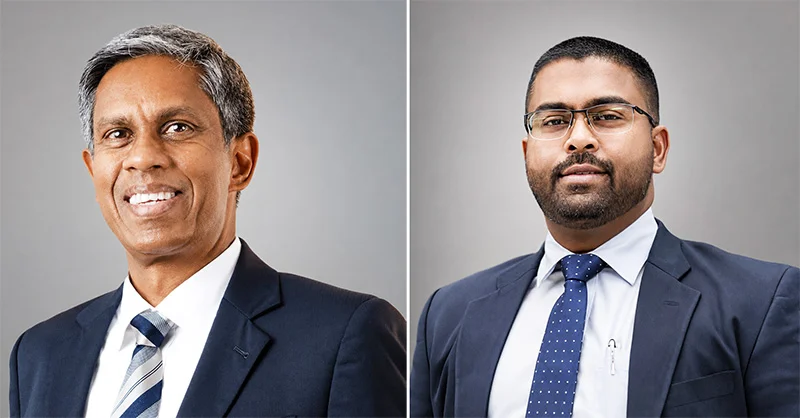
Siyapatha Finance PLC, the largest fully-owned finance company of the Sampath Bank Group, delivered an exceptional financial performance for the six months ended 30 June 2026, reflecting the Company’s continued strategic growth initiatives, resilient asset quality, and unwavering commitment to sustainable value creation.
The Company recorded a profit after tax (PAT) of Rs. 1,007 million, a robust 43 percent increase from Rs. 706 million in the corresponding period of 2025, while profit before taxes (PBT) grew 38 percent to Rs. 2,334 million from Rs. 1,689 million, demonstrating sustained market and customer confidence in the Company’s core operations.
“Our performance in the first half of 2026 is a clear reflection of Siyapatha Finance’s strategic foresight and our unwavering commitment to sustainable growth,” said Siyapatha Finance Chief Executive Officer Mathisha Hewawitharana. “Surpassing the Rs. 104 billion mark in total assets while significantly improving our asset quality underscores the strength of our core operations and the deep trust our customers place in us. As we navigate the evolving macroeconomic landscape, we remain focused on prudent risk management and delivering enhanced value to our stakeholders.”
The Company’s core business operations continued to yield strong returns, with total interest income growing to Rs. 7,719 million from Rs. 5,272 million a year earlier, driving net interest income up to Rs. 3,487 million from Rs. 2,629 million, signifying the Company’s efficient management of assets and liabilities. Other income strengthened to Rs. 1,054 million from Rs. 826 million, reinforcing the effectiveness of the Company’s revenue diversification strategy. The cost-to-income ratio improved to 49 percent from 54 percent, a testament to the Company’s continued focus on operational efficiency and process optimization.
Asset quality strengthened markedly during the period, underscoring the success of Siyapatha Finance’s prudent credit risk management and proactive recovery initiatives. The gross stage 3 loans ratio improved to 4 percent from 8 percent a year earlier, while the net stage 3 loans ratio declined to 2 percent from 3 percent.

UN Delegation Meets Chief of Staff to the President

Afghanistan to host Zimbabwe, Bangladesh in ODI tri-series

Sandhu’s 6 for 7 seals Pakistan’s semi-final spot

INS Udaygiri makes port call in Colombo

Showers in the Uva, Central and Eastern provinces and in Polonnaruwa district

22A: Exclusion of 8 petitions questioned, action filed against SC Registrar, others

‘Dates have the highest sugar content to fight Coronavirus’

Sunday Island 27 December – Headlines

#SundayIsland 17th December – Headlines

Sunday Island – 28th March

Sunday Island Headlines – 21 March

Sunday Island – 21st February – Headlines
-

 News6 days ago
Denied of promotion to SC despite vacancies, justice Gurusinghe retires
-

 Latest News6 days ago
Grade 5 scholarship exam results released
-

 News6 days ago
22A: SC urged to suspend hearing, appoint full bench
-

 Midweek Review7 days ago
The local and global dynamics of Sri Lanka’s 22nd Amendment
-

 News4 days ago
Namal remanded until Sept. 18 over Airbus deal investigation
-

 Latest News3 days ago
Tharanga creates history with Diamond League crown in Brussels
-

 News6 days ago
Govt. seeks NATO assistance
-

 News7 days ago
40 professional organisations and TU oppose proposed 22A