
Features
Ceylon’s first university in memory and imagination

OLD PERADENIYA
By Ernest Macintyre
INTRODUCTION
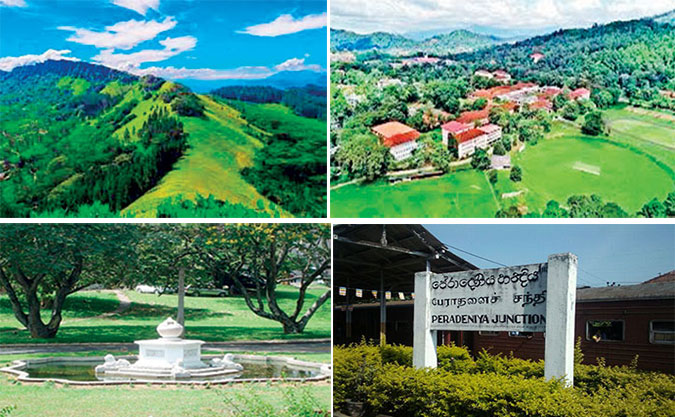
The Mahaweli River, 335 long, the longest river in Lanka, has its beginning in a remote village of Nuwara-Eliya District in the central hills, and ends going into the sea at the Bay of Bengal on the east coast at Trincomalee. As it passes Kandy, the main town of the central province, and goes south about six kilometers, it bends at an elbow to the shape of an arm, to cradle within an expanse of habitation born from nature accommodating Lankan classical and colonial architecture, the residential University of Ceylon, Peradeniya.
From the sandy banks of the river the richly vegetated land slopes gently upward till it reaches the old Galaha Road along which on either side, from the Botanical Gardens junction, north to the ancient Buddhist village of Hindagla ,south, are the buildings designed by architect Shirley D’ Alwis. Sir Ivor Jennings, the first Vice Chancellor took the lead in proposing and constructing the sober and dignified monument in architect Shirley D’Alwis’s honour that is situated at the first roundabout on this central road of the campus with a shallow pond all around it.
The Mahaweli from which we rose up to Galaha road is only one side of the story of nature’s promise. On the other side of Galaha, all along, the land rises further to reach in the distance, the Hantana chain of mountains. Hantana is a chain of seven mountains, surrounded by forest. From the top of the mountains is seen, at the rising of the sun, the University, faraway.
This sunrise in 1955, all was quiet on the campus. There were no students, yet. Ones already at university had four more weeks before term started. But shortly, the many hundreds of new students, those who had just gained entrance would arrive.
So we have a little time to take a walk along Galaha Road Near the village of Hindagala, in the south, where in the mid-1950s the campus ended, was the large Ramanathan Hall. It was the largest of the halls of residence, with three floors and named after Sir Ponnambalam Ramanathan who was associated with the movement for independence from Britain for the colony of Ceylon.
Turning back from Ramanathan along Galaha Road ,returning northwards, quite close to Ramanathan was Sangamitta Hall and Hilda Obeyesekere Hall, and also close by, up a hill on the Hantana side was James Peiris Hall. All three for female undergrads.
Sangamitta Hall needs a little more telling; it being the only one with a ancient historical name. Sangamitta was the title or description given to the daughter of King Ashoka of India (about 270 BC). Her name was Ayapali, and was referred to as Sangamitta when she joined the order of Buddhist nuns. Sangamitta and her brother Mahinda were sent by Ashoka their father to spread the Word of The Buddha south across India and ending in Lanka.
James Peiris and Hilda Obeyesekare whom the other two close by halls were named after, were prominent and wealthy social and political figures of the early twentieth century.
To divert now to an undergraduate activity allowable in adulthood in a residential facility of both sexes. The young men called it Kissing Bend. Despite the mischievous manipulation of language enjoyed freely in Peradeniya , Kissing Bend was not a curved part of the physical make up of one of the genders. It was an area of hard asphalt on the ground on Galaha road, where we are now on our walk through the campus.
A location of love’s reluctant closing moments of an evening after Mahaweli meetings. The Kissing Bend, with a big tree covering on one side. Kissing goodnight was just before seven in the evening, the stipulated time for women to be back in their halls, after returning from sessions close together on the banks of the Mahaveli .
young males and females, without the cultural restraint of Pirivena origin, in a university of Western imagination, allowed them freedom of nature. An old English song, ” I Met My Little Bright Eyed Doll, Down By The Riverside”, may have had its Sinhala version, much sung in Peradeniya at the time, ” Mage as deka dilisena bonikka ganga iney sambuna”, emerging from the banks of Peradeniya’s Mahaweli.
Kissing Bend was an important land mark, for as Professor Sarachchandra is reported to have once said to undergraduates: “Peradeniya is not only for passing exams, it is for the passing of young lives, at a time when it is surging.” He did not mean kissing at the bend, yet it relates to human surge and emotion in youth ,and accompanying thought, extends to works of art, which the professor had in mind. It requires imagination to extend to the surge of art, closely pressed bodies and upright, with entangled legs at Kissing Bend. Today it is probably called “imbina wangua“, with the growth of the use of Sinhala.
Moving from alongside Hilda Obeyasekara Hall now in the other direction from Hindagala, the next important structures in those times were the impressive administrative buildings, library and lecture rooms on the left and Arunachalam and Jayatileka halls side by side on the right, named again, after important political figures of the time. From Jayatitilake Hall can be seen the Shirley D’Awis memorial. Honouring the architect who in design, gave to Peradeniya man’s complement to nature. These buildings were given special mention, whatever the intention of the words mean, when the recently departed Queen of Britain and her husband Philip formally declared the University of Ceylon, open.
In the view from Jayatilleka Hall beyond this memorial was the sports grounds and tennis courts. To the right of the sports field was a makeshift accommodation, the Faculty Club. The evening club for the academic staff, who in keeping with their intellectual claims could think better with a drink. This club, apart from private homes was the only place arrack could be had on campus. The two immediate progressions from schooldays to university were ” áll but” freedom with the opposite sex and arrack. The former was easily and discreetly available, the latter prohibited on campus, yet consumed growingly, in the town of Peradeniya and the city of Kandy, bringing back its heartily displayed consumption to the campus.
Further north to the right on Galaha road, beyond Jayatilleka Hall was a narrow asphalt strip branching upwards to the seventh student residence, Marrs Hall, named after an important academic and university official, in its early Colombo University College of London days.
Seven halls of residence somewhat autonomous with an elected student president and a warden. The close social relationships were within each hall, the three meal sittings a convenient regrouping after dispersal into the larger campus body for lectures and tutorials, presided over by people who now, the years have taken away, together with some whom they lectured to, now in their mid eighties. Luudowyk, Passe, Doric de Souza, Sarachchandra, Siri Gunasinghe, H.A.de .S Gunasekara, Vaithianandan, Cuthbert Amarasinghe, Van den Driesen, Sinnappa Arasaratnam, La Brooy, Miss. Mathiaparanam and Basil Mendis. Some from the many.
The ones they educated in the mid fifties will be now in their mid eighties. The lecturers will be remembered for some time more.
Very modern the halls of residence were, with every contemporary facility students could ask for. In fact, Ramanathan Hall may have gone too far , socially inconsiderate, in installing bidets in each toilet. Small porcelain basins fixed to the floor, which spouted water upwards when its tap was opened, to serve the sitter on the bidet. Bidet is an old French word for “pony”, and was associated with Royalty ,the notion that one “rides” or straddles a bidet much like a pony is ridden. Even the Colombo “kultur” students felt more secure in their old manual methods, leaving the French “ponies” as obtrusive ornaments.
To get back to those times, we now move outside to a place that mainly served the campus. The steam train from Colombo had arrived at the small nearby Peradeniya railway station.
That morning the small station was packed with young men and women.They had come from all parts of the country. A good many were from Colombo schools. Amongst names of Sinhala and Tamil origin there were also significant numbers of Fernandos, Silvas and Pereras, resulting from the long Portuguese part of Ceylon history.
Because of free education introduced in 1948, they were well matched in numbers by those from rural Ceylon . South, Central Ceylon and North West below the Jaffna Peninsula which brought into the campus names like Deekiriwewa and Menikdiwela. TheNorth Westerners converged at Polgahawela, and then to Colombo, to change trains for Peradeniya.
The Central Province provided a mixture of Colombo and rural types. Breckenridge , Dhanapala and Senaratne are three we remember, from Trinity College and Premaratne the cricketer from Katugastota. They were not at the station, because they were close enough to Peradeniya.
There were the not so westernised Tamils from Jaffna and the Eastern Province. Not as westernised as the young Tamil men and women of the Colombo schools who had a long history of migration from Jaffna, from 1905, when the first train left Kankesanthurai for the capital city. Singhams, Lingams, Moorthys, Samys amongst others were all there at Peradeniya.
The Ceylon Moors were well spread, Colombo, Kandy, Jaffna and the Eastern Province. We remember Raheem of Royal ,Lafir and Mohamed Mustapha Ibrahim. So, the chatter on the station platform was very mixed. English, mostly from the Colombo schools and the Burghers, Sinhala from the very large area of provinces outside Colombo and Tamil from north and east.
Females, jostled with the males, in a way schoolboys and schoolgirls which they were a few months ago, had not been allowed. They would all be in close residence very soon, after transport from the station in vans. With the exception that females lived in separate halls, morning to evening they were free to be with males, including evening privacy on the banks of the Mahaweli, and at dusk, parting proximities of “Kissing Bend”.
Men together with women hiking up to Hantane in the weekends was another opportunity by which this university helped indicate, conservatively and intelligently, that men and women were meant by nature and civilization to prepare, to mate in proper time.
Significant on the station that morning was race or cultural mixing together. Peradeniya was probably the first social formation in Lanka where Sinhalese and Tamils, Ceylon Moors ,Malays and Burghers in significant numbers would actually live closely and rub shoulders with each other, sharing rooms , dining tables , sport, art , social events and academic discourse.
College House of University College, London University, had a small number of Sinhalese, Tamils and other minorities resident, but that university was largely non-residential. Government departments and commercial firms had both Sinhalese and Tamils and other ethnicities. But no institution in Lanka, before Peradeniya had thousands as one community living, day and night, closely together.
Peradeniya especially opened the opportunity for Sinhalese, Tamil, Moors, Burghers, and Malay youth to explore and conclude that they were one humanity.
Two other identifiable “cultural” groups, outside of ethnicity, that did not initially mix, that is in the 1950’s, were what students called the “O Facs” and the “Kulturs”. The students of the oriental faculties, largely from rural schools who opted for Pali, Sanskrit, Sinhala apart from Economics and History and the urban school students, mainly Colombo, Kandy, Galle and the like who did English. Latin, Greek, Economics, Western Philosophy, History.
It was unfortunate that this unreal social divide very likely created by the cultural snobbery of Colombo school products came into the campus, for it was the “O Facs” who within a year stamped Peradeniya with a cultural creation hallmarking Sri Lankan culture and launching it into South Asian recognition. Maname, a Sinhala creation that stands alongside any dramatic work, anywhere. In time this remnant colonial division imperceptibly wore out.
This day of Peradeniya also saw the last congregation of Burghers, in significant number, benefiting university contribution to the country. Though it is common to hear of Portuguese Burghers and Dutch Burghers of Ceylon, they are of varied European descent like in the composition of the mixed European De Meuron Regiment first employed by the Dutch , then serving the British and finally being disbanded in 1816 in Colombo to become part of the population From that station platform or directly onto the campus that morning, there were names like Ludowyk, Pietresz, Ondaatje, Roosmale- Cocq, Taylor, Hingert, De Zoysa, Elhart, Van der Gert, De Lay, Moldrich, Wouterz, Solomons, Jansen, Roberts, De Saram, Nicolle, Schrader, Forbes and Hepponstal. Most were unaware this morning that Peradeniya was to be only a short stopover, on their way to Melbourne.
The government’s language policy change, displacing English was a year later. Hepponstall sensed the change. He migrated to Melbourne after only one term in Peradeniya, causing Vanderdergert to quip, “What happened to Hepponstall can happen to us all”. And it eventually did. A lost tribe of Lanka. Still identifiable mainly in Melbourne.
Soon the station platform was again empty. Vans organized by the university transported the freshers to their halls of residence where a small number arriving in their parent’s cars were already establishing themselves.
A wonderful blessing of nature and human architecture was to be theirs for the next three or four years.Beyond the promise of this bend in the river on either side spread the also alluring country that sustained it. This island’s modern history, a trajectory, which Aristotle would have called a given Plot or circumstance could not leave its first university untouched, as this story will unfold.

The prison violence in Negombo has become the first major crisis to confront the government since it came to power. The government may or may not be responsible for creating the conditions that have accumulated over decades and made the prison system a powder keg. The fact is the government’s Ratama Ekata anti-drug crackdown boosted the countrywide prison population from 28,000, in late 2024, to 41,000, in 2026. The conditions of imprisonment include chronic overcrowding, poor infrastructure, inadequate staffing, the penetration of organised crime and drug networks into prisons, and the long neglect of prison reform by successive governments. The Negombo Prison was housing approximately 2,600 inmates at the time of the clashes although it was built for only about 650. By the time order was restored, 29 people, including seven prison officers, had lost their lives and more than 100 others had been injured.
Justice Minister Harshana Nanayakkara accepted responsibility before Parliament, visited the Prison and announced immediate measures, including legislative changes to facilitate bail and alternatives to remanding prisoners. The NPP government needs to accept responsibility for its failure to anticipate the danger, to respond with sufficient speed and competence once the problem had erupted. A dangerous situation can be observed countrywide with more than 42,000 prisoners being held in prisons designed to accommodate about 10,000 inmates. The magnitude of the Negombo Prison tragedy needs to be understood not merely as an isolated incident but as a warning that the government cannot postpone structural reforms indefinitely. A government elected on the promise of changing the system cannot justify repeating the failures of its predecessors on the basis that it is sincere and uncorrupt unlike them.
The failure to move beyond promises has become evident in several other sectors as well. Farmers continue to agitate over unresolved problems. Plantation workers continue to seek meaningful integration into national life. Many of them, who were victims of Cyclone Ditwah, continue to live in miserable conditions due to the government’s slowness in dealing with their problems of their lack of ownership of lands and homes. The Mylathamadu cattle farmers of Batticaloa have issues once again even after two presidents, President Ranil Wickremesinghe and now President Anura Kumara Dissanayake ordered evacuation of intruders in terms of court orders. But the local police and the Mahaweli Authority officials seem slow to take any actions, even to the extent of not complying with judicial decisions. Victims of past human rights violations and thousands of families of missing persons are still waiting for justice. The promised repeal of the Prevention of Terrorism Act has yet to materialise. Prison reform has now joined this growing list of deferred commitments.
NPP Pledges
The National People’s Power election manifesto promised not merely honest government but systemic transformation. Under the section dealing with prisons, it pledged to restructure the prison system, reduce overcrowding, expand open prison facilities, strengthen rehabilitation through education, vocational training and psychological support, establish a formal parole system and transform prisons from places of punishment into centres of rehabilitation and reintegration. Those promises reflected international best practice and recognised that a humane prison system is essential to a democratic society. Yet nearly two years into its term little visible progress has been made in implementing these reforms.
Sri Lanka has witnessed different types of prison violence. Some have erupted spontaneously because of intolerable prison conditions, overcrowding and frustration. Others have occurred under circumstances that raised alarming questions about state complicity. The massacre of 53 Tamil political prisoners inside Welikada Prison during the anti-Tamil violence of July 1983 remains one of the darkest chapters in the country’s history. Those prisoners were not protected despite being under state custody. The Mahara Prison violence of November 2020, in which 11 inmates were killed after protests over Covid conditions, similarly generated serious allegations regarding the targeted use of weapons and led to widespread calls for an independent investigation.
Following the deadly violence at Mahara Prison during the Covid pandemic, then Opposition party leader Anura Kumara Dissanayake declared in Parliament that “those who are remanded and imprisoned are under the custody of the state. Therefore, the primary responsibility for the safety of the lives of the prisoners and detainees who are in state custody lies with the government.” He further said that “it is entirely unacceptable in a democratic nation that upholds human rights for prisoners, who are under the protection of the state, to be gunned down while in government custody.” But in the Negombo tragedy once again the state, with President Dissanayake at the helm, was unable to protect the inmates though there is no evidence that the government orchestrated the violence. Being in power for two years there is a rightful expectation that it could have taken better preventive action.
Urgency Needed
There are two special conditions, however, that make the Negombo Prison tragedy a possible turning point rather than merely another episode in Sri Lanka’s long history of prison violence. The first is that until these events the country had enjoyed an extended period without major organised political or communal violence. This improvement was recognised internationally when Sri Lanka rose 30 places in the 2025 Global Peace Index to rank 67 among 163 countries. The Index measures countries on three broad indicators, namely the level of societal safety and security, the extent of ongoing domestic and international conflict, and the degree of militarisation. The improvement reflects the country’s recovery from the years of political upheaval and economic collapse and suggests that Sri Lanka is moving towards a more peaceful future.
The second distinguishing feature is that the present government has no known links to organised crime or the underworld that has so often been associated with sections of the political establishment in the past. This is one of its greatest strengths. President Anura Kumara Dissanayake has spoken publicly about the nexus between organised crime, drug trafficking, money laundering and politics, and has challenged political parties to take action against members who maintain links with criminal networks. That willingness to confront organised crime gives the government a credibility that previous governments lacked. But integrity by itself is not enough. Honest intentions must be matched by administrative competence and political will. A government that seeks to change the system must demonstrate that it can reform and manage the institutions of the state more effectively than those who came before it. The Negombo tragedy suggests that this remains a major challenge.
The government’s greatest asset remains the trust that the public has placed in its sincerity. Unlike many previous governments, it is not burdened by allegations of protecting organised crime or profiting from corruption. That gives it a unique opportunity to undertake reforms that others could not credibly pursue. But it must not rest on its laurels in the belief it is superior to the rest. The Negombo Prison tragedy should become the catalyst for implementing the wider programme of reform promised in the election manifesto. Prison reform cannot be viewed in isolation. It is part of the broader commitment to change the system, strengthen public institutions and ensure that the state serves the people with competence as well as integrity. The reforms promised to rice farmers, cattle herders, plantation communities, victims of past human rights violations and all those who looked to the government for a new beginning deserve the same sense of urgency. Other priorities cannot justify postponing the structural changes that the NPP promised and the country has waited for decades.
by Jehan Perera
Features
Chandi: The one-tusked rebel who defied captivity and became a symbol of Sri Lanka’s wild spirit

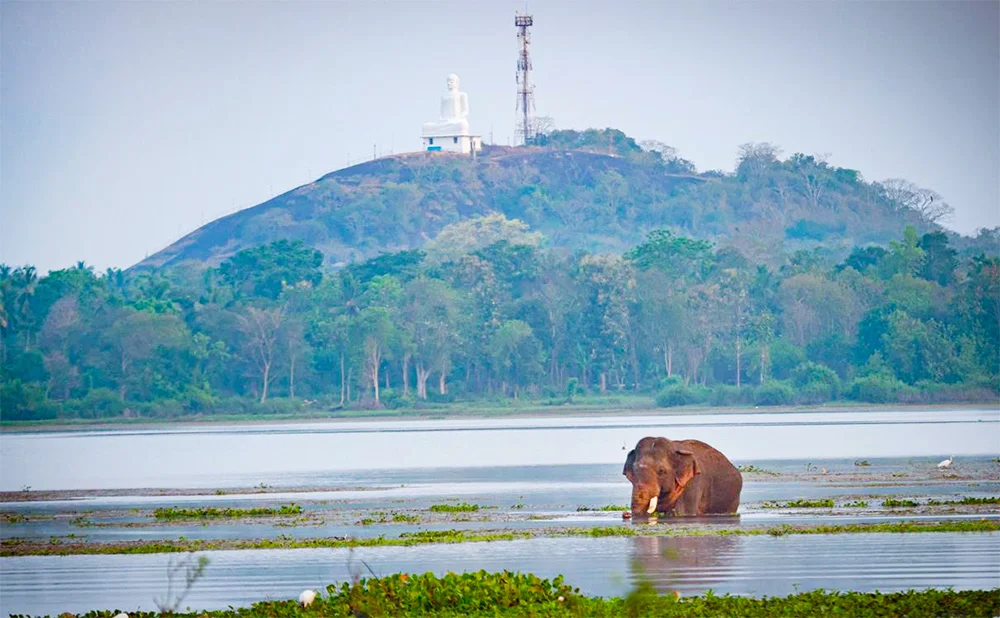
The story of Chandi (T081), the legendary one-tusked elephant of Galgamuwa, is not merely the tale of a wild tusker. It is the remarkable chronicle of an animal whose lifelong struggle for freedom challenged conventional wildlife management, captivated conservationists and villagers alike, and ultimately became one of the most inspiring chapters in Sri Lanka’s wildlife history.
Known affectionately as “Chandi”—a Sinhala name signifying courage, toughness and fearlessness—the iconic tusker earned his place among the country’s most celebrated wild elephants through sheer determination rather than physical grandeur. Born with only one tusk, he repeatedly demonstrated that true strength lies not in appearance but in resilience.
Wildlife photographer and conservationist Chandika Lakmal, founder of Wild Tuskers of Sri Lanka, believes Chandi’s life offers valuable lessons for wildlife conservation and the management of human-elephant conflict.
“Chandi was much more than an elephant.
He became the embodiment of freedom. Every chapter of his life reflected an extraordinary determination to return to the forests where he was born. He showed us that elephants possess deep memories and emotional connections to their homeland that cannot simply be erased through translocation.”
Lakmal said Chandi’s story deserves to be preserved not only as wildlife history but also as a reminder that conservation strategies must be guided by science and compassion.
Unlike most Sri Lankan tuskers, Chandi possessed only his right tusk after being born without the other. Yet that single tusk became an extraordinary tool in his battle against electric fences and other barriers erected across his traditional range.
For decades, Chandi roamed the forests and agricultural landscapes surrounding Galgamuwa, including Mudiyannegama, Ehatuwewa, Kaduru Wewa and Siyambalangamuwa. As cultivation expanded and natural habitats became increasingly fragmented, his encounters with people became more frequent.
Authorities first captured him around 2009 and transported him nearly 200 kilometres away to the Somawathiya National Park in an attempt to reduce conflict between villagers and wildlife.
Many believed the relocation marked the end of Chandi’s association with Galgamuwa.
They were mistaken.
Displaying one of the most extraordinary examples of elephant navigation recorded in Sri Lanka, Chandi travelled through unfamiliar forests and settlements before eventually finding his way back to his birthplace.
“His return astonished everyone,” Lakmal recalled. “Very few animals could accomplish such a journey. Chandi demonstrated the incredible navigational abilities of elephants and their unwavering attachment to familiar landscapes.”
Years later, renewed crop-raiding incidents resulted in another decision to remove him from his home.
This time, he was sent to the Horowpathana Elephant Holding Ground, where elephants considered troublesome are kept under confinement.
For many wildlife observers, Horowpathana represented a final destination.
Numerous elephants transferred there had struggled to adapt to restricted movement and limited access to natural feeding grounds.
Few expected Chandi ever to return.
Yet the fearless tusker once again surprised the nation.
He escaped.
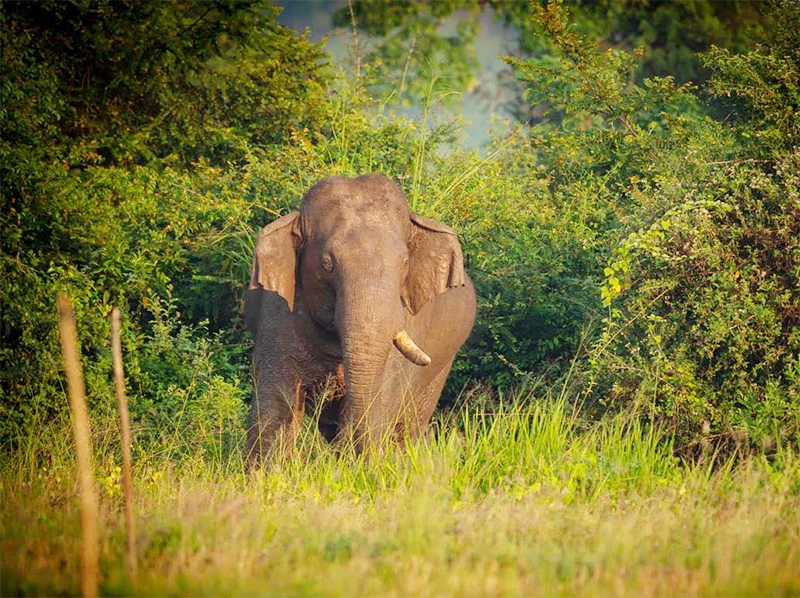
Breaking through barriers that were believed to be secure, Chandi returned to Galgamuwa, reclaiming the forests that had shaped his life.
His remarkable escape became one of the most talked-about wildlife stories in Sri Lanka.
As Chandi aged, deteriorating eyesight increasingly drove him towards cultivated lands in search of food.
Concerned about renewed conflict, authorities captured him once more around 2018 and transferred him back to Horowpathana.
This time, however, every conceivable measure had been taken to prevent another escape.
Massive reinforced concrete pillars were embedded deep underground. Heavy steel cables linked the posts while multiple rows of electric fencing surrounded the enclosure. Steel spikes were fixed atop the pillars.
It was considered escape-proof.
Nevertheless, within months Chandi once again appeared in Galgamuwa.
To this day, nobody knows exactly how he managed to escape.
“That second escape has become one of the greatest mysteries in Sri Lanka’s wildlife history,” Lakmal said. “Despite all the engineering, Chandi proved once again that the desire for freedom can never be underestimated.”
Lakmal believes Chandi’s repeated returns challenged long-held assumptions about elephant translocation.
“His life clearly demonstrated that moving elephants away from their traditional home ranges is not always an effective long-term solution. Many elephants attempt to return, sometimes travelling hundreds of kilometres and creating even greater risks for themselves and people.”
In his twilight years, Chandi became noticeably calmer.
Poor eyesight reduced his movements, and instead of covering extensive distances he remained within a relatively small range around Galgamuwa.
Villagers frequently encountered him standing quietly in reservoirs, resting beneath trees or walking peacefully along rural roads.
Despite his formidable reputation from earlier years, he rarely displayed aggression toward people.
His calm demeanour transformed him into one of Sri Lanka’s favourite photographic subjects.
Wildlife enthusiasts travelled long distances simply to witness the legendary one-tusked giant.
According to Lakmal, Chandi developed an almost mythical status among elephant lovers.
“People admired him because he represented resilience.
He survived repeated captures, difficult relocations and confinement, yet never surrendered. His determination inspired thousands who followed his story.”
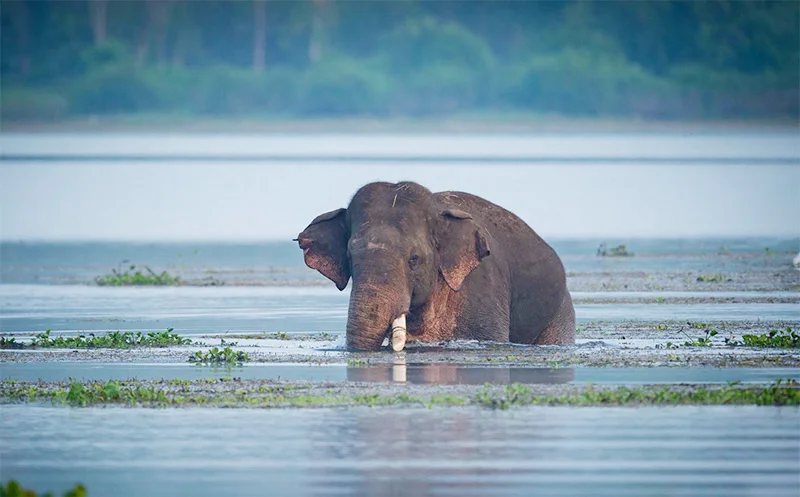
Local folklore added another colourful chapter to Chandi’s reputation.
Villagers often joked that the giant tusker occasionally developed a taste for “goda”, the illicit liquor brewed near remote village tanks.
Whether fact or folklore, the tale only strengthened his legendary status among local communities.
Towards the end of 2023, proposals surfaced once again to relocate Chandi, this time to Maduru Oya.
The proposal was met with strong opposition from conservationists, wildlife photographers and local residents.
Many argued that after spending a lifetime defending his homeland, Chandi deserved the dignity of living out his final years where he belonged.
Fortunately, the relocation never took place.
Instead, Chandi remained in Galgamuwa until the end.
His final battle came not against humans but against nature itself.
In late 2024, he suffered fatal injuries during a confrontation with another dominant tusker, Ratta (T079), near Kaduru Wewa.
He was believed to have been approximately 55 years old.
His death marked the end of an extraordinary life that had captured the imagination of wildlife lovers across Sri Lanka.
Lakmal says Chandi’s greatest legacy extends far beyond his individual story.
“Future generations should remember Chandi as the elephant who repeatedly chose freedom over captivity. His life teaches us that conservation is not simply about fencing animals or relocating them.
It is about understanding their behaviour, respecting their natural movements and protecting the landscapes that sustain them.”
He added that Sri Lanka’s escalating human-elephant conflict requires more scientific planning, habitat restoration and landscape-level conservation rather than relying solely on translocation.
For many conservationists, Chandi will forever remain one of the greatest symbols of the island’s wild heritage—a fearless survivor whose determination inspired a nation.
His story is ultimately one of resilience, belonging and freedom.
Long after his footprints have faded from the dusty roads of Galgamuwa, the legend of Chandi—the one-tusked rebel who refused to surrender his homeland—will continue to echo through Sri Lanka’s forests, reminding future generations that the spirit of the wild cannot easily be confined.
By Ifham Nizam

The current debate on increasing the retirement age of judges has attracted considerable public attention. While some people support the proposal as a means of retaining experienced members of the judiciary, others argue that extending the tenure of senior judges would unfairly delay promotional opportunities for younger judges.
This argument, though frequently repeated, overlooks a far more important question. The issue is not whether promotions will be delayed. The real question is whether Sri Lanka should deprive itself of the services of highly experienced professionals simply because they have reached a predetermined age.
The judiciary exists to serve the people, not to provide a career ladder for judges. Every decision relating to judicial appointments and retirement must therefore be guided by one overriding principle – the public interest.
Sri Lanka currently requires Supreme Court judges to retire at the age of sixty-five, Court of Appeal judges at sixty-three, High Court judges at sixty-one and Magistrates and District Judges at sixty. These retirement ages are considerably lower than those found in many developed countries.
Canada requires federally appointed judges to retire at seventy-five. Australia, New Zealand, Belgium, Denmark, Ireland, Japan, the Netherlands, Norway and Spain generally prescribe retirement at seventy, while Germany and France have retirement ages around sixty-seven. The United States goes even further by granting life tenure to federal judges, including Supreme Court Justices, subject to good behaviour.
These countries have adopted such policies because they recognise a simple reality. The value of a judge lies not in physical strength but in wisdom, maturity, independence, integrity and decades of accumulated legal knowledge.
Unlike many occupations where physical ability may decline with age, judicial competence often improves through experience. Every constitutional interpretation, every commercial dispute and every criminal appeal benefits from the judgment of individuals who have spent decades applying the law under diverse and often difficult circumstances.
Life expectancy has increased significantly throughout the world. Advances in healthcare have enabled many professionals to remain mentally alert and physically active well into their seventies. Society has readily accepted this reality. Distinguished surgeons continue to perform complex operations. University professors continue to teach and conduct research. Engineers continue to supervise major infrastructure projects. Senior accountants, architects and consultants continue to advise governments and multinational corporations. There is no convincing reason why judges, whose principal contribution is intellectual rather than physical, should be treated differently.
Opponents of extending judicial retirement often argue that doing so would reduce promotional opportunities for younger judges. While understandable from an individual career perspective, this argument should not determine national policy.
Promotions are not an end in themselves. Nor should vacancies be artificially created merely to accelerate career advancement.
No successful private corporation dismisses its most capable Chief Executive Officer simply because younger executives are waiting for promotion. Universities do not ask distinguished professors to retire to create vacancies for lecturers. Hospitals do not remove highly respected consultants because junior doctors are ready to advance. International engineering firms do not compel their most experienced engineers to leave office solely to facilitate promotions.
The objective of every successful institution is to retain capable people for as long as they continue to perform effectively. The judiciary should be no exception.
Indeed, experienced judges provide an invaluable service beyond deciding cases. They mentor younger judges, preserve institutional memory, maintain consistency in judicial standards and uphold the traditions and independence of the courts. Their guidance helps shape the next generation of judges and contributes directly to the quality of justice delivered to the public.
Another important consideration is Sri Lanka’s substantial backlog of litigation. Delays in the disposal of cases continue to frustrate litigants and undermine public confidence in the justice system. Retaining experienced judges for a few additional years could contribute significantly to reducing these delays while ensuring continuity and stability within the courts.
Naturally, extending the retirement age should not mean automatic continuation in office. Every extension should be subject to periodic medical examinations, continued professional competence, impeccable ethical standards and satisfactory performance. Those who are no longer able to discharge their responsibilities effectively should retire regardless of age.
More importantly, this discussion should not be confined to the judiciary.
Sri Lanka should undertake a comprehensive review of retirement policies throughout the public sector.
Our country has invested enormous public resources in educating and training doctors, engineers, university academics, scientists, accountants, administrators and numerous other specialists. Many of these professionals remain exceptionally capable long after reaching the current retirement age. Yet the nation often loses their services at precisely the stage when their knowledge, judgment and experience are at their highest.
This represents not merely a loss to the individual concerned but a significant loss to the country.
The argument that senior officers should retire simply to create promotional opportunities for juniors is equally unconvincing in every sector.
Promotions should be based on merit, competence, leadership and organisational need, not merely on vacancies created by compulsory retirement.
A well-managed institution should be capable of retaining outstanding senior professionals while simultaneously identifying, training and promoting younger officers on merit. Effective succession planning, mentoring and professional development are the proper solutions, not the premature loss of experience.
Public institutions exist to serve the people. Their primary responsibility is to deliver efficient, impartial and professional services. Every policy decision relating to retirement should therefore be assessed according to one simple question: Will this improve the quality of public service?
If the answer is yes, reform should be seriously considered.
If Sri Lanka wishes to strengthen its institutions and improve governance, it must make better use of one of its greatest national assets—the experience of its senior professionals.
Retirement should no longer be viewed simply as a matter of chronological age. It should increasingly be based on continued competence, medical fitness, integrity and the ability to contribute meaningfully to national development.
Such a policy would strengthen the judiciary, improve public administration, preserve invaluable institutional knowledge and ensure that Sri Lanka benefits fully from the wisdom and experience of those who have dedicated their lives to public service.
The objective should never be to retain people because they are senior.
The objective should be to retain the best people for as long as they remain capable of serving the nation with distinction.
by K. R. Pushparanjan

Oil prices hit 1-month high as US-Iran attacks dim Strait of Hormuz outlook

A few showers may occur in the Western, Sabaragamuwa and North-western provinces and in Kandy, Nuwara-Eliya, Galle and Matara districts

‘Sarasavi Diriya Abhiman’ programme launched under PM’s patronage

England to make late call on Declan Rice for World Cup semi-final

GEF-UNDP backs USD 38 mn drive to curb mercury, hazardous waste

Govt. bans import of goods made with forced labour

‘Dates have the highest sugar content to fight Coronavirus’

Sunday Island 27 December – Headlines

#SundayIsland 17th December – Headlines

Sunday Island – 28th March

Sunday Island Headlines – 21 March

Sunday Island – 21st February – Headlines
-
 News5 days ago
Herath warns prospective migrant workers not to get fleeced by racketeers
-

 Midweek Review7 days ago
Unexpected focus on ‘pieces of tin’ worn by military men
-
 Features3 days ago
Prison riots and politics: NPP’s biggest challenge and Sri Lanka’s biggest opportunity
-

 Editorial4 days ago
What’s the world coming to?
-
 Foreign News5 days ago
Tensions erupt in Indian state after 11-year-old raped and murdered
-
 Features5 days ago
Devanesan Annan – in Memoriam
-

 News6 days ago
Negombo Prison riot: Ensuring protection of prisoners fundamental responsibility of the state – UN
-

 Editorial7 days ago
Prison riots and political battles