
Features
Shared prosperity: A vision for South Asia

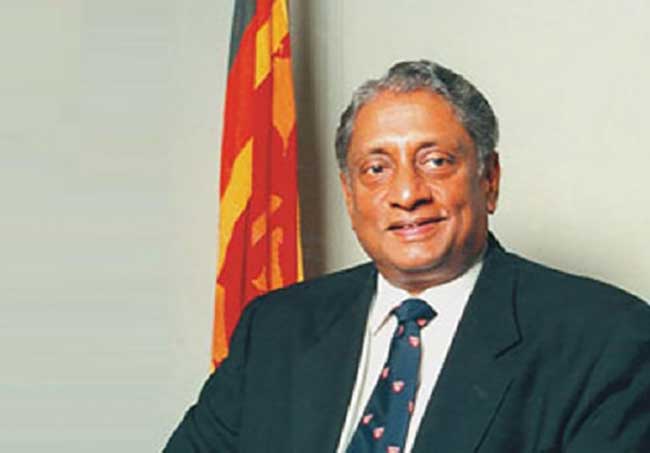
The Lakshman Kadirgamar Memorial Lecture 2023, delivered by Dr. A.K. Abdul Momen, MP
Hon’ble Foreign Minister of Bangladesh
on 03 Feb., 2023.
The event was hosted by the Lakshman Kdirgamar Institute
Of International Relations and Strategic StudiesColombo, Sri Lanka
I am profoundly honoured to have the opportunity to deliver this prestigious Lakshman Kadirgamar Memorial Lecture 2023. I thank the Foreign Minister of Sri Lanka, Mr. Ali Sabry, for this honour.
As an academician, it is my immense pleasure to share my thoughts with the esteemed audience of our close neighbour, Sri Lanka. I am also happy to return to this beautiful island, in less than a year, after the BIMSTEC Summit, held in Colombo.
At the outset, let me pay my homage to late Mr Lakshman Kadirgamar, one of Sri Lanka’s finest sons. He was Foreign Minister during some of the most challenging times in your recent history. Still, he steadily moved towards achieving his dream to build a multi-religious and multi-ethnic united Sri Lanka where all communities could live in harmony. He was a legal scholar and a leader, par excellence. He served to raise the level of the political discourse of Sri Lanka, both at home and abroad. His assassination was one of the most tragic losses for the country. However, we are confident that Lakshman Kadirgamar will be remembered by future generations of Sri Lankans for the values and principles he lived and died for which are even more relevant in present-day Sri Lanka.
I am aware of the regard the late Lakshman Kadirgamar held for Bangladesh. I am also aware that my Prime Minister Sheikh Hasina knew him well. Let me share an anecdote. During one of his visits to Bangladesh, after meeting my Prime Minister, on the way out, she impromptu took him to the stage of her political, public meeting and introduced him to the audience. He even spoke there for a few minutes. Mrs. Kadirgamar who is present here today, was a witness to that episode. That was an indication of how highly the late Kadirgamar was regarded by my Prime Minister. Perhaps all these prompted Mrs Suganthie Kadirgamar to think of hearing from Bangladesh at this year’s Memorial Lecture. I am deeply touched by this gesture. Thank you, Madam.
We see this as an extension of collaboration between LKI and our think tank BIISS.
Today I would like to share my thoughts on the theme “Shared Prosperity: A Vision for South Asia” which we hold very dearly to our heart.
It cannot begin without recalling our Father of the Nation Bangabandhu Sheikh Mujibur Rahman who provided our foreign policy dictum “Friendship to all, Malice to None” which he later focused more on promoting relations with neighbours first. His able daughter, Hon’ble Prime Minister Sheikh Hasina, aptly picked up the philosophy and extended it and went for its implementation.
Before I delve into the theme, it would be pertinent to put Bangladesh-Sri Lanka bilateral relations in perspective. The relationship is based on multitude of commonalities and close people-to-people contacts. Last year, we celebrated the 50th anniversary of the establishment of our diplomatic ties. We regularly exchange high level visits, are engaged in bilateral discussions on sectoral cooperation, including shipping, trade and commerce, education, agriculture, youth development, connectivity and so on. Our relationship is all about friendship, goodwill and good neighbourliness. Therefore, it is comfortable for me to speak before you in a broader perspective involving the entire region’s development aspect.
Now, why do we think of a holistic approach to prosperity? It is firstly due to the compulsion of the contemporary evolution of global order. We are now going through one of the most significant phases of human history, having already experienced an unprecedented Covid-19 pandemic. Just as we showed our capacity to tame the pandemic, another challenge came in our way – armed conflict in Europe. This has not only slowed down our recovery from the havoc done by the pandemic but also caused a global economic recession due to increase in energy and food prices and, more importantly, disruption of supply chain and financial transaction mechanism, owing to sanctions. Besides, we are also victims of rivalry between big and emerging economies and their strategic power play. All these necessitate the developing countries to get together.
The vision of shared prosperity becomes more relevant when we compare the development trajectory of South Asian countries. Indeed, we have made substantial progress. Some South Asian countries have already graduated to middle income status while others are making their way. Yet, poverty is still high in the region.
One predominant characteristic is that our economies display greater interest in integrating with the global economy than with each other. Regional cooperation, within the existing frameworks, has made only limited progress, being hostage to political and security considerations. The problems have their roots in the historical baggage, as well as the existing disparity in the regional structure. In addition, there are a number of outstanding issues and bilateral discords.
All these realities have left us a message that for survival, we need closer collaboration among neighbours, setting aside our differences; we must have concerted efforts through sharing of experiences and learning from each other.
In this backdrop, Bangladesh has been following a policy of shared prosperity, as a vision for the friendly neighbours of South Asia. Guided by Prime Minister Sheikh Hasina, we are advocating for inclusive development in the region. Our development trajectory and ideological stance dovetail our vision of shared prosperity for South Asia. Let me tell how we are doing it.
In Bangladesh, human development is the pillar of sustainable development. Our Father of the Nation, Bangabandhu Sheikh Mujibur Rahman, in his maiden speech, at the UNGA, in 1974, said, and I quote, “there is an international responsibility … to ensuring everyone the right to a standard living adequate for the health and the well-being of himself and his family”. Unquote.
This vision remains relevant even today. In that spirit, we are pursuing inclusive and people-centric development in association with regional and global efforts.
In the last decade, we have achieved rapid economic growth, ensuring social justice for all. Today, Bangladesh is acknowledged as one of the fastest growing economies in the world. We have reduced poverty from 41.5% to 20% in the last 14 years. Our per capita income has tripled in just a decade. Bangladesh has fulfilled all criterions for graduating from LDC to a developing country. Bangladesh is ranked as world’s 5th best COVID resilient country, and South Asia’s best performer.
Last year, we inaugurated the self-funded ‘Padma Multi-purpose Bridge”. A few days ago, we started the first ever Metro Rail service in our capital. Soon, we shall complete the 3.2 kilometer Bangabandhu Sheikh Mujibur Rahman Tunnel under the river Karnaphuli in Chattogram, the first in South Asia. Several other mega-projects are in the pipeline which will bring about significant economic upliftment.
Our aspiration is to transform Bangladesh into a knowledge-based ‘Smart Bangladesh” by 2041 and a prosperous and climate-resilient delta by 2100. We hope to attain these goals by way of ensuring women empowerment, sustainable economic growth and creating opportunities for all.
The priorities of Sheikh Hasina Government are the following:
First, provide food, Second, provide cloths, Third, shelter and accommodation to all and no one should be left behind, Fourth, Education, and Fifth, Healthcare to all. To achieve these goals, she promoted vehicles like Digital Bangladesh, innovation, foreign entrepreneurs and private initiatives in an atmosphere of regional peace, stability and security, and through connectivity. Bangladesh has become a hub of connectivity and looking forward to become a ‘Smart Bangladesh’.
When it comes to foreign policy, we have been pursuing neighbourhood diplomacy for amiable political relations with the South Asian neighbours alongside conducting a balancing act on strategic issues based on the philosophy of “shared prosperity”. I can name a few initiatives which speak of our commitment to the fulfilment of the philosophy.
Bangladesh, within its limited resources, is always ready to stand by her neighbours in times of emergency – be it natural calamity, or pandemic or economic crisis. We despatched essential medicines, medical equipment and technical assistance to the Maldives, Nepal, Bhutan and India during the peak period of the Covid-19 pandemic.
We had readily extended humanitarian assistance to Nepal when they faced the deadly earthquake, back in 2015. Last year, we helped the earthquake victims of Afghanistan. Prior to that, we contributed to the fund raised by the United Nations for the people of Afghanistan.
Further, our assistance for the people of Sri Lanka, with emergency medicines, during the moment of crisis, last year, or the currency SWAP arrangement, is the reflection of our commitment to our philosophy. These symbolic gestures were not about our capacity, pride or mere demonstration, rather it was purely about our sense of obligation to our neighbours. We strongly believe that shared prosperity comes with shared responsibility and development in a single country of a particular region may not sustain if others are not taken along.
In addition, we have resolved most of our critical issues with our neighbours, peacefully, through dialogue and discussion. For example, we have resolved our border demarcation problem with India, our maritime boundary with India and Myanmar, and also our water sharing with India, peacefully, through dialogue and discussion.
For an emerging region, like South Asia, we need to devise certain policies and implement those in a sustainable manner. I would like to share some of my thoughts which could be explored in quest for our shared prosperity and inclusive development:
First of all
, without regional peace and stability we would not be able to grow as aspired for. To that effect, our leaders in the region have to work closely on priority basis. We may have issues between neighbours but we have to transcend that to leave a legacy of harmony for our future generation so that a culture of peace and stability prevails in the region. We can vouch for it from our own experience. In Bangladesh, we are sheltering 1.1 million forcibly displaced Myanmar nationals. If remains unresolved, it has the potential to jeopardise the entire security architecture of South Asia. So, here the neighbourhood should support us for their own interests.
Second
, we need to revitalize our regional platforms and properly implement our initiatives taken under BIMSTEC and IORA. We are happy that BIMSTEC is progressing better, but we should endeavour to make it move always like a rolling machine.
Third
, we need to focus on regional trade and investment. Countries in South Asia had implemented trade liberalization within the framework of SAFTA but in a limited scale. Bangladesh is in the process of concluding Preferential Trade Agreement/Free Trade Agreement with several of its South Asian peers. We have already concluded PTA with Bhutan; are at an advanced stage of negotiations for PTA with Sri Lanka and discussions for PTA with Nepal are on. In the same spirit, Bangladesh is about to start negotiations on Comprehensive Economic Partnership Agreement (CEPA) with India.
Fourth,
a well-connected region brings immense economic benefits and leads to greater regional integration. To maximize our intra- and extra-regional trade potentials and enhance people-to-people contacts, Bangladesh is committed to regional and sub regional connectivity initiatives. Bangladesh’s geostrategic location is a big leverage which was rightly picked up by our Hon’ble Prime Minister. She benevolently offered connectivity in the form of transit and trans-shipment to our friendly neighbours for sustainable growth and collective prosperity of the region. As for Sri Lanka, if we can establish better shipping connectivity which our two countries are working on, the overall regional connectivity would be more robust.
Fifth
, We live in a globalized world, highly interconnected and interdependent. Our region has gone through similar experience and history. Bangladesh believes and promotes religious harmony. We have been promoting “Culture of Peace” across nations. The basic element of “Culture of Peace” is to inculcate a mindset of tolerance, a mind set of respect towards others, irrespective of religion, ethnicity, colour, background or race. If we can develop such mindset by stopping venom of hatred towards others, we can hope to have sustainable peace and stability across nations, leading to end of violence, wars, and terrorism in nations and regions. There won’t be millions of refugees or persecuted Rohingyas. Bangladesh takes special pride in it as even before Renaissance was started in Europe in the 17th century, even before America was discovered in 1492, in Bengal a campaign was started by Chandi Das as early as 1408 that says “সবার উপরে মানুষ সত্য; তাহার উপরে নাই”- humanity is above all and we still try to promote it.
Sixth
, we have to look beyond a traditional approach of development and challenges and revisit the non-traditional global crises of the recent time. We are experiencing food, fuel, fertiliser and energy shortages due to global politics and disruption of supply chain; as littoral and island countries, we face similar challenges of natural disasters; we have vast maritime area which needs effective maritime governance; we need to curb marine pollution and ensure responsible use of marine resources. Our collective, sincere and bold efforts are required to minimize the impacts of climate change as well.
In this context, I would like to share Bangladesh’s understanding and position.
Ocean Governance:
· Blue Economy:
Bangladesh is an avid proponent of Blue Economy and responsible use of marine resources for the benefit of the entire region. We are keen to utilize the full potential of our marine resources and have developed an integrated maritime policy, drawing on the inter-linkages between the different domains and functions of our seas, oceans and coastal areas. Bangladesh also values the importance of sound science, innovative management, effective enforcement, meaningful partnerships, and robust public participation as essential elements of Blue Economy. At this stage, we need support, technical expertise and investment for sustainable exploration and exploitation of marine resources. As the past and present chairs of IORA, Bangladesh and Sri Lanka should find out ways of bilateral collaboration particularly in Blue Economy in the Bay of Bengal.
· Controlling of Illegal, Unregulated and Unreported (IUU) fishing:
IUU fishing in the maritime territory of Bangladesh needs to be monitored and controlled. Our present capability of marine law enforcement in this regard is limited. Here regional collaboration would be very useful.
· Marine Pollution: Marine pollution is a major concern for all littoral countries. Micro-plastic contamination poses serious threat to marine eco system. Responsible tourism and appropriate legal framework, underpinned by regional collaboration, would greatly help.
Climate Change and Climate Security in the Bay of Bengal:
We have taken a whole-of-government and whole-of-society approach to make the country climate-resilient. Our Climate Change Strategy and Action Plan was formulated in 2009. Bangladesh has pioneered in establishing a climate fund, entirely from our own resources, in 2009. Nearly $443 million has been allocated to this fund since then.
Moreover, we are going to implement the ‘Mujib Climate Prosperity Plan’ to achieve low carbon economic growth for optimised prosperity and partnership. Green growth, resilient infrastructure and renewable energy are key pillars of this prosperity plan. This is a paradigm shift from vulnerability to resilience and now from resilience to prosperity.
As the immediate past Chair of the Climate Vulnerable Forum, we had promoted the interests of the climate vulnerable countries, including Sri Lanka, in the international platforms. Bangladesh is globally acclaimed for its remarkable success in climate adaptation, in particular in locally-led adaptation efforts. The Global Centre on Adaptation (GCA) South Asia regional office in Dhaka is disseminating local based innovative adaptation strategies to other climate vulnerable countries.
To rehabilitate the climate displaced people, we have undertaken one of the world’s largest housing projects which can shelter 4,500 climate displaced families. Under the “Ashrayan” project, a landmark initiative for the landless and homeless people, 450,000 families have been provided with houses. Keeping disaster resilience in mind, the project focuses on mitigation through afforestation, rainwater harvesting, solar home systems and improved cook stoves. In addition, the government has implemented river-bank protection, river excavation and dredging, building of embankment, excavation of irrigation canals and drainage canals in last 10 years at a massive scale. We feel, our national efforts need to be complemented by regional assistance.
As the chair of CVF and as a climate vulnerable country, our priority is to save this planet earth for our future generations. In order to save it, we need all countries, specially those that are major polluters, to come up with aggressive NDCs, so that global temperature remains below 1.5 degree Celsius, they should allocate more funds to climate change, they should share the burden of rehabilitation of ‘climate migrants’ that are uprooted from their sweet homes and traditional jobs due to erratic climatic changes, river erosion and additional salinity. We are happy that “loss and damage” has been introduced in COP-27.
Seventh
, South Asia needs a collective voice in the international forum for optimizing their own interests.
Finally,
and most importantly, South Asian leaders need similar political will for a better and prosperous region.
We hope that Bangladesh and its neighbours in South Asia would be able to tap the potentials of each other’s complementarities to further consolidate our relations to rise and shine as a region. May I conclude by reminding ourselves what a Bengali poet has said, and I quote,
Don’t be afraid of the cloud, sunshine is sure to follow.
With this, I conclude. I thank you all for your graceful presence and patience.
Joy Bangla, Joy Bangabandhu!


by Jehan Perera
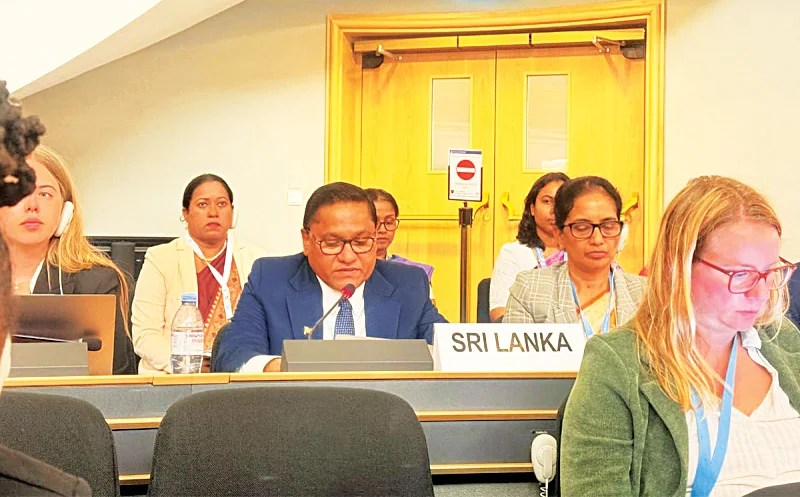
The government is preparing to meet the challenge of the UN Human Rights Council next month. A Sri Lankan delegation led by Foreign Minister Vijitha Herath is expected to attend the 63rd session of the UNHRC in Geneva, where the UN High Commissioner for Human Rights will present a written update on Sri Lanka. The government has already submitted its response to the advance version of the report prepared by the Office of the High Commissioner for Human Rights. The Foreign Minister, accompanied by officials from Colombo and Sri Lanka’s Permanent Mission in Geneva, is expected to explain the progress made on reconciliation, accountability and human rights. This is therefore an important moment for the government. It is an opportunity not merely to defend its record but to make new commitments.
The government has been criticised, as were its predecessors, for the manner in which it has dealt with past human rights violations, especially those connected with the thirty year war. The vexed issue of thousands of missing persons remains at the centre of this criticism. The government has sought to strengthen the Office on Missing Persons by providing it with additional staff and resources. It has also given support to the excavations at the Chemmani mass grave. Justice and National Integration Minister Harshana Nanayakkara has told Parliament that the government has allocated Rs. 57 million for the excavations and related legal work, though that figure has not been set against the cost of comparable forensic operations elsewhere.
The government also took the significant step of holding a national event in Jaffna to mark the International Day of the Victims of Enforced Disappearances. Minister Harshana Nanayakkara attended the event together with the Chairman of the Office on Missing Persons (OMP), Mahesh Katulanda, and other senior officials and political representatives. Their presence was meant to demonstrate the government’s commitment to addressing the issue. But on the victims’ side there is continuing dissatisfaction. The commemoration in Jaffna was met by a protest outside the District Secretariat, organised by families of the disappeared, who demanded to know what happened to relatives who, according to their accounts, surrendered to or were taken away by the military and were never heard from again.
Jaffna Protests
The protests in Jaffna are a reminder of the gap that remains between what the government is trying to do and what the victims expect. For these families, compensation and death certificates are not substitutes for knowing what actually happened to those they lost. The protests, and the police action taken against some of those who demonstrated, were reported by the international and Tamil media and by international human rights organisations, and overshadowed much of what the government had hoped to showcase at the Jaffna event. The OMP’s mandate is to establish the fate and whereabouts of missing persons, clarify the circumstances in which they went missing, and provide redress and assistance to their families. Accordingly, it has sought to verify complaints, remove duplicate entries, encourage people who have not yet made complaints to come forward, and facilitate compensation and other forms of assistance. The families of victims expect the OMP to do more to clarify the circumstances in which their loved ones went missing. An example would be the disappearance of 158 displaced Tamil persons from the Eastern University campus in Vantharumoolai, Batticaloa District, who were rounded up and forcibly removed in front of thousands of other similarly displaced persons, including the officer in charge Prof T Jayasingam.
The government has also increased the support available to families of the missing, and says it is accelerating the OMP’s investigations. But the scale of what remains undone is stark. There are around 11,000 complaints remaining to be investigated, according to the Justice Minister, while the OMP has reported that final information has been established in only 31 cases, communicated privately to the families concerned. On the government’s own figures, that puts the clearance rate for establishing fate and whereabouts at well under one percent of the outstanding caseload. There is a limit to what the OMP can do even with more resources and time. Its mandate is primarily to establish the fate and whereabouts of individual missing persons. It was not intended to produce the comprehensive, public account of the past that victims and the country as a whole require.
In 2015, the government headed by President Maithripala Sirisena and Prime Minister Ranil Wickremesinghe committed itself to establishing such a commission as part of a comprehensive approach to dealing with Sri Lanka’s past. Human Rights Council Resolution 30/1, which the government co-sponsored, specifically welcomed the proposed establishment of a “commission for truth, justice, reconciliation and non-recurrence”, together with an Office on Missing Persons and an Office for Reparations. However, the commitment to a truth-seeking mechanism was never fulfilled. The government should consider setting one up now. There is a growing feeling among Tamil people in the North and East that the government is failing to deliver on promises that are important to them. On issues important to them, they feel this is once again a Sinhala-dominated government like all the ones that came before.
Establish Truth
For the past two years the government has been concentrating on problems that it deems are important to the country as a whole such as the economy, development, poverty alleviation and corruption and criminality. However, the government needs to demonstrate that national unity means addressing the concerns of all communities, including those whose wounds from the war remain unhealed. Some of its own institutions have begun to act on this. The Office for National Unity and Reconciliation recently staged a drama entitled From Yakaweva to Nandikadal, depicting relationships between people that transcend the destruction caused by war. The drama portrayed the sufferings as well as the prejudices on both sides of the divide, from the Kebithigollewa bus bombing to the final days of the war around the Nandikadal lagoon. Its central message is that without forgiveness there cannot be reconciliation.
Particularly moving was the fact that the actors themselves came from families touched by the violence on both sides. The son of an LTTE Black Tiger leader and the daughter of an Army officer were among those who performed, alongside others who had experienced and survived some of the sites of carnage. The fact that a state institution is taking this message of reconciliation forward is itself a testament to the government’s openness to dealing with the past. A government institution can reach a population far larger than any civil society campaign could reach on its own, simply because the machinery of the state is so much more extensive. It is in this context that the government needs to give serious thought to setting up a Truth and Reconciliation Commission as the next step in the truth-seeking process. Special care will need to be taken to ensure that those who are appointed are not only politically non-partisan, but are acceptable to all the communities.
A Truth and Reconciliation Commission cannot by itself resolve all the wounds of the past. Nor can it replace criminal investigations or judicial proceedings where these are necessary. But it can provide something that existing institutions cannot provide on their own. This would be a comprehensive national process through which victims can be heard and the truth can be established. The general population needs to understand what happened, so that the country can begin to acknowledge its past without passing it on indefinitely to future generations. The government has already taken several steps. It is supporting the search for the truth at Chemmani. It has begun reaching out to families of the disappeared. Its own institutions are producing messages of reconciliation. But these are still not delivering the results that the victims and their families want. The next step should be to bring these efforts together to begin the journey from the missing to the missing truth, and from there to comprehensive justice.
A robe without recognition:
 by Anushka Kahandagamage
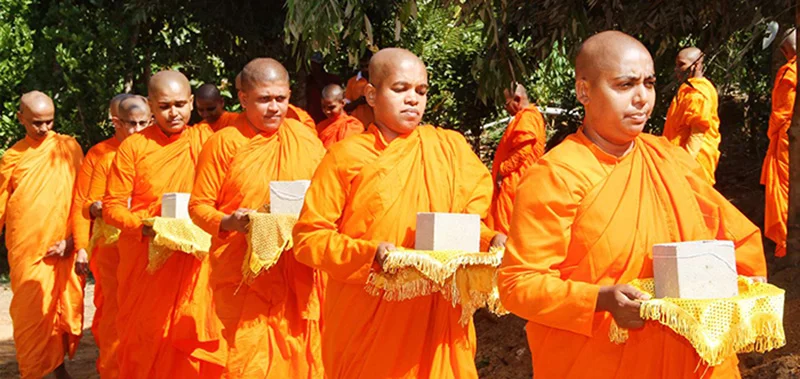
Education is the right of every child. Yet somewhere between childhood and the robe, that right becomes precarious for many Buddhist women in Sri Lanka, threatening not only their social standing, but their fundamental access to learning and the institutional discrimination they face. This piece is not about Buddhist disciplinary rules, which discriminates women, rather about how the state’s refusal to fully recognise bhikkhunis as bhikkhunis quietly determines what they are, and are not, permitted to learn.
Unlike dasasil mathas, who occupy a distinct and unofficial category within Buddhist renunciation, bhikkhunis belong to a formally ordained order recognised within Buddhist monastic tradition itself. Dasa sil mata means ‘ten-precept mother.’ They are women who observe the ten precepts (rather than the fuller Vinaya) and live a renunciant, celibate life, often in robes, but formal ordination has not translated into formal recognition by the state. Even after a Supreme Court ruling affirmed their right to be identified as bhikkhunis on their National Identity Cards, many still do not hold one. This stems from the hesitation of the male-dominated Buddhist hierarchy to recognise these women as part of the Theravada tradition, specifically refusing to validate their higher ordination. The identity card lists her title as Dasa Sil Mata. The ruling exists on paper, but they are still waiting for their identity cards. This is not a small bureaucratic oversight. It is the first link in a longer chain, one that reaches, eventually, into the classroom.
A Name Withheld
In Sri Lanka, there are 827 pirivenas, traditional monastic colleges that have, for centuries, served as the primary institutions of Buddhist education. Of these, only 12 are dedicated to female renunciants at all, and of those 12, just five serve fully ordained nuns specifically. The imbalance is stark on its face: 827 institutions for monks, five for fully ordained nuns. But the discrimination here is not only a matter of numbers, but it is also written into the very language used to name these institutions. Monks’ schools are called pirivena, a term carrying centuries of institutional weight, historical continuity, and state recognition under Sri Lanka’s education laws. Bhikkhunis’ schools, by contrast, are not called pirivenas at all. They are designated Buddha Sravika Meheni Adhyapana Ayathanaya (Institute for the Education of Buddha’s Female Disciples), a separate, parallel term that, however similar in function, withholds from bhikkhuni institutions the same legal and institutional status that the word ‘pirivena’ confers. Since there are ten-precept mothers, the institutes have not given the same name as the pirivena and lack the official as well as social recognition they deserve.
A Pattern a Century in the Making
Following the decline of the Buddhist nun (bhikkhuni) order after the Polonnaruwa period, the first woman to be robed again was ordained in 1905 as a dasasil matha. Although dasasil mathas have long served important religious and societal roles, they have historically lacked access to formal education. Unfortunately, today also, this pattern continuous to exist. Education, in this context, is never just about literacy or dhamma study. It is the currency of religious authority. A bhikkhuni denied equivalent education or educated in an institution the state refuses to name a pirivena, is denied that religious authority. She may know the Tipitaka as well as any monk yet will lack the institutional stamp that would make a lay community trust her reading of it. It was not indifference from the public; it was the accumulated effect of a system that has spent centuries teaching devotees, implicitly, that a woman’s robe does not carry the same weight as a man.
The female renunciants, both dasasil mathas and bhikkunis, although they wear robes, have not been regarded as individuals capable of comprehending or preaching dhamma, simply because they are women. This is most visible in education, the pirivena system, developed historically to train bhikkhus, offered dasasil mathas and bhikkunis no equivalent institutional pathway, no comparable curriculum, certification, or state recognition. This exclusion is notable because it runs counter to Sri Lanka’s broader educational trends, where women have historically outnumbered men in general university enrolment, the gap here is specific to monastic/religious education rather than a reflection of wider societal restrictions on women’s schooling. The country’s National Education Commission Policy has a section on Pirivena education. However, it does not address the education of Buddhist nuns, nor does it mention nuns within the policy. I recently learned that the policy was being reviewed, with a committee appointed by the Ministry of Education, scheduled to begin the review on the 1st of September. This presents an important opportunity to raise the issue of nuns’ education and advocate for its inclusion in the revised policy.
The monks and nuns’ education institutes are funded by the government, which allocates only 5,000–6,000 LKR per student for the entire year. This sum is grossly inadequate to cover even basic institutional needs, accommodation, food, learning materials, and the maintenance of the physical premises, let alone to support any meaningful expansion of the curriculum. With this level of funding, these education institutes are struggling to sustain themselves, and many are forced to rely almost entirely on external support simply to remain operational. This is where the disparity becomes most visible. As female renunciants have historically not been taken seriously, regarded neither as authoritative teachers of dhamma nor as figures worthy of the same reverence extended to their male counterparts, their education centres receive far fewer lay offerings than those for male renunciants. The result is a widening resource gap that mirrors and reinforces the very discrimination that caused it. Underfunded institutions produce fewer well-trained female scholars, which in turn reinforces the perception that female renunciants are less capable, a perception that then justifies continued underinvestment. Without deliberate intervention, either through equitable government allocation or targeted lay support, this cycle is likely to persist rather than resolve on its own.
Sitting Alone at the Bo Tree
I was at Jaya Sri Maha Bodhi in Anuradhapura, where a few monks sat preaching in the shade of the Bo Tree, each surrounded by small clusters of lay devotees. Nearby, I noticed a few female Buddhist renunciants, though I could not immediately tell whether they were bhikkhunîs or dasasil mathas, since visually, in their robes and demeanour, they appeared indistinguishable to an outside observer. Most of them sat alone, without the small crowds of devotees gathered around the monks nearby. This, too, is not incidental. Because women cannot enter the sâsana through the same pathway to ordination, available to men, many Buddhist female renunciants remain dasasil mathas, a status that carries the appearance of monastic life without its legitamised spiritual standing. They observe the 10 precepts, wear robes, and live in renunciation, yet occupy a lower, unofficial rung in the religious hierarchy, one that grants them neither the ordination lineage nor the institutional recognition given to monks. However, in June last year, the Supreme Court of Sri Lanka delivered a landmark majority ruling in SC/FR/218/2013, affirming that fully ordained Buddhist nuns have the fundamental right to use the title ‘Bhikkhuni’ on their National Identity Cards, legally recognising the de facto existence of the Bhikkhuni Sanga.
A Closed Loop
Social discrimination and educational discrimination feed each other in a closed loop. Because bhikkhunis have fewer, less recognised institutions, fewer are formally trained to a standard the public recognises. Because fewer are recognised as authoritative teachers, fewer devotees seek them out or support them. Because they attract fewer devotees, the education institutions of female renunciants remain under-resourced and easy to overlook in state budgets and in popular imagination alike. A dasasil matha or bhikkhuni without an active following also lacks the economic support that following brings, since in Sri Lanka’s monastic economy, devotees are patrons as much as students. The precarity is not only spiritual or bureaucratic; it is material, and it compounds across a lifetime spent in robes.
Until bhikkhunis’ education is named, funded, and recognised on the same terms as that of bhikkhus, this will remain a story not only about missing ID cards or under-resourced schools, but about an education system that continues to decide, quietly and continuously, which students are worth investing in. Education was supposed to be the one place where the women can speak for themselves, instead, for these women, it has become just another place where women have to ask permission to be heard.
(Anushka is a Sociologist who is working on contemporary Buddhist movements. She was formerly attached to the University of Colombo)
Kuppi is a politics and pedagogy happening on the margins of the lecture hall that parodies, subverts, and simultaneously reaffirms social hierarchies.

 Sri Lankan music knows no borders. Wherever our people go, our melodies follow — and our musicians make sure of it.
From Qatar’s Exit, to Melbourne’s EBONY, to Toronto’s Ceymphony, and Dubai’s Seven Notes, Sri Lankan bands abroad continue to keep the community connected to home, through song.
In July, Rajiv Sebastian set the Dubai stage alight with the band Seven Notes, creating an unforgettable night for Sri Lankans in the UAE. And the live-wire behind that magic? Niluk Uswaththa of Seven Notes.
Well, Niluk says he isn’t stopping there.
Now, Dubai is preparing for something truly special — ‘Memories of Milton – Live in Concert’, a grand musical tribute to one of Sri Lanka’s most beloved voices: Milton Mallawarachchi.
For more than a decade, Milton Mallawarachchi was a trending force in Sri Lankan music. With nearly 850 songs and over 35 albums to his name, he gave us melodies that became the soundtrack to our lives — songs of love, longing, and life itself.
On Saturday, 26th September 2026, from 8:00 PM to 3:00 AM, the Mercure Hotel, Al Barsha Heights, Dubai, will transform into a space of nostalgia.

Ranil Mallawarachchi; Carrying forward his father’s legacy / Yenuli Neriah
With the spotlight on Ranil Mallawarachchi — Milton’s eldest son, carrying forward his father’s legacy — along with Yenuli Neriah and Tharaka, the evening will certainly bring Milton’s timeless classics back to life … on one stage.
Seven Notes will do the needful, providing the live music that made Dubai dance before.
According to Niluk, this isn’t just a concert.
“It’s designed as a nostalgic musical journey — to bring cherished memories and beloved songs back to life,” he says.
And he promises: 26th September will be a night to remember.
In fact, Niluk Uswaththa has become a driving force for Sri Lankan entertainment in Dubai.
Through Seven Notes, he ensures the community always has something special to look forward to — especially when it comes to music that feels like home.
The success of these overseas shows naturally raises one big question back in Sri Lanka.
Yes, music lovers, in Sri Lanka, are keen to know whether the Seven Notes band will pop up in Colombo, sometime soon, for a live performance?
Music lovers, island-wide, will be watching … and waiting!

Cabinet aporives recruitment of Nursing Instructors for Nursing Schools under the Ministry of Health and Mass Media on Contract Basis
Signing agreement for the establishment of BIMSTEC Technology Transfer Facility in Sri Lanka
The cabinet approves agreement on mutual legal cooperation in criminal matters between the Republic of Sri Lanka and the Republic of Korea

Misbah-ul-Haq resigns as Pakistan selector after Test squad upheaval
Amendment of the Quarantine and Prevention of Diseases Ordinance No. 3 of 1897
Cabinet approves donation of USD One Million to the Government of Nepal

‘Dates have the highest sugar content to fight Coronavirus’

Sunday Island 27 December – Headlines

#SundayIsland 17th December – Headlines

Sunday Island – 28th March

Sunday Island Headlines – 21 March

Sunday Island – 21st February – Headlines
-

 News5 days ago
Eight politicians in drug kingpin probe
-

 Features3 days ago
“Wrap Me Up in My Blazer”— A Gentlemanly Bradby Reminiscence
-

 Business5 days ago
Sri Lanka opens up: A new season of direct connectivity
-
 Features7 days ago
Insights from Chieftains of Uva: Genealogy of two Kandyan Families – Part II
-

 Features5 days ago
Redefining ageing in Sri Lanka
-
 Latest News5 days ago
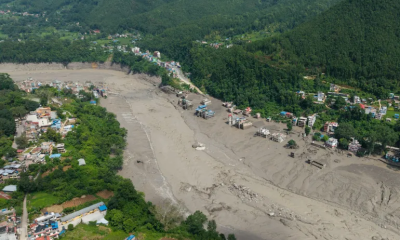
Nepal-Tibet floods: What happened, what caused them and who is missing?
-

 Editorial7 days ago
Warning of power cuts: El Niño and corruption
-

 Features7 days ago
Export diversification: Missing the wood for the trees – Part I