
Sports
Mahela pleased with Mumbai’s positive start in IPL 2020

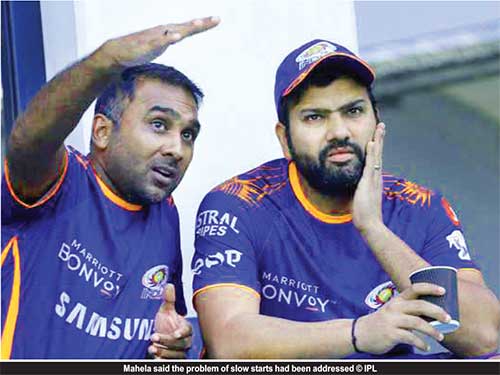
Mahela said the problem of slow starts had been addressed © IPL
Half-way through the tournament, Mumbai Indians find themselves with five wins to their credit — and a place at the top of the points table (which was later usurped by Delhi Capitals after their eighth match). Only twice in all these years have they had a better start to an IPL season. It’s almost an alien territory for Mumbai Indians to be in. Mahela Jayawardene, the team’s head coach, said that this was a problem identified, addressed and worked upon coming into the 2020 season.
“As a coach, you will never be at ease in such a tournament,” Jayawardene admitted despite his side getting off to a good start. “But it [the issue of starting slow] was something we were conscious about at the start of the tournament, where we always start slow and then we claw our way into the tournament. So it was something we spoke about.
“We knew the guys going into the tournament were in good form, they had prepared well but it’s all about getting into that awareness, the intelligence for the situations out there. Trying to get them to understand the situations quickly enough and adapt, that’s where we came back strongly after the first few games where we learnt a lot very quickly, how to play in Abu Dhabi, which is going to be our main venue, having to play eight games there. That has been the key, players understanding how we need to adapt to the change. That whole identification as well, whether they are batters or bowlers – what are the situations they are going to be in and winning those little battles out there with the oppositions. So far, I’m very happy the way the guys have responded to that.”
A good reason for Mumbai Indians’s success so far has been due to the high-performing pace trio of Jasprit Bumrah, Trent Boult and James Pattinson. However, with the pitches in UAE turning slower and aiding slower bowlers, a few teams have already benefited with the performances of their spinners. However, Jayawardene doesn’t feel a need to change the combination that has been winning them games just as yet.
“Last year as well, we made that adjustment at the backend of the tournament when we played in pitches that suited the spinners,” he said. “So far, the fast bowlers have had a bigger role to play in the tournament, whether it is the powerplay, the middle overs or the back end. We’re trying to keep that balance. As long as they are making the contributions and they are penetrating the opposition batting line-ups, it doesn’t matter what kind of surfaces we play on. The quality of the fast bowling line-up that we have, they are always going to create opportunities.
“We have a couple of good spinners operating right now in the playing XI. And there are a couple of guys who are in the wings, who we might look at depending on the opposition and match-ups. Depending on the conditions, we might, but right now I’m happy with the combination that we have, seeing the way we have operated.”
Even though the tournament is past its half-way mark, Mumbai Indians remain possibly the only side with a settled XI. It’s a core they have continued with from their last year’s title-winning run. With all the players hitting form and making match-winning contributions at some point or the other already, there isn’t a lot to cover with the on-field battles. However, they are also a team that hasn’t tested its bench too much, and that brings with it, its own set of headaches of dropping motivations within the team. However, Jayawardene is confident that the team culture is strong enough to make the receive players feel important in the setup.
“It’s about creating a culture within the group where everyone understands that there are players who are going to go out in the middle but the other guys are also as important as anyone else in that group,” he said. “They are the ones who keep the guys on the field on their toes because these are very good players who we have got on our bench. At any time, they are ready to go out on the field and perform. It makes a healthy rivalry within the group. Everybody is focussed, they are prepared for each and every game.
“If we feel they (the players in the XI) are physically not capable or whether they are not mentally fresh. We will make sure we manage those workloads. So that is one of the things for which we have got a lot of good players on the bench to make sure they are ready to go at any given time. It’s a great headache to have but it’s also a good, healthy competition that we’ve created. What we try and do is try to keep them fresh and prepared, not push them too much but not let them relax too much either. It’s a two-month tournament, it’s not too much of an ask from these professionals. We just have to make sure they are at the top of their game. It’s also communication between the management and the players, trying to figure out issues and resolve it before it can be a problem for the two.”
(Cricbuzz )



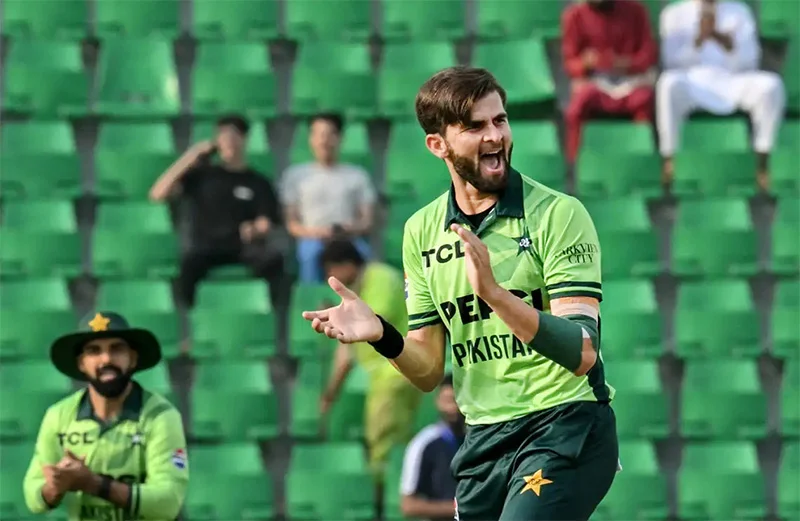
After a weekend of entertaining cricket in Colombo, the Lanka Premier League movesd to Dambulla, where another exciting phase of the tournament awaits. The North Central town will host nine matches, including double-headers over the weekend. The competition will then shift to Kandy before returning to Colombo for the business end, with R. Premadasa Stadium staging the playoffs and the final.
There were no clear frontrunners during the SSC leg of the competition, although Galle Gallants strengthened their position by winning both their matches. They remain the only unbeaten side after the opening round. At the other end of the table, Kandy Royals have work to do after losing both their games. Dambulla Sixers, Colombo Kaps and Jaffna Kings have each won one match and lost one.
Among the local players, Kusal Mendis, Charith Asalanka, Bhanuka Rajapaksa and Janith Liyanage have been the standout performers with the bat. South Africa’s Reeza Hendricks and Australians Sam Harper and Ben McDermott have also produced impressive knocks. With the ball, Eshan Malinga, Akif Javed and Binura Fernando have led the way with a string of eye-catching performances.
The resurgence of Charith Asalanka augurs well for Sri Lankan cricket. The left-hander, who captained the national T20 side before being removed just ahead of the World Cup and subsequently lost his place in the team, has reminded everyone of the talent that made him one of the country’s brightest prospects.
More broadly, the tournament continues to serve Sri Lankan cricket well. While it provides players with a lucrative earning opportunity, it also prepares them for the demands of international cricket and offers selectors an ideal platform to assess emerging talent. Equally important, it gives out-of-form players the opportunity to rebuild confidence and revive their careers.
Sharing a dressing room with established international stars such as Shaheen Afridi, James Neesham, Gulbadin Naib, Rassie van der Dussen, Mohammad Nawaz, David Wiese and Moeen Ali can only accelerate the development of the younger local players.
The LPL was launched at the height of the COVID-19 pandemic and although the tournament has experienced interruptions, largely due to franchise ownership changes, it has continued to make steady progress, attracting several high-profile players and coaches. There are ambitious plans to expand the competition to six teams once greater continuity and stability are assured. The tournament is overseen by SSC stalwart Samantha Dodanwala.
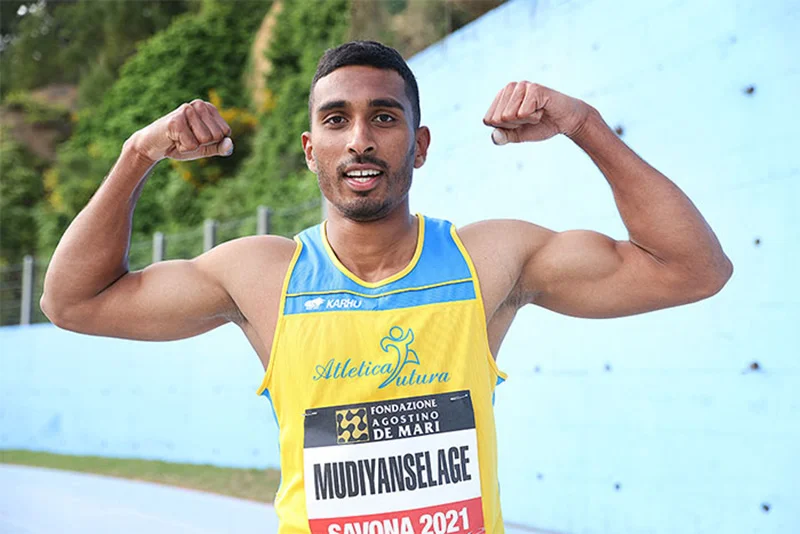
History-making sprinter Yupun Abeykoon announced his retirement from competitive athletics at a hastily arranged press briefing on Tuesday, bringing the curtain down on a remarkable career in which his personal-best performance transcended medals, becoming a landmark achievement that inspired not only Sri Lanka but the entire region.
Yupun Abeykoon’s greatest achievement was becoming the first Sri Lankan and the first South Asian to run sub ten seconds in track and field’s marquee discipline.
The 31-year-old said that he leaves the sport having fulfilled his dream while citing the absence of a proper system to reward athletes for winning medals as one of the key reasons behind his decision to retire from competitive athletics.
At the time of his retirement his 9.96 feat remains the fifth fastest performance in history in the entire Asian region and he is one of only 11 in the entire Asian region to have accomplished the sub ten seconds mark in 100 metres.
Ironically, the announcement of his retirement comes just couple of days ahead of the start of the Commonwealth Games.
The sprinter’s greatest championship achievement came at the last edition of the Commonwealth Games in Birmingham, where he won the bronze medal in the men’s 100 metres, ending Sri Lanka’s long wait for a sprint medal at a major multi-sport event. He also represented Sri Lanka at the Tokyo Olympic Games, becoming the country’s lone male track athlete and the first South Asian male sprinter to compete in the Olympic 100m in many year.
Abeykoon leaves an indelible mark as the first South Asian athlete to break the 10-second barrier in the men’s 100 metres. On 3 July 2022, he stunned the athletics world by clocking 9.96 seconds at the Résisprint International meet in La Chaux-de-Fonds, Switzerland, rewriting history for Sri Lanka and the entire South Asian region. He also established national records in the 100m (9.96s), 200m (20.37s) and indoor 60m, while setting the Asian 150m record of 15.16 seconds.
Having trained in Italy under coach Claudio Licciardello, Abeykoon transformed himself into one of Asia’s fastest men and became a regular competitor on the European circuit, including Diamond League meetings. His success inspired Sri Lankan sprinters and demonstrated that athletes from the region could compete with the world’s elite.
During the press conferance held online, Abeykoon thanked his parformer schools, the SLEME the regiment in Sri Lanka Army he represented, Palitha Fernando, the former president of Sri Lanka Athletics and Sri Lanka Cricket among others, his coaching team in Italy and the millions of Sri Lankans who supported him throughout his journey.
While expressing pride in his accomplishments, he also indicated that his retirement was not an easy decision and suggested that broader issues, specially lack of professionalism within Sri Lankan athletics had contributed to his choice.
Although his competitive career has come to an end, Yupun Abeykoon’s legacy is secure. As the fastest man Sri Lanka has ever produced and the first South Asian to run under 10 seconds, he redefined the limits of sprinting in the region and inspired countless young athletes to dream beyond perceived barriers. His achievements will remain a benchmark in Sri Lankan athletics for generations to come.
by Reemus Fernando

HONOUR –MCA CHAMPIONS LEAGUE 2026
Abans Group defeated Commercial Bank by three wickets and registered their first win in the Honour – MCA Champions League 2026 cricket tournament played at the MCA ground on Sunday.
Electing to bat first, Commercial Bank were restricted to 135 by the Abans group bowlers led by Kaveesha Dulanjana [3-28] and Mihiranga Fernando with figures of [7-2-08-1] after which in the chase, Tharusha Fernando was unbeaten on 36 while Dilshan de Zoysa, Akeel Inham and Kavishka Gihan had 20 plus scores against their names to reach the win need with three wickets in hand in the 32nd over.
SCORES:
Commercial Bank
135/10 in 45.2 overs [Lasith Nanayakkara 21; Kaveesha Dulanjana 3-28, Mihiranga Fernando 1-08]
Abans Group
137/7 in 31.4 overs [Tharusha Fernando 36*; Dushean Gamage 3-25, Pasindu Denipitiya 3-40]

A few showers will occur in the Western, Sabaragamuwa and North-western provinces and in Kandy, Nuwara-Eliya, Galle and Matara districts

Customs asked to resume probe or face legal action

Outgoing Chinese Ambassador Qi Zhenhong bids farewell to Mahanayake Theras

Move to extend retirement age of top judges: BASL asks govt. to stop process pending meaningful consultations

Govt. mum on identities of JVP founder’s wife and children

Three high-profile alleged suicides shaping key investigations

‘Dates have the highest sugar content to fight Coronavirus’

Sunday Island 27 December – Headlines

#SundayIsland 17th December – Headlines

Sunday Island – 28th March

Sunday Island Headlines – 21 March

Sunday Island – 21st February – Headlines
-

 Features3 days ago
Two memorable excerpts from a former SLAF commander’s memoir
-

 Business3 days ago
‘Giving up was never an option’: The fisherman who fought back after losing millions in SL
-
 Latest News4 days ago
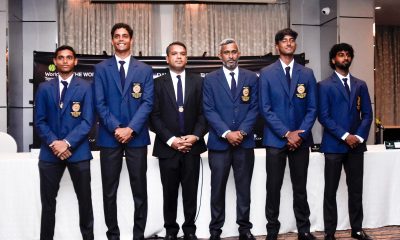
Davis cup Asia/Oceania Group IV 2026 to be held in Colombo from 20th to 25th July
-

 Features3 days ago
Erdoğan’s New Republic
-

 Life style3 days ago
Taste of the Swiss Alps comes to Colombo
-
 News4 days ago
Evidence recorded in money laundering case against Yoshitha Rajapaksa
-

 News4 days ago
Dengue outbreak gallops ahead: Infections surpasses 73,455, leaving 50 dead
-

 News5 days ago
Money laundering case against Yoshitha, fixed for pre-trial conference