
News
Reconstructing past deep-water circulations of Indian Ocean


Global overturning circulation — the equatorward transport of cold, deep waters and the poleward transport of warm, near-surface waters — controls ocean heat distribution and atmospheric carbon dioxide levels, thus playing a critical role in global climate, says a report published by The Hindu yesterday.
It said: Studies have indicated that tectonically driven changes in the ocean gateways such as the closure of the Central American Seaway, a body of water that once separated North America from South America, since the late Miocene period, had a dramatic impact on the circulation.
It is thought that tectonic changes might have led to the formation of two separate water bodies — northern component water in the North Atlantic and Antarctic Bottom Water (AABW) in the Southern Ocean. Consequently, it is also hypothesised that there would have been large-scale changes in the Deep Water Circulation (DWC) in the oceans across the world, thus impacting global climate through ocean-atmosphere carbon dioxide and heat exchanges.
But these formulations have remained untested due to lack of adequate data. Some records that are available are from near the deep-water formation regions mostly from the Pacific and the Atlantic Oceans. Hence, they might not necessarily reflect the impact and change in deep water circulation.
Now, the Indian Ocean does not have any major deep-water formations of its own. It acts only as a host for NCW and AABW. Further, the northern parts of the Indian Ocean are located at one of the terminal ends of the GOC, far away from the deep-water formation regions and oceanic seaways. These specific features could make the northern Indian Ocean an ideal basin to do this.
Few studies have been carried out in the Indian Ocean to reconstruct past deep water circulations based on iron-manganese crust records and authigenic neodymium isotope composition of sediment cores. But iron-manganese crusts are situated at deeper depths and are bathed only by AABW, making it suitable only for the reconstruction of the history of AABW, and authigenic neodymium isotope records are available only from the Bay of Bengal region. But they too cannot help as the Himalayan rivers that empty into the Bay also bring in substantial amounts of Neodymium particulates.
A new study by a team of researchers from the Goa-based National Centre for Polar and Ocean Research and the School of Earth, Ocean and Atmospheric Sciences in Goa University has now sorted out the issue.
The scientists have generated an authigenic neodymium isotope record from the Arabian Sea and reconstructed the DWC record of the Indian Ocean for the period from 11.3 million years ago (Miocene era) to 1.98 million years ago (Pleistocene era).
“The record shows a clear shift from the Pacific water dominated deep circulation system before about nine million years ago, to the onset of a modern-like deep water circulation system in the Indian Ocean comprising of Antarctic bottom water and northern component water during the Miocene-Pliocene transition (about six million years ago). Our finding suggests a widespread impact of the late Miocene Central American Seaway closure on the evolution of ocean deep water circulation and validates the so-called Panama Closure Hypothesis,” says Dr. Waliur Rahaman from the National Centre for Polar and Ocean Research (NCPOR) and one of the corresponding authors.
The two months long expedition was carried out on-board drilling vessel R/V JOIDES Resolution from March 31 to May 31, 2015.
Commenting on the findings, Dr. Sambuddha Misra, Associate Professor, Centre for Earth Sciences, Indian Institute of Science, who was not part of the research work, says the study is highly significant since it provides unequivocal evidence in support of the theory that the closing of the gap between North and South America had led to the evolution of the modern form of GOC. The work is also commendable as it involved extremely difficult measurements, he adds.

Latest News
Level III landslide early warnings issued to the Districts of Kandy, Kegalle, Kurunegala and Matale extended


The landslide early warning center of the National Building Research Organisation [NBRO] has extended the Level III RED landslide early warnings issued to the Districts of Kandy, Kegalle, Kurunegala and Matale until 1600hrs on 11th December 2025.
Accordingly,
The LEVEL III RED landslide warnings issued to the the Divisional Secretaries Divisions and surrounding areas of Kundasale, Pasbage Korale, Medadumbara, Ganga Ihala Korale, Hatharaliyadda, Pathadumbara, Doluwa, Panvila, Gangawata Korale, Ududumbara, Akurana, Yatinuwara, Harispattuwa, Deltota, Thumpane, Poojapitiya, Udapalatha, Udunuwara, Minipe and Pathahewaheta in the Kandy district, Aranayaka, Yatiyanthota, Rambukkana, Bulathkohupitiya and Mawanella in the Kegalle district, Mallawapitiya, Mawathagama and Rideegama in the Kurunegala district, and Rattota, Laggala Pallegama, Ukuwela, Matale, Wilgamuwa, Pallepola, Naula, Yatawatta and Ambanganga Korale in the Matale district have been extended.
LEVEL II AMBER landslide early warnings have been issued to the Divisional Secretaries Divisions and surrounding areas of Uva Paranagama, Hali_Ela, Meegahakivula, Badulla, Kandeketiya, Bandarawela, Soranathota, Ella, Haputhale, Lunugala, Welimada, Haldummulla and Passara in the Badulla district, Warakapola, Galigamuwa, Kegalle, Dehiowita, Ruwanwella and Deraniyagala in the Kegalle district, Polgahawela and Alawwa in the Kurunegala district, Kothmale East, Walapane, Thalawakele, Nuwara Eliya, Kothmale West, Nildandahinna, Mathurata, Ambagamuwa Korale, Hanguranketha and Norwood in the Nuwara Eliya district. and Kolonna, Godakawela and Kahawaththa in the Ratnapura district.
LEVEL I YELLOW landslide early warnings have been issued to the Divisional Secretaries Divisions and surrounding areas of Divulapitiya, Attanagalla and Mirigama in the Gampaha district, Narammala in the Kurunegala district, and Kiriella, Eheliyagoda, Balangoda, Kaltota, Openayake, Nivithigala, Imbulpe, Ayagama, Kuruwita, Kalawana, Elapatha, Pelmadulla and Ratnapura in the Ratnapura district.
News
“We cannot allow flooding to become a part of the daily lives of the people in the Colombo District” – PM

Prime Minister Dr. Harini Amarasuriya stated that unauthorized constructions within the Colombo District, nor any form of residential developments that endanger the public carried out under the guise of development agenda will not be allowed.
The Prime Minister made these remarks while addressing the media at the conclusion of the Colombo District Disaster Management Committee meeting held on Tuesday [December 09] at the Colombo District Secretariat.
Addressing further, the Prime Minister stated:
“The Colombo District has become vulnerable to this extent due to the constructions carried out without any proper planning or understanding of regulations, along with personal and politically motivated decisions that have placed both the district and its people at risk.
Compared to the districts that suffered severe loss of life and property due to the recent cyclone, the damage to the Colombo District has been relatively lower. However, special intervention is being carried out together with the relevant institutions to manage the potential future flood risks in the district.
This matter was also given special attention during today’s District Disaster Management Committee meeting. We cannot allow the flooding to become a regular part of the lives of the people in Colombo. All relevant institutions will come together to put forward a common plan for flood control in the district.”
The Prime Minister further stated that discussions are already underway to provide sustainable solutions for the people living in high-risk areas within the Colombo District.
The discussion was attended by the Deputy Minister of Urban Development Eranga Gunasekara, Deputy Minister of Mass Media Kaushalya Ariyaratne, and Colombo District Members of Parliament Aruna Panagoda and Chandana Suriyarachchi.
[Prime Minister’s Media Division]
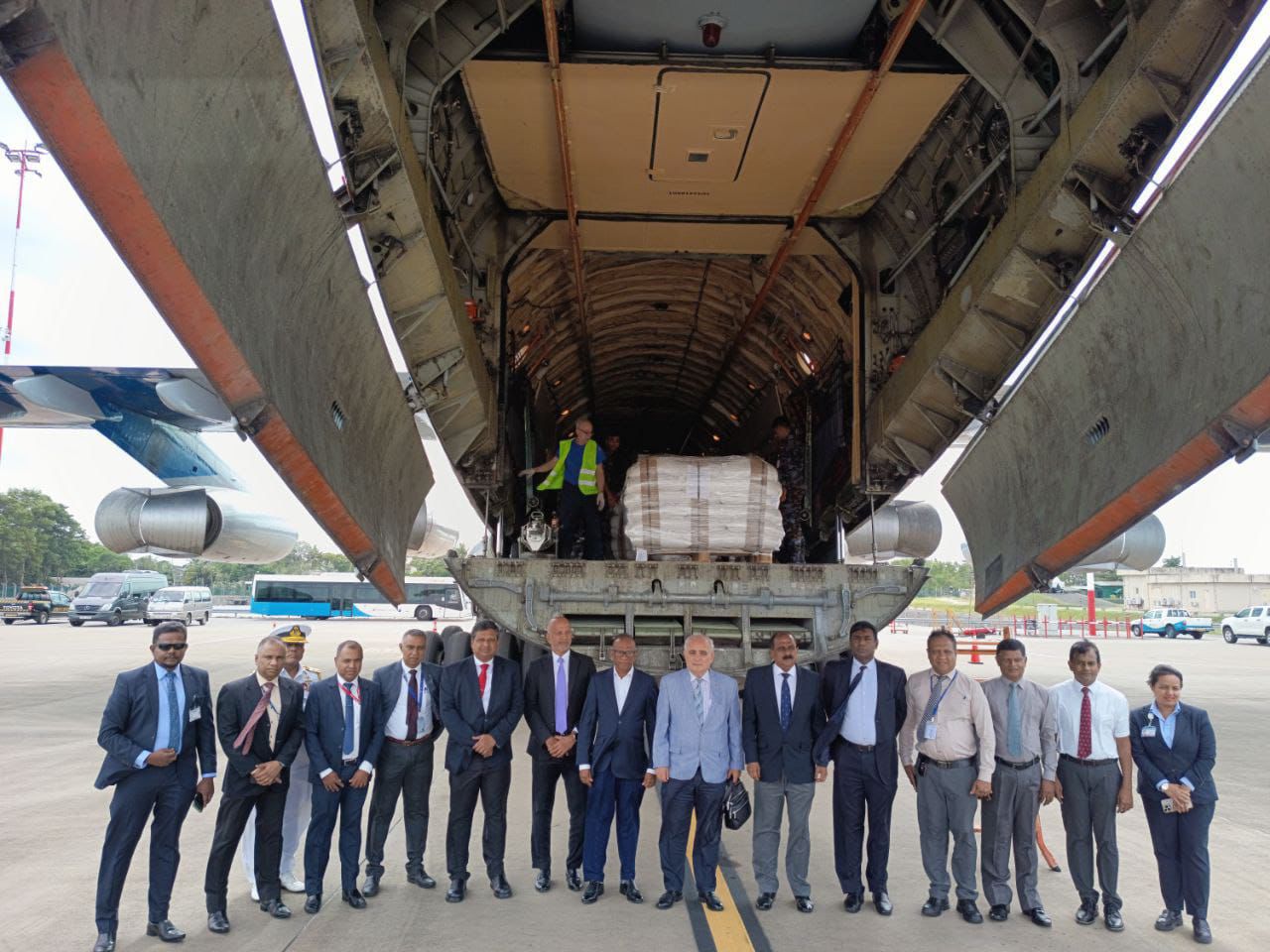
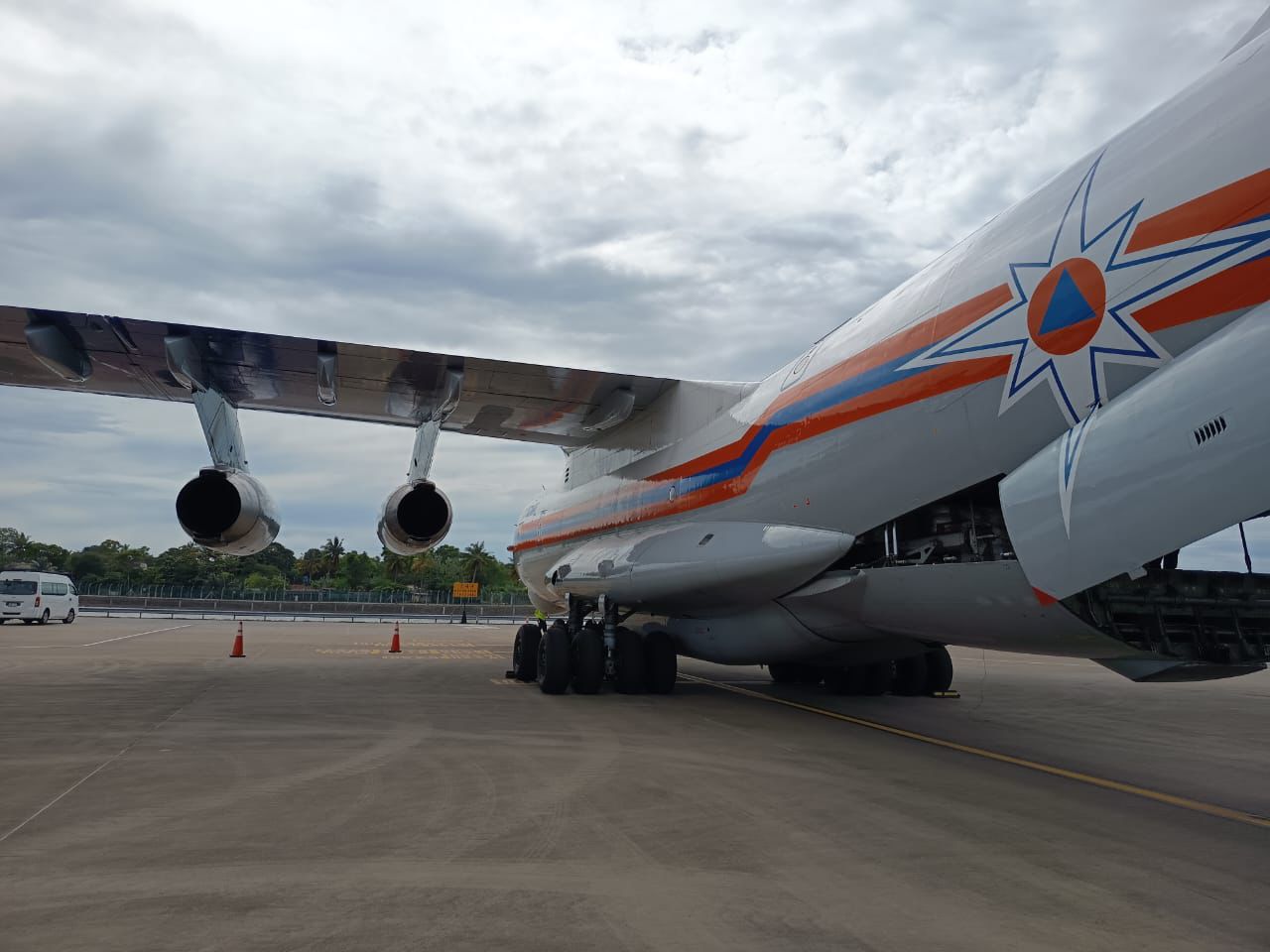
The handover of 35 tonnes of Russian Humanitarian Aid to Sri Lanka, recently affected by the cyclone «Ditwah», took place at Katunayake today (10th December)
The shipment was welcomed at the Katunayake airport by Ambassador of Russia Levan Dzhagaryan, Minister of Ports and Civil Aviation Anura Karunathilaka and Deputy Minister of Defence, Major General Aruna Jayasekara (Retd).
Ambassador Levan Dzhagaryan: said “This delivery is a reflection of long-term friendly relations between Russia and Sri Lanka and reaffirms Moscow’s commitment to support countries in a difficult humanitarian situation.”
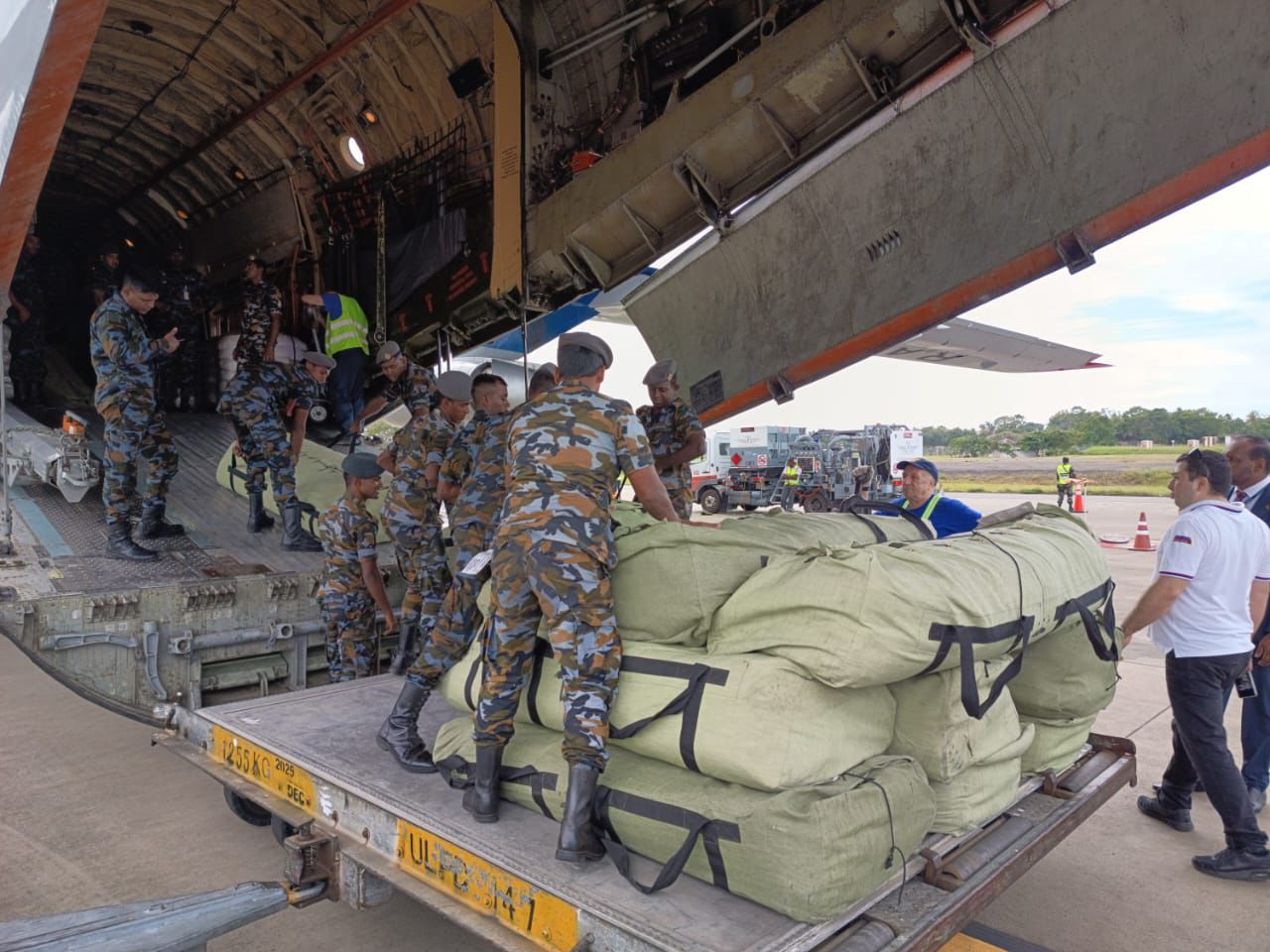
The supplies brought by the EMERCOM (Russian Ministry of Emergency Situations) aircraft comprised a movable 60 kW electric power station, Pumping equipment for water drainage, Summer tents (10-person capacity) and Food supplies (sugar, vegetable oil, rice)
The total cargo weight is 35 metric tonnes. The aid will be distributed among the most affected regions.


Level III landslide early warnings issued to the Districts of Kandy, Kegalle, Kurunegala and Matale extended

“We cannot allow flooding to become a part of the daily lives of the people in the Colombo District” – PM

Russia gifts 35 tonnes of Humanitarian Aid to Sri Lanka

Sri Lanka squad named for ACC Men’s U19 Asia Cup

Hospital CCTV helps clear long jumper of doping

Tickner and Rae bowl West Indies out for 205 to give New Zealand the edge

‘Dates have the highest sugar content to fight Coronavirus’

Sunday Island 27 December – Headlines

#SundayIsland 17th December – Headlines

Sunday Island – 28th March

Sunday Island Headlines – 21 March

Sunday Island – 21st February – Headlines
-

 News3 days ago
Over 35,000 drug offenders nabbed in 36 days
-
 News7 days ago
Level III landslide early warning continue to be in force in the districts of Kandy, Kegalle, Kurunegala and Matale
-

 Business5 days ago
LOLC Finance Factoring powers business growth
-

 News5 days ago
CPC delegation meets JVP for talks on disaster response
-
 News2 days ago
Cyclone Ditwah leaves Sri Lanka’s biodiversity in ruins: Top scientist warns of unseen ecological disaster
-

 News5 days ago
A 6th Year Accolade: The Eternal Opulence of My Fair Lady
-

 News3 days ago
Rising water level in Malwathu Oya triggers alert in Thanthirimale
-

 Features22 hours ago
Finally, Mahinda Yapa sets the record straight