
Features
The failure of political leadership

Dr. Nihal Jayawickrema
(Continued from last week)
If the health of the nation has been seriously compromised, it is principally due to the failure of its political leadership, all of whom represent, or have represented predominantly Sinhalese electorates. For them, the constituency is essentially Sinhalese in race, Buddhist in religion, and Mahawamsa in mindset. Under pressure from the Tamil political leadership or faced with the threat of satyagraha or civil disobedience campaigns, or occasionally when driven to seek the support of the Tamil members of parliament to form an administration, successive Sinhalese political parties have entered into formal or informal agreements with representatives of the Tamil people. These were rarely honoured. The responses were determined purely by political expediency.
For example, in 1957, the Bandaranaike – Chelvanayakam Pact provided for the establishment of Regional Councils and for the use of Tamil in the northern and eastern provinces. Nine months later, under pressure from the Eksath Bhikku Peramuna and from the UNP led by J.R. Jayewardene which organized a 72-mile march from Colombo to the Temple of the Tooth “to save the Sinhala race”, S.W.R.D. Bandaranaike announced that the pact which bore his signature as Prime Minister was incapable of being implemented.
In 1958, Mr Bandaranaike enacted the Tamil Language (Special Provisions) Act but failed in his lifetime to make the regulations which would have made that law operative. When in 1966, Dudley Senanayake attempted to make these regulations, Opposition parties led by Mrs Bandaranaike demonstrated against that move on the streets of Colombo and took an oath at the statue of Vihara Maha Devi to oppose the division of the country. Dudley Senanayake, fortified by a state of emergency, proceeded to make the regulations, but did not implement them in the remaining four years of his government.
In 1965, Dudley Senanayake signed an agreement with S.J.V. Chelvanayakam in which he promised to establish District Councils. A Bill for this purpose was prepared but was never introduced in Parliament. Meanwhile, a White Paper on the subject, promising less than what Mr Bandaranaike had offered in 1957, was publicly and ceremonially burnt on the steps of parliament building by members of the SLFP and other Opposition parties.
In 1970, Mrs Bandaranaike invited the Federal Party members to the Constituent Assembly to help draft a new constitution which would “serve to build a nation ever more strongly consciousness of its oneness amidst the diversity imposed upon it by history”. When they responded positively and suggested that that goal be reached through federalism, they were ruled out of order and left with no alternative but to withdraw from the exercise.
In 1977, the UNP manifesto promised to summon an All-Party Conference to consider the problems of non-Sinhala speaking people, but conveniently forgot that promise once the general election was won, and it took several years of terrorist activity and military reprisals, hundreds of deaths, the burning of the Jaffna public library, and the events of July 1983, to convince the government that that promise ought to be kept. When that All-Party Conference eventually met (but without the SLFP leader on whom civil disabilities had been imposed and expelled from parliament), the much-maligned Annexure C, which the Tamil political leadership claimed contained the agenda they had been invited to discuss, continued to lie on the table in the manner of an illegitimate child abandoned by its mother.
Meanwhile, the Sixth Amendment to the Constitution, which required all members of parliament to take a loyalty oath to an indivisible Sri Lanka, which the TULF refused to do, resulted in the moderate political wing of the Tamil community losing their political influence and becoming irrelevant in any negotiations. That, in brief and in outline, is a case study of the failure of political leadership.
HEALING THE NATION
Transitional justice
The problem of healing the nation today is two-fold. On the one hand, there is the issue of governance which our political leaders have failed to resolve for nearly 60 years. On the other hand, there is the issue of justice, reparation, and reconciliation, which has been brought to the fore through the actions of a succession of Presidents who set out to resolve a political and human rights problem, conveniently dubbed “the terrorist problem”, through the application of military firepower. It was President Jayewardene who, in October 1979, directed the Army Commander to proceed to the north with absolute authority to eliminate by any means whatsoever all forms of terrorism he may encounter; the final solution was to be achieved by Christmas of that year. For decades thereafter, a daily sacrificial offering was made of thousands of idealistic young Sinhalese men in the prime of their lives who journeyed to the north and the east in the confident hope that before they laid down their own lives, they would be able to kill a few equally idealistic young Tamil men and women, and thereby make this thrice blessed isle a safer, happier, and more righteous place for all of us to live in.
The poet John Donne reminds us that ‘No man is an island, entire of itself. Every man is piece of the continent, a part of the main’. How a nation treats its nationals is no longer a matter exclusively within its own concern. There are now norms and standards which form part of a growing body of international law. Therefore, a government’s behaviour towards its own nationals is now regulated by international treaties. In 1981, the Government of Sri Lanka brought itself within the jurisdiction of international human rights law when it subscribed to, and ratified, the two international human rights covenants.
Sri Lanka is believed to have one of the highest rates of reported cases of enforced disappearances in the world, and yet no tangible steps have been taken for several years even in respect of the much-publicised Ekneligoda disappearance. Over 300 political killings in 2005, and over 700 extra-judicial executions in the next two years have been recorded, with no action being taken to investigate them. The high-profile killings of Lakshman Kadirgamar in August 2005 in circumstances that are still classified and shrouded in mystery; of Joseph Pararajasingham at a Christmas Eve church service in Batticaloa in 2005; of five Tamil university students in Trincomalee in January 2006; of 17 ACF workers in Muttur in August 2006; and of Lasantha Wickrematunge within a high security zone in January 2009; have all remained uninvestigated or not effectively investigated. Some military personnel have been charged with the killing of Nadarajah Raviraj in Colombo in November 2006, but has it been ascertained why they committed that crime? The Rajapaksa Government clearly demonstrated that it lacked the will or the desire to hold persons who have perpetrated such serious crimes accountable for their actions. Even if the present Government wishes to reverse this culture of impunity, does it have at its disposal the expertise to successfully investigate several thousand cases of enforced disappearance and extra-judicial execution?
In 2015, the Human Rights Council published the findings of the investigation on Sri Lanka conducted by three distinguished legal experts, the former President of Finland, the former Governor-General of New Zealand and the former President of the Human Rights Commission of Pakistan. That commission had gathered information of unlawful killings of civilians by security forces and paramilitary groups; extrajudicial execution of identified LTTE cadres and unidentified individuals at the very end of the fighting, including those who were known to have surrendered to the Sri Lankan military; arbitrary arrests and abductions; enforced disappearances; torture and other forms of cruel, inhuman and degrading treatment; sexual and gender-based violence; forced recruitment of children for use in hostilities; denial of humanitarian assistance; and the deprivation of liberty of internally displaced persons.
The government has announced its intention to establish a Truth Commission, which is a healing process that offers victims and perpetrators an opportunity to outline details of past crimes. It is a mechanism that has been attempted, with some degree of success, in South Africa and in several Latin American countries such as Argentina, Chile, El Salvador and Guatemala. I once witnessed the proceedings of a truth commission in Nigeria. It is based on the Christian concept of confession. Whether it would be appropriate for Sri Lanka is an open question. The government is reportedly taking steps to provide restitution, compensation, and rehabilitation. However, a pre-condition for reconciliation is accountability. Without accountability, there can be no reconciliation in any society.
The UN High Commissioner for Human Rights recommended the establishment of a hybrid court which is a unique element in the human rights-based approach to transitional justice in a post-conflict situation. By including international judges, prosecutors, lawyers and investigators, a hybrid court is designed to deal with those who bear the greatest responsibility for serious crimes arising from or during the conflict, such as war crimes or crimes against humanity, including sexual crimes and crimes against children. President Sirisena has repeatedly asserted that, under no circumstances, will he agree to the participation of foreigners in the accountability process in Sri Lanka. He has claimed that Sri Lanka has an independent judiciary which is quite capable of addressing the issues of accountability without any foreign assistance. It is perhaps time that his advisers briefed him on the real position.
In many significant respects, the Sri Lankan legal and judicial system has, in the past few decades, failed its multi-ethnic and multi-religious population, and has demonstrated that it lacks the will and the capacity to address such serious crimes. War Crimes and Crimes against Humanity, as well as Enforced Disappearances, have not been criminalized in Sri Lanka. Neither the International Covenant on Civil and Political Rights (which the Jayewardene Government acceded to) and its Optional Protocol (which the Kumaratunge Government ratified), nor the International Covenant on Economic, Social and Cultural Rights, have yet been incorporated in our law. No effective mechanism has yet been established for the protection of witnesses and victims of crime. In 2006, Chief Justice Sarath Silva suspended the application to Sri Lanka of international human rights treaties, holding that their ratification was an infringement of the Constitution. His judgment was described by a world-renowned jurist as “an example of judicial waywardness” or “judicial eccentricity”. Another referred to it as “Alice in Wonderland reasoning”. Therefore, we lack the legal framework within which accountability can be established for such crimes. The process of remedying that deficiency may benefit from expertise, whether international or otherwise.
The judicial culture of the Supreme Court, especially evident in the past decade, has been one of extreme deference to the presidential executive. Whenever fundamental rights were invoked, the court, composed as it was of judges appointed by President Rajapaksa, often from among his contemporaries at Law College, would, more often than not, capitulate to executive assertions of state security. Political opponents of the previous government and members of ethnic minorities, and indeed civil society, have rarely, if ever, obtained any relief. The judgments of the Supreme Court, especially in matters affecting individual rights, reveal an astounding ignorance or unfamiliarity with contemporary developments in the law in other jurisdictions.
The Attorney-General’s Department, which remained embedded in the Presidential Secretariat from 2011 to 2015, did not possess the capacity or the inclination to view, with independence and impartiality, the crimes allegedly committed with the knowledge or connivance of those at the highest levels of the then government. Instead, its senior officers travelled annually to Geneva to deny before the international community that any such crimes had ever been committed. An Attorney General himself uttered what was later proved to be a lie regarding a disappeared journalist. Is it being seriously suggested that these same officers should now be entrusted with the task of presenting the evidence which the OHCHR claims it has, and which they have so strenuously repudiated for decades? The apparent indifference with which investigations that commenced after the change of government are being handled by those in the commanding heights of that department suggests that the culture in that department remains the same.
Sri Lanka’s inability to conduct credible investigations through quasi-judicial bodies has also been demonstrated by the performance of a succession of commissions of inquiry headed by retired judicial officers. The Udalagama Commission lost its credibility very early in its proceedings. The Paranagama Commission keeps rolling along, from month to month, year to year, signifying the urgency it attaches to Enforced Disappearances. The performance of the previous Human Rights Commission, which had the duty to investigate infringements of fundamental rights, was so abysmal that the United Nations downgraded its status for lack of balance and objectivity.
The question which the government will need to address is whether it has, with the resources available to it, the capacity to effectively investigate, prosecute and try the serious allegations referred to in the report of the OHCHR investigation on Sri Lanka, including war crimes and crimes against humanity. To admit that we cannot undertake these tasks alone is not an admission of weakness. On the contrary, it will be a sincere and genuine commitment to achieving the objective of accountability on behalf of those who laid down their lives and the families who continue to live in grief. In respect of war crimes and crimes against humanity, the expertise of lawyers skilled in dealing with such crimes, military analysts, crime scene investigators, trauma experts, psychological counsellors, and a host of others who are competent to address issues of victim needs and rights, witness preparation and protection, are essential, and international assistance in that regard ought to be welcomed.
Power sharing at the centre
One inescapable fact that emerges from the post-Independence history of Sri Lanka is that the Sinhalese political leadership is unwilling to share political power with the Tamil political leadership. For the past fifty years, since the emergence of the Federal Party, negotiations between Sinhalese and Tamil political leaders have focused on the unit of devolution. Should it be district, provincial or regional? Fear has been created in Sinhalese minds that any such form of devolution would eventually lead to a separate state. In this connection, I wish to refer to two principles of international human rights law which now regulate the relationship between the government and the different ethnic groups living in Sri Lanka. These are the principles of non-discrimination and self-determination.
The principle of non-discrimination means that as between the citizens of Sri Lanka, neither law nor executive action may discriminate on the basis of race, religion, language, sex, political or other opinion, national or social origin, birth or other status. The principle of self-determination is contained in both human rights covenants to which the Government of Sri Lanka has committed itself. It means that cohesive ethnic groups have the right to choose for themselves a form of political organization, and through such organization to freely pursue their economic, social, and cultural development. That choice may take one of several forms. It could be independence as a separate state; or association with other ethnic groups in a federal state; or autonomy or assimilation in a unitary state. However, if the ethnic group concerned already has a home within territorial boundaries of a sovereign and independent state, (which the Tamil community has); and if that state has a government which is representative of all the people irrespective of race, (which the Sri Lankan government is not}; and if that government respects the twin principles of non-discrimination and self-determination, (which Sri Lankan governments have not}; the choice of that ethic group does not extend to the creation of a separate state.
Therefore, it seems to me that, whatever agreement may be reached regarding governance at the periphery, it is vital and fundamental that there should be power sharing at the centre. This is not a matter that should be left for negotiation at the conclusion of a general election. That has led in the past to the inclusion of Colombo-based token Tamils in the Cabinet, such as C. Kumarasuriar and Lakshman Kadirgamar, who represented none but themselves. Power sharing at the centre is a requirement that should be incorporated in the Constitution. Whichever political party forms the government, it should be mandatory for the different ethnic groups to be represented in the Cabinet, at least in proportion to the number of such members elected to Parliament. Thereby, the minority communities will be constitutionally guaranteed not of token but of genuine representation, both in the legislature and in the government. Policy formation will thereafter be by consensus of the different ethnic groups, which is how it should be in a multi-ethnic, multi-religious and multi-linguistic country as Sri Lanka.
Entering the global community
After almost 60 years of isolationist policies, it is time that we entered the global community. We cannot do that if we are unable to communicate with others outside our island home. Lee Kuan Yew had the foresight to retain the use of the English language in Singapore, as did many of Africa’s national leaders. At a meeting in Thailand last year, the Thai Foreign Secretary informed me that his country had begun using English as the medium of instruction in schools. When I expressed some surprise, he explained that Thailand did not want to send its citizens out as menial workers. By retaining, or adopting, English – now the acknowledged international language, these countries have ensured that their peoples can communicate with the world beyond their geographical boundaries and acquire the new knowledge that now emerges as rapidly as the old is debunked and equip themselves to serve the global community in capacities other than as domestic helpers and semi-skilled workers. I think it would be a reality check for our politicians if they were to ask the youth of this country which language they wish to be educated in. Language is not only a mode of communication; it is also the medium through which knowledge is acquired. It is unfortunate, but true, that Sinhala does not serve either purpose adequately.
Conclusion
I do not wish to conclude my presentation by leaving the impression that Sri Lanka has been devoid of any manifestation of leadership. Of course, not. In the 1920s, A.E. Goonesinha provided the leadership for the working people to organize themselves, and for the youth to agitate for the immediate relief of social problems. In the 1930s, a group of young Ceylonese intellectuals on their return from universities abroad, influenced deeply by the ideas of Karl Marx – Dr S.A. Wickremasinghe, Dr N.M. Perera, Dr Colvin R de Silva, Leslie Goonewardene and Philip Gunewardene – provided the leadership to the formation of the left movement in Ceylon. In the 1940s, D.S. Senanayake and Sir Oliver Goonetilleke provided the leadership to the negotiations with the British Government that secured self-government for Ceylon without shedding a single drop of blood. On the long night of January 27, 1962, Felix Dias Bandaranaike, almost single-handedly, saved not only a great many lives, but also the social and political fabric of our society by aborting the first ever attempt to overthrow the lawfully established government of this country.
In April 1971, barely two weeks into the JVP insurgency, with the military ready to launch an offensive, Mrs Bandaranaike called upon combatants to surrender at check points manned by public servants, guaranteeing them safe conduct, an appeal to which nearly 10,000 young persons responded. In 1978, J.R. Jayewardene gave a whole new direction to our economy, lifting it out of the shackles of outmoded socialism. In 2002, Ranil Wickremasinghe had the courage and the vision to enter into a ceasefire agreement with the LTTE to bring an end to the hostilities as a means to establishing a positive atmosphere in which steps towards negotiations on a lasting solution could be taken. These were all examples of leadership.
In conclusion, may I adopt and adapt the words of the present Chief Justice of Kenya in reminding ourselves that we must fully discharge our obligations to each other as individuals who are part of a common polity.
These obligations start from the basic requirements: respect for each other as individuals, as well as respect for communities and other identity groups. It is socially obnoxious, politically reckless, and economically ignorant to cheapen the presence of any community in this country. It is only the weak-minded people incapable of comprehending the origins of the modern state, its philosophy, its instruments, and its edicts, that resort to such approaches in managing the expression of disagreement. Just as a fish that grows in a pond may consider itself the king of the sea until it is introduced into the ocean, we too must also awaken to the reality that our ethnic and sectarian interests may only matter if we are disconnected from the rest of the world. Unless we all recognize that we are a confederation of cultures, languages and interests, we shall never be able to cultivate the sensitivity and respect for one another that is necessary to hold us together. We might never live up to true greatness as a member of the community of nations because we overstayed our welcome in the pond when the ocean beckoned. The things that are seen to divide us – ethnicity, religion, race, class, clan, region, occupation, sexual identity, generation, disability – are also the raw materials needed to create the mosaic of one nation.
(Concluded)








Features
Combining local resources,traditional knowledge and science to build a food-secure Sri Lanka

World Food Day 2026: Innovating today for a better food future
by Dr. Kaushalya Wijayasekara
What will be on the Sri Lankan dinner table ten years from now? Will our children be able to get nutritious food at a price their families can afford? Will farmers be able to grow enough despite changing weather and rising costs? And how much of the food we produce will actually reach the consumer, instead of being lost or wasted along the way?
These questions can’t wait. A farmer faces unpredictable weather. A family faces rising food costs. Fruit goes unsold after a good harvest. Some children do not get enough nutrition. The future of food is tied to the future of Sri Lanka itself.
World Food Day 2026 is a chance to look beyond the immediate problems and ask whether we can build a food system that feeds our people well, gives farmers better opportunities, protects the environment and makes better use of what we already have. The answer can be yes, but we will have to think differently.
We are not starting from zero. Sri Lanka has diverse crops, fisheries, traditional food knowledge, indigenous varieties, research institutions, universities and a young generation able to create new solutions. What we need is to bring these together and act. Producing more will not secure our food future on its own. It will depend on how intelligently we produce, process, preserve, distribute and consume food.
Making more of what we already have
Innovation does not always mean inventing something new. Often it means finding better uses for the resources we have.
Sri Lanka grows traditional rice varieties, kurakkan, green gram, cowpea, jackfruit, breadfruit, cassava, sweet potato, coconut and palmyrah. All of them have great potential for modern, nutritious, value-added foods. Jackfruit and breadfruit can be made into flour and other convenient products. Traditional rice varieties can go into new foods that suit changing consumer needs. Palmyrah, with its strong cultural heritage, can create new income through better processing, packaging, quality assurance and market development.
The aim is to connect our traditional food knowledge with modern consumer needs and technology, while keeping our food heritage.
Stop wasting the food we produce
Reducing food loss and waste should be a major priority. Seasonal fruits such as mango, banana, papaya and pineapple can be lost in large quantities when production exceeds demand or when storage, transport and processing facilities are inadequate. With suitable technology, these fruits can become dried products, pulps, powders, beverages and other shelf-stable foods.
Agricultural and fisheries by-products are resources too. They could be turned into food ingredients, animal feed, bio-based products and other useful materials, which would move us toward a more circular food economy.
Technology alone is not enough. We need stronger local processing facilities, cold storage, efficient transport, collection centres and market information systems, especially close to where food is produced. Cutting food loss raises the value of what our farmers and fishers already produce.
Nutrition and food safety come first
Food security means more than having enough food. People also need food that is safe and nutritious.
Sri Lanka can develop affordable, nutritious foods from local pulses, grains, vegetables, fruits and fish. Children and other vulnerable groups should get particular attention. Schoolchildren in particular deserve a focus: safe, nutritious, locally sourced products for school feeding programs would support child nutrition, local farmers and domestic food industries at the same time.
Food safety must stay at the centre of food innovation. Good hygiene, quality control, laboratory testing, traceability and appropriate food safety systems are what make new products safe as well as attractive and nutritious.
A food system that can cope with climate change
Climate change is already affecting agricultural production, water availability, crop yields and food prices. We need food systems that can handle changing conditions. That means climate-resilient crops, efficient water use, soil and water conservation, better storage and resource-efficient food processing.
Traditional knowledge matters here. Generations of Sri Lankan farmers have developed practices suited to local climates and ecosystems. Combining that experience with modern science can give us solutions that fit local conditions and are sustainable. Technology alone will not build the future of food. Science, experience and local knowledge together can.
Give young people a bigger role
Sri Lanka’s universities have an important part to play in shaping our food future. Young people should be encouraged to identify real problems in the food system and work on practical solutions in areas such as food waste, sustainable packaging, nutrition, food safety, modernising traditional foods and digital technologies.
A good research project should not always end as a research paper. Where appropriate, research should be supported to move on to products, technologies, enterprises and community solutions. That needs stronger partnerships between universities and industry, along with mentoring, research funding, business support and market connections. If young researchers and entrepreneurs can turn their ideas into viable food innovations, both consumers and producers will benefit.
A pathway designed for Sri Lanka
We do not need to copy food-system models from other countries. We can build a pathway that suits our own resources, culture and needs. It would bring together local resources, traditional knowledge, scientific research, appropriate technology and entrepreneurship, with farmers, fishers, universities, research institutions, food industries, entrepreneurs and policymakers working side by side.
The goal goes beyond selling raw materials. We need to create more value, reduce waste, improve nutrition, generate jobs and strengthen rural livelihoods. This matters especially for small and medium-scale food enterprises, which can drive local economic development when they get the right technical, financial and market support.
The choices we make today
The food future will not create itself. It will be shaped by what we grow, what we research, what we process, what we consume and what we choose not to waste.
So, the question for World Food Day 2026 is this: what can we do today so that every Sri Lankan has safe, nutritious, affordable and sustainable food tomorrow?
The answers are already around us, in our farms, fisheries, food businesses, universities, laboratories and communities. We have the resources, the traditional knowledge, the scientific expertise and talented young people. What we need now is to connect them and act.
A better food future begins with the choices we make today.
Dr. Kaushalya Wijayasekara
Senior Lecturer, Department of Biosystems Technology, Faculty of Technology, University of Ruhuna

By Admiral Ravindra C Wijegunaratne
WV, RWP and Bar, RSP, VSV, USP, NI (M) (Pakistan), ndc, psn, Bsc
(Hons) (War Studies) (Karachi) MPhil (Madras)
Former Navy Commander and Former Chief of Defence Staff
Former Chairman, Trincomalee Petroleum Terminals Ltd
Former Managing Director Ceylon Petroleum Corporation
Former High Commissioner to Pakistan
The Digampathana suicide truck attack on 16th October 2006 remains the deadliest single strike in Sri Lanka Navy history, leaving scars that time cannot erase.
It was a seemingly ordinary Monday morning on 16 October 2006, but the calm of that day would soon be shattered in a way none of us could have imagined. As the Commandant of the Naval and Maritime Academy and Flag Officer Commanding Naval Fleet at Trincomalee, I was aware that a number of my cadets were travelling that morning, part of a convoy of fifteen buses carrying naval personnel from Trincomalee, Colombo, and other bases, heading toward Dambulla to rendezvous with another group. The convoy also included trucks and escort vehicles, a routine movement planned and coordinated with the army to ensure the roads were clear. The morning started quietly. Some personnel greeted friends, handed over their weapons, or strolled to a nearby tea shop. It all seemed so ordinary—too ordinary for what would come next.

Sri Lanka Navy sunk LTTE Ships carrying arms, ammunition and warlike materials thousand miles away from Sri Lanka in Indian Ocean in September and October 2007.
By late morning, both convoys had reached the small ground at Digampathana, near the Sigiriya junction, and personnel mingled briefly, unaware that a carefully orchestrated act of terror was waiting. Then, suddenly, an empty half-truck veered directly into the convoy. It exploded with a ferocity I can still recall as if it were yesterday. Nuts, bolts, and high explosives tore through the air. Pandemonium erupted instantly. I later learned that 107 of our naval personnel were killed on the spot and another 153 critically injured. The scene was indescribable—bodies scattered, vehicles mangled, personal effects strewn across the ground. I remember later hearing that the head of the suicide bomber was recovered more than 100 meters away from the blast, a grim testament to the sheer force of the explosion.
I was in my office at the Naval and Maritime Academy when my mobile phone rang. A young midshipman from the 21st intake called, his voice trembling: “Sir, there was a huge explosion at the convoy point! Many are dead … my batch mate Wijesundara is among them.” I immediately jumped into my jeep with my escort Chief Petty Officer and driver and rushed to Digampathana, relying on every ounce of my driving skill to reach the scene. The journey, which usually took little more than an hour, felt endless that day, each passing mile weighed down by dread.
When I arrived, I was confronted with a sight that no training can prepare you for. The injured were being rushed to Dambulla Hospital, where doctors and nurses worked tirelessly, improvising in ways that saved lives despite the overwhelming chaos. I went back to the site after visiting the hospital. The remains of our naval personnel were scattered across the ground, and someone had begun collecting weapons and protective gear. I immediately contacted Surgeon Rear Admiral Nico Jayasekara and received his instructions: collect all body parts in separate bags and transport them to the Trincomalee Naval Hospital mortuary. This gruesome work had to be done with care and dignity, and it filled the icebox in my vehicle. Through DNA testing initiated by Rear Admiral Nico, we were able to identify every naval personnel lost that day, bringing some closure to grieving families.
The Navy Commander at the time, Vice Admiral Wasantha Karannagoda, was devastated. I had worked closely with him and knew how deeply he cared for his men. He ensured that the fallen were honoured with full ceremonial naval funerals at Welisara Naval Base, attended by families and comrades. Sixty-seven funerals were conducted in a single day—a number that still haunts me.
The Digampathana attack remains the largest single loss of naval life in our history. It was a day of sorrow, but also a day that reinforced our resolve. The tragedy galvanized the Navy to target the LTTE Sea Tiger wing with renewed determination and reshaped our maritime operations forever. Every time I think of that day, I remember not just the lives lost, but the courage, professionalism, and dedication of those who survived, those who treated the injured, and those who ensured the fallen were honored properly. May the souls of our naval hero’s rest in peace, their sacrifice guiding us and inspiring generations of naval personnel to come.

Tales of Mystery and Suspense – 24
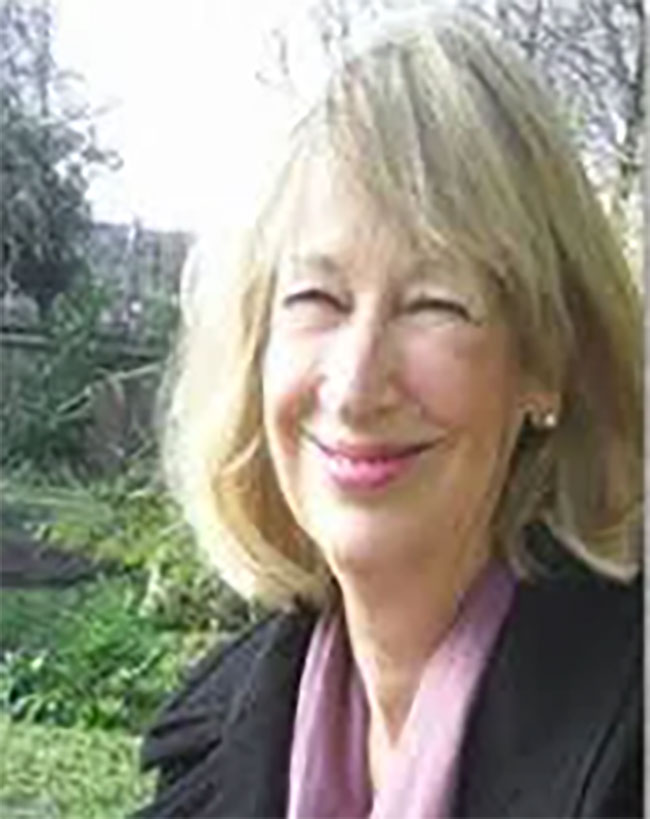
I was intrigued by the title of a book I found in a book drop at the condominium of a friend, Murder at Whitby Abbey, and I brought it home with me though I will not be able to return it in the near future. It was described on the cover page as ‘a standout in the crowded medieval mystery field’, though I fear I do not know of other books in this field, apart from the Cadfael series, which I have dealt with earlier.
The book, by Cassandra Clark, is set during the reign of Richard II and has as a backdrop his precarious position, which led to his being replaced, and murdered, by his cousin Henry, who reigned as Henry IV. It is a gloomy book, the action taking place in the twelve days of Christmas leading up to the Epiphany. And the gloom is pervasive, even though this is supposed to be a time of festivity, with mummers performing, and many of those in the guest house where the heroine stays going to town to enjoy themselves, with much drinking and much music, which also fills the guesthouse.
The heroine Hildegarde is a nun, sent to try to acquire a relic being sold by Whitby Abbey, though this was also a penance set by the Abbot of the monastery that governed her abbess because she had had sex with a man. Soon after she and her companions reach the Abbey set high on a cliff, she finds that there are other bidders, and soon suspects that the hierarchy, not perhaps the Abbot who seems a weakling, but his rapacious bursar, is determined to make money, and not above creating false relics to sell to several aspirants.
After Hildegarde and her Cistercian companions – Whitby is a Benedictine Foundation – two monks, Gregory and Egbert, and a young priest Mark, reach the abbey, they find that Aelwyn, a monk they had met on their way to the guesthouse had died. This was in the apple store, and they realize, when they find the surplices of novices stuffed into the air vents, that he had been left to suffocate in the overwhelming scent of apples.
Clark
The Cistercians are asked to look into the death, perhaps because they are likely to get no cooperation from the Abbey folk, but perhaps because those in charge are keen to know what happened. And the infirmarer, an old monk, suggests Hildegarde talk to a man called Edred who worked for the bursar, and had been a friend of Aelwyn’s. But Edred too is killed, before he can keep an appointment he had made with Hildegarde, drowned in a pool near the farmhouse of the Abbey.
Meanwhile tensions arise between the fisherfolk and the abbey for the bursar wants to charge them for using the beach that technically belongs to the abbey to dry their fish and their nets. This leads to physical battles, when the guards used by the abbey, under the command it seems of the bursar whose determination to make money is not resisted by the abbot and the prior, try to storm the area where the fishermen live.
Hildegard finds out more about what had happened through two youngsters, one of whom Torold is the son of Aelwyn by a woman who worked as a prostitute for a cartel, and with whom Mark fell in love. The other works on the farm and had seen Edred meet someone near the pool, after which that someone left the place by himself. And the boy had also found in the pool a sort of dagger with the seal of the abbey.
He and his dog, and Torold who follows her, rescue Hildegarde from a man at arms who has waylaid her and tries to rape her earlier. Escaping into the abbey she was nearly been raped then by the bursar, but she managed to escape, in the process setting fire to him and the muniments room, which led, when he was rescued, to the discovery of a box with the money he said had been stolen, blame being cast on both Aelwyn and Edred.
Matters come to a head when the fisherfolk try to storm the abbey, being resisted by the men at arms stationed on the towers. But then Hildegarde realizes that behind the murders was the bursar’s clerk, whom she pursued to the cathedral. There is great drama then as she escapes from him when he tries to kill her, and then from the man at arms who had tried to both rape and kill her, but they both fall from the scaffolding she had climbed, the latter coming from a tower where he had been stationed.
Both of them think they run the rapacity of the abbey, the latter claiming to work for the nobles opposed to Richard, who is presented throughout the book as devoted to his subjects, not to power or money. But though the villains die, the bursar continues, having got over the hysteria the fire had caused and his acknowledgment then of guilt – and though the abbot and the prior seem less vicious, whether they will be able to assert themselves is questionable.
Before the climax, when the others in the guesthouse were leaving, Hildegarde found that two of them were in possession of the relic, for which they seem to have paid well. Hildegarde herself had made a derisory offer, but before she leaves the abbot gives her the relic, perhaps in gratitude for what she and her fellow Cistercians had discovered, the abbey having made as much money as it needed and more from the gullible other buyers.
Mark’s inamorata is saved from the stews because she moves in with Edred’s widow whom the bursar had thrown out of the rooms he occupied when her husband was found dead. Hildegarde had paid for lodgings, in a house run by the man who ran the brothels, but he had a kindly side and was going to finance them to make nets for the fishermen.
So, the Cistercians set off for their home as swiftly as they can to get there on the day of the Epiphany, having stopped en route to pray for King Richard whose birthday it was.

Physical development must be matched by the enrichment of people’s inner lives through aesthetics and culture – PM

Review of the operations of the 1818 Hotline introduced to report drug-related information

Showers in the Western, Southern, Central, Sabaragamuwa, North-Western and Northern provinces and in the Anuradhapura District

SJB: Govt. trying to reappoint Jayakody, who resigned from Cabinet amidst coal scam

India busts Pakistani salt smuggling via Sri Lanka

Monks brave heavy rains to press for Gnanasara Thera’s release

‘Dates have the highest sugar content to fight Coronavirus’

Sunday Island 27 December – Headlines

#SundayIsland 17th December – Headlines

Sunday Island – 28th March

Sunday Island Headlines – 21 March

Sunday Island – 21st February – Headlines
-

 News5 days ago
Sri Lanka escalates anti-graft drive with Shiranthi’s jailing
-
 News6 days ago
NPP govt. reminded of its responsibilities as US warship leaves Colombo
-
 Latest News6 days ago
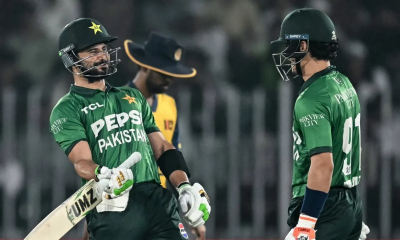
Farhan, Sadaqat help Pakistan ace 183 chase to go 1-0 up
-

 Latest News4 days ago
Farhan and Sadaqat help Pakistan seal series in style
-

 News5 days ago
Iranian ships stranded, Lanka fears US sanctions
-

 Latest News3 days ago
Nissanka’s return headlines Sri Lanka’s Test squad against Pakistan
-
 News6 days ago
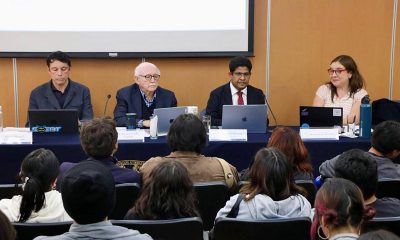
Interdicted top House official Kularatne receives special recognition in Mexican Parliament
-

 Features4 days ago
Intake 16: 45 years of duty and honour