
News
FAO helps launch modified multi-day fishing vessel to reduce post-harvest loss

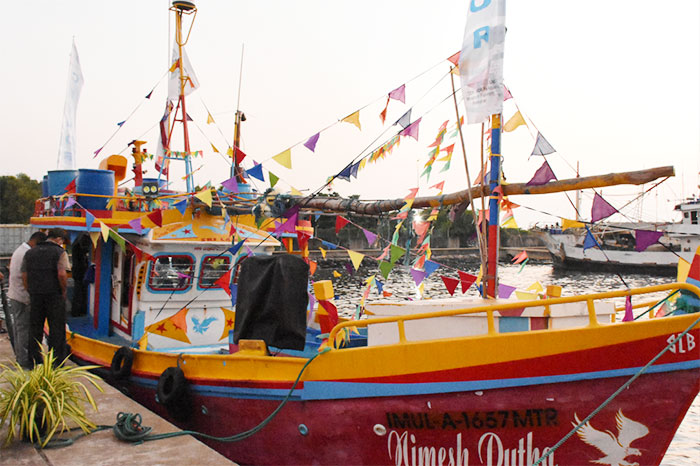
The Food and Agriculture Organization of the United Nations (FAO) and the Ministry of Fisheries yesterday (04) launched a modified multi-day fishing vessel at an event in Colombo. A FAO press release said that it was meant to improve the quality of fish and reduce post-harvest loss in the Fisheries sector.
The following is the text of the FAO statement: “Fish products are an important source of animal protein for Sri Lanka and the sector contributes about 1.1 percent to Sri Lanka’s GDP. However, studies by the National Aquatic Resources Research and Development Agency (NARA) indicate that the fish quality loss in some harbours is at 60 – 70 percent.
Some of the issues, contributing to these losses, include the lack of an adequate cooling system in multi-day fishing vessels that use weeks-old ice to maintain low temperatures and the captured harvest not being handled or stored properly by fishers, which reduces the quality of the overall harvest and damage the bottom layer of stored fish.
To address this issue FAO, together with the Ministry of Fisheries and NARA, modified the design of a multi-day fishing vessel as a pilot project to introduce new boat designs that provide an economically viable solution to minimize the quality loss of fish harvests. By reducing the existing post-harvest losses, the investment for the proposed new design can be recovered within 3.5 years.
The modified multi-day vessel features a pilot coolant system in the fish holds, and storage as well, as a modified fish holding facility to minimize the physical damage to fish due to overload. The modified vessel was launched at an event in Colombo under the auspices of Prime Minister Dinesh Gunawardena, Minister of Fisheries, Douglas Devananda, State Minister of Fisheries, Piyal Nishantha de Silva, and the FAO Assistant Representative for Sri Lanka, Nalin Munasinghe.
Prime Minister Dinesh Gunawardena highlighted the potential of the project stating, “I’m thankful to the Ministry and FAO for the efforts taken to introduce innovative methods to protect the valuable harvests of the fisheries industry. This innovative design will bring multiple benefits for the fisheries community by enabling them to protect the quality of their harvest.”
Minister of Fisheries Douglas Devananda stated, “I thank FAO, NARA, NERD, and other fisheries organizations that supported us in this initiative. We’re committed to introducing innovative solutions to address the challenges faced by the Fisheries community today.”
Speaking on the initiative, Assistant FAO Representative for Sri Lanka, Nalin Munasinghe, stated “This initiative is an important step in introducing new technology to the Fisheries sector that will reduce losses, increase profits and improve the quality of fish available for consumers. As FAO we are committed to supporting the sustainable integration of technology and innovation to strengthen Sri Lanka’s journey to becoming a food-secure nation.”
Together with its partners, FAO in Sri Lanka is committed to addressing urgent food security needs, while improving the capacity of the fisheries and agriculture sectors to support Sri Lanka’s journey to becoming a food-secure nation.



Senior England players, including captain Nat Sciver Brunt, will be allowed to miss a three-match T20I series in Sri Lanka if their franchises qualify for the final stages of WPL 2027 in India.
Sri Lanka Cricket (SLC) announced dates for England’s tour on Wednesday, with the three T20Is in Pallekele scheduled from February 1 to 5 acting as preparation for the inaugural Women’s T20 Champions Trophy, which runs from February 14 to 28 in India. England will then return to Sri Lanka for three ODIs in Dambulla from March 4 to 8.
The WPL runs from January 14 to February 7, and Cricinfo has learned that the ECB will allow England players to fulfil their franchise commitments even if it means missing the Sri Lanka T20Is. The approach is recognition that the WPL playoffs will provide players with good preparation for the Champions Trophy through high-stakes games in relevant conditions.
Sciver-Brunt (Mumbai Indians), Lauren Bell (Royal Challengers Bengaluru) and Sophie Ecclestone (UP Warriorz) have all been retained by their franchises for 2027. Only two English players – Sophia Dunkley and Kira Chathli – have entered next week’s auction, with the majority opting to prioritise the Sri Lanka series.
No Sri Lankan players are affected by the date clash as things stand, though captain Chamari Athapaththu and Mithali Ayodhya have both entered auction scheduled for October 28.
The ECB has previously allowed players to miss bilateral T20Is to play in the WPL, with four players – Ecclestone, Sciver-Brunt, Alice Capsey and Danni Wyatt-Hodge – arriving late for a series in New Zealand due to their participation in the 2024 edition.
The inaugural Women’s Champions Trophy was initially scheduled to be played in Sri Lanka in June-July 2027. The dates were moved forward earlier this year by the ICC, who then stripped Sri Lanka of hosting rights over government interference in their cricket administration and relocated the tournament to India.
England will also hold a red-ball training camp in India in January, selection for which will take place in the coming weeks.
The move follows head coach Charlotte Edwards’ appraisal at the end of the home summer, saying her side would need to intensify their focus on Test cricket after India thrashed them by 270 runs at Lord’s in July and with an Ashes series looming in the middle of next year.
“There will be a real focus on our red-ball cricket come December, January, February and leading into our English summer,” Edwards said at the time. “Expect potentially some of the players to be removed from county cricket. I’ll put that out there now because we’ve got a few best v best [planned].”
England Women tour to Sri Lanka
T20I series: February 1, 3, 5 (all Pallekele)
ODI series: March 4, 6, 8 (all Dambulla)
[Cricinfo]
By Shamindra Ferdinando
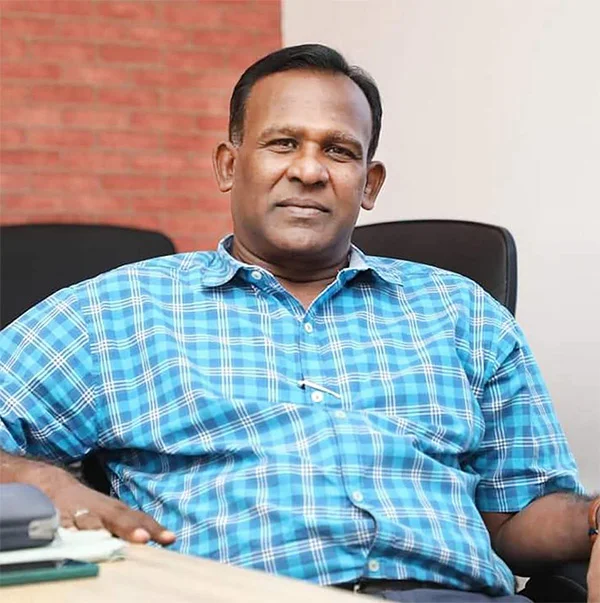
The use of low quality coal, over a period of time, had led to the developing crisis at the Lakvijaya Coal Power Plant (LVPP) at Norochcholai that compelled the boastful NPP government to implement power cuts, former Lanka Electricity Company (Private) Limited (LECO) Chairman Bandula Chandrasekera said yesterday.
The government imposed one-hour countrywide power cuts on 19 Oct.
Chandrasekera, now a consumer rights activist, warned that though the government declared the power cuts would be limited to three days, the situation could take a turn for the worse.
The top United Republican Front (URF) activist said so in response to the government’s claim that Saturday’s sudden drop in electricity generation at the country’s only coal-fired power plant hadn’t been caused by the quality issue of coal.
The former LEOCO Chief emphasised that the country was paying a very heavy price for the controversial procurement of low-quality coal for the 2025/2026 season.
“Procurement of low quality coal is not an allegation. It has been accepted by a seven-member committee, headed by K. L. R. C. Wijayasinghe, Additional Secretary, Energy Ministry, appointed by Parliament,” Chandrasekera said, pointing out that the government was trying to mislead the public into believing that the use of coal supplied by Trident Chemphar wasn’t the cause of the current power crisis.
The expert committee that investigated the coal scam had disclosed losses caused by substandard coal, Chandrasekera said, adding that the total losses/damages could be as much as Rs 20 bn.
Trouble erupted in Dec, 2025 when LVPP began using coal purchased from the new supplier, whose selection was challenged by the Auditor General in a special report submitted to Parliament, in April this year, he said.
Since the government entered into a deal with the Indian company, LVPP has so far received 19 ship loads of coal. An investigation conducted on the orders of the Public Utilities Commission of Sri Lanka (PUCSL) revealed that the use of low-quality coal had had a detrimental impact on the LVPP.
The Frontline Socialist Party (FSP) exposed the corrupt deal in Sept. 2025. The NPP run Parliament ignored the disclosure made by the JVP breakaway faction.
Chandrasekera said that the Committee asserted that it would cost approximately Rs 80 mn to restore the LVPP to the previous status. Responding to The Island queries, Chandrasekera emphasised the country couldn’t meet the power requirement unless the LVPP operates without hindrance. Those who had been, for whatever reason, switched to South African coal provided by the Indian supplier should be held accountable and punished, Chandrasekera said, recalling how the NPP parliamentary group defeated the no-confidence motion moved against the then Power Minister Kumara Jayakody, who later quit, as the enormity of the scam and its repercussions shook the government.
Chandrasekera said that the government couldn’t maintain services though the powers that be intended to meet the power deficit with the help of hydropower generated by the Victoria power station. The ex-official underscored the need to inquire into the failure of the authorities to implement the backup plan last Saturday. Had Victoria met the requirement, last Saturday’s countrywide power failure, that lasted from 11.43 am to 11 pm could have been averted, Chandrasekera said.
He also questioned the controversial government decision to disconnect solar power over the weekend as the absence of solar generation obviously aggravated the problem. Chandrasekera emphasised that the latest countrywide power outage exposed the government whose basic strategy was to blame everything on the Opposition.
“We sincerely hope the Presidential Commission inquiring into the coal scams also looks into the situation developing at LVPP due to the use of substandard coal. According to him, the loss caused by the recent outage was estimated to be around Rs 16 bn and the crisis could not be addressed by propaganda campaigns, especially on social media. But, if other factors, including the expenditure on hydro and thermal generation were taken into consideration, the losses could be as much as Rs 20 bn.

Power cuts continued across the country yesterday and are expected to continue today following the shutdown of all three generating units at the Lakvijaya Power Plant in Norochcholai.
The Public Utilities Commission of Sri Lanka (PUCSL) said approval had been granted on Monday (19) following a request by the National System Operator (NSO) to impose scheduled power cuts.
Accordingly, one-hour power cuts were scheduled between 4.30 p.m. and 9.00 p.m., with the country divided into four zones. Hospitals and locations providing essential services were exempted.
The three Norochcholai generating units remain out of operation following the countrywide power failure last Saturday, prompting the NSO to introduce daily power cuts to manage the available electricity supply.
NSO Chief Executive Officer Buddhika Samarasekara said the power cuts would be necessary yesterday and today (21).

Crystal Palace urged to retire bald eagle mascot

Little time to unpack as India open in Christchurch

Senior England players to miss Sri Lanka T20Is for WPL 2027

Bangladesh and Nepal to host Women’s Under-19 T20 World Cup from January 21 to February 6

Showers above 100 mm are likely at some places in the Western, Sabaragamuwa, Central, North-western, Northern and Southern provinces and in Anuradhapura district.

Low-quality coal causes power cuts: Ex-LECO Chief

‘Dates have the highest sugar content to fight Coronavirus’

Sunday Island 27 December – Headlines

#SundayIsland 17th December – Headlines

Sunday Island – 28th March

Sunday Island Headlines – 21 March

Sunday Island – 21st February – Headlines
-

 Features4 days ago
Kotahena:A Small Enclave, An Extraordinary Legacy
-
 News5 days ago
Asgiri Mahanayake calls for immediate release of Gnanasara Thera
-

 News3 days ago
Record 1,600 students take Russian Classical Ballet examination in Sri Lanka
-
 News7 days ago
AC President recuses himself from hearing prison attire case pertaining to Gnanasara Thera
-
 News6 days ago
Naval officer testifies Yoshitha received Rs. 5.15 mn in salaries during SLN service
-

 News4 days ago
Karannagoda pushed for £24,536 for Yoshitha’s UK training, Court told
-

 Editorial6 days ago
Saving Anojan: Beyond Executioner’s Blade
-

 News7 days ago
CID informs Fort Magistrate’s Court investigation into money laundering case against Namal completed