
Sports
Ashwin and Shreyas Iyer make it 2-0 for India in close finish

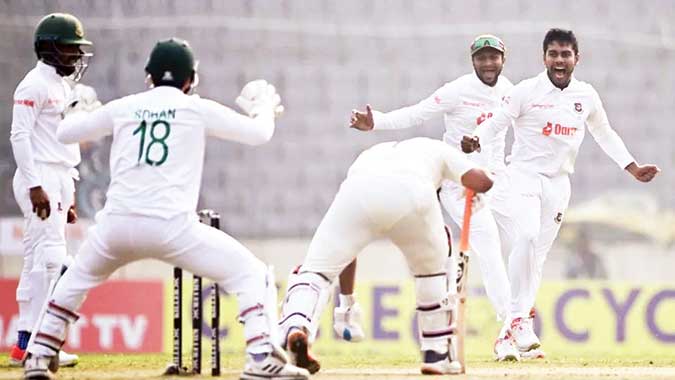
A fighting and defiant half-century stand between No. 8 Shreyas Iyer and R Ashwin saved India from a lower-order collapse and led them to a thin three-wicket win on a turning and low pitch on the fourth morning in Dhaka. Resuming on 45 for 4, India needed 100 more to win and Bangladesh six wickets. Mehidy Hasan Miraz’s five-for gave the hosts a big chance with quick wickets in the first half hour before Ashwin and Iyer used patience, accounted for the low bounce and also scored at a good clip – at over four an over – to take India over the line before the scheduled lunch break.
India strengthened their second spot on the WTC table with the 2-0 series win and have a four-Test series coming up at home against Australia, of which they can afford to lose only one game to not lose out on the final spot.
India were in deep trouble in the first hour at 74 for 7, still 71 adrift from the target, when Iyer and Ashwin came together. Iyer used his straight bat to play out the spinners patiently and Ashwin used a low stance for the low bounce especially against Mehidy as the Bangladesh spinners stuck to a stump-to-stump line that had fetched them three wickets in the morning.
Mehidy even created a chance when Ashwin was on 1 and India on 80, when Ashwin gloved the ball to short leg where Mominul Haque put down a straightforward chance. Just like Bangladesh made India pay for the dropped chances on Saturday, Ashwin cashed in on the life he got and picked up regular boundaries once he moved into double-digits. He collected two in an over off Khaled Ahmed and finished things off in a 16-run over off Mehidy which started with a first-ball six over midwicket and ended with back-to-back fours, taking Ashwin to an unbeaten 42 off 62 while Iyer was on 29 at the other end.
Bangladesh had raced ahead with an early advantage in a dramatic first hour that saw a few boundaries, numerous appeals, two reviews, and three wickets.Jaydev Unadkat survived a very marginal lbw call on the third ball of the day and Bangladesh’s review showed the ball was just hitting leg stump, which wasn’t enough to overturn the on-field decision. Unadkat slog-swept the very next ball for six over midwicket but fell in the next over when Shakib Al Hasan slipped in a quick one from around the wicket to trap him right in front on the back foot and Unadkat wasted a review.
Mehidy then removed two left-hand batters in consecutive overs for his eighth Test five-for. Rishabh Pant, at No. 7, unleashed a reverse sweep early on against Shakib for four but also looked nervous while either stepping out too often against the spinners or going on the back foot dangerously against sharp turn. Mehidy bowled on the fourth stump line consistently to him from around the wicket and pitched one marginally shorter to trap Pant on the back foot for 9.
Seventy-one for 6 quickly became 74 for 7. Axar Patel carried on from his overnight 26 with regular strokes to keep the score ticking whenever he got width or length to work with. But he also became a victim of Mehidy’s stifling line and flat trajectory when a grubber deflected off his pads on the back foot and hit the stumps to send him back for 34.
Shakib replaced himself with Taijul Islam to keep the left-arm spin threat going from one end and Iyer and Ashwin kept their bats close to pads and leaned forward to block the ball patiently in a boundary-less spell of 67 balls. With two right-hand batters on now, Mehidy’s magic didn’t look as unplayable now, barring the life Ashwin got. Iyer hit his first four on his 29th ball when Mehidy pitched one wide and then stepped out to drive Shakib inside out for a powerful cover drive followed by a pull for two more fours to quickly take India past 100 and switch the momentum.
When India were 34 away, Shakib brought on pace for the first time in the day. After conceding a four down the leg side, Khaled Ahmed nearly created a chance with Ashwin’s thick edge past a diving gully fielder but that also went for four. Taijul came back on, Mehidy tried going around the wicket and Bangladesh hoped maybe lack of bounce would get them an opening, but nothing worked.
Ashwin quickly scored 31 off the last 34 runs with the help of four fours and a six and kept Bangladesh still searching for their first Test win against India.
(cricinfo)
Scores:
Bangladesh 227 all out (Mominul Haque 84: Umesh Yadav 4-25, Ravichandran Ashwin 4-71) and 231 all out (Litton Das 73, Zakir Hasan 51, Axar Patel 3-68)
India 314 all out (Rishabh Pant 93, Shreyas Iyer 87; Taijul Islam 4-74, Shakib Al Hasan 4-79) and 145 for 7 Wickets (Ravichandran Ashwin 42 n.o., Axar Patel 34; Mehidy Hasan Miraz 5-63)







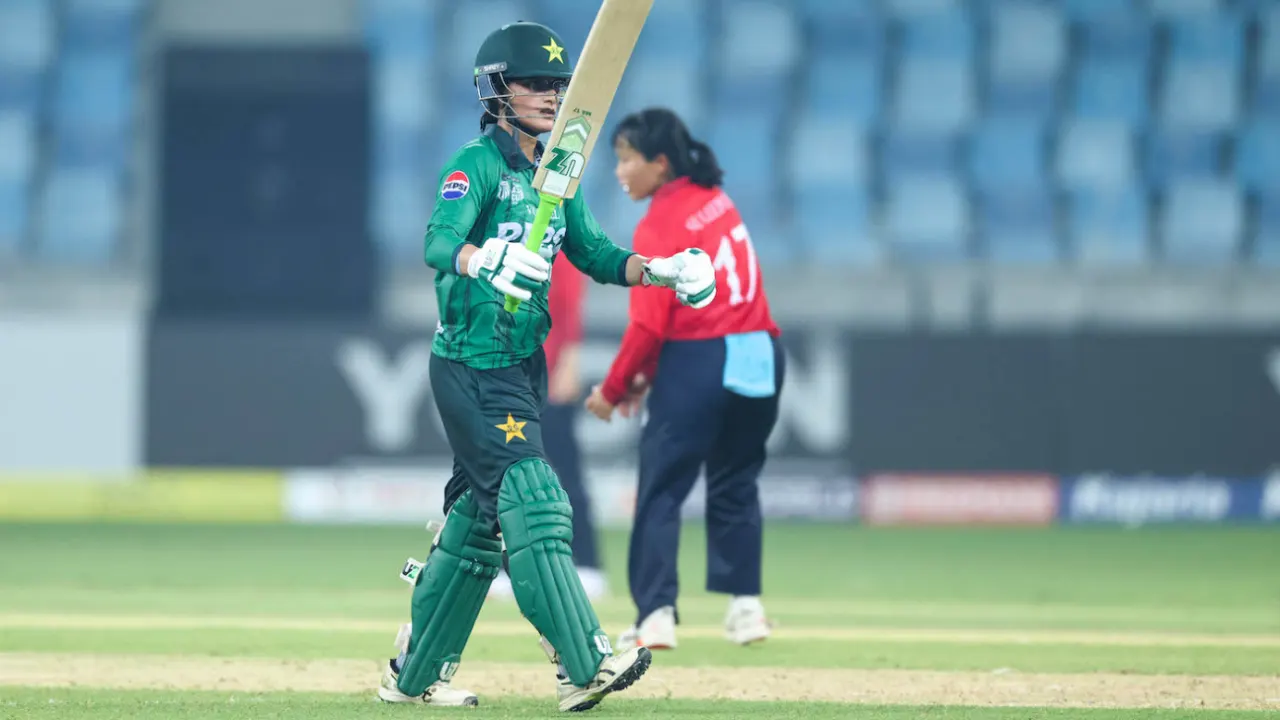
Muneeba Ali braved the oppressive heat of Dubai before Pakistan’s spinners put on a disciplined show to begin their T20 Asia Cup campaign with a commanding win over Thailand. The result knocked Thailand out of the competition as they suffered their second defeat in three matches.
On a pitch which stayed low, Fatima Sana backed her spinners to do the job by opting to bat at the toss, a decision which raised eyebrows at the time. She stood vindicated in the end as Pakistan completed a comfortable 35-run win.
But, it also brought to light Pakistan’s perennial batting woes as they managed only 119 for 9 in 20 overs despite Sana harbouring hopes of her side going beyond 150. Thailand never stood a chance of chasing the target against Pakistan’s quality spin attack and finished with 84-8 in 20 overs.
There was anticipation in the lead up to this contest as to whether the Thai left-arm orthodox bowler would surpass India’s Deepti Sharma as the highest wicket taker in the format. Thipatcha Putthawong did not make the spectators wait as she achieved the feat with a double-wicket maiden in the second over of the game.
Putthawong sent back Shawaal Zulfiqar on the second ball with the one that gripped off a length. It had Zulfiqar punch the ball right into the midriff of Suleeporn Laomi at point. Four balls later, she got her landmark wicket when Gull Feroza, back into the Pakistan side after missing the Sri Lanka T20Is, was caught at fine leg while playing the paddle.
That over tightened the screws on the Pakistan batters as they struggled to get going throughout the powerplay, which they finished with 32 for 3. Putthawong and Phannita Maya shared the six overs between themselves but it was the former’s figures of 3-0-21-1 that stood out.
Ayesha Zafar was the third batter to fall inside the powerplay, courtesy an outstanding catch by Natthakan Chantham at midwicket off Maya’s bowling.
Putthawong added another wicket to her tally in the last over of the innings. She now has 173 wickets in the format at a staggering average of 9.17 and economy of 4.11.
As has often been the case, the onus of doing the repair work fell on Muneeba, who opened the innings with Zulfiqar. She saw partners fall before putting together a solid partnership of 54 runs with Shamas.
Shamas picked up boundaries through point and wide of slip in her first four balls to kick the innings into gear. It helped Muneeba, who was struggling for breath because of the harsh Dubai weather, settle down. Muneeba often fell on her haunches to gather her breath and, at one point, had to be tended to by the team physio.
Conditions were tough for batting with the pitch playing slow and low, and the outfield being heavier than usual for a T20 game. Muneeba, nonetheless, continued to fight until the death overs and registered her fourth half-century. She finished with 54 off 52 with four boundaries and was stumped off Laomi’s bowling in the 17th over.
Shamas, who found herself in the main squad because of an injury to Najiha Alvi, made a crucial run-a-ball 20 to stop the floodgates. But her wicket, also to Laomi, re-opened the floodgates.
Laomi takes two in an over
Pakistan fans must have taken solace in the fact that Shamas was replaced by their captain, who had been at the top of her game in the T20 World Cup this year. But Sana had a brief stay at the crease. She was caught and bowled, second ball, as Laomi took a stunning catch diving forward. Both wickets fell in the 13th over of the innings. It was the second time in the innings that Pakistan lost two in an over.
Laomi varied her lengths and pace with great deception to finish as the best bowler for her side with 3-14 from four overs.
The average first-innings score at this venue in the women’s T20Is is 118, and that Pakistan managed one more was because of Tuba’s 12* off only four balls. She announced her arrival at the crease, amidst a flurry of wickets, with a gigantic six over square leg. She then hit a boundary through the covers in the last over.
Thailand might have harboured hopes of repeating the heroics from the 2022 edition of the T20 Asia Cup when they beat Pakistan. But they were eviscerated in Sadia Iqbal’s first over, the second of the run chase, as she sent back Maya and Nannapat Koncharoenkai.
Coincidentally, this over, like the second over of the first innings, ended up as a double-wicket maiden, and the two wickets in both these overs came on the second and last ball of the over across the innings.
Thailand needed one of their batters to emulate Muneeba, but they were starved of runs by Pakistan’s disciplined bowling and attacking field sets. They stood no chance at chasing the total down with the required run rate climbing every over.
The introduction of Nashra Sandhu after the powerplay further aggravated Thailand’s woes as the left-arm spinner allowed only six runs from her four overs, she picked up Chantham as well. Iqbal returned for the last over of the innings and picked up a wicket on the last ball to finish with 3 for 11 from four overs.
That Pakistan were able to secure a win despite a subpar batting performance was partly because they played a weaker opposition. But, their next opponents, India, are not likely to provide them much of a leeway.
Scores:
Pakistan Women 119 for 9 in 20 overs (Muneeba Ali 54, Sadaf Shamas 20, Umm e Hani 17, Tuba Hassan 12*; Phannita Maya 2-34, ; Thipatcha Putthawong 3-18, Sunida Chaturongrattana 1-23, Suleeporn Laomi 3-14) beat Thailand Women 84/8 in 20 overs (Naththakan Chantham 14, Naruemol Chaiwai 17, Aphisara Suwanchonrathi 13, Chanida Sutthiruang 25; Fatima Sana 1-22, Sadia Iqbal 3-11, Nashra Sandhu 1-06, Tuba Hasan 2-17) by 35 runs
[Cricinfo]

by Rex Clementine
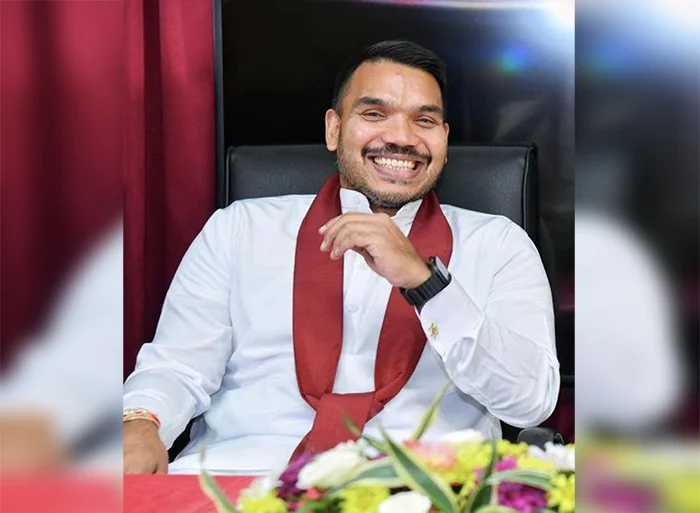
Parliamentarian Namal Rajapaksa has taken to social media to criticise the government over Sri Lanka supposedly missing out on hosting the inaugural Women’s Champions Trophy, scheduled for next year. The former Sports Minister has been shedding crocodile tears, bemoaning the politicisation of sport in Sri Lanka.
Coming from Namal, that is quite something.
Namal is a lawyer by profession. Those who practise law are generally expected to do their homework before presenting a case. When MP Rajapaksa shoots from the hip like this, however, one is entitled to wonder about that much celebrated law degree. This, after all, is a man who reportedly passed his law examinations with flying colours. A little fact checking, therefore, should hardly be beyond him.
The ICC does not recognise government appointed interim committees and does not permit countries operating under such arrangements to host ICC events. But to claim that Sri Lanka has already been stripped of the Women’s Champions Trophy is both premature and inaccurate. If the host nation is to be changed, that decision is expected at the next ICC Board meeting in November. By that time, SLC should be ready for fresh elections.
Nor is it correct to suggest that Sri Lanka will miss out on participating in the tournament. Ranked sixth in the world, Sri Lanka remain very much in contention to play, with the qualification criteria comprising the top five ranked teams plus the hosts. So, even if India were to host the tournament, Sri Lanka would still be part of the competition.
It appears politician Rajapaksa is fishing in troubled waters. Unfortunately, he seems to have forgotten to check whether there are any fish.
The less said about the disasters that befell Sri Lankan sports when the Rajapaksas were running the country, the kinder we would be to Namal.
Sri Lanka were the designated hosts of the Men’s Asia Cup in 2022. Back to back India versus Pakistan games in Colombo would have been a tremendous shot in the arm for the economy, with supporters from around the world descending on the island for one of cricket’s greatest spectacles.
There was one small problem: Namal’s uncles had helped run the country’s petrol pumps dry.
With fuel not freely available and the country engulfed in an economic crisis, the Asian Cricket Council shifted the tournament to the UAE. Curiously, there were no crocodile tears then. Namal’s social media account appeared to have misplaced its outrage.
Now he lectures the country about politicising sport.
To this government’s credit, it has largely refrained from interfering with the affairs of the cricket administration or team selection. Take the recent selection of Niroshan Dickwella. Many Sri Lankan supporters disagreed with it, including people sympathetic to the government. Yet there was no ministerial intervention. During Namal’s father’s regime, Sports Ministers could change selection committees almost overnight.
It is also worth recalling that when President Chandrika Kumaratunga appointed the first three Interim Committees, she turned to respected figures such as Rienzie Wijetilleke, Hemaka Amarasuriya and Vijaya Malalasekara.
Mahinda Rajapaksa did not spare cricket from political patronage either. His appointees to Cricket Interim Committees included family members, individuals who had lost cricket elections and others close to the political establishment.
Namal may point out that his father also appointed a reputed former cricketer to head an Interim Committee in 2010. Quite correct. But Mahinda Rajapaksa, the shrewd politician that he was, usually had another card up his sleeve. His dream of an international cricket stadium in his electorate soon became reality.
Sport became so politicised during the Mahinda Rajapaksa administration that even club elections were not immune. Those who doubt it can ask what happened at Colts Cricket Club, where respected officials stepped aside amid fears of crossing uncle Gota.
Sports officials were not alone. The media had their share too. Photographers covering the Rajapaksa boys playing at the Welisara Navy camp were harassed. On one occasion, a reporter was assaulted by Navy personnel.
Then there was television.
A television station linked to the Rajapaksa family telecast international cricket after a Cabinet decision concerning broadcasting rights was altered. Cricket was a cash cow. While state television struggled financially, the Rajapaksa boys were hardly complaining about political interference in sport.
And now Namal cries foul, accusing this government of politicising cricket.
His father appointed more Interim Committees than any other President. Even when elections were held, allegations of manipulation and political interference were rife. For years, Sri Lankan cricket suffered under administrators whose greatest qualification was often not what they knew about cricket, but whom they knew in politics.
That is why Namal Rajapaksa lecturing anyone about political interference in sport is rather like an arsonist complaining about the smell of smoke.
This government took on a cricket establishment that many had feared touching. There were warnings from the outset that reform would bring turbulence. So far, the authorities have managed to minimise those jolts. They should now be allowed to finish what they started. More strength to NPP and comrade AKD.
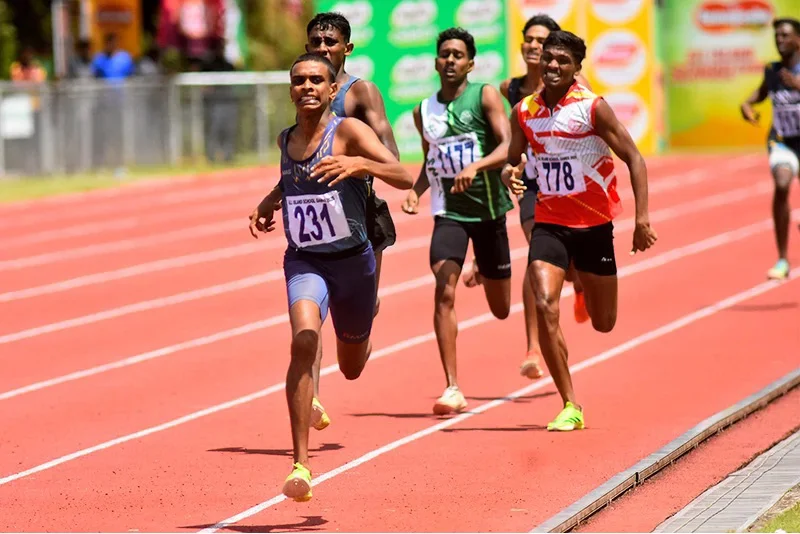
The 40th All-Island Schools Sports Festival will get under way on September 11, bringing the country’s biggest sporting event, in terms of mass participation, into its decisive national phase.
Although the national-level competition is scheduled to run until October 20, the festival’s journey began months ago at divisional level, where thousands of schoolchildren representing their respective schools competed for honours and qualification through successive rounds at Divisional, Zonal and Provincial level.
The massive participation and the extensive qualifying process, involving athletes and teams from across the country, make the All-Island Schools Sports Festival the largest sporting event in Sri Lanka. Those who have progressed through the earlier stages will now compete for national honours across a wide range of individual and team sports.
The Ministry of Education has released the official calendar for the national phase of the festival, which will be conducted across all nine provinces in four stages.
The opening stage will run from September 11 to 15, followed by the second stage from September 18 to 21. The third stage is scheduled for September 27 to 30, while the fourth stage will be held from October 2 to 9.
The festival will culminate with the boys’ and girls’ track and field championships from October 16 to 20 at the Mahinda Rajapaksa Stadium in Diyagama, Homagama, where the closing ceremony is also expected to be held.
Stage One: September 11–15
Judo (September 11–13, Nawalapitiya); Beach Volleyball (September 11–13, Negombo); Wrestling (September 11–14, Bandarawela); Rugby Football (September 11–13, Pallekele); Gymnastics (September 13–14, Colombo); and Swimming (September 13–15, Colombo).
Stage Two : September 18–21
Basketball (September 18–21, Colombo); Weightlifting (September 18–21, Polonnaruwa); Chess (September 18–20, Kurunegala); Softball Cricket (September 19–21, Anuradhapura); Karate (September 19–21, Kotuwila, Matara); Aerobic Gymnastics (September 19–21, Colombo); Hockey (September 19–21, Colombo); Table Tennis (September 19–21, Kegalle); and Handball (September 19–21, Weeraketiya).
Stage Three: September 27–30
Half Marathon
(September 27, Battaramulla); Physical Fitness Exercises (September 27–28, Digana); Carrom (September 27–29, Trincomalee); Elle (September 27–29, Embilipitiya); Netball (September 27–29, Bandarawela); and Taekwondo (September 27–30, Bandarawela).
Stage Four: October 2–9
Wushu
(October 2–5, Digana); Volleyball (October 2–5, Ruwanwella); Badminton (October 2–4, Colombo); Leather-Ball Cricket (October 2–4, Colombo); Football (October 2–5, Jaffna); Cycling (October 3–4, Anuradhapura); Boxing (October 5 -9 Colombo); Kabaddi (October 6–9, Nindavur); and Throwball (October 5–8, Pannala).
Athletics: October 16–20
The boys’ and girls’ track and field championships will be held from October 16 to 20 at the Mahinda Rajapaksa Stadium in Diyagama, Homagama, bringing the 40th All-Island Schools Sports Festival to a close. (RF)

Prime Minister participates in Global Conscious Food Systems Summit in Bhutan

Bouchier century sets England up for record 282-run chase against Ireland

Muneeba, Pakistan’s spinners knock Thailand out of Asia Cup

Showers will occur in the Western and Sabaragamuwa provinces and in Galle, Matara, Kandy and Nuwara-Eliya districts

Sun directly overhead Anamaduwa, Moragollagama, Dambulla, Manampitiya and Valaichchenai, at about 12.10 noon today (02)

SC rejects petitioners’ request for full bench

‘Dates have the highest sugar content to fight Coronavirus’

Sunday Island 27 December – Headlines

#SundayIsland 17th December – Headlines

Sunday Island – 28th March

Sunday Island Headlines – 21 March

Sunday Island – 21st February – Headlines
-

 News5 days ago
Eight politicians in drug kingpin probe
-

 Features3 days ago
“Wrap Me Up in My Blazer”— A Gentlemanly Bradby Reminiscence
-

 Business5 days ago
Sri Lanka opens up: A new season of direct connectivity
-

 Features5 days ago
Redefining ageing in Sri Lanka
-
 Latest News6 days ago
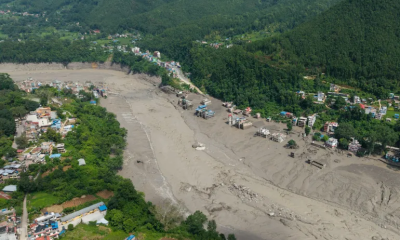
Nepal-Tibet floods: What happened, what caused them and who is missing?
-

 Editorial6 days ago
Unfolding El Niño and burning issues
-

 Features2 days ago
When Sri Lankan stories find their own voice
-
 Foreign News7 days ago
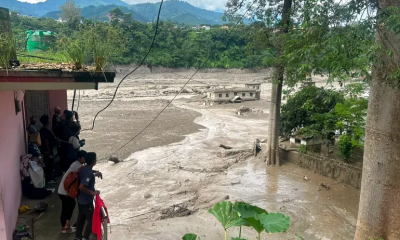
At least eight killed, hundreds missing after Nepal flash flood