
News
Indonesia’s bid to woo investors complicated by ‘sex ban’ code


Medan, Indonesia– For years, Indonesia has strived to present itself as a welcoming investment destination, to rival neighbours Vietnam and Malaysia.
In 2016, during his first term in office, Indonesian President Joko “Jokowi” Widodo announced the opening up of dozens of industries to foreign investment in what he termed a “big bang” of economic liberalisation.Six years later, the Southeast Asian country’s controversial new criminal code – which has been blazed across international headlines, since its adoption earlier this month, due to its ban on sex outside of marriage – is raising questions about Jakarta’s commitment to fostering an open and welcoming business environment.
In Indonesia, opinion remains divided on whether the revised criminal code, which includes prohibitions on blasphemy, cohabitation, sorcery and insulting the government, helps or hurts Jakarta’s sales pitch to the world.
The Indonesian Employers Association (APINDO) has raised concerns about several sections of the code, including penalties for corporate crime, that will have a “broad impact”, and the recognition of customary law.
“For the business sector, the implementation of this customary law shall create legal uncertainty and make investors reconsider investing in Indonesia,” APINDO said in a statement provided to Al Jazeera.
APINDO also said the ban on non-marital sex will “do more harm than good, especially for the business sector engaged in tourism and hospitality”.Other industry figures have brushed off such concerns.
“Currently the government is still implementing the new criminal code. Of course, there will be some pros and cons, but there will be a three-year period before it is applied in real life,” Clement Gultom, Managing Director of Boraspati Tour and Travel, in Medan, told Al Jazeera.
“As such, I am more inclined to choose not to be aggressive towards the new criminal code,” Gultom said, adding that lawyers and activists could apply for a judicial review of the code, through the Supreme Court, if necessary.
Khairul Mahalli, Chairman of the North Sumatra Chamber of Commerce and Industry, expressed similarly upbeat sentiments.
“The function of the government is as a regulator and the function of businesses is as an operator,” he said. “We need to support the government and make sure that the new laws are coordinated at all levels of governance.”
Mahalli said bodies, such as the Chambers of Commerce, would be instrumental in connecting foreign businesses, with local partners, and ensuring the smooth continuation of businesses, after the code comes into effect.
“For now, the world of business, in Indonesia, has not been affected and is a world of opportunity,” he said.
The revised code – a complete overhaul of the code from 1918, when Indonesia was a Dutch colony – had been controversial for years, before its passage, sparking nationwide protests, in 2019. Then, as now, critics feared it would violate basic human rights and erode Indonesia’s democratic freedoms.The changes come as Indonesia has been making strides in its bid to attract investment, which includes a target of attracting $89bn in foreign investment next year.
Indonesia’s foreign direct investment (FDI) rose 63.6 percent, on a yearly basis, in the third quarter of 2022, hitting $10.83bn, according to the Investment Minister, Bahlil Lahadalia.China, Japan and Singapore were the biggest sources of investment, which was mainly driven by the development of resources processing – part of the country’s wider strategy to add value to its minerals.
Some environmental activists have suggested the revised code, far from dissuading investors, will embolden those who wish to exploit fragile ecosystems.Arie Rompas, a campaigner at Greenpeace Indonesia, said he believed the code had been ratified for the benefit of foreign investment and to silence critical voices.
“Investors will be happy because articles on environmental crime have been made easier, which is to say that environmental crimes have been made more difficult to prove in Court,” Rompas told Al Jazeera.
Rompas said many of the new laws, that critics say will restrict dissent and protest, are likely to be used against those who criticise foreign investment, particularly projects that threaten the environment.
“The potential for criminalisation actually threatens local communities and activists if they protest or criticise projects, considered strategic by the government, in cooperation with outsiders,” he said.
“This criminal code was designed to strengthen the spirit of colonialism’s legacy of exploiting natural resources, damaging the environment and silencing critical voices in civil society.”
The new criminal code places restrictions on “organising a march, rally or demonstration” and includes penalties of up to six months in prison for anyone found to have caused “a disturbance to the public interest, trouble, or riots in the community”.Other articles make insulting public authorities, and state institutions, a crime, punishable by up to 18 months in prison.
Usman Hamid, Director of Amnesty International Indonesia, said the Batang Toru Dam project, a $1.6bn China-funded hydropower business, run by Jakarta-based PT North Sumatra Hydro Energy, is an example of the kind of projects the government hopes to protect with the criminal code.The project, which began in 2017, has been controversial, from the start, due to what activists say is the threat it poses to the local Tapanuli orangutan population. Source: Al Jazeera

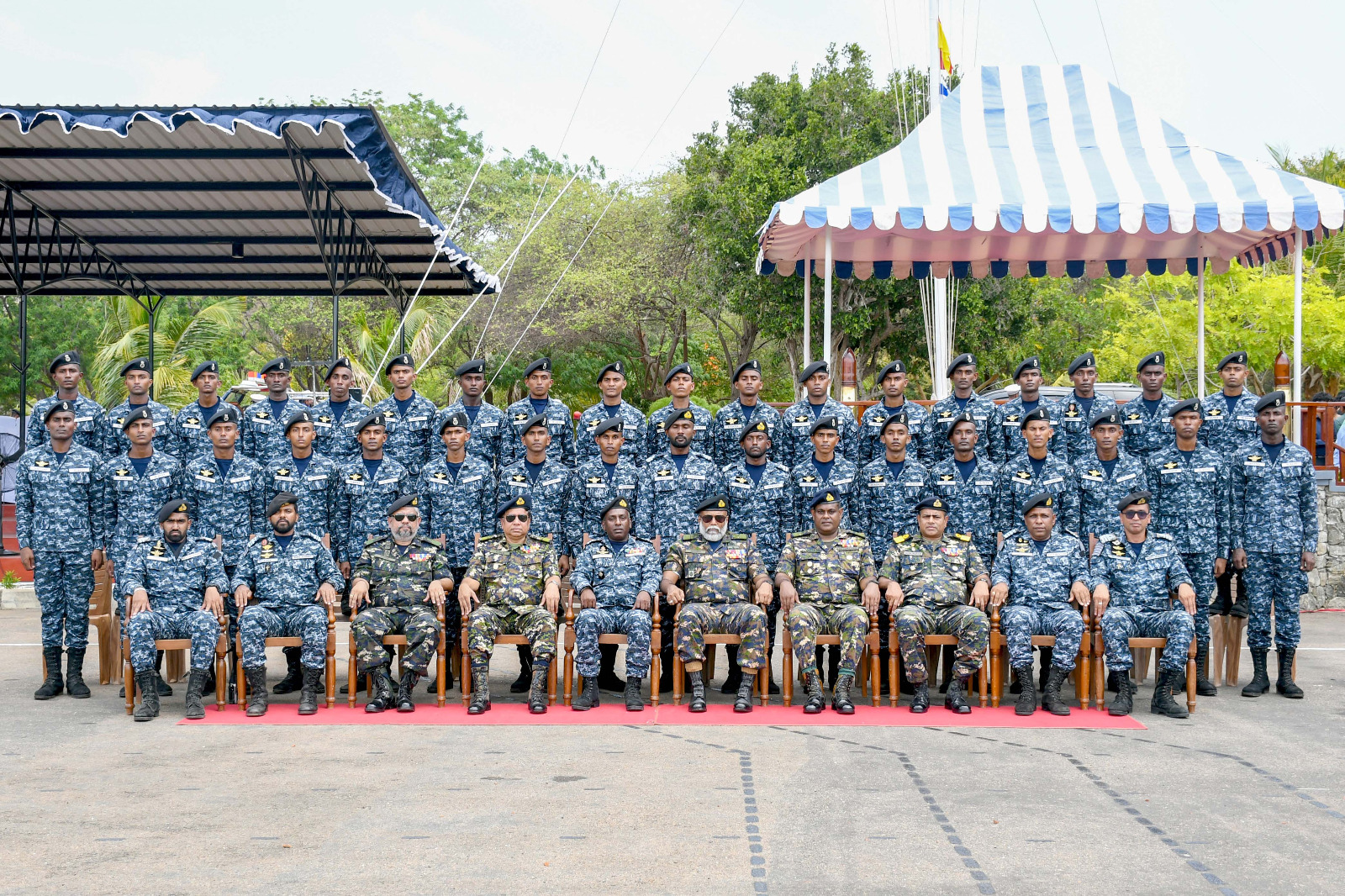
Thirty-six (36) naval personnel completed an eight-month Basic Marine Qualification Course and received their Marine insignia at the main parade ground of SLNS Vidura in Sampur, Trincomalee today, (29 August 2026).
At the invitation of Commandant SLNS Vidura, Captain Ravindu Harischandra, the ceremony was graced by Rear Admiral Buddhika Liyanagamage, Deputy Chief of Staff of the Navy and Commander Eastern Naval Area.
The group, comprising 3 officers and 33 sailors, completed the 10th intake of the Basic Marine Qualification Course, after volunteering for the demanding training programme.
In recognition of exceptional performance during the training, trophies were presented to outstanding personnel. Lieutenant (S) VPA Sasanka was awarded trophies for Best Marine of the Course, Highest Aggregate in Overall Subjects, and Best Marksman.
Physical Training Instructor WMGDP Bandara received the trophy for Best Physical Fitness. Addressing the newly qualified personnel,
Rear Admiral Liyanagamage congratulated them on successfully completing the course. He urged them to use the skills and experience gained through their training to contribute to safeguarding the country’s sovereignty and territorial integrity.
He also called on them to apply the courage and determination developed during the course both in their professional and personal lives, and to remain prepared to meet any challenge faced by the country.
He stressed the importance of keeping their knowledge and training up to date and maintaining constant vigilance while carrying out their duties.
Rear Admiral Liyanagamage also expressed his appreciation to
the Commanding Officer of SLNS Vidura and the directing staff for their contribution to the successful completion of the course.
The insignia ceremony also included a demonstration showcasing the capabilities and skills of the Sri Lanka Navy Marine.
Rear Admiral Achala Silva, Director General Logistics; Rear Admiral Kusal Dissanayake, Commandant Naval Infantry; Commodore Sanjeewa Kodikara, Director Marine; officers
from Navy Headquarters and the Eastern Naval Area; senior officers from the Army, Air Force and Police; and parents of the newly passed out marine personnel attended the ceremony.
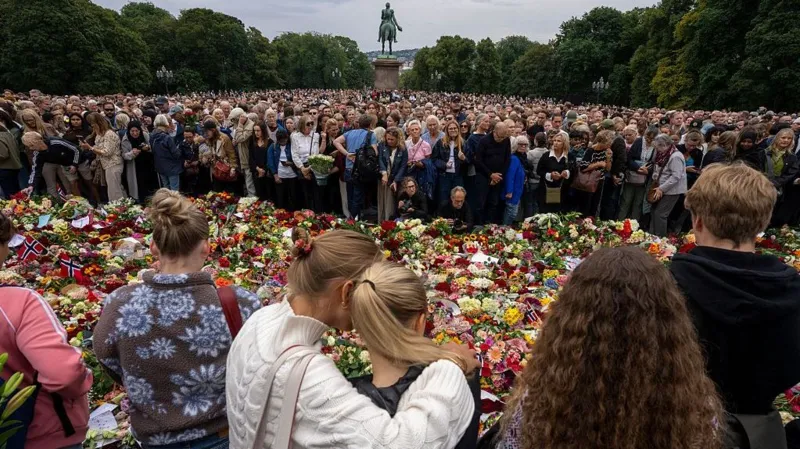
Norwegians are grieving the death of the beloved King Harald V, as a period of national mourning begins and his son Haakon VIII assumes the throne.
After Harald’s death was announced early on Friday, crowds amassed at the royal palace in Oslo, laying flowers and flags, some mourners visibly in tears.
The 53-year-old new king held an extraordinary council of state meeting with government ministers, saying he was taking on the royal family’s motto “All for Norway”.
Harald – who was on the throne for 35 years – died in hospital at 06:35 local time (04:35 GMT) aged 89, after being treated there for a rare blood condition. His coffin was later taken to the palace in a public procession.
Memorials outside the palace included a candle with the word “thanks” written on it (BBC)
An estimated 10,000 people lined the streets in the capital to see the late king go past, Norway’s public broadcaster reported.
The late monarch has been described as an inclusive, transparent and empathetic “people’s king” who modernised the Norwegian monarchy.
European royals, including King Charles III – whose mother Queen Elizabeth II was Harald’s second cousin – as well as political leaders and ordinary citizens, paid tribute to his service and the stability he brought to the country.
Norway’s Prime Minister Jonas Gahr Støre, who laid flowers outside the palace and signed a book of condolences after greeting the new king, said the country was “united in grief and gratitude”.
In a televised memorial address – one of multiple eulogies by ministers – he said the late king’s “legacy lives on” and offered condolences to the royal family and Queen Sonja, who would have celebrated her 58th wedding anniversary with Harald on Saturday. Støre was joined by ministers and a crowd of citizens grieving outside the palace (BBC)
Norway’s superstar footballer Erling Haaland thanked Harald for “everything you meant to Norway” in a post on Instagram, adding that it had been an honour to meet him earlier in the summer at the palace following the Fifa World Cup.
In the country’s capital, Norwegians shared their grief and affection for the late king.
“I personally will say he was everything for us, especially being an immigrant,” Biteya Terfassa, an Oslo resident who was born in Ethiopia, told news agency Reuters outside the palace.
“He made us feel at home and he made us feel loved. So he was like a grandfather that I never had.”
At noon, the Norwegian Armed Forces honoured Harald with a funeral salute of 21 shots from Akershus Fortress in central Oslo.
Later on Friday, a procession left the chapel at Rikshospitalet, where Harald died, taking his coffin in a hearse to the royal palace.
The date of Harald’s funeral is yet to be officially announced. Until then, he will be lying in state in the palace chapel so the public can pay their last respects.
During the national mourning period, flags will be flown at half-mast across the Nordic country, while Harald’s portrait will be displayed, candles lit and moments of silence held at professional events.
All non work-related social events will be cancelled or postponed. Oslo Mayor Anne Lindboe, who was due to get married on Friday, even postponed her wedding,
King Haakon, who is Harald’s younger child, is now the monarch and his wife Mette-Marit queen.
He is due to take an oath before the Norwegian parliament on Tuesday and will later participate in a consecration service – a stripped-down version of a coronation, which Norway no longer has.
His daughter, the 22-year-old Ingrid Alexandra, who joined her father to meet ministers at the palace on Friday, is next in line to the throne as crown princess after the rules of succession changed in 1990 to allow firstborn women to inherit the crown. Crown Princess Ingrid Alexandra, second from right, stood by her father’s side (BBC)
Haakon assumes his new role at a difficult time, as the royal family has faced health challenges and scandals this year.
Now-Queen Mette-Marit came under scrutiny earlier this year when it was revealed that she had a three-year friendship with the late convicted sex offender Jeffrey Epstein, for which she has publicly apologised.
Later in the year, she received a lung transplant, after suffering from pulmonary fibrosis since 2018. Doctors will not declare her stable until next year, meaning her husband must balance his new official duties with her care.
Meanwhile, Mette-Marit’s son from a previous relationship, Marius Borg Høiby, was convicted in June of rape and other offences and sentenced to four years in prison. He is appealing.
Høiby is not a member of the royal family, but was raised with them since he was four years old, when now-King Haakon married his mother.

Although Harald remained popular until his death, a poll for newspaper Aftenposten earlier this year found that support for the monarchy had dropped from 72% in 2024 to 54%.
However, Norwegian royal experts told the BBC that the new king, while facing questions about the turbulence surrounding his family, was respected, hard-working and, they believed, able to move forward despite the challenges.
(BBC)
Latest News
Sun directly overhead Pallawarayankaddu, Akkarayankulam, Ariviyal Nagar, Puthukkudiyiruppu, Ananthapuram at about 12.11 noon today (29)


The sun is going to be directly over the latitudes of Sri Lanka from 28th of August to 07th of September due to its apparent southward relative motion.
The nearest places of Sri Lanka over which the sun is overhead today (29) are Pallawarayankaddu, Akkarayankulam, Ariviyal Nagar, Puthukkudiyiruppu, Ananthapuram about 12.11 noon.

Thirty-six naval personnel pass out on successful completion of Marine training

Ex-White House teleprompter operator ordered to pay $172,000 for Trump speech bets

Rescuers on high alert for signs of secondary landslides

More than 600 killed in Nepal flood as search for survivors enters fourth day

Norway mourns King Harald as Haakon VIII ascends throne

Trump announces ‘biggest oil deal in world history’ with Venezuela

‘Dates have the highest sugar content to fight Coronavirus’

Sunday Island 27 December – Headlines

#SundayIsland 17th December – Headlines

Sunday Island – 28th March

Sunday Island Headlines – 21 March

Sunday Island – 21st February – Headlines
-

 Features7 days ago
My secondary schooling after Royal Primary
-
 Features7 days ago
From the First to the 22nd: A short history of Amendment Politics and Reform Frustrations
-

 News5 days ago
Missing doctor’s body found in Mahiyanganaya
-
 Features7 days ago
How Shelton Kodikara became first Professor of International Relations
-
 Features7 days ago
How St. John’s College Shaped Panadura for 150 Years
-
 News5 days ago
Australia declines to release Finance Secy Suriyapperuma’s citizenship details
-
 News7 days ago
Ex- Atamasthanadhipathi uses Magistrate’s gate to enter court
-
 News5 days ago
22A: BASL suggests CJ recuse himself from hearing petitions