
News
Hit-run killer of Lankan student jailed for eight years


Nisali Perera was just two metres from safety when an ice-addicted driver struck and killed her on a Melbourne road
Shane Cochrane killed her instantly after he sped through a red light in Clayton in August 2019, having used ice and GHB the night before.
The 20-year-old Sri Lankan international student, on her way home from Monash University, was thrown nearly 60m by the impact.
But Cochrane didn’t stop, instead dumping his car at an abandoned church nearby before hopping into a DiDi ride share.
Judge Liz Gaynor sentenced the 38-year-old, who appeared to wipe away tears as he faced the Victorian County Court on Tuesday, to a maximum 10 years behind bars, the Australian media reported yesterday (6)
Cochrane had earlier pleaded guilty to multiple offences including culpable driving causing death, and failing to stop and render assistance.
Ms Perera’s parents were torn when their only child was accepted to study commerce at Monash, the court heard.
Her mother, Kamal, said in a statement they were “reluctant” to let their daughter go from their care and protection, but wanted the young woman to be able to “fulfil her dreams and live independently”.
“I still regret the fact that I let her go (to Australia),” the 52-year-old said.
“If I kept her back (home) … she would have lived.
“We do not have anything to look forward to in the future.”
Kamal Perera and her husband despaired that their daughter wouldn’t be able to care for them in their old age, as is customary in Sri Lankan culture.
“The irony of the situation is that Nisali had a belief that Australia was a very safe country,” Judge Gaynor said on Tuesday.
“She was the centre of her parents’ world and their lives have been entirely and irrevocably shattered.”
Cochrane had already been sentenced 29 times, mostly for drug and driving offences, when he fatally struck Ms Perera.
Judge Gaynor called his road record “appalling”.
He was still under the influence of ice when he sped, unlicensed, through a light which had been red for 12 seconds.
A collision reconstruction expert told the court Cochrane was “most likely” driving at 95 to 102km/h when he struck Ms Perera, who was 2.3m away from crossing the road.
The former furniture removalist and courier was arrested sleeping in a home at Officer, southeast of Melbourne, five days after the crash.
“I was just driving along that road and … the next thing I know, I’ve hit somebody, like, I didn’t even see her one bit,” he told police.
Cochrane is thought to have a brain injury from prolonged drug use and trauma, after an upbringing marred by violence. His mother died from drugs when he was a teenager.
He will be eligible for parole after eight years, but has already served 355 days in pre-sentence detention.


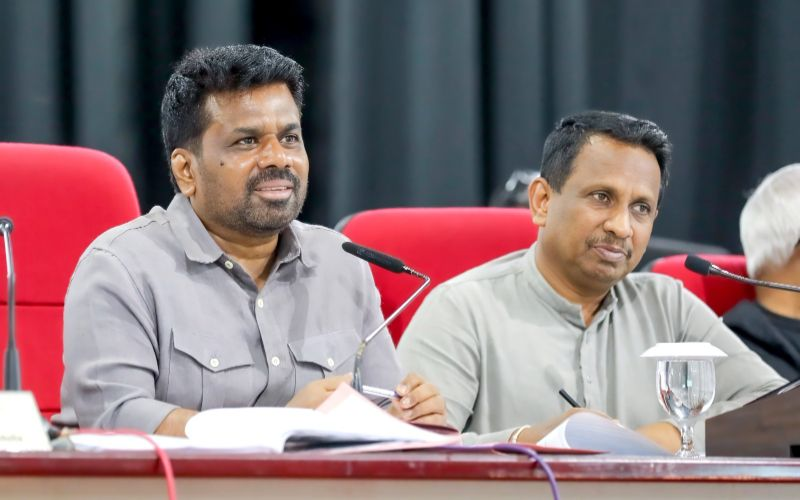
A Special Coordination Committee meeting for the Badulla District was held on Wednesday (13) afternoon at the Badulla District Secretariat under the patronage of President Anura Kumara Dissanayake to review the progress of measures taken to restore normalcy to the lives of people affected by the cyclone “Ditwah” and to develop infrastructure in the district.
As a result of the disaster situation, 90,667 individuals belonging to 26,517 families in the Badulla District were affected. A total of 77 estate houses and 507 rural houses suffered complete damage. In addition, 1,376 estate houses and 1,474 rural houses have been identified as high-risk dwellings. Accordingly, the total number of families that need to be resettled in the Badulla District is 3,434. During the meeting, the President inquired separately at divisional secretariat level about the resettlement process and the issues that had arisen.
Special attention was also given to the speedy release of state lands currently occupied by private companies, which have been proposed for resettlement purposes. The President instructed officials to commence housing construction work immediately after reaching agreement among the relevant institutions regarding the release of these lands.
The President further emphasized the need to expedite the resettlement process and stated that authorities should move beyond reports and plans and ensure that people who lost their homes gain confidence and hope in owning a new house.
The President also instructed that people who are hesitant about relocating to different lands should be given time until June 15 to make a decision.
The President separately reviewed the progress of compensation payments to affected people in the Badulla District, including compensation for loss of livelihoods, compensation for small and medium-scale business establishments, housing rental assistance and compensation for loss of life.
Attention was also drawn to the process of removing sand and rocks deposited on paddy fields and agricultural lands due to the disaster. It was decided to provide an allowance of Rs. 25,000 per acre for this purpose and to implement the programme with the support of farmer organizations.
Special focus was also given to the development of roads in the Badulla District damaged by the disaster. The President instructed that work on all 21 affected roads under the Road Development Authority be completed within this year.
The President also inquired about the programme being carried out for provincial road development and the required allocations and instructed officials to prepare and submit estimates for the necessary funding for all those roads.
The President further instructed officials not to consider financial constraints as an obstacle in restoring normal life for those affected by the disaster. President Dissanayake stated that the district should recover from the destruction caused by the cyclone within this year and be prepared to restart the Badulla District development programme from next year onward.
Also attending the meeting were Badulla District Coordination Committee Chairman and Minister of Plantation and Community Infrastructure, Samantha Vidyarathna; Co-Chairman and Uva Province Governor, Attorney-at-Law Kapila Jayasekara; Deputy Minister of Tourism, Ruwan Ranasinghe; Deputy Minister of Youth Affairs, Dinidu Saman Hennayake; Members of Parliament Kitnan Selvaraj and Ravindra Bandara; the Mayors of Badulla and Bandarawela Municipal Councils; Chairpersons of Local Councils; public representatives; the Chief Secretary of the Uva Province; the District Secretary; government officials of the Badulla District; Heads of relevant Departments; and representatives of the security forces.
(PMD)

Alleging that the Public Utilities Commission of Sri Lanka (PUCSL) has shifted the massive losses, caused by the coal scam, to the hapless public, Opposition and SJB Leader, Sajith Premadasa, has questioned the conduct of the regulator, noting that it is mandated to protect the interests of both the service provider and the consumers.
Premadasa alleged that the PUCSL ignored the representations made by the SJB on behalf of local industries.
Premadasa said that the PUCSL had authorised the latest 18% increase, in response to the request made by the recently established National System Operator (Pvt) Ltd (NSO), on behalf of the NPP government.
The PUCSL was established in terms of the Public Utilities Commission of Sri Lanka Act, No. 35 of 2002. Although the PUCSL was supposed to function as a multi-sector regulator for electricity, water services and petroleum industries, successive governments refrained from bringing water services and petroleum industries under its purview.
The Opposition leader alleged that the PUCSL did the bidding of the government.
Since January this year, PUCSL has increased electricity tariffs on three occasions. The latest came into operation on 11 May.
The PUCSL consists of Prof. K. P. L. Chandralal (Chairman), Engineer Piyal Henanayake (Deputy Chairman), Dr. M.C.S. Fernando, and Lilantha Samaranayake, PhD.
Premadasa said that instead of taking tangible measures to recover the unbearable losses caused by the coal scam, the government burdened the entire country through the PUCSL.
“Don’t forget that the government is shielding its henchmen responsible for the coal scam at the expense of the country,” MP Premadasa said, pointing out that there couldn’t have been any dispute over their culpability, after the National Audit Office (NAO) found fault with the Energy Ministry for granting the tender for the supply of coal for the 2025/2026 season to a company not qualified even to participate in the tender process.
The SJB leader declared that the resignation of Energy Minister, Kumara Jayakody, and its Secretary, Prof. Udayanga Hemapala, in the immediate aftermath of Parliament defeating a no-faith motion against the Minister was meant to protect the ruling party.
The PUCSL has stated that the NSO received Rs 15 bn from the government to grant relief to 95% of the consumers. “How could the PUCSL justify unbearable electricity tariff increases for the remaining 5% of the consumers, knowing very well that it will destabilise key sectors in the economy?” a power sector expert said.
By Shamindra Ferdinando
News
Rains bring relief to debt-ridden CEB as reservoirs fill; one dead, 62 families affected by adverse weather
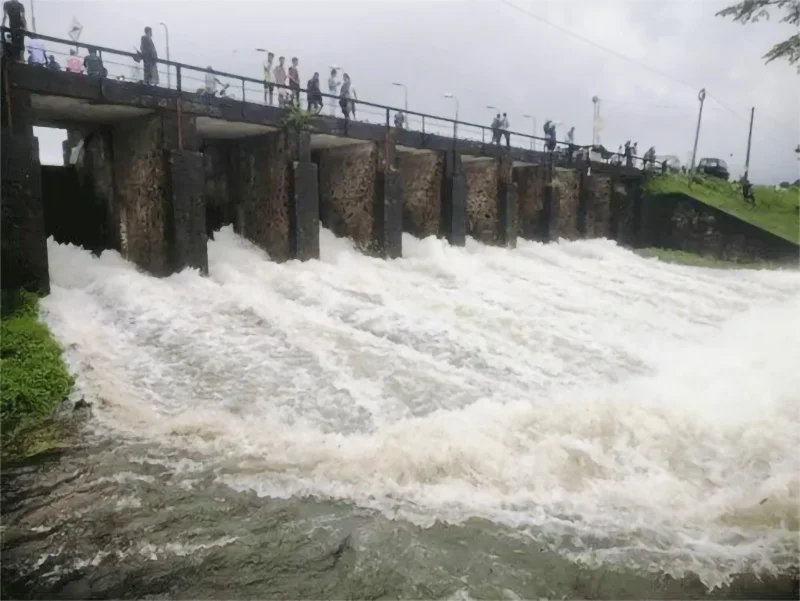
The widespread torrential rains currently experienced countrywide are expected to provide significant financial relief to the debt-ridden Ceylon Electricity Board (CEB) by sharply increasing hydroelectric power generation and reducing dependence on costly thermal and coal-powered electricity generation, power sector officials said yesterday.
Senior engineers of the CEB told The Island the rapid rise in water levels in major catchment areas and reservoirs had already strengthened hydropower generation capacity across the country.
Officials of the Irrigation Department confirmed that 33 reservoirs are presently spilling following continuous heavy rainfall over several parts of the island.
Among the major reservoirs spilling are Rajanganaya, Lunugamwehera, Weheragala, Deduru Oya, Nalanda and Wemedilla reservoirs, while several spill gates have been opened to release excess water due to heavy inflows into the catchment systems.
An Irrigation Department engineer said catchment areas linked to the Mahaweli, Kala Oya and southern river basins had received exceptionally heavy rainfall over the past several days.
“The inflows are extremely high. Reservoir capacities are increasing rapidly and this is highly beneficial for irrigation, water supply and hydroelectric generation,” the official said.
CEB engineers explained that the increase in reservoir storage levels would enable the Board to maximise hydroelectricity generation from major hydropower stations linked to the Mahaweli and Laxapana systems.
A senior CEB engineer said hydropower remained the cheapest electricity source available to Sri Lanka.
“Hydro generation costs are minimal compared to thermal generation. Once reservoirs fill up, we can considerably reduce expensive oil-based thermal generation,” the engineer said.
According to power sector estimates, hydroelectricity generation costs remain below Rs. 5 per unit, whereas coal-fired electricity generation costs range between approximately Rs. 18 and Rs. 25 per unit depending on international coal prices and exchange rate fluctuations.
Diesel and furnace oil-powered thermal generation are significantly more expensive, costing between Rs. 40 and Rs. 70 per unit.
CEB officials said the prevailing rainy conditions were therefore producing enormous savings for the financially-strained utility.
Daily electricity demand currently fluctuates between 45 million and 50 million units. One unit equal 1 kWh. One million units 1 GWh.
Energy sector estimates indicate that if hydropower generation replaces between 10 million and 15 million thermal-generated units daily, the CEB could save between Rs. 350 million and Rs. 900 million per day depending on the displaced fuel source.
Even replacing coal-powered generation alone could save between Rs. 150 million and Rs. 300 million daily.
“The present rains have arrived at a critical time for the CEB. Higher hydro generation means lower fuel imports, reduced thermal dispatch and major savings for the utility,” another senior engineer said.
Meanwhile, the prevailing adverse weather has also caused fatalities and damage in several districts.
The Disaster Management Centre (DMC) said one person had died while 62 families in four districts had been affected by the severe weather conditions.
The fatality was reported from the Koralai Pattu South Divisional Secretariat Division in the Batticaloa District.
According to the latest DMC situation report issued at 10.00 p.m., 17 Divisional Secretariat divisions across four districts have been affected by the disaster situation caused by the severe weather.
Some 203 persons belonging to 62 families have been affected so far, while 17 people are currently being accommodated at safe shelters.
The DMC further stated that 39 houses had been damaged due to the prevailing adverse weather conditions.
Meanwhile, the Department of Meteorology issued a red warning for heavy rains in several parts of the country.
The Met. Department said the prevailing showery conditions were expected to continue further due to the low-pressure area in the vicinity of Sri Lanka.
Very heavy showers exceeding 150 mm are likely at some places in the Western, Sabaragamuwa, Central and Northwestern provinces and in the Galle and Matara districts.
Heavy showers of about 100 mm are also likely at some places elsewhere across the island.
The Disaster Management Centre yesterday urged the public to take adequate precautions to minimise damages caused by heavy rain, strong winds and lightning during thundershowers.
By Ifham Nizam

‘Watermelon deaths’ in Mumbai puzzle investigators

Mass sex abuse allegations force closure of boarding school in Indonesia

Gunshots fired in Philippine Senate where lawmaker wanted by ICC is holed up

Kohli’s ninth IPL hundred powers Royal Challengers Bengaluru to the top

Special Coordination Committee meeting for Badulla District chaired by the President

Showers or thundershowers will occur at times in the Western, Sabaragamuwa, Central, Southern, North-western and Northern provinces

‘Dates have the highest sugar content to fight Coronavirus’

Sunday Island 27 December – Headlines

#SundayIsland 17th December – Headlines

Sunday Island – 28th March

Sunday Island Headlines – 21 March

Sunday Island – 21st February – Headlines
-

 News4 days ago
Lanka Port City officials to meet investors in Dubai
-
 News1 day ago
Ex-SriLankan CEO’s death: Controversy surrounds execution of bail bond
-

 News5 days ago
SLPP expresses concern over death of former SriLankan CEO
-

 Editorial6 days ago
The Vijay factor
-
 News5 days ago
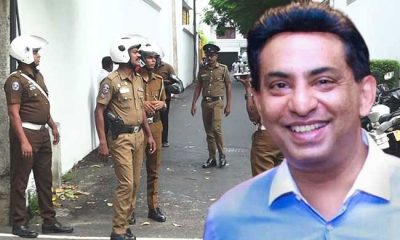
Police inform Fort Magistrate’s Court of finding ex-CEO of SriLankan dead under suspicious circumstances
-
Features2 days ago
High Stakes in Pursuing corruption cases
-
 Features2 days ago
When University systems fail:Supreme Court’s landmark intervention in sexual harassment case
-

 Features6 days ago
Palm leaf manuscripts of Sri Lanka – 1