
Business
Unilever Sri Lanka recognised as one of Asia’s Best Employer Brands in 2022

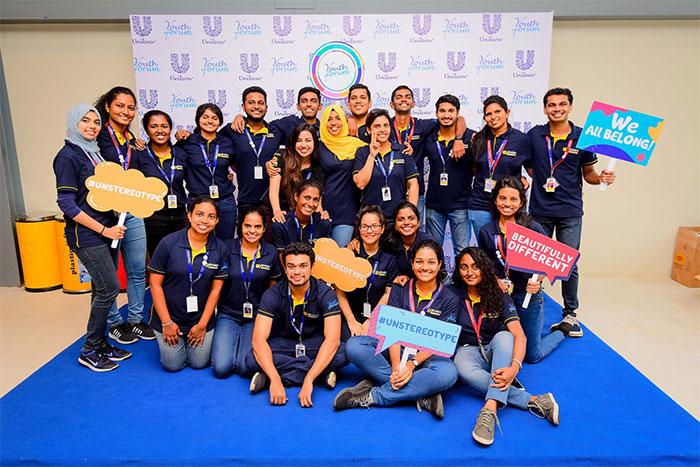
Empowers 30,000+ youth to help build a purposeful Sri Lanka
Unilever Sri Lanka emerged as one of ‘Asia’s Best Employer Brands’ in 2022 at the 17th Employer Brands Awards held at Pan Pacific, Singapore. The FMCG giant was ranked amongst the Top 50 companies in Asia for its outstanding contributions to Human Resources Management in the country. The event was hosted by the World HRD Congress and Stars of the Industry Group and endorsed by the Asian Confederation of Business. The awards were adjudged by the Employer Branding Institute, a virtual organisation which connects senior HR leaders across the world to share best practices in Employer Branding.
Sharing her thoughts, Ananya Sabharwal, Human Resources Director of Unilever Sri Lanka said, “We are truly humbled to receive this coveted recognition which underscores our commitment to building leaders of tomorrow. Many of our employees say that Unilever is like a university. I myself am grateful to have received a rich variety of exposure across the globe since my Unilever career gave me the opportunity to work and learn across India, USA, UK, the Netherlands and now most recently Sri Lanka. We want our youth to also experience development opportunities to become future fit citizens of the world. We not only invest in classroom trainings for students, but also offer flexible development interventions where our youth get to continue their studies whilst getting first-hand corporate exposure that help form a strong foundation for meaningful careers ahead. We truly believe that investing in our youth is one of the most promising ways in which we can invest in the growth and future of Sri Lanka, especially during these challenging times”.
Adding her thoughts, Hajar Alafifi, Chairperson and Managing Director of Unilever Sri Lanka said, “Through the Unilever Compass, we’re committed to helping people stay fit for work – now and in the future. And in this journey, we are equipping people to adapt and thrive in today’s rapidly changing world whilst partnering with others to create jobs and skills for our youth. We will continue to support our people and our youth, thereby developing and enhancing their skills in the hopes of building a better tomorrow.”
Unilever Sri Lanka has touched the lives of 30,000+ Sri Lankan youth to become more employable over the last five years through its ‘Employer Brand’ youth initiatives. The company is also a pioneer in offering flexible and novel industry exposure stints for selected undergraduates who seek part-time/short-term exposure opportunities while studying fulltime.
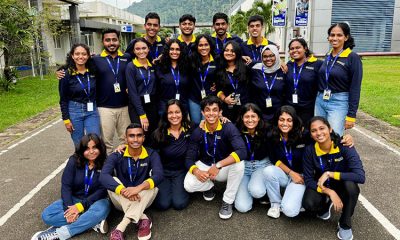
SPARKS – Unilever’s Student Ambassador Programme invites undergraduates from top Sri Lankan universities to become Unilever ambassadors within their universities for one year. Together with the company, 20 young and versatile youngsters drive ~3 campus sessions per week across leading universities in the island and bring to life the Unilever Youth Forum which is one of the largest undergraduate forums held in the country that connects Sri Lankan youth with industry leaders. Over the last 8 years, the company has selected 110+ student ambassadors across 9 main universities and delivered 100+ skill development programmes across campuses.
The company’s Unilever Challenge which is a real time brand centered case study competition, offers undergraduates and fresh graduates the opportunity to represent Sri Lanka at the Global Unilever Future Leaders League, giving them first-hand experience in working with leading brands and building their disruptive thinking. This year, the local team coached by Unilever Sri Lanka emerged as runners-up, beating over 54,000 applicants and 500+ undergraduates worldwide.
ULEARN is another novel intervention of Unilever for undergraduates to volunteer for short-term business projects with Unilever Sri Lanka. These structured programmes enable flexibility and provides first-hand corporate exposure to students at a very early stage in their careers.
In its quest to enable youth employability and unlock future talent to reverse the current brain drain trend in the country, the company has also partnered with John Keels Holdings and London Stock Exchange to launch ‘Fast-Track’, a cross-industry Summer Internship for Sri Lankan students studying locally and abroad; and has partnered with CIMA, the Sri Lanka Institute of Information Technology (SLIIT), General Sir John Kotelawala Defense University (KDU), AIESEC Sri Lanka and Gavel clubs, to help support dynamic capability building in Sri Lankan youth.

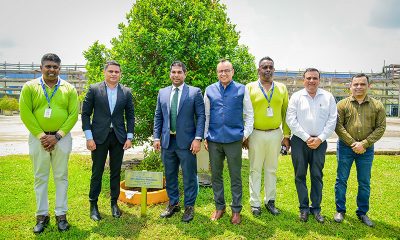

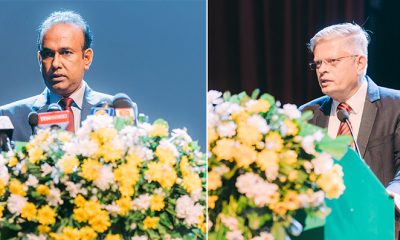

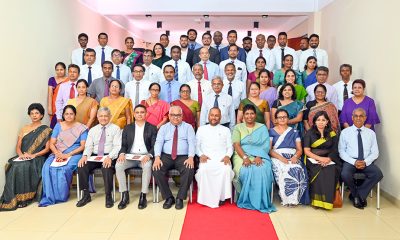



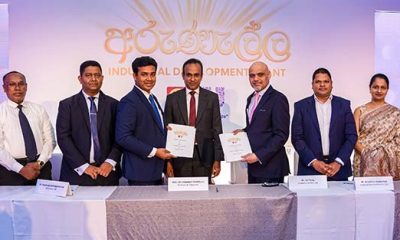


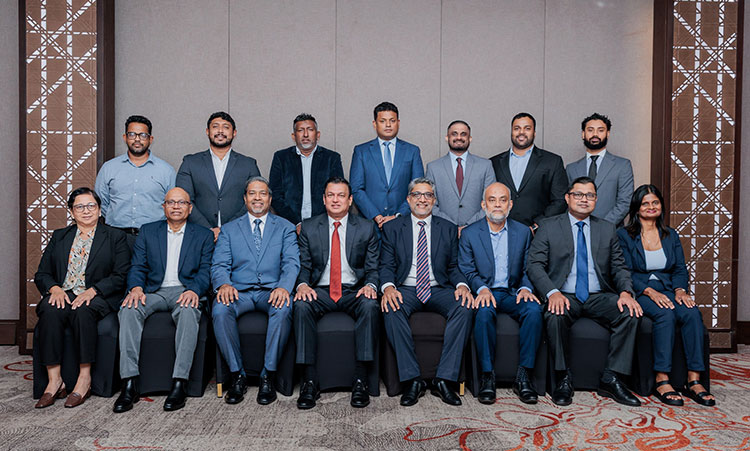
The Sri Lanka Retailers’ Association (SLRA) successfully held its 9th Annual General Meeting (AGM) on 23 June 2026 at Hilton Colombo Residencies, bringing together members of the country’s organized retail sector to review the Association’s achievements over the past year and outline its strategic priorities for the future.
The AGM formally adopted the Annual Report and Audited Accounts for the financial year 2025/26 and elected the Office Bearers and Executive Council for the year 2026–2027.
Infiyaz M. Ali, Director of Healthguard Pharmacy Ltd, was announced as President of the Sri Lanka Retailers’ Association for 2026–2027. He will be supported by Mahesh Wijewardena, Executive Director and Group Chief Executive Officer of Singer (Sri Lanka) PLC, as Senior Vice President, and Kumar De Silva, CEO of SPAR SL Private Ltd, as Vice President.
The newly appointed Executive Council comprises senior representatives from leading retail organizations across Sri Lanka, reflecting the Association’s continued commitment to representing the diverse interests of the retail sector.
Addressing the gathering, President Infiyaz M. Ali emphasized the importance of collaboration, innovation, and industry advocacy in driving the next phase of growth for Sri Lanka’s retail sector.
“Retail continues to be one of the most dynamic sectors of the Sri Lankan economy. As consumer expectations evolve and technology reshapes the industry, the role of SLRA is to create opportunities for knowledge sharing, collaboration, and collective action. We remain committed to supporting our members and contributing to the sustainable growth of the retail ecosystem,” he stated.
The AGM was honoured by the presence of Wasantha Samarasinghe, Minister of Trade, Commerce, Food Security and Cooperative Development, who attended as Chief Guest. In his address, the Minister highlighted the importance of the retail sector as a key contributor to economic development, employment generation, and consumer welfare, while emphasizing the need for stronger public-private collaboration to strengthen the industry’s competitiveness.
Members also had the opportunity to gain insights from the Guest Speaker, Chayu Damsinghe, Head of Macroeconomic Advisory at Frontier Research, who shared perspectives on Sri Lanka’s economic outlook, emerging business trends, and the opportunities and challenges facing the private sector in the years ahead.
A key highlight of the evening was the presentation on the upcoming Sri Lanka Retail Forum 2026, SLRA’s flagship industry event, which will be held under the theme “Retail Without Boundaries – Building the Next Growth Engine.” The forum is expected to bring together more than 500 industry leaders, retailers, entrepreneurs, policymakers, technology providers, and investors to discuss the trends shaping the future of retail.
The Association reaffirmed its commitment to supporting retailers through industry advocacy, professional development initiatives, policy engagement, and knowledge-sharing platforms that foster innovation and business growth.
Since its establishment in 2015, SLRA has played a pivotal role in bringing together retailers from diverse sectors including FMCG, fashion, healthcare, consumer electronics, and digital commerce, creating a unified voice for the industry.
With a renewed leadership team and an ambitious programme of activities planned for the year ahead, SLRA looks forward to working closely with its members and stakeholders to strengthen Sri Lanka’s retail sector and contribute to the country’s economic development.

CSE trading was yesterday driven by month- end profit-takings, market analysts said.Amid those developments both indices moved upwards. The All Share Price Index went up by 2.77 points, while the S and P SL20 rose by 10.91 points.
Turnover stood at Rs 1.91 billion with two crossings. Those crossings were; ACL Cables 2.1 million shares crossed to the tune of 209 million; its shares traded at Rs 100 and Hayleys 100,000 shares crossed for Rs 24.1 million; its shares traded at Rs 240.
In the retail market companies that mainly contributed to the turnover were: Hayleys Rs 141 million (587,000 shares traded), Lanka Realty Rs 105 million (1.8 million shares traded), CIC (Non Voting) Rs 81 million (3.1 million shares traded), HNB Finance Rs 79 million (8.3 million shares traded), Dialog Axiata Rs 56.7 million (1.2 million shares traded), Colombo Dockyard Rs 48.6 million (371,000 shares traded) and Singer SriLanka Rs 46.6 million (586,000 shares crossed).
During the day 63.9 million share volumes changed hands in 18300 transactions.
It is said that manufacturing sector counters, especially Hayleys, performed well while construction related companies, especially ACL Cables, also performed well. Banking sector counters, especially HNB, were also notable on the floor.
Meanwhile, Lee Hedges concluded negotiations with Amana Bank to sell and transfer its land and premises in Kollupitiya for a total consideration of Rs 2.7 billion, with the transaction completed on June 25, 2026.
Lee Hedges shares were trading up 2.52 percent, at Rs.325.75, while Amana Bank was up 1.13 percent at Rs.26.80.
Yesterday the rupee was quoted at Rs 336.90/337.00 to the US dollar in the spot market, from Rs 337.25/35 the previous day, while bond yields were quoted slightly higher, dealers said.
The telegraphic transfer rate for Sri Lanka’s rupee against the US dollar was 332.3416 buying, 342.0372 selling; the euro was 376.2315 selling, 389.9580 buying; and the pound was 436.5994 buying, 451.8110 selling.
By Hiran H Senewiratne
Business
MullenLowe’s Praveena Perera becomes first Sri Lankan woman named to Campaign APAC’s 40 Under 40


Honoured among Asia-Pacific’s most influential emerging professionals
Praveena Perera, Associate Vice President and Client Services Director at MullenLowe Group Sri Lanka, has become the first Sri Lankan woman to be named to Campaign Asia-Pacific’s 40 Under 40 list, a recognition that celebrates the region’s most influential emerging leaders across marketing, media, technology, and communications.
Now in its 14th year, Campaign Asia-Pacific’s 40 Under 40 recognises outstanding professionals across the region whose achievements and leadership potential are shaping the future of the industry. Praveena earned her place on the 2026 list following a comprehensive assessment by senior industry leaders and Campaign Asia-Pacific’s editorial team.
Commenting on the recognition, Praveena Perera said, “This is a deeply meaningful milestone in a journey that has been shaped by continuous learning, hard work, and the support of many people along the way. I am grateful to MullenLowe Sri Lanka, my colleagues, mentors, and family for their belief in me. Recognition such as this is never an individual achievement, and I hope it encourages more women in Sri Lanka to pursue leadership opportunities and realise their potential.”
Praveena currently leads the Unilever portfolio at MullenLowe Sri Lanka, overseeing 27 brands across four categories. Her leadership has played a pivotal role in driving business growth, strengthening client partnerships, and delivering award-winning work. These efforts contributed to MullenLowe Sri Lanka being named Creative Agency of the Year at the Campaign Agency of the Year Awards 2025, while also securing Agency of the Year and Marketer of the Year honours alongside Unilever Sri Lanka at the Effie Awards Sri Lanka 2025.
As one of the youngest Associate Vice Presidents at MullenLowe Sri Lanka and among the first women to serve on its Operating Committee, Praveena has built a reputation for leadership that extends beyond business performance. Her growing list of achievements includes being recognised among the Top 50 Professional and Career Women Global Awards in 2023, reflecting a career marked by consistent excellence, while her commitment to mentoring future talent continues to contribute to greater female representation within the industry.
Thayalan Bartlett, Executive Chairman of MullenLowe Group Sri Lanka, said, “Praveena’s recognition is thoroughly deserved. She has consistently demonstrated exceptional leadership, commercial acumen, and resilience while navigating some of the most demanding circumstances our industry has faced. Her ability to balance performance, people development, and long-term thinking has distinguished her as one of the most promising leaders of her generation.”
Campaign Asia-Pacific’s 2026 cohort comprises 40 professionals representing 14 markets across the region, selected for their contributions to business growth, innovation, leadership, and industry advancement. Praveena’s inclusion marks an important milestone for Sri Lanka’s communications industry and reflects the growing impact of Sri Lankan talent on the regional stage.
MullenLowe Group Sri Lanka (MLG) is Sri Lanka’s largest integrated brand communications company with nine independent strategic business verticals spanning Mainstream, Digital, Activations, MarTech, Media and Public Relations. MLG’s Sri Lanka office consists of 111 staff, serves 43 of the nation’s top corporates, manages 111 brands across 33 categories, including 80% of the top 10 and 50% of the top 20 most advertised categories in the country, making it a company with prolific cross-category knowledge. Ranked among the world’s top 100 most effective agencies and APAC’s top 20, MLG is Sri Lanka’s reigning Effie Agency of the Year, Campaign Asia’s Creative Agency of the Year for South Asia, and a consistent local and regional awards leader for over a decade. It operates as a full member affiliate of MullenLowe Group Worldwide, which was recently acquired by Omnicom. As the world’s largest marketing services group, Omnicom combines unmatched global knowledge and experience with local insight to deliver end-to-end brand solutions.

Showers will occur at times in the Western, Sabaragamuwa and North-western provinces and in Galle, Matara, Kandy and Nuwara-Eliya districts

FSP complains of irregularities in a Guinness World Record event held in Sri Lanka

Opposition MPs sign motion demanding debate on prolonged failure to fill vacancies in superior courts

Another Lankan desperado deported from Malaysia arrested at BIA

SJB swift justice!

Hoarded relief goods brought to light after audit officers force open locked storerooms at Udapalatha DS

‘Dates have the highest sugar content to fight Coronavirus’

Sunday Island 27 December – Headlines

#SundayIsland 17th December – Headlines

Sunday Island – 28th March

Sunday Island Headlines – 21 March

Sunday Island – 21st February – Headlines
-

 Features6 days ago
Nanda Pethiyagoda Wanasundara as three generations of family saw her
-

 Features5 days ago
Sri Lanka developing independent hydrographic capabilities
-

 Editorial6 days ago
Fuel crisis: Beyond price debate
-

 Opinion4 days ago
Ranasinghe Premadasa: The man who would not take ‘No’ for an answer
-

 Latest News5 days ago
Sooryavanshi thumps fastest List A fifty as India A win tri-series
-

 News4 days ago
US Assistant Secretary of State for South and Central Asian Affairs meets President
-

 Business5 days ago
University of West London opens Sri Lanka’s first full UK university branch campus
-

 Features6 days ago
The Sirisena – Ranil conflict and events leading to MR’s return as PM