
Sports
Wasim Akram reveals he was addicted to cocaine after playing career ended


Wasim Akram has opened up on his struggle with a cocaine addiction after his playing career ended, in his upcoming autobiography Sultan: A Memoir.Akram, Pakistan’s leading wicket-taker in both Test and ODI cricket, retired in 2003 after an 18-year international career, but continued to travel the world on commentary and coaching assignments. The cocaine habit, he says, began after he retired, when he started to crave a “a substitute for the adrenaline rush of competition”, and ended after the death of his first wife Huma in 2009.
Extracts from his book, published alongside an interview in The Times, paint a frank picture of Akram’s slide into addiction.
“I liked to indulge myself; I liked to party,” he writes. “The culture of fame in south Asia is all consuming, seductive and corrupting. You can go to ten parties a night, and some do. And it took its toll on me. My devices turned into vices.
“Worst of all, I developed a dependence on cocaine. It started innocuously enough when I was offered a line at a party in England; my use grew steadily more serious, to the point that I felt I needed it to function.
“It made me volatile. It made me deceptive. Huma, I know, was often lonely in this time . . . she would talk of her desire to move to Karachi, to be nearer her parents and siblings. I was reluctant. Why? Partly because I liked going to Karachi on my own, pretending it was work when it was actually about partying, often for days at a time.
“Huma eventually found me out, discovering a packet of cocaine in my wallet . . . ‘You need help.’ I agreed. It was getting out of hand. I couldn’t control it. One line would become two, two would become four; four would become a gram, a gram would become two. I could not sleep. I could not eat. I grew inattentive to my diabetes, which caused me headaches and mood swings. Like a lot of addicts, part of me welcomed discovery: the secrecy had been exhausting.”
Akram went into rehab, finding the experience distressing – “The doctor was a complete con man, who worked primarily on manipulating families rather than treating patients, on separating relatives from money rather than users from drugs” – and ended up relapsing.
“Try as I might, part of me was still smouldering inside about the indignity of what I’d been put through. My pride was hurt, and the lure of my lifestyle remained. I briefly contemplated divorce. I settled for heading to the 2009 ICC Champions Trophy where, out from under Huma’s daily scrutiny, I started using again.”
Akram says the cocaine use ended after Huma’s death in October 2009 from the rare fungal infection mucormycosis.
“Huma’s last selfless, unconscious act was curing me of my drug problem. That way of life was over, and I have never looked back.”
Akram has since remarried, and has three children – two sons from his first marriage and a daughter from his second. In his interview with The Times, he said he had written his book for his children.
“I’m a bit anxious about the book,” he said, “but I think once it is out, I’ll be kind of over it. I’m anxious because at my age, I’m 56 and I’ve been diabetic for 25 years, it is just stress, you know . . . it was tough to revisit all the things. I’ve done it for my two boys, who are 25 and 21, and my seven-year-old daughter, just to put my side of the story.” (ESPN)





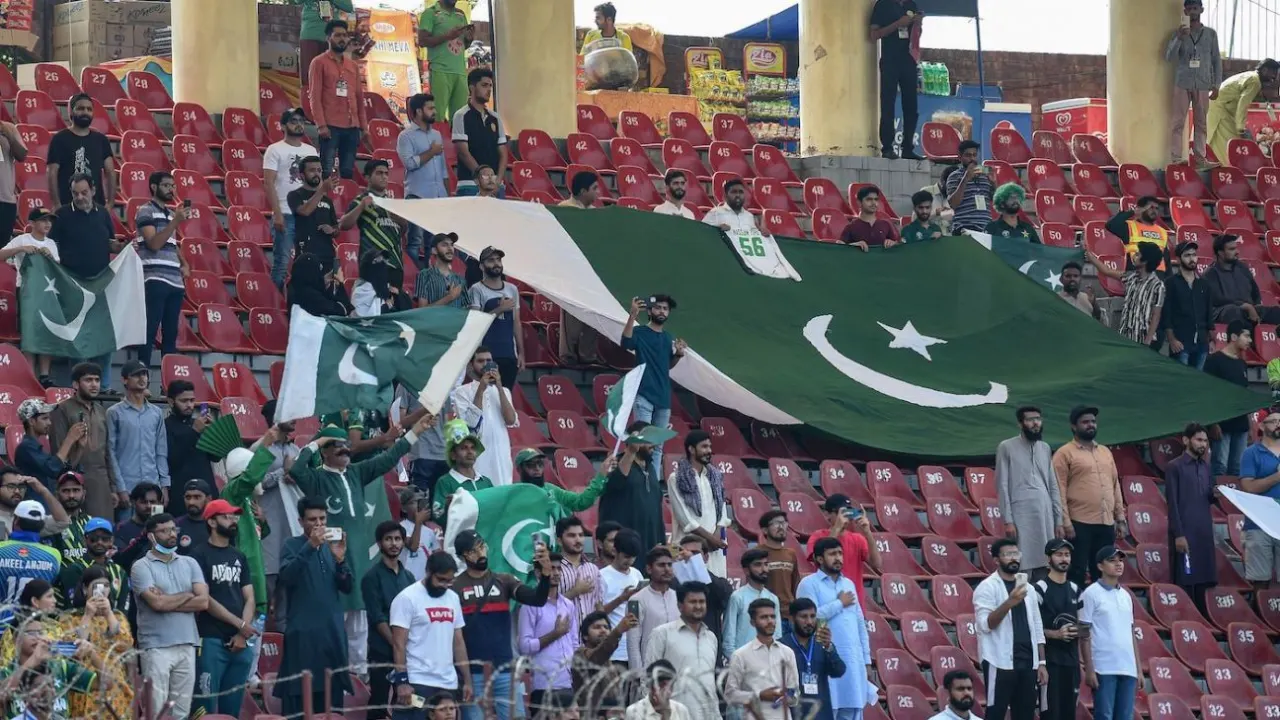
A Pakistan Under-19 cricket team suddenly became the centre of focus when it was mistaken for a group of asylum seekers in Portsmouth. A group of protesters gathered outside the Marriott Hotel in Portsmouth after reports that asylum seekers were staying there. The situation had to be later diffused when it was ascertained that the hotel was hosting the Pakistan Under-19 team.
According to the Guardian, the situation became tense when a crowd gathered outside the Marriott hotel after reports that about 40 men who did not seem to be English arrived at the hotel. George Madgwick, a Reform councillor, called the hotel to mediate between the Pakistan Under-19 staff and the assembled crowd, following which the crowd dispersed.
“I spoke to the coach of the team, who was very understanding,” Madgwick told the Guardian. “I went out to the protesters and told them, ‘You’ve got it wrong guys, it’s a cricket club.’ They left within a couple of minutes. It was a massively unfortunate incident.
“From the perspective of the people of Portsmouth who are already on high alert, this was a coach from the same company which was turning up with about 40 foreign men.”
The ECB has been in touch with the Pakistan management following the incident and is reviewing security arrangements.
The Pakistan Under-19 team played a four-day game against England Under-19 in Arundel from September 2 to 5, which they lost by ten runs. The two teams faced off in a Youth ODI on September 9, with Pakistan winning by 177 runs. Pakistan’s senior men’s team are also playing the third and final Test against England at Edgbaston.
[Cricinfo]

by Rex Clementine
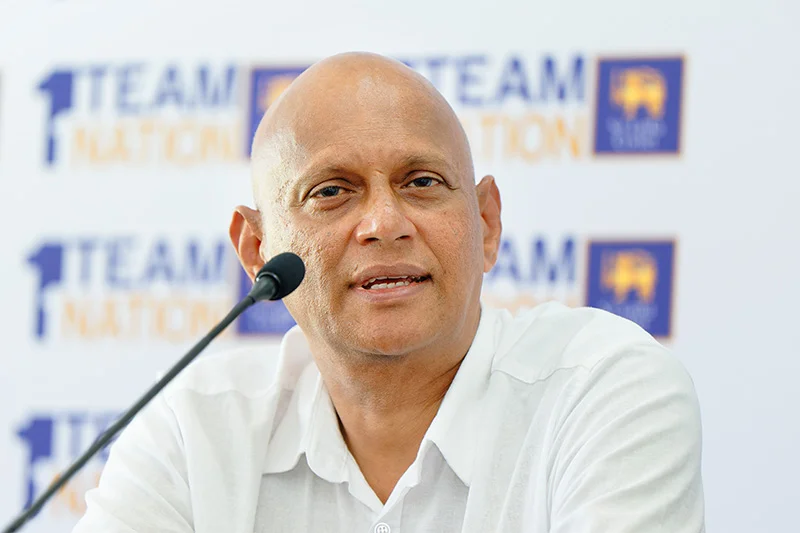
Sri Lanka’s Chairman of Selectors Kapila Wijegunawardene held his first media briefing yesterday since assuming office four months ago, a period in which several decisions have left the cricketing fraternity scratching their heads.
To his credit, the Chief Selector admitted that picking Lahiru Kumara for the tour of the Caribbean without first proving his fitness had been a mistake. It proved a costly one too, with the fast bowler breaking down after sending down just one over.
The former medium pacer was considerably more guarded when confronted with other contentious issues, including Dhananjaya de Silva’s defensive captaincy and the decision to recall Niroshan Dickwella after more than three years in the wilderness.
“We learned a tough lesson after what happened in the Caribbean with Lahiru Kumara and now we have made it mandatory for players to prove their fitness in domestic cricket when they come back from injuries,” Wijegunawardene told reporters.
That perhaps summed up the philosophy of this selection panel. Having burned their fingers once, caution appears to be the watchword. There seems little appetite for bold calls – the sort Duleep Mendis made when he gave Sanath Jayasuriya and Romesh Kaluwitharana licence to tear into attacks during the field restrictions, or Sidath Wettimuny when he entrusted the vice-captaincy to a 22-year-old Mahela Jayawardene.
Ironically, as Wijegunawardene addressed the media, NCC were taking on Moors in a domestic T20 quarter-final right in front of his eyes at the SSC. One of those making an impression was seam bowling all-rounder Milan Rathnayake, who dismissed Dickwella for a second ball duck.
Wijegunawardene was duly asked why Milan had not been considered for the forthcoming tour of England.
Until now, the impression had been that the selectors were investing in Milan, giving the all-rounder sufficient international exposure with an eye on next year’s World Cup in South Africa. Suddenly, however, it appears to be back to square one, with Wijegunawardene indicating that the selectors have turned again to Dasun Shanaka for the all-rounder’s slot.
Shanaka has not played an ODI for more than two and a half years and has earned his recall largely on the strength of his T20 form. Yet he has repeatedly struggled to convince in the 50 over format, particularly if the selectors view him primarily as a batting all rounder.
This is where the selectors appear to have failed to do their homework. A proper analysis of Shanaka’s record would tell them that his batting has seldom been reliable enough in ODI cricket. The numbers tell that story quite clearly.
What the numbers will not tell you is that Dasun has instigated more bloodless coups than General Zia-ul-Haq and General Pervez Musharraf put together.
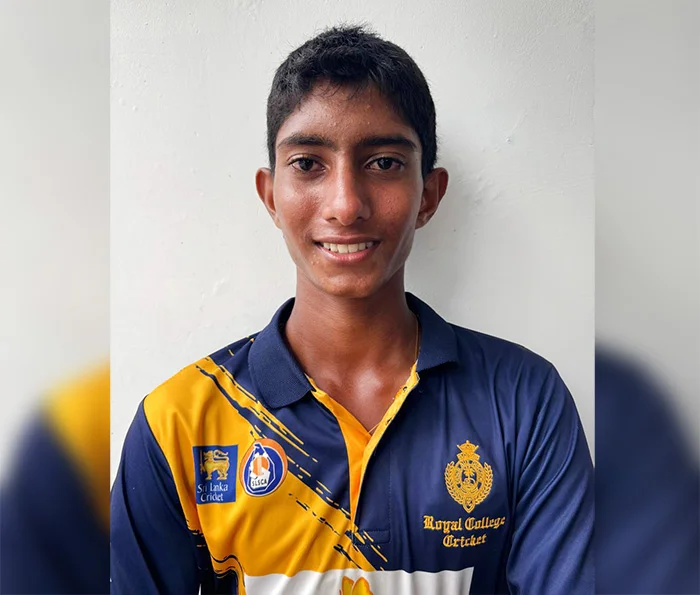
Royal College Colombo ‘B’ team reached the Under-17 Division II Inter-Schools Limited Overs Cricket Tournament final with a convincing 125-run win over Sir John Kothalawala College, Kurunegala as Manish Wijesundera excelled with a century at Ananda Mawatha.
Wijesundera produced a match-defining innings, hitting an unbeaten 114 off 129 balls, with 15 fours and four sixes for Royal to post 235 for seven in 50 overs.
Chasing 236 for victory, Sir John Kothalawala never threatened the target and were bowled out for 110 in 33 overs as Dinuja Wellahewage led the way with a superb four for 25 in nine overs.
While Dulna Nimnal took two wickets, Sithuka Alwis, Binara Kulasekara and Senuth Perera took a wicket each.
Vihaga Chamalsha offered the main resistance with an attacking 43 off 37 balls, including six fours and two sixes, while Pulina Methmal scored 25.
Earlier, Manish Wijesundera’s decisive knock provided the backbone of Royal’s total after the side had slipped to 31 for two.
Sithuka Alwis added 25, while Thumindu Somasiri made 21 as Royal steadily built their total before finishing strongly.
Sir John Kothalawala’s bowlers found it difficult to contain Wijesundera, although Indeepa Udesh impressed with two for 26 from 10 overs. Pulina Methmal also claimed two wickets.
Royal will now meet Wadduwa Central in the final.
Scores
Royal 235 for 7 in 50 overs (Manish Wijesundera 114n.o., Sithuka Alwis 25, Thumindu Somasiri 21; Indeepa Udesh 2/26, Pulina Methmal 2/64)
Sir John Kothalawala
110 all out in 33 overs (Vihaga Chamalsha 43, Pulina Methmal 25; Dinuja Wellahewage 4/25, Dulna Nimnal 2/36)

Trump says every adult American will get $5,000 if Republicans win midterms

Protesters mistake Pakistan’s U-19 team for asylum seekers in Portsmouth

Steps are being taken to provide accommodation facilities for 16,000 university students – Prime Minister

Showers will occur in the Western and Sabaragamuwa provinces and in Kandy, Nuwara-Eliya, Galle and Matara districts.


Sri Lanka reiterates its territory won’t be used against India

‘Dates have the highest sugar content to fight Coronavirus’

Sunday Island 27 December – Headlines

#SundayIsland 17th December – Headlines

Sunday Island – 28th March

Sunday Island Headlines – 21 March

Sunday Island – 21st February – Headlines
-

 News6 days ago
Namal remanded until Sept. 18 over Airbus deal investigation
-

 Latest News5 days ago
Tharanga creates history with Diamond League crown in Brussels
-

 News5 days ago
Dispute which triggered listed company director being detained at BIA resolved
-

 Features4 days ago
After the parade: What a traffic OIC’s walk-out tells us
-
 Opinion7 days ago
In Memory of Dr Upatissa Pethiyagoda
-

 Editorial6 days ago
Power vs Equality
-
Editorial4 days ago
Arrests as theatre
-
 Latest News6 days ago
SLPP MP Namal Rajapaksa arrested by CIABOC