
News
WB: Unprecedented shocks rattle South Asia, exacerbating challenges and dampening growth

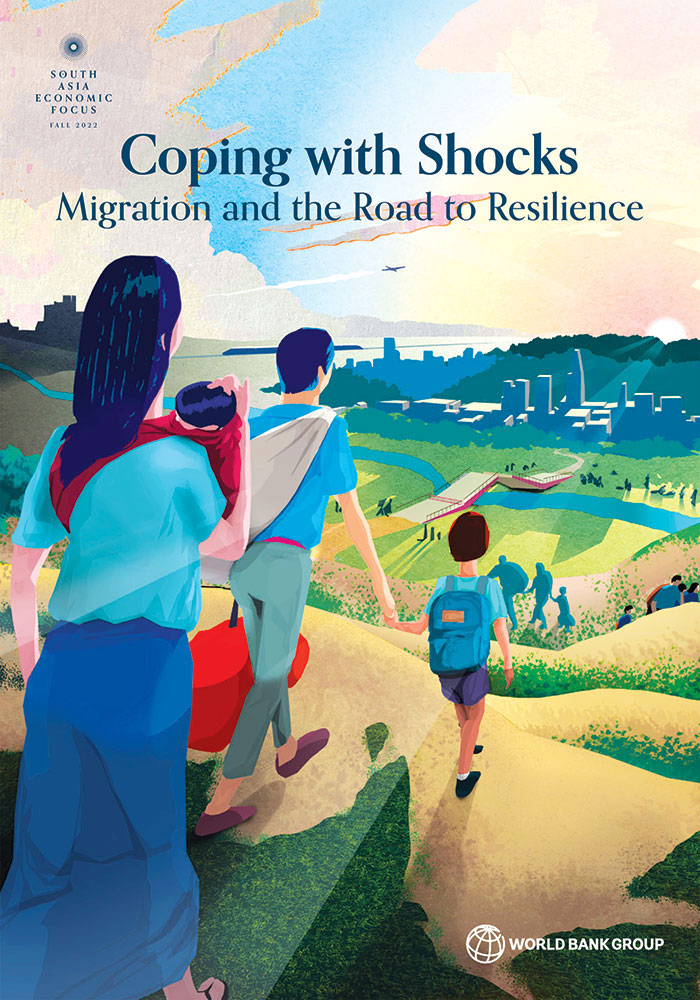
Beset with Sri Lanka’s economic crisis, Pakistan’s catastrophic floods, a global slowdown, and impacts of the war in Ukraine, South Asia faces an unprecedented combination of shocks on top of the lingering scars of the COVID-19 pandemic. Growth in the region is dampening, says the World Bank in its twice-a-year update, underscoring the need for countries to build resilience.Released last week in Washington, the latest South Asia Economic Focus, Coping with Shocks: Migration and the Road to Resilience, projects regional growth to average 5.8 percent this year – a downward revision of 1 percentage point from the forecast made in June. This follows growth of 7.8 percent in 2021, when most countries were rebounding from the pandemic slump.
The report says: In short order, a series of once-in-a-lifetime shocks has hit South Asia. The devastating floods in Pakistan, a full-blown economic crisis in Sri Lanka, and the ongoing war in Ukraine, which caused skyrocketing commodity prices, are happening when countries in South Asia are still trying to recover from COVID-19.
As a result of these crises, many households face severe economic hardship. In Sri Lanka, people suffer from shortages of essential items; floods in Pakistan have wreaked havoc on millions of people that lost their homes; soaring food prices across the region have adverse impacts on households’ ability to obtain sufficient food; people in Afghanistan suffer from double-digit declines in income and reduced access to core services; and the lives of migrant workers, upended during COVID lockdowns, face uncertainty and possible scarring effects from the pandemic. The economic headwinds manifest themselves as problems in the balance of payments. Elevated global food and energy prices have increased import bills while a slowdown in the global economy has reduced momentum in the region’s export growth.
This happens when trade balances were already deteriorating because of a rise in domestic spending: government deficits were increasing because of relief efforts and private consumption rebounded after the lockdowns ended. Falling or stagnating remittance inflows through official channels have worsened the situation further for several countries. The resulting larger current-account deficits are becoming increasingly difficult to finance.
Heightened uncertainty in the global markets, together with monetary tightening in advanced economies, have shifted investor sentiment and increased net capital outflows from the region in the first half of 2022. The balance-of-payments pressures have in turn resulted in dwindling foreign exchange reserves and led to requests by Sri Lanka, Pakistan, and Bangladesh to the IMF for support.
Countries have also resorted to restrictive measures to curb imports, but with potentially detrimental effects on the economic recovery. Apart from the balance-of-payment problems, several serious domestic challenges also warrant attention, not least the supply bottlenecks and deteriorated asset quality in the financial sectors. Despite the mounting challenges, there are also optimistic signs, as some sectors and some countries are recovering strongly. In India, services exports have recovered more strongly than in the rest of the world, and India’s ample foreign reserve buffers have afforded resilience to the country’s external sector. In most countries in the region, telecom and business services are also driving the recovery. The recovery of the tourism sector has remained robust in Maldives, while Bhutan recently fully re-opened its borders to tourists after prolonged lockdowns since 2020.
Against this backdrop, growth forecasts for South Asia have been downgraded. Growth in the region is expected to slow down to 5.8 percent in the calendar year 2022, 1 percentage point lower than forecasted in June, mainly because of a weakening of growth in the second half of 2022. The growth path diverges among South Asian countries: The more services-led economies (India, Nepal, and Maldives) are expected to maintain a reasonable recovery trend despite headwinds, while Afghanistan, Sri Lanka and Pakistan are in more precarious shapes and will see poverty increase in 2022 amid severe domestic crises.
All countries in the region will see their resilience tested as global energy prices are expected to remain very high and global demand for goods will weaken. The countries responding to high import prices by setting price caps or quantity barriers—which distort price signals—will experience a negative impact on growth. The growth forecast depends on the uncertain outlook for commodity prices, growth in high-income countries, and the amount of tightening in global financial markets.
The report presents simulations to assess the impact of a changing international environment. The impact differs across countries, but the general conclusion is that changes in commodity prices have the largest impact. The impact of changes in import demand in the rest of the world and of capital-flow reversals is more muted as South Asia has not deeply penetrated export markets and several countries had limited access to private international finance. Various structural changes are occurring in the background, which creates opportunities for the region’s long-term resilience. A realization that the limited fiscal space is impacting debt sustainability has led many countries to undertake revenue measures such as increasing indirect taxes, broadening the tax base, and reducing fuel subsidies, which if fully implemented could improve long-term fiscal viability. Financial innovations and digital technologies that create more flexible employment opportunities could provide people with tools to withstand future shocks and increase the region’s resilience.
However, it is crucial that the opportunities translate into a more inclusive development path in which workers in the informal sector, and especially women have better access to markets and finance. On the downside, extreme weather events will become much more common with climate change, which calls for the urgent need to improve climate resilience through upgrading adaptation mechanisms and maintaining sufficient financial reserves. Labor migration, both international and domestic, is a key part of life in South Asia.
Just before the COVID-19 pandemic began, in 2019, 41.2 million people from South Asia were living outside their country of birth. In some South Asian countries such as Nepal and Sri Lanka, international diaspora numbers are close to 10 percent of the home country’s population. In parts of Bangladesh, approximately one-third of households out-migrate temporarily during the pre-harvest lean season. The flow of migrants represents the interaction of two economic forces: reallocation of labor to places where it is more productive and adjustment to local economic shocks such as weather-related shocks; both are central to inclusive and resilient development.
Despite the importance of migration to individuals and the region, migrants in South Asia face considerable barriers to mobility. Mobility costs—pecuniary and non-pecuniary—and frictions in credit and labor markets have hindered these benefits of labor mobility from being fully tapped. For example, on average, Bangladeshi workers were spending the equivalent of more than US$3,000 to move abroad before the COVID pandemic, a figure that represented about 2.5 years of the median household income.
Seasonal migrants from rural India faced the equivalent of 80 percent of their daily earnings at the migration destination in daily migration costs, including non-pecuniary costs of harsh living conditions at the destination. Migration also exposes South Asians to risks because of the precarious labor market conditions that poor migrant workers face. For example, the legal (visa) status of emigrants to GCC countries, the most common international destination for South Asian emigrants, is contingent on their holding temporary jobs in low-skill sectors.
Similarly, poor internal migrants in South Asia work largely in the informal sector, where they lack access to social protection. The COVID crisis exposed this vulnerability on a large scale, as migrants returning home during COVID-related lockdowns face multiple hardships. New survey-based evidence confirms that the COVID shock substantially slowed down new migration flows and created an unprecedented wave of return migration. The surveys also reveal that return migrants, especially women, struggled to assimilate into the home labor markets, with high unemployment rates among the newly returned migrants. Due to the overall fall in outmigration, migrant-sending households experienced disproportionate declines in income, driven by a drop in remittances received. A troubling possibility is that the pandemic shock has had long-term scarring effects on the costs and frictions associated with migration.
To ensure that migration can continue to play a key role in development and as a coping mechanism in the face of shocks, two policies deserve priority. First, it is vital to address unnecessarily high costs and frictions in migration, particularly those that might have worsened during the COVID crisis. The second main policy priority for the region is to learn from the pandemic experience and incorporate measures to “de-risk” migration into migration-supporting policies and institutions. In particular, because many poor migrant workers are employed in informal jobs, reforms to extend social protection to the informal sector should be designed to include migrant workers without deterring mobility.

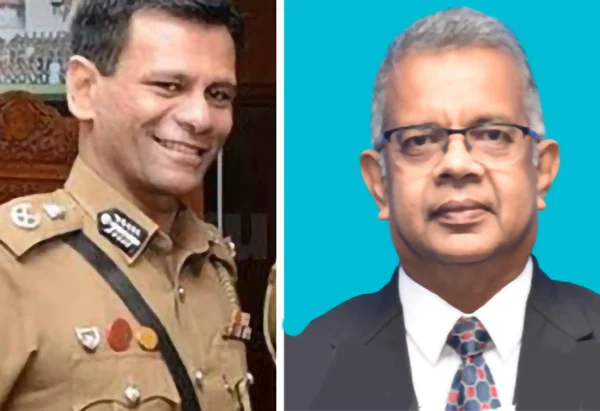
Senior DIG among those slated for transfer
By Shamindra Ferdinando
The National Police Commission (NPC) is expected to take up Police Headquarters recommendation to transfer a group of police officers responsible for a major ‘Ice’ bust at the Colombo port recently.
NPC sources told The Island that recommendation in respect of transfers was received last week. Sources said that though the NPC was scheduled to meet today (01), whether IGP Priyantha Weerasooriya’s recommendation would be discussed and decided today was not known.
Members of the NPC are retired High Court Judge Lalith Ekanayake (Chairman), K. Karunaharan, Dilshan Kapila Jayasuriya, A.A.M. Illiyas and Jayantha Jayasinghe
The IGP directed the Special Investigation Unit (SIU) to probe those who carried out the 31 August, 2026 raid that resulted in the detection of 463 kgs of ‘Ice’ concealed in a container that arrived from Pakistan.
The US Embassy declined to comment on the probe though it declared that the largest ever narcotics detection was made on intelligence made available by the US Drug Enforcement Administration (DEA).
The officers investigated for what an authoritative Headquarters source called shortcomings and lapses on the part of the raiding party, belonged to the Central Crime Investigation Bureau (CCIB). Senior DIG Ranmal Kodituwakku who, on behalf of the CCIB, received information directly from the DEA, is among those Police Headquarters wanted to transfer.
CCIB carried out the raid after having obtained a search order from the Aluthgama Magistrate court. Among the suspects taken in this connection are three Pakistani nationals.

* First Reading of the Budget on 7 October
The Committee on Parliamentary Business has decided that the Second Reading of the Appropriation Bill for the year 2027 (Budget Speech/presentation of Budget proposals) will take place on 12 November, followed by the Second Reading debate from 13 November to 14 December.
Secretary General of Parliament Kushani Rohanadeera said this had been decided at a meeting of the Committee on Parliamentary Business held recently under the chairmanship of Speaker Dr. Jagath Wickramaratne.
Accordingly, the Appropriation Bill was scheduled to be presented to Parliament for its First Reading on 7 October, the Secretary General said.
It was also decided that the Second Reading of the Appropriation Bill (Budget Speech) would be delivered by President Anura Kumara Dissanayake, in his capacity as the Minister in charge of Finance, on Thursday, 12 November, 2026.
Thereafter, the Second Reading debate will be held for seven days, from 13 November to 20 November. Accordingly, the vote on the Second Reading will be held at 6.00 pm on 20 November.
Thereafter, the Committee Stage debate will be held for 19 days, from 21 November to 14 December , with the vote on the Third Reading of the Budget scheduled for 6.00 pm on 14 December.
During this period, the Budget debate will be held every day, including Saturdays, except on public holidays and Sundays. Parliament is scheduled to meet at 9.30 am on each of these days.
From 9.30 am to 10.00 am each day, time will be allocated for the Parliamentary business specified under Standing Order 22(1) to (6). Thereafter, five Questions for Oral Answers will be taken up from 10.00 am to 10.30 am, followed by one question under Standing Order 27(2) from 10.30 am to 11.00 am.
Accordingly, the debate is scheduled to be held from 11.00 am to 6.00 pm on all days, except the two days on which votes are scheduled to be taken, Motions at the Adjournment Time will be taken up for debate from 6.00 pm to 6.30 pm, based on a 50:50 time allocation between the Government and the Opposition, the Secretary General stated.
It was also approved that during the Second Reading debate, 60% of the debate time will be allocated to the Government and 40% to the Opposition, while during the Committee Stage debate, 40% will be allocated to the Government and 60% to the Opposition.
Furthermore, if a division is called for on an Expenditure Head, relating to a Ministry, the relevant vote will be held at 6.00 pm at the conclusion of the proceedings on the respective day.
News
CB Governor confident over timely disbursement of next IMF tranche; hands post-2027 programme decisions to govt.


By Sanath Nanayakkare
Central Bank Governor Dr. Nandalal Weerasinghe addressed queries on the nation’s IMF bailout programme yesterday and indicated that Sri Lanka expects to reach a Staff-Level Agreement with the Fund shortly, clearing the path for the next tranche of funding under the $3 billion EFF arrangement before the end of the year.
Answering questions on Sri Lanka’s economic path, after the current programme expires in March 2027, Dr. Weerasinghe clarified that seeking a follow-up IMF arrangement was entirely a policy decision for the government rather than the Central Bank, maintaining the institutional boundary between Central Bank operations and political decision-making.
The Governor remained firm in his projection that the national economy would expand by around 4 percent throughout 2026, demonstrating economic resilience, even amid external volatilities, such as high oil prices.
Dr. Weerasinghe expressed confidence in the domestic economy’s underlying momentum. While international financial institutions and multilateral agencies had pegged Sri Lanka’s growth prospects at more conservative levels, typically around 3.0 to 3.5 percent, he emphasised that CBSL’s projections are grounded in continuous analysis of real-time indicators.
“When you compare with several other agencies, their growth projections hover around 3 to 3.5 percent. However, the economy is already growing at around 4 percent. In our projections, the economy will maintain this growth rate of around 4 percent throughout the year,” Governor Weerasinghe said.
He noted that despite mid-year quarter adjustments due to volatile oil prices, real economic indicators, including steady credit expansion across the commercial banking sector and sustained industrial and service activity, indicate that the growth trajectory remains firmly on track above the 4 percent benchmark.
Reiterating the Central Bank’s primary mandate, Dr. Weerasinghe noted that monetary policy actions remained focused on anchoring inflation and curtailing excess demand to prevent runaway price spikes.
On inflation targeting, the Governor mentioned that CBSL had submitted a technical recommendation to the Ministry of Finance to maintain an inflation target of 5 percent (+ or – 2 percent band) over the next three-year horizon.
Responding to inquiries on differing target forecasts announced by external agencies such as the IMF, Dr. Weerasinghe underscored that the Central Bank’s recommendations stem strictly from domestic technical and empirical evaluations.
“Our recommendation is based on pure technical and empirical analysis considering the country’s specific situation. We have recommended maintaining a 5 percent target for the next three years, and the government has accepted this recommendation,” he added.
Regarding foreign exchange management, the Governor noted that the Central Bank continues its active market intervention strategy aimed at smoothing out undue exchange rate volatility rather than resisting natural market trends.
Dr. Weerasinghe concluded that while the short-to-medium-term outlook remained assured, the combination of a steady 4 percent growth target and proactive fiscal measures would firmly anchor macroeconomic stability through 2026 and beyond.

US-assisted ‘Ice’ detection: NPC to examine IGP’s move to transfer drug-busting team

2027 Budget to be held from 12 Nov. to 14 Dec.

CB Governor confident over timely disbursement of next IMF tranche; hands post-2027 programme decisions to govt.

Cabinet spokesman explains why Thileepan statue was removed

CA dismisses writ petition filed by MP Jayaweera

Harsha’s committee warns unnecessary regulations could discourage businesses and create a risk of hindering economic growth

‘Dates have the highest sugar content to fight Coronavirus’

Sunday Island 27 December – Headlines

#SundayIsland 17th December – Headlines

Sunday Island – 28th March

Sunday Island Headlines – 21 March

Sunday Island – 21st February – Headlines
-

 Latest News7 days ago
Showers above 100 mm are likely at some places in the Western, Sabaragamuwa, Central and North-western provinces and in Galle and Matara Districts
-

 Features6 days ago
Beyond traditional jobs: Why Sri Lanka needs to facilitate the gig economy
-

 Editorial5 days ago
Birth of a bad law
-

 News3 days ago
Police remove Thileepan statue in Jaffna
-
 Latest News6 days ago
Kusal, Wellalage star as Sri Lanka defend 322 in Headingley thriller
-

 News5 days ago
TIN mandatory for key transactions from Nov. 1
-

 Features3 days ago
The 22nd Amendment, constitutional recovery and illiberal slippage
-

 Features3 days ago
Of foreigners as CEOs of Lankan ventures