
Features
Winner of Nobel Prize for Literature and Booker shortlist

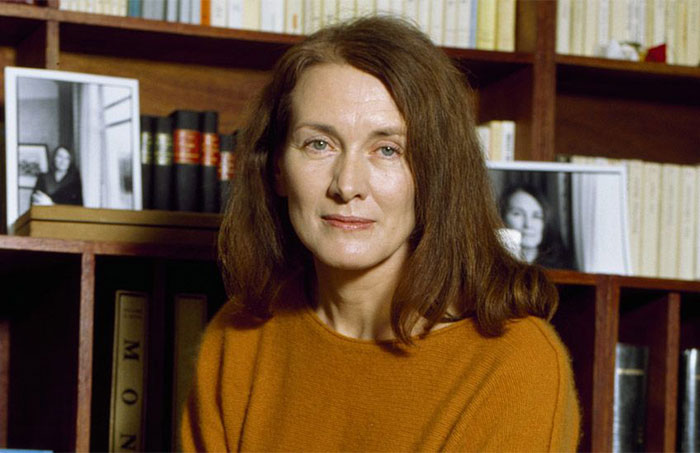
“It was a way to save life, save from nothingness – the thing that most resembles it” so admitted the 2022 Nobel Prize winner writing about her book of diary entries of an affair she had with a younger man in 1988-90. Nobel Prizes were first awarded in 1901 for physics, chemistry, physiology or medicine, and literature in Stockholm, Sweden. I was glad to note literature was included among the ‘hard’ science subjects. The Peace Prize was also first awarded that year but from Oslo, Norway.
This year a French woman novelist who writes autobiographically won the Literature Prize; she being the 17th woman to be awarded the prize among, so far, 119 Literature Nobel Laureates. Louise Gluck, American poet, won in 2020 and 82-year old Annie Ernaux carried away the award for 2022. Of the previous 16 women Nobel Laureates, the more familiar (at least to me) are short story writer, Irish/Scottish Alice Munro (1931-) who won the Nobel in 2013 and British/ Zimbabwean Doris Lessing (1919-2013), winner in 2007. Asians who have won the Lit Nobel are Rabindranath Tagore, Bengali (1881-1941) who won in 1913; Yasunani Kawabata, Japanese (1899-1994) in 1968, Kenzaburo Oe, Japanese (1935 – ) in 1974 and Gao Xingjian, Chinese, (1940 -) in 2000. American balladeer Bob Dylan receiving the prize in 2016 resulted in much controversy. The Nobel is awarded considering the writer’s total output of creative writing, and perhaps the influence s/he has had.
Annie Ernaux (1940-) writes in French but many of her 20 novels have been translated to English and published in the US, so she is known to the Western and English reading world. I admit I have not read her nor knew of her, but take delight in the fact of a woman winning this most prestigious prize. I however read widely on her, particularly the New York Times comments and critiques and shall quote from these.
The 2022 Nobel Laureate for Literature
“For decades, Annie Ernaux had dissected the most humiliating, private and scandalous moments from her past with almost clinical precision.” Her writing has spoken particularly to women and to others who, like her, come from the working class “seldom depicted with such clarity in literature.” She has described her upbringing in a small town in Normandy where her parents owned a grocery store and café. She described graphically her father attempting to murder her mother when she was 12 years old; the first sentence in her memoir Shame being this fact. She felt compelled, in particular, to keep examining the inequality and struggles that women face. “Speaking from my condition as a woman,” she said, “it does not seem to me that we women have become equal in freedom, in power.” She described her work as a political act meant to reveal entrenched social inequality and her writing on this viewpoint is compared to her using a knife as language. She was hugely influenced by Simone de Beauvoir.
She first attempted writing for publication when in College, but her mss was rejected. She took up writing again when she was 30; a teacher, married with two children. That effort led to her 1974 debut novel Cleaned Out, deeply autobiographical and kept secret from her husband, pretending it was her PhD thesis she was working on. He belittled her writing until she was published by a renowned French publishing house. The marriage was stormy and finally ended in divorce when her third book – A Frozen Woman 1981 was out and acclaimed. She did not remarry preferring to live alone.
Commercial success came to her with Simple Passions in 1992, a very candid and detailed account of a relationship with a Russian diplomat, much younger to her. She was obsessed by him and in her autobiographical novel as diary entries, plunged into revealing female desire and passion. “I shall carry out an ethnological study of myself” she wrote in her 1997 memoir Shame. This detailed a love relationship she had when 18 (1958) which shamed her, left her feeling deserted and resulted in a nervous condition, succumbing to an eating disorder.She started off writing autobiographical fiction but cast off any pretense she was inventing a plot and went on to writing memoirs; refusing to label her work fiction or nonfiction. A coined term names her genre of authorship – autofiction.
She re-wrote about her first sexual experience in her 2000 memoir Happening. “Everything she writes, every word, is literal and factually true, but tremendous works of the imagination,” notes Dan Simon, the founder of Seven Stories Press which publishes her translations to English in America for the past 31 years. Another comment by a fellow woman writer “She achieved a hugely important formal revolution in literature, away from metaphors, pretty sentences and characters. She didn’t try to fit into existing definitions of literature, of what is beautiful: She came up with her own.”
Some of her readers did not approve of her candid honesty, but most – women particularly – approved. So different to what pertains in Sri Lanka. Write a novel or short story including an adulterous love affair and the author is thought to be writing about herself!! Also most writing purposely remains prudish, fearing censure and attribution of what is fictional to the truth about the writer. However, this tendency cannot be faulted completely, since our English readership is limited and conservative too. A comment on the Nobel Committee’s choice of honouring this writer and her work is that it was striking; an author who writes intensely personally and of ordinary experiences. At a news conference following the announcement, Ernaux promised to keep writing. “To receive the Nobel Prize is, for me, a responsibility to continue.”
Short listed for Booker Prize
We in Sri Lanka are particularly interested in the announcement of the Booker Prize winner for 2022 on October 17, since Shehan Karunatilaka is in the running having been short-listed from the long list of 16. “A bleak but slyly funny story that explores the trauma of Sri Lanka’s civil wars” reads an analysis of Shehan’s entry – The Seven Moons of Maali Almeida –
“mythic story follows a photographer who wakes up dead in an underworld where he encounters victims of political violence.”
Zimbabwean writer NoViolet Bulawayo’s Glory “obliquely tackles the downfall of the autocrat Robert Mugabe, through a narrative featuring a cast of animals”; American Percival Everett, Distinguished Prof of English in the University of Southern California, in his entry The Trees uses the story of two black detectives who investigate murders that echo the lynching of Emmet Till to expose racism in America. Small Things Like These is Irish writer Claire Keegan’s slim novel about the suffering of unmarried women and their children in Ireland’s Magdalene laundries; English writer, Alan Garner, in Treacle Walker writes about a boy who has magical visions; and American Elizabth Strout in Oh William! deals with a grieving woman who helps her ex-husband investigate his troubled family.
(NOTE: I report, not having read or even seen the mentioned books in a bookshop I visit. A friend downloaded Ernaux from his kindle and did not take to her writing. Typical of a man to be put off by absolute candidness of a woman in man-relationships!)
Sri Lankans and the Booker Prize Michael Ondaatje
magnanimously says he is Sri Lankan Canadian, even though he left Sri Lanka in his pre-teens to England and settled down in Canada. This fact endears him to us and his returning often to his country of birth. Single handedly, almost, he gave a tremendous boost to Sri Lankan English fiction writing and local readership with his placing the money he got from winning the Booker in 1992 for his novel English Patient in trust, to award the annual Gratiaen Prize for creative writing. To crown his many other successes and prizes won, he was selected winner of the Golden Booker Prize in 2018 which recognizes the best book for a decade.
Anuk Arudpragasm
though living in the UK says he is Sri Lankan. He was short listed for the Booker in 2021 for his second work of fiction, though very factual – A passage to the North. His first book –The Story of a Brief Marriage – also situated in Sri Lanka, won him the DSC Prize for South Asian Literature. Shehan won it too.
This little dot of an island in the Indian ocean is on the literary world map. We hope fervently that Shehan Karunatilaka with be the Booker winner this year. The success of Shehan and Anuk are doubly great as the Booker now judges books from American writers – almost doubling the contenders to compete with, while previously it was Commonwealth and ex- Commonwealth countries that were eligible.


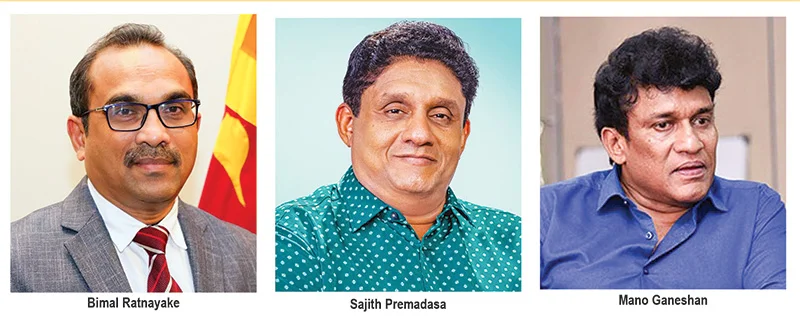
At a symposium on reconciliation organised by the National Peace Council last week, more than 250 religious clergy, civic activists and political representatives from different communities gathered to discuss the country’s future. Speaking at the event, Minister Bimal Rathnayake explained the government’s approach to national reconciliation. He said the government viewed the country’s recovery in terms of a three stage process. The first stage was stabilisation, the second was development and the third was transformation. Reconciliation, he implied, would come in that final stage. The participation of Opposition Leader Sajith Premadasa at the same symposium, and the constructive nature of his comments, strengthens that hope.
When the present NPP government took office in 2024, the country was emerging from one of the gravest crises in its post Independence history. The economic collapse of 2022 had led to shortages of fuel, food, medicines and electricity. Inflation soared, foreign reserves disappeared and long queues became part of daily life. The political upheaval that followed culminated in the resignation of former President Gotabaya Rajapaksa after mass public protests under the banner of the Aragalaya movement. The country was then governed by a leadership that spoke the language of reform and reconciliation but was widely perceived as lacking a direct popular mandate.
Sri Lanka’s past experience suggests that stabilisation and transformation cannot be treated as entirely separate stages. Postponing reconciliation until some future moment risks repeating the failures of the past. If transformation is endlessly delayed until a supposedly perfect moment arrives, there will always be new crises and new reasons for postponement. Minister Rathnayake’s contention that the government’s immediate priority has necessarily been stabilisation flows from the government’s awareness of the precarious situation the country is. Over the past two years, the government has succeeded to a significant extent in restoring economic and political stability. Inflation has reduced, shortages have ended and public institutions have regained a degree of functionality.
Guaranteed Changes
On the other hand, the country’s development continues to face challenges due to adverse global conditions, including disruptions caused by conflict in the Middle East and extreme weather events that have affected tourism, trade and the cost of living. The danger is that reconciliation may be indefinitely postponed in the name of stabilisation. This danger can be reduced if the government works proactively with the opposition and civil society to commence practical measures of transformation now rather than later. The participation of Opposition Leader Sajith Premadasa at the symposium, and the constructive nature of his comments, has strengthened the sense that bipartisan engagement on reconciliation may now be possible.
The urgency of transformation came through strongly in the presentations made by representatives of the Sri Lanka Tamil and Malaiyaha Tamil communities. ITAK parliamentarian S.Shritharan spoke of the frustration caused by unresolved post war issues in the north and east. He referred to disputes regarding land occupied during the war years, including controversies linked to Buddhist temples and state sponsored settlement activity in areas claimed by local communities. He also pointed to the continuing large scale presence of the security forces in the north and east nearly two decades after the end of the war. These grievances have remained central to Tamil political discourse since the end of the armed conflict in 2009. Families displaced by war continue to seek the return of ancestral lands. Civil society organisations in the north have repeatedly called for greater civilian control over local administration and a reduction in military involvement in civilian life.
Academic research and practical work on the ground have shown that reconciliation cannot be separated from questions of dignity, equality and justice. Former minister Mano Ganesan, leader of the Democratic People’s Front, focused on the longstanding problems faced by the Malaiyaha Tamil community. He spoke passionately about continuing housing shortages, landlessness and economic marginalisation, issues that have persisted since Independence. He also highlighted the devastating impact of recent extreme weather events on estate communities that remain socially and economically vulnerable. The condition of the Malaiyaha Tamil community remains one of the enduring social justice issues in Sri Lanka.
After Independence in 1948, a large proportion of them were denied citizenship and voting rights through legislation that rendered them stateless. Though citizenship rights were eventually restored, the social and economic consequences of exclusion continue to be felt generations later.
Many families still lack secure housing and land ownership despite their immense contribution to the country’s plantation economy. Minister Rathnayake’s responses to both these concerns were politically significant. He argued that recent political developments, including the declining influence of narrow ethnic politics across communities, indicated a major shift in public attitudes. According to him, the political ground has changed in ways that make it increasingly difficult for politicians who rely primarily on ethnic division and communal insecurity to retain public support.
Inter-Connected
There is evidence to support the assessment about the changing political grounding which sees future prospects in the resolution of long standing problems. . The economic collapse of 2022 affected all communities alike and generated a new politics centred on governance, anti corruption, accountability and economic justice. The Aragalaya protests brought together Sinhalese, Tamils and Muslims in a common demand for political change. Although ethnic grievances have not disappeared, the crisis created space for a broader understanding that the country’s future depends on cooperation rather than division. Opposition Leader Premadasa’s comments at the symposium reflected this changing political climate. He emphasised that national reconciliation could not be separated from economic justice and the need to address disparities between regions and social classes.v He also mentioned the need for civil society organisations to take this message to the community. This wider understanding of reconciliation is important because ethnic inequality and economic inequality have often reinforced each other in Sri Lanka’s history.
Academic studies have identified the denial of citizenship rights after Independence as a historic injustice that set back the Malaiyaha community for decades. The challenge now is to ensure that transformation becomes part of the stabilisation and development process itself. Practical first steps are both possible and necessary. The release of civilian lands still under state control, greater devolution of administrative authority, reduction of military involvement in civilian affairs, language equality in public administration and accelerated housing and land ownership programmes in the plantation sector are all measures that can begin immediately without waiting for a final stage of transformation.
The government’s recent commitment that provincial council elections will finally be held this year is therefore significant. These elections have been repeatedly postponed by successive governments. Holding them would not solve the ethnic conflict by itself. But it would signal a willingness to restore democratic institutions and share power in a meaningful way.
Sri Lanka has repeatedly postponed difficult reforms in the hope that a more convenient political moment would eventually arrive. But opportunities are invariably created and fought for instead of being provided as a gift by a benevolent government.
The present moment, shaped by the economic crisis and public demand for accountable government, offers a rare opportunity to move simultaneously towards stability, development and reconciliation. Provincial council elections can be the first meaningful step. But they must not be the last.
by Jehan Perera
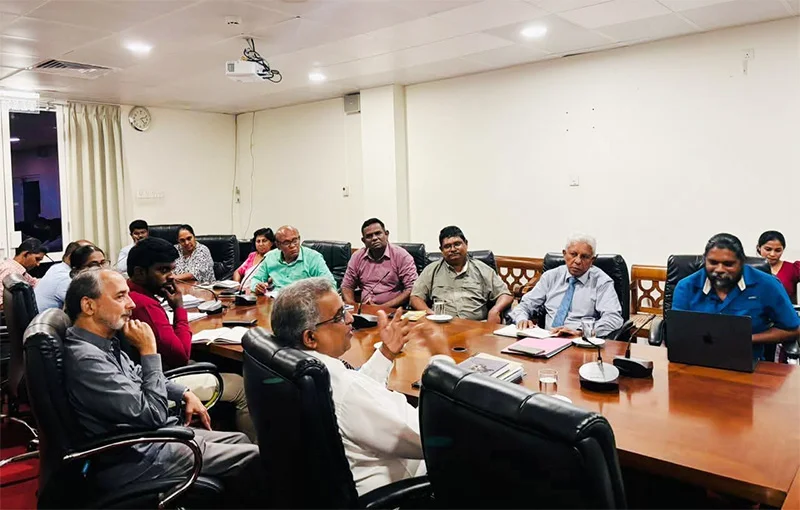
In a significant move aimed at steering Sri Lanka’s environmental governance towards a more science-based and evidence-driven path, the Ministry of Environment has initiated a new collaborative mechanism to integrate leading researchers into national policy formulation and conservation planning.
The initiative was discussed at a high-level meeting chaired by Dr. Dammika Patabendi at the Ministry of Environment on Tuesday, where top environmental scientists, wildlife experts and researchers were invited to contribute towards what officials described as a “strategic transition” in the country’s environmental management framework.
The discussions focused on strengthening the scientific basis of environmental conservation programmes and national policy decisions while creating a more research-friendly environment for academics and field scientists engaged in biodiversity and ecological studies.
Particular attention was paid to long-standing concerns raised by researchers regarding procedural and operational difficulties encountered when conducting studies in collaboration with the Department of Wildlife Conservation and the Forest Department.
Minister Patabendi stressed the need for environmental policies to be guided by credible scientific data rather than ad hoc administrative decisions, ministry sources said.
Among the key proposals discussed was the establishment of a streamlined mechanism that would reduce bureaucratic obstacles faced by researchers in obtaining approvals, accessing field sites and sharing scientific findings with state institutions.
The Minister highlighted the importance of building stronger partnerships between policymakers and the scientific community at a time when Sri Lanka is grappling with escalating environmental challenges including deforestation, biodiversity loss, human-elephant conflict, climate-related disasters and ecosystem degradation.
Environmentalists attending the meeting had also highlighted the urgent necessity of incorporating empirical research into national decision-making processes to ensure long-term ecological sustainability and better resource management.
The meeting brought together several of Sri Lanka’s leading environmental researchers and academics including Rohan Pethiyagoda, Saminda Fernando, Sewwandi Jayakody, Samantha Gunasekara, Dinidu Devapura, Himesh Jayasinghe, Manoj Prasanna, Mendis Wickramasinghe and Suranjan Karunarathna.
Director General of Wildlife Conservation Ranjan Marasinghe also participated in the deliberations.
Officials said the proposed framework is expected to pave the way for a more transparent, data-oriented and scientifically credible environmental governance structure capable of addressing emerging conservation challenges more effectively.
The government expects the new mechanism to support the implementation of practical and scientifically robust programmes aimed at safeguarding Sri Lanka’s ecological future while enhancing cooperation between state agencies and the country’s growing community of environmental researchers.
By Ifham Nizam

 Niluk Uswaththa, of Seven Notes fame, based in Dubai, surprised many when he and his wife Apeksha, turned up in Colombo, last week … unannounced.
Yes, they had a purpose in their surprise visit … to wish Apeksha’s mum for her birthday, which was on Monday, 18th May, and what a surprise it turned out to be!
In an exclusive chit-chat with The Island, Niluk said that the scene in Dubai is improving and Seven Notes do have work coming their way.
Since the members of Seven Notes are all employed (doing day jobs), they operate only on Saturdays and Sundays.

Niluk: Didn’t come prepared to perform, but obliged
friends in Galle
In fact, to get to Colombo for the birthday surprise (on Monday, 18th May), the band had to skip their 17th May, Sunday gig.
“Although it’s a short vacation, my wife and I are enjoying the setup here,” said Niluk, adding that they spent two days in Galle and that their next destination is Anuradhapura.”
Niluk didn’t come prepared to perform, but he obliged the crowd present, at a friend’s birthday celebrations, in Galle, singing and playing guitar.
They are scheduled to leave for their home, in Dubai, in the first week of June.
Seven Notes is an outfit made up of Sri Lankans and the band has been around for almost nine years.
Niluk came into their scene nearly seven years ago.
“When I went to Dubai, I had offers coming my way but it was Seven Notes that impressed me because of their acoustic style.”
The Dubai’s entertainment scene is showing clear signs of bouncing back and even levelling up in the next few months.
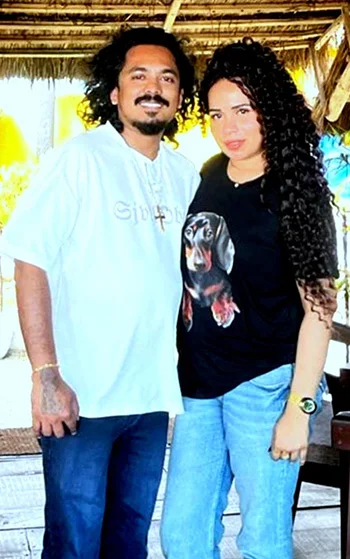
Niluk and Apeksha: Enjoying their short vacation
After a slowdown earlier this year due to regional tensions, shows and festivals are back on the calendar, and organisers say late 2026 could be the busiest concert season in years.
Time Out Dubai says “the 2026 concert calendar is filling up nicely” and “the city is ready to party once again” after some reschedules.
Dubai Summer Surprises in July brings retail activations, comedy nights, and indoor art exhibitions.
Organisers point to a backlog of postponed events that are being rescheduled for late 2026 and early 2027.
Yes, Dubai is calm on the surface but on alert. Life is mostly normal in the city, but there’s a “balancing act” as people watch for escalation.

Upcountry Hindu Priests meet President’s Secretary

Gibson, Dean knock over New Zealand for 80 as England cruise to series win

Solid Royal Challengers Bengaluru, surging Gujarat Titans clash for direct final ticket

US military launches strikes on southern Iran amid talks in Qatar

Pope says AI must be ‘disarmed’ to prevent domination, exclusion, and death

Showers will occur at times in the Western, Sabaragamuwa and North-western provinces and in Galle, Matara, Kandy and Nuwara-Eliya districts.

‘Dates have the highest sugar content to fight Coronavirus’

Sunday Island 27 December – Headlines

#SundayIsland 17th December – Headlines

Sunday Island – 28th March

Sunday Island Headlines – 21 March

Sunday Island – 21st February – Headlines
-
 Features7 days ago
Octopus, Leech, and Snake: How Sri Lanka’s banks feast while the nation starves
-
 Sports7 days ago
Sri Lanka women’s volleyball team ready for Central Asian challenge
-
 Opinion6 days ago
Murder of Ehelepola family, Bogambara Wewa and Sightings of Wangediya
-

 Business5 days ago
Historic launch of CCWE Fashion Week & International Summit 2026
-
 News6 days ago
Steps underway to safeguard Sri Lanka’s maritime heritage
-
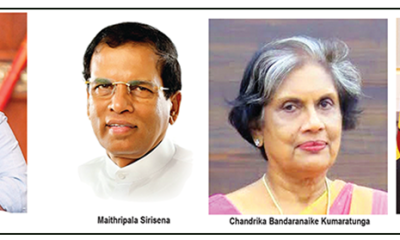
 Features3 days ago
The NPP’s pivot to the past
-
 News2 days ago
Police probe underway to ascertain links between criminals deported from UAE and local politicians
-

 Editorial6 days ago
A play without its protagonist